
First published in the September 2022 issue of Woman magazine
“… an ecologically dead status symbol.” Douglas W. Tallamy
Let’s talk about lawns.
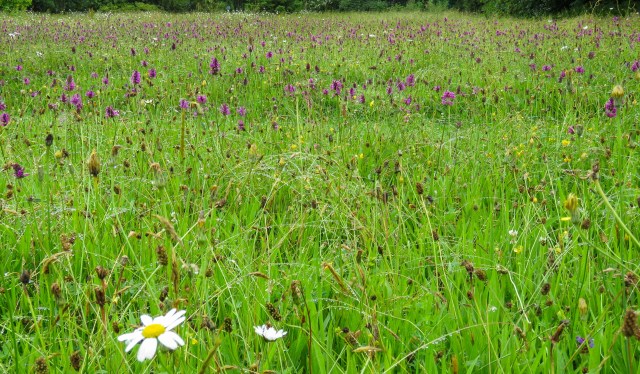
I remember doing a profile on a gardening couple who took great pride in their lawn. “Visitors say they just want to take their shoes off and luxuriate in the grass,” declared the lawn man of the pair. I had taken my gardening and life partner, Mark, along for moral support and as soon as we were safely in the car and departing, he expostulated, “People want to let their bare skin touch that?”
We both knew what sort of chemical arsenal was used to achieve a lawn that looked like green velvet and we would not be wanting our skin touching it. It is a value that originates from American suburbia – all those perfect street frontages – and I am not sure that is of merit.
There is the perfect lawn and then there is mown grass. It is many years since Mark declared that he would not routinely spray the lawn to try and keep it to the chosen grass varieties that give a handsome sward. As long as it was small-leafed, green and able to be mown, that was fine. I notice that it is me, not him, who goes around on my hands and knees rooting out the flat weeds but the excessive daisies, dandelions and docks worry me more than him.
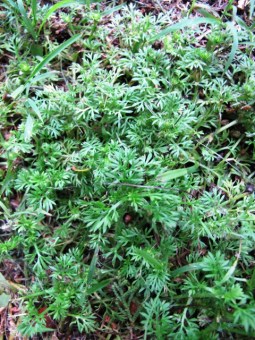
I would make an exception if we had small children in our lives. I might then agitate for spraying Onehunga weed, or prickle weed as it is often called. It makes going barefooted unpleasant. If you are going to resort to spraying it, you need to understand that it germinates in winter, grows madly all spring and, when the prickles appear in summer, it has already set its seed and the plant will die so there is no point at all in spraying at that time. You need to spray in spring when it is in full growth to break the seeding cycle and you will need to do it for several years as dormant seeds will keep germinating.
If you are not keen on spraying, you can let the grass grow long in the spring flush which will force the Onehunga weed to grow taller to reach the light. Then set the mower level lower than usual and you will be cutting off most of the Onehunga weed before it has a chance to flower and seed.
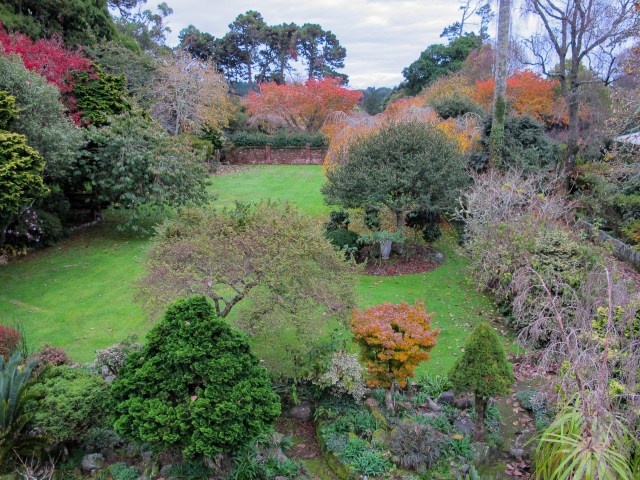
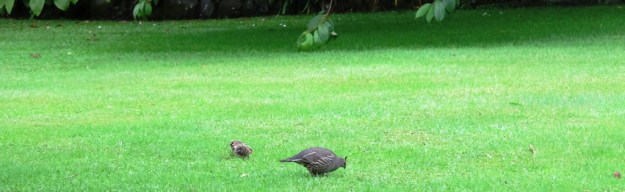
What about not mowing at all? It is a controversial position to take in an urban setting. We recently let our front lawn grow over summer and there is no doubt it is alive with bees and butterflies when in flower. The Californian quail love it too with its abundance of seed. Our main interlopers are clover, lotus major and self-heal (Prunella vulgaris) which means it flowers pink, white, yellow and blue. Mark refers to it as a low meadow.
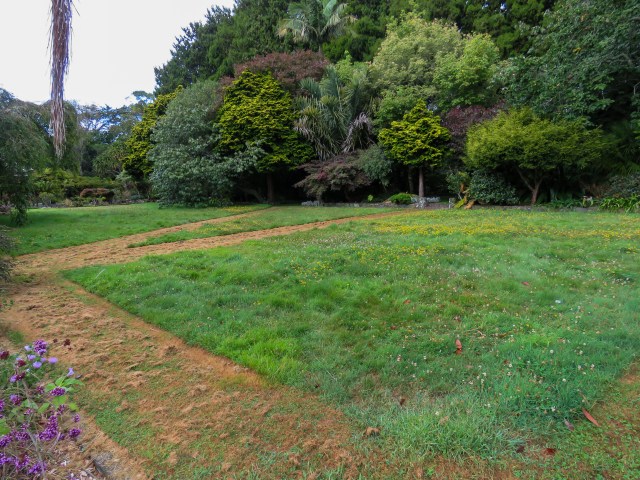
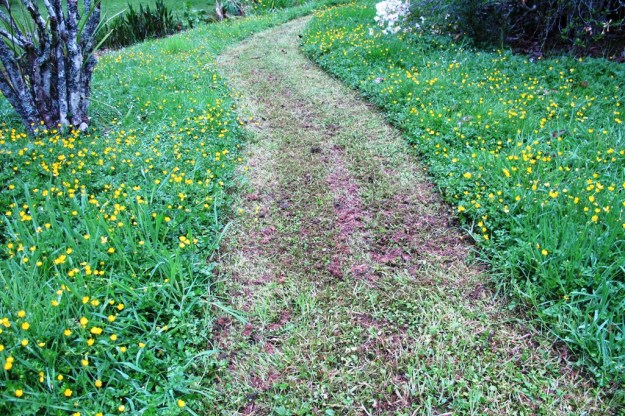
Because our front lawn is quite a major statement, it worried me when it looked …. well… rank and unloved in the early stages. I had a stroke of genius, drawing on what I had seen overseas, and asked for a double width to be mown around the perimeter and our most used paths across the lawn to be mown, again a generous two mower widths wide. It made all the difference visually and transformed it from unmown lawn to managed meadow. We kept it that way until the flowering was finished and then cut it all down again.

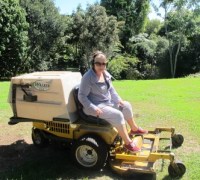
On the topic of mowing, get yourself a mulcher mower that chomps up the clippings to a fine tilth that is absorbed back into the grass. It means you don’t ever need to feed your lawn with nitrogen fertiliser again and it makes mowing faster without faffing around with lawn clippings which are the bane of landfill. The only reason lawns need fertilising is because constant mowing and collecting the clippings strips out any goodness and doesn’t allow for a natural cycle of replenishment. We haven’t fed our lawns for years, maybe even decades, but they remain green, well-covered and healthy simply because we use a mulcher mower.
If you choose to spray your lawn, then at least educate yourself as to what the active ingredients are and choose accordingly. There are more environmentally friendly options coming available but lawn sprays in the past – some of which will still be in garden sheds around the country and some may still be available – were a toxic brew.
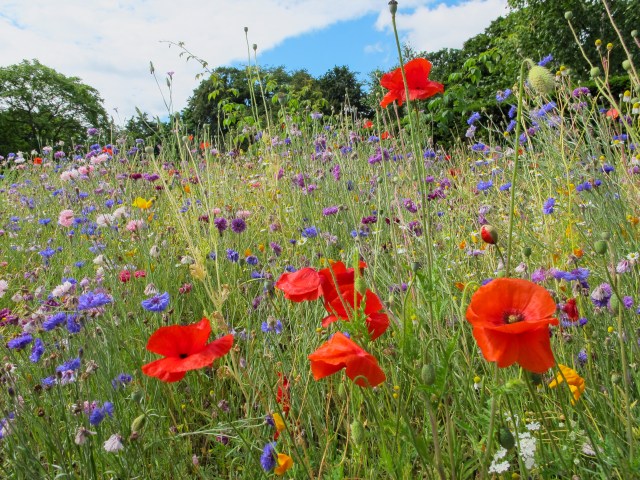
Proper meadows and wildflowers are a whole different topic. When wildflowers are mentioned, most people think of wildflower seed mixes – the ones that are soldier poppies, cornflowers, cosmos, daisies white and daisies yellow and a whole lot more. Pretty though they can be at their peak, they are neither meadow nor wildflower, or certainly not our wildflowers. Essentially it is gardening with annuals and such plantings are generally short-lived and need quite a bit of work to stop them deteriorating to a flattened, weedy mess. There are alternative approaches but they are not an easy answer and take a much higher level of gardening skill than a simple lawn requires.
What does a lawn achieve? If you are the sort of family who gets out for wholesome games in the garden, be it backyard cricket, rugby, badminton or even croquet, then yes, the lawn provides a suitable recreational space. Most of us persist with lawns long past the time when we have children frolicking outdoors, assuming they ever did.
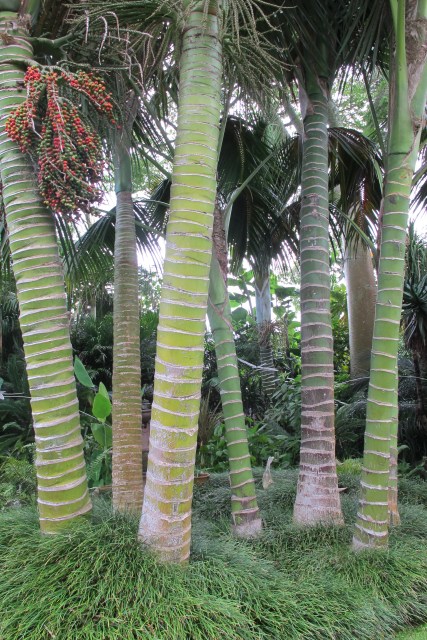
I came to the conclusion that there are two reasons for lawns. The first is practical; they are lower maintenance than most styles of garden. The second reason is aesthetic; an expanse of mown grass gives a breathing space in a garden and can frame the more detailed, decorative areas. The mistake is to think that you can only get that breathing space with a lawn. There are other ways and it doesn’t have to be the courtyard approach of paving or decking. I remember Gil Hanly’s garden in Auckland where she created a simple breathing space with green mondo grass beneath palm trees. It would have been lower maintenance than mown grass and, in a highly detailed garden with lots of colour, it gave that space to draw breath and relax.
In the end, lawns are on a spectrum. At the extreme end are the lawn fanatics who will de-thatch, aerate (because they have killed off the earthworms), core, oversow, irrigate, use sprays frequently, fertilise extensively and mow every day or every second day to maintain a perfect velvet monoculture comparable to a bowling green. I see this as an environmental travesty and a political statement from people who are proudly declaring total control and supremacy over nature by every means in their chemical and mechanical arsenals.
At the other end of the scale are those who either dispense with lawns entirely or simply give up mowing. There is a lot of room to move in between those two extremes where most of us can find a level which sits better with us in environmental, aesthetic and practical terms.

We just need to stop thinking of one end as admirable and aspirational and the other end as disgraceful and lazy. Nature would prefer it if more of us were inclined to land on the laissez faire end of the spectrum.
“Over three-quarters of all garden chemicals sold in Britain are for the improvement of our lawns.” The Curious Gardener’s Almanac by Niall Edworthy (2006)






 Tikorangi The Jury Garden