
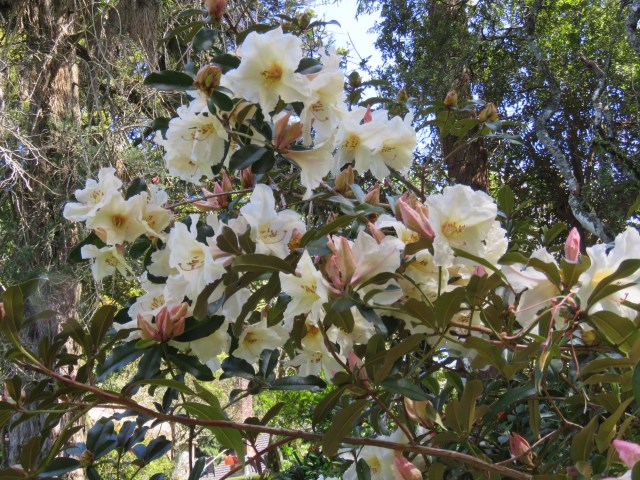
We are down to the last few days before we open this coming Friday as part of the Centuria Taranaki Garden Festival. I may write about how we prepare our very large garden for opening one day soon, but not today. There is still too much to do. All I will say is that it never ceases to amaze me how the final garden round (The Great Rake Over, as Mark calls it) brings all the earlier work together to present the garden at its best – or certainly its tidiest.
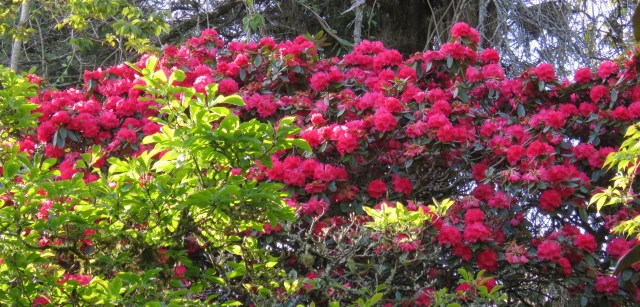
At the risk of being repetitive, this is our final festival so a last chance to visit our garden. We have no plans to open for the general public after this event from the coming Friday 28 October to Sunday 6 November.
I am really hoping for fine weather next Sunday 30 October for our Music in the Garden event and also for a good turnout because other people are involved so I feel personally responsible that it be a success for them. Music is from La Mer, cake sold by the slice from Rose at the Garden Cake Kitchen, pre-ordered savoury platters from Becky at Humble Grazing and the Etta Coffee Van on site selling teas and cold drinks as well as coffee. Our gardener, Zach, will also be selling his plants including the sought-after Stipa gigantea, Curculigo recurvata, Elegia capensis and assorted perennials. Bring folding chairs or a rug and, if you wish, your own bottle of wine.
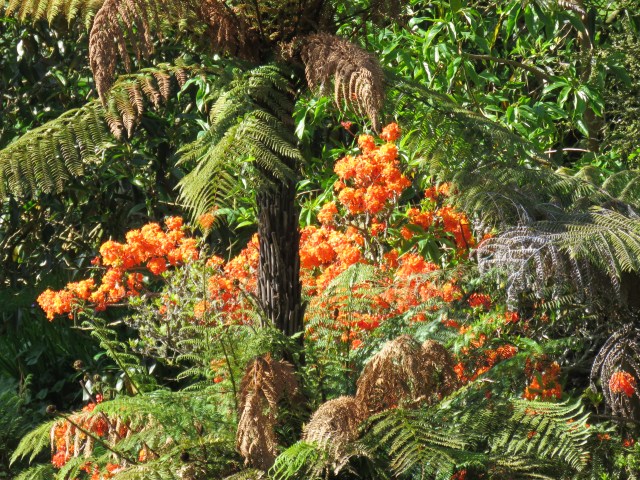
I am offering free garden tours at 11am on Friday 28 Oct, Tuesday 1 and Thursday 3 Nov. Just turn up five minutes early if you want to join one of these.
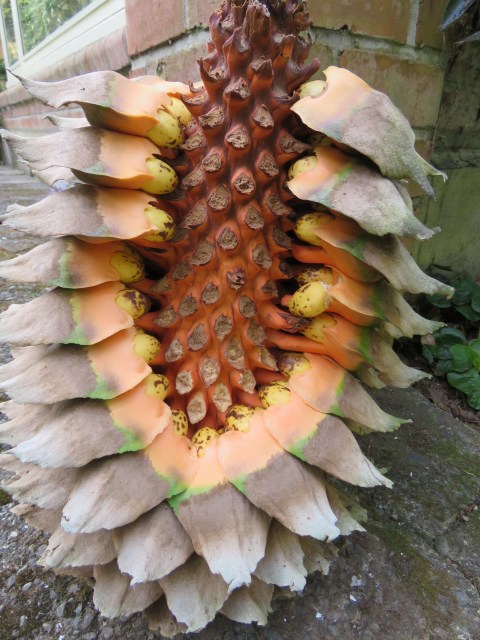
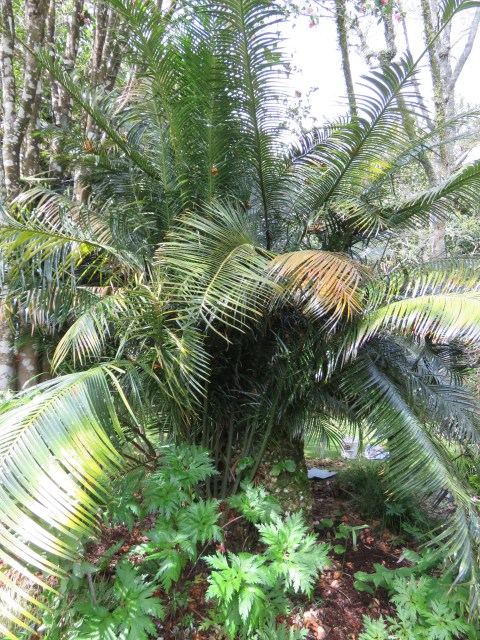
Look at this cycad cone. It is from the very handsome Lepidozamia peroffskyana, sometimes known – Wiki tells me – as Scaly Zamia or Pineapple Cycad. It is an Australian native coming from areas that are more warm-temperate than tropical which will be why it is thriving here. I see it is one of the tallest cycads and can reach up to seven metres tall but it is clearly going to take a long time to get anywhere near that height here. We cut the cone off because our experience is that if we leave it on the plant, it reacts by turning the new growth yellow which is distinctly unsightly. Neither of us being botanists, we are uncertain why this happens although Mark vaguely mentioned ‘something to do with a chemical reaction’.
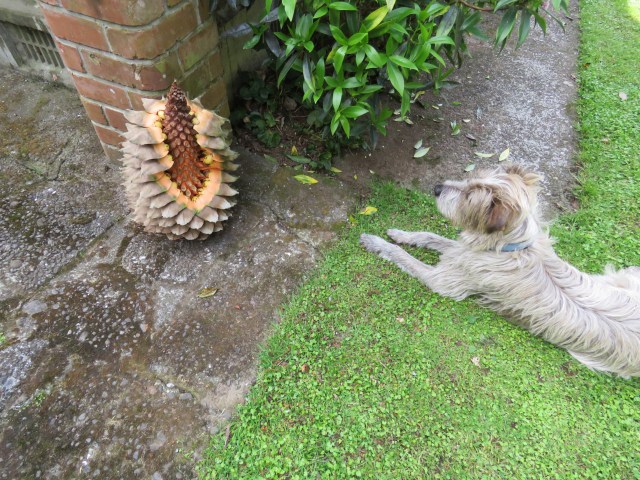
Ralph was particularly fascinated by it and felt sure that the segments should be edible. There is not much that bypasses that dog’s nose. There is some anxiety here about how Ralph will cope with festival, this being his first (and last, as it turns out). We bought a new chest harness for him in case we have to keep him on a lead or tie him up but he is fairly sure that harness is a punishment and an instrument of torture. Dudley dog is more experienced and likely to take on his seasonal role of Carpark Biosecurity Officer as he optimistically checks all arrivals for hidden food.


 Tikorangi The Jury Garden