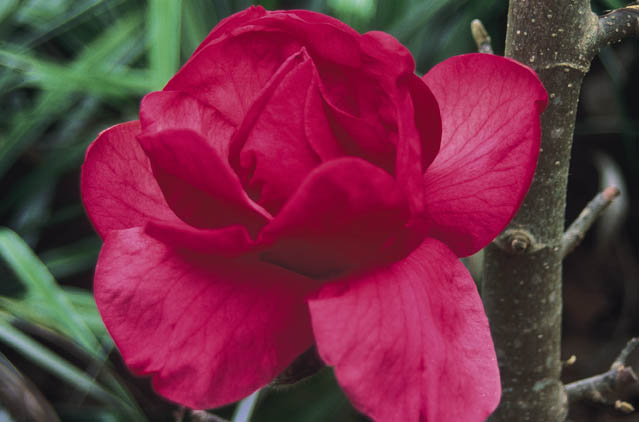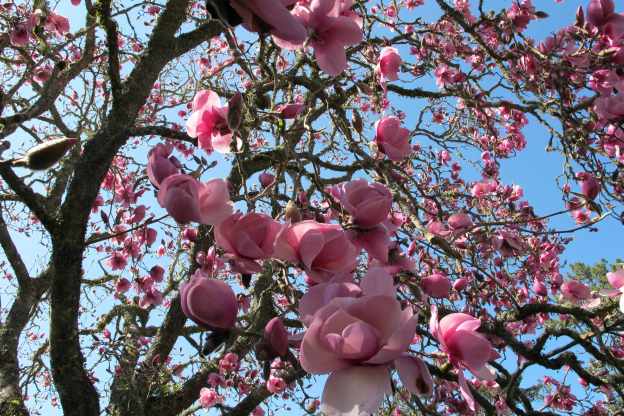
Tag Archives: Magnolia Black Tulip

The Jury Magnolias. A retrospective view.

Written for and first published in the International Magnolia Society journal. In the time since writing the text and publication, we are now able to release details of the three new deciduous magnolia hybrids being released internationally.

The Jury magnolia reputation rests on just twelve deciduous magnolias so far. Soon there will be fifteen and it may end up at seventeen in total. Despite originating on a farm in far-flung New Zealand, some of those plants have had a significant impact in the international magnolia world. 
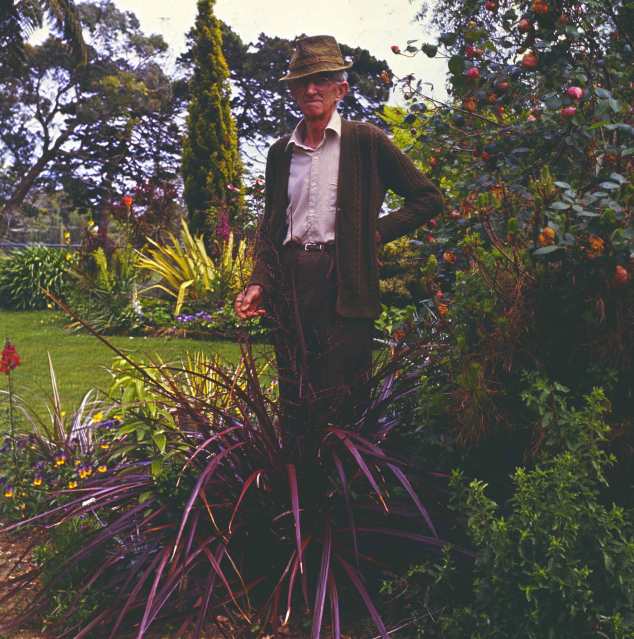
Felix in his garden, 1985. Photo credit: Fiona Clark

Felix Jury was a farmer who decided he would rather garden. He handed over the family farm to his second son as soon as he could and devoted his time and energy to building a large garden. He started by buying plants, importing new material from around the world. It was the failure of many of these to thrive in our warm temperate conditions that started him on the hybridising path. He was a self-taught amateur; like many of his contemporaries of the day, he became proficient at raising seed, striking cuttings, budding and grafting across a wide range of genus but it was always on a small scale, hobby basis. For an amateur, some of his plants have stood the test of time across the world. Phormium ‘Yellow Wave’ is still being produced internationally in surprisingly large numbers and Camellias ‘Dreamboat’ and ‘Waterlily’ have remained household names in the camellia world. He never received a cent in payment for any of these plants. Over time, it is his magnolias that have firmly cemented his name in international gardening.

Mark Jury was Felix’s youngest son. By the time Mark and I returned to the family property in 1980 with Mark planning to set up a plant nursery, his father had scaled down his adventures with plants and quietly retired to the garden. It was a privilege for both father and son to have seventeen years working closely together in remarkable harmony. Felix was able to transfer all his knowledge and experience to Mark who was keen to continue the garden development and to take the plant breeding to the next level. Unlike his father, Mark needed to generate an income. Also self-taught, Mark started the nursery, literally building up from one wheelbarrow to a successful boutique business doing mail-order, wholesale and on-site retail.

Felix didn’t raise large numbers of magnolias from his controlled crosses. They would probably number no more than fifty and over a few years only in the 1960s. Of these, eight ended up being named and released commercially. Technically, there were nine but we will return to the irritating matter of the ninth later.  He would have named more but Mark vetoed that. From an early stage, Mark took the view that fewer and more stringent selections were better than more when it comes to a genus with the potential to be long-term trees in the landscape.
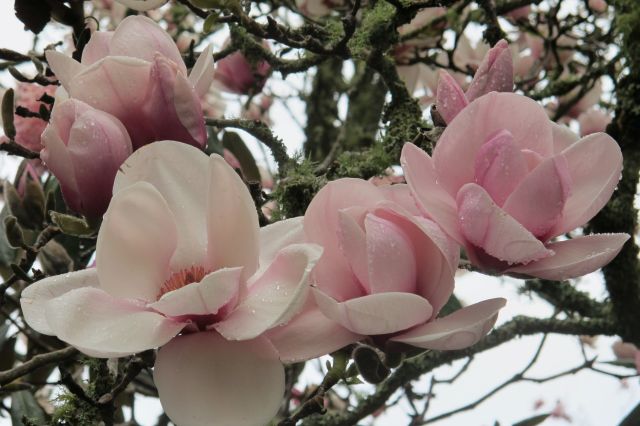
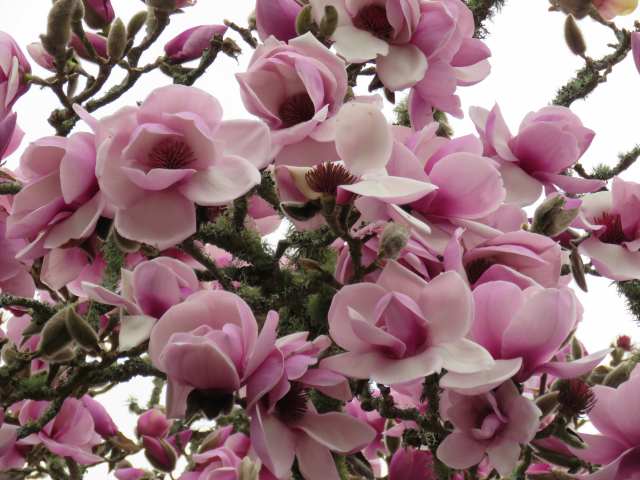
Magnolia ‘Atlas’
Magnolia ‘Iolanthe’

Of those eight, Mark has felt that probably only six should have been named. He singles out sister seedlings ‘Milky Way’ and ‘Athene’ as two that could have been narrowed down to one. For a long time, he said the same thing of ‘Iolanthe’ and ‘Atlas’ but has had to change his tune. While we regard ‘Iolanthe’ as a flagship magnolia, arguably one of the best two Felix bred in New Zealand conditions, it has never performed as well overseas and is certainly not rated as highly elsewhere. ‘Atlas’ has a larger bloom and is a prettier pink but its flowering season is short – by our standards – and we don’t often see it in its full glory because the petals are too soft and get badly weather-marked. But ‘Atlas’ appears to be hardier in overseas climates and a better performer elsewhere than it is here.
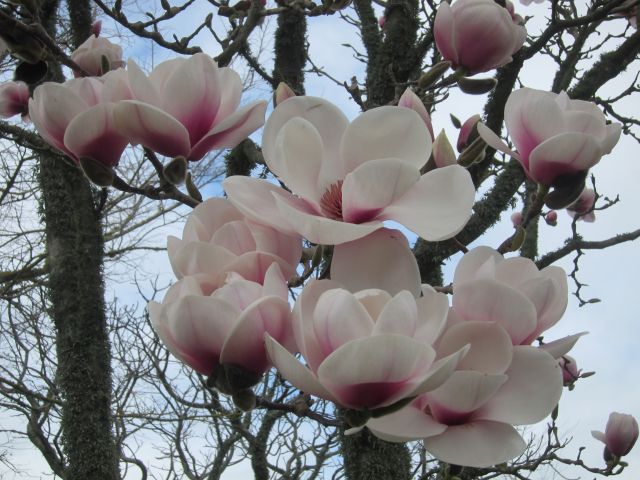
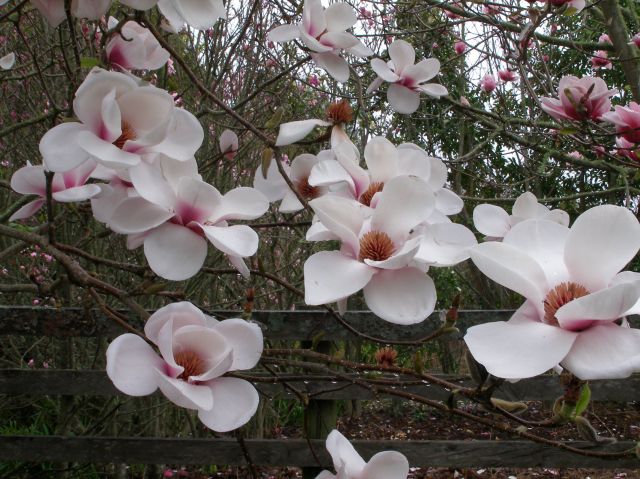
Magnolia ‘Milky Way’
and ‘Athene’. Even we have trouble telling them apart at times, particularly in photo close-ups. We can usually tell by looking at the tree and time of flowering or side by side comparisons, but we have to think about it every time.

In those days, the range of magnolias available commercially was small. Felix’s initial goal was to see if he could create hybrids that would flower on young plants and stay a garden-friendly size. It was generally accepted that when a magnolia was planted, it was realistic to expect a delay of between about seven and fifteen years to get the first blooms. He also liked the cup and saucer flower form and he wanted more colour. Of his named hybrids, six of the eight had a chance hybrid in their parentage. It was the cross he received from Hillier’s Nursery as a seedling of M. campbellii var mollicomata ‘Lanarth’. Mark has always referred to it as his father’s secret weapon. When it flowered, it was clear it was not ‘Lanarth’ but a hybrid, presumed to be with M. sargentiana robusta. He duly named it for his favourite son so it is known as Magnolia ‘Mark Jury’.
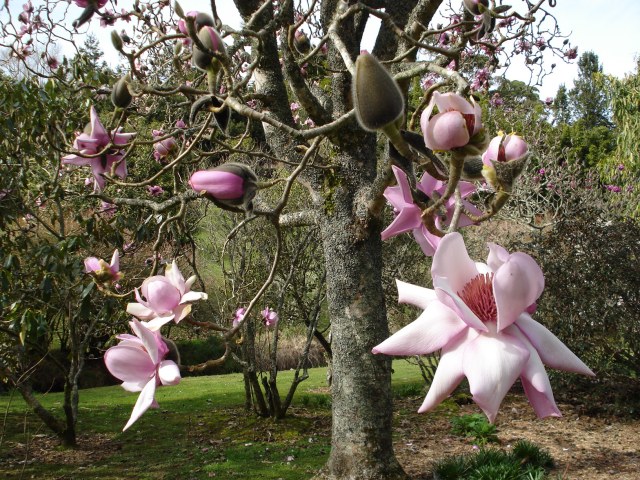
Felix’s breeder parent – M. ‘Mark Jury’ – is always distinctive with its very large blooms and pronounced recurved petals

Felix’s two greatest achievements were in creating large-flowered hybrids that bloomed on young plants and in introducing the breakthrough to red shades with his cultivar ‘Vulcan’.

Possibly under-appreciated are the additional factors of heavy textured petals, solid flower form and the setting of flower buds down the stems so blooms open in sequence, rather than just tip buds that all open at once for a mass display that may only last a fortnight. Our springtime is characterised by unsettled weather; Mark refers to the magnolia storms. One overnight storm can destroy the display of softer booms like M. sprengeri var. ‘Diva’ or wipe out the tip bud display of ‘Sweetheart’ (a ‘Caerhays Belle’ seedling).
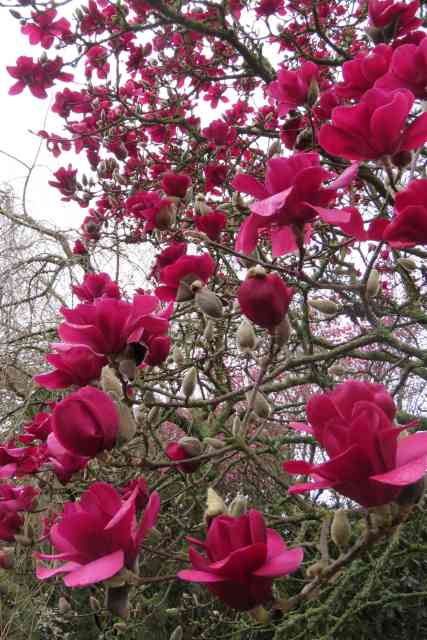
Magnolia ‘Vulcan’ at its early season best

The performance of ‘Vulcan’ around the world has been well documented and ranges from brilliant to undeniably disappointing.

I will say that ‘Vulcan’ was the only plant we have ever put on the market which we could track its flowering by the phone calls we received year on year. Being a long, thin country in the southern latitudes, magnolias open first in the warmer north and then in sequence heading down the country. The phone would start ringing in early June from the north and continue through August from more southern areas. That is a stand-out plant.

Whatever its flaws, ‘Vulcan’ opened the door to the plethora of red hybrids now available internationally and it remains a key foundation plant in the development of new hybrids.
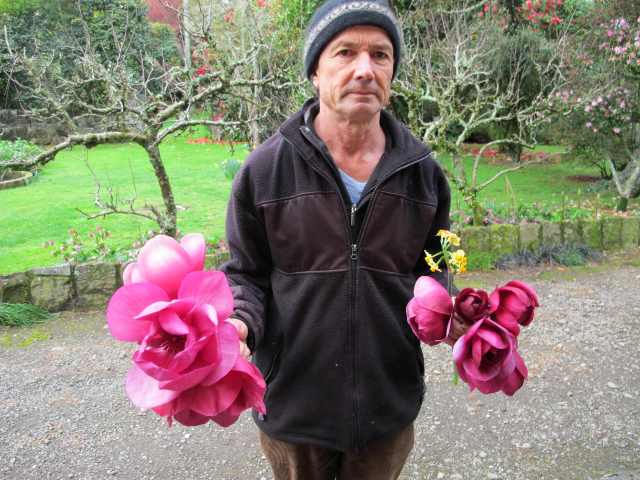
Mark, picking seedling blooms to compare back in 2013
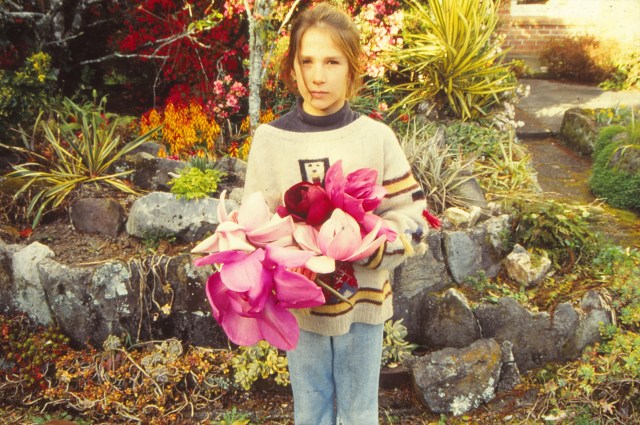
Like father, like daughter. I recently found this photo of our second child holding her father’s blooms from twenty years earlier – likely the first blooms from some of Mark’s earliest crosses

Mark started hybridising magnolias in the 1980s, picking up where his father had left off and using the same genetic base. He has raised many more controlled crosses than his father ever did. We have never counted how many but it will be well into the thousands. Of those, only four have been named and released and there is another tranche of three which are being built up for release internationally. That makes seven Mark Jury magnolias and all are distinctly different.

Ill health has cut short Mark’s breeding programme and we are now assessing the final batches of his breeding efforts. He has already decided that he has done as much as he can with the reds so he has ruled out the next generations of those and we are now looking at his yellows. We are hopeful that we will get maybe two final selections so he may end up with nine named magnolias in total.
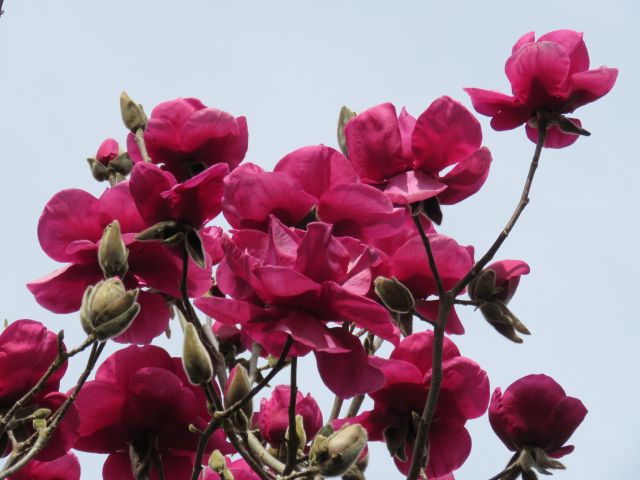
Magnolia ‘Felix Jury

He has always been particularly proud of the cultivar he named for his father, Magnolia ‘Felix Jury’. He reached the goal Felix had set – a tree that will not get excessively large but with very large, colourful blooms from an early age. It has always delighted us that Felix was still alive to see it bloom. In our climate, the colour can vary from rich pink through to deep red, at its best. Over the years, we have learned that the colour in magnolias can bleach out, particularly in colder climates, and we get exceptionally rich colour in New Zealand. Presumably this is related to the very clear light that we have, along with the soils and mild climate (never very hot and never particularly cold). ‘Felix Jury’ keeps its size and form in different climates and even when the colour is lighter in shade, it is an acceptable pink, albeit not the stronger shades we see here.
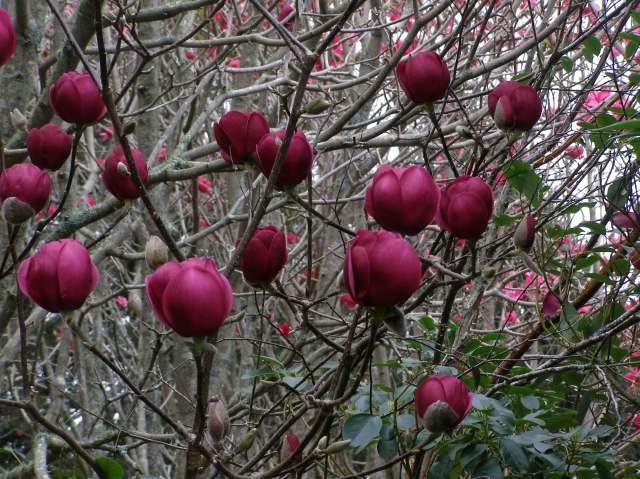
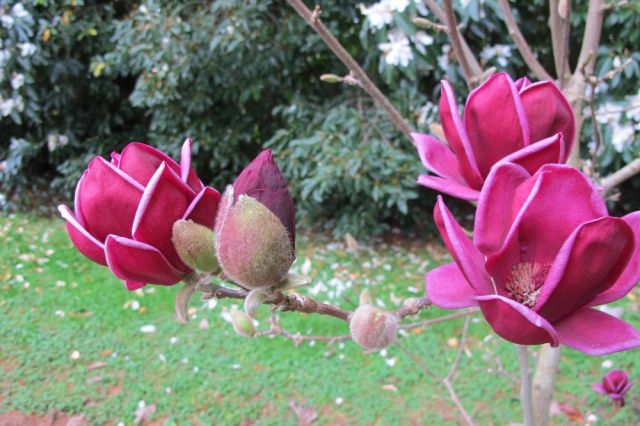
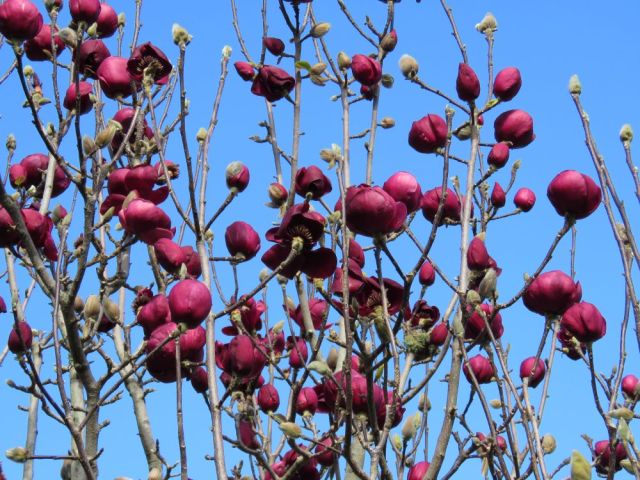
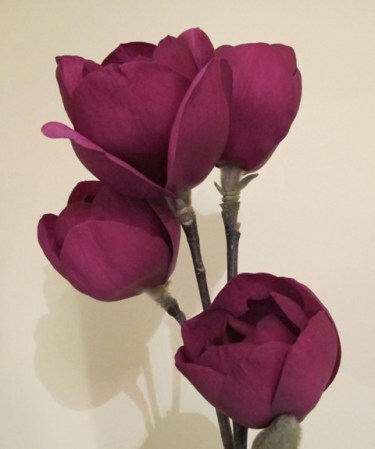
Magnolia ‘Black Tulip’

Both Mark’s ‘Black Tulip’ and ‘Felix Jury’ are showing up in the breeding of countless cultivars across the magnolia world and are clearly having long-term influence. ‘Black Tulip’ sets seed readily and it seems every man, woman and their dog have raised seedlings, judging by the photos we have seen.  None appear to be an improvement on the parent to our eyes and not many have taken it in a different direction. But its impact on the development of new hybrids is clear to see. Mark has raised hundreds of his own ‘Black Tulip’ hybrids so we see many, many lookalikes but few stand-outs.
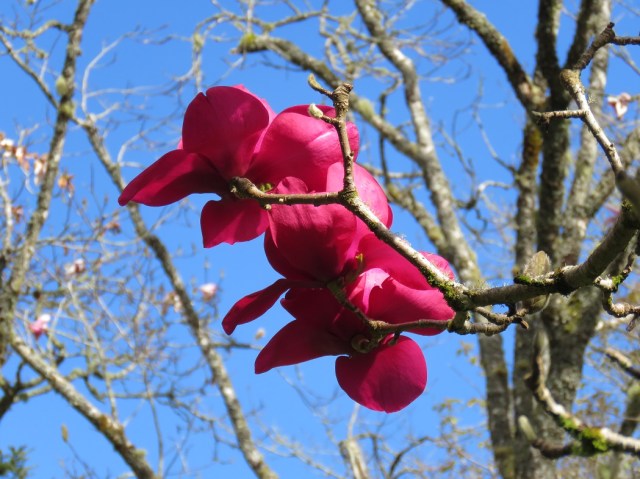
Mark’s best red, ‘Ruby Tuesday’

We have high hopes of the last red he has selected which is one of the three new ones to be released. He bypassed ‘Black Tulip’ and went back to his father’s ‘Vulcan’ as one of the parents. We don’t rush selections based on flower alone; this one goes back 20 years but its shade of red stood out from the start and the original plant has never had an off-season. It has lost the muddy purple undertones of ‘Vulcan’ and keeps its rich shade of red right through the exceptionally long flowering season. It starts a little later than ‘Vulcan’ so is less vulnerable to late frosts and the late season blooms are as good as the first ones. We describe it as a ‘Vulcan’ upgrade. It has kept the best features but eliminated the undesirable characteristics. Only time will tell if this is true in other climates but keep an eye out for this ruby red selection in the coming years.

Mark turned his attention to the yellows. The magnolia world is awash with yellow hybrids, so many that it is hard to pick out the ones that are superior. Mark’s dream was of a big, pure yellow flower in the cup and saucer form of M.campbellii but on a tree that opens its flowers before its foliage appears, and in a garden-friendly size. A yellow ‘Iolanthe’ or ‘Felix Jury’, so to speak.
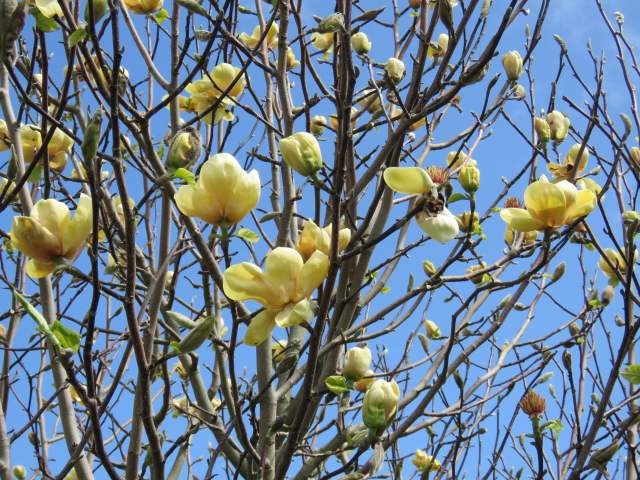
Magnolia ‘Honey Tulip’ – the only yellow Mark has named so far

His ‘Honey Tulip’ was a step on the way. It was a break away from the pointed buds, narrow petals and small flowers that come from the dominant M.acuminata parentage. It isn’t the butter yellow he wanted but it met the brief of solid flower structure and thick texture, flowered before leaf-break and stayed small enough for most gardens. Importantly, the colour does not fade out as the season progresses.

The next generations have taken it further. He has the strong, clear yellow he wanted, the large flower size, the flower form, the slightly earlier blooming season to beat leaf-break and the garden friendly habit of growth. He just doesn’t have them all on the same plant.
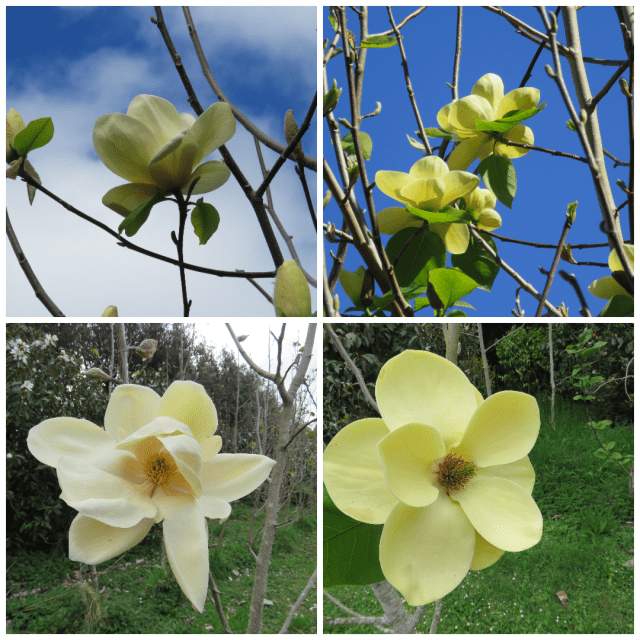
If we could just take the best aspect of each of the seedlings and get them all onto one plant, that would be good.

The goal of a big, pure yellow, cup and saucer magnolia is achievable but Mark has run out of time and energy. It will take another generation of plant breeder to reach it. That said, there are probably a couple of good yellows that are significant steps along the way that we should get out of the last batch of seedlings. One, in particular, is a very pretty lemon-yellow (so not the strong colour he wanted but still yellow) with the desired flower size and form and it is blooming from an early age although the flowers coincide with leaf-break. It is hard to reach perfection.
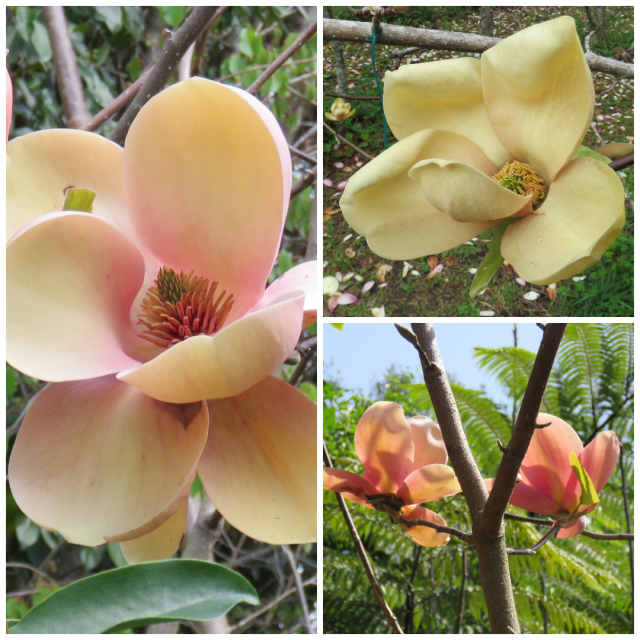
Sunset shades and caramel shades but none good enough to select yet

There are a few striking sunset mixes of strong colour on goblet shaped blooms but none of them look good enough to select. Plant selection is always made on a variety of criteria but Mark’s personal preference for solid colour is strong. Every magnolia he has named is one colour inside and out because that is what he likes. I had to twist his arm to even look at the sunset mixes; he does not think pink and yellow is a pleasing combination. He is also dismissive of what he calls ‘novelty blooms’. I marked one seedling that had distinctive, caramel-coloured blooms. Viewed close-up, they are interesting but I had to concede he was right. On the tree, they will just look like they have been hit by frost.

Always, we are selecting for plants that will look good over time in the landscape. Looking interesting as a cut flower in a vase is not enough, given the magnolia is a landscape tree with long term potential.

I mentioned the irritating ninth Felix Jury hybrid at the start. It is Magnolia ‘Eleanor May’ and I wouldn’t even reference it except I saw a photo lauding its merits in the UK this year. I don’t have a photo of it in my files which indicates the low esteem we hold it in. While it is a seedling from Felix’s breeding programme, we don’t claim it as a Jury hybrid. It is a full sister to ‘Iolanthe’ and a rejected seedling. Felix provided material of it to the nursery Duncan and Davies to use as a good root stock. From there, the nursery sent out a few failed grafts of ‘Iolanthe’ to garden centres by mistake. One plant was purchased by a customer who was observant enough to pick the difference when it flowered. He then took it upon himself to name it for his wife which may have been legal but was certainly lacking in courtesy. As far as we are concerned, it is inferior to ‘Iolanthe’, had already been rejected in selection and was an escapee by mistake. Besides, when we question releasing two of the same cross – ‘Iolanthe’ and ‘Atlas’ – why would we want to claim a third of the same cross? We have a property filled with sister seedlings which we would hate to see unleashed onto an over-crowded magnolia market.
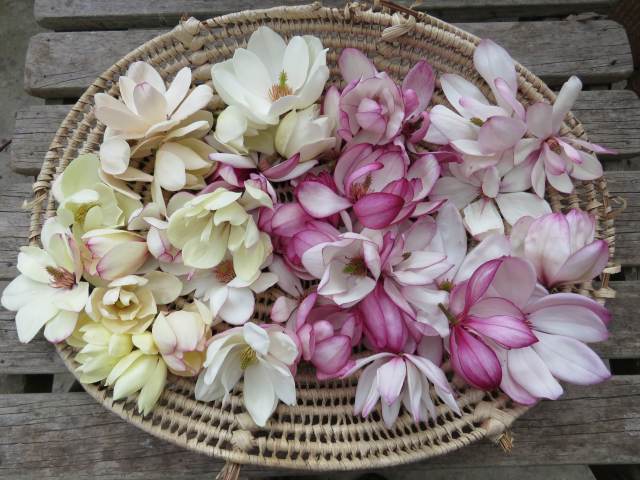
Starting with predominantly white genus, Mark has reached into the pinks, purples, peach tones and lemon as well as bicolours.

Mark’s more recent work with hardier members of the michelia group is another story. The first three selections are on the international market under the Fairy Magnolia® branding. They are in white, cream and soft pink and the next two on the way are in shades of peach and blackberry ripple. We are now onto the final round of selections which are into the bicolours and purple.
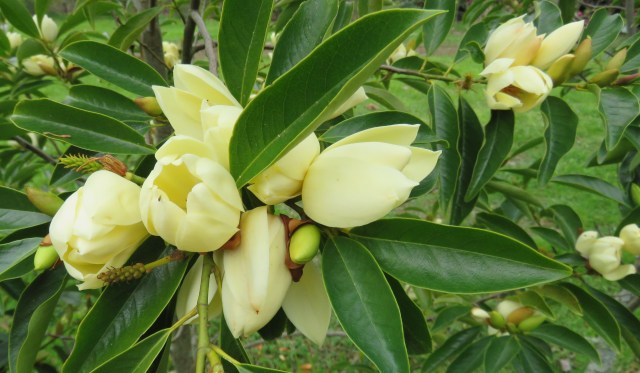
Getting there – definitely lemon but not yellow enough
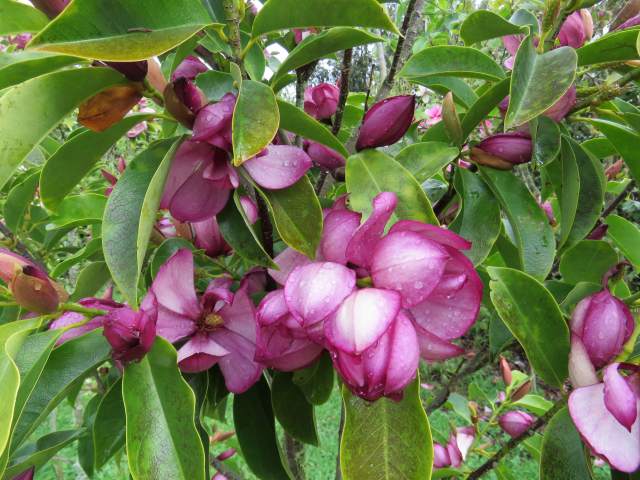
The dark pinks and purples have been more rewarding than the yellows

Again, he has come up short on a strong yellow that is good enough to select and, regretfully, the really pretty apricot ones have not made the grade. But we know that those colours are within reach without sacrificing hardiness. Mark wryly describes his work on michelias as ‘RFI’. That is Room for Improvement. It will take another breeder to get there but there is plenty of promise and scope to take them further.
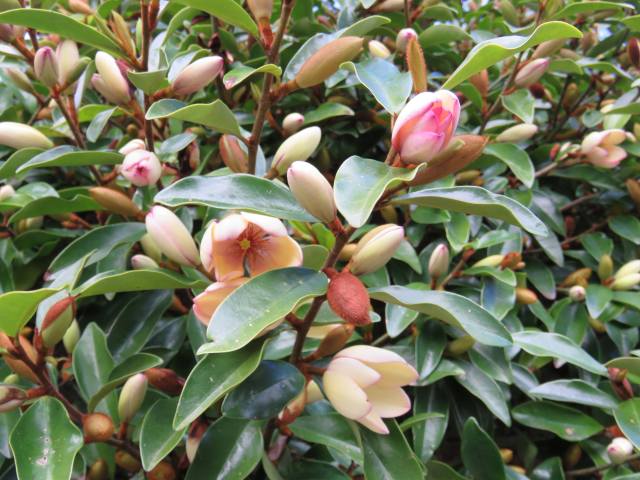
Labelled ‘FM Baby’ in my files, this new selection is being released as Fairy Magnolia® ‘Petite Peach’

Felix Jury magnolias

Apollo (probably liliiflora nigra hybrid x campbellii var mollicomata ‘Lanarth’)

Athene (‘Lennei Alba’ x ‘Mark Jury’) 

Atlas (‘Lennei’ x ‘Mark Jury’)

Iolanthe (‘Lennei’ x ‘Mark Jury’)

Lotus (‘Lennei Alba’ x ‘Mark Jury’) 

Milky Way (‘Lennei Alba’ x ‘Mark Jury’) 

Serene (liliflora x ‘Mark Jury’)

Vulcan (liliiflora hybrid x ‘Lanarth’)

Mark Jury magnolias

Black Tulip (‘Vulcan’ x)

Burgundy Star™ (liliiflora nigra x ‘Vulcan’)

Felix Jury (‘Atlas’ x ‘Vulcan’)

Honey Tulip (‘Yellow Bird’ x ‘Iolanthe’)

 Plus Ruby Tuesday, Dawn Light and Ab Fab
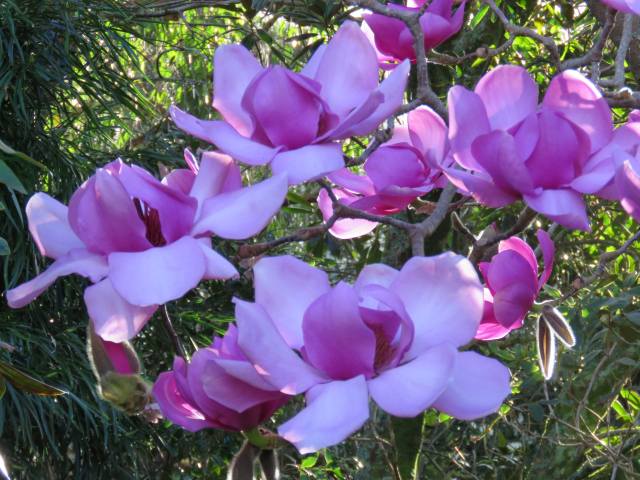
Magnolia ‘Dawn Light’
Magnolia ‘Ab Fab’

Fairy Magnolia® Blush (M. laevifolia x foggii hybrid)

Fairy Magnolia® Cream (M. laevifolia x foggii hybrid)

Fairy Magnolia® White (M. laevifolia x doltsopa)

Fairy Magnolia® Lime (on very limited release in Europe only)

Plus Fairy Magnolia® Petite Peach
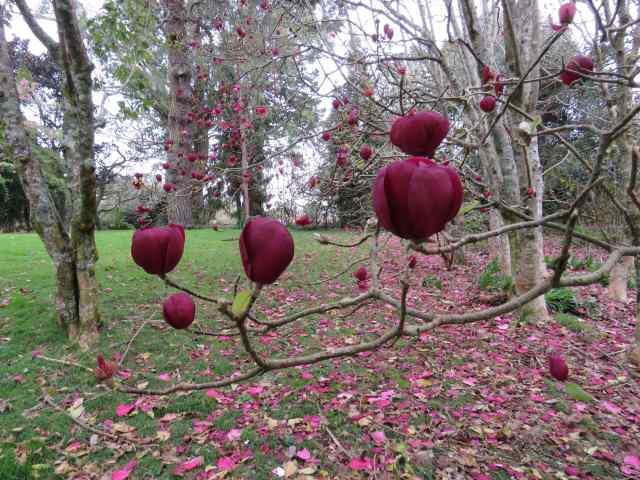
“You’ve got mail”

Two interactions this week brought me unexpected pleasure.

The first was an email from Michael in Portland and I was so touched by his words I asked his permission to share it here. I post it without comment except to say that the ‘Dark Tulip’ Magnolia he refers to is of course our Magnolia ‘Black Tulip’.

Magnolia Black Tulip ihere

Hello! 

This is a bit of story, but I want to express how grateful I am for your Dark Tulip Magnolia. 

I grew up in Mississippi, which is in the southern part of the United States and southern magnolia is the state flower. When I was about five years old my father took me to a garden center where we bought a small southern magnolia. He told me that was “my” tree. I loved that tree and it became a symbol of my childhood and my relationship with my dad. I’m in my late 30’s now and I live in Oregon, which is +2,000 miles from Mississippi. I rarely go back to Mississippi, but when I do I always drive by that house to sit at look at that giant magnolia from my car. My dad died unexpectedly almost two years ago and magnolias are still very much connected to him in my mind. 

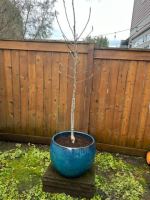
I’ve always wanted a magnolia of my own, but I’ve been living in apartments my entire adult life. This winter, I finally moved into a house with a (small) yard. I knew I wanted to plant a magnolia even if I had to grow it in a pot (for now). I went to a nursery here in Portland and the moment I saw your Dark Tulip Magnolia, my heart jumped! The blossoms stopped me in my tracks. The flowers immediately sent me back to so many childhood memories, to memories of my father planting our tree. But yet this magnolia is… an evolution of something… the unbelievably deep and soul moving burgundy is stunning! It’s hard to express, but your Dark Tulip Magnolia has become a symbol of growth after loss, of moving forward, of change. It’s deeply poignant to me. 

I purchased my first tree of my adult life: your Dark Tulip Magnolia. I have it in a very large container, which I know is not ideal, but it is the best I can do for a few years. I am determined to learn everything I can and do my best to help it thrive. This living art you’ve created has played a role in healing my heart and in my life story. It is the most beautiful tree I have ever seen. 

Michael’s plant

I know the Dark Tulip Magnolia has been around for years, but it is new to me and I’ve been reading everything I can find about how to keep it healthy. I want you to know that your work has created profound meaning in my life. I am so grateful for the years of work you’ve put into creating such beautiful trees. 

Thank you for the beauty you’ve contributed to the world and to my life. 

Michael

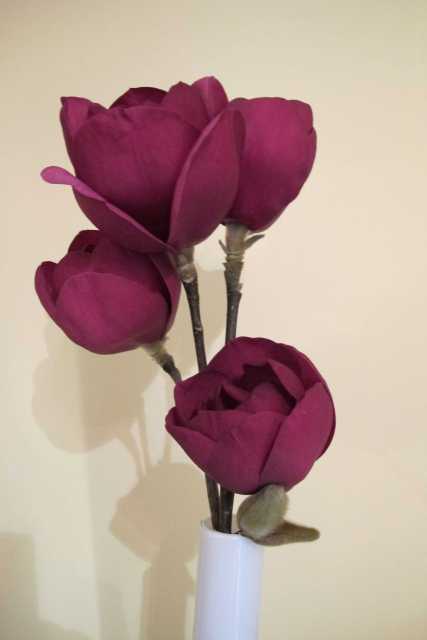
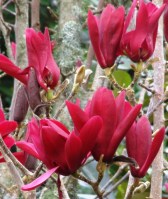
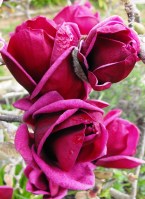
Magnolia Black Tulip – the first magnolia of Mark’s breeding that he named and released

It is always rewarding when people derive pleasure from plants bred here by Mark and Felix before him. When one touches somebody in a deep emotional, almost spiritual way, that is next level altogether.

The rare delight of a hand written postcard

The second  treat this week was when the mailbox delivered up the rare specimen of a handwritten postcard. In a week when NZ Post announced the demise of posties, to be replaced by courier drivers, a handwritten card seemed especially poignant. It was a letter of appreciation from a reader of this site. The bit that made me laugh out loud was: “But I really had to say a big thankyou for ‘sad beige’!!!! So funny (and sad!)”

I read that bit out loud to Zach as he came into work that morning and he snorted in delight. It was he who gifted me ‘sad beige’ as in here , here, and here.

Appreciative comments from readers are always treasured but readers who share my sense of humour are gold.

Back in the days when people still bought and read newspapers, I used to get more feedback on the garden pages I wrote from 1997 through to 2015. I just looked up those dates and I am stunned I kept it up for 18 years. Mark used to call the incoming mail my ‘fan mail’. I kept the special ones and I shall add the postcard and the email to that file. I am a bit sorry I can’t store the phone calls I used to receive from elderly gents wanting to discuss growing potatoes. This was in the days of landlines and phone books, you understand, a time when there were quite a few elderly gentlemen wanting to discuss potatoes. Never having grown a potato in my life, I would hand those calls over to Mark who was far better equipped on the topic. They were oddly charming, in a niche sort of way.

Early autumn in the Wild North Garden

“His Majesty The King’s Coronation Collection”

Mark’s Magnolia ‘Felix Jury’

It is a well-known fact that King Charles 111 is a very keen gardener and has been for a long time. We received confirmation this week that Mark’s Magnolia ‘Felix Jury’ was included in a collection of 25 carefully selected plants presented to him to mark his coronation.

The gift was from the Royal Horticultural Society (RHS), specifically from the Rhododendron, Camellia and Magnolia Group of which he has been the royal patron since 2018. Reportedly, he was delighted to receive the plants this week and they are destined for his Sandringham estate which is undergoing a major rejuvenation under his personal direction.

There are only three magnolias included in this collection and all are from Aotearoa New Zealand, which is a sign of this country’s standing in the heady world of international magnolias. Most of the collection is focused on rhododendrons with just three camellias included, one of which is also a NZ hybrid. ‘Festival of Lights’ was bred by the late Neville Haydon of Camellia Haven fame.

Magnolia ‘Genie’ bred by Vance Hooper

The other two magnolias are ‘Genie’ which is the best-known cultivar of breeder, Vance Hooper and the late Os Blumhardt of Whangarei’s ‘Starwars’.

‘Starwars’ dates back to the 1960s when Felix was also raising the first generation of Jury magnolia hybrids. We knew Os Blumhardt fairly well. He used to stay with us when he came to Taranaki and he was most encouraging to Mark in his early days of plant breeding and extraordinarily generous with his own material. We still have some very fine vireyas and camellias of his in our garden and his early, limited work with michelias (‘Mixed Up Miss’ and ‘Bubbles’ are his best known) laid the groundwork for Mark’s Fairy Magnolia series many years later. But we were less enamoured by his Magnolia ‘Starwars’ – until we made a magnolia trip to the UK, Italy and Switzerland back in the early 2000s.

Magnolia ‘Starwars’ bred by Os Blumhardt

At home, we have ‘Starwars’ planted on the roadside on our lower boundary in a row of other magnolias. It is pretty enough and puts on a good show but the flowers are a bit floppy and, to be brutal, it looks a bit dated compared to many of the magnolias we grow now. It was a different story in the UK and Europe. That was before any of Mark’s hybrids were available in that part of the world and we were tracking how his father’s varieties were performing. There is a huge difference in climate, growing conditions and light between here and over there and there is no guarantee that plants will look the same. We were a bit disappointed, particularly in ‘Iolanthe’ in those conditions.

‘Starwars’, on the other hand, was an absolute stand-out and it was being grown widely. Many of the international group we were travelling with assumed it was a Jury plant because it came from NZ. After we had seen several looking brilliant, Mark was moved to reply, “No, it isn’t one of ours but I wish it was.” I think it has earned its place in the Royal Collection as a proven performer.

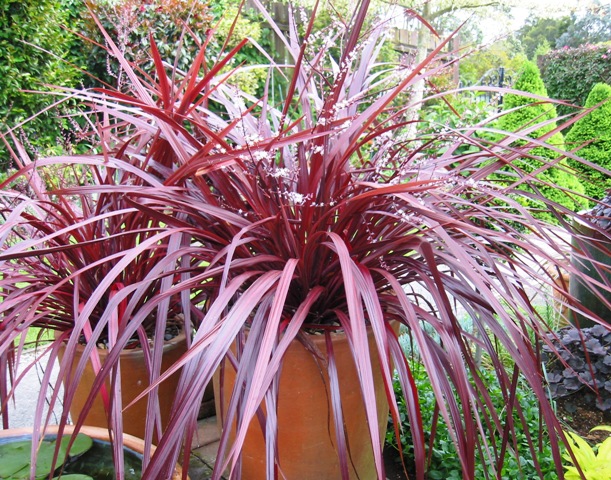
Cordyline Red Fountain

This is not the first of our plants to grace the royal estates. The first we know of was when our Cordyline ‘Red Fountain’ was presented to the then Prince Charles in a ceremony at Auckland Regional Botanic Gardens – but not by us. While I have no doubt that the plant was a very fine specimen, we rather doubted that it had all the phytosanitary clearance and paperwork needed for plants to cross international borders. Mark quipped at the time that maybe we should alert Border Control that the royal entourage was carrying plant material. We have no way of knowing whether Royals are subject to the same regulations as travellers of lesser status or whether it even left the country. I hope it might be in his garden at Highgrove.

Next, there was a presentation of Mark’s Magnolia ‘Black Tulip’ to the late Queen in 2010. We don’t know which royal garden that plant ended up in – maybe Windsor?

Then there was the ceremonial planting of another specimen of Magnolia ‘Black Tulip’ by the Burmese leader Aung San Suu Kyi with the then Prince of Wales and the Duchess of Cornwall at their London residence of Clarence House in 2012.

That felt like a significant moment in history and to our great amusement, it is immortalised in a You Tube clip. That video shows it in a prime spot close to the residence. From memory, the magnolia they move over to look at was one planted by the Dalai Lama but I can’t remember what that variety was now – one of the species, maybe.

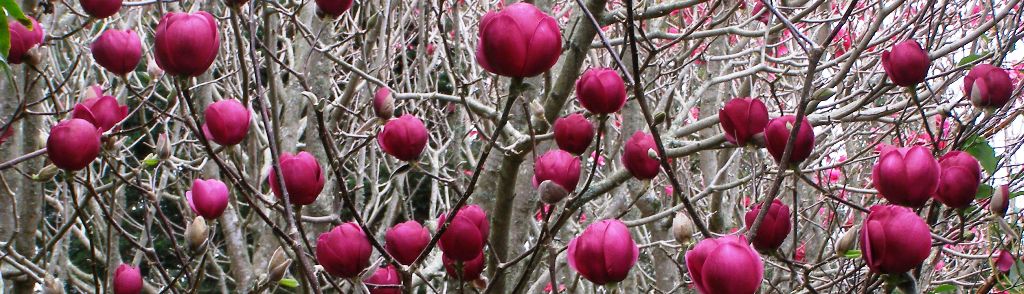
Magnolia Black Tulip

At the time, I wrote here: “We are honoured by this international recognition, though Mark would have preferred them to have planted his Magnolia Felix instead. It appears to be performing very well in the UK and the Royals’ gardens are large enough to take large flowered magnolias.”

We are very pleased that it will be ‘Felix Jury’ that will grace the Sandringham estate.

“The Rhododendron, Camellia and Magnolia Coronation Collection is a collection of

plants and trees gifted to His Majesty, to mark his Coronation. As our Royal Patron

it represents our appreciation of how much his support and interest in our genera is

valued by our members from around the world.

It tells the story of the Rhododendron, Camellia and Magnolia Group’s one hundred

and seven-year history. The twenty-five plants and trees provide a historical and

horticultural link between the genera and the Royal Family and represents the

legacy of great gardens, the passion of private breeders and having good plants

in the garden. The specially chosen plants form a tapestry of our beautiful genera

internationally.

The best of the past and of the future, old and new. We hope that His Majesty enjoys

these plants and that they give him great satisfaction in the years ahead.”

From the official release announcing this gift.

All the reds

Magnolia 'Felix Jury'

Magnolia ‘Felix Jury’

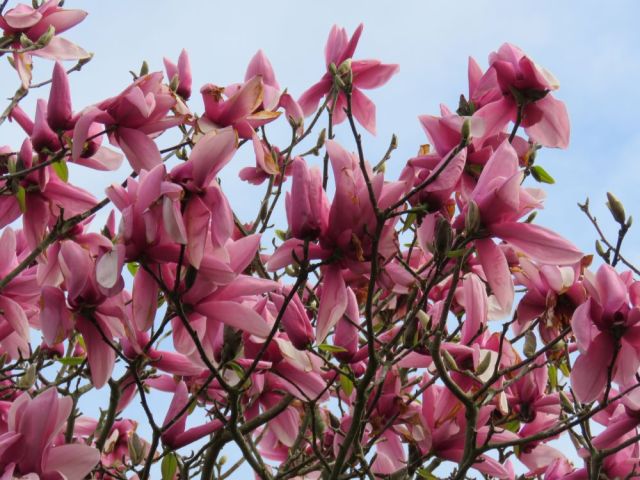
August belongs to the red magnolias here. They start flowering in July for us but peak this month with September leaning more to the pinks, whites and yellows. While others may delight in one or two red magnolias, we get them en masse. For every named variety, there are many sister seedlings that will never be released but keep on growing and flowering each year. Magnolia trees just get bigger and better as the years go by so the annual display keeps on getting more spectacular.

Magnolia liliiflora 'Nigra'

Magnolia liliiflora ‘Nigra’

When Felix Jury, transferred the pollen of Magnolia ‘Lanarth’ onto Magnolia liliiflora ‘Nigra’ in the early 1960s, I doubt very much that he contemplated a significant breakthrough in the international world of magnolias which would bring fame – though not fortune. He just wanted to see if he could get to large red flowers. Lanarth (technically M. campbellii var. mollicomata ‘Lanarth’) has lovely flower form and at its best is a magnificent purple on a handsome tree. M. liliiflora ‘Nigra’ can have good red colour but with small flowers on a shrubby, spreading plant, it is not showy.

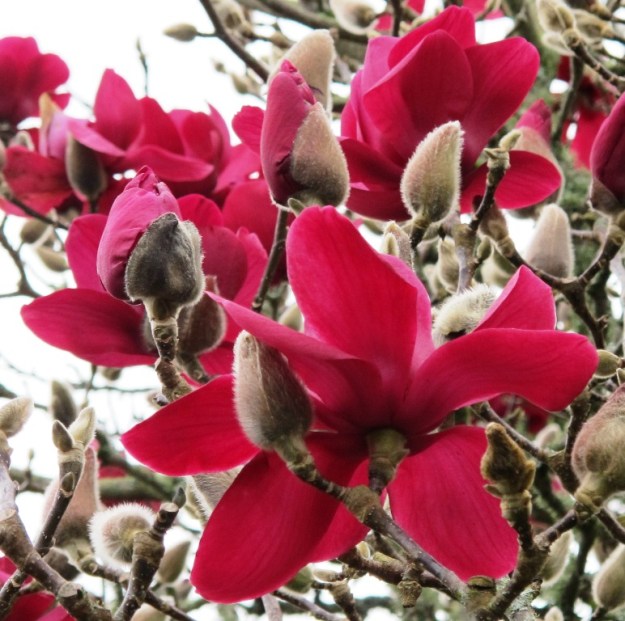
Magnolia 'Vulcan'

Magnolia ‘Vulcan’

The best of the progeny he named Magnolia ‘Vulcan’ and for the next decades, it stood proudly on its own as a major step along the way to red magnolias. Sure, it is not a pure red and the later season flowers fade out to a somewhat murky purple. There is always room for improvement but Felix laid the foundations for what is following now and he showed that a determined, self-taught, hobby plantsman at the bottom of the world could make a major contribution to the international magnolia scene.

Magnolia 'Black Tulip'

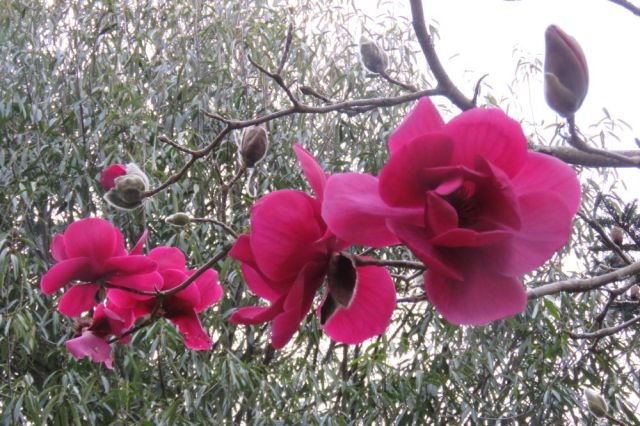
Magnolia ‘Black Tulip’

Magnolia 'Burgundy Star'

Magnolia ‘Burgundy Star’

It is perhaps not widely recognised in this country that New Zealand has led the way with red magnolias Our spring display is arguably the best in the world. For reasons yet to be determined, we get deeper and stronger colours here, certainly than in the UK and Europe. There, they are accustomed to white, pink and now yellow magnolias, but the impact of the red types that are now relatively common here never fails to stun international visitors who come in spring. Felix Jury paved the way with Vulcan. His youngest son, Mark – the man to whom I have been married for more decades than we like to tally – continued building on this foundation, as has fellow Taranaki magnolia breeder, Vance Hooper.

Mark’s quest is a pure red magnolia, losing the purple tones that dog the earlier hybrids. He is getting very close – not quite there yet, but close enough to think that it is achievable. Like his father before him, Mark prefers large flowers with solid colour both inside and outside the petals (technically tepals).

Magnolia 'Genie'

Magnolia ‘Genie’

Vance Hooper is going down a slightly different track and shows a liking for bicoloured flowers. In magnolias this often means a paler inner petal. He is also actively selecting for smaller growing trees which are floriferous over a long period of time, often with smaller flowers. His best known red cultivar to date is Magnolia Genie but he too has a whole range of red seedlings under observation and a number of other named varieties already released.

Felix named one purple – Apollo – and one into the red tones, Vulcan. Mark has named only three reds so far – Black Tulip, Burgundy Star and Felix Jury. Of these, Burgundy Star is arguably the reddest but it is the one he named for his father that brings us greatest pleasure. As a juvenile plant, it started off with OTT giant pink blooms but as it matured, the colour deepened and we now get enormous red flowers – though I admit they fade out to pink. This magnolia represents what Felix himself was trying to get to – a rich coloured, very large bloom of the Iolanthe-type.

It is a source of quiet satisfaction to us that Felix lived long enough to see his son achieve this outcome and it was for this reason that Mark named it for his father. We were most gratified to learn that it has been given an Award of Garden Merit by Britain’s Royal Horticultural Society.

I have never forgotten the customer who came in to buy a magnolia some years ago. She didn’t want a red one, was sick of seeing them – too common, she declared. No, she wanted a white one. I think I remained steadfastly polite but as our forest of colour blooms each August, I rememer her blissful ignorance.

First published in the August issue of New Zealand Gardener.

'Lanarth" is in full flower and looking particularly fine this week

‘Lanarth” is in full flower and looking particularly fine this week

The story of the red magnolias

Vulcan to the left, Lanarth to the right

Vulcan to the left, Lanarth to the right

Few people realise that the story of the red magnolias is a New Zealand story. Probably even fewer realise that when it comes to stronger colours in magnolias, we get the best colour in the world here.

I am talking about deciduous magnolias. The evergreen grandiflora types are resolutely white in bloom and adding colour to the softer-leafed, evergreen michelias is very much a work in progress. But deciduous reds, we do well.

Most deciduous magnolias are in the white and pink colour range and very lovely many of them are too. But with many plant genus, there is always that quest to extend the range of flower form and colour, to build on what happens in nature to get a better performing, showier garden plant. Some of it is about pushing boundaries to see what can be done. A truly blue rose is still an unfulfilled quest but it is highly likely it will come sooner or later.

Some would argue that we do not yet have truly red magnolias and there is truth in that. There is no scarlet, no fire engine red. All the red varieties on the market still retain a blue cast to them and fade out to pink or purple tones rather than to the orange end of the colour spectrum. But if you line one of the red magnolias up against a purple one, it is clear that they are a different colour.

This (liliiflora 'Nigra')

This (liliiflora ‘Nigra’)

I started by saying that the story of red magnolias is a New Zealand story. In fact it started as our family story. Back in the 1970s, Felix Jury wondered if he could get a large flowered, solid coloured red magnolia on a smaller growing tree. He started with the red species – M. liliifora ‘Nigra’. In itself, ‘Nigra’ is a nice enough, low spreading magnolia but nothing showy. He crossed it with the very showy, indubitably purple ‘Lanarth’ (technically M. campbellii var. mollicamata ‘Lanarth’). The rest, as they say, is history.

crossed with this (Lanarth)

crossed with this (Lanarth)

‘Vulcan’ took the magnolia world by storm. This was the break in colour and form. It is not perfect. We know that. The flowers do not age gracefully. It flowers too early in the season for some areas. It does not develop its depth of colour or size of bloom in colder climates and is a shadow of its own self in most UK and European destinations. But after more than 20 years, it is still hugely popular and very distinctive, particularly in Australia and New Zealand. It set the standard and it opened the door to other cultivars.

... and the result was this: Vulcan

… and the result was this: Vulcan

In due course, but slowly, slowly, Mark followed on from his father. He raised hundreds of seedlings and named ‘Black Tulip’ (the darkest of the reds), ‘Felix Jury’ and ‘Burgundy Star’.

Fellow breeder, Vance Hooper, started his programme on the reds and he has named several. The best known is ‘Genie’. Like Mark, he is continuing determinedly down the red magnolia line in the quest for perfection, although improvement or variation will do as steps along the way.

There are other reds on the NZ market now, though none from sustained breeding programmes to match those undertaken by Mark and Vance.

Black Tulip - the first of the second generation red magnolias

Black Tulip – the first of the second generation red magnolias

It appears that it is ‘Black Tulip’ that has enabled the rise of new selections in UK and Europe. It sets seed and every man and their dog is now raising seed and naming selections. Mark is a little wry as he comments that he raised hundreds of plants to get one ‘Black Tulip’ whereas others raise a few seed and name several. He has an ever-decreasing level of patience for amateurs who, as he says, “raise five seedlings and name six of them” based on the first or second flowering only, when he is still assessing seedlings which are 20 years old and showing their adult form, habit and performance.

So New Zealand is about to lose its position of world domination in the red magnolias. But we still get better colour here than others do overseas. There is no certainty yet as to whether that is related to our mild climate, our soils, the root stock used or the quality of light – likely a combination of all. ‘Felix Jury’, which can flower strong red for us is more an over-sized pink flamingo so far in European gardens. We are just relieved that it achieves full-sized flowers and plenty of them, even if it is not red in their conditions.

Magnolia Felix Jury at its best here

Magnolia Felix Jury at its best here

The quest for truer reds continues. A red that loses the magenta hue. Mark is assessing several with which he is quietly very pleased. They are not scarlet but they are an improvement in colour. Just don’t hold your breath. This is a long haul.

Finally, while NZ leads the world in reds, it was USA which gave us yellow magnolias. These all descend from one yellow American species – M. acuminata. I just say that for the record. Credit where credit is due.

First published in the Waikato Times and reprinted here with their permission.