Tag Archives: Magnolia campbellii var campbellii

Mānawatia a Matariki

It is Matariki time again – the rising of the Pleiades star cluster marking the Maori New Year. I marvel that long ago, well before the arrival of any European settlers here in the antipodes, Maori worked out the timing of the winter solstice and the rising of the star cluster that marked the start of a new year cycle. To the naysayers who deny indigenous knowledge and science, I say just look at that. Maori worked out a time that corresponds to the northern hemisphere new year, coming soon after the shortest day. It makes far more sense than having a new year start on January 1 as we go into full summer here. Matariki has become our own unique festival in Aotearoa, rooted in history and observations that go back well before the country was named New Zealand.
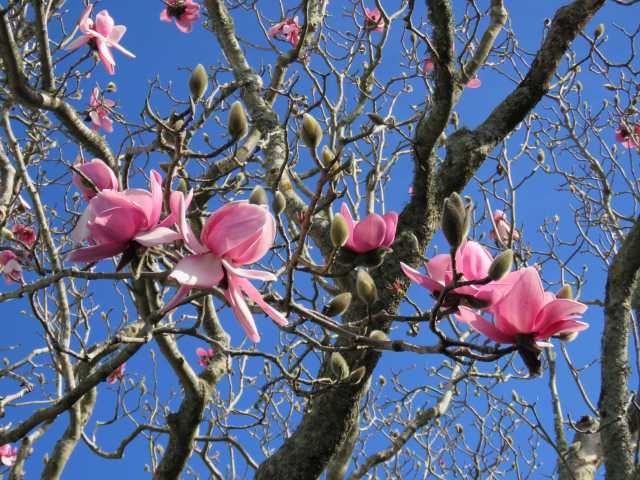
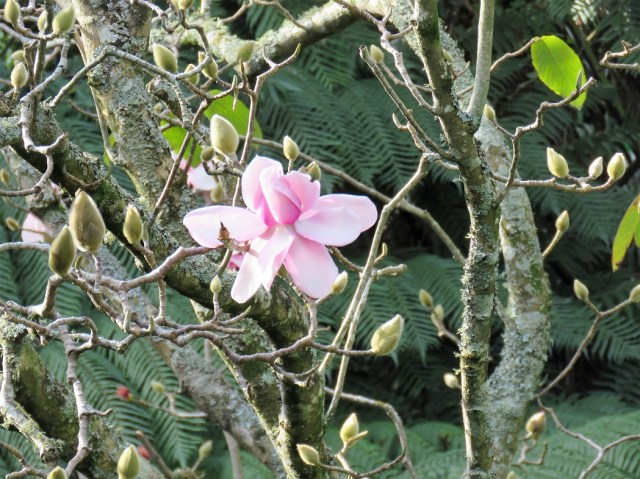
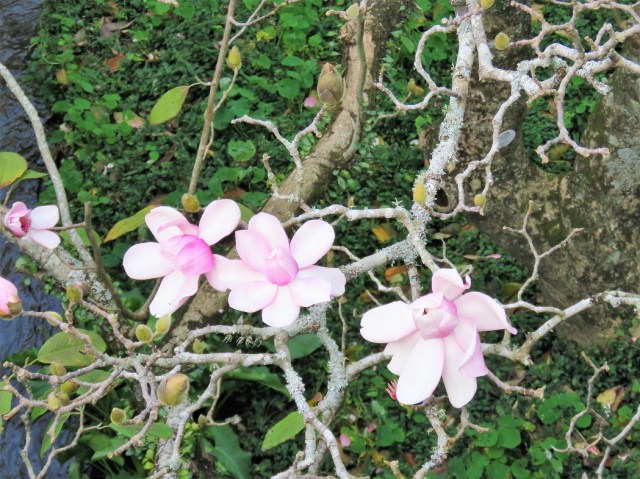
Magnolia campbellii var campbellii

I am a bit sorry that I lived most of my life without knowing a single thing about Matariki. Even before we recognised its significance, I had arrived at a similar personal recognition that, for me, a new gardening year started around the winter solstice when the first flowers on the earliest blooming magnolia opened, the magnificent M. campbellii. It makes it a richer experience to add Matariki and the historical and cultural context to the mix.
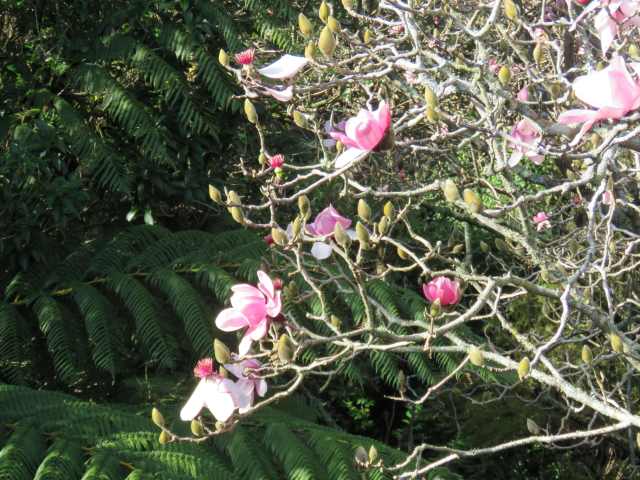
The Huatoki M. campbellii. I think there are three trees in the group amongst what are will be self-sown tree ferns
The Waitara Magnolia campbellii

I track several plants of M.campbellii. The mature trees in my local city beside the Huatoki Stream (best viewed from Powderham Street, beside the Liquorland Store) are usually the first to open blooms. The one in my nearest town, Waitara, in the grounds of St John the Baptist Anglican Church is arguably the best specimen and, being in a protected spot, usually has the most perfect blooms. It often opens a few days or a week after the Huatoki trees but was looking better than them this week.
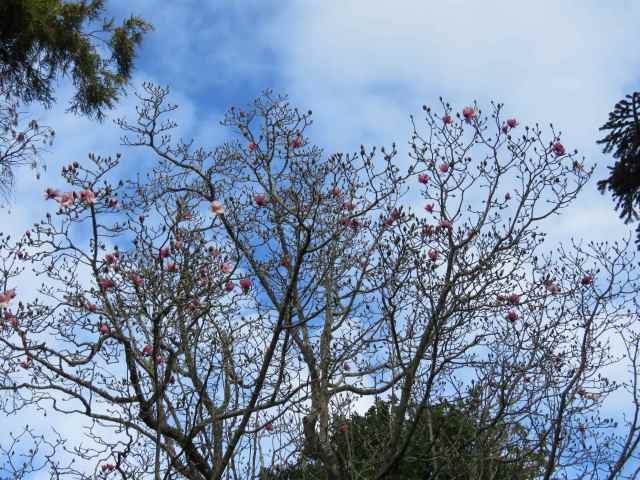
Our specimen is still opening its first blooms

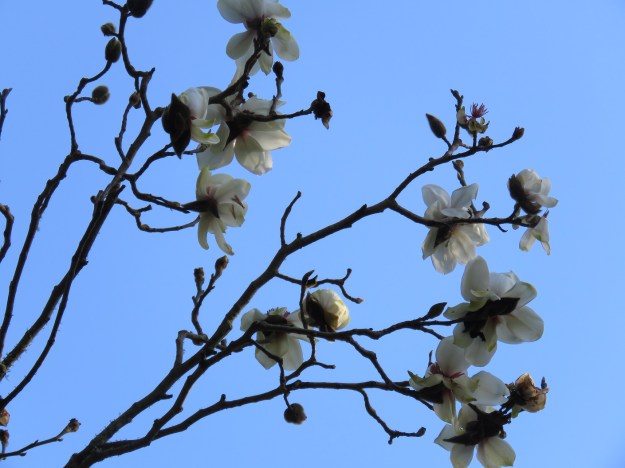
The third one is our specimen in the park. Because we about 5km inland and not surrounded by concrete and tarseal, we are cooler and always a couple of weeks behind. It is too early yet to get my photos of our campbellii blooms with the snowy slopes of our maunga, Mount Taranaki, in the distance behind. There are not enough blooms open at the top of the tree and not enough snow on the maunga yet. In fact, none of these trees are at their peak so there is time to get out and admire them in coming weeks.  All are the same clone which is the most widely grown form in this country – the Quaker Mason pink form. We are lucky it is a particularly good form because the species is variable in the wild and most commonly white.
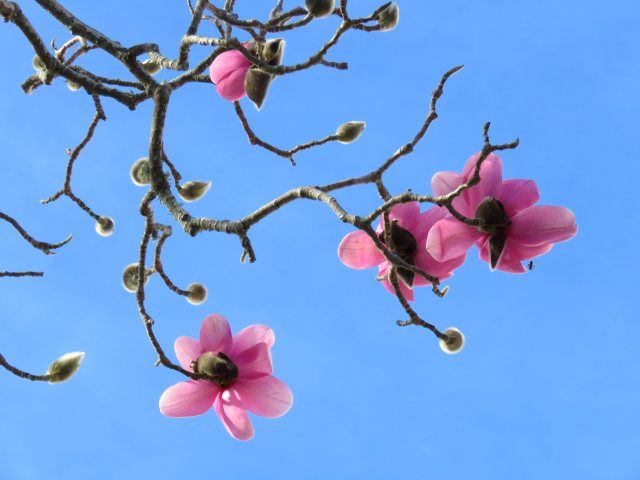
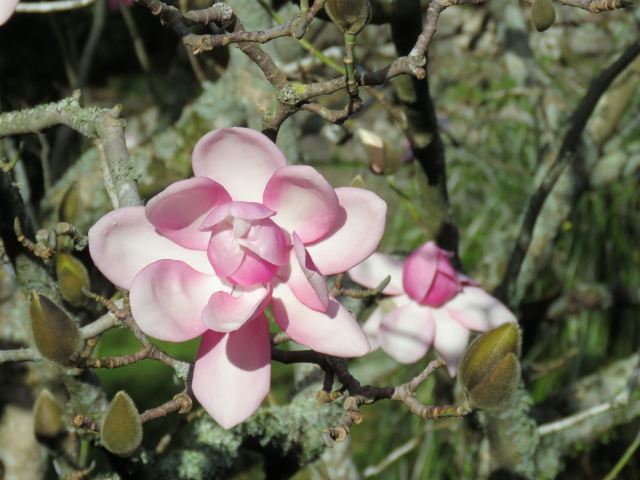
We know that Matariki heralds the worst of winter to come in the next month. We have only had a few cold days so far and it is churlish to complain when the temperature has been hovering around 15° or 16° celsius (night time usually 8° to 9°) up until the last few days. But spring is already making a move and the season will gather pace around the anticipated cold spells.

Also flowering this week, Narcissus ‘Grand Soleil d’Or’
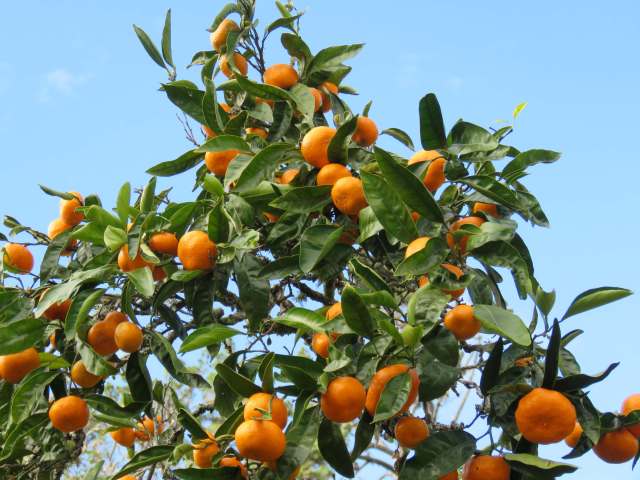
Mandarins on a winter’s day

Mānawatia a Matariki or happy Maori New Year today. We will be celebrating it with friends for lunch. May you draw breath and look forward to the next year, too.
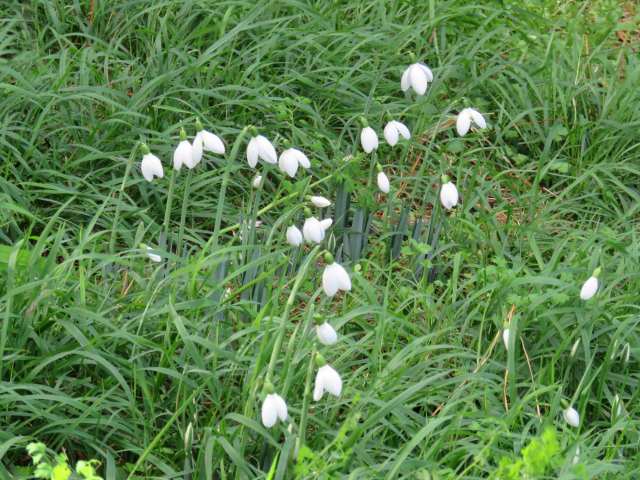
and snowdrops both in the garden and in meadow situations

New Year New Zealand style – Matariki

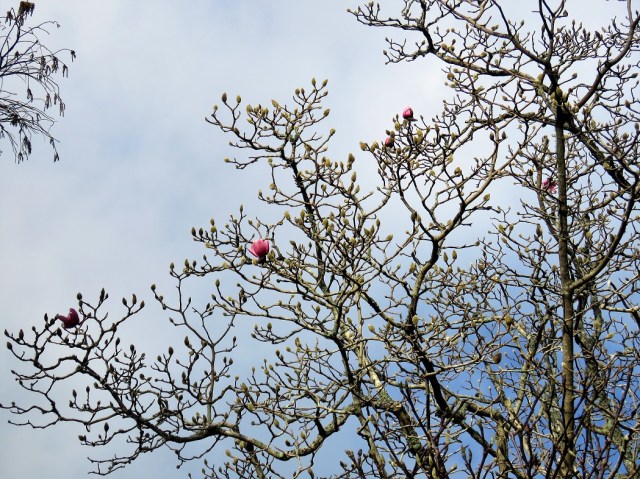
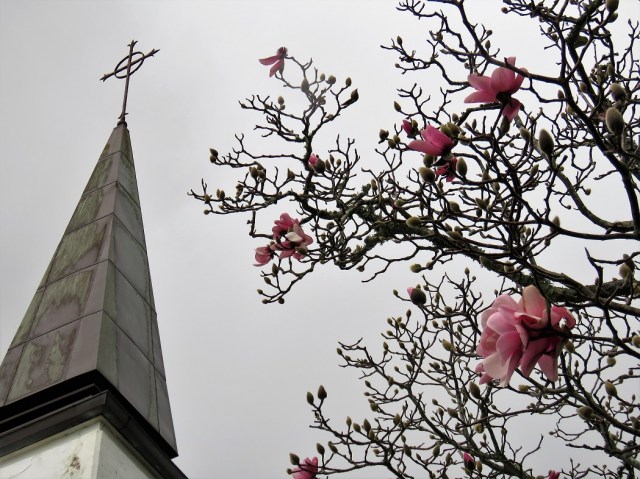
Opening right on cue with Matariki and the winter solstice, Magnolia campbellii var campbellii, albeit against a leaden, wintry sky

The winter solstice this year is this coming Tuesday, 21 June. On Wednesday, we can wake in the knowledge that we are past the shortest day of the year. The days will grow longer again, imperceptibly at first but the cumulative effect means we will start to notice soon enough.

Next Friday, on June 24 we celebrate Matariki with a public holiday for the first time. Matariki marks the rising of the Pleiades star formation and the new moon which means that traditionally it covers a longer period but it has been narrowed to the one special day on the calendar of public holidays. It is the Maori new year and it is a source of awe to me that in pre-European settlement days, Maori determined the commencement of a new year which closely corresponds with the seasonality of the European new year with its arbitrary date of January 1.

For me, Matariki is synonymous with the flowering of the campbelliis and the start of a new year of gardening

I regard Matariki as a marker in time which is relevant to our country in a way that the northern new year and Queen’s Birthday are not. Because I am not a fan of winter, the declaration of hope that the year is changing and spring is just around the corner lifts my spirits. And my spirits certainly need lifting in the current run of unrelenting leaden skies punctuated by rain.

The Powderham Street campbelliis have a lovely location beside the Huatoki Stream and can be viewed from the road above so the dominant view is looking down or at least across at eye level

On the first cold day of winter here this week – the first day that has seen me needing to wear a coat – I went to town. And yes, right on cue, the campbellii magnolias are indeed in bloom. These are the pink Quaker Mason form of M. campbellii var campbellii which is the most widely grown selection around here. I photograph and write about them every year and I am not at all sure that I have anything new add but the emotional response I have to seeing these magnificent trees coming into bloom on or near the darkest day of the year never dims.

As usual, the three trees on Powderham Street in New Plymouth by the Huatoki Stream have a fair number of blooms already open although they won’t be at their peak until mid July.

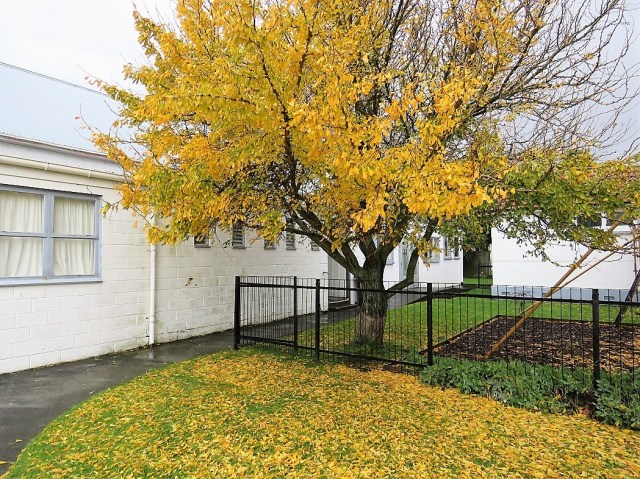
The last gasp of autumn – the golden Ginkgo biloba to the left of the church…
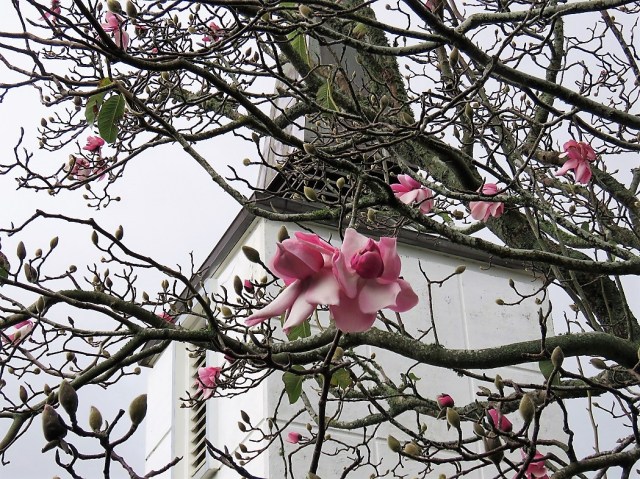
and the promise of spring with Magnolia campbellii to the right.

I think the tree in the grounds of St John the Baptist Church is Waitara is matching it for open blooms. All these trees are in sheltered positions, very close to the coast and, being urban, surrounded by large amounts of concrete and tarseal which warm the areas they are planted. I like the juxtaposition of the gingko to the left of the church in its golden raiment and the magnolia to the right opening to its pink glory. Autumn meets spring in the churchyard of Waitara.

The promise of much to come on our tree of M. campbellii

Our tree in the park is always later. We are about 5km inland and our tree is in a colder position and that can make a difference of ten days or more to the blooming. But we have the first few blooms showing colour although not yet fully open, with the promise of many more to come.

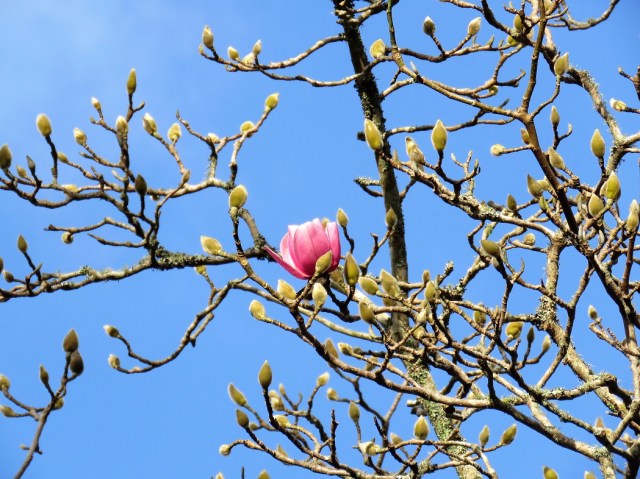
I managed to line up one of the first blooms just opening on our tree with a rare patch of blue this week

Spring is just around the corner.

The flower to the left is an immature Stenocarpus bloom. When fully open, it has long clusters of red stamens as seen just above

Unrelated, but picked up in our park, I like decayed leaf skeletons. In this case I think it is a leaf from Magnolia insignis, formerly Manglietia insignis. The curious pin-wheel item beside it is an immature flower from the Stenocarpus, probably sinuatus, or Queensland Firewheel Tree.  To be honest, our specimen of this tree is so tall and the flowers are so high up that we largely notice them only as the fallen red stamens on the leaf litter below. They are sometimes used as street trees in warmer areas both in their homeland of Australia and California and, when pruned and shaped and in a warmer climate, the flowering appears to be showier than here. I assume this flower head was blown off the tree before it could open fully. How amazing is that structure of the flower cluster?

A story of the magnolia, the mountain and air freshener

Thursday July 9 at 8.40am

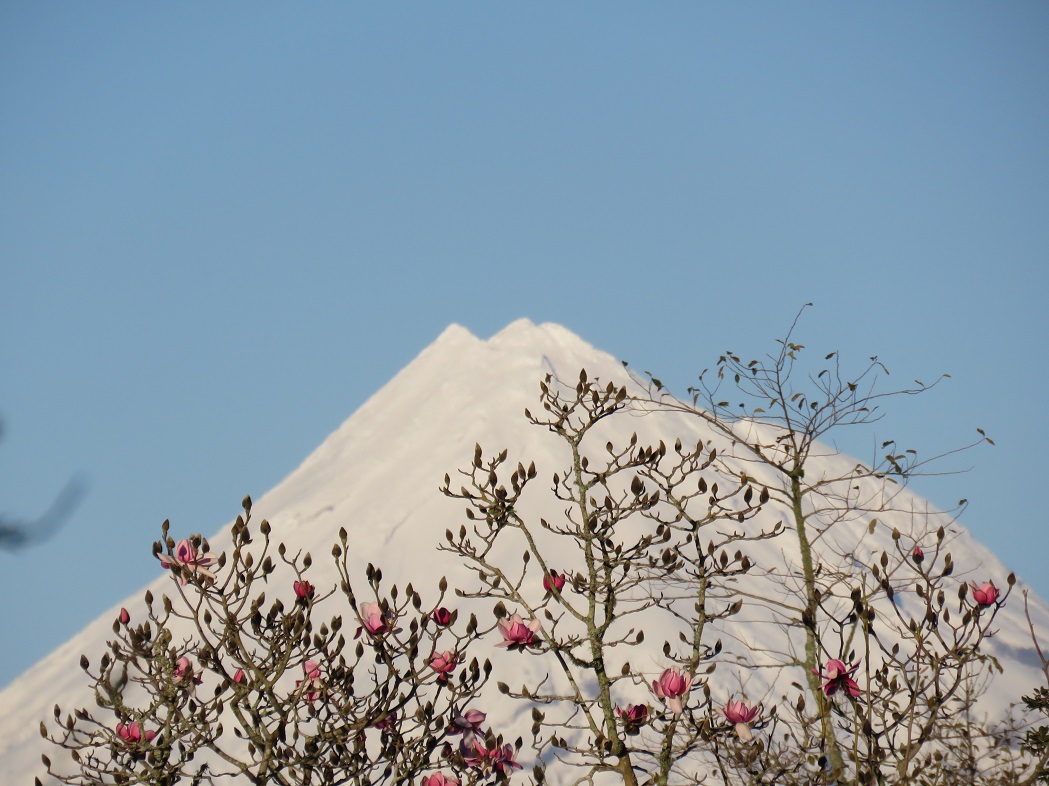
The first photo opportunity of the year to capture our Magnolia campbellii and Mount Taranaki came this week and it reminded me of a funny story. Well, I think it is funny.

It was only last year, I think, that a creative from a Sydney advertising agency contacted me. She had found a photo of mine on the internet of this very scene and she was enquiring whether we would agree to let a film crew visit to film it for a product – unspecified. She wanted permission and to negotiate a fee so she could pitch the concept to the client.

I briefly thought it might be fun. But only briefly, until I worked out the logistics of the exercise. That is a very specific view shaft and a scene that is visible for just a few days each year. I imagined the crew flying in, some from Sydney and maybe the film crew from Auckland and me feeling personally responsible for the weather. That is a mountain. In midwinter, it is  more often shrouded in cloud than in clear view. I can go out at 8am and it may be fine and sunny here but 40km away, on that mountain peak, the cloud is moving in and by 8.03 there is nothing left to see.  We can go a week, maybe ten days, without a clear view of the peak. With a film crew hanging around waiting for the moment? I think not.

Magnolia campbellii var campbellii

Then I shuddered at the thought of the crew capturing that view and then asking me where they could get other angles on the scene. They can’t. There is only one, highly specific view shaft and that image is taken right on the limits of my camera zoom function.

I said no. Undeterred, she asked me if I recommend other locations. I pointed out that they do grow magnolias in Australia, very well in fact in the Dandenong area outside Melbourne. I have seen them there. No, she replied. She wanted a setting that looked like Chinese countryside. Reader, I cringed. Our maunga can, at a pinch, pass for Mount Fuji in Japan – and has done in the movie ‘The Last Samurai’. The magnolia actually comes from Darjeeling, which is in northern India. I have been to China and seen a bit of their countryside. I do not think she had.

I suggested Auckland Regional Botanic Gardens and there our correspondence ended.

I did not think any more of the matter until my Canberra daughter emailed me saying: “Is this the advert you missed out on providing the pics for?”  I am guessing so. It fits the brief. Air freshener? That is not a product I ever buy. We have plenty of the natural product here. Besides, as those blooms on our Magnolia campbellii are about eight to ten metres up in the air, I have no idea at all whether they are even scented.

Postscript: Mark tells me that he is pretty sure M. campbellii has no scent. Perhaps they were thinking of the Yulan magnolia, M. denudata, he hypothesized. We don’t have it in the garden so I looked it up and yes, it is renowned for its lemon fragrance. That is not the magnolia used in the advertisement. It seems botanical accuracy matters more to us than it does to air freshener manufacturers and Sydney creatives.

A perfect, cloudless morning – Friday 10 July at 8.40am

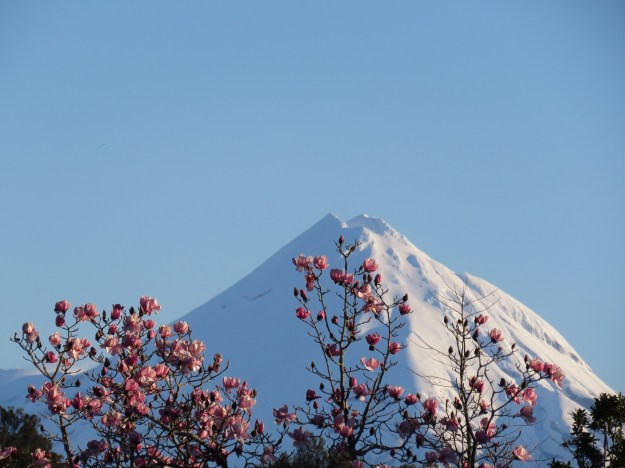
Quaker Mason, the magnolia and our maunga


The magnolia and the maunga from our garden in Tikorangi

In the heart of wintry July, M. campbellii is the first magnolia to open and promises the delight of a new spring. At least, that is when our tree blooms. All the tarseal and concrete in the central city of New Plymouth lifts the temperature and the cluster of trees in the Huatoki Reserve by Powderham Street open their first flowers in June, before they have even shed all their autumn foliage.

For the past two Julys, I have spent more time than I should have taking photos of our tree against the snow-capped peak of Mount Taranaki. The magnolia and the maunga, I call the series. There is a distance of maybe 40 km or so between the two so this is right at the limits of both the zoom on my camera and my technical skills but I keep trying for the perfect image without having to resort to cheating with filters and the computer.

M. campbellii in the grounds of the Church of St John Baptist in Waitara

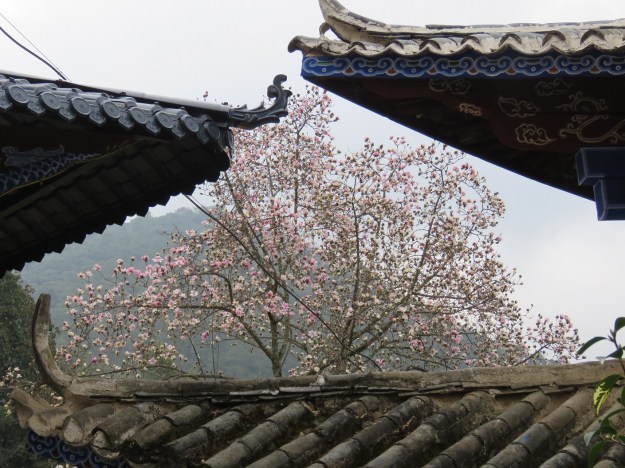
When I look at my photo file on campbellii, I have a series of trees framed against backgrounds – one in our local town of Waitara against the spire of the Church of St John the Baptist, a specimen at Tupare garden with the backdrop of the rushing Waiwhakaiho River, the aforementioned Powderham Street specimens against a carpark building, even one on Mount Baotai, framed by Chinese roof lines. I think what drives me is the effort to capture the spirit of over the top, gorgeous flowers appearing in a winter landscape.

Quaker Mason form

Magnolia campbellii is one of the oldest varieties in New Zealand. It dates back to the second half of the nineteenth century and was sold commercially by Duncan and Davies as early as 1915. Before you rush out to buy one, you need to be aware that this species can take many years before it sets flower buds and ultimately grows into a very large tree. Its early season blooming also makes it vulnerable to frost damage in cooler parts of the country. If you are only going to plant one magnolia, maybe look to one of the more recent hybrids, although M. campbellii itself belongs in any collection. Our specimen here was one of the first trees planted in our park by Mark’s father, Felix, in the early 1950s.

The pink campbellii is the most common in Taranaki where the majority are the particularly good ‘Quaker-Mason form’. It is traced back to Thomas Mason (commonly referred to as Quaker Mason, on account of him being a Quaker), a prominent Wellington horticulturist who arrived as a new settler in 1841 and had a huge influence through until the end the century. But the pink that we take as the norm here, is in fact not at all common in the wild where most campbelliis are white. Apparently our pink originated in Darjeeling – an area better known for its tea in India’s north east.

M. campbellii on Mount Baotai in south west China, with Chinese powerlines

Overall, M. campbellii has a wide natural distribution. It grows from eastern Nepal, across Sikkim and Assam into south western China and down to northern Burma. We were thrilled to see a plant on Mount Baotai in China last year, even though its pale pink blooms showed it to be a pretty average form of the species. We couldn’t tell if it was naturally occurring or had been moved into its current position, as the modern Chinese are wont to do.

The white form at Tupare

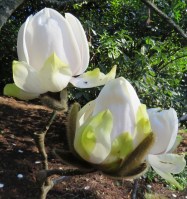
We don’t have a white M. campbellii in our garden so I had to head to Tupare Garden in New Plymouth to photograph their mature specimen that dates back to the late 1940s or early 50s. The blooms have a curious green flush at the juvenile stage but the tree is not a strong growing, distinctive form. It is not a patch on all the pink Quaker-Mason specimens around but there will be other white forms available in New Zealand.

These are all Magnolia campbellii var. campbellii. The other popular form of the same species, known as Magnolia campbellii var. mollicomata, originates from areas further to the east and flowers several weeks later. Our fine specimen of purple ‘Lanarth’ (or Magnolia campbellii var. mollicomata ‘Lanarth’, to be pedantic) will not flower until halfway into August.

First published in the July issue of New Zealand Gardener and reprinted here with their permission. 


The pink campbellii at Tupare with the rushing river beyond

Two footnotes:

The word maunga means mountain in the Maori language. In Taranaki, where the presence of our beautiful maunga (Mount Taranaki) is a defining element for all who live here, the word maunga is often used in preference to the English word.

The blue skies are indeed genuine. We have a clarity and intensity of light here all year round, even in mid winter. Though it must be said that not every day in winter has blue skies!