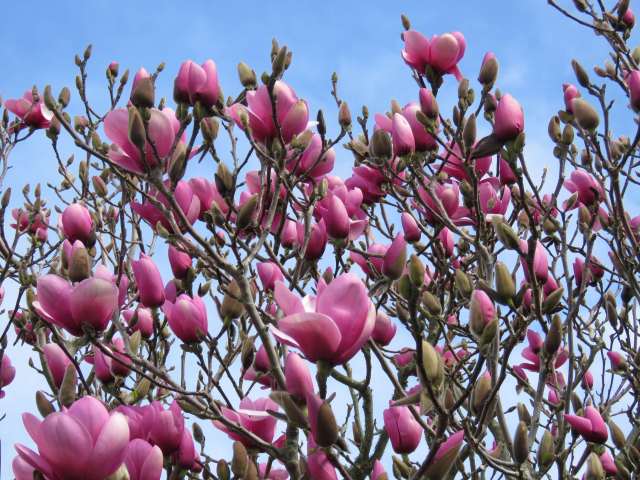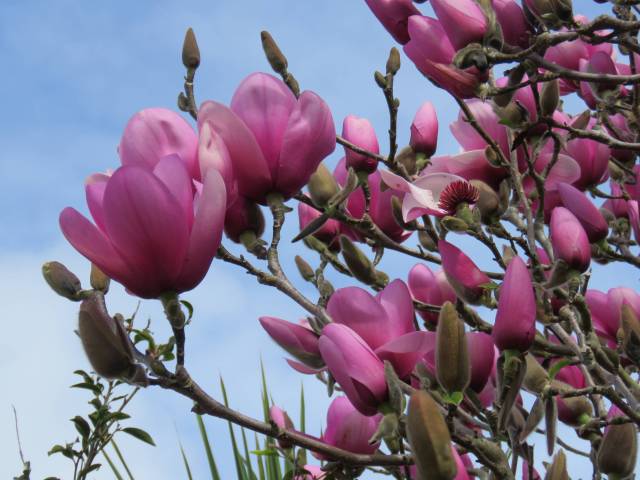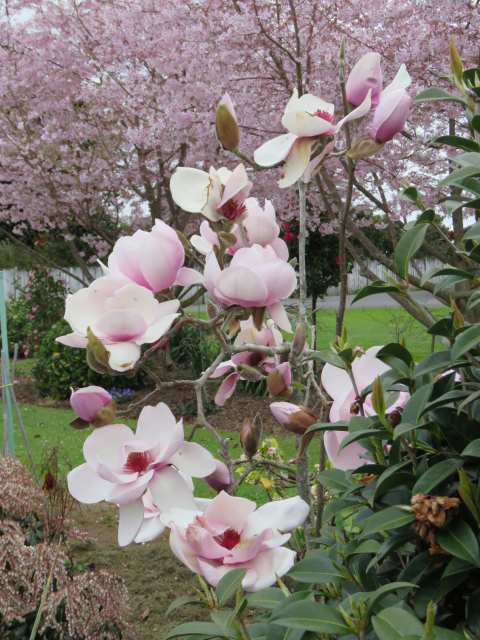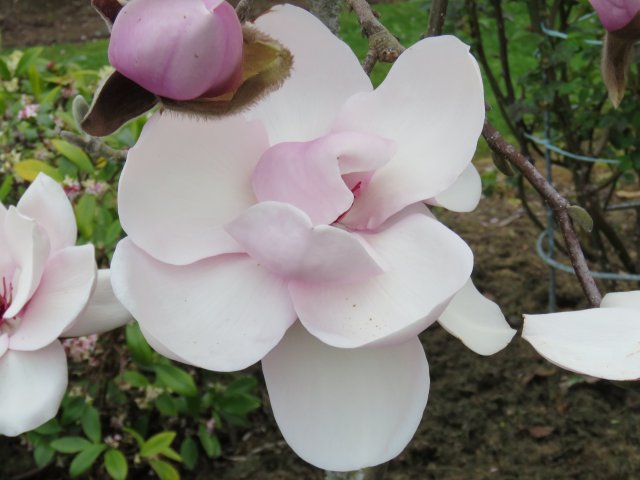
Tag Archives: Magnolia Felix Jury

The Jury Magnolias. A retrospective view.

Written for and first published in the International Magnolia Society journal. In the time since writing the text and publication, we are now able to release details of the three new deciduous magnolia hybrids being released internationally.

The Jury magnolia reputation rests on just twelve deciduous magnolias so far. Soon there will be fifteen and it may end up at seventeen in total. Despite originating on a farm in far-flung New Zealand, some of those plants have had a significant impact in the international magnolia world. 
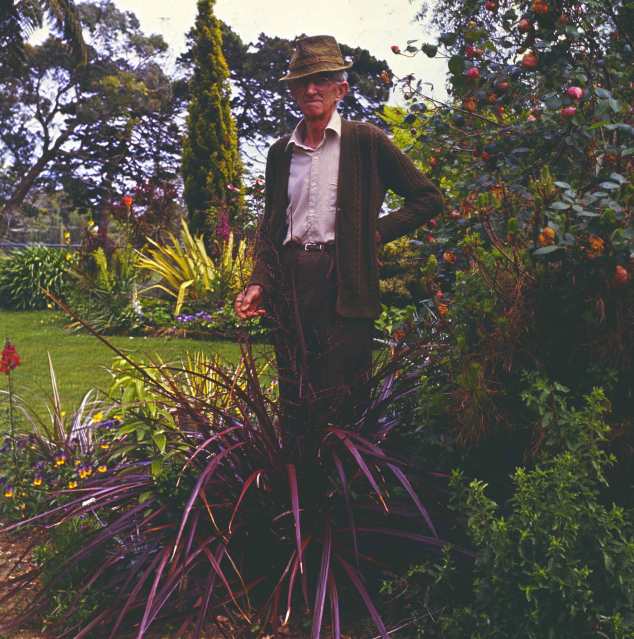
Felix in his garden, 1985. Photo credit: Fiona Clark

Felix Jury was a farmer who decided he would rather garden. He handed over the family farm to his second son as soon as he could and devoted his time and energy to building a large garden. He started by buying plants, importing new material from around the world. It was the failure of many of these to thrive in our warm temperate conditions that started him on the hybridising path. He was a self-taught amateur; like many of his contemporaries of the day, he became proficient at raising seed, striking cuttings, budding and grafting across a wide range of genus but it was always on a small scale, hobby basis. For an amateur, some of his plants have stood the test of time across the world. Phormium ‘Yellow Wave’ is still being produced internationally in surprisingly large numbers and Camellias ‘Dreamboat’ and ‘Waterlily’ have remained household names in the camellia world. He never received a cent in payment for any of these plants. Over time, it is his magnolias that have firmly cemented his name in international gardening.

Mark Jury was Felix’s youngest son. By the time Mark and I returned to the family property in 1980 with Mark planning to set up a plant nursery, his father had scaled down his adventures with plants and quietly retired to the garden. It was a privilege for both father and son to have seventeen years working closely together in remarkable harmony. Felix was able to transfer all his knowledge and experience to Mark who was keen to continue the garden development and to take the plant breeding to the next level. Unlike his father, Mark needed to generate an income. Also self-taught, Mark started the nursery, literally building up from one wheelbarrow to a successful boutique business doing mail-order, wholesale and on-site retail.

Felix didn’t raise large numbers of magnolias from his controlled crosses. They would probably number no more than fifty and over a few years only in the 1960s. Of these, eight ended up being named and released commercially. Technically, there were nine but we will return to the irritating matter of the ninth later.  He would have named more but Mark vetoed that. From an early stage, Mark took the view that fewer and more stringent selections were better than more when it comes to a genus with the potential to be long-term trees in the landscape.
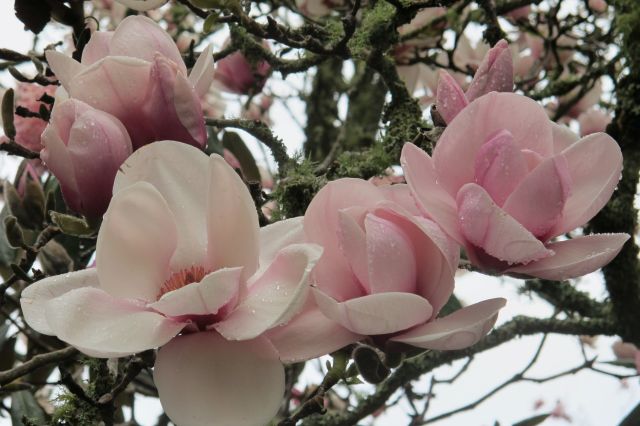
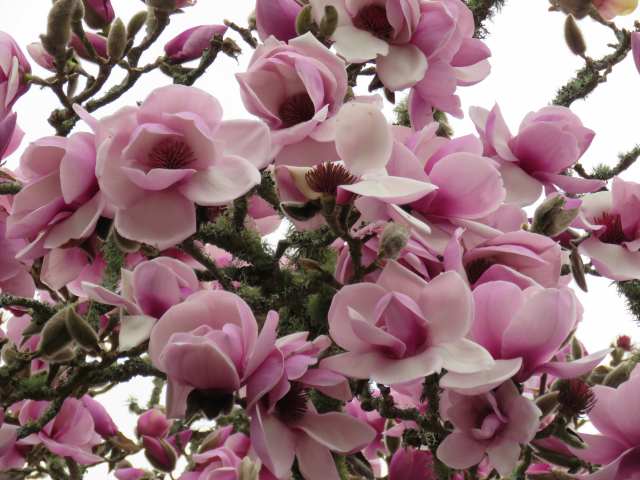
Magnolia ‘Atlas’
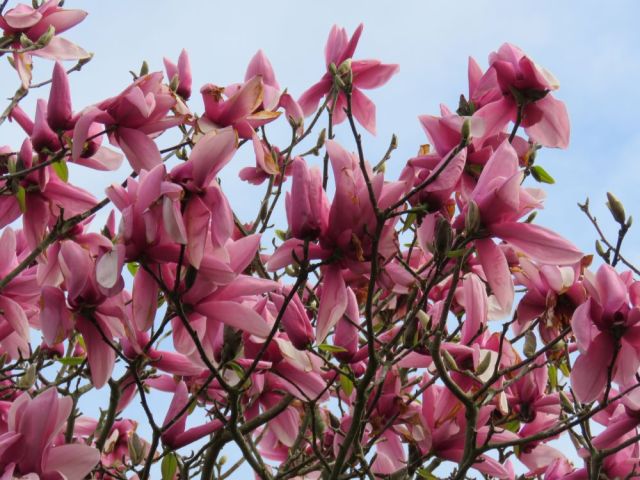
Magnolia ‘Iolanthe’

Of those eight, Mark has felt that probably only six should have been named. He singles out sister seedlings ‘Milky Way’ and ‘Athene’ as two that could have been narrowed down to one. For a long time, he said the same thing of ‘Iolanthe’ and ‘Atlas’ but has had to change his tune. While we regard ‘Iolanthe’ as a flagship magnolia, arguably one of the best two Felix bred in New Zealand conditions, it has never performed as well overseas and is certainly not rated as highly elsewhere. ‘Atlas’ has a larger bloom and is a prettier pink but its flowering season is short – by our standards – and we don’t often see it in its full glory because the petals are too soft and get badly weather-marked. But ‘Atlas’ appears to be hardier in overseas climates and a better performer elsewhere than it is here.
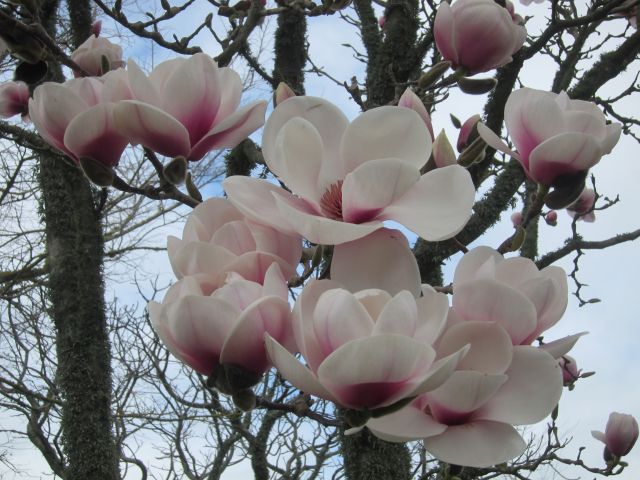
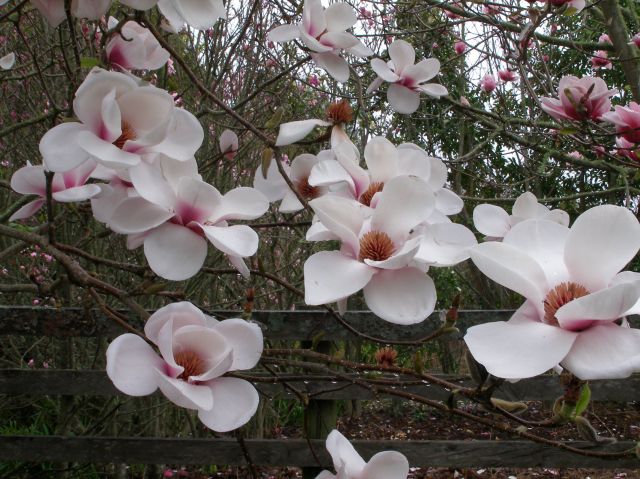
Magnolia ‘Milky Way’
and ‘Athene’. Even we have trouble telling them apart at times, particularly in photo close-ups. We can usually tell by looking at the tree and time of flowering or side by side comparisons, but we have to think about it every time.

In those days, the range of magnolias available commercially was small. Felix’s initial goal was to see if he could create hybrids that would flower on young plants and stay a garden-friendly size. It was generally accepted that when a magnolia was planted, it was realistic to expect a delay of between about seven and fifteen years to get the first blooms. He also liked the cup and saucer flower form and he wanted more colour. Of his named hybrids, six of the eight had a chance hybrid in their parentage. It was the cross he received from Hillier’s Nursery as a seedling of M. campbellii var mollicomata ‘Lanarth’. Mark has always referred to it as his father’s secret weapon. When it flowered, it was clear it was not ‘Lanarth’ but a hybrid, presumed to be with M. sargentiana robusta. He duly named it for his favourite son so it is known as Magnolia ‘Mark Jury’.
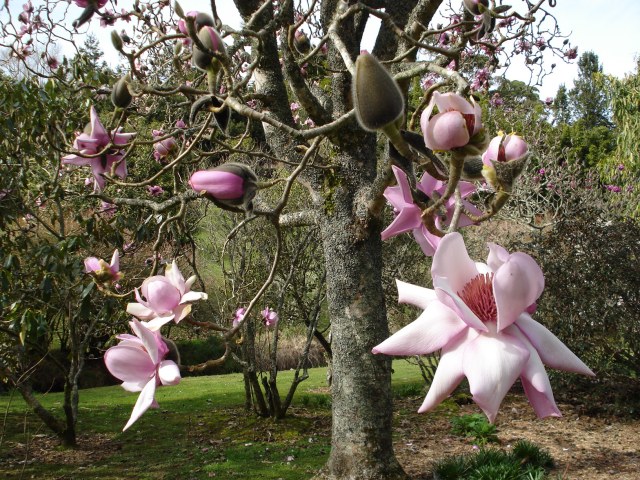
Felix’s breeder parent – M. ‘Mark Jury’ – is always distinctive with its very large blooms and pronounced recurved petals

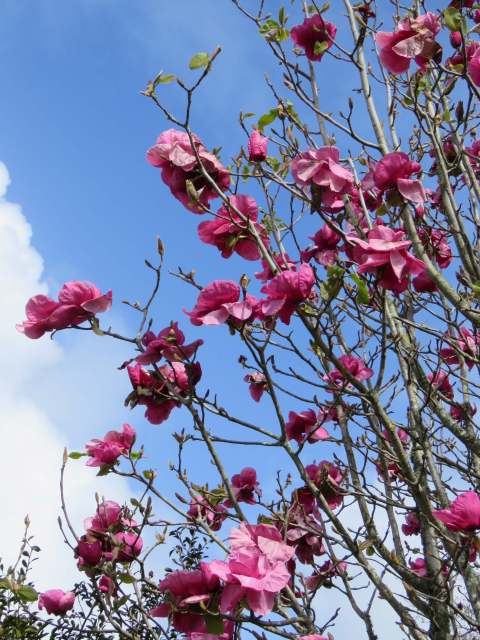
Felix’s two greatest achievements were in creating large-flowered hybrids that bloomed on young plants and in introducing the breakthrough to red shades with his cultivar ‘Vulcan’.

Possibly under-appreciated are the additional factors of heavy textured petals, solid flower form and the setting of flower buds down the stems so blooms open in sequence, rather than just tip buds that all open at once for a mass display that may only last a fortnight. Our springtime is characterised by unsettled weather; Mark refers to the magnolia storms. One overnight storm can destroy the display of softer booms like M. sprengeri var. ‘Diva’ or wipe out the tip bud display of ‘Sweetheart’ (a ‘Caerhays Belle’ seedling).
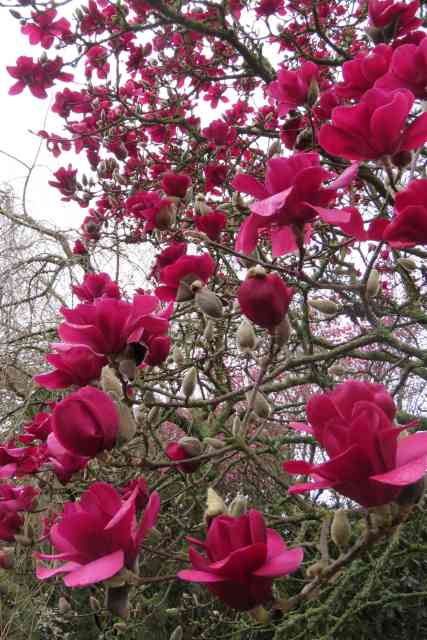
Magnolia ‘Vulcan’ at its early season best

The performance of ‘Vulcan’ around the world has been well documented and ranges from brilliant to undeniably disappointing.

I will say that ‘Vulcan’ was the only plant we have ever put on the market which we could track its flowering by the phone calls we received year on year. Being a long, thin country in the southern latitudes, magnolias open first in the warmer north and then in sequence heading down the country. The phone would start ringing in early June from the north and continue through August from more southern areas. That is a stand-out plant.

Whatever its flaws, ‘Vulcan’ opened the door to the plethora of red hybrids now available internationally and it remains a key foundation plant in the development of new hybrids.
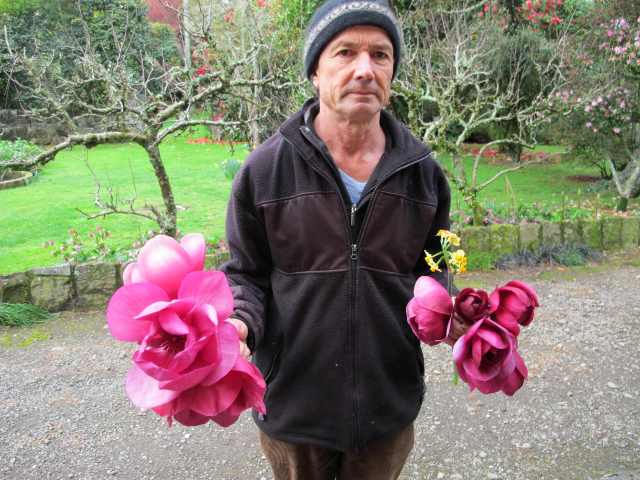
Mark, picking seedling blooms to compare back in 2013
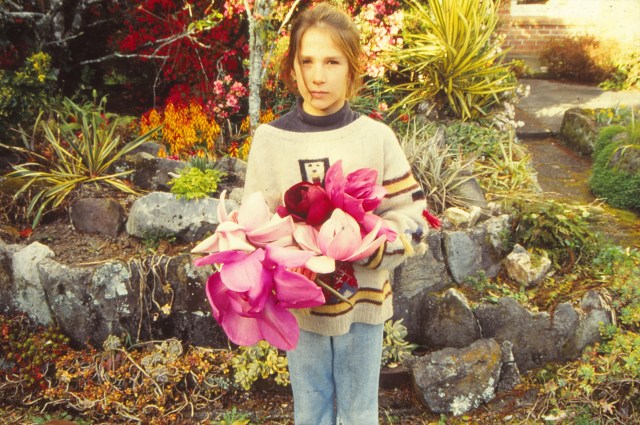
Like father, like daughter. I recently found this photo of our second child holding her father’s blooms from twenty years earlier – likely the first blooms from some of Mark’s earliest crosses

Mark started hybridising magnolias in the 1980s, picking up where his father had left off and using the same genetic base. He has raised many more controlled crosses than his father ever did. We have never counted how many but it will be well into the thousands. Of those, only four have been named and released and there is another tranche of three which are being built up for release internationally. That makes seven Mark Jury magnolias and all are distinctly different.

Ill health has cut short Mark’s breeding programme and we are now assessing the final batches of his breeding efforts. He has already decided that he has done as much as he can with the reds so he has ruled out the next generations of those and we are now looking at his yellows. We are hopeful that we will get maybe two final selections so he may end up with nine named magnolias in total.
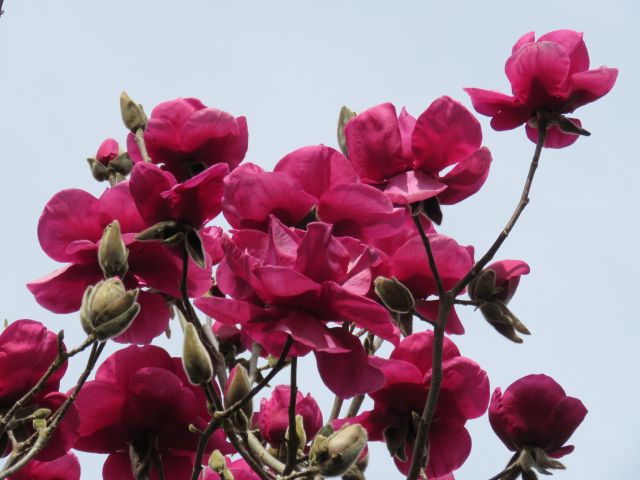
Magnolia ‘Felix Jury

He has always been particularly proud of the cultivar he named for his father, Magnolia ‘Felix Jury’. He reached the goal Felix had set – a tree that will not get excessively large but with very large, colourful blooms from an early age. It has always delighted us that Felix was still alive to see it bloom. In our climate, the colour can vary from rich pink through to deep red, at its best. Over the years, we have learned that the colour in magnolias can bleach out, particularly in colder climates, and we get exceptionally rich colour in New Zealand. Presumably this is related to the very clear light that we have, along with the soils and mild climate (never very hot and never particularly cold). ‘Felix Jury’ keeps its size and form in different climates and even when the colour is lighter in shade, it is an acceptable pink, albeit not the stronger shades we see here.
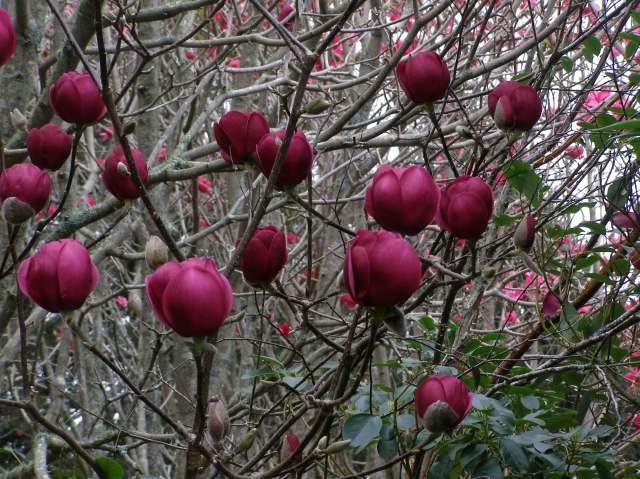
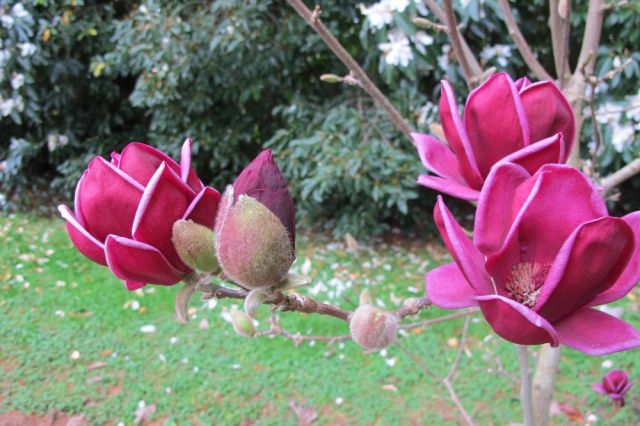
Magnolia ‘Black Tulip’

Both Mark’s ‘Black Tulip’ and ‘Felix Jury’ are showing up in the breeding of countless cultivars across the magnolia world and are clearly having long-term influence. ‘Black Tulip’ sets seed readily and it seems every man, woman and their dog have raised seedlings, judging by the photos we have seen.  None appear to be an improvement on the parent to our eyes and not many have taken it in a different direction. But its impact on the development of new hybrids is clear to see. Mark has raised hundreds of his own ‘Black Tulip’ hybrids so we see many, many lookalikes but few stand-outs.
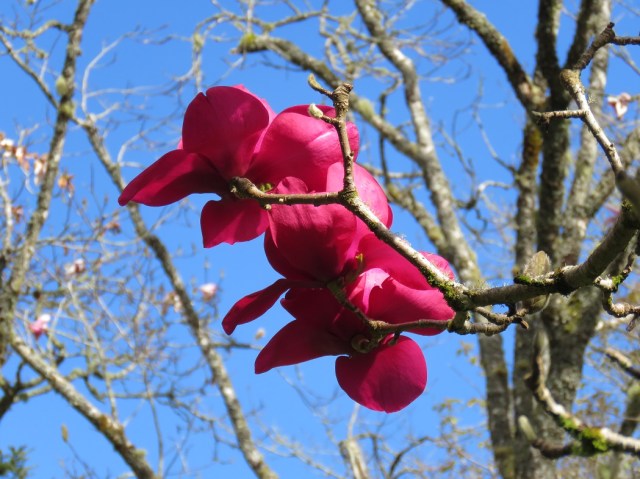
Mark’s best red, ‘Ruby Tuesday’

We have high hopes of the last red he has selected which is one of the three new ones to be released. He bypassed ‘Black Tulip’ and went back to his father’s ‘Vulcan’ as one of the parents. We don’t rush selections based on flower alone; this one goes back 20 years but its shade of red stood out from the start and the original plant has never had an off-season. It has lost the muddy purple undertones of ‘Vulcan’ and keeps its rich shade of red right through the exceptionally long flowering season. It starts a little later than ‘Vulcan’ so is less vulnerable to late frosts and the late season blooms are as good as the first ones. We describe it as a ‘Vulcan’ upgrade. It has kept the best features but eliminated the undesirable characteristics. Only time will tell if this is true in other climates but keep an eye out for this ruby red selection in the coming years.

Mark turned his attention to the yellows. The magnolia world is awash with yellow hybrids, so many that it is hard to pick out the ones that are superior. Mark’s dream was of a big, pure yellow flower in the cup and saucer form of M.campbellii but on a tree that opens its flowers before its foliage appears, and in a garden-friendly size. A yellow ‘Iolanthe’ or ‘Felix Jury’, so to speak.
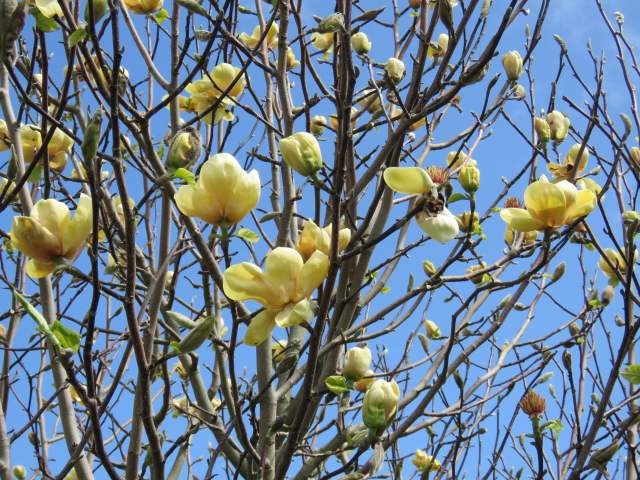
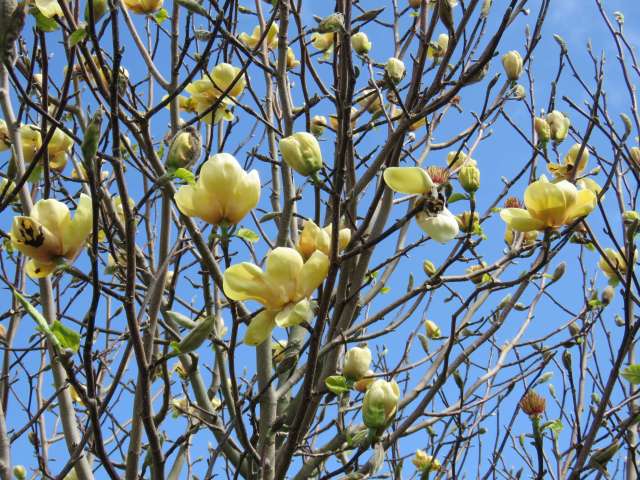
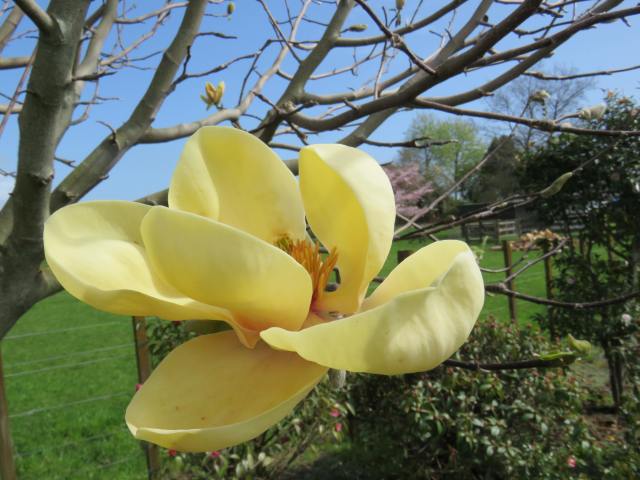
Magnolia ‘Honey Tulip’ – the only yellow Mark has named so far

His ‘Honey Tulip’ was a step on the way. It was a break away from the pointed buds, narrow petals and small flowers that come from the dominant M.acuminata parentage. It isn’t the butter yellow he wanted but it met the brief of solid flower structure and thick texture, flowered before leaf-break and stayed small enough for most gardens. Importantly, the colour does not fade out as the season progresses.

The next generations have taken it further. He has the strong, clear yellow he wanted, the large flower size, the flower form, the slightly earlier blooming season to beat leaf-break and the garden friendly habit of growth. He just doesn’t have them all on the same plant.
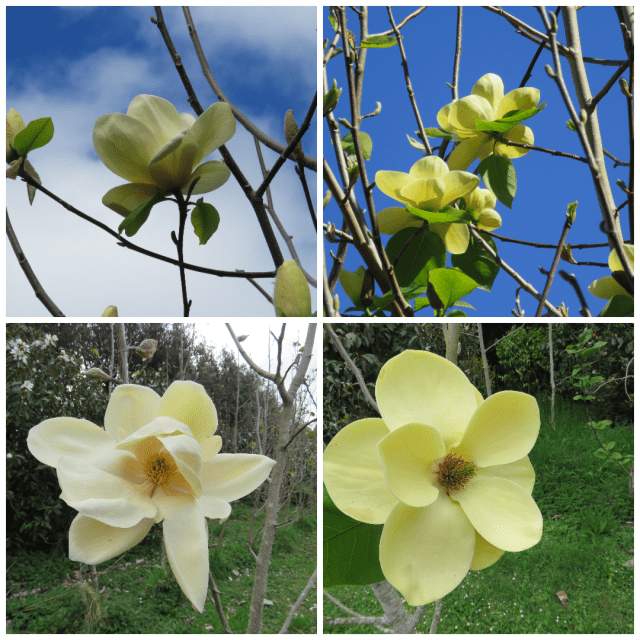
If we could just take the best aspect of each of the seedlings and get them all onto one plant, that would be good.

The goal of a big, pure yellow, cup and saucer magnolia is achievable but Mark has run out of time and energy. It will take another generation of plant breeder to reach it. That said, there are probably a couple of good yellows that are significant steps along the way that we should get out of the last batch of seedlings. One, in particular, is a very pretty lemon-yellow (so not the strong colour he wanted but still yellow) with the desired flower size and form and it is blooming from an early age although the flowers coincide with leaf-break. It is hard to reach perfection.
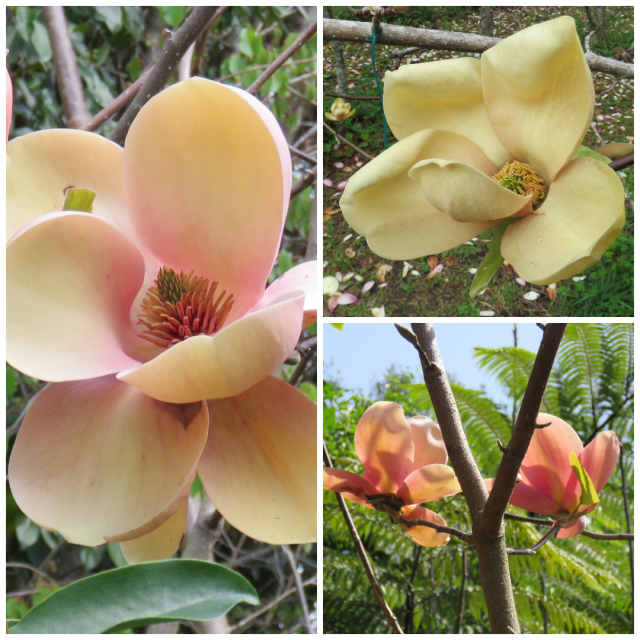
Sunset shades and caramel shades but none good enough to select yet

There are a few striking sunset mixes of strong colour on goblet shaped blooms but none of them look good enough to select. Plant selection is always made on a variety of criteria but Mark’s personal preference for solid colour is strong. Every magnolia he has named is one colour inside and out because that is what he likes. I had to twist his arm to even look at the sunset mixes; he does not think pink and yellow is a pleasing combination. He is also dismissive of what he calls ‘novelty blooms’. I marked one seedling that had distinctive, caramel-coloured blooms. Viewed close-up, they are interesting but I had to concede he was right. On the tree, they will just look like they have been hit by frost.

Always, we are selecting for plants that will look good over time in the landscape. Looking interesting as a cut flower in a vase is not enough, given the magnolia is a landscape tree with long term potential.

I mentioned the irritating ninth Felix Jury hybrid at the start. It is Magnolia ‘Eleanor May’ and I wouldn’t even reference it except I saw a photo lauding its merits in the UK this year. I don’t have a photo of it in my files which indicates the low esteem we hold it in. While it is a seedling from Felix’s breeding programme, we don’t claim it as a Jury hybrid. It is a full sister to ‘Iolanthe’ and a rejected seedling. Felix provided material of it to the nursery Duncan and Davies to use as a good root stock. From there, the nursery sent out a few failed grafts of ‘Iolanthe’ to garden centres by mistake. One plant was purchased by a customer who was observant enough to pick the difference when it flowered. He then took it upon himself to name it for his wife which may have been legal but was certainly lacking in courtesy. As far as we are concerned, it is inferior to ‘Iolanthe’, had already been rejected in selection and was an escapee by mistake. Besides, when we question releasing two of the same cross – ‘Iolanthe’ and ‘Atlas’ – why would we want to claim a third of the same cross? We have a property filled with sister seedlings which we would hate to see unleashed onto an over-crowded magnolia market.
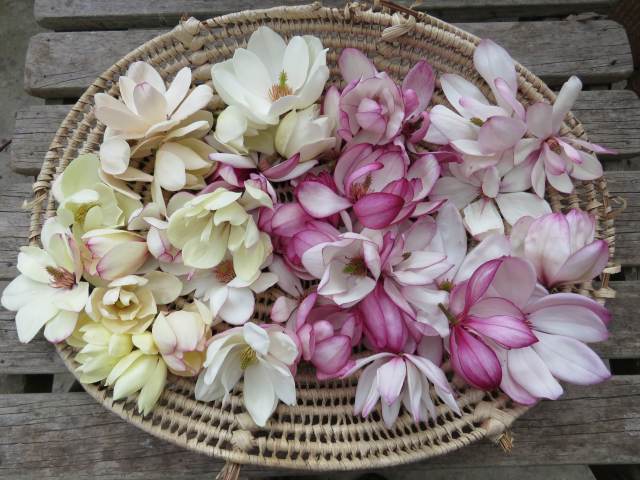
Starting with predominantly white genus, Mark has reached into the pinks, purples, peach tones and lemon as well as bicolours.

Mark’s more recent work with hardier members of the michelia group is another story. The first three selections are on the international market under the Fairy Magnolia® branding. They are in white, cream and soft pink and the next two on the way are in shades of peach and blackberry ripple. We are now onto the final round of selections which are into the bicolours and purple.
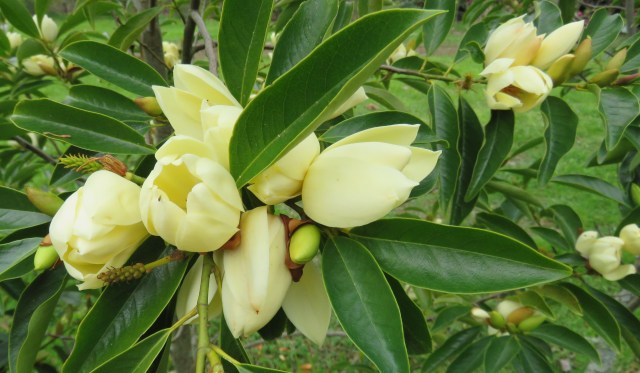
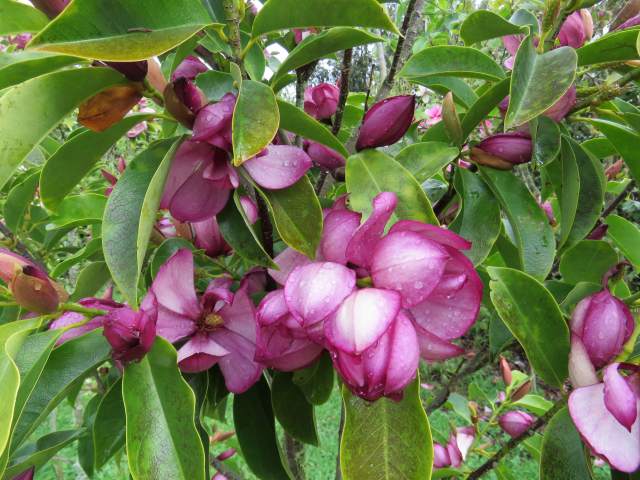
Getting there – definitely lemon but not yellow enough
The dark pinks and purples have been more rewarding than the yellows

Again, he has come up short on a strong yellow that is good enough to select and, regretfully, the really pretty apricot ones have not made the grade. But we know that those colours are within reach without sacrificing hardiness. Mark wryly describes his work on michelias as ‘RFI’. That is Room for Improvement. It will take another breeder to get there but there is plenty of promise and scope to take them further.
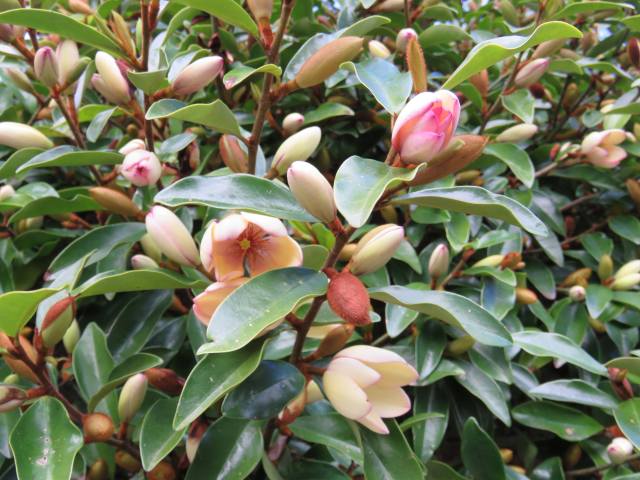
Labelled ‘FM Baby’ in my files, this new selection is being released as Fairy Magnolia® ‘Petite Peach’

Felix Jury magnolias

Apollo (probably liliiflora nigra hybrid x campbellii var mollicomata ‘Lanarth’)

Athene (‘Lennei Alba’ x ‘Mark Jury’) 

Atlas (‘Lennei’ x ‘Mark Jury’)

Iolanthe (‘Lennei’ x ‘Mark Jury’)

Lotus (‘Lennei Alba’ x ‘Mark Jury’) 

Milky Way (‘Lennei Alba’ x ‘Mark Jury’) 

Serene (liliflora x ‘Mark Jury’)

Vulcan (liliiflora hybrid x ‘Lanarth’)

Mark Jury magnolias

Black Tulip (‘Vulcan’ x)

Burgundy Star™ (liliiflora nigra x ‘Vulcan’)

Felix Jury (‘Atlas’ x ‘Vulcan’)

Honey Tulip (‘Yellow Bird’ x ‘Iolanthe’)

 Plus Ruby Tuesday, Dawn Light and Ab Fab
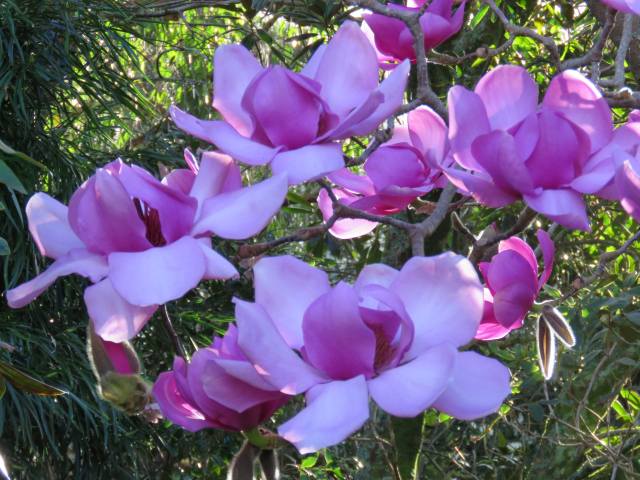
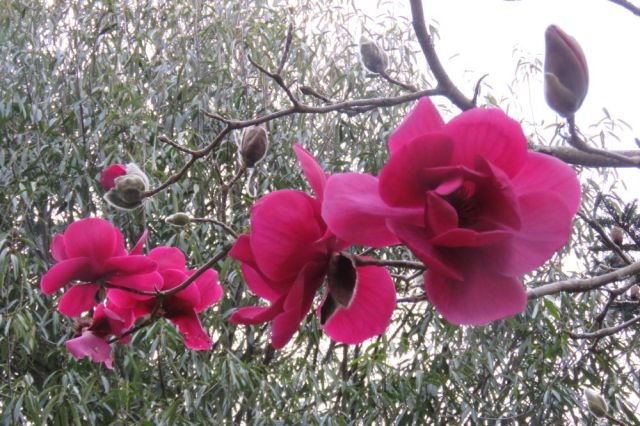
Magnolia ‘Dawn Light’
Magnolia ‘Ab Fab’

Fairy Magnolia® Blush (M. laevifolia x foggii hybrid)

Fairy Magnolia® Cream (M. laevifolia x foggii hybrid)

Fairy Magnolia® White (M. laevifolia x doltsopa)

Fairy Magnolia® Lime (on very limited release in Europe only)

Plus Fairy Magnolia® Petite Peach
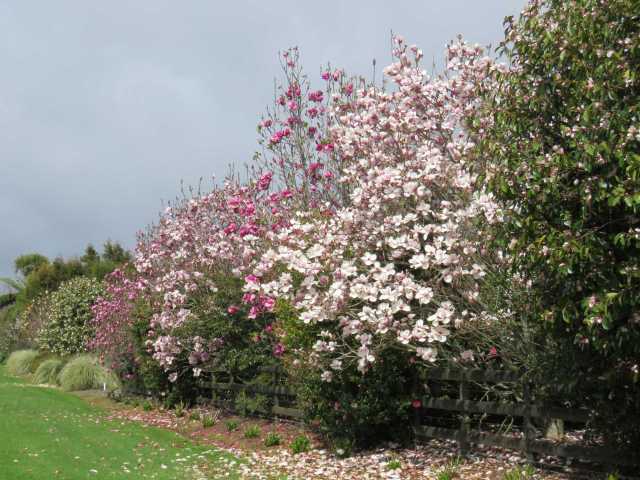
Magnolia delight

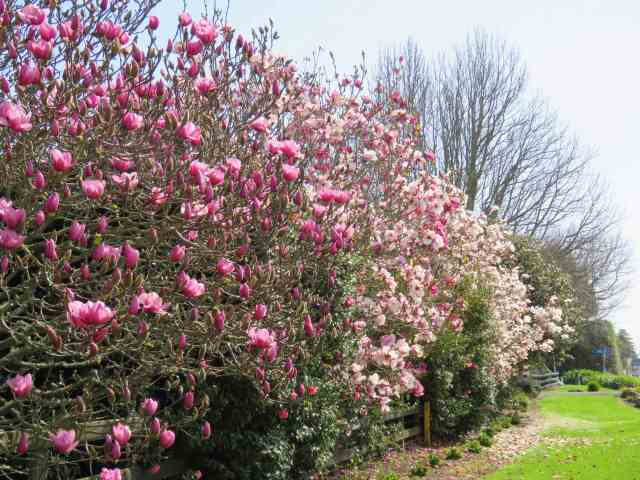
The roadside. On the far left is Honey Tulip and there is a Black Tulip also there that is not visible. Fairy Magnolia Cream, Serene, Iolanthe, Felix Jury, Athene and Fairy Magnolia Blush.

I see it was twelve years ago that I wrote about generous gardeners. Not those who readily share plants but those who plant up areas for other’s enjoyment. I remembered that article this week because of a beautiful stretch of roadside on the outskirts of our small town that I drive by almost every time I leave our property. It is a spectacular row of magnolias that goes from strength to strength every year. It edges grass paddocks where the owners graze a few stock.

Looking back from halfway along the row

The thing about this row of magnolias is that its purpose is to delight passers-by. The owners, Pat and Brian, can’t see it from their house which is on the adjacent section. Pat, in particular, is a keen gardener and they keep a detailed and heavily ornamented garden around the house but the row of magnolias is for the benefit of passing traffic, be it in vehicles or on foot.

Magnolia Athene
Fairy Magnolia Cream

I called in yesterday to ask their permission to share the photos and, with their usual generous spirit, they said ‘any time. Our garden is your garden’. I had thought I might ask Pat if I could photograph her but it was a rushed visit and I didn’t want to embarrass her. She commented that she thought the magnolias were better this year than ever before and many people are admiring them. “I tell everybody they are Abbie’s magnolias.”

Magnolia Felix Jury just finishing flowering in Pat and Brian’s roadside row

We have had this conversation before. What you have to understand is that this row of magnolias is not far off being a complete collection of Jury magnolias. In vain, do I tell her that they are Felix and Mark’s plants. In Pat’s mind, they are mine.

I do remember giving Pat this plant of Honey Tulip
Honey Tulip – Mark’s only yellow on the market. So far.

She remembers me giving her most of the plants. I remember giving her one and may have given her a few more but she was a very good customer of ours in the days when we used to retail plants. I have always admired Pat’s eye for a good plant. She lacks any curiosity about plants, rarely remembers names, won’t grow bulbs because they are untidy when they finish flowering but she has a good eye and picks out plants she likes solely on their appearance. She has a garden with plants like Camellia yuhsienensis, Rhododendron veitchianum and other choice varieties tucked in with garden centre utility options and plants she has picked up on special. I find her approach to gardening refreshingly honest and unpretentious while also being very capable.

Pat’s plant of Rhododendron veitchianum. It wasn’t until I got up close to it that I realised the striking colour contrast was cineraria.

What makes these magnolias interesting to us is that Pat and Brian garden very differently to how we do. The magnolias are planted in the open, exposed to pretty much every wind that blows. They are not mulched and the ground around them is kept bare. They are not trimmed or clipped. I would guess that they were well fertilised when getting established but are now left to their own devices. In those exposed, open conditions,  they are performing better than many of the ones we have here in our own garden which is sheltered from most winds.

Serene is one of Felix Jury’s lesser known hybrids but worthy of more attention. A later season magnolia, it is very lovely.

Wind is a big issue in this country of long thin islands set amidst vast oceans. Wind hardiness is a big factor in the selection of magnolias in our breeding programme. Petals that are of a softer, thinner texture and flower forms that are looser in structure fall apart when it blows hard. We see it every year on some of the magnolias here – particularly M. sprengeri ‘Diva’, M. sargentiana var. robusta and even the stellatas (star magnolias) and their hybrids. We have seen spectacular displays on some of these and similar magnolias in less windy countries – memorably in the Dandenongs in Australia and in the north of Italy. We don’t have that leeway here. So, it is interesting to see the Jury magnolias in very open conditions, still putting up mass displays of blooms that are largely untroubled by the many storm fronts that pass over in our early spring time.

A small plant of Magnolia Iolanthe with many OTT blooms

A few doors down from Pat and Brian’s home is a house with this little Magnolia ‘Iolanthe’ in bloom – showy enough for me to stop the car and photograph from the roadside. The plant can only have been in the ground two or three years and I haven’t noticed it in flower before, although there is a young plant of ‘Felix Jury’ a few metres away in the same garden that catches my eye when in flower, every time I drive past. But look at ‘Iolanthe’ strutting her stuff! I counted around 30 blooms and opening buds on this very small plant.

Magnolia Iolanthe

I am a big fan of front gardens and roadside plantings. They make the world a better place for us all, or at least for those of us who notice them.

“His Majesty The King’s Coronation Collection”

Mark’s Magnolia ‘Felix Jury’

It is a well-known fact that King Charles 111 is a very keen gardener and has been for a long time. We received confirmation this week that Mark’s Magnolia ‘Felix Jury’ was included in a collection of 25 carefully selected plants presented to him to mark his coronation.

The gift was from the Royal Horticultural Society (RHS), specifically from the Rhododendron, Camellia and Magnolia Group of which he has been the royal patron since 2018. Reportedly, he was delighted to receive the plants this week and they are destined for his Sandringham estate which is undergoing a major rejuvenation under his personal direction.

There are only three magnolias included in this collection and all are from Aotearoa New Zealand, which is a sign of this country’s standing in the heady world of international magnolias. Most of the collection is focused on rhododendrons with just three camellias included, one of which is also a NZ hybrid. ‘Festival of Lights’ was bred by the late Neville Haydon of Camellia Haven fame.

Magnolia ‘Genie’ bred by Vance Hooper

The other two magnolias are ‘Genie’ which is the best-known cultivar of breeder, Vance Hooper and the late Os Blumhardt of Whangarei’s ‘Starwars’.

‘Starwars’ dates back to the 1960s when Felix was also raising the first generation of Jury magnolia hybrids. We knew Os Blumhardt fairly well. He used to stay with us when he came to Taranaki and he was most encouraging to Mark in his early days of plant breeding and extraordinarily generous with his own material. We still have some very fine vireyas and camellias of his in our garden and his early, limited work with michelias (‘Mixed Up Miss’ and ‘Bubbles’ are his best known) laid the groundwork for Mark’s Fairy Magnolia series many years later. But we were less enamoured by his Magnolia ‘Starwars’ – until we made a magnolia trip to the UK, Italy and Switzerland back in the early 2000s.

Magnolia ‘Starwars’ bred by Os Blumhardt

At home, we have ‘Starwars’ planted on the roadside on our lower boundary in a row of other magnolias. It is pretty enough and puts on a good show but the flowers are a bit floppy and, to be brutal, it looks a bit dated compared to many of the magnolias we grow now. It was a different story in the UK and Europe. That was before any of Mark’s hybrids were available in that part of the world and we were tracking how his father’s varieties were performing. There is a huge difference in climate, growing conditions and light between here and over there and there is no guarantee that plants will look the same. We were a bit disappointed, particularly in ‘Iolanthe’ in those conditions.

‘Starwars’, on the other hand, was an absolute stand-out and it was being grown widely. Many of the international group we were travelling with assumed it was a Jury plant because it came from NZ. After we had seen several looking brilliant, Mark was moved to reply, “No, it isn’t one of ours but I wish it was.” I think it has earned its place in the Royal Collection as a proven performer.

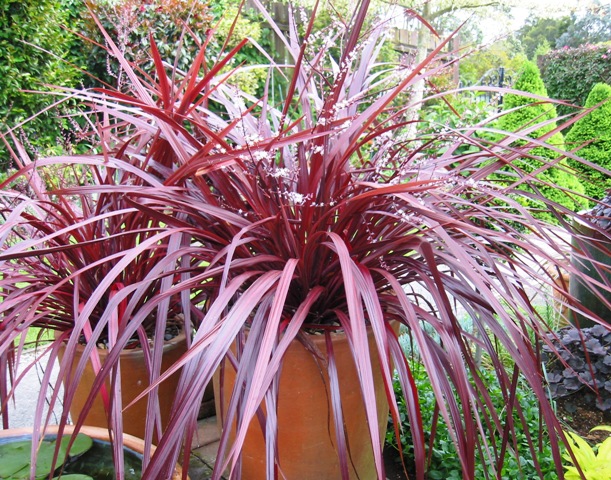
Cordyline Red Fountain

This is not the first of our plants to grace the royal estates. The first we know of was when our Cordyline ‘Red Fountain’ was presented to the then Prince Charles in a ceremony at Auckland Regional Botanic Gardens – but not by us. While I have no doubt that the plant was a very fine specimen, we rather doubted that it had all the phytosanitary clearance and paperwork needed for plants to cross international borders. Mark quipped at the time that maybe we should alert Border Control that the royal entourage was carrying plant material. We have no way of knowing whether Royals are subject to the same regulations as travellers of lesser status or whether it even left the country. I hope it might be in his garden at Highgrove.

Next, there was a presentation of Mark’s Magnolia ‘Black Tulip’ to the late Queen in 2010. We don’t know which royal garden that plant ended up in – maybe Windsor?

Then there was the ceremonial planting of another specimen of Magnolia ‘Black Tulip’ by the Burmese leader Aung San Suu Kyi with the then Prince of Wales and the Duchess of Cornwall at their London residence of Clarence House in 2012.

That felt like a significant moment in history and to our great amusement, it is immortalised in a You Tube clip. That video shows it in a prime spot close to the residence. From memory, the magnolia they move over to look at was one planted by the Dalai Lama but I can’t remember what that variety was now – one of the species, maybe.

Magnolia Black Tulip

At the time, I wrote here: “We are honoured by this international recognition, though Mark would have preferred them to have planted his Magnolia Felix instead. It appears to be performing very well in the UK and the Royals’ gardens are large enough to take large flowered magnolias.”

We are very pleased that it will be ‘Felix Jury’ that will grace the Sandringham estate.

“The Rhododendron, Camellia and Magnolia Coronation Collection is a collection of

plants and trees gifted to His Majesty, to mark his Coronation. As our Royal Patron

it represents our appreciation of how much his support and interest in our genera is

valued by our members from around the world.

It tells the story of the Rhododendron, Camellia and Magnolia Group’s one hundred

and seven-year history. The twenty-five plants and trees provide a historical and

horticultural link between the genera and the Royal Family and represents the

legacy of great gardens, the passion of private breeders and having good plants

in the garden. The specially chosen plants form a tapestry of our beautiful genera

internationally.

The best of the past and of the future, old and new. We hope that His Majesty enjoys

these plants and that they give him great satisfaction in the years ahead.”

From the official release announcing this gift.

Of weather, early magnolias, possums and rats

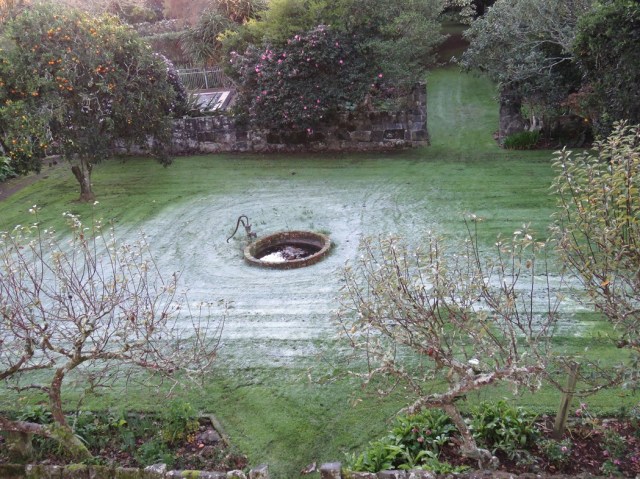
Frosty mornings from Wednesday to Saturday showing up the lawnmower lines

We had to drive to Wanganui and back on Tuesday morning – a five hour round trip. On the way down, we drove through snow (inland from here), sleet and hail as the first polar blast of winter hit. By the time we drove back the sun had appeared but with a biting cold wind that felt as if it had come straight off the ice caps of Antarctica. Wednesday dawned bright, clear, frosty and calm though cold and that has been the pattern in subsequent days – cold mornings and sunny days.

Sunrise on Wednesday morning

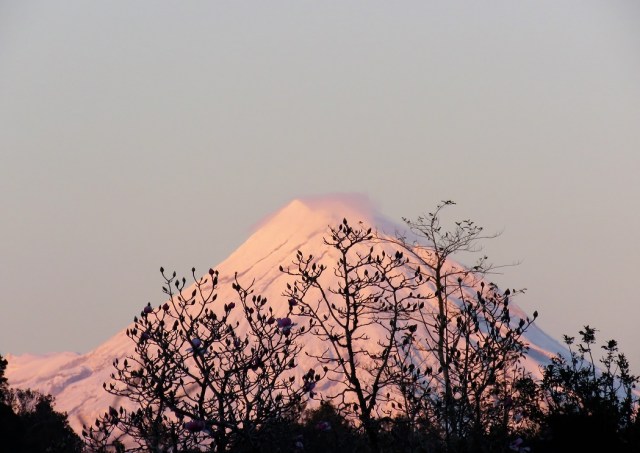
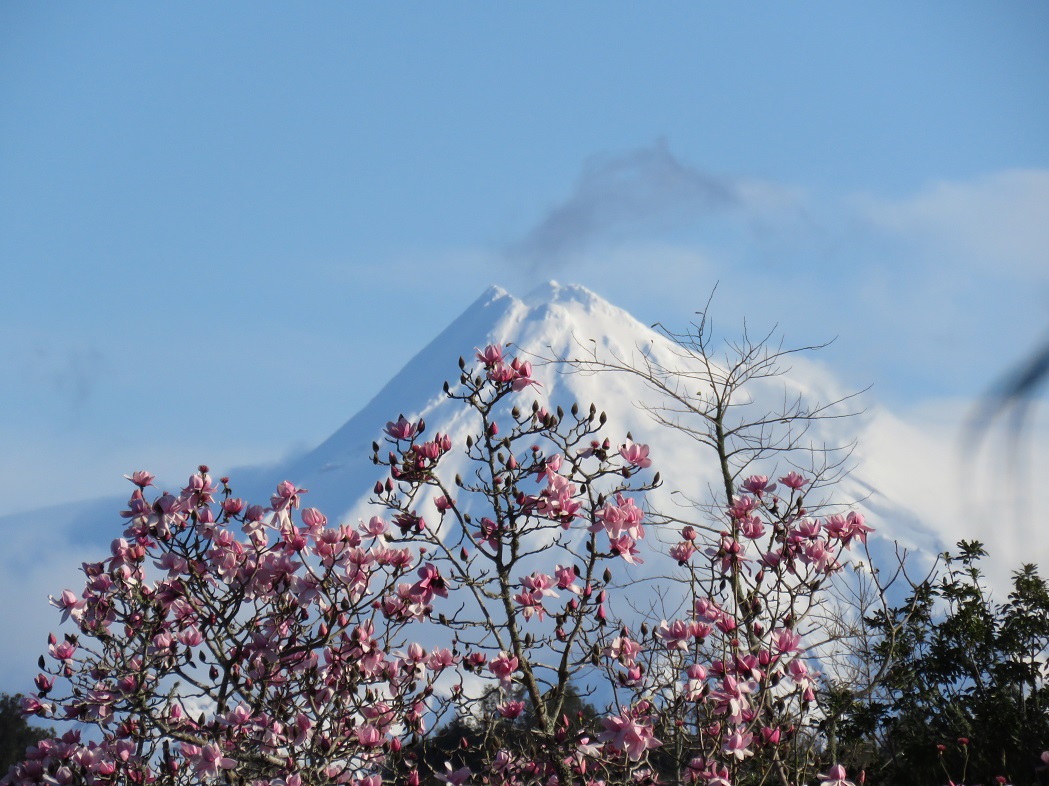
The magnolias are undeterred. Matariki[i] is underway and the plants agree that this is the time to celebrate the start of a new year.  It will be another few weeks before the Magnolia campbellii in our park will be in full bloom but my annual pastime of photographing the magnolia and te mounga[ii]  has started.

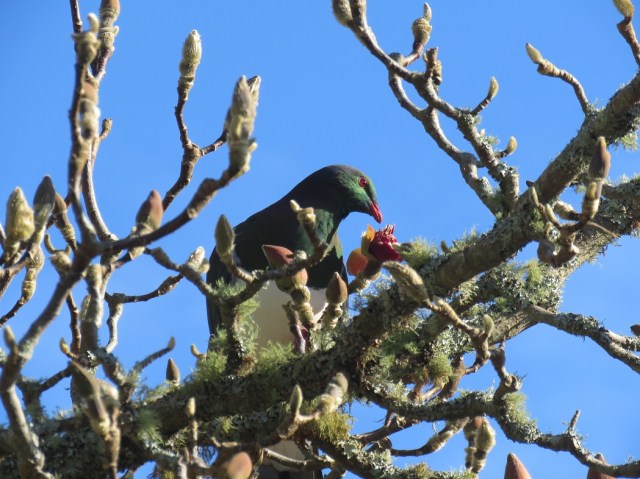
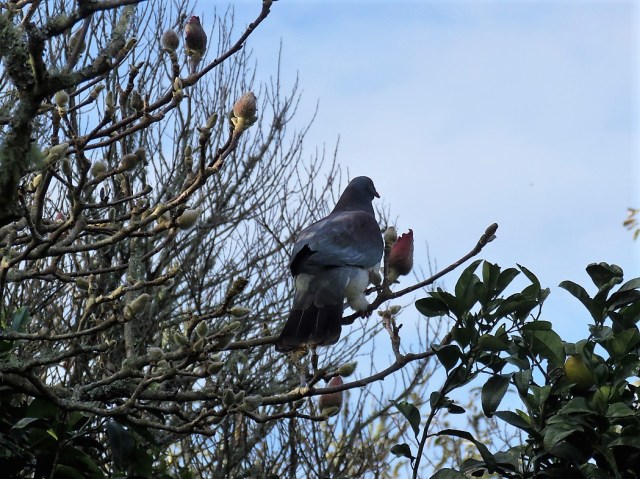
Absolutely shameless, this kereru was, eating the magnolia buds as we watched

By 10am, it is warm enough for us to sit outside for morning coffee and this shameless – shameless, I tell you – kereru[iii] took up its position in a magnolia a few metres away, eating the petals of the first buds showing colour. It may have been its mate just down the driveway that was doing the same to the first buds on Magnolia Vulcan. We are more charmed than miffed. Soon the trees will open so many blooms that they will outpace the kereru. We would rather have resident kereru all year round than perfect first magnolia blooms. I am told kaka – our big native parrot – can do the same but we have not had a mob of kaka descend on us. A reader tells me she once watched them strip every bud off a magnolia. The only two kaka we have seen here arrived singly in different years and while Mark saw one of them pulling buds off Magnolia Iolanthe to hurl at the tui who were protesting its presence, it takes more than one to strip a tree. Rosella parrots – a showy Australian intruder – are also reputed to cause damage up north but we haven’t seen them doing it here and we do have them turn up in small groups. 

Just an unnamed seedling, as we say

The only magnolias in full bloom so far are seedlings from the breeding programme that will never be released. We only ever name magnolias that are going into commercial production and these first ones are just too early, too vulnerable to winter’s icy blasts to put on the market. They exist solely to give us pleasure on our own property. Some of them are such good performers that an identifying reference name evolves. So it is with Hazel’s magnolia. We get asked for funeral flowers from time to time, or we offer to do informal casket arrangements for people we know. This magnolia formed the centrepiece of an arrangement for Hazel, the mother of a close friend of Mark’s and a dear lady who meant a great deal to him in his younger years.

Hazel’s seedling at its best
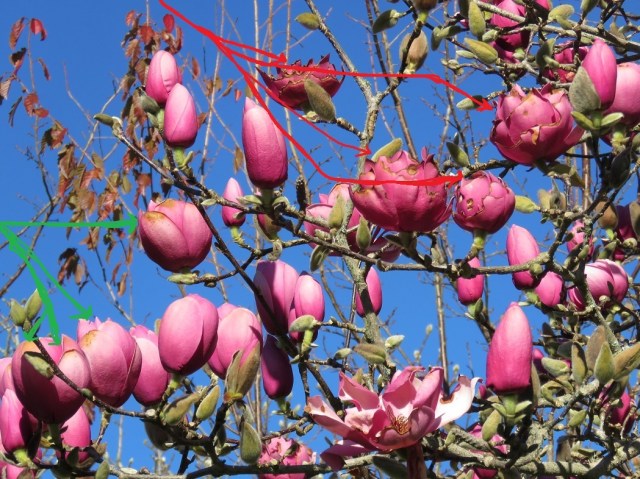
Hazel’s seedling this week. The red arrows show what is likely to be damage from a kereru eating the young petals. The green arrows to the left show burning from the frosts this week.

Hazel’s magnolia makes a pretty picture every year. It performs well and, we found, also holds well when cut. In the world of magnolias, it is not remarkable. There are prettier colours, more distinctive forms and it flowers way too early for most growing conditions. It just happens to be the first of the season for us, standing out in bloom where it is growing in the shelter belt that protects one of our open paddocks.  Yesterday, it looked great from a distance. Close-up, it revealed two problems. The chewed blooms are almost certainly the result of kereru feeding on the sweet, young petals. The browning is frost damage and if it gets damaged in our mild climate, it will get destroyed in colder conditions.

Magnolia buds that will never open to good blooms. Every one of them has had the centre nipped out of them.

We have long assumed that the chewing out of young buds which then open to distorted blooms can be attributed to the pesky possums that Mark wages war on all year round. We certainly could have done without the early settlers introducing the brushtail possum which is a noxious pest, optimistically slated for eradication in this country, though protected in its Australian homeland. Mark is now wondering whether it is a combination of rats and possums.

Possum guilt. That red is a stomach full of magnolia buds. Our magnolia buds.

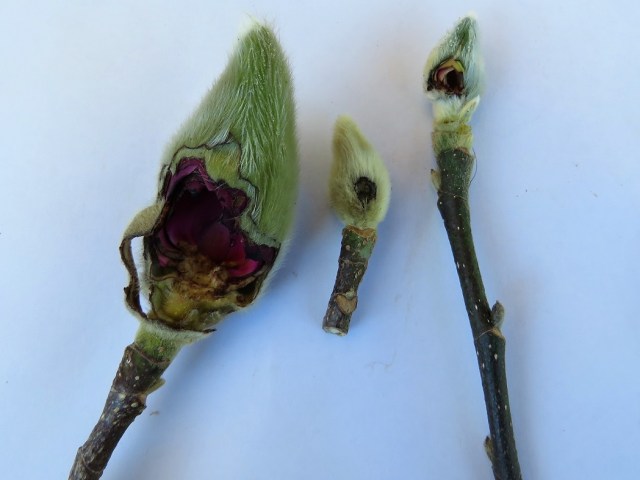
We know possums are guilty. Mark has shot enough of them in magnolia trees and the proof lies in an examination of their stomach contents. All that red? Those are magnolia buds. Rats are harder to prove because we never seen one in the act and we don’t have the corpses to perform a forensic analysis of stomach contents. But when all the buds failed on a plant of Honey Tulip last year and closer examination showed that every single bud had a neat incision in it, he thought it may be rat damage, not possums. We know possums eat out the centre of larger buds with colour already developed. It seems like the very small nips in the less well-developed buds are rats.

Our pick is that the large bud on the left has been eaten out by a possum. The two smaller buds are more likely to have been attacked, ever so neatly, by rats. Possums don’t attack the buds at that early stage.

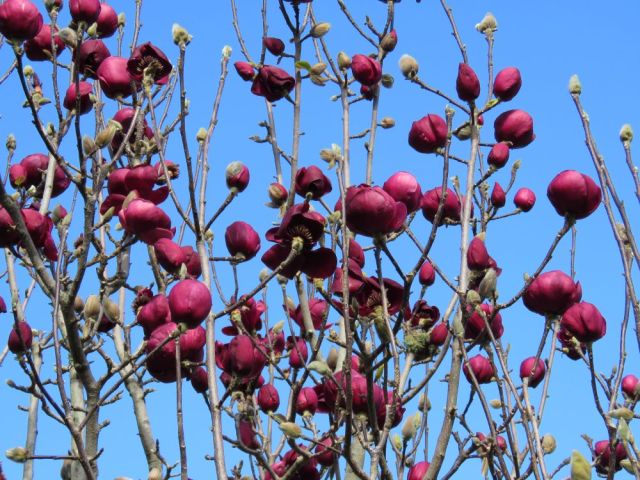
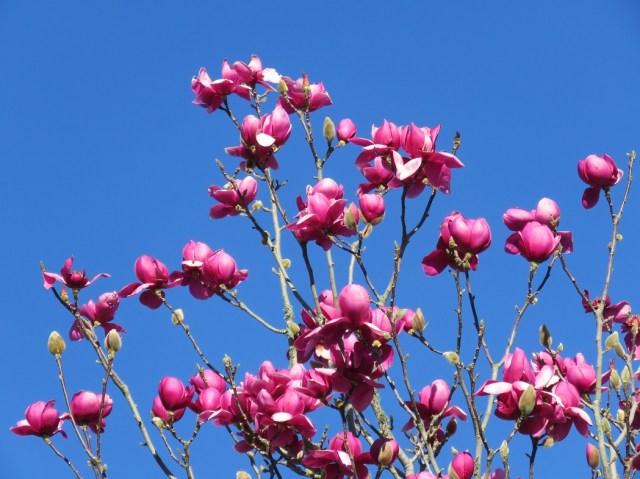
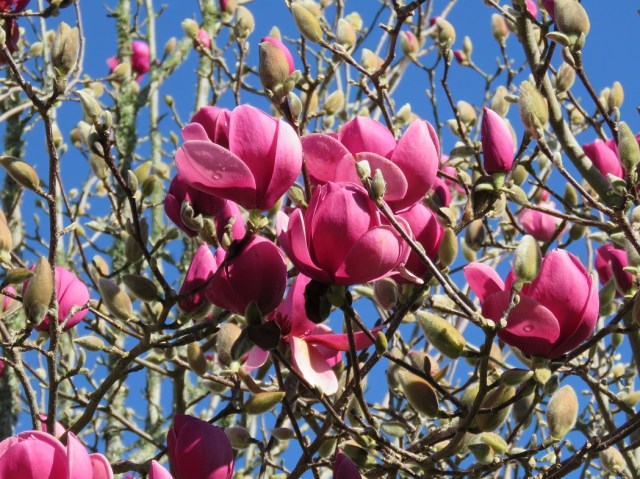
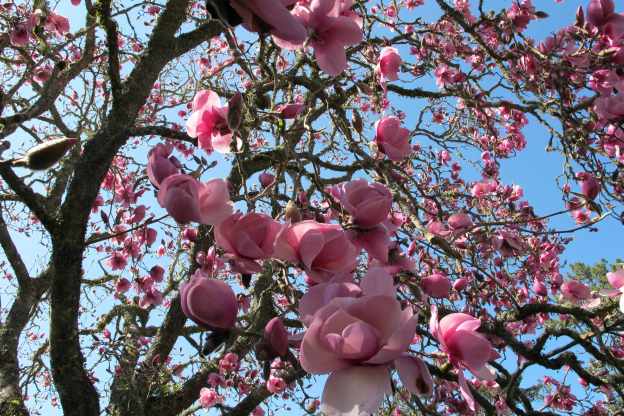
In the meantime, how many photos of the magnolia and te mounga do I need? I shall stop now until more blooms are open. But glory be, how I love big, beautiful magnolias against a blue sky or snow.

Thursday morning
and Friday afternoon. At least the frosts aren’t bad enough to take out the Magnolia campbellii blooms

[i] Matariki – the Maori new year, determined by the rise of the Pleiades star formation. 

[ii] Te mounga – the mountain in local dialect. In standardised Maori, mounga is more commonly seen as maunga. Otherwise known as Mount Taranaki.

[iii] Kereru – native wood pigeon. It is fully protected because its numbers are declining due to loss of habitat and its very slow rate of natural increase – most breeding pairs only raise a single chick each year.
An unrepentant kereru eating the first buds on Magnolia Vulcan

On another topic, rather than a postscript, those who read my May post about Mrs Wang’s garden (and there were many of you. I know this from my site stats) may enjoy this delightful and affirming update. I feel vindicated. Mrs Wang is indeed a first-generation New Zealander, she declares herself to be a digger and she did indeed experience the devastating famine in China during her childhood. I did not, I admit, pick her as a professional civil engineer. Those whose ugly response when the story broke was to defend the establishment by attempting to discredit Mrs Wang with vile speculation based entirely on their own prejudices, need to take a good hard look at their own racism. I am not referring to comments on my post – readers here are in a different league but I saw some pretty awful speculation and accusation coming through on other social media. There is much that is good in this world for those who choose to see it.

The first bloom of the season opening yesterday on Magnolia Felix Jury. We get the best colour on the early blooms.

Spring is in the air ♫ ♫ ♫

Mount Taranaki is an active volcano but the dark above its crater is cloud not smoke

I was prophetic. Just two weeks ago I commented that bringing in a film crew from outside the area to capture our view of Magnolia campbellii and Mount Taranaki was fraught with problems, that we could go ten days without being able to see it. In fact it was fourteen days this time – a period of cloud and intermittent rain which kept te mounga shrouded. Yesterday was fine and sunny and the cloud over the peak cleared in the afternoon. Is there a lovelier sight?

As I walked around the garden with my camera, it was clear that, midwinter or not, the plants are telling us that spring is here. Is it earlier this year than usual? We are reserving judgement; these things tend to even out over time though this winter has been relatively mild There have only been a handful of days when it has been too bad to be outside for at least a few hours.

Magnolia Vulcan – the ragged flowers to the right will have been chewed by kereru

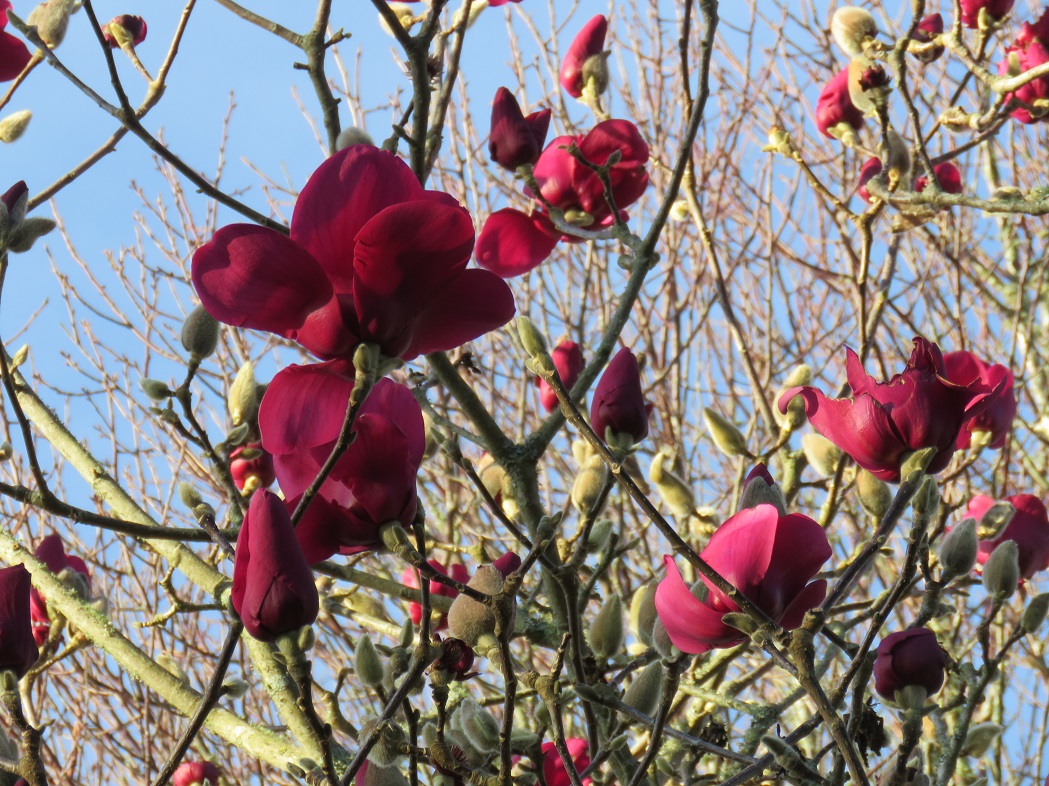
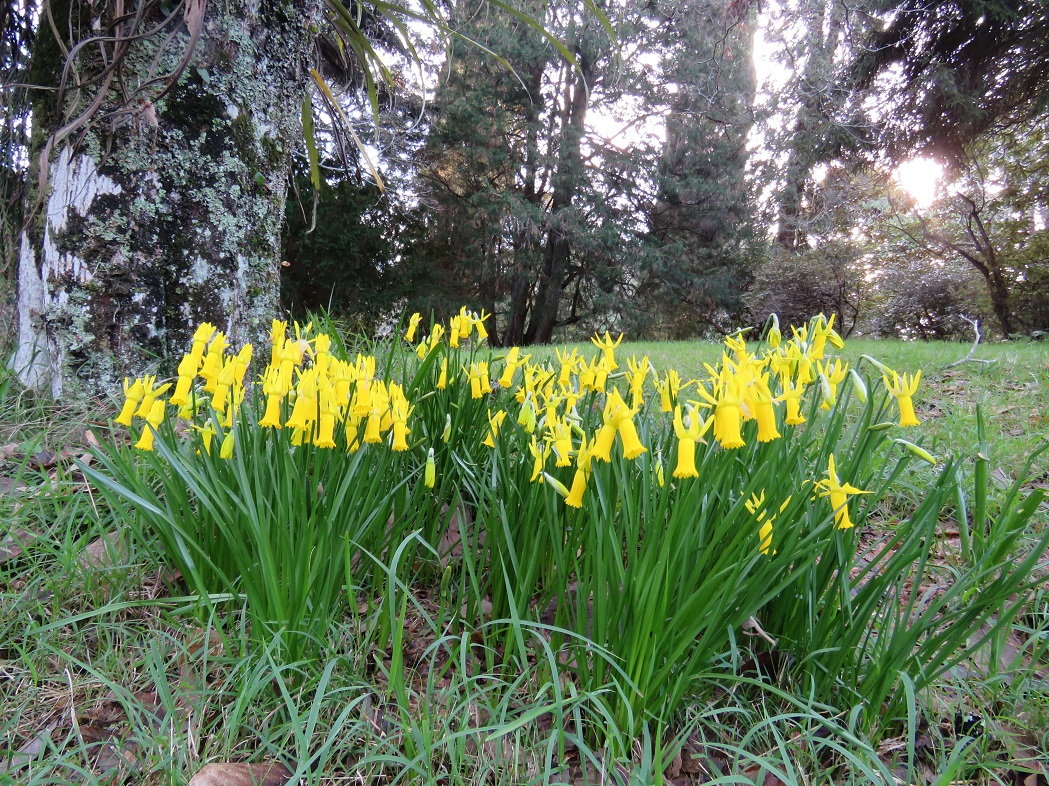
Magnolia season is probably our showiest with the grandeur and vibrancy of blooms against the sky, complemented by drifts of snowdrops and dwarf narcissi below. Vulcan has opened its first blooms, showing the colour intensity we get here in the garden of the breeder (Felix Jury) which is rarely matched in colder climes in the northern hemisphere where it can be smaller and more of a murky purple.

Magnolia Felix Jury

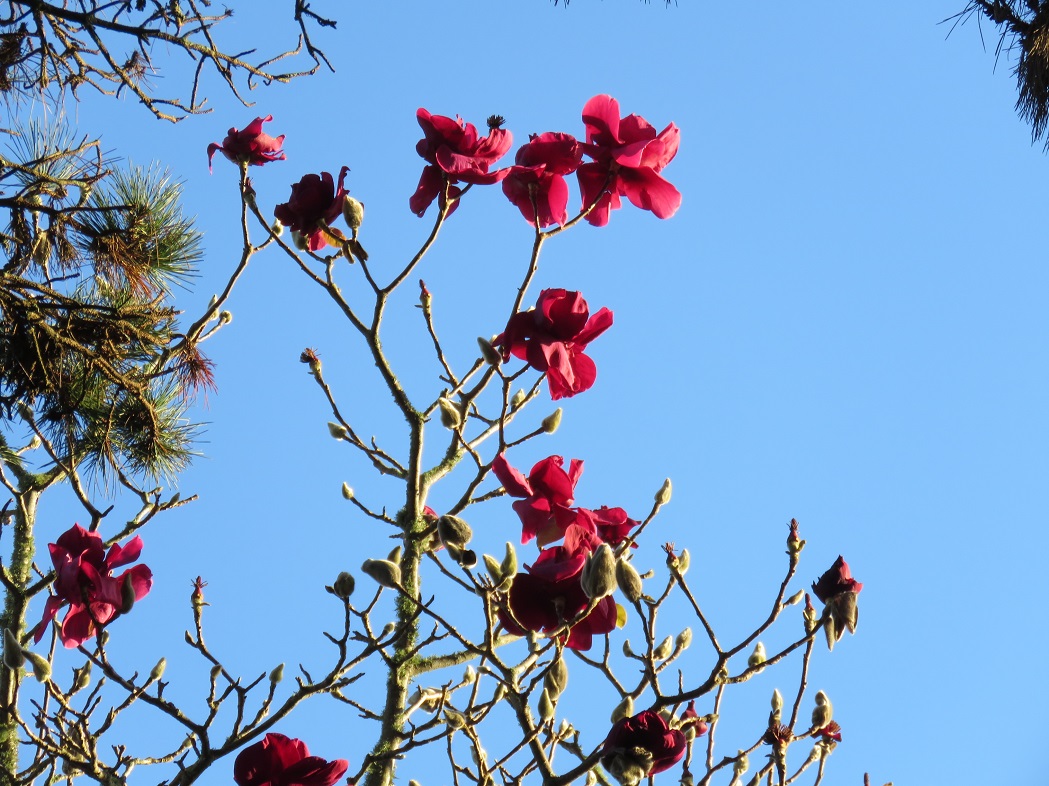
So too Magnolia Felix Jury (bred by Mark) which opens red for us. It, too, tends to colour bleach in colder climates so is more a rich pink but with its magnificent size and flower form, it doesn’t seem to matter. Nobody complains about it to us and we only get rave reviews from around the world.
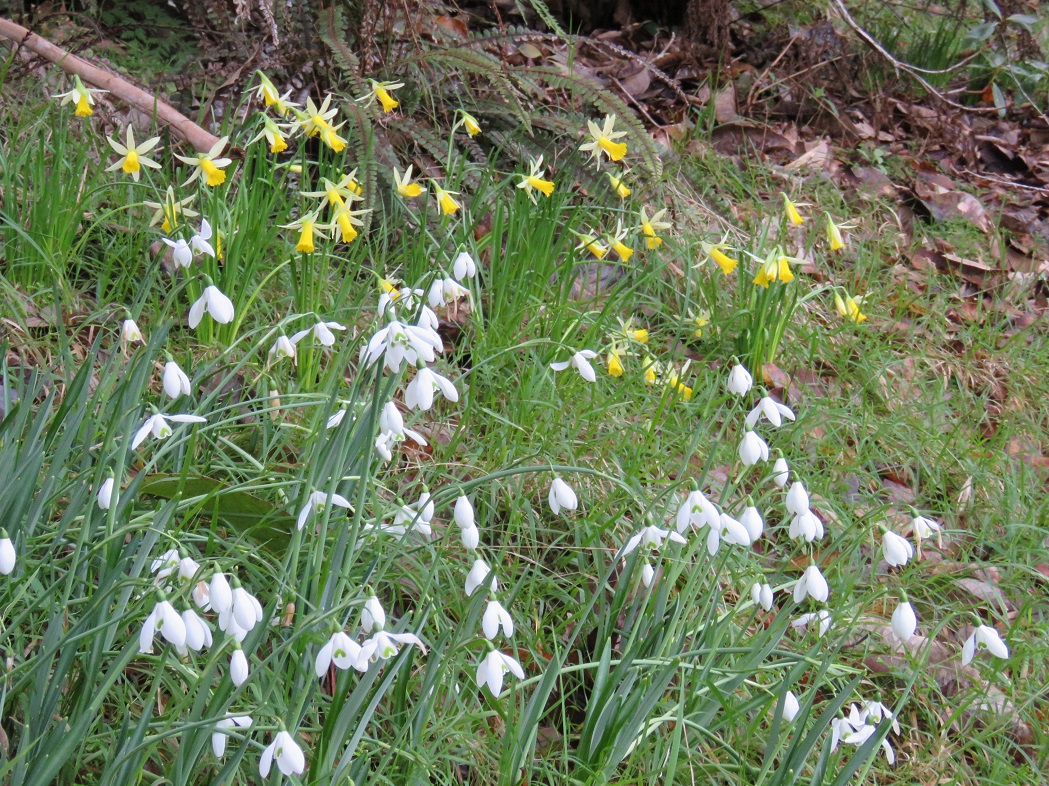
Hybrid cyclaminues narcissi with their swept back petals making them look perpetually astonished

With the rush of spring, comes a rising sense of urgency. This anxiety has yet to afflict Mark but I am feeling it. Opening the garden at the end of October takes planning. I have no idea what preparing a small garden for opening is like but I know a lot about preparing a large one. Timing is everything. Unlike routinely maintaining a garden – and we routinely maintain ours to a level that makes us happy – opening for a festival means having it all ready at the same time.

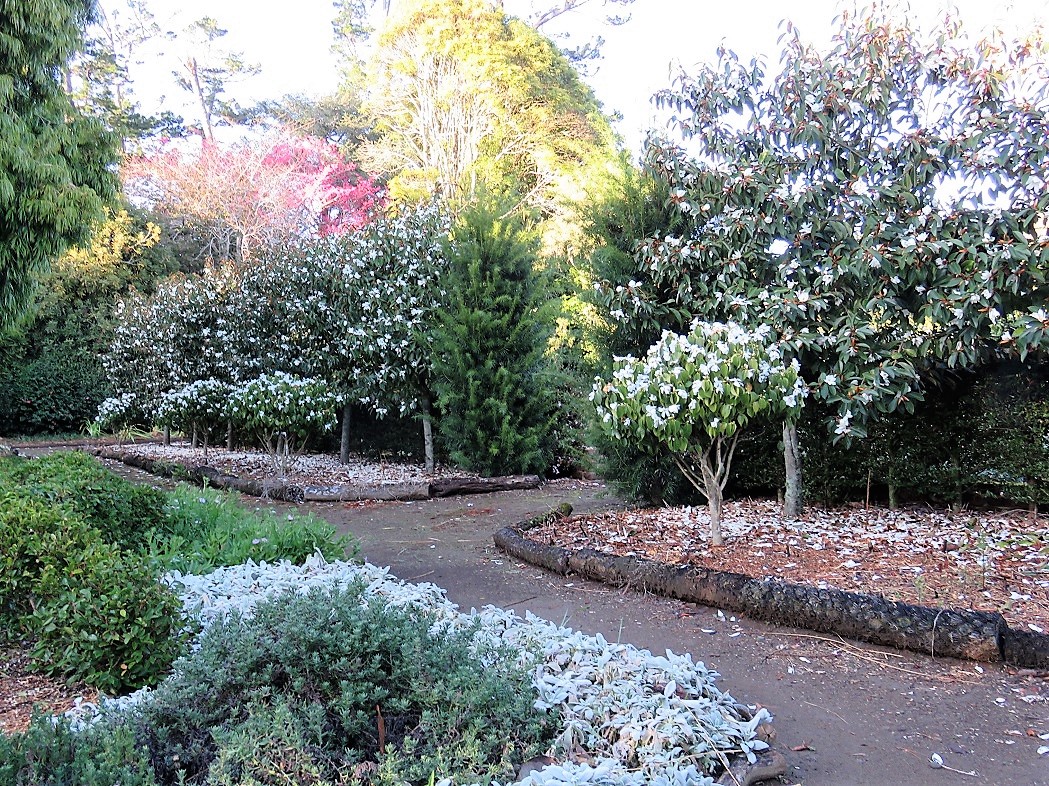
Major work includes laying a path surface in the new areas. Mark’s Fairy Magnolia White with Camellia yuhsienensis in front. The pink at the back is Prunus campanulata.

My plan is to have all major work and the first round of the entire garden completed by the end of August. That leaves about seven weeks to do the second round which is more about titivating and detail. The final week is then about cleaning public areas and doing the last-minute presentation stuff (including, believe it not, cleaning the house windows). I think we are on track but it feels like there is a lot to do. Well, there is a lot to do.

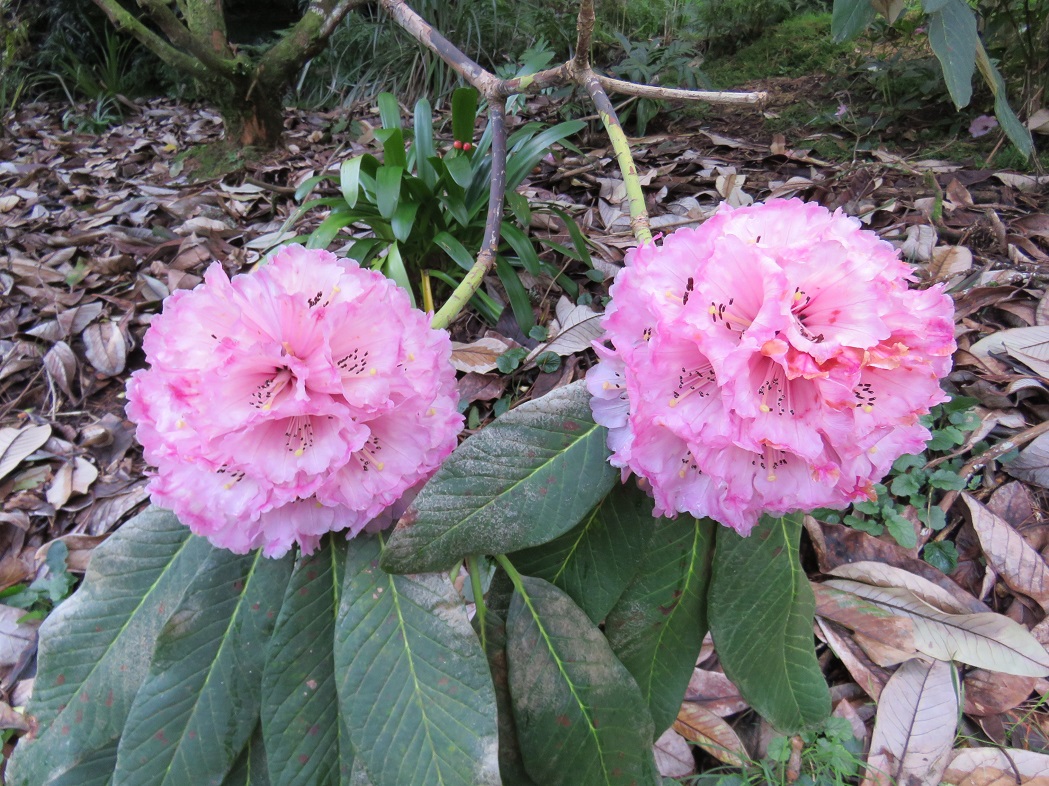
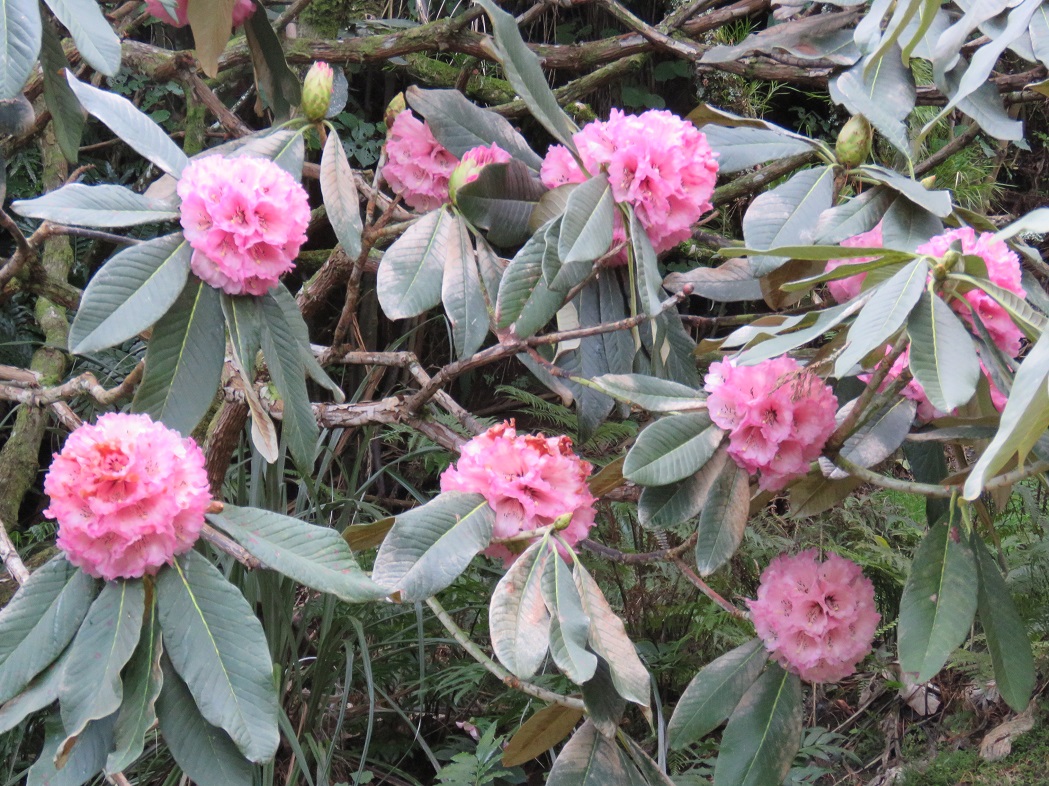
The big-leafed rhododendrons flower now, not at the beginning of November. This is Rhododendron protistum var. giganteum.

We have never targeted our plantings to the annual garden festival. I think that is more a small garden approach. Back in the days when we used to retail plants (and that is a long time ago now – over a decade) most locals who opened their gardens for the festival would only buy plants that we could assure them would flower in the prescribed ten days. They actually geared their entire garden to peak over that ten day period. Each to their own. We garden primarily to please ourselves and we like flowers and seasonal interest all year round. So there is always something of interest in bloom but also plants that have ‘passed over’, as we say, and plants that ‘yet to come’.

We are currently at peak snowdrop

There is a lot ‘coming’ right now and that brings us great pleasure, even if sharing it is done vicariously. It will look different when we open for festival – not better, not worse, just different. Probably tidier, though.

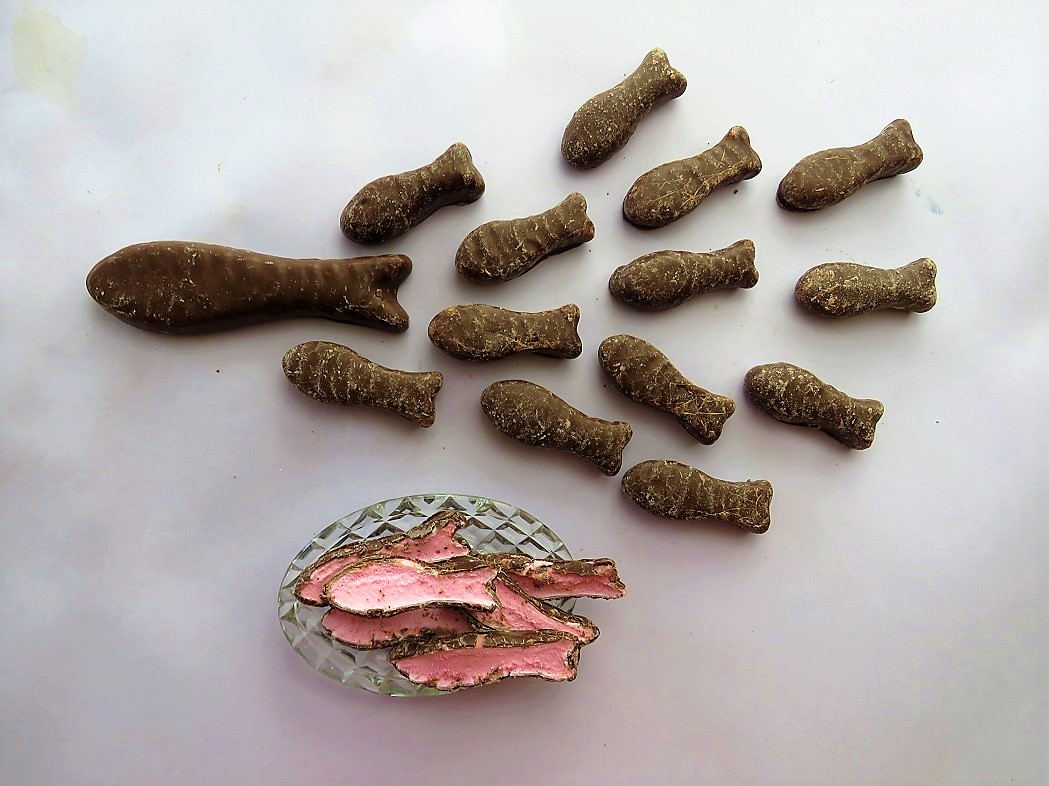
A school of chocolate fish

Finally, in my occasional series on reinterpreting New Zealand confectionary in flowers, I give you the chocolate fish. I was a bit disappointed when I cut into the fish. I am pretty sure that the marshmallow interior used to be a richer pink shade – raspberry-ish even, but I have taken some floral licence.

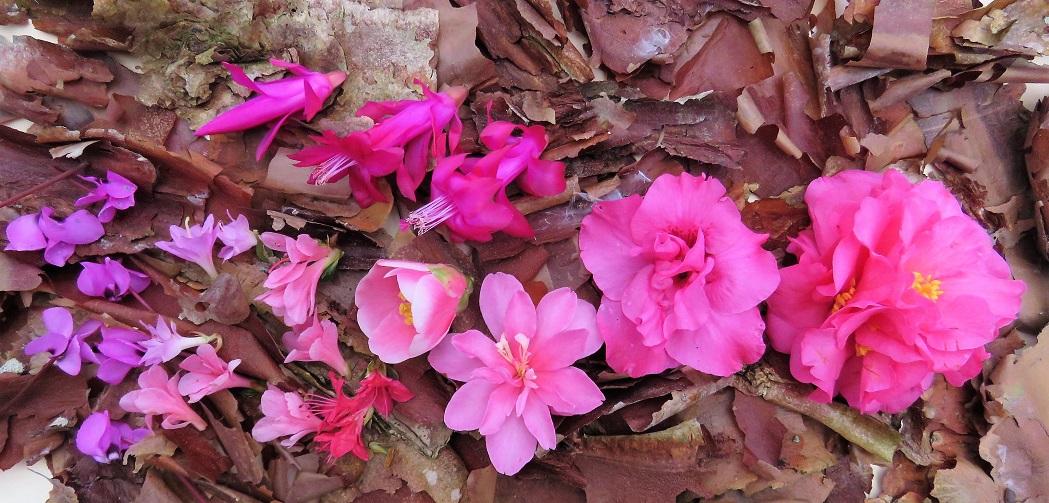
Cyclamen coum, schlumbergera, azaleas and camellias on a bed of Acer griseum bark