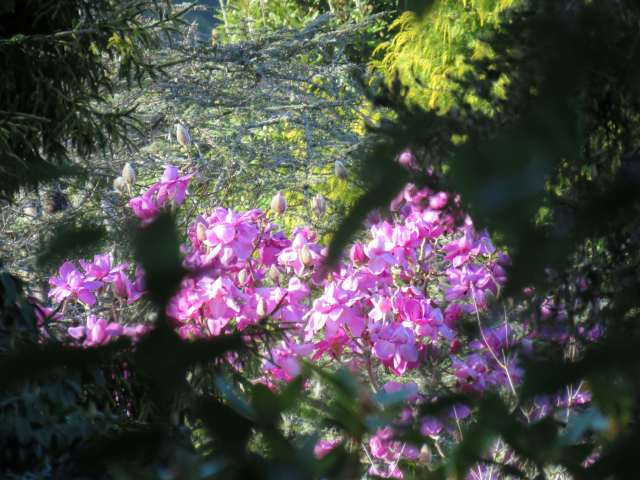
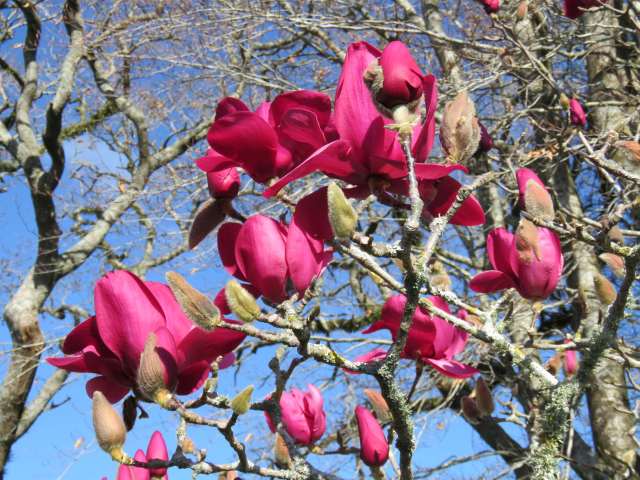
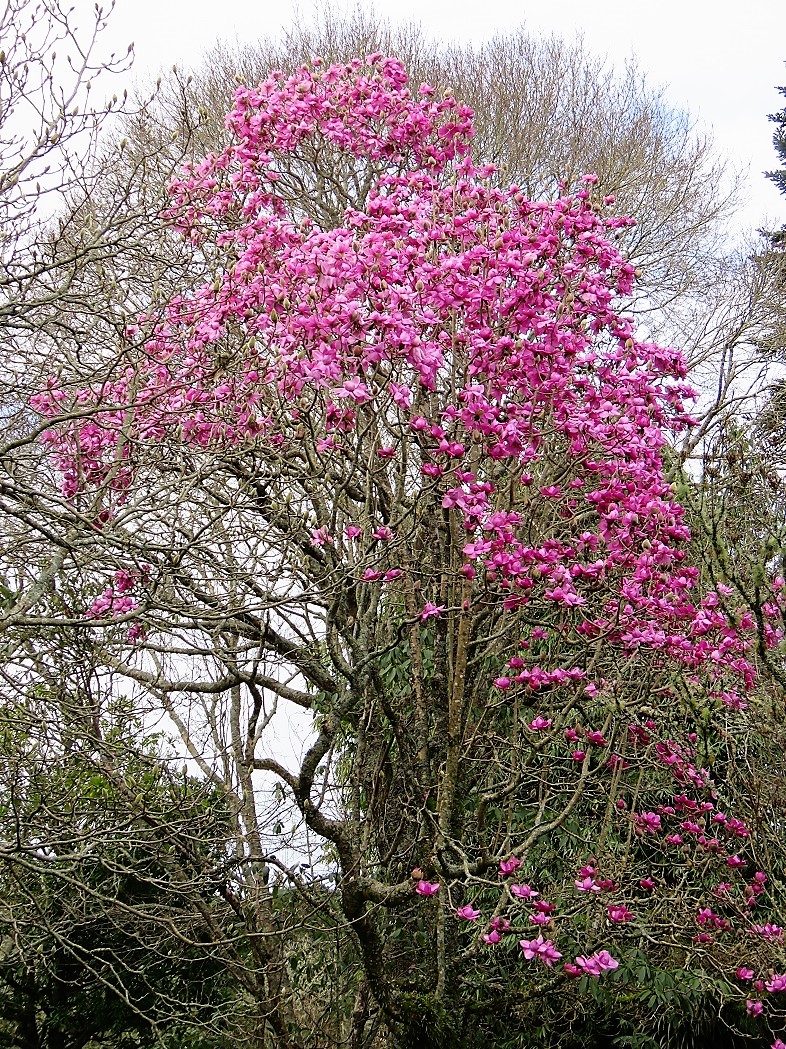
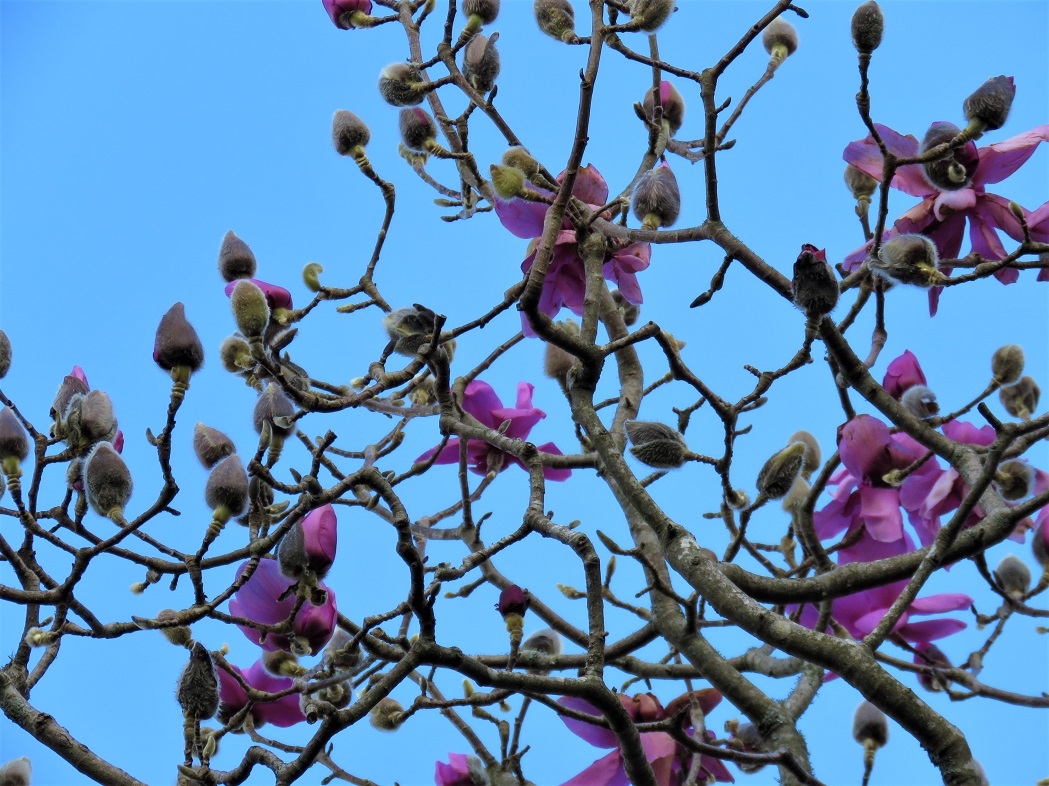
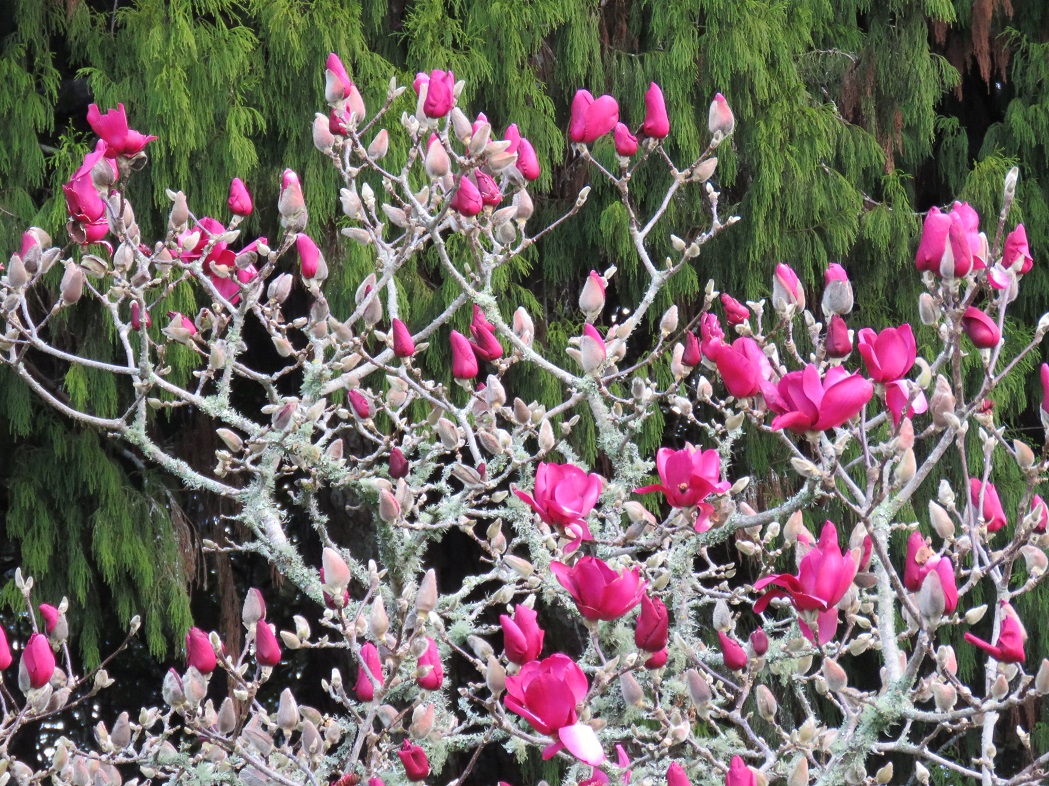
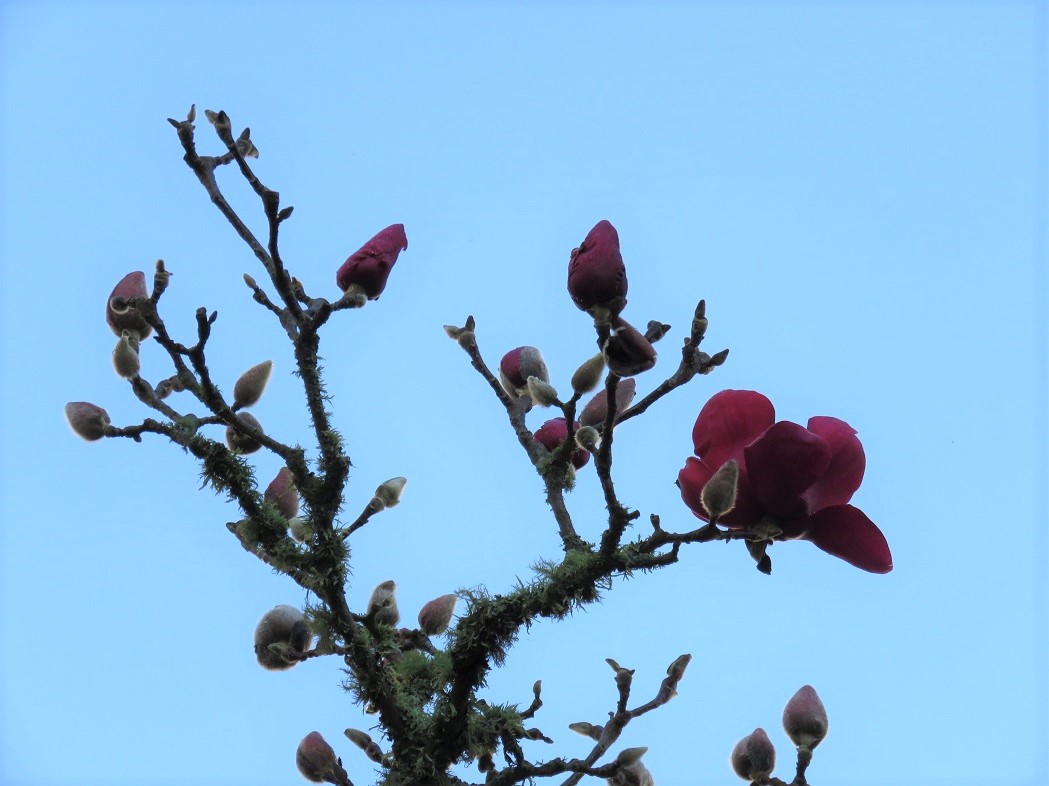
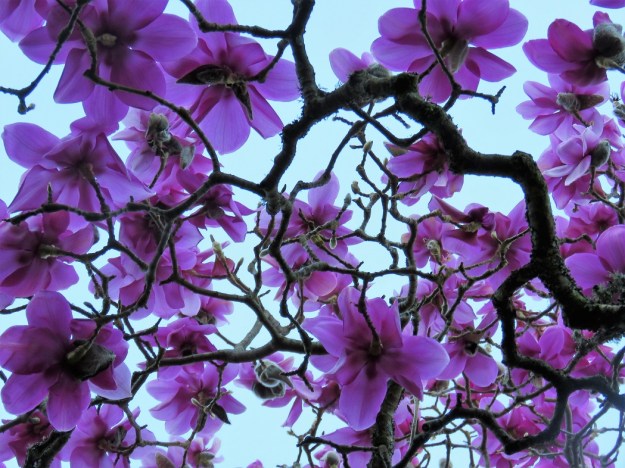
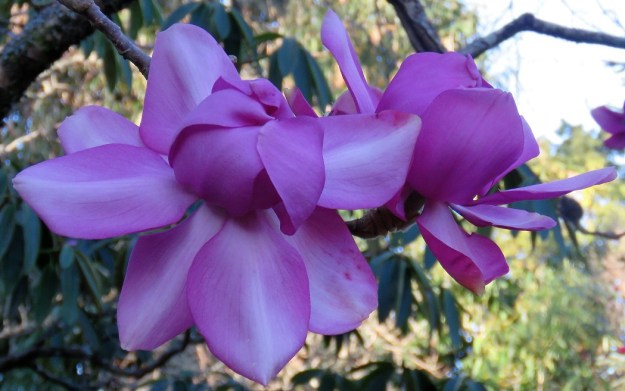
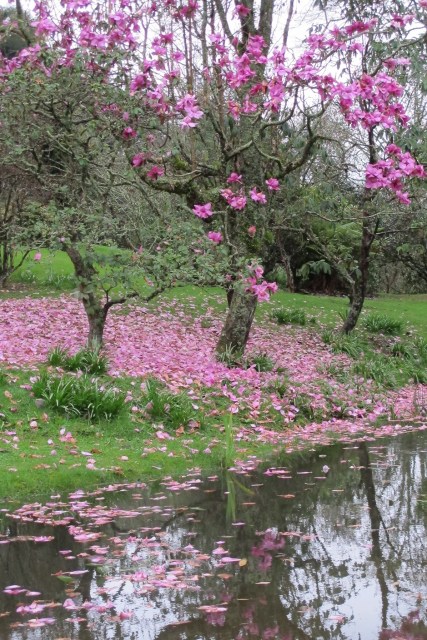
As I paused to admire the glorious purple of Magnolia ‘Lanarth’ through the trees, the thought occurred to me that the vast majority of the red magnolias raised and released around the world since the mid 1980s have descended from this particular tree down by the stream in our park. Some are several generations down the line but they trace their genes back to our tree.
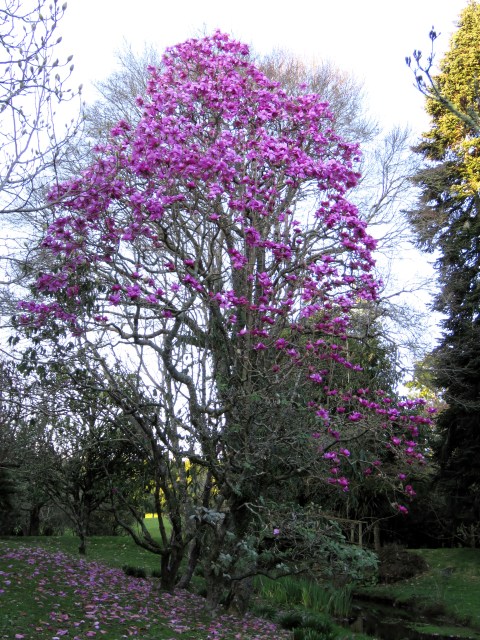
Botanically, our Magnolia ‘Lanarth’ is the form distributed by leading UK nursery, Hilliers, back in the 1960s, Magnolia campbellii var. mollicomata ‘Lanarth’. Felix Jury imported it at considerable expense and thank goodness he did.
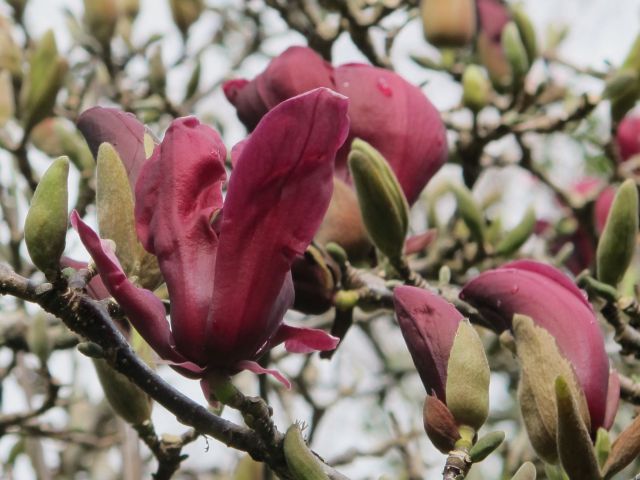
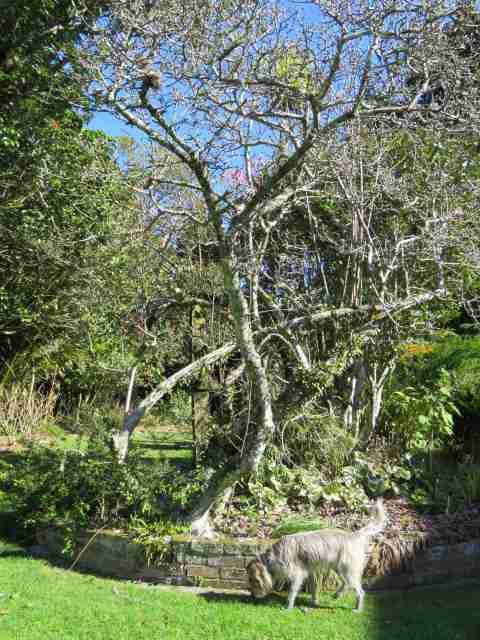
To be fair, it wasn’t just ‘Lanarth’ that launched the platform for new generations of red magnolias. The plant of Magnolia liliiflora ‘Nigra’ in the garden border behind our house was the other parent, almost certainly the seed-setter. In the heady world of magnolias, liliiflora is not a showstopper. Our plant is more sturdy shrub than tree, the blooms are not large, typical liliiflora form which is not showy and the flower colour has none of the rich glow that magnolias can have. But it is red both inside and outside on the petals. Mark tells me we are reputed to have a particularly good form of liliiflora ‘Nigra’ in this country in terms of its solid red bloom without the inner petal being white.
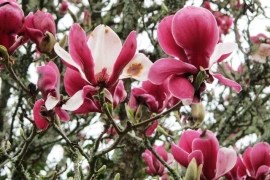
Breeders and enthusiasts around the world had been trying to create good red magnolias before, like the optimistically named ‘Chyverton Red’, ‘Pickard’s Ruby’ and ‘Pickard’s Garnet’. We have one example here but I only have one tiny photo of it and I have just found out that the name we have on it is wrong. I will have to take more notice of it when it flowers this year and try and work out what it is, only out of curiosity because it is not remarkable.
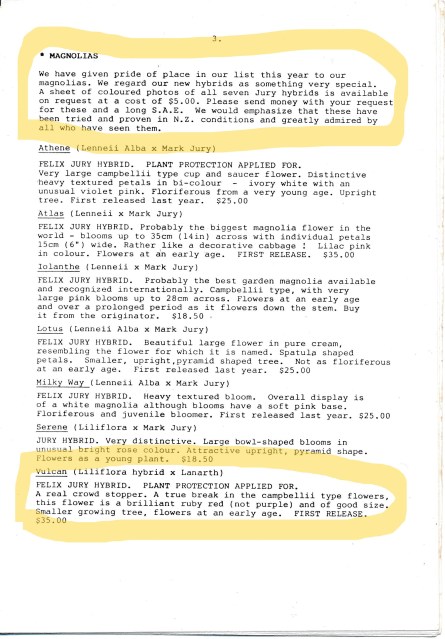
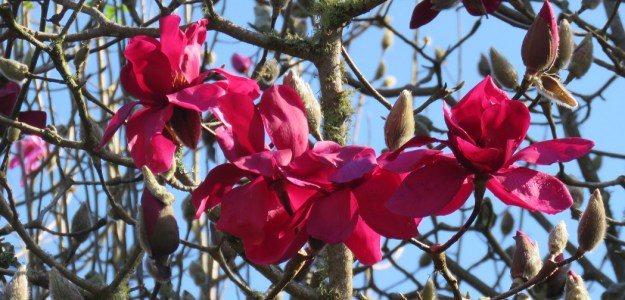
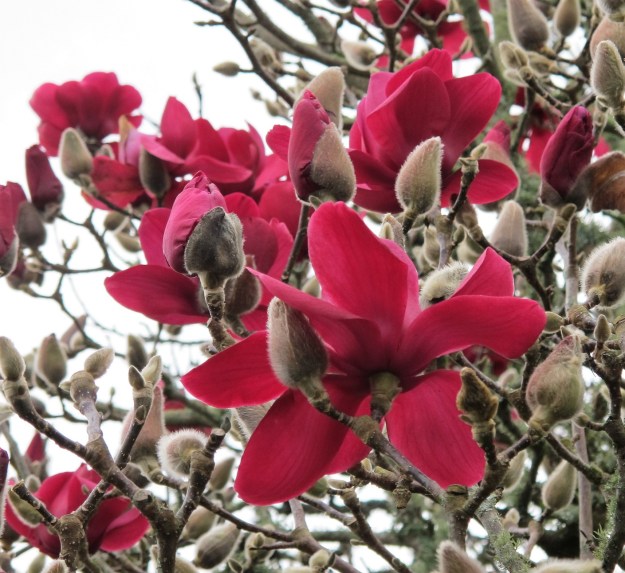
Felix looked at his plant of ‘Lanarth’ and wondered if he could get a good-sized, red campbellii-type flower. He had already done his other breeding to reach ‘Iolanthe’, ‘Milky Way’, ‘Athene’ and the other four Felix Jury cultivars. And so he created ‘Vulcan’, a breakthrough in its day. ‘Lanarth’ contributed the flower size and form, solid colour inside and out but also the translucence, tree form and scent. M. liliiflora ‘Nigra’ contributed solid colour, smaller tree stature and, importantly, red.
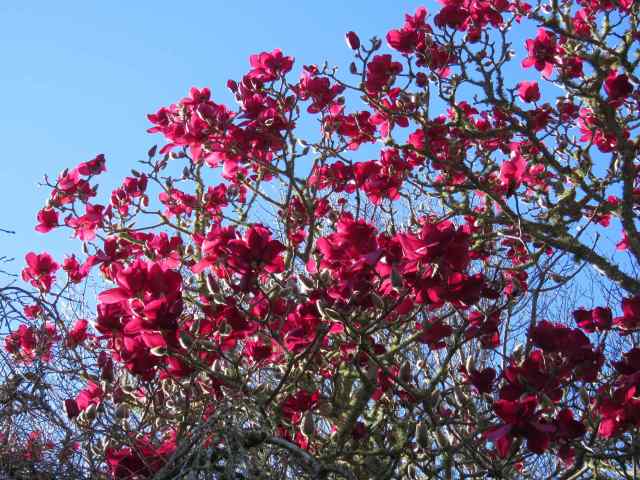
We first released ‘Vulcan’ in 1989, in that wonderfully under-stated way of that era. I don’t think we sent any plant material overseas at the time but bits of it soon winged their way around the world and the rest, as they say, is history. ‘Vulcan’ is not without its flaws. It flowers too early for frosty areas (as does ‘Lanarth’); it only achieves its density and purity of colour in warmer climates and even then tends to fade out to murky purple as the season progresses. But for its time, it was a breakthrough. It was the only plant we ever released that we could track its flowering from north to south of the country by the telephone calls we received. Even today, 35 years on, it is a showstopper at its best. I had two young tradeswomen painters in a couple of weeks ago and one of them asked me about the ‘black magnolia’ as she spotted the first buds opening, declaring she had never seen anything like it before.
Felix didn’t go any further with breeding magnolias after ‘Vulcan’ but encouraged Mark in turn. And it was Mark who created the next generation which included ‘Black Tulip’ and ‘Felix Jury’. Other NZ breeders followed suit – notably Vance Hooper and Ian Baldick.
It seems that ‘Black Tulip’ and Felix Jury’ have become two of the more significant breeder parents around the world. I see many, many red seedlings on international magnolia pages and they are clearly descended from those early red hybrids here.
Felix named one red magnolia, Mark has named and released three but there is a fourth in the pipeline. We are hoping it will be ready for release internationally next year or maybe 2026. We describe it as a ‘Vulcan’ upgrade. It flowers a little later and has an exceptionally long blooming season and is a different hue of red, without a tendency to the purple undertones inherited from ‘Lanarth’. Solid colour and cup and saucer form which is our preference – it stands out here as good and we have high hopes for it across a range of climates. I won’t share photos until we have a release date.
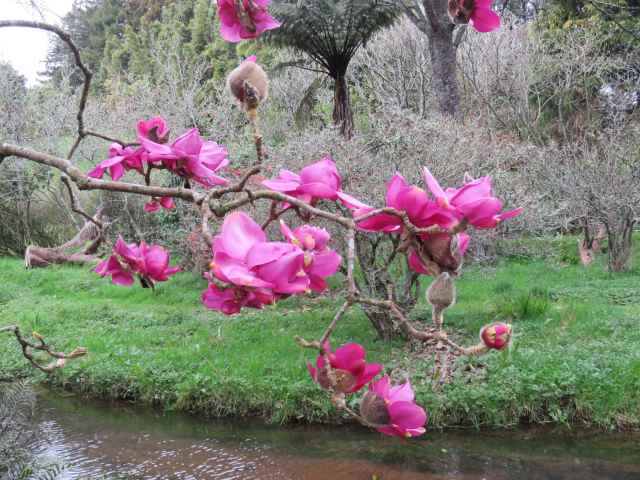
The new selection also traces its origin to the lovely ‘Lanarth’ in our park. That ‘Lanarth’ originated from a seed collection by plant hunter, George Forrest, in 1924 in southeastern China, near the Burmese border. Only three seed germinated back in the UK and this one was the best, named for the garden where it was raised in Cornwall. Those are quite long odds for what turned out to be such a significant plant.


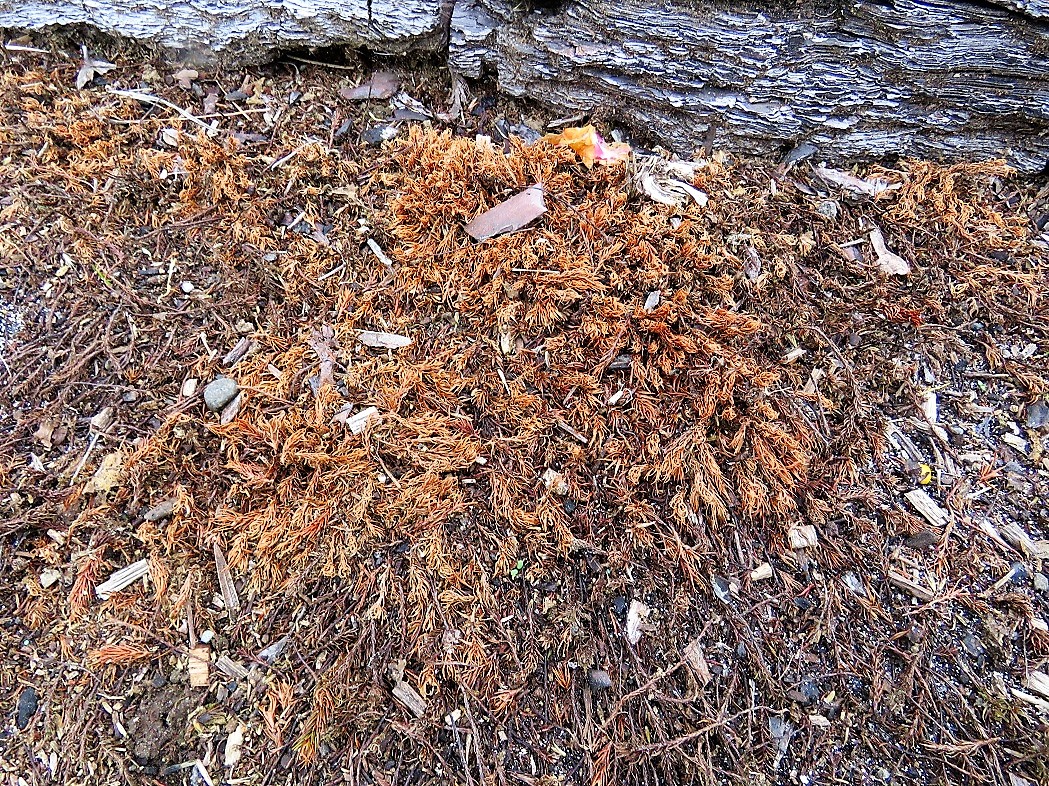

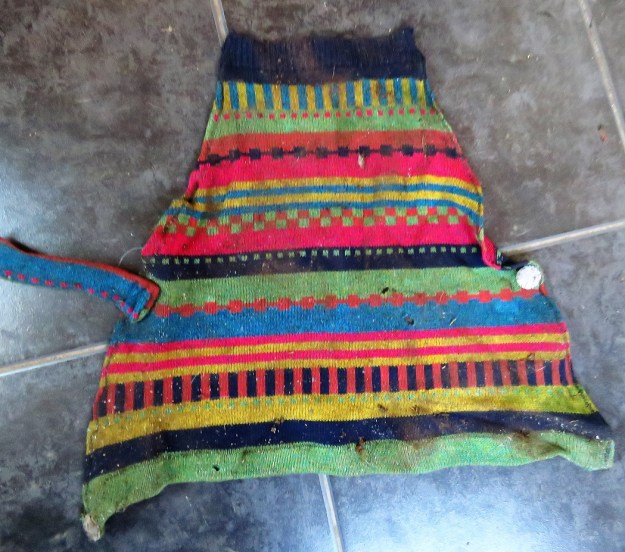 Finally, an animal story. When we first adopted poor, unloved Spikey dog in 2009, we worried that he felt the cold badly. His coat was very thin – at least compared to the Shetland sheep dog we also had at the time – and he had not one ounce of body fat. Daughter made him a coat of many colours. I put it on him one chilly morn and Mark laughed at the ridiculous sight. Spike then hurtled down the avenue gardens after a rabbit and reappeared without his coat. Suggestions ranged from him being too embarrassed to be seen in the coat to Mark’s idea that he had regifted it to a needy rabbit family. Years passed and we never found the Joseph coat – until this week. It is a little brittle after 8 or 9 years in the open but a triumph to the resilience of yarn blends. One minute – that is how much wear that coat had.
 In the meantime, he had been gifted a genuine Harrods coat and I had bought him a little number that made him look like the canine version of Julian Clary. But we always knew that as a bogan, freewheeling dog, he would have preferred a black vinyl number with chrome studs. These days he is over 14, stone deaf with a heart condition and possibly some level of dementia so he has passed the winter days sleeping in his bed by the fire. Yesterday, with spring in the air, he came out of hibernation and could even have been described as frolicking as he accompanied us around the garden with visiting friends. There may be life in the old dog yet, if he doesn’t get taken out by a heart attack.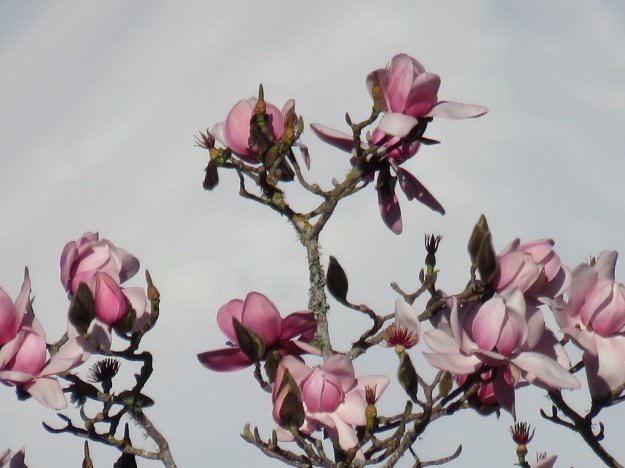
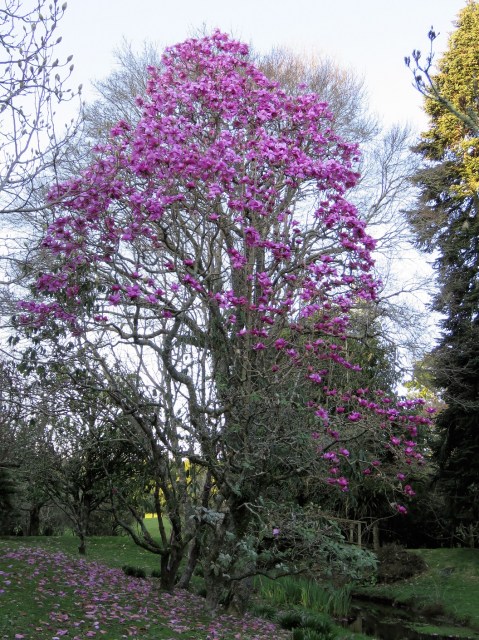
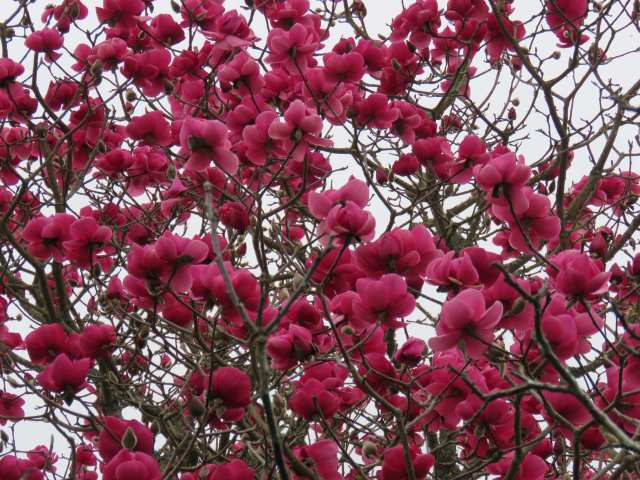
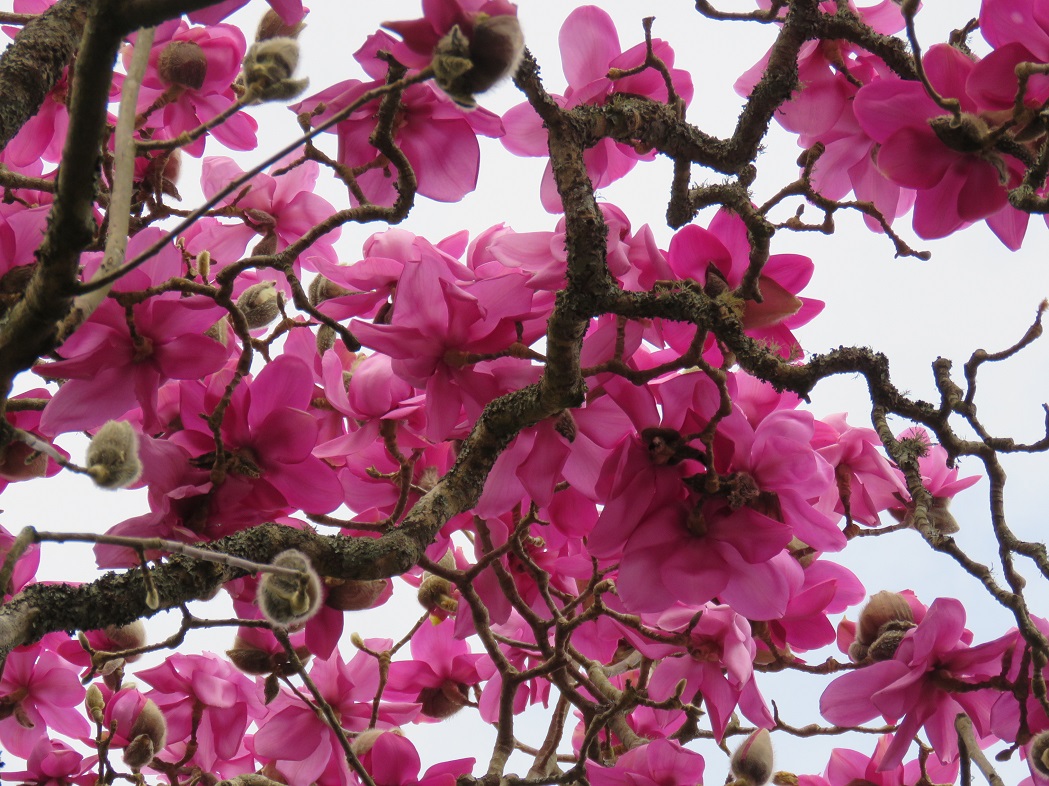
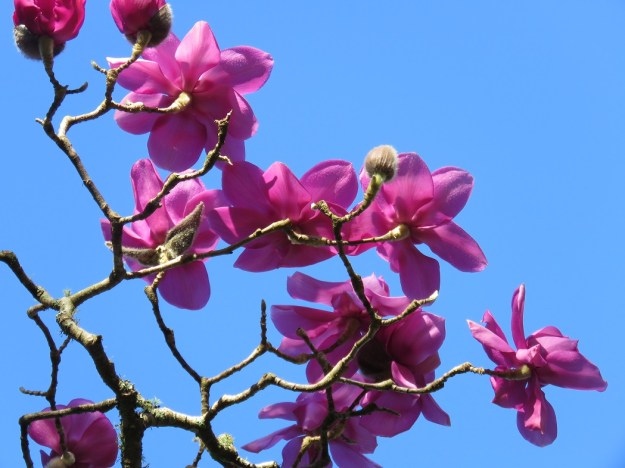
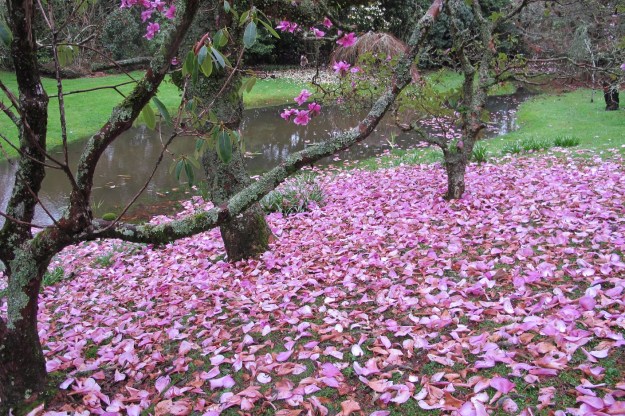 The true ‘Lanarth’ finally flowered here in the 1960s and it became the key to Felix’s best known success – the colour breakthrough from purple into red tones, first seen in Magnolia ‘Vulcan’. The rest, as they say, is history and New Zealand is now recognised internationally as the home of the best red hybrids. These days with the downstream breeding, the purple tones of ‘Lanarth’ are being eliminated in favour of purer red shades. Now it is the case that there are several good red magnolias on the market, but no large, purple-flowered, garden-friendly improvement on the original ‘Lanarth’ that we have seen. It has been attempted. We just haven’t seen one yet that we think is as good as, let alone better than the original.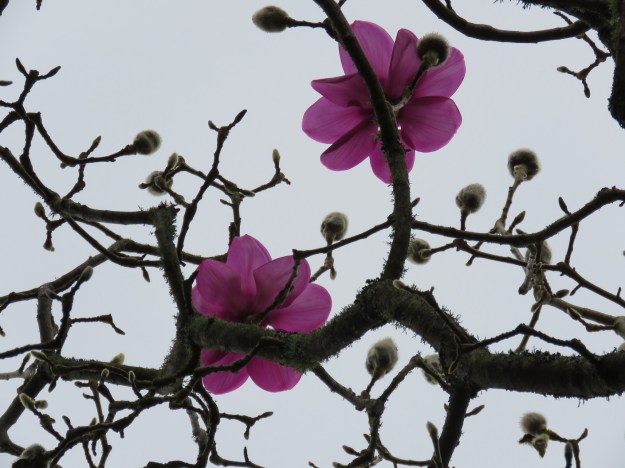
 Tikorangi The Jury Garden