Tag Archives: Magnolia liliiflora nigra

The legacy of Magnolia ‘Lanarth’ and modest Magnolia liliiflora ‘Nigra’

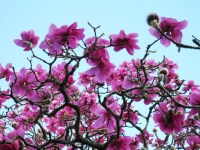
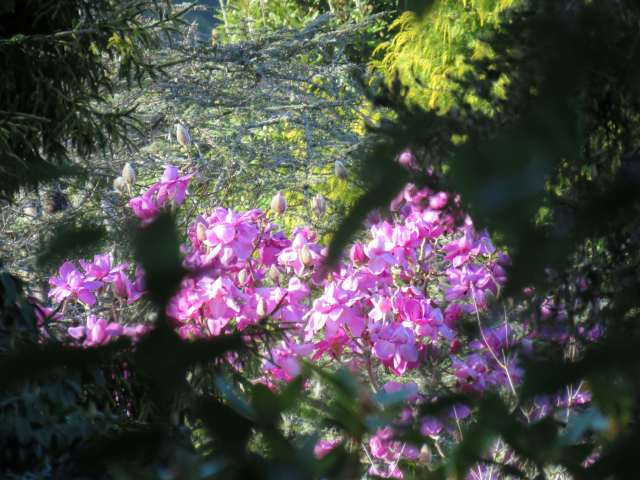
Not the best photo but I can assure you it was the best sight on its day – looking through trees to ‘Lanarth’ in the distance

As I paused to admire the glorious purple of Magnolia ‘Lanarth’ through the trees, the thought occurred to me that the vast majority of the red magnolias raised and released around the world since the mid 1980s have descended from this particular tree down by the stream in our park. Some are several generations down the line but they trace their genes back to our tree.
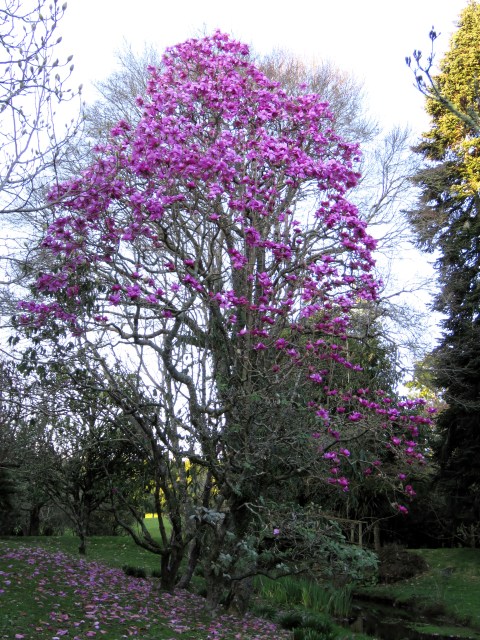
Our plant of Magnolia campbelllii var mollicomata ‘Lanarth’

Botanically, our Magnolia ‘Lanarth’ is the form distributed by leading UK nursery, Hilliers, back in the 1960s, Magnolia campbellii var. mollicomata ‘Lanarth’. Felix Jury imported it at considerable expense and thank goodness he did.
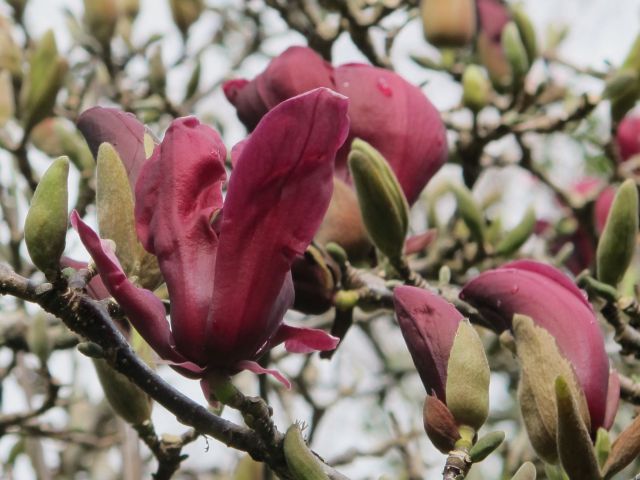
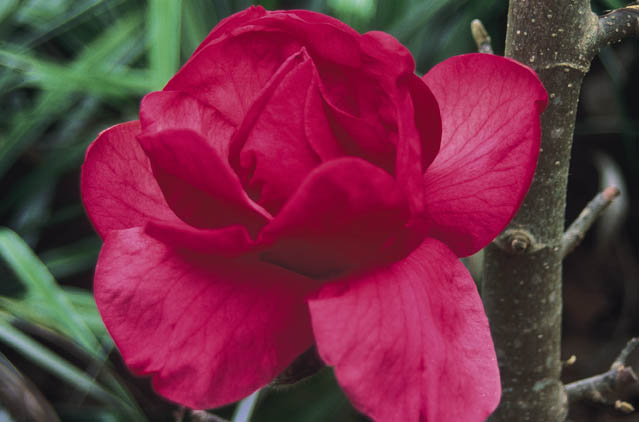
Magnolia liliiflora Nigra – red but otherwise unremarkable
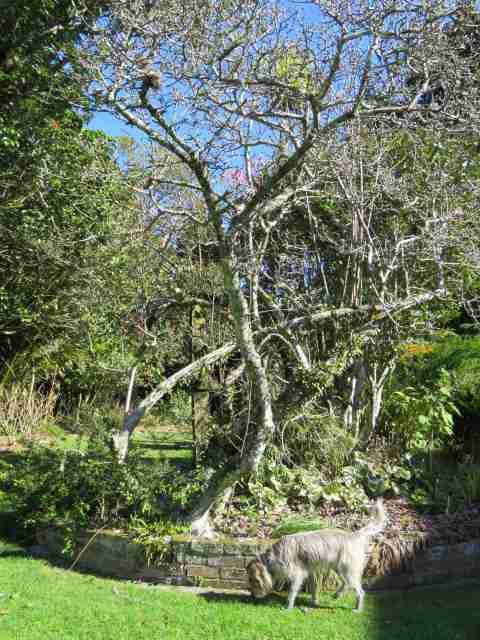
and the shrubby tree of M liliiflora Nigra at about 60 years of age. It flowers later in the season so we think must have been the mother of the red hybrids, not the pollen donor.

To be fair, it wasn’t just ‘Lanarth’ that launched the platform for new generations of red magnolias. The plant of Magnolia liliiflora ‘Nigra’ in the garden border behind our house was the other parent, almost certainly the seed-setter. In the heady world of magnolias, liliiflora is not a showstopper. Our plant is more sturdy shrub than tree, the blooms are not large, typical liliiflora form which is not showy and the flower colour has none of the rich glow that magnolias can have. But it is red both inside and outside on the petals. Mark tells me we are reputed to have a particularly good form of liliiflora ‘Nigra’ in this country in terms of its solid red bloom without the inner petal being white.
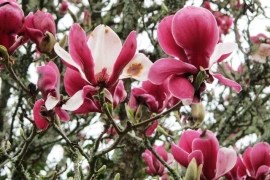
Breeders and enthusiasts around the world had been trying to create good red magnolias before, like the optimistically named ‘Chyverton Red’,  ‘Pickard’s Ruby’ and ‘Pickard’s Garnet’. We have one example here but I only have one tiny photo of it and I have just found out that the name we have on it is wrong. I will have to take more notice of it when it flowers this year and try and work out what it is, only out of curiosity because it is not remarkable.  

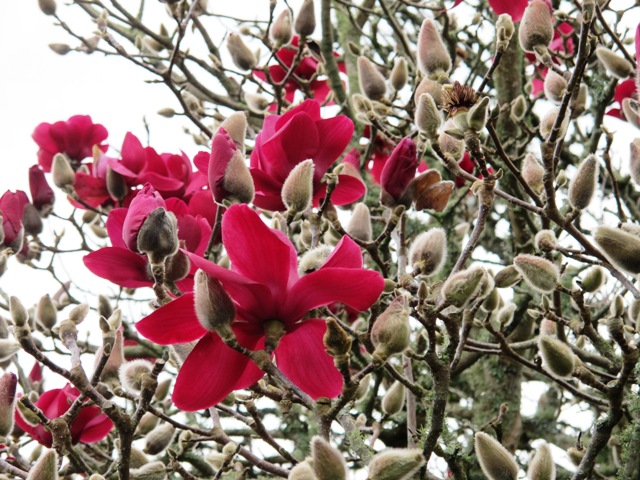
Felix looked at his plant of ‘Lanarth’ and wondered if he could get a good-sized, red campbellii-type flower. He had already done his other breeding to reach ‘Iolanthe’, ‘Milky Way’, ‘Athene’ and the other four Felix Jury cultivars. And so he created ‘Vulcan’, a breakthrough in its day. ‘Lanarth’ contributed the flower size and form, solid colour inside and out but also the translucence, tree form and scent. M. liliiflora ‘Nigra’ contributed solid colour, smaller tree stature and, importantly, red.
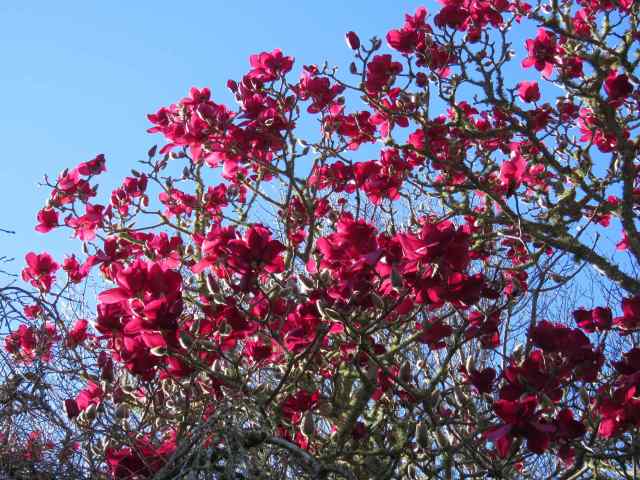
Magnolia ‘Vulcan’ this morning

We first released ‘Vulcan’ in 1989, in that wonderfully under-stated way of that era. I don’t think we sent any plant material overseas at the time but bits of it soon winged their way around the world and the rest, as they say, is history. ‘Vulcan’ is not without its flaws. It flowers too early for frosty areas (as does ‘Lanarth’); it only achieves its density and purity of colour in warmer climates and even then tends to fade out to murky purple as the season progresses. But for its time, it was a breakthrough. It was the only plant we ever released that we could track its flowering from north to south of the country by the telephone calls we received. Even today, 35 years on, it is a showstopper at its best. I had two young tradeswomen painters in a couple of weeks ago and one of them asked me about the ‘black magnolia’ as she spotted the first buds opening, declaring she had never seen anything like it before.
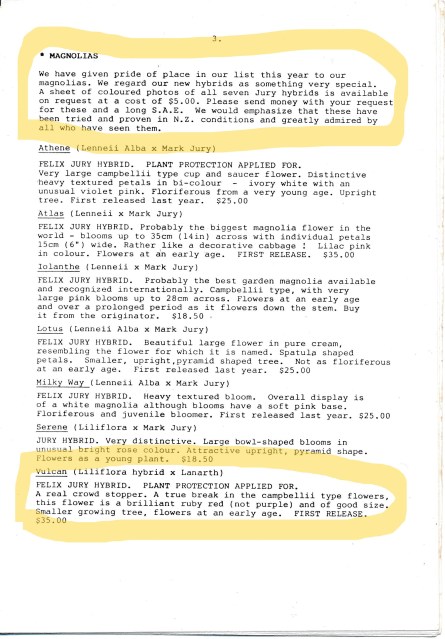
Our mailorder catalogue from 1989

Felix didn’t go any further with breeding magnolias after ‘Vulcan’ but encouraged Mark in turn. And it was Mark who created the next generation which included ‘Black Tulip’ and ‘Felix Jury’.  Other NZ breeders followed suit – notably Vance Hooper and Ian Baldick.

It seems that ‘Black Tulip’ and Felix Jury’ have become two of the more significant breeder parents around the world. I see many, many red seedlings on international magnolia pages and they are clearly descended from those early red hybrids here.
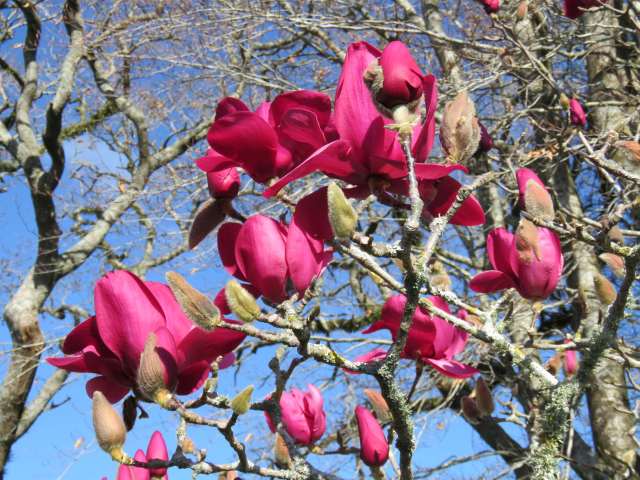
Magnolia ‘Vulcan’

Felix named one red magnolia, Mark has named and released three but there is a fourth in the pipeline. We are hoping it will be ready for release internationally next year or maybe 2026. We describe it as a ‘Vulcan’ upgrade. It flowers a little later and has an exceptionally long blooming season and is a different hue of red, without a tendency to the purple undertones inherited from ‘Lanarth’. Solid colour and cup and saucer form which is our preference – it stands out here as good and we have high hopes for it across a range of climates. I won’t share photos until we have a release date.
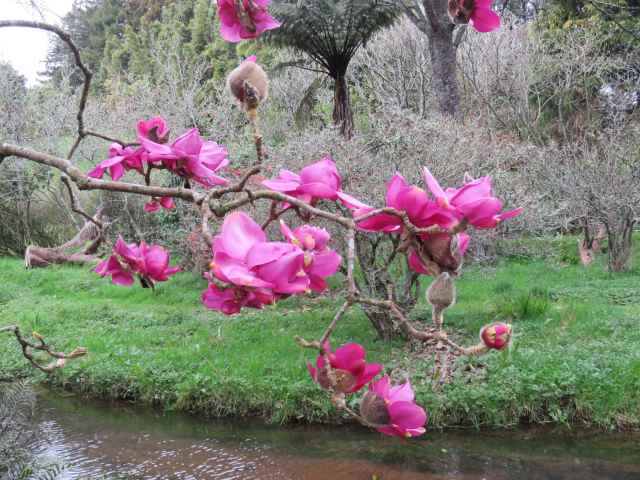
Magnolia campbelli var mollicomata ‘Lanarth’

The new selection also traces its origin to the lovely ‘Lanarth’ in our park. That ‘Lanarth’ originated from a seed collection by plant hunter, George Forrest, in 1924 in southeastern China, near the Burmese border. Only three seed germinated back in the UK and this one was the best, named for the garden where it was raised in Cornwall. Those are quite long odds for what turned out to be such a significant plant.
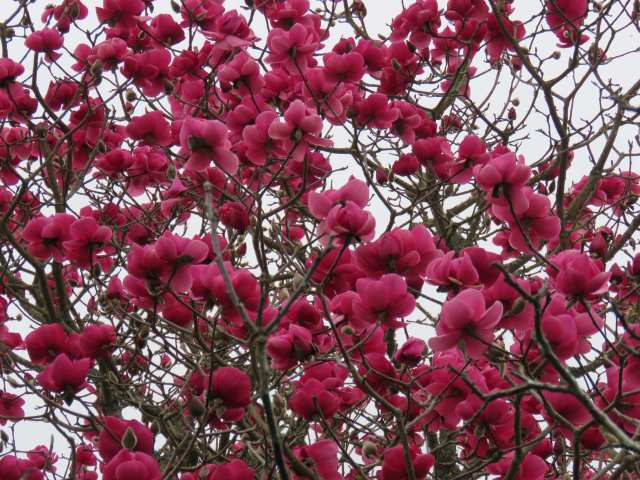
While we may only have named and released four red magnolias from the Garden of Jury, with one more to come, we have many, many magnolias on the property that come from the same breeding lines. This lovely one that won’t be selected for release is another seedling from the batch that gave both ‘Black Tulip’ and ‘Felix Jury’.

All the reds

Magnolia 'Felix Jury'

Magnolia ‘Felix Jury’

August belongs to the red magnolias here. They start flowering in July for us but peak this month with September leaning more to the pinks, whites and yellows. While others may delight in one or two red magnolias, we get them en masse. For every named variety, there are many sister seedlings that will never be released but keep on growing and flowering each year. Magnolia trees just get bigger and better as the years go by so the annual display keeps on getting more spectacular.

Magnolia liliiflora 'Nigra'

Magnolia liliiflora ‘Nigra’

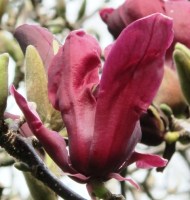
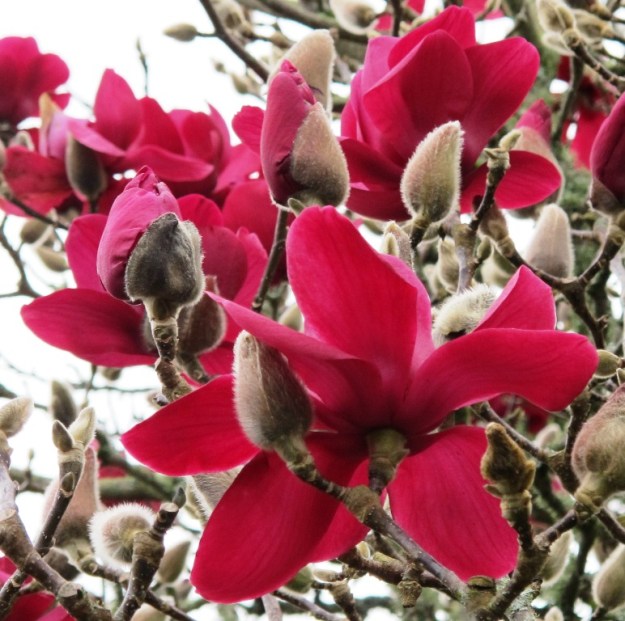
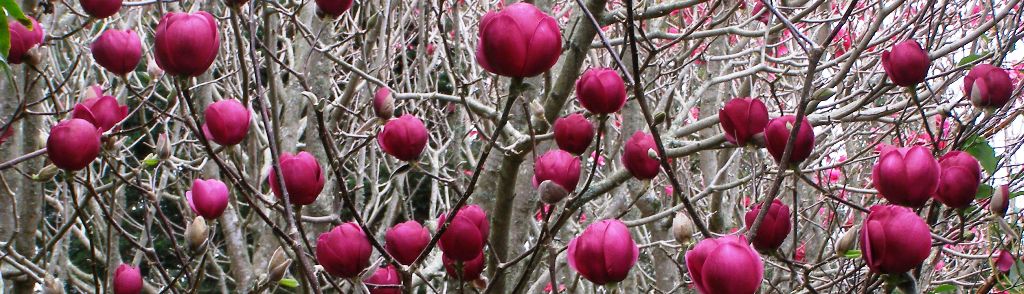
When Felix Jury, transferred the pollen of Magnolia ‘Lanarth’ onto Magnolia liliiflora ‘Nigra’ in the early 1960s, I doubt very much that he contemplated a significant breakthrough in the international world of magnolias which would bring fame – though not fortune. He just wanted to see if he could get to large red flowers. Lanarth (technically M. campbellii var. mollicomata ‘Lanarth’) has lovely flower form and at its best is a magnificent purple on a handsome tree. M. liliiflora ‘Nigra’ can have good red colour but with small flowers on a shrubby, spreading plant, it is not showy.

Magnolia 'Vulcan'

Magnolia ‘Vulcan’

The best of the progeny he named Magnolia ‘Vulcan’ and for the next decades, it stood proudly on its own as a major step along the way to red magnolias. Sure, it is not a pure red and the later season flowers fade out to a somewhat murky purple. There is always room for improvement but Felix laid the foundations for what is following now and he showed that a determined, self-taught, hobby plantsman at the bottom of the world could make a major contribution to the international magnolia scene.

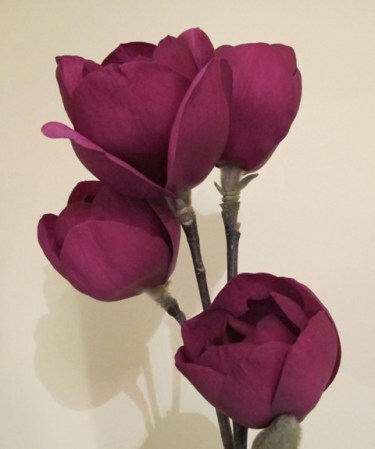
Magnolia 'Black Tulip'

Magnolia ‘Black Tulip’

Magnolia 'Burgundy Star'

Magnolia ‘Burgundy Star’

It is perhaps not widely recognised in this country that New Zealand has led the way with red magnolias Our spring display is arguably the best in the world. For reasons yet to be determined, we get deeper and stronger colours here, certainly than in the UK and Europe. There, they are accustomed to white, pink and now yellow magnolias, but the impact of the red types that are now relatively common here never fails to stun international visitors who come in spring. Felix Jury paved the way with Vulcan. His youngest son, Mark – the man to whom I have been married for more decades than we like to tally – continued building on this foundation, as has fellow Taranaki magnolia breeder, Vance Hooper.

Mark’s quest is a pure red magnolia, losing the purple tones that dog the earlier hybrids. He is getting very close – not quite there yet, but close enough to think that it is achievable. Like his father before him, Mark prefers large flowers with solid colour both inside and outside the petals (technically tepals).

Magnolia 'Genie'

Magnolia ‘Genie’

Vance Hooper is going down a slightly different track and shows a liking for bicoloured flowers. In magnolias this often means a paler inner petal. He is also actively selecting for smaller growing trees which are floriferous over a long period of time, often with smaller flowers. His best known red cultivar to date is Magnolia Genie but he too has a whole range of red seedlings under observation and a number of other named varieties already released.

Felix named one purple – Apollo – and one into the red tones, Vulcan. Mark has named only three reds so far – Black Tulip, Burgundy Star and Felix Jury. Of these, Burgundy Star is arguably the reddest but it is the one he named for his father that brings us greatest pleasure. As a juvenile plant, it started off with OTT giant pink blooms but as it matured, the colour deepened and we now get enormous red flowers – though I admit they fade out to pink. This magnolia represents what Felix himself was trying to get to – a rich coloured, very large bloom of the Iolanthe-type.

It is a source of quiet satisfaction to us that Felix lived long enough to see his son achieve this outcome and it was for this reason that Mark named it for his father. We were most gratified to learn that it has been given an Award of Garden Merit by Britain’s Royal Horticultural Society.

I have never forgotten the customer who came in to buy a magnolia some years ago. She didn’t want a red one, was sick of seeing them – too common, she declared. No, she wanted a white one. I think I remained steadfastly polite but as our forest of colour blooms each August, I rememer her blissful ignorance.

First published in the August issue of New Zealand Gardener.

'Lanarth" is in full flower and looking particularly fine this week

‘Lanarth” is in full flower and looking particularly fine this week

The story of the red magnolias

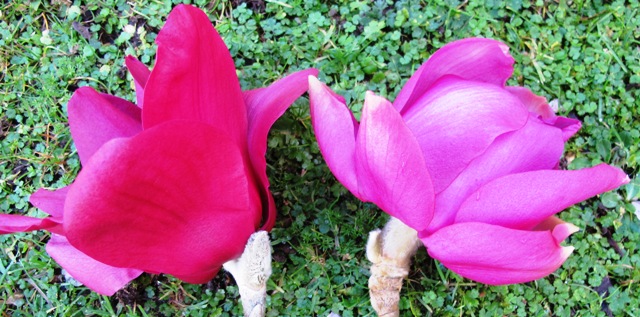
Vulcan to the left, Lanarth to the right

Vulcan to the left, Lanarth to the right

Few people realise that the story of the red magnolias is a New Zealand story. Probably even fewer realise that when it comes to stronger colours in magnolias, we get the best colour in the world here.

I am talking about deciduous magnolias. The evergreen grandiflora types are resolutely white in bloom and adding colour to the softer-leafed, evergreen michelias is very much a work in progress. But deciduous reds, we do well.

Most deciduous magnolias are in the white and pink colour range and very lovely many of them are too. But with many plant genus, there is always that quest to extend the range of flower form and colour, to build on what happens in nature to get a better performing, showier garden plant. Some of it is about pushing boundaries to see what can be done. A truly blue rose is still an unfulfilled quest but it is highly likely it will come sooner or later.

Some would argue that we do not yet have truly red magnolias and there is truth in that. There is no scarlet, no fire engine red. All the red varieties on the market still retain a blue cast to them and fade out to pink or purple tones rather than to the orange end of the colour spectrum. But if you line one of the red magnolias up against a purple one, it is clear that they are a different colour.

This (liliiflora 'Nigra')

This (liliiflora ‘Nigra’)

I started by saying that the story of red magnolias is a New Zealand story. In fact it started as our family story. Back in the 1970s, Felix Jury wondered if he could get a large flowered, solid coloured red magnolia on a smaller growing tree. He started with the red species – M. liliifora ‘Nigra’. In itself, ‘Nigra’ is a nice enough, low spreading magnolia but nothing showy. He crossed it with the very showy, indubitably purple ‘Lanarth’ (technically M. campbellii var. mollicamata ‘Lanarth’). The rest, as they say, is history.

crossed with this (Lanarth)

crossed with this (Lanarth)

‘Vulcan’ took the magnolia world by storm. This was the break in colour and form. It is not perfect. We know that. The flowers do not age gracefully. It flowers too early in the season for some areas. It does not develop its depth of colour or size of bloom in colder climates and is a shadow of its own self in most UK and European destinations. But after more than 20 years, it is still hugely popular and very distinctive, particularly in Australia and New Zealand. It set the standard and it opened the door to other cultivars.

... and the result was this: Vulcan

… and the result was this: Vulcan

In due course, but slowly, slowly, Mark followed on from his father. He raised hundreds of seedlings and named ‘Black Tulip’ (the darkest of the reds), ‘Felix Jury’ and ‘Burgundy Star’.

Fellow breeder, Vance Hooper, started his programme on the reds and he has named several. The best known is ‘Genie’. Like Mark, he is continuing determinedly down the red magnolia line in the quest for perfection, although improvement or variation will do as steps along the way.

There are other reds on the NZ market now, though none from sustained breeding programmes to match those undertaken by Mark and Vance.

Black Tulip - the first of the second generation red magnolias

Black Tulip – the first of the second generation red magnolias

It appears that it is ‘Black Tulip’ that has enabled the rise of new selections in UK and Europe. It sets seed and every man and their dog is now raising seed and naming selections. Mark is a little wry as he comments that he raised hundreds of plants to get one ‘Black Tulip’ whereas others raise a few seed and name several. He has an ever-decreasing level of patience for amateurs who, as he says, “raise five seedlings and name six of them” based on the first or second flowering only, when he is still assessing seedlings which are 20 years old and showing their adult form, habit and performance.

So New Zealand is about to lose its position of world domination in the red magnolias. But we still get better colour here than others do overseas. There is no certainty yet as to whether that is related to our mild climate, our soils, the root stock used or the quality of light – likely a combination of all. ‘Felix Jury’, which can flower strong red for us is more an over-sized pink flamingo so far in European gardens. We are just relieved that it achieves full-sized flowers and plenty of them, even if it is not red in their conditions.

Magnolia Felix Jury at its best here

Magnolia Felix Jury at its best here

The quest for truer reds continues. A red that loses the magenta hue. Mark is assessing several with which he is quietly very pleased. They are not scarlet but they are an improvement in colour. Just don’t hold your breath. This is a long haul.

Finally, while NZ leads the world in reds, it was USA which gave us yellow magnolias. These all descend from one yellow American species – M. acuminata. I just say that for the record. Credit where credit is due.

First published in the Waikato Times and reprinted here with their permission.