Tag Archives: Mark and Abbie Jury

From an earlier era

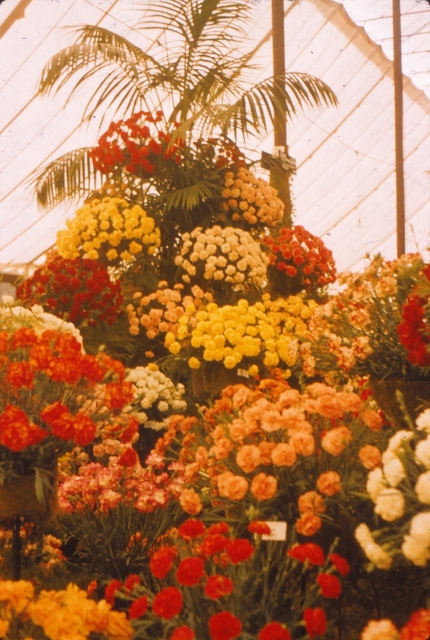
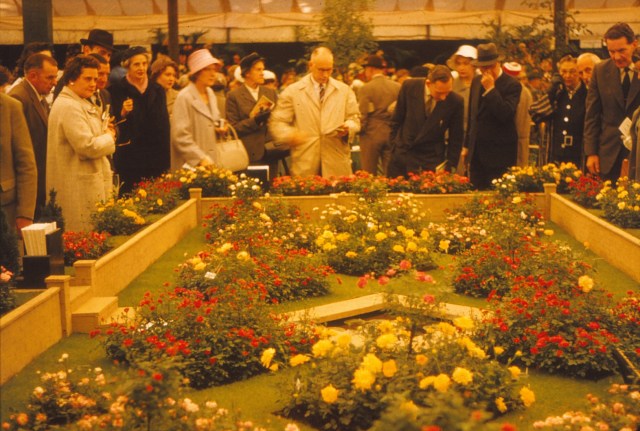
The marquee displays at the 1960 Chelsea Flower Show

I had told myself for decades that one of these days. I will sort through the family slides. Not so much a day, it turned out, as a couple of weeks but I am close to the end.

Both Mark’s parents and Mark himself photographed on slide film in the days before digital cameras. It was always an expensive medium to work in, probably even more so in the days when slide films had to be sent to Australia to be developed. There were boxes and boxes and boxes of slides. Forty years of them.

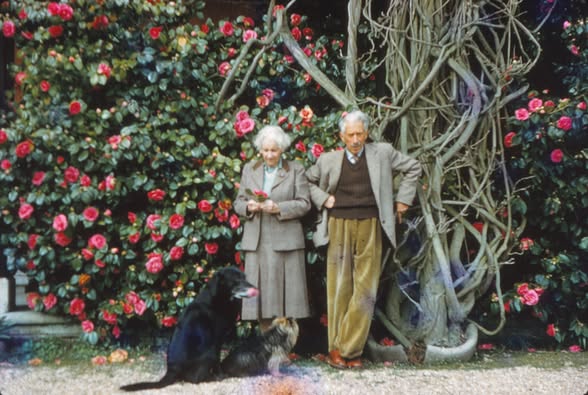
Labelled ‘Captain and Mrs Ingram, Benenden’. Initially I assumed this must be from Felix’s trip to the UK a decade later, Captain Ingram being none other than renowned plant collector and ornithologist Collingwood “Cherry” Ingram. The photo is more Mimosa in style and Mark says he is pretty sure his mother visited the Ingrams on her tour.

I decided early on that I would scan and keep the historic images of the garden and the property and those of identifiable family members but the close-ups of flowers could all be discarded, as could random landscapes and events that meant something at the time but are of no discernible relevance now.

My task became a lot more interesting when I came to the slides that Mark’s mother, Mimosa, took and now I worry that I may have been too ruthless in my selection of those to scan and keep and those to discard.

Mimosa in front of the Papal Basilica of St Peter in the Vatican, 1960 photograph (not a slide in this case)

Mark’s mother only left the country once that I can see. But that one occasion was a big trip – Le Grand Tour, in fact. Mark has always been a bit vague on her absence, it being ‘quite a long trip’, he thought. I was a fair way through sorting the slides before I realised what a huge experience it must have been for her. She spent about two months voyaging there and back and five months exploring the UK, Italy, France, Austria, Germany, and the Netherlands.

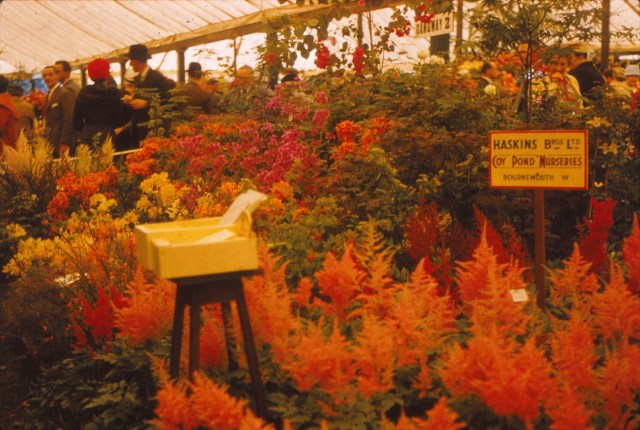
Astilbes in the marquee at Chelsea
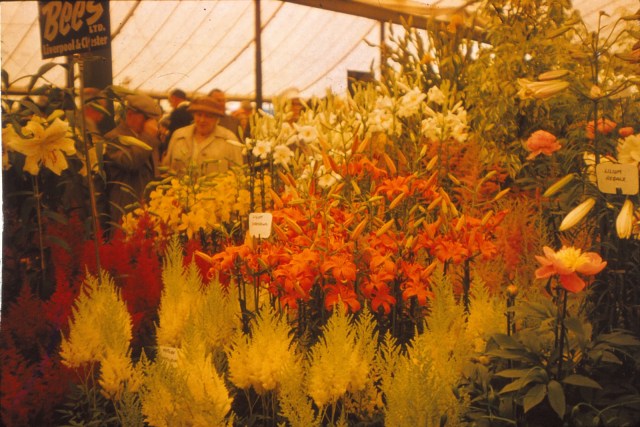
Astilbes and lilies
This display of roses was somewhat less than glorious but look at the serious garden visitors behind

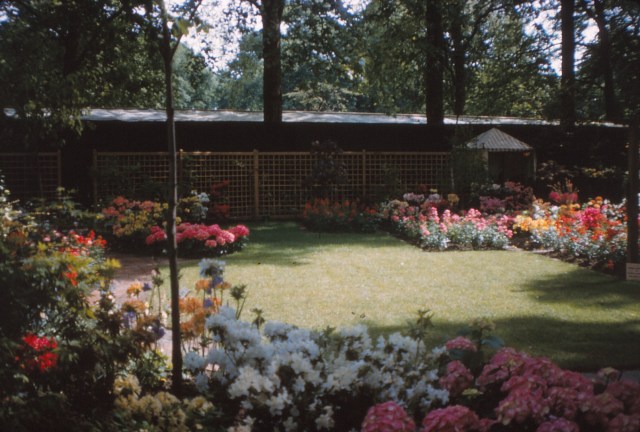
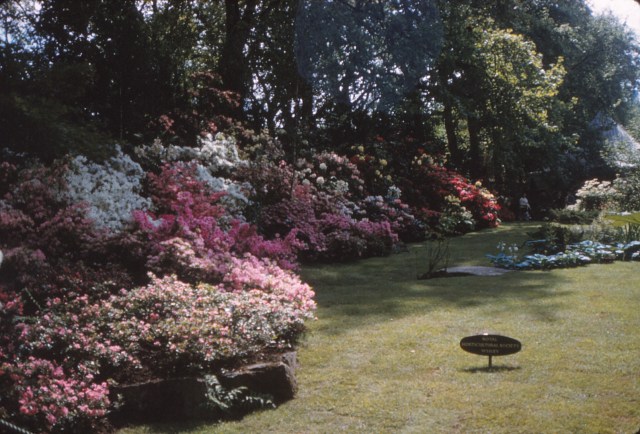
It included the Chelsea Flower Show where she was clearly impressed by the marquee displays which were of the very highest standard. She didn’t take many photos of the outdoor gardens. It seems that the showpiece outdoor gardens have evolved quite a bit in the last 65 years. Perhaps they are more fashion-forward these days?

It would seem that the outdoor gardens had more to do glorious floral displays than design

I wanted to date her Chelsea visit and I can now say that it was indeed 1960, as I thought. We also happen to have the menu cards from the trip over and back. We forget how recent long-distance air travel is and how extraordinary it is that we can travel all the way across the world in just over 24 hours in the air. Mimosa sailed out of Aotearoa New Zealand just before Christmas 1959, on board the SS Australia, a long-distance passenger liner operated by the Italian company, Lloyd Triestino, with an Italian crew.

The large format covers for entertainment cards and the menus changed daily, clearly designed as souvenirs – and successful souvenirs in that we still have them!
A very Italian experience

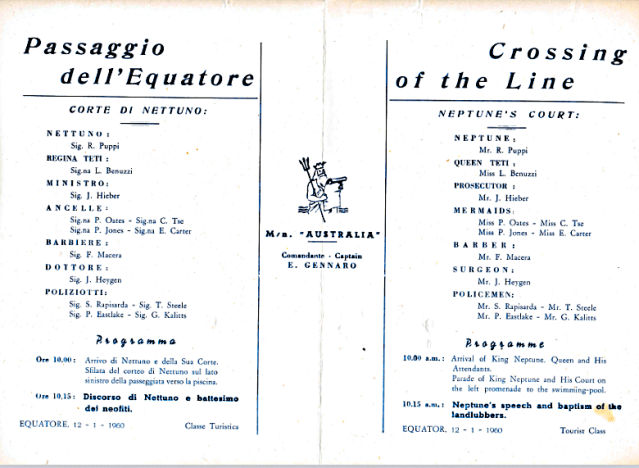
This solved one mystery. I was a little surprised by this somewhat raunchy image until Mark and another both suggested it was related to ‘crossing the line’, ergo, the equator. I found the programme for the event. One wonders what form the 10.15am Discorso di Nettuno e battesimo deo neofiti took (Neptune’s speech and the baptism of the landlubbers) but it all happened on January 12, 1960. Those relatively uninhibited young men in the photo appear to be the Italian crew. The voyage terminated on January 27 at an Italian port, having travelled via the Suez Canal.

Rather more risque than the farm boys from Tikorangi that Mimosa would have known

It must all have been quite the culture shock for a middle-aged woman from Tikorangi but Mark tells me his mother prepared for it all by putting quite a lot of effort into teaching herself Italian. I am not at all sure how one would even plan a trip of that length, in pre-internet days but even more so as a woman travelling on her own with no prior experience. I doubt that she would wing it, as we have done, and she probably travelled with a great deal more luggage than we have ever taken.

The return voyage was likely less exotic, on board the R.M.S. Rangitane, owned by the New Zealand Shipping Company so it likely transited the Panama Canal which, according to my mother, was very dull compared to the Suez. She boarded the Rangitane on or about June 3, 1960 and they docked in NZ on July 6. The menu cards from this return voyage show a diet that was considerably less adventurous than on the Italian liner.

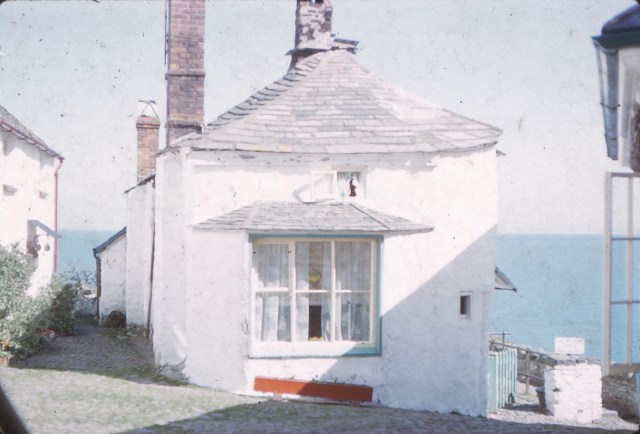
I loved this soft focus image from her visit to a seaside village in Cornwall. We stayed in a very similar fisherman’s cottage in St Mawes when we visited in 2009.

Mimosa was always interested in gardens but she mostly photographed landscapes and architecture. She had a good eye and, 65 years on, it was her people photographs that I found most delightful.  

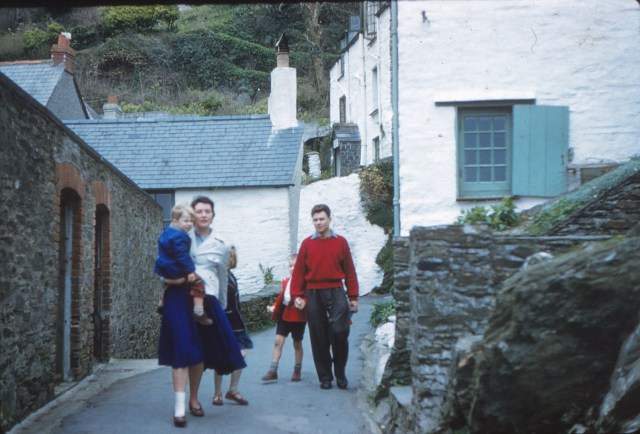
A random shot, I assume, of Cornish locals, possibly inspired by the blue and red clothing composition. As Mark commented, these photos are all the more remarkable for the fact that with old cameras, the settings all had to be manually adjusted so she would have had to take a light reading with her light meter and then adjust for distance and focus as well. Photography was less spontaneous back then.

When the rainy weather sets in again, I will turn my attention to ordering the garden scenes that I have scanned in. It is interesting to see the earliest plantings and constructions and the various stages they have gone through in close to 75 years. It makes us realise yet again that a garden can never be frozen in time. Gardening is a dynamic response to a changing environment, in the longer term at least. Curated examples may appear here in due course.

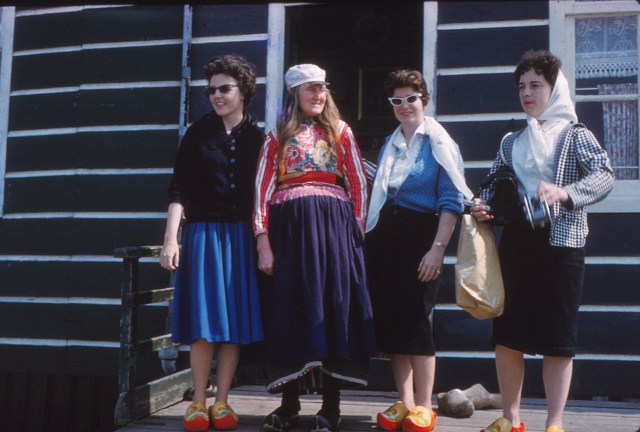
From her visit to the Netherlands…. Clogs- dear. They are all wearing clogs.
Nothing to do with Mimosa’s grand tour, but this was probably my favourite of her images. It was labelled ‘Lou and Simon Urenui Domain Gala January ’67’
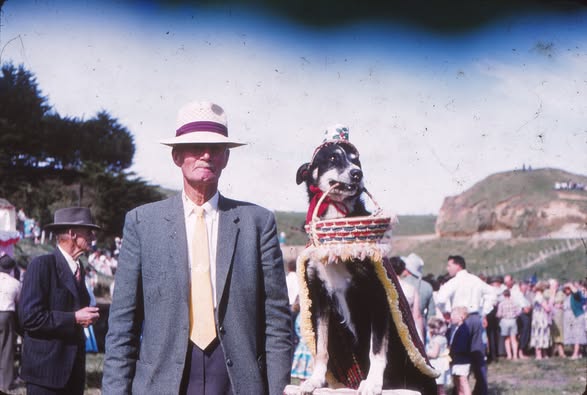
Or how about “Mr Ashton and his dog raising funds at the Wai-iti Life Saving Carnival”? The expression on the dog’s face is wonderful, if you are viewing on a large screen, as are the men wearing suits and ties at a beach carnival.

Mānawatia a Matariki

Happy Māori New Year

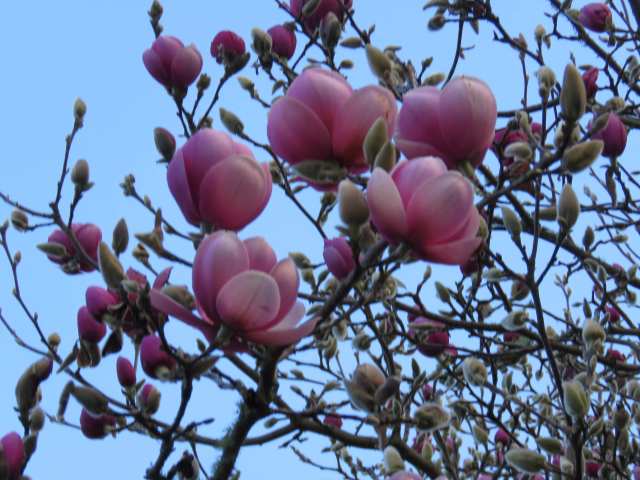
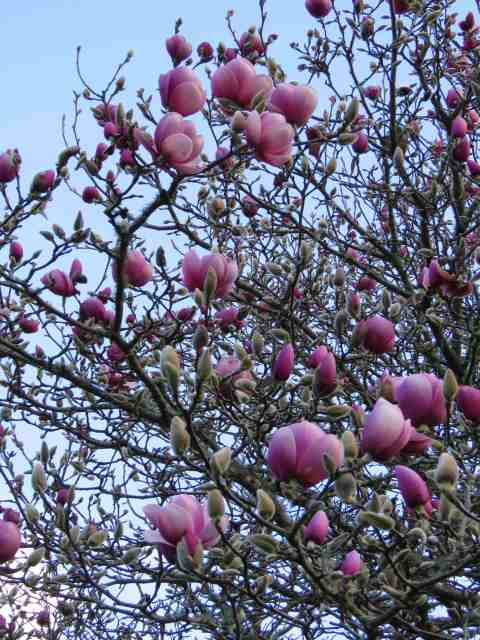
We refer to this seedling as Hazel’s magnolia

Usually I mark the time of the winter solstice and Matariki – the Māori New Year – with a photograph of the first blooms of the season on our pink Magnolia campbellii, set against our maunga (Mount Taranaki), with or without snow. The snow came in sufficient quantity last week for the low altitude ski field to open for a day or two. This week, that snow has melted away, all but a smidgeon on the peak. Such is the situation with a mountain set right on the coast.

This year, I am marking it with a seedling from Mark’s breeding programme that we refer to as ‘Hazel’s magnolia’. Several years ago, when Mark was asked to do the casket flowers for an old friend’s mother, he constructed his arrangement with the flowers of this magnolia. Her name was Hazel. In a world hurtling at breakneck speed towards one disaster after another, marked by cruelty and inhumanity, the memory of Hazel seems especially poignant. Hazel was a gem in life – one of the kindest people you could ever meet, gentle, welcoming and with natural grace.

Remembering Hazel

It gives us considerable pleasure to remember Hazel each year with this magnolia. It is a one-off plant; we won’t officially name it or release it. It flowers too early in the season for commercial release and is not sufficiently distinctive to make the cut of the very few we name but that in no way diminishes our pleasure in the blooming each year around Matariki and the winter solstice.

It seems a vain hope that the start of a new year in Aotearoa will bring optimism, hope and a return to kinder, more compassionate times. Hazel’s magnolia is a reminder for us that these qualities are possible at an individual, personal level. May you have your own personal markers of hope for the year to come and the future beyond.

How many Nerine bowdenii did you say?

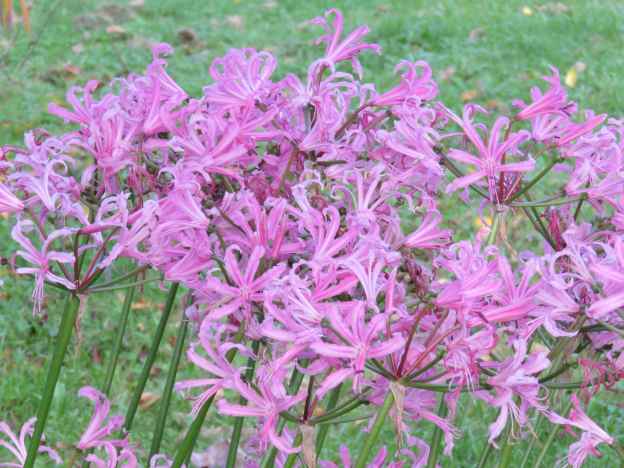
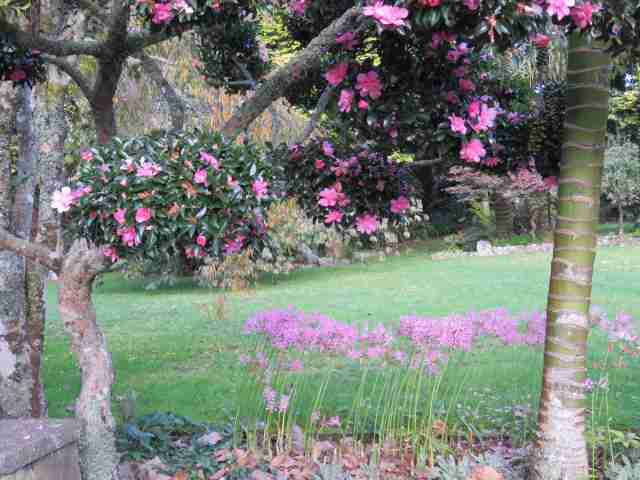
There is nothing too special about Nerine bowdenii. It is the last of the autumn season to flower for us. We have a particularly attractive patch which is a delight every year, planted on the edge of the main lawn, just beneath Camellia sasanqua ‘Elfin Rose’ which is more or less the same shade of sugar pink.

Camellia ‘Elfin Rose’ and Nerine bowdenii beside the drive

There were three large pots of N. bowdenii sitting on an area of mat left over from our nursery days which I thought I would gather up because I had a space to plant them in an area of the Iolanthe garden which I am working over. “There are more in the propagation house,” said Mark. Good, I thought. I have just the spot where they can star in autumn and be anonymous and unobtrusive for the rest of the year.

I don’t often go into the propagation house; it is basically Mark and Zach’s territory. So when I went to gather up the bowdeniis to plant, it came as a shock. Reader, there are seven trays of them with an average of fifteen pots per tray and many of those pots had multiplied up to be about five per pot. That is a lot of bowdenii.

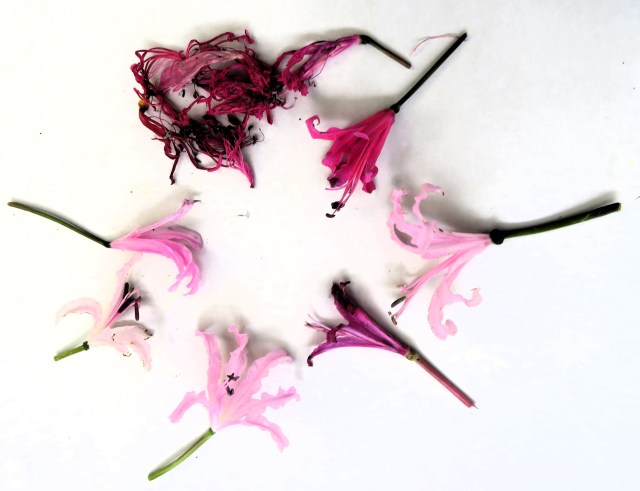
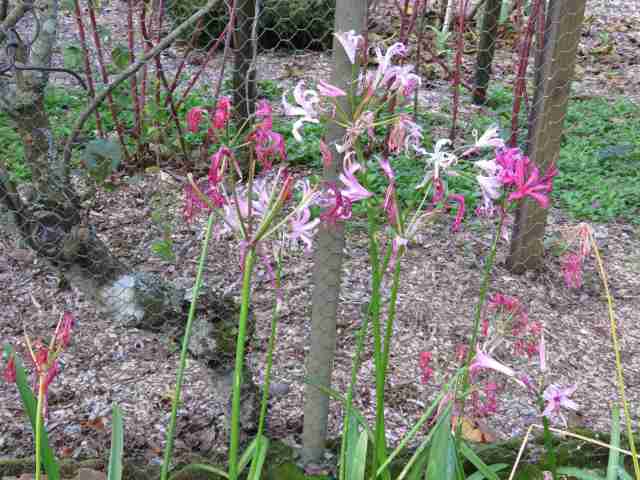
More surprising to me was the variation within them and it dawned on me that these were not straight species bowdenii,  but Mark’s hybrids. Over twenty years ago, it had entirely escaped my notice that he was faffing around hybridising bowdenii. It is way easier to grow as garden plant and to keep flowering consistently than the more desirable N. sarniensis types and he was trying to see if he could combine that robust nature with the variations in colour and size of sarniensis.

Not many flowers left as it is the end of the season but you get the drift

It was the deep colours that surprised me. The species can show variation but is commonly sugar pink. Indubitably sugar pink. Mark’s seedlings ranged from almost white, through pale pinks and bicolours to very deep pinks verging on red to some knocking on the door of the smoky shades that Felix was working on with his sarniensis hybrids.

Clearly, I will have to expand the area I was giving over to bowdenii in the Iolanthe garden and it is going to be a great deal more interesting than just a seasonal wave of sugar pink. I am looking forward to next year. In the meantime, my challenge is integrating hundreds of bowdenii hybrids into a garden that is perennial-cottage in style without turning it into what looks like a nursery trial bed. It may be more river than stream or wave.

Planting them in their new home beside the raspberry coop. I expect a good show next year.

In recalling the history of those nerines this morning, Mark tells me he was inspired to start experimenting with bowdenii crosses when Auckland plantsman and nurseryman, Terry Hatch, showed him an impressive hybrid he had high hopes for. “But,” he added, “they are still eclipsed by the nerines created by Monty Hollows in Palmerston North”. I remember over 50 years ago, when we were both students at Massey University, that Mark took me out to see Monty Hollows’ astounding chrysanthemums but I never saw his nerines.

I had to look up Monty Hollows. Brother of more famous Fred Hollows, he died in 2019, aged 91, and is largely remembered as a giant in the local cycling scene. A man of many talents and enterprises, horticulture also featured and he exported nerines to Asia. Monty, others may remember you for your energy, enterprise and loyalty to cycling but Mark has never forgotten your achievements with nerines where you set a very high bar.

The story behind those Scadoxus katherinae

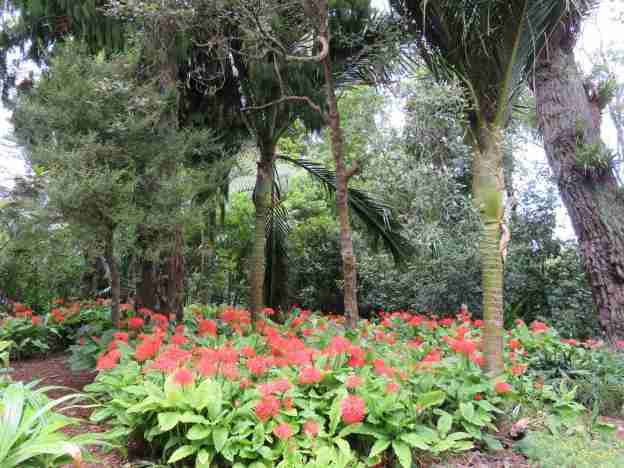
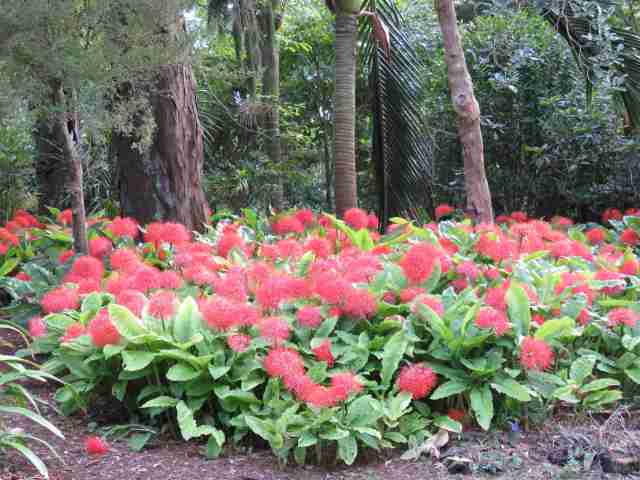
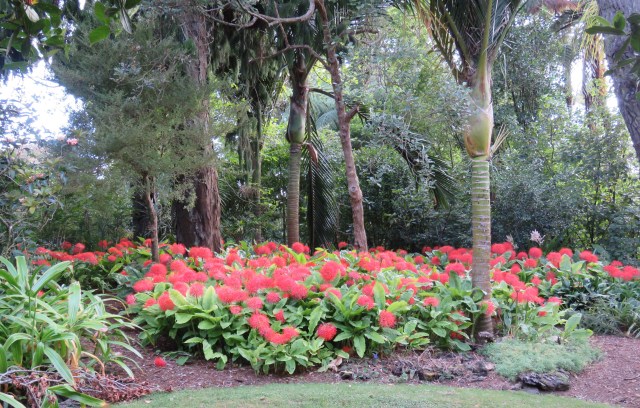
Every year I photograph our swathe of Scadoxus katherinae, more accurately Scadoxus multiflorus ssp katherinae. It is a remarkable display, especially to those who know plants and those who have one treasured plant that they nurse along in a pot.

Mark told me the story behind it this week. His father, Felix, had a few plants of it, but not many. He will have started with one single specimen. Back in the days, Jack Goodwin was director of Parks and Reserves in New Plymouth and Jack had a different selection of katherinae that he had picked out which he was very pleased with. It had a bigger flower and a shorter, sturdier stem. He gave one to Felix but Felix was less impressed by it.  

Mark was in his earlier days of dabbling with plant breeding – a man with a paintbrush. He crossed Jack’s form with Felix’s form. Because he was crossing one clone of the species with another clone of the same species, the progeny remain the species, not hybrids. Clonal crossing doesn’t create hybrids – hybrids are a mix of different species – but it can result in increased vigour.

The rest, as they say, is history. Mark planted the seedlings at the end of the Avenue Garden where they have thrived down the decades. It is a rare example of a plant that naturalises without becoming a weed. They have just gently increased their range around the perimeter. The seeds are fairly heavy and fleshy so they are not spread by wind and presumably the birds don’t like them so they get to fall on the ground by the parent plant. I used to relocate the germinating seedlings from the paths back into the garden but now we just pull them out. We have enough.

We refer to katherinae as a bulb from South Africa but botanically, it is a bulbous perennial or a rhizomatous perennial. The bulb part is just a swollen lower stem. They are evergreen but they replace all their foliage every year so there is a period in late winter to early spring when the old foliage drops down and looks sad just as the new shoots are emerging. They are a plant for shaded woodland and will thrive in fairly tough, dry conditions with no attention at all – as seen here. However, they are not a plant for cold climates. The internet says zone 10, although we usually refer to ourselves as more zone 9 than 10. If your temperature drops below zero celsius in winter, you are in trouble.

We don’t often boast but this is a sight we doubt you will see anywhere else, except maybe in the wild.

The marriage of sustainable gardening with biodiversity

Our Wild North Garden – an experiment in a much looser style of gardening

Following on from yesterday’s post considering sustainability in gardens, a new book out of the UK take the issues of sustainability and reducing negative environmental impacts to a far more holistic view. I admit I have not yet read ‘Pastoral Gardens’ by Clare Foster with photographs by Andrew Montgomery. I am not sure it is in this country yet. I am working from the interview with her on Dig Delve, the site of Dan Pearson – an English garden designer whose work we greatly admire.

I am not sure that the term ‘pastoral gardens’ will ever catch on in this country. While the word ‘pastoral’ is evocative in England with its connotations of bucolic nostalgia, here it is more likely to be associated with ‘pasture’ which immediately summons up the mental image of intensive dairy farming. I prefer the term the ‘New Naturalism’ or even our shorthand of ‘wild gardening’.

Nigel Dunnet’s garden at the Barbican is included in the book but I hesitate over the inclusion of this Central London garden under the descriptor of a ‘pastoral garden’. It is a wonderful example, however, of a naturalistic-styled garden in a challenging environment.

What comes through very strongly in the interview, and presumably the book, is the embrace of gardening styles that work with Nature, that prioritise biodiversity and garden practices that enhance the natural environment. It is still gardening and still focused on aesthetics, but not at the cost of damaging the environment. The author won me with this quote:

“Another uniting factor for all these gardens is their need to be gardened. So many people think that wildlife-friendly gardens are relaxed, neglected spaces, that can be left to their own devices. This is certainly not the case with the gardens we showcase in this book. The role of the gardener is almost more important than ever in overseeing, managing and editing each planting scheme, ensuring that diversity is maintained, rather than one or two species taking over.”

We saw this deterioration happen over time in in the Missouri Meadow Garden at Wisley where a dominant aster had swamped out large parts of the meadow.The role of the gardeners had fallen well short on maintaining this area and I assume it had to do with the fact it needed to be monitored and maintained in a very different way to more traditional perennial plantings and they had yet to learn those skills.

Wildside, Keith Wiley’s garden in Devon, was a revelation to us in terms of complex biodiversity and still stands in our memory as one of the most exciting gardens we have visited. It is not in the book, though.

I think the author is dancing on a pin head when she attempts to differentiate current trends in naturalistic gardening from the earlier work by Irish gardener, William Robinson of Gravetye Manor in the 1880s and the more recent New Perennials movement. I may be doing her an injustice but I think she is saying that ‘pastoral gardens’ are basically the new naturalism but sitting on the higher moral ground of biodiversity. I see the difference as more linguistic. The term biodiversity is an amalgam of biological & diversity and was first coined in 1968 but didn’t enter common usage until the 1980s. Robinson didn’t have the same language to draw on but that doesn’t mean that his gardening in harmony with nature is any less for that. The loss of biodiversity, the impact of climate change and questioning of many current garden norms which run counter to the natural environment combine to give considerable urgency to the matter, but it is not necessarily new.

We grow good hostas without needing to lay slug bait or add fertiliser

We have never done any scientific study to determine the changes to our immediate garden environment when we consciously switched to more sustainable practices. That would, I am guessing, involve analysing small sections across the property, maybe 10cm squares, maybe metre squares, starting before we changed our practices and then at various points along the way. Counting the number of different insects, fungi, bacteria, animals, plant species and analysing the soil profile could prove the case. We rely on anecdotal evidence. We never use slug bait but our hostas are largely clean and lush which would suggest that we have a very healthy bird population which keeps the slugs and snails in check and indeed, we see a great deal of bird activity all the time here. But we have never taken a census of the bird population or done any comparisons. Observation tells us that it is a healthier environment but that is not scientific proof so I am somewhat cautious about making sweeping environmental claims for how we garden.

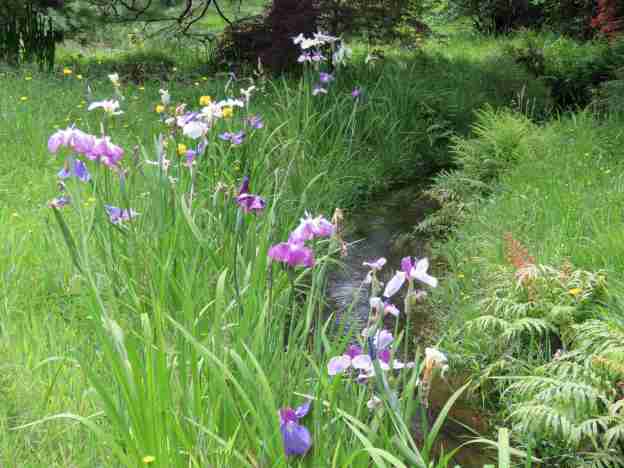
When we changed the management of the grass in our park to go with a Taranaki version of a meadow, we were not at all sure how others would react. It was even more the case when we opened the Wild North Garden which is several steps further on the naturalistic, wild gardening spectrum. When you open your garden to the public, you also open yourself to being judged. It was heartening to see an overwhelmingly positive response. It may be that the visitors who dismissed it as lazy or unkempt were too polite to say so but if that is the case, they didn’t question us or express their dislike. Most visitors visibly breathed out, relaxed and often responded to the casual environment with emotion rather than detached observation. These days, we don’t open any longer so we don’t feel at all sensitive to judgement of our garden but I have thought about it recently. In a country which places a high value on immaculate maintenance and overall tidiness in open gardens, why did visitors respond so positively to large areas which were anything but?

A marked contrast between the house gardens and the looser management in the park and the wild garden
Our Wild North Garden again

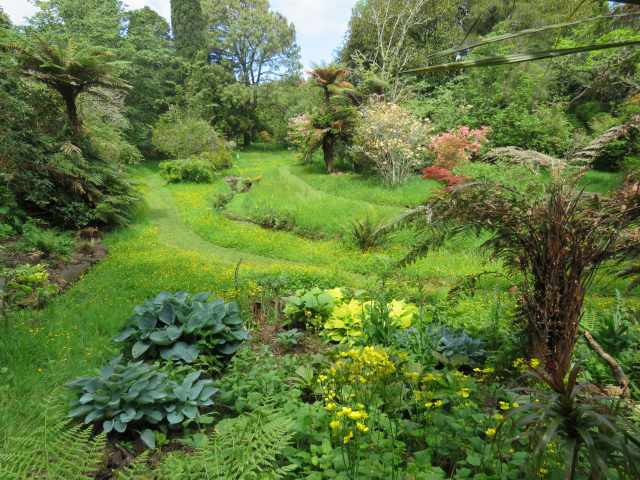
I think it is likely the contrast in our garden. We always maintain the house gardens – the area of close to two acres on the flat around the house which includes the summer gardens, the rockery, the Rimu Walk and the Avenue Gardens – to a weed-free, tidy state with areas that are quite sharply defined. The switch to the loose style of the park and the Wild North is very different and it is that contrast that makes it appear by design, not laissez faire management.

A Dan Pearson designed garden in the Cotswolds that we were lucky to visit. Formalised blocks of meadow beneath apple trees on the edge of of an otherwise tightly maintained garden.

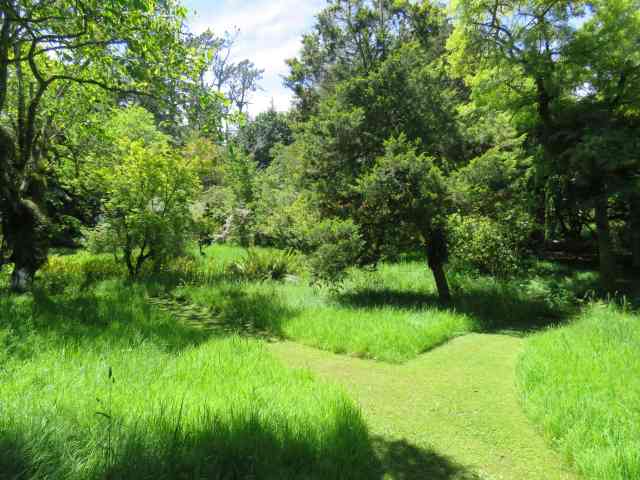
There is a lesson there that can be applied to those gardening on a smaller scale. The juxtaposition of some formality and form with more naturalistic, wilder plantings can pull it all together. It is what Dan Pearson does really well, if you scroll through to the photos of the garden he designed and planted at Little Dartmouth Farm. You can start small. We have experimented with letting our front lawn grow and flower over summer but giving it form by mowing a double width around the edge and paths on our main walking tracks across the lawn. It is not an option if your priority is an immaculate monoculture of a lawn that resembles a green velvet sward but we long ago abandoned that approach as a crime against nature.

I would suggest that if you are starting this particular journey and struggling to reconcile it with the traditional values of tidiness and visibly tight maintenance,  you may find it easier if you keep the gardens closest to the house in a controlled, tidy state but start loosening that iron grip as you move further away. It creates a transition that seems to make sense to the logical parts of our brains.

It is fine to start small; it is recognising the need to change many of the ways we garden that is the very first step.  Clare Foster’s book promises to show just how successful it can be to take a much more expansive view and to integrate concerns about sustainability, biodiversity and the longer term environment alongside placing a high value on aesthetics.

When I have written about working with Nature rather than gardening by controlling Nature, about gardens that sit within the landscape rather than on the land, about gardens that are immersive and not just pictorial,  I think they are just variations on the topic that Clare Foster has grouped under her term of pastoral gardens. It is the same ground that I traversed with Australian gardener, Michael McCoy and it comes through repeatedly in his social media posts.

No matter the words and terms we use, I think we are all singing from the same song sheet and it is reassuring to find that the directions we have chosen in our little corner of Tikorangi are part of a wider international trend of questioning how we garden, what we value and how we can garden more positively to support an environment that gets more degraded and threatened every day.

Soft-edged romanticism at Wildside in an area on the margins of more intensively gardened areas

For New Zealand readers: I went to order the book on line but blenched when it was going to cost as much for postage as the book. I can cope with £55 for the book but £54.95 for postage was an additional cost I will need to ponder further.