
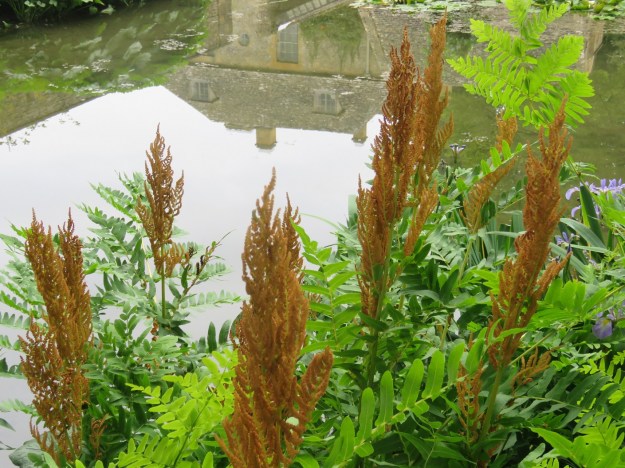
The elliptical pool reflecting the house
Is there such a thing as a perfect garden? I would have said no until we visited a private garden in a little village in the Cotswolds. It was as close to perfect as I have seen.
Let me explain what I mean when I say perfect, by starting with what I don’t mean. I don’t mean it is the best garden that I have ever seen or the most exciting one – we don’t rank gardens like that. Nor that it is static and frozen in time. It is anything but. What I mean is that on the day we visited, it was a garden in perfect harmony where all the elements came together at the same time.
I would list those elements as:
- the owners’ expectations, wishes and lifestyle
- the designer and his design within the particular location
- the plantings
- use of colour
- the hard landscaping
- the underpinning infrastructure,
- the maintenance of the garden
- and the incidents of surprise and delight.
All these elements were in balance, to an extent that I have not seen before. There were no jarring notes.
The designer is Dan Pearson, a gentle tour de force in the contemporary gardening scene. He has a strong focus on enhancing nature by working with it, bringing a naturalistic philosophy to his gardens.
 To set the scene, from memory the owners told us it is an acre in size. It is flat and Pearson took it back almost to a blank canvas. With the typical Cotswold two-storeyed cottage in the local golden stone being on the road side of the site, the body of the garden has four distinct sections, three of which feature water. The first is by a charming stream boundary and centres on a large elliptical pool with restrained plantings. The second is a formal garden built around a canal, with a dining area closest to the house. The third is the most spacious and contains a swimming pool. It was apparently the first garden Pearson had done that included a swimming pool and he was not keen. I can understand why. Pools are awfully difficult to integrate without turning it into the Miami look. But this pool was beautifully executed, though that is easier when you don’t have our laws requiring childproof fencing close in on all swimming pools.
The fourth area contains contemporary block plantings adjacent to another outdoor entertaining area.
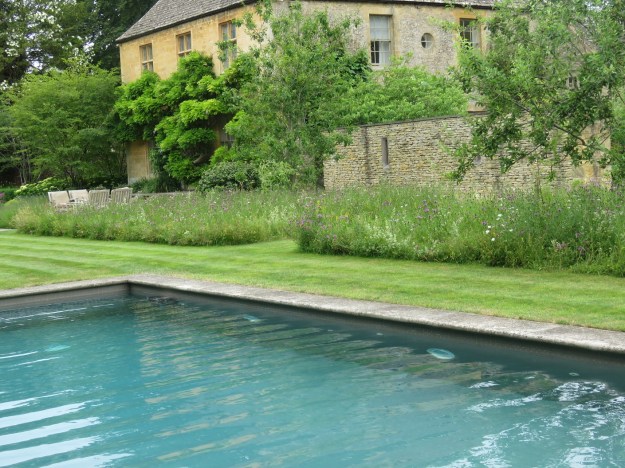
The swimming pool and meadows
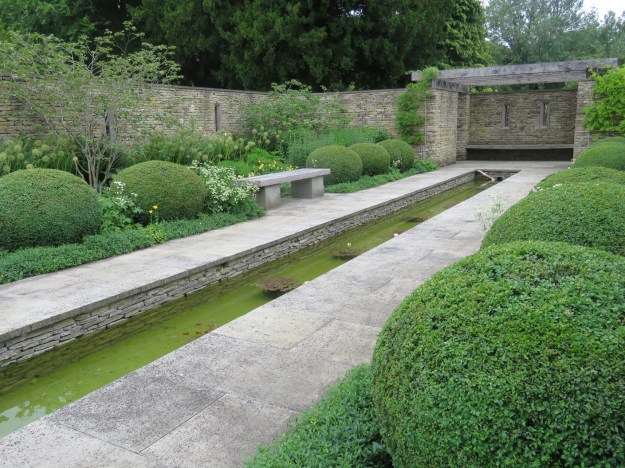
The canal garden
There is a feeling of timelessness, particularly in the canal garden, that I attribute to the proportions the designer has brought to the space. We had been thinking about issues of space, proportions and symmetry in Italy the week before. It is those which make classic Italian gardens classic. Looking at it in a much smaller-scale domestic garden reinforced the view that this is what you can get if you choose the right designer. The key word is “can”. It is not guaranteed from all designers but I will say that it is even rarer to see an amateur gardener achieve this. That confident use of space and proportion underpins everything but done really well, it is not obvious.
 What I call the ‘hidden infrastructure’ of the garden is well camouflaged to the point where it was not apparent at all. Again, attention to detail is paramount. There is no pond lining visible on the elliptical pool. I asked and the pool is made the old fashioned way, presumably with clay lining to remove the need for an unsightly pool liner. I did not spot a single skerrick of plastic anywhere in the garden. No cheap solar powered lights either. There were no visible hoses hanging about, no clumsy afterthoughts of garden edgings. The swimming pool filter was housed out of sight. The motorised pool cover was near to silent and the wiring was hidden. The compost bins and inevitable wheelie bins were discreetly housed. Everything had been thought of. We fall well short of that in our own garden but we admire the impressive attention to detail.


Look at the attention to detail on the dry stone walls
The visible infrastructure – more commonly called the hard landscaping – was beautifully executed to the highest of standards. Just look at the wonderful oak-framed arrow slits in the new stone wall.
The maintenance of the garden was unobtrusive but immaculate. Britain has a long, enviable tradition of training professional gardeners. Not for them the experience of the self-claimed garden maintenance contractors. An Auckland friend ruefully noted recently that “The woman doing my “gardening” was moved to “prune” my daphne last month. I will have a daphne-free winter.” These are high level skills that keep this Cotswold garden in peak condition and true to the original vision while meeting the owners’ expectations. There is a wonderful eye for detail and a sure hand in knowing what to leave and what to ‘edit’, as is said in modern parlance.

Roseraie de l’Hay, I think
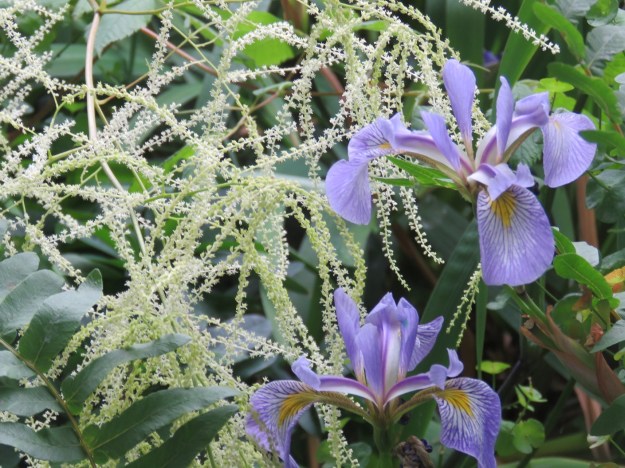
The plantings were botanically varied but more restrained than the current UK fashion for large and vibrant perennials in ever more shocking colour combinations – and probably easier to live with for that. But I appreciated the unexpectedness of colour – the bright golden aquilegias and the yellow Clematis tangutica, the latter combined with red crocosmia. A less bold planting would have gone for the safe but cliched option of the white rugosa, Rosa Blanc Double de Coubert, rather than the bold, deep cerise of what I assume is Roseraie de l’Hay.
This is a garden of charm, restraint and timeless elegance. It has the good bones that may allow it to endure down the decades. On the day, for us, it was simply a delight of gardening perfection.
Again, I have posted an additional album of photos on Facebook for those who would like to see more pictures around the garden.
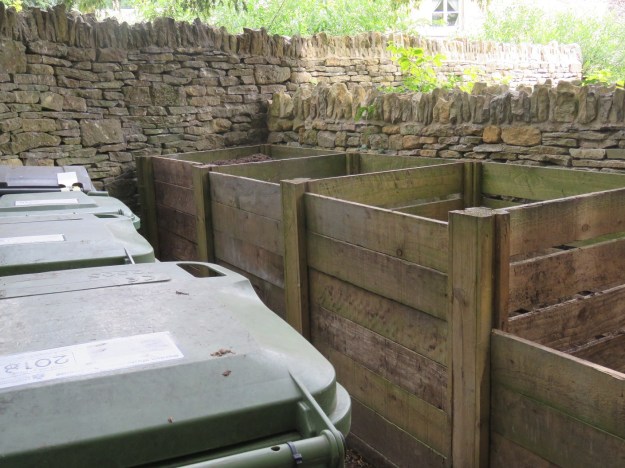
Even the wheelie bins and compost bins were screened from view by dry stone walls.



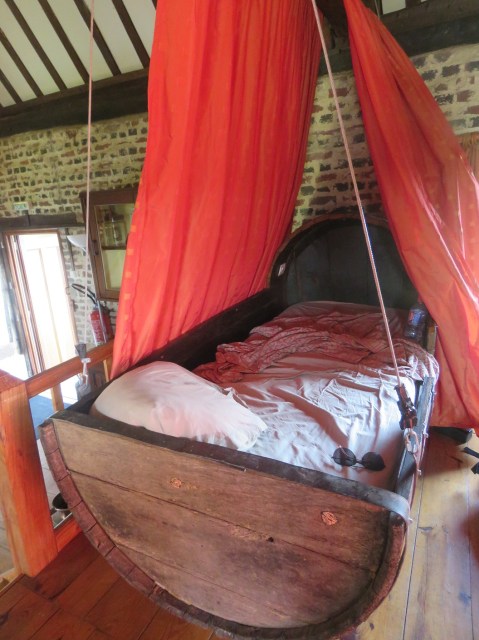 We stayed in another Air BnB place in Camembert – in this case a Norman barn that had been converted to a large apartment. Some of the conversion was a little curious but we did not electrocute ourselves and the opportunity to sleep in an adult-sized cradle created from a half cider barrel may never come my way again.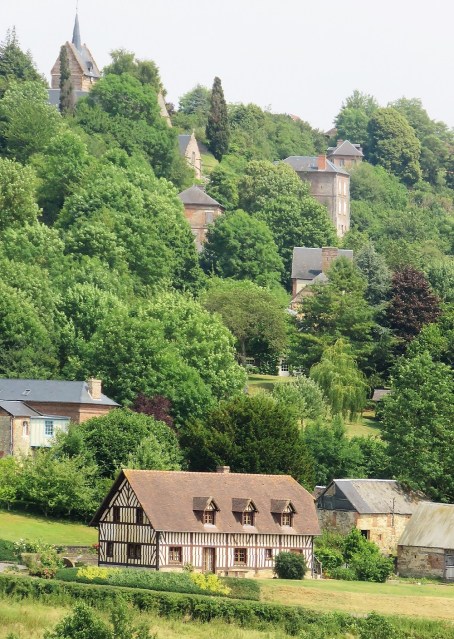
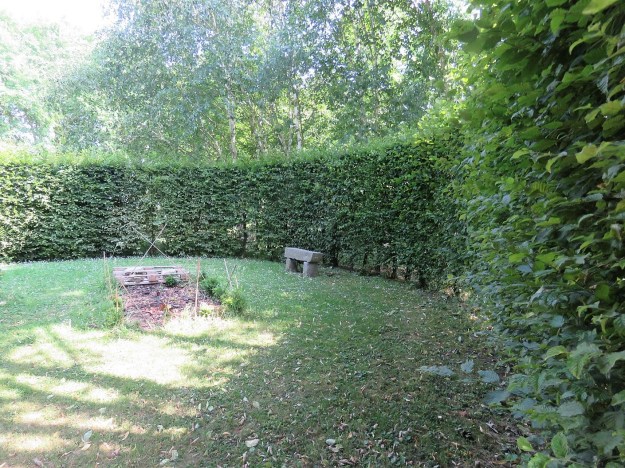

 The fruit of the mandrake! Mandragora officinarum, to be botanical. This is not something one sees often. It is apparently the root that is harvested for whatever purpose one harvests mandrake, but the fruit are certainly eye-catching too. I think it was in the physic garden.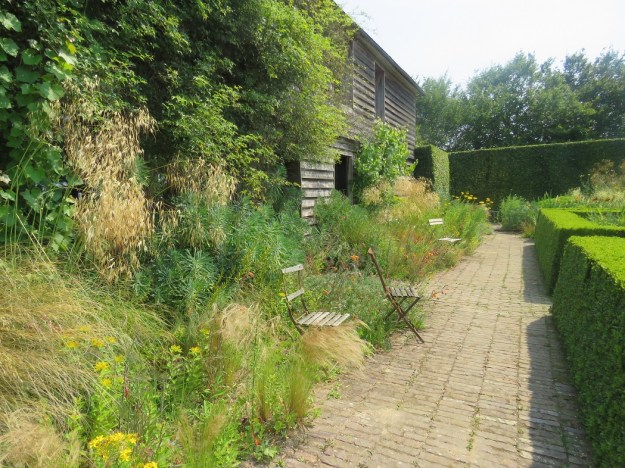
 Five years ago, I wrote a piece entitled “But where are the hollyhocks?”. Occasionally a garden visitor sears him or herself on the brain and on this particular occasion, a gentleman came out from our garden and asked that very question, declaring that he could not find any hollyhocks. I have never forgotten because it was such a bizarre question. Until that point, it had never occurred to me that anybody might regard a garden as seriously deficient for the want of some hollyhocks. We failed that test.
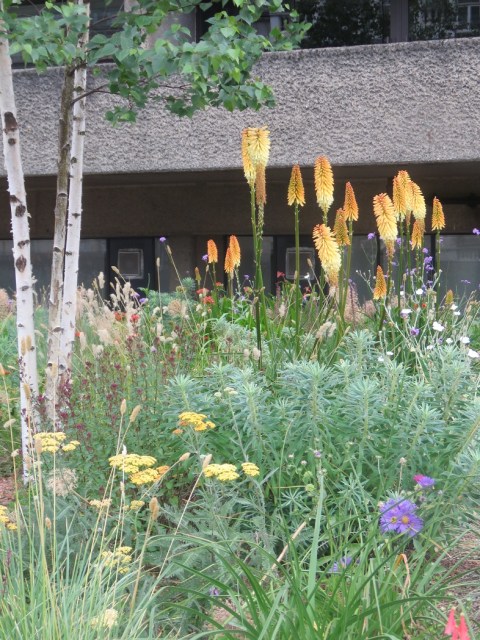
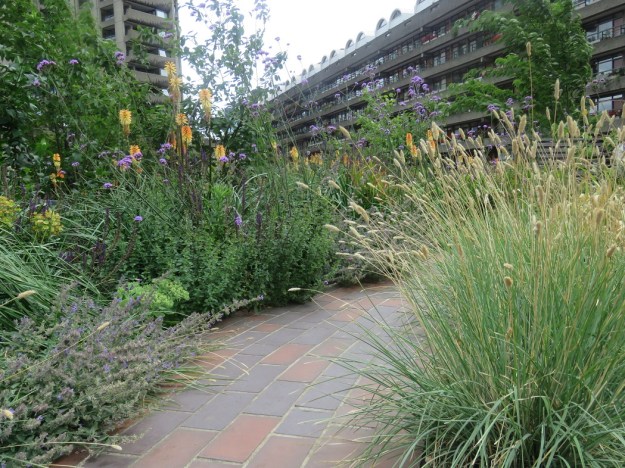
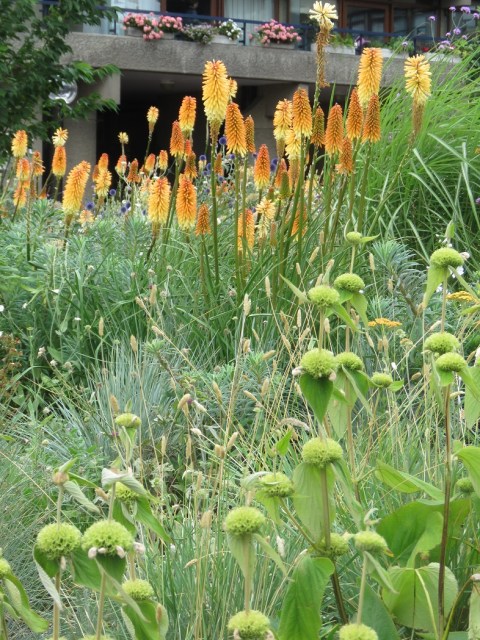
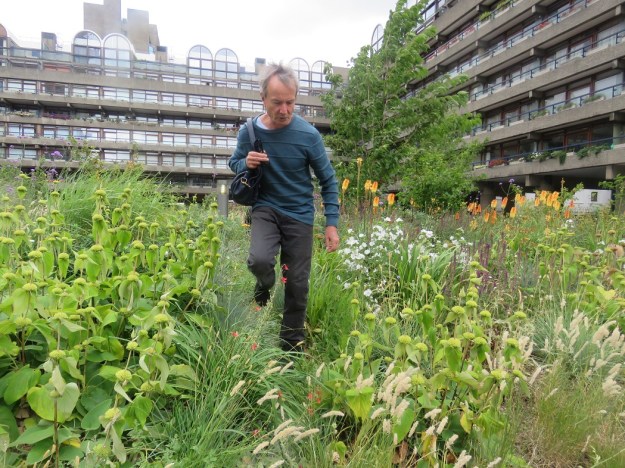
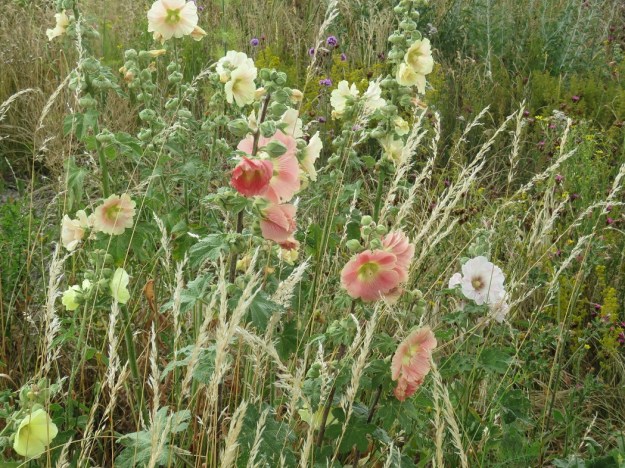 But we found the hollyhocks in London. An entire block of them growing wild. This was part of the Olympic Village plantings. Most of these plantings were prairie-flavoured while hollyhocks are pretty much traditional cottage-garden plants. This may be why they were kept separate and all on their lonesome. They made us smile. I am only guessing that the other plants like the mullein and Verbena bonariensis have introduced themselves to the hollyhock party.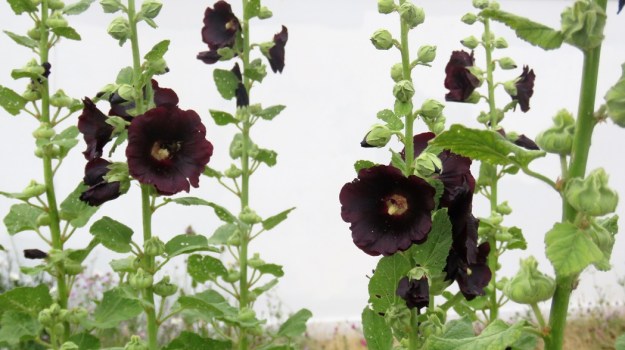

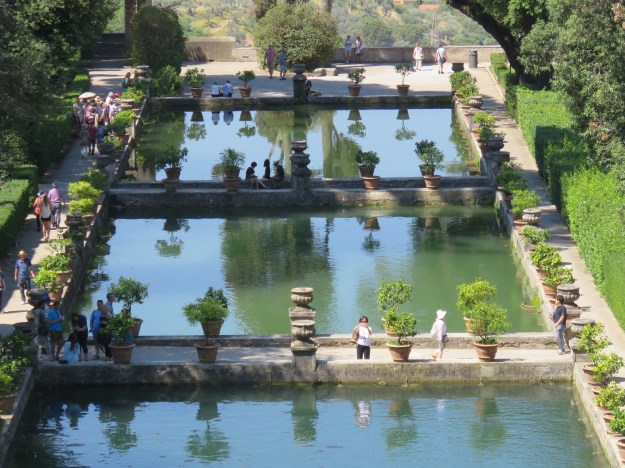 Villa d’Este in Tivoli is known worldwide as one of the great Italian gardens. Built by The Man Who Would be Pope to compensate his thwarted ambition, it dates back to 1560. It was grand then. It is still grand today and water features throughout. His land excavations to achieve this garden would have put Capability Brown into the shade.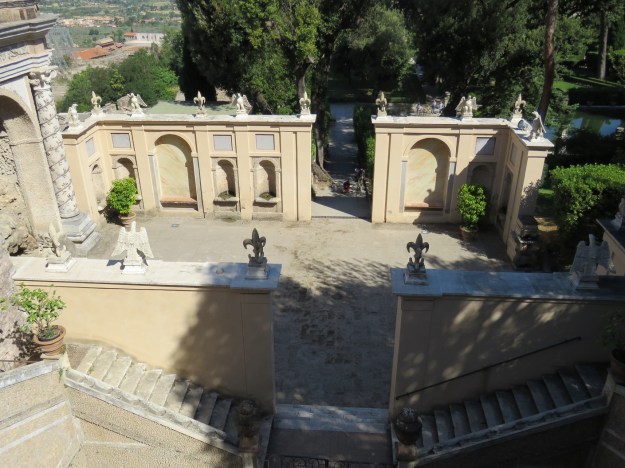
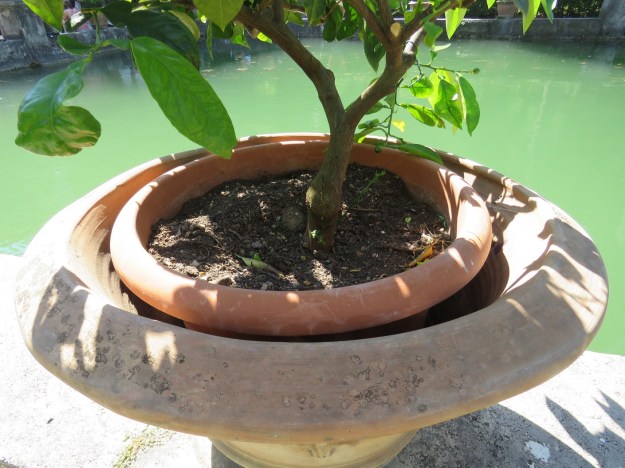 Attention to detail is not a strong point in Italian garden maintenance. Plants are not required to be immaculate. Irrigation hoses are often visible. It is okay to have plastic pots visible inside the terracotta pots. Water quality can leave a lot to be desired. Lawns are impossible in their climate. Some coarse grass kept green by watering is the best that one can hope for. The big picture is what matters. But, should you have grand visions of creating an
  The straw broom brought a smile to our faces. Regular readers may remember me posting about the
 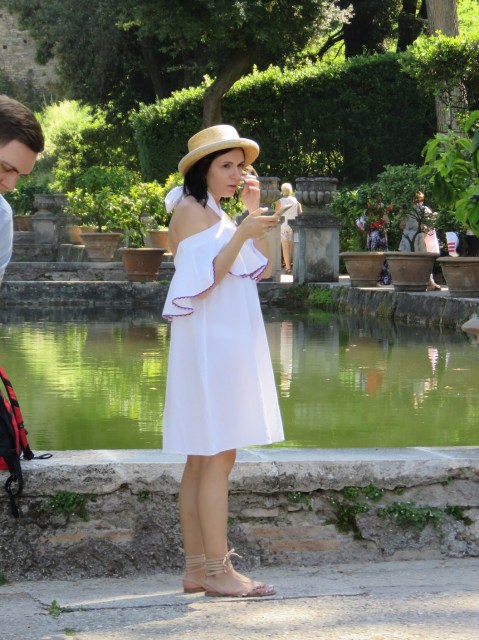 I am sure it takes a great deal of work to look like a modern-day princess, even more so when the temperature is over 30 Celsius and the location requires walking down and then up hundreds of steps. Mark noted that she was also behaving like a princess – the one with the pea under the mattress. I couldn’t possibly comment. Even when I was considerably younger, I do not think I ever managed the princess look.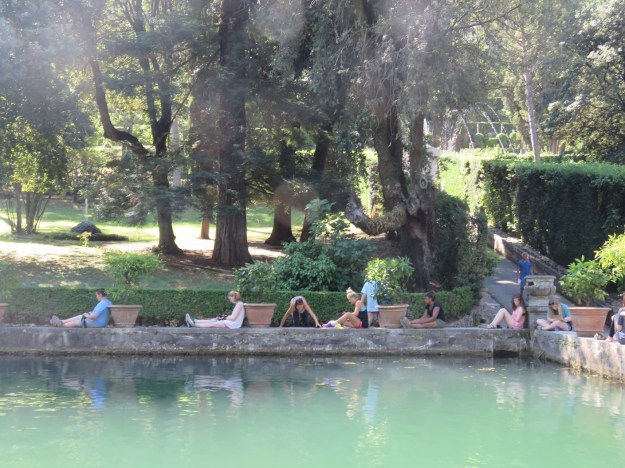


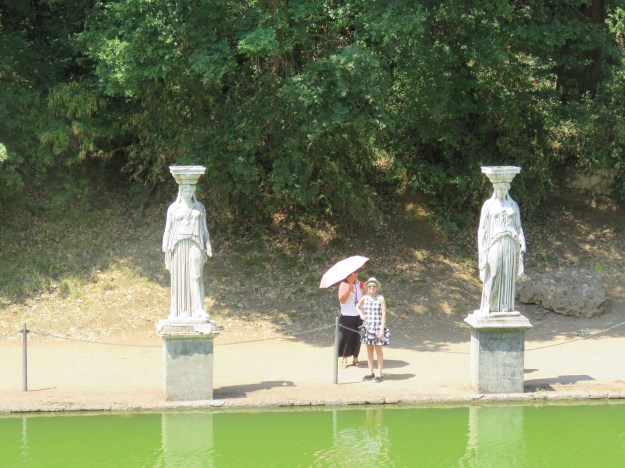 There was a fair amount of statuary of the armless, legless and formerly white variety but I think most of it was more recent reproduction already in decay. Much of the surviving, original statuary and marble had been raided 500 years ago by Cardinal Ippolito ll d’Este and relocated to his nearby pad but we did not know this when we went around Villa d’Este.
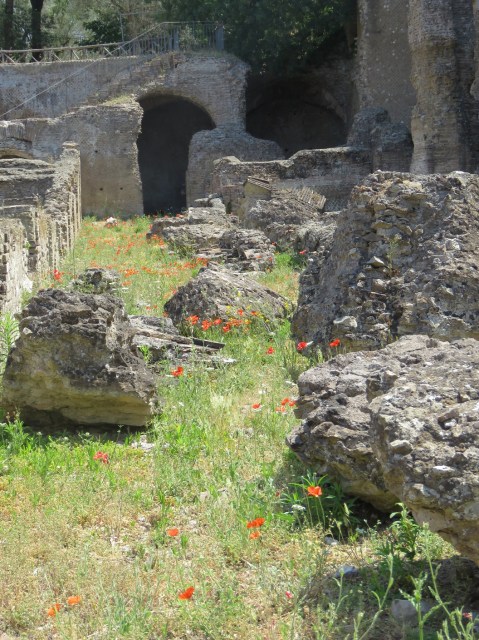 The wildflowers in the ruins of Adriana had a simple charm. In those drought-like conditions, the spring rains must bring a short-lived surge of germination and growth. The plants shoot straight into flower but conditions prevent them becoming invasive problems.
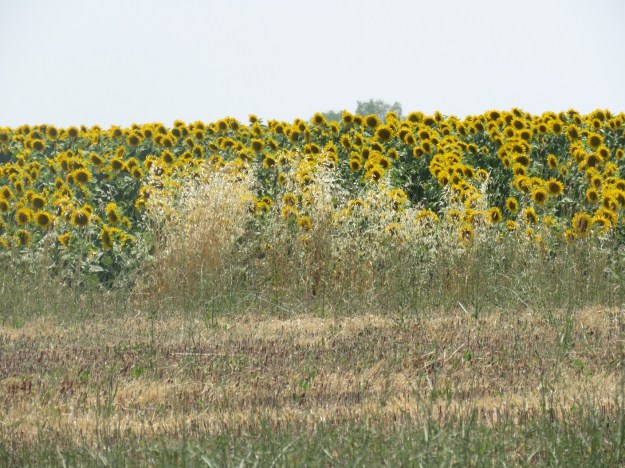
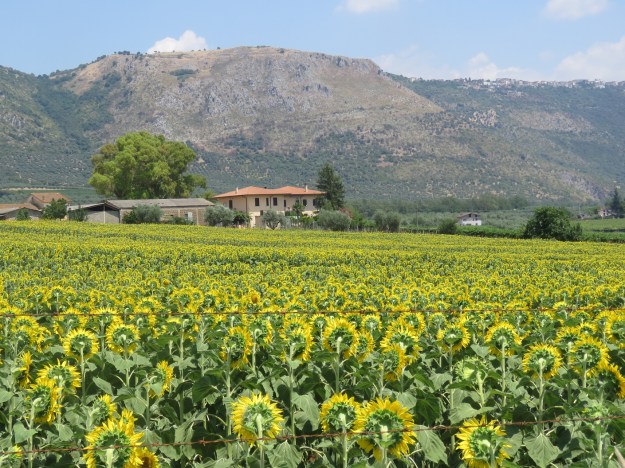 Finally, fields of sunflowers on the road to Ninfa. All facing the wrong way for the picture book image with the house and hills behind. Viewed from the other side, we lost the landscape context.
 Tikorangi The Jury Garden