Tag Archives: Mark and Abbie Jury

Gardening more sustainably – part one. Where to start?

A friend was telling me about a major garden that he had visited recently and his disappointment that it was, as we say, noticeably ‘going back’. He then offered the reason that “of course, they are trying to garden sustainably,” as if to excuse the out-of-control weed issues.

No. No. No. That is not sustainable gardening. That is stopping using glyphosate in regular garden management but not replacing with extensive hand weeding, mulching and making sure no weeds ever get large enough to seed down.

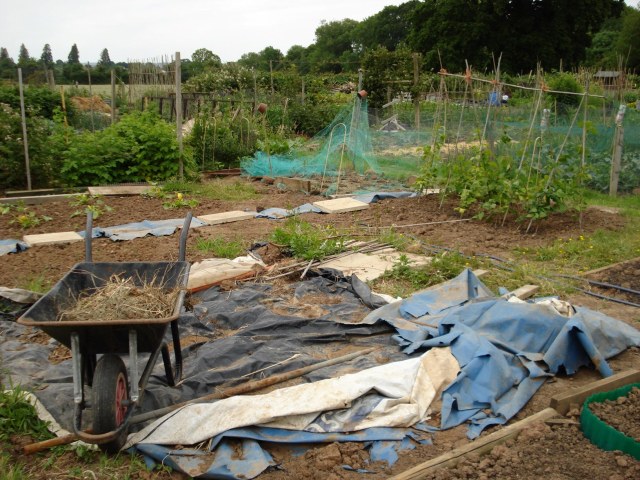
This is from a block of English allotments, many of which are highly productive but score low on aesthetics. Different goals apply in ornamental gardens. Also, too many synthetics and plastic to ever be described as sustainable.

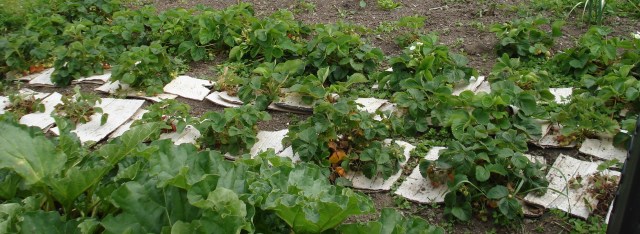
A sustainable approach has more traction in the home vegetable garden where good soil management and the production of healthy vegetables  are prioritised – often a mixture of organics, permaculture, biodynamics and other approaches that used to be extremely fringe but are now more mainstream. What doesn’t usually come into that type of gardening is aesthetics. Laying cardboard and old woollen carpet is fine in a utilitarian environment of food production but not generally acceptable in an ornamental garden setting.

Cardboard is a lot better than laying synthetic weedmat and bequeathing non biodegradable materials to the land for centuries to come, but it is not exactly pleasing to the eye.

We have been talking about sustainable gardening here for years and it comes down to two main principles for us. One is eliminating – or at least hugely reducing – garden practices and habits that we know are bad for the environment. The second is gardening in a way we can manage as we age but which maintains the garden in a state that continues to bring us pleasure. We are certainly ageing here, but we have no plans to sell up and move somewhere smaller so that second point is equally important to us, but may not apply to others.

If you do a search on sustainable gardening, there are plenty of resources on line, like this one from Missouri Botanic Gardens, which give handy hints on things great and small that you can do to make your garden practice more environmentally friendly. You do not need me to produce another check list. Small steps are a good start.

Changing a large, predominantly ornamental garden to more sustainable management needs more than small steps. It takes a whole different approach and looking through different eyes. Alas, it sometimes starts with ceasing use of all toxic sprays and that is a giant step, not a small one. We are old enough to be of the glyphosate generation. When it was introduced and then generic, cheaper options became available, it was a game-changer both in gardening and in agriculture. Mark recalls the talk at the time that Round Up (the original glyphosate) was the equivalent of a labour unit. One man – and they were usually men – with a knapsack sprayer could deal to weeds astonishingly quickly. Many large gardens in this country were established and are still maintained with weed sprays. Ours was no exception. Mark would fill the sprayer and start a weed round from one end of the garden to the other on a regular basis.

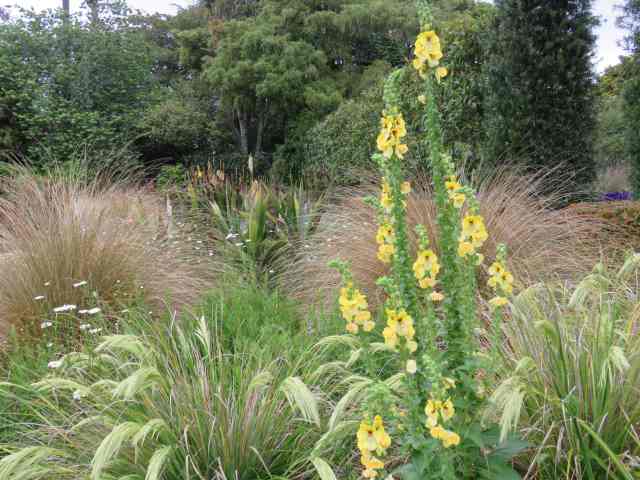
The Rimu Walk is the lowest maintenance area of our garden and one of the most highly detailed. The combination of shade and years of vigilant weeding means that weed growth is minimal. Problem plants have long since been removed and the complex plantings are compatible with each other and form a stable matrix which requires very little attention.

Over time, that practice has become questionable and is now increasingly regarded as unacceptable. I remember a point in time when Mark decided it was not at all okay to be seen by members of the public with the knapsack sprayer on his back. He would discreetly disappear when people arrived. When we closed the nursery, we moved away from the routine use of sprays. We removed plants that needed spraying to stay healthy; we stopped using fungicides, went for canola oil-based insecticides when we needed them and stopped the routine use of glyphosate in garden management.

We don’t describe our garden as organic because it is not. There are times when we will resort to sprays to deal with particularly invasive weeds (onion weed, tradescantia and the like) or to knock back weed growth in areas of the property we don’t garden but it is never routine and it is not often. We don’t spray or fertilise our lawns and haven’t for at least 15 years but we have changed how we manage them. Our general use of commercially produced fertiliser is rare and targeted to single plants. There is no nitrogen run-off from our place.

In full sun, we control weed growth in the Court Garden by a thick mulch of wood chip, vigilant hand weeding and deadheading some of the plants which need it before they seed down too much. Started in freshly dug ground, this garden has never been fertilised nor shown any need for it. If we are planting something new, it will usually get some compost on its roots. Where appropriate, we will often return thinnings and prunings to the mulch as we go so the soil will continue to be enriched with fresh humus on top.

There are commercial products now that claim to deliver the same results as the spurned sprays but all that is doing is continuing the same gardening practices, usually with less effective tools. Think of it like the attempts to reproduce the traditional food diet but with vegan substitutes – tofurkey (tofu turkey) and fake chicken made from pea protein come to mind. I tried the pea *chicken* once and it was perfectly pleasant but it wasn’t the same as chicken and, when I looked at the packet, the food miles were huge – I think I remember it coming from the north of the UK – and it was a highly processed product. I didn’t buy it again. Just as a good vegan diet is not as simple as swapping out animal products for something that emulates that product, so too does swapping out a toxic spray for an *organic* product fail to get to grips with real issues of sustainability.

Nor indeed should sustainability be confused with low maintenance. They are different concepts.

Once you have taken the first baby steps towards gardening more sustainably, it takes a change of thinking and management to make the next, more significant steps. It is not what we garden with that is the issue; it is how we garden and what personal values we bring to our gardens.

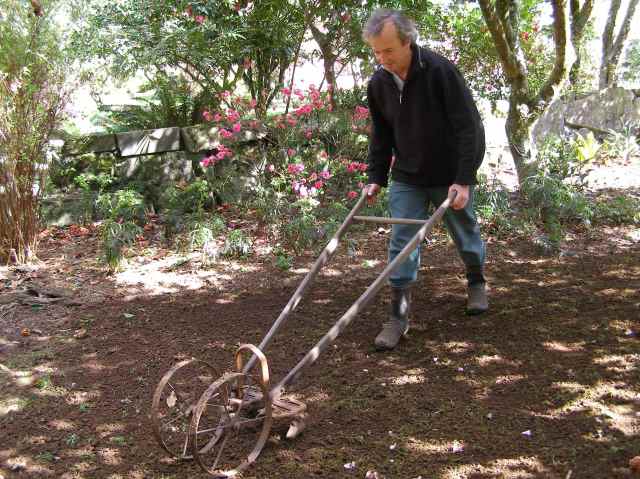
Before glyphosate, there was the multi-use Planet Junior which can be used to till the top layer of soil and leave the hoed weeds in the sun to die off. This is an old photo but we still have the Planet Junior and it has handy applications in some situations.

Part one of two. Sustainability and gardening for biodiversity to follow…. Probably tomorrow.

Good things take time *

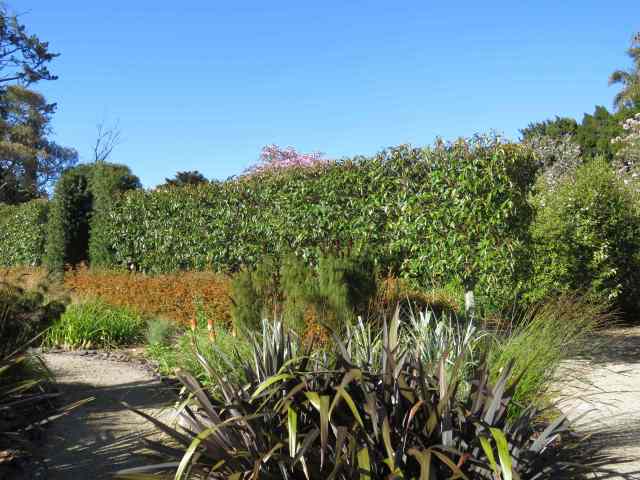
Pleached Fairy Magnolia Whites in a row shaped to a flat plane. We have two such rows.

Behold our pleached rows of Fairy Magnolia White! I am delighted. A goal has been achieved. It has taken 10 years and that was starting with big plants. In retrospect,  I admit that it seems quite a long time but such is the way of gardening. It has looked fine and established for maybe 6 or 7 of those intervening years but finally, we have it how it was envisaged.

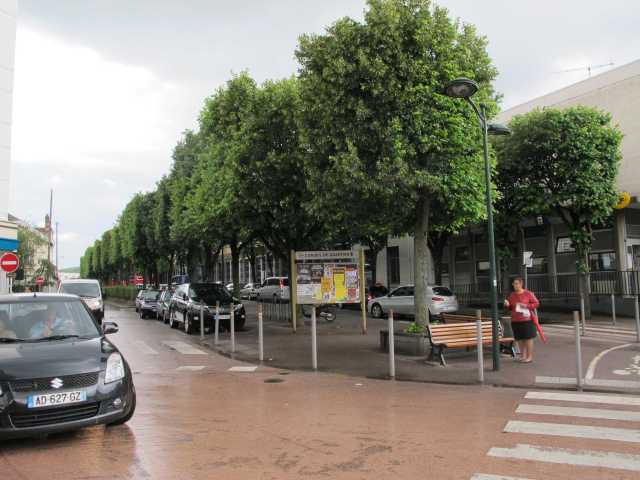
Pleached street trees in Vernon

Pleaching is creating a hedge on stilts where the foliage is knitted together to form a length that is more or less flat on two sides but uninterrupted in its length. I photographed pleached street trees in Vernon, the small French town closest to Giverny back in 2014 but I think it was Mark who drew my attention to them because he already had the plan of pleached rows defining our summer gardens, on which we had started the groundworks back at home.

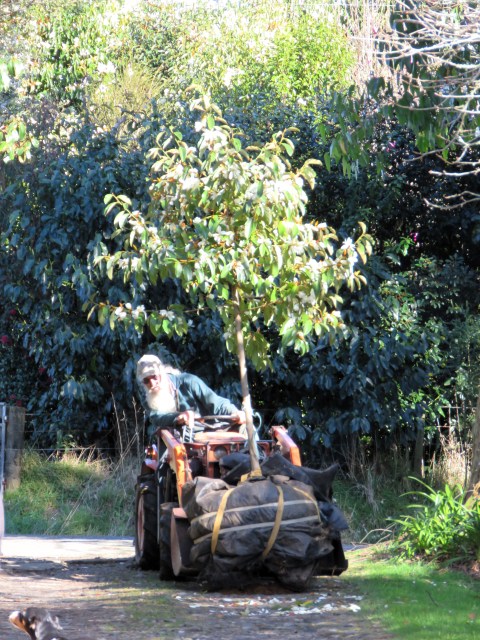
Lloyd on our baby tractor, moving in trees one at a time back in 2014
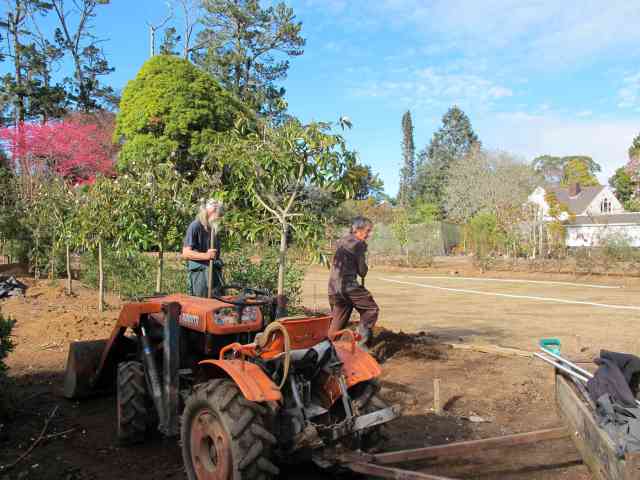
The start of the summer gardens, when we were all a decade younger. You can see the peg in the ground – they were working to string lines to get the spacings even and straight.

So it was Mark’s vision and his and Lloyd’s hard work that saw large plants going into the new ground in the spring of 2014 and autumn of 2015. We already had the plants growing in a field on our property across the road. They were our original stock plants from when we first released Fairy Magnolia White and they were trained to a strong central leader or trunk. It was no mean feat digging them and getting them across the road and planted but Mark and Lloyd were 10 years younger then. As an aside of useful advice, as soon as they were planted, Mark removed about a third of the foliage, which seemed brutal at the time but was all about reducing the stress on the plants after transplanting.

This is what it looked like a month ago when Fairy Magnolia White was in bloom

In the years since, they have been trimmed once a year – as flowering finishes – to get them to the form we want but it was when our gardener, Zach, joined us that it all started to come together. This must be the third or maybe fourth year that Zach has trimmed them and he has it just right now. As garden tasks go, it is not a massive job – I think it only took him just over two days – and the heaviest part is managing the ladders, which are large. But it is a skilled, precise job. It is all secateur and handsaw work – not hedge clippers.

Squared off to be narrow in width, as viewed from one end of a row

It will look sharper when the hedge of Camellia Fairy Blush beneath also gets its big trim this week and the gap between that hedge and the pleached michelias above is fully defined. I was impatient to record my delight with the clearly defined, more-or-less two dimensional appearance (height and length but little width).  

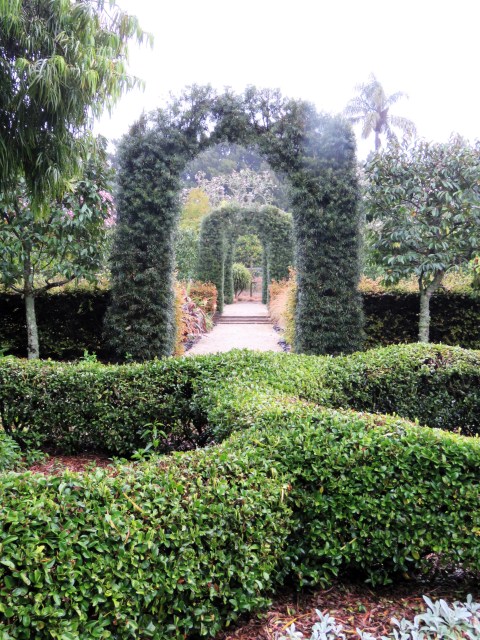
We have three archways of Podocarpus parlatorei. This front one still needs to thicken in the middle but it is getting there.

Credit to Zach, too, for creating the archways of Podocarpus parlatorei in the same garden. Mark had always planned either arches or gables – to echo the gables on the house. Realistically, had it been left to us, I am guessing we would probably have taken the easier route and just trimmed to tight columns but Zach has trained them over to be arches and they have almost filled out to final thickness. They are tied in, in case you are wondering how he did it. The key is getting it tied in when the new growth is soft enough to bend. When it has hardened, it will break. The podocarps are trimmed annually but he has kept the arch tied and trimmed every few months. Again, getting the ladder into place is the most onerous part of this task. Mark, Lloyd and I are all getting a bit old to be carting the largest ladders and working at height. This is just yet another reason why I appreciate younger generations.

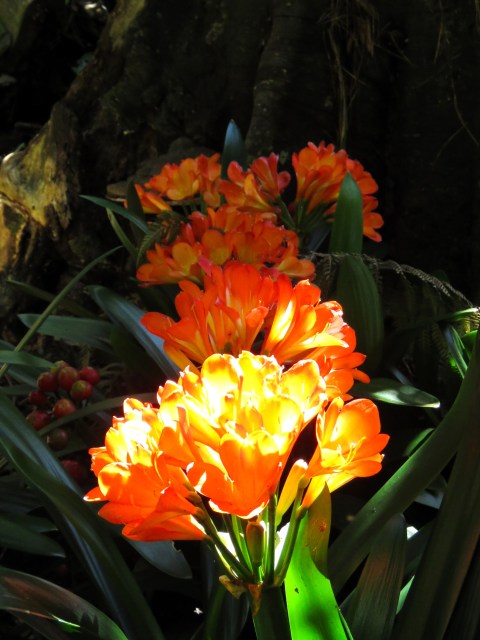
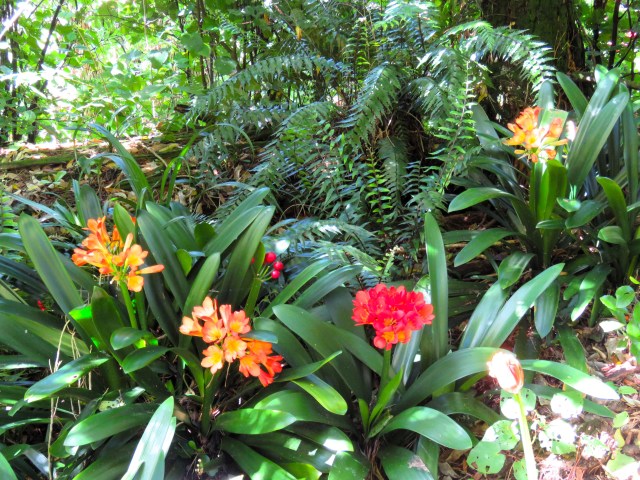
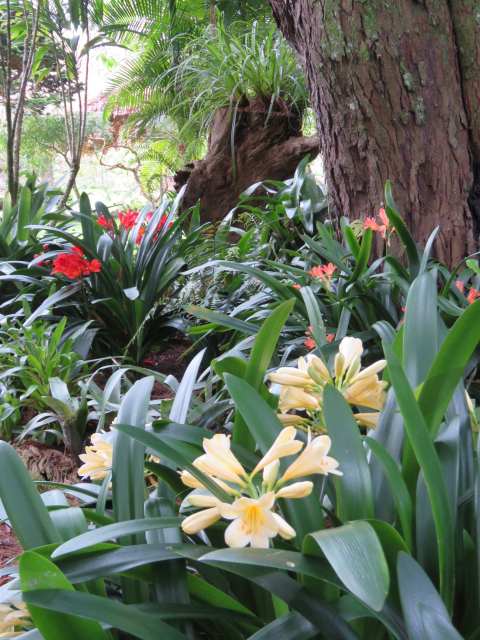
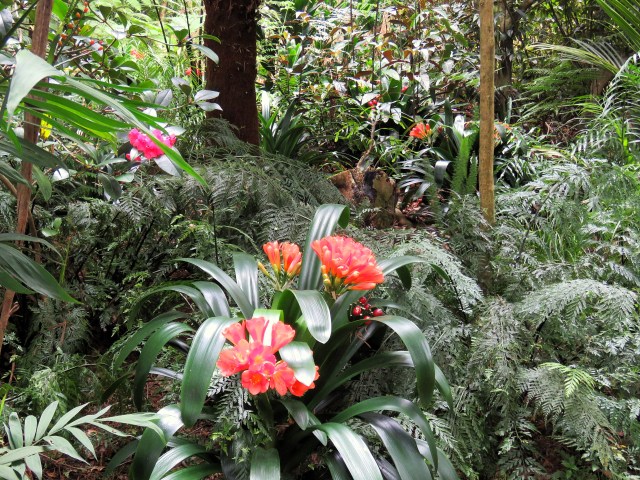
Time, too, has seen our clivia plantings go from strength to strength and they are certainly starring this spring. You can have too many clivias in a garden; the orange and red ones are very strident. I am not a fan of mass plantings of clivia but we have integrated them amongst other plants in shady areas and they glow. Ours are almost all seedlings raised here from controlled crosses. This means that Mark has taken the pollen from ones he thinks are good and used the pollen on other selected specimens, marked the pollinated flowers and gathered the ripened seed to sow in nursery conditions. It is quite a bit of faffing about but increases the likelihood of getting superior seedlings rather than leaving it all to Nature. We now have so many that we just weed out seedlings and thinnings.

Mixed colours and mixed plantings are our style, not blocks of single coloured clivias

The reason why clivias are usually expensive to buy is that they are slow growing. It takes much longer than most common perennials to get them large enough to set flowers and sell in garden centres – years more, in fact.

Gardening really is about the longer game but it is particularly rewarding when you see visions realised and areas that get better as plants mature.  

* The heading is a reference that it is likely only New Zealanders will understand. Cheese. Yes cheese. A reference to a long running advertisment for a brand of tasty cheese.

Too many bluebells!

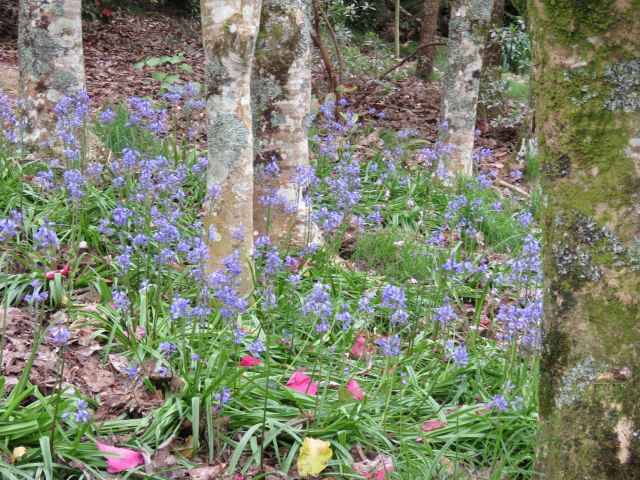
So pretty beneath the trees in an area that is not cultivated garden

The romantic haze of blue of a drift of bluebells – how delightful. And yes, it is but only in the right place. I have written about bluebells down the years and we went to some trouble to establish drifts here. Ironically, back in 2007, I wrote: “The bluebell planting was a bit of triumph for Mark. He had been gently nurturing a patch in the vegetable garden to build numbers and came up with about 2000 this year. Now 2000 bluebells may sound a large amount to most people but his mission, he explained, was to try and get that 2000 to look more like 20 000. It takes a huge number to have much impact in a large area.”

I was first inspired by a natural bluebell wood in Scotland back in the early 1990s and I loved bluebell season when our friends, Bruce and Lorri Ellis, had Te Popo Garden. I have a childhood memory of my mother’s treasured bluebells. She was a good English gardener, my mother, and she encouraged us to pick flowers as long as we picked them with long enough stems to be put in vases. But the bluebells were prohibited; we were allowed to pick the common, blue grape hyacinths (muscari) but not the bluebells.

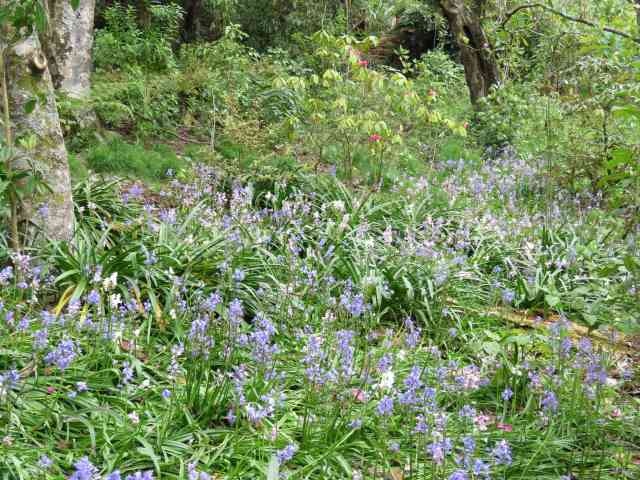
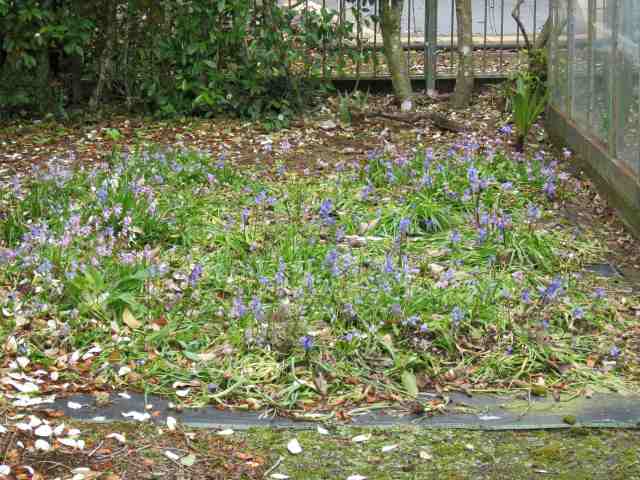
We also enjoy the bluebells in wilder areas, These all grew from seed Mark scattered. The presence of pink and white ones tell you that they are Spanish bluebells.

I once spent some time unravelling the differences between Spanish and English bluebells  and came to the conclusion that what we have here are all Spanish bluebells, or maybe Spanglish hybrids, but not the more desirable English species.

Our mistake here has been to allow some into cultivated areas of the garden. Bluebells are best kept to wilder situations. I speak from experience. Bluebells are thugs; in well cultivated garden conditions, they are more than thuggish and can spread at a frankly alarming rate. Not only do the bulbs multiply over-enthusiastically , but the seed disperses freely and germinates happily where it lands. We started trying to deadhead our garden bluebells some years ago. Now we – as in Zach and I, but mostly Zach – are trying to eradicate them from some areas and to drastically thin them where eradication is not possible. Bluebells may be pretty but we don’t want them everywhere.

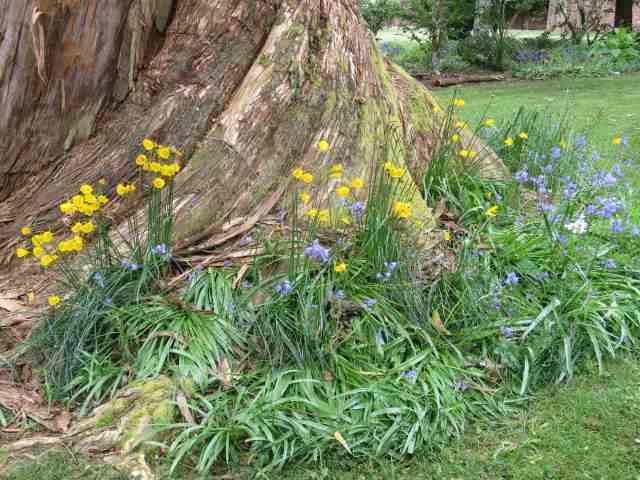
Bluebells are fine in this situation, around a tree trunk where they are contained by mowing. The narcissi are bulbocodiums and you can tell the tree is a eucalyptus by that interesting twirl on the trunk.

I am sure we could hit them with spray but that is a last resort here and we haven’t quite reached that stage of desperation.

What to do with all the bulbs that have been dug is the question that is now troubling us. I don’t want to give them away seeing we have decided they are weedy. They can’t go into the compost because they won’t die in there. Some of the early ones went into buckets of water to see if they will rot down but that is taking a long time and we don’t need buckets of water so much as tanks or drums. Also, we won’t appreciate stagnant water as temperatures rise and mosquitoes become active.  

I don’t think they are going to die here, even sitting on weedmat

Some have been spread on a stand-out area covered in weedmat in the hope that they will dry out and dessicate. But they are actually growing and flowering there. Maybe when the heat of summer comes, we can keep turning the heap and drying them out but I reckon they are tough enough to survive.

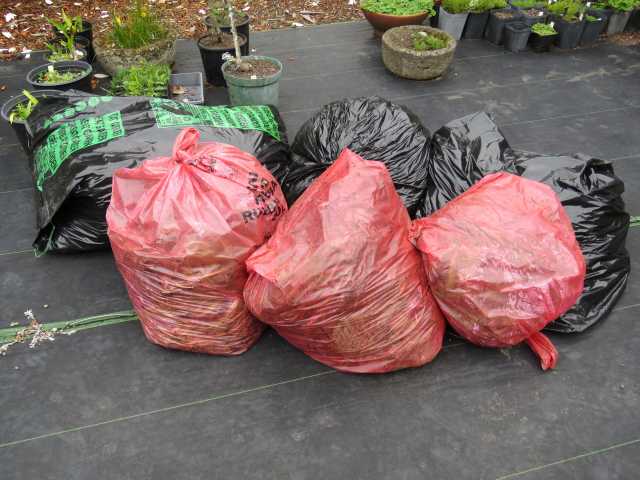
We have resorted to removing the foliage and putting them into plastic sacks. The theory is that black sacks will heat enough over summer to cook the plants inside them and it mostly worked on wandering willie (wandering jew or tradescantia) in the past but the volume was considerably less.

Our landfill wheelie bin is not to be used for green waste unless it is noxious weeds. I may make a professional decision that bluebell bulbs are indeed noxious weeds and start putting a bag a fortnight into the landfill bin but it will take months to clear them.

Any helpful ideas?

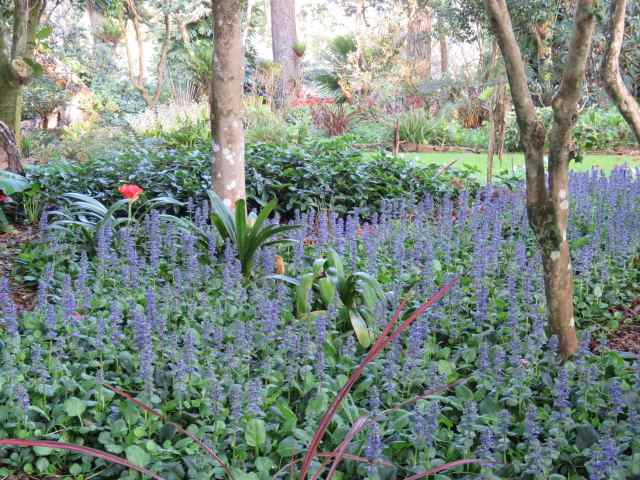
Ajuga – a better behaved blue drift in a garden situation

The moral of this story is not to repeat our mistake and allow any bluebells at all into garden beds. Ajuga is a much more garden friendly option to create a blue haze.

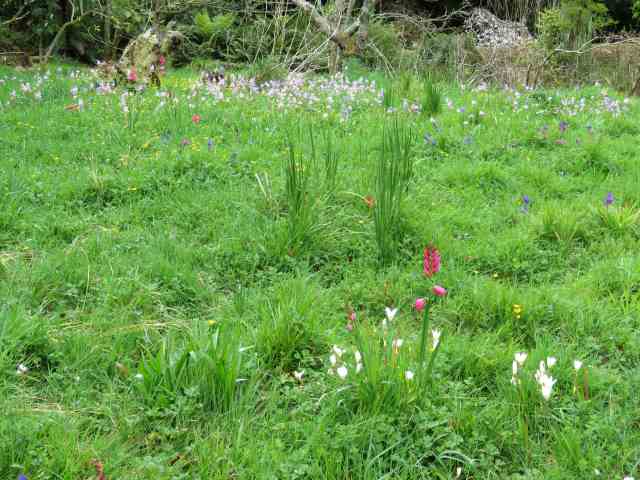
The meadow we are developing in the Wild North Garden with a scatttering of bluebells, but mostly pinkbells, at the top of the photo

It has taken us years to learn how to create a sustainable flowery meadow in our conditions of high rainfall and high fertility but I feel we are succeeding in the Wild North Garden. Looking at it this week, I thought that a flowery meadow that goes from spring to autumn is more rewarding than a bluebell drift that looks lovely for three weeks of the year.

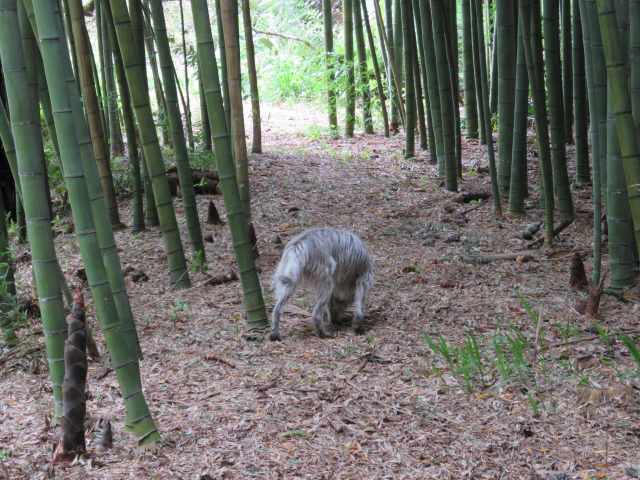
Ralph, back to sniffing out rabbits or maybe rats down in the bamboo grove

For those of you who expressed concern about our dog, Ralph, after last week’s post, I am pleased to report he is not far off being back to his normal self. He appears to have some damage to his lungs with a persistent cough. We have our fingers crossed that this may heal over time. Organ damage is a known side effect of the poisons he ingested but whether it will be permanent remains to be seen. Otherwise, he is back to his usual exuberance and if he were human, he would thank you for your concern. We are deeply relieved.

Spring panic, camellia pruning and a good ladder – a very good ladder

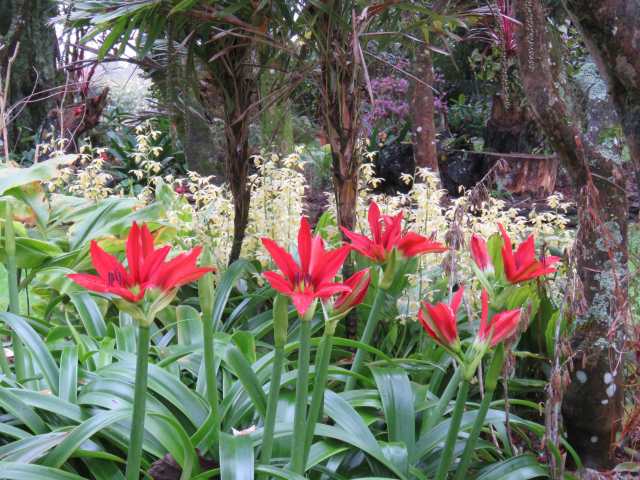
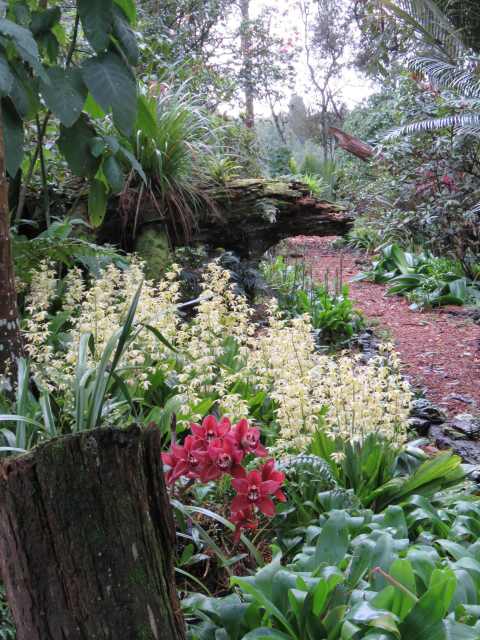
The Hippeastrum aulicums are coming into flower and the calanthe orchids are in full bloom.

As we hurtle into the full flush of spring, after a remarkably calm and mild winter, not only is the weather breaking up but I can feel the old sense of rising panic. The weather is entirely to be expected. Mark calls it ‘the magnolia storms’ on account of them always hitting during magnolia season – the confluence of cold fronts from the South Pole and warm fronts from Australia and the Pacific Ocean, I believe.

The sense of panic is more personal. I am the last of the generations who came through an education system where everything depended on the final examinations. There was no internal assessment. I was particularly good at exams which was just as well because I was never very diligent during the year. The arrival of spring meant I had to focus and cram in preparation, which I did. My last two years in school and then five years in tertiary education were marked by deep anxiety and stress in spring and exams generally finished towards the end. It was not my favourite season.

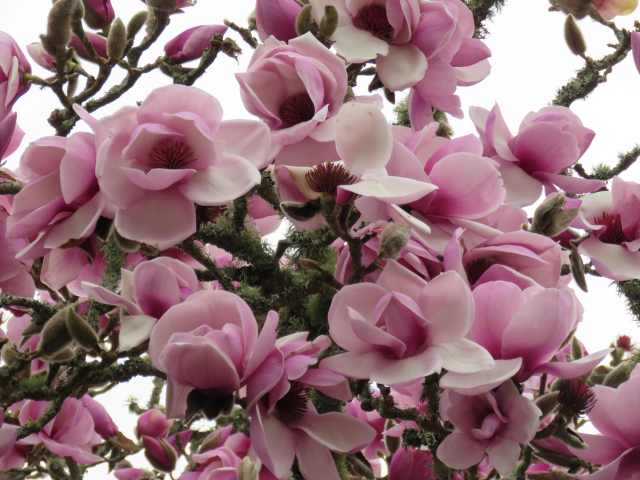
Some plants just get better with age and some do not. A magnolia should be amongst those that do get better and Magnolia Iolanthe fits that brief, even after 70 years.

I had barely recovered from repetitive stress dreams that dogged me well into mature adulthood when we inflicted springtime stress on ourselves in a different form. Many years of opening for the Taranaki Garden Festival meant that the advent of spring signalled the time the pressure came on to make sure every corner of the garden was up to opening standard. In a garden the size of ours, that was a big task that took planning, personal deadlines and a lot of hard work that wasn’t always fun.

The exams are a very long way in the past and we no longer open for the garden festival. Any stress these days is entirely self-inflicted but I still felt the old anxiety rising as I walked around the garden this week.  The onset of spring has been so rapid this year, that I found myself worrying that if I was distracted or forgot to look for a few days, I could miss something entirely. I had to speak sternly to myself, pointing out that this is what we garden for and that I need to take the time to breathe, to look and to enjoy. I listened to my own advice and truly, the seasonal sights are a joy to experience and yes, I do have the time these days to appreciate them. Every day, another plant will open in bloom to add to the floral tapestry already on display.

I have almost finished pruning the camellias that need it and I pondered the thought that two skills which are under-rated in gardening are pruning and staking. It is awfully obvious when they are done badly and doing them well can seem to take quite a bit of time.

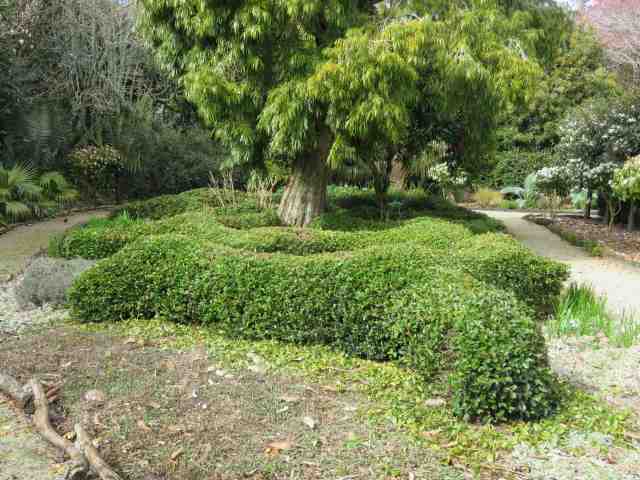
The undulating hedge in the Wave Garden – cut with an electric hedge trimmer.

We use a variety of pruning techniques on the camellias, depending on the situation. If we are doing a full rejuvenation, it is easy. We just cut off to a good framework and then practise patience for two years while the plant recovers and makes bushy, fresh growth. Camellia hedges are done with the electric hedge trimmer. Mark did the Wave Garden hedges and I spent probably as long going through afterwards with secateurs to tidy up wayward branches and bits that were still out of place.

Camellia Tiny Star was cut back pretty much to bare wood two years ago after getting way too tall and leggy. This is two years of regrowth.

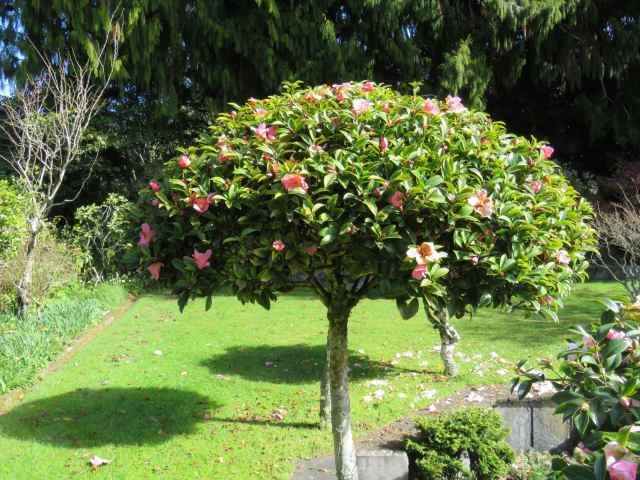
It was the four umbrella camellias surrounding the sunken garden that have taken the most time. These are top-worked, so grafted about a metre off the ground. They are a seedling from Mark’s breeding programme that we never sold but Mark has always referred to as Pink Poppet. For years, he has kept them in shape with the hedge clippers. When I say years, I have no idea how long. Maybe fifteen or so? They had become very dense and full of debris and dead twigs. I decided they needed a good clean out and thinning.

Untouched as yet.
Spot the difference? These are two down the other end of the sunken garden that have just had hours of attention and you can see in the wool bale how much has been removed.

I may not have started, had I realised how long it would take. The first one took me around four hours. I did speed up but even so the last one would have been two and a half hours and I could have spent longer and done a more thorough job. At the end of it, I had removed at least a third of the bulk and they did not look any different. But that is the whole point and the reason why it took so long. I didn’t want them to look any different, I wanted them to be able to breathe, to shed spent blooms and leaves and to get rid of the growing issue with black mould on some of the foliage. Invisible pruning. I am hoping they may last another decade.

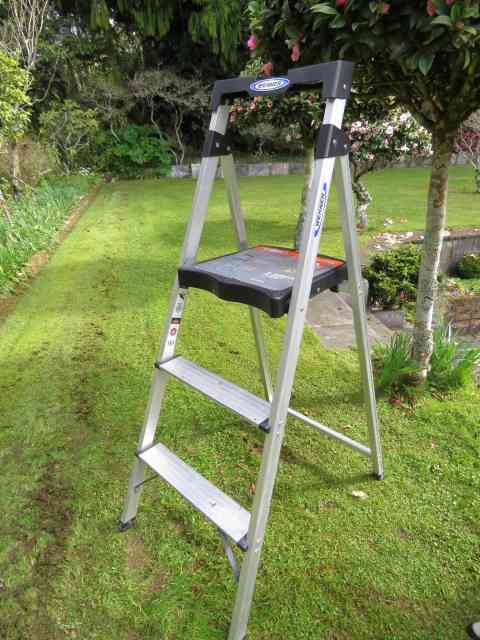
Behold my ladder. In an establishment with many ladders (about eight different ones), this one is mine, all mine. I bought it to use in the house. We have a higher ceiling stud than modern houses and I couldn’t reach the top cupboards from the kitchen step ladder. So it lives in the broom cupboard in the house but I also use it in the garden. It is so lightweight, I can lift it with a single finger. It is very stable with a platform for comfortable standing, rather than a narrow step at the top. There is even a handy top shelf for small tools. I can’t recommend it highly enough for anyone who needs a convenient ladder for outdoor or indoor use. Lloyd was so impressed when I let him use it indoors for a task that he said he was going to get one for his home. For New Zealand readers, I bought it at Mitre 10 Mega and it wasn’t hugely expensive – a bit over $100, from memory. It is worth every cent.

Early spring gold

A selection of the earliest flowering narcissi – we like variety

What a delight are the dainty narcissi. I see I started photographing them in in mid July so we have had a month of pleasure so far and plenty more to come. When it comes to magnolia flowers, we lean to the bigger is better way of thinking but the narcissi are different. Small and dainty, thank you.

In the Court Garden

The big daffodils flower later and we don’t have many of those. In fact, we have none of the large-bloomed, modern hybrids which are what dominate the commercial bulb catalogues. They just don’t fit our garden style. Also, because they are later flowering, they get hammered by the narcissi fly and with their long stems and heavy heads, they flop over as garden plants in heavy spring rains.

Down in the park. Those backswept petals are a feature of cyclamineus narcissi but they are by no means all as backswept as these specimens that look particularly startled.

We once went to the National Daffodil Show when, for some unknown reason, it was staged in the War Memorial Hall of our nearest small town. It was amazing but the only dwarf varieties on show took up about one square metre while the rest of the hall was packed with impressive displays of show blooms and there was a clear preference for what we sniffily refer to as ‘novelties’ but devotees would describe as ‘breeding breakthroughs’. Those split coronas (the trumpet part in the middle) that look squashed don’t do anything for me and I am unconvinced by the colour break to pastel, salmon pink. But that is a matter of personal taste and life would be dull if we all liked the same thing.

Against a tree trunk in our entrance area

Mark and his father before him gathered up all the dwarf varieties they could find at a time when there were more available than seem to be around these days. So we have a reasonable representation of named varieties like ‘Tête-à-tête’ (more commonly written as Tete a Tete, without the French accents these days), ‘Beryl’, ‘Jetfire’, bulbocodiums (hooped petticoats) in both bright yellow and lemon (Bulbocodium citrinus), ‘Thalia’ and others. But we wanted more and we wanted them sooner than we could get by lifting and dividing existing clumps, which is why both Felix and Mark started raising seed.

In the hellebore border beside the drive

It is the back story of our garden, really. We could not afford to garden on the scale we do if we had to buy in all the plants. A lot of what we have across most of the genus we grow are unnamed seedlings that have been raised on site. In most cases, those seedlings are the result of controlled crosses rather than random, self-sown seedlings. A controlled cross is selecting two good parents and taking the pollen from one to fertilise the other, marking the flower stem and watching until the seed is ripe enough to gather. It is quite a bit more faffing around than just collecting random seed that has set but it ensures a higher percentage of good progeny.

That is a Felix Jury hybrid which he named Twilight which may still be available in NZ. Naturalised on our bulb hillside in the park.

If you want to start in a smaller way, you can just gather seed but, with narcissi, you need to sow it in a seed tray, look after it and pot on the seedlings when they are large enough, growing them on – usually in small pots – until they are large enough to plant out. From seed to flowering size takes about three years which may seem a long time to some who are used to more instant results but we are patient gardeners here.

If you are wondering where to start, Peeping Tom is a very early season, larger variety that is fantastically reliable and prolific. It and Twilight in the preceding photo are the strongest growers and form the backbone of many of our larger plantings.

The classification of narcissi is a complicated business and there are many different species and groups. In our climate, we have most success with the cyclamineus types, often characterised by swept back petals. The other advantage of keeping to dwarfer varieties is that their foliage is smaller and finer so they die off more gracefully, rather than the spent foliage flopping down and smothering everything around them.

Mid August is a very pretty time for us. The early magnolias are magnificent and the dainty narcissi scattered all around the place are such a good contrast in scale, colour and detail. We have figured we can never have too many little narcissi and are continuing to spread them further afield from cultivated areas, to extending the bulb meadows and tucked in wherever we think they can grow undisturbed that they may emerge and delight during their weeks to shine their golden light in early spring.

I laughed at myself when I found this photo of Jetfire from nine years ago. I was clearly having a flight of fantasy as I photographed flowers set against our stainless steel splashback, lit by the spotlights on the rangehood.