
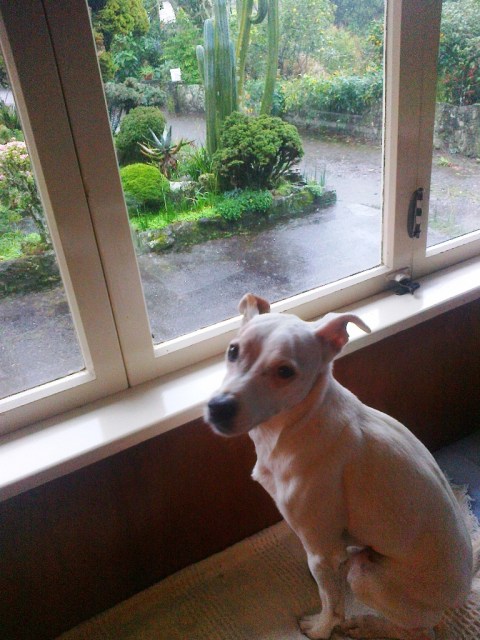
 It rained yesterday. A lot. We are accustomed to heavy rain here and are blessed with very free draining soils. The dogs hate the rain and won’t go out until it is near emergency time for them. But the rain, it continued. Mark lost track of the rain gauge around 200ml during the day.
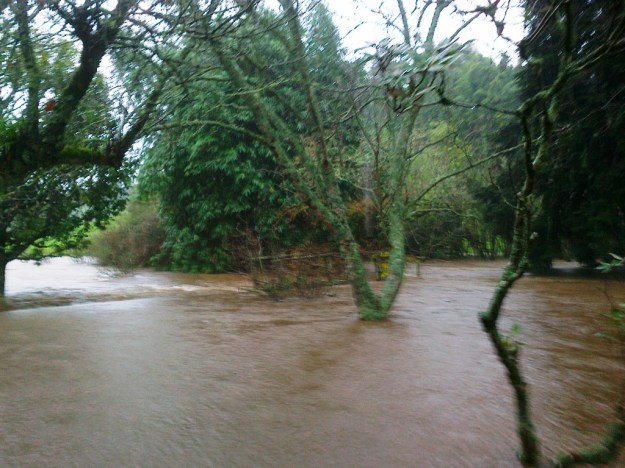
 Down in our park is the lowest area of our property but over the years, we had eliminated flooding with a weir, flood channel and stop banks. Until yesterday. That is what we refer to as the high bridge in the very centre behind the magnolia – featured often in photographs. It is a low grade phone camera image because I was not going to risk my new camera in the torrential rain. The water is flowing right over the bridge.
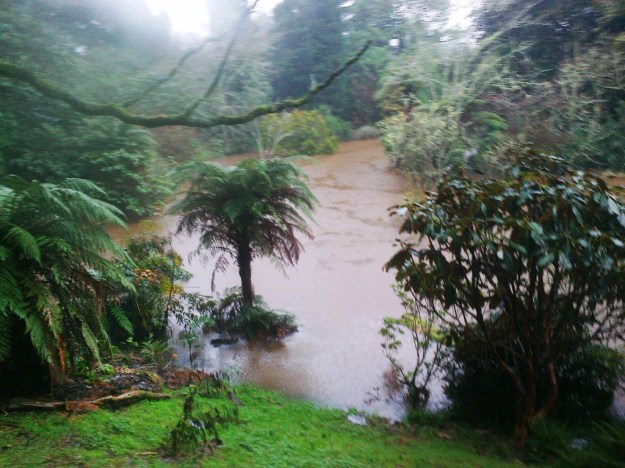
 In fact the better part of park was flooded and resembled a raging torrent. It is usually such a quiet little stream that flows through. Half of it is channelled through the garden as here, and half is diverted down the separate flood channel. It all became one yesterday.
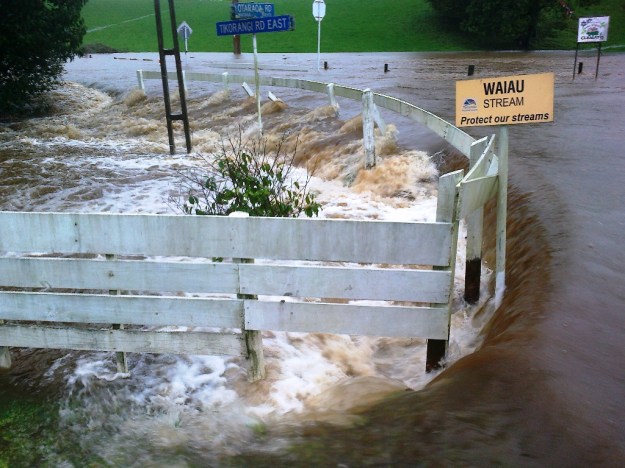 When we made our way out to the road, we saw why our park was flooding. This is the corner where the stream enters our property.
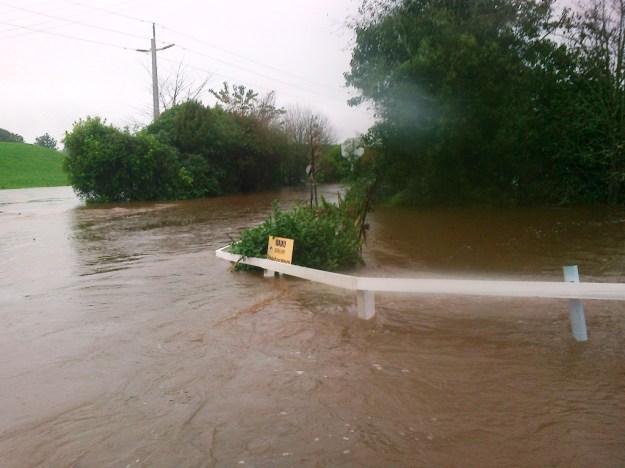 And the scene to the right of the intersection which is also our place.
 But nothing must stop the petrochemical traffic (though we notice it has stopped today so the road damage must be a concern). This massive LNG tanker ploughed blindly through without checking that there was still road beneath, which was a bit of a surprise to us.
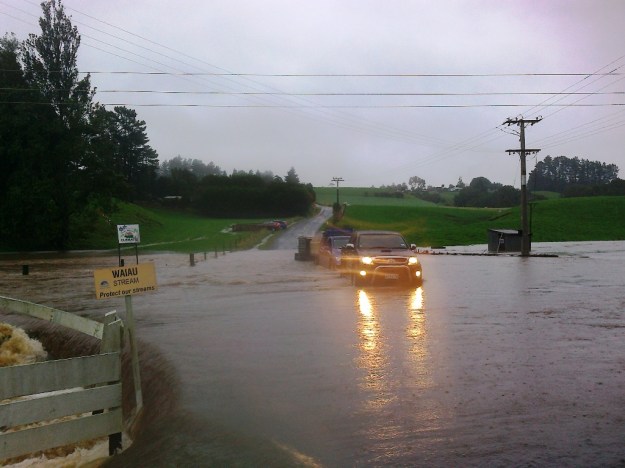 The ute that tried it next was not so lucky. He hit the water too fast and stalled. Fortunately help was to hand for towing him out because the water was flowing through his vehicle and the current could well have swept it away.
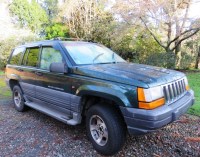 There is a lesson on negotiating flood waters, even in the big 4 wheel drive offroad vehicles much favoured today. We noticed a Jeep Cherokee in our carpark, but didn’t find out until later in the day that it too had stalled in the water. The occupants had to escape through a window because the water was up the doors. It was towed to the closest safe place, which was ours. We joked about claiming salvage rights over it but he arrived today to try and start it. It didn’t. Start, I mean, so it is still parked there.
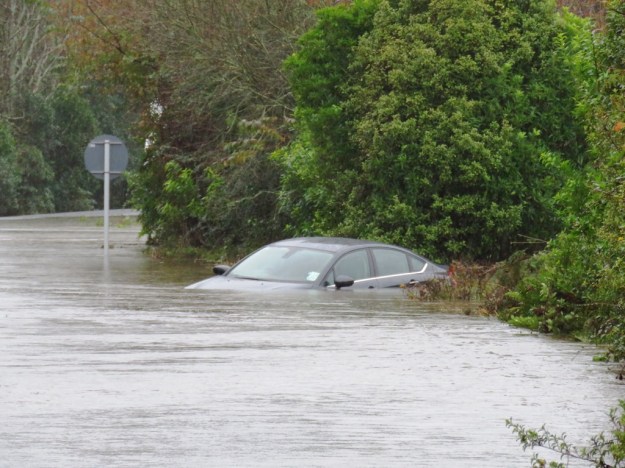 The shocker was this car. It is just around the corner to the right, out of view to those of us on the other road. The occupants were our elderly neighbours who had to be rescued out of the car window. They were very shocked, but not otherwise injured. With hindsight, we worry how close they came to drowning and none of us on the other road would even have known they were there, a few metres out of sight.
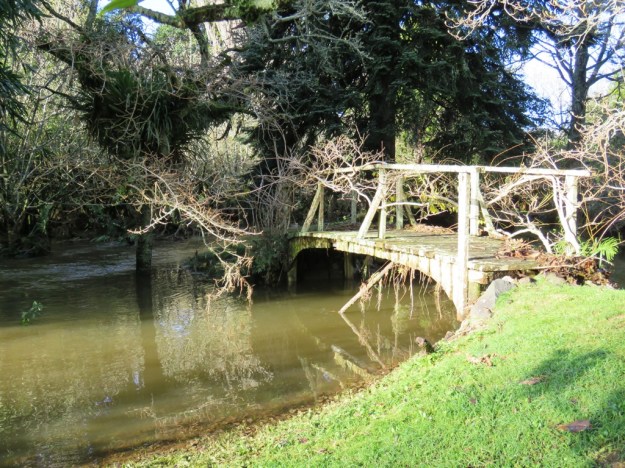 This morning, the waters were receding. It is messy but we have not yet found any major damage on our place. Others have not been as lucky. It is perhaps a timely warning about the power of Nature and the increasing frequency of what are referred to as “extreme weather events. And always live in a house on a hill, not on a flood plain.
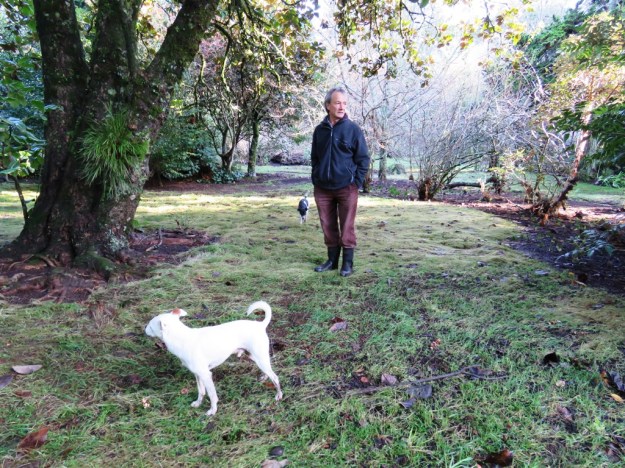 Where Mark and dogs are standing was half a metre under water at this time yesterday.
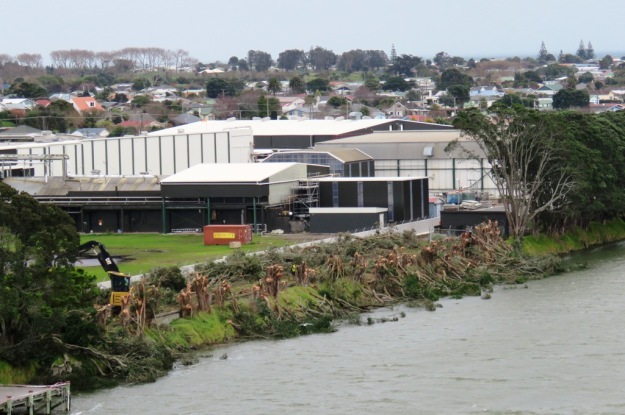
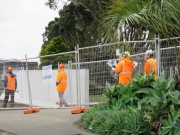
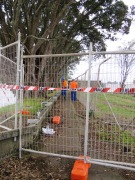
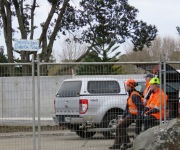
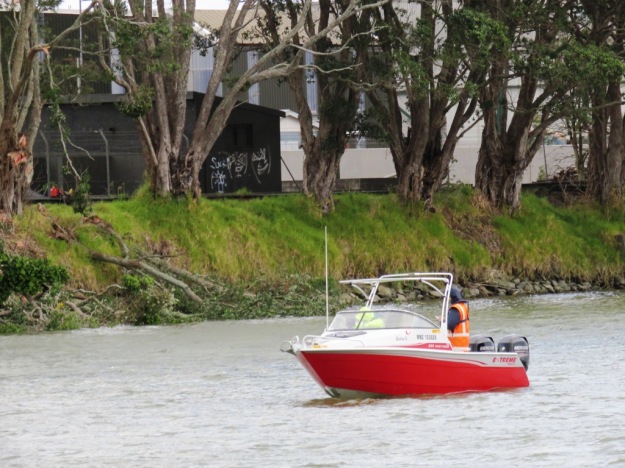
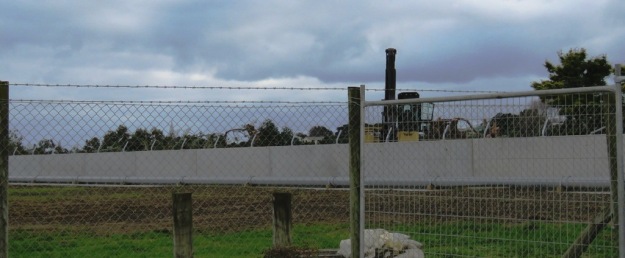 How anybody in their right mind could think that the hostile expanse of concrete flood wall, topped with barbed wire (it is doing double duty as a security wall for the meat packing works behind) was an appropriate form of town flood protection in this day and age is beyond comprehension. It looks like a prison wall. This is the face of Waitara in 2015. We regard it as simply shameful action by Taranaki Regional Council.
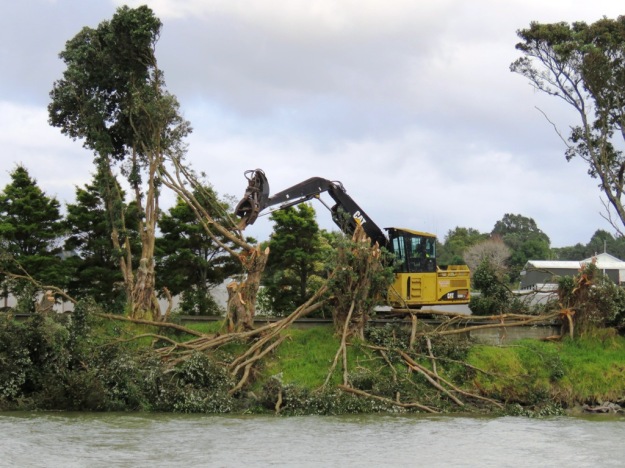 While the chainsaws worked at one end of the row, the digger driver proved that you don’t need chainsaws at the other end – the might of the machine means you can break apart the trees. There was no sign that the men on the site felt any sorrow at the unceremonious felling.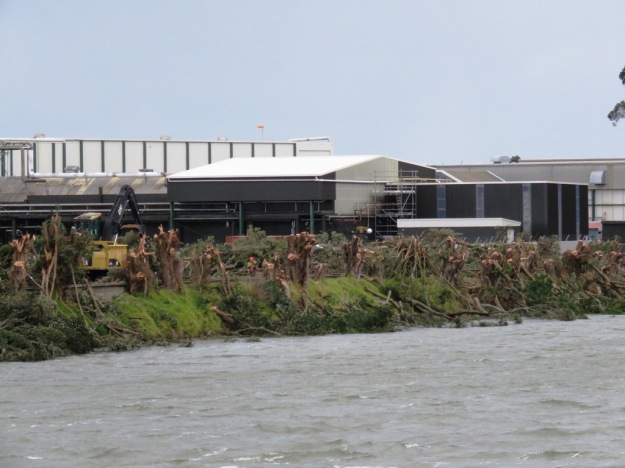



 It being autumn, ‘tis the season of sasanqua camellias here. Ever since camellia petal blight arrived to wreak havoc on the later flowering japonicas, we have been a great deal more appreciative of the sasanquas. What they lack in flower form, they make up in performance.


 After picking flowers, I couldn’t resist laying out some samples of the autumn harvest. I didn’t get too obsessive. There is much that I forgot to include – a good potato crop, sweet corn, another year’s supply of dried beans (not sure we have finished the 2013 bean harvest yet) and I forgot entirely about the show-off avocados which we have in such abundance that we are giving them away by the supermarket bag full.
 Tikorangi The Jury Garden