Tag Archives: Mark and Abbie Jury

The Winter Garden

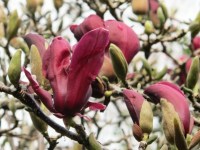
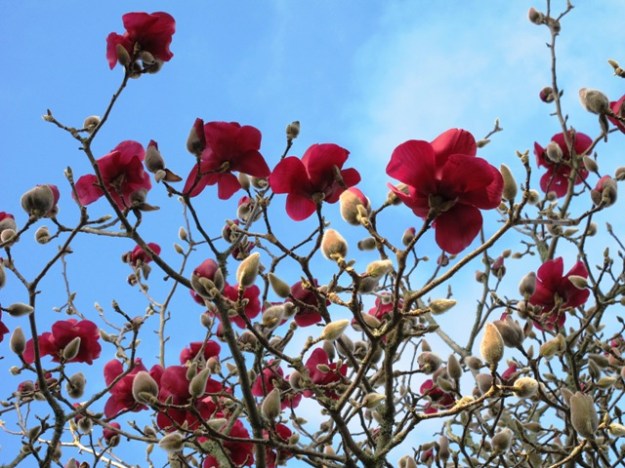
Magnolia Lanarth has a short but glorious season

Magnolia Lanarth has a short but glorious season

I have been away for a couple of weeks. To the tropics, no less, but I need to let the experience percolate in my brain a little longer before I can translate it to anything of relevance for gardeners in our temperate climate.

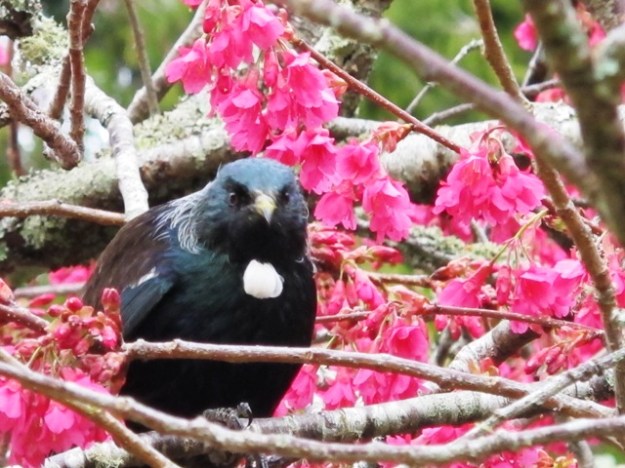
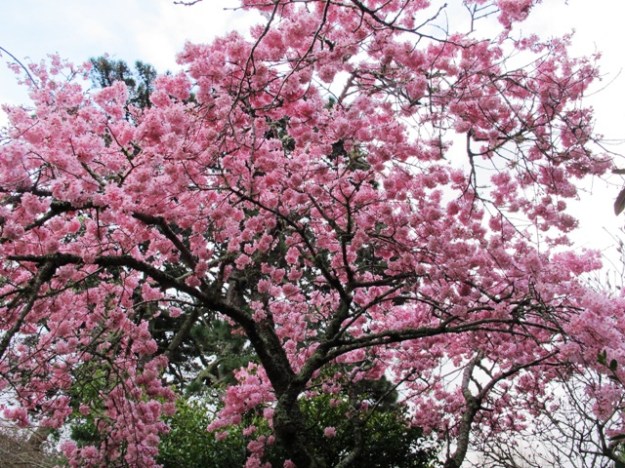
What amazed me was coming home to our winter garden. When I left in mid July, the earliest magnolias were just showing colour and the first blooms, along with some of the narcissi. By early August, we have trees full of bloom. The garden is awash with scores of tui as the campanulata cherries flower. I briefly thought of writing about plants for winter colour but there is just so much in flower that it would quickly descend to a boring list.

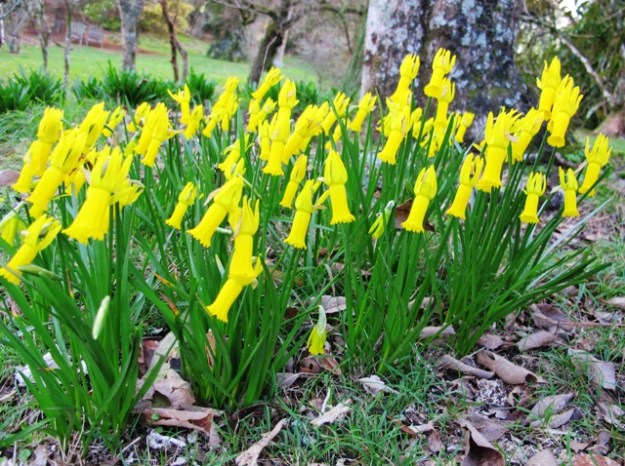
If narcissus could look startled, these cyclamineus  growing in the park certainly do

If narcissus could look startled, these cyclamineus growing in the park certainly do

This is our winter, dear readers. Technically spring does not start until September 1. Gardening is different here to many countries.

If you have looked at British and northern European gardens, there is a long spell in winter when nothing happens. People basically put their gardens to bed and retreat indoors. A heavy dependence on deciduous perennials means that gardens which are full of foliage and bloom in warmer months look dead in winter. The majority of their trees are deciduous so become bare skeletons. It is why the definition of form becomes hugely important because that is all there is to look in the depths of winter. Hardy plants like buxus, yew and conifers give accents which are often the only statement plants in those cold months.

The same is probably true of many inland areas in the world (outside the tropics) where temperatures plummet. My Canberra-resident daughter is always astonished when she comes home in winter to see how lush and colourful we are compared to her arid, hard conditions.

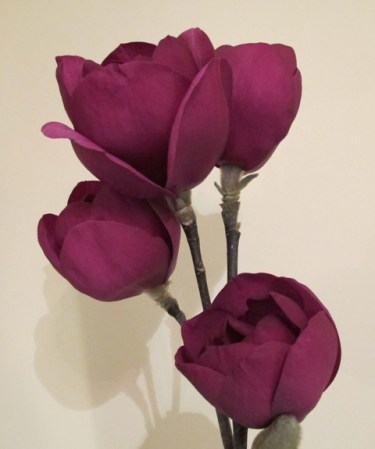
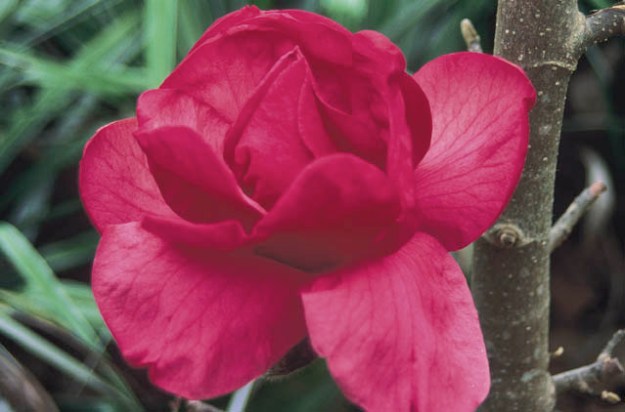
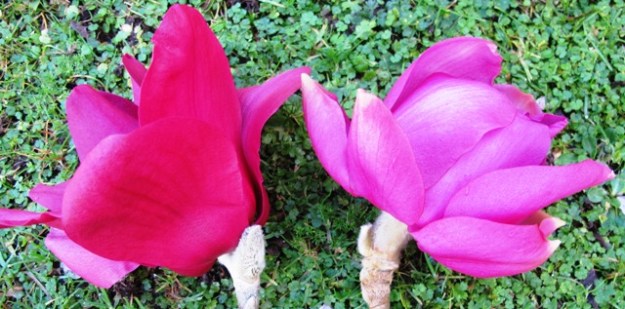
Those who shun deciduous plants miss out on the wonder of plants like Magnolia Vulcan

Those who shun deciduous plants miss out on the wonder of plants like Magnolia Vulcan

For starters, our native plants are all evergreen. So too are most of the ornamental plants we favour in our gardens. Over the years, I have met a swag of customers who point blank refuse to have anything deciduous in their garden, which I think is a bit of a short sighted view. Some of the showiest plants of all are those which go dormant in the colder months and then leap into spectacular display – magnolias, for example. To my mind, there is a place for both evergreen and deciduous plants in gardens.

I do, however, find it curious when I see people unquestioningly grabbing the fundamentals of garden design from other climates without considering the application to our conditions. Most of us like some element of design and definition in our gardens, though there are looser styles which don’t rely on these – meadow, woodland, prairie and food forests are examples. But that definition is not essential to give us something to look at in winter.

Similarly, I am inclined to silently snort when I hear people pontificating that foliage and form are the most important elements in plants because flowers are but transient (or worse, vulgar). I think we should celebrate living in a climate which is so temperate that we can have flowers and seasonal colour twelve months of the year, that we don’t need to put our gardens to bed for winter (or indeed for hot, dry summers) and that the clarity of light and the brightness of the sun seems just as great in July and August as it is in January. We just have shorter daylight hours, lower temperatures and a few more storms.

Being so temperate, few gardeners in this country have conditions where there is a sharp seasonal change. Most of us just drift imperceptibly from one season to the next with flowering extended over longer periods. The mid season camellias are at their peak here – more winter than spring flowering in this country. The snowdrops are passing over, but the dwarf narcissi are flowering all round the place and many of the lachenalias are blooming. Daphne scent hangs heavy in the air. The earliest rhododendrons are blooming already, michelias are opening.

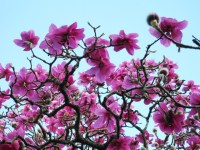
And the magnolias. Do not forget the magnolias. Lanarth has a short but spectacular early season. M. campbellii is at its peak, red Vulcan is opening more flowers every day. The most spectacular time of our gardening year is upon us already, and it is still winter.

I rarely complain about the winter garden here.

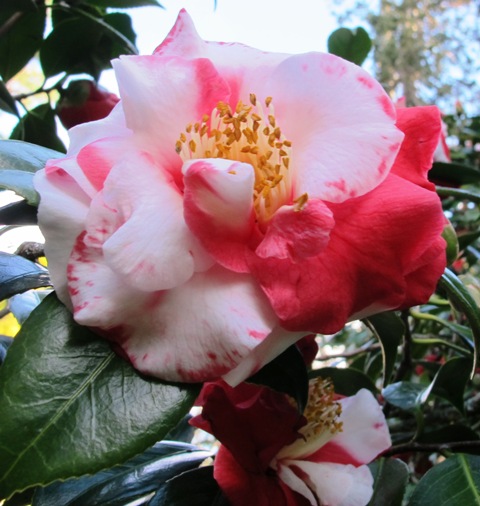
While not usually fans of variegated flowers, The Czar var on the back lawn is an exception

While not usually fans of variegated flowers, The Czar var on the back lawn is an exception

First published in the Waikato Times and reprinted here with their permission.
Food forests – fashion trend or sound option?

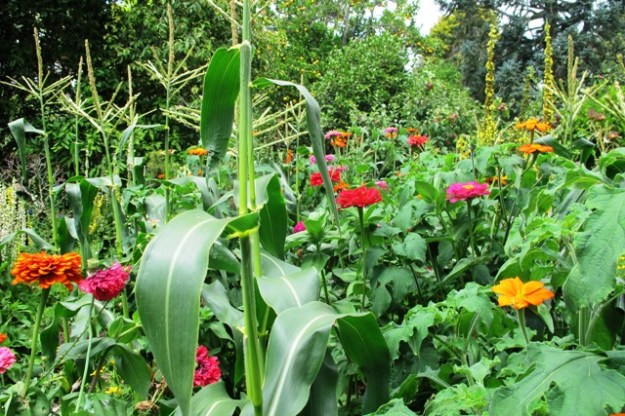
Mark's recent directions in the old vegetable garden may unwittingly be well down the food forest track

Mark’s recent directions in the old vegetable garden may unwittingly be well down the food forest track

Food forests. Trendy. That was enough to make us raise our eyebrows and sniff, even more so when we saw a patently absurd attempt on an earlier series of BBC Gardeners’ World to plant a so-called food forest. But we realised that they were in vogue. It was time to have a closer look.

If you are into raised vegetable beds, ultra-tidy gardens, mown lawns and general orderliness, the food forest concept will not appeal. It is not going to be an easy fit for somebody who buys their veg seedlings by the plastic punnet and on the way out, picks up a heavy grade plastic bag of compost. Nor is it overly practical in a tiny back garden.

In its simplest form, the food forest is modelled on the tropical forest and traditional methods of achieving ongoing food production with fewer inputs and less hands-on work. In a forest, you have three layers. The top canopy is the tallest trees (maybe mango, coconut palm, avocado). Beneath that are the mid canopy plants like the banana palms, maybe citrus trees or figs. At ground level are the crops that will grow in semi shade and with root competition – the likes of cassava, yams and physalis. Clambering up the trees are the climbers – think passionfruit.

The whole thing about the tropics is that you get fantastic rates of growth because of the warmth and the moisture. It is a bit different in a colder climate and, to be honest, the more temperate food forests I have looked at on line are somewhat less purist with the layers. That is because, the colder the climate, the more important sun, warmth and light become. We just won’t get the food production without them.

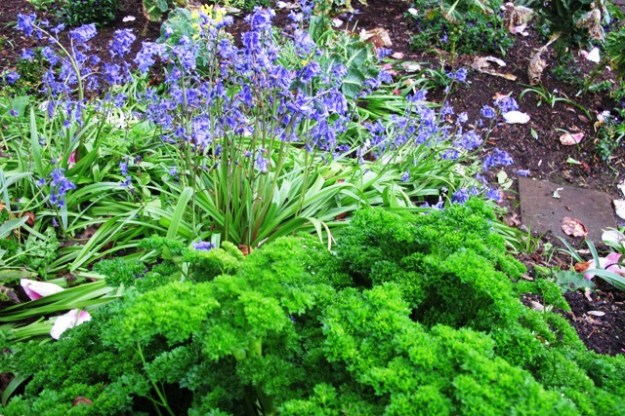
Parsley, bluebells and self-seeding brassicas. Why not?

Parsley, bluebells and self-seeding brassicas. Why not?

The contemporary, temperate food forest appears to be more about building a sustainable ecology. So the top layers of maybe the walnut tree, the pear, the olives and plums get pushed back to the boundary where they become a productive shelter belt, rather than a canopy.

In appearance it may look somewhat chaotic, untidy even, maybe unkempt. Crops are not usually put into tightly managed rows. Garden beds and edgings disappear. Plants are placed where they will grow best and often dotted around in a visually random manner. There is a heavy emphasis on permanent plants and on varieties which will seed down to regenerate themselves. Ornamentals and vegetables are often inter-planted, though the ornamentals will usually be there for a purpose other than aesthetics – maybe to provide food for the bees or the native birds or to contribute as a green crop.

Traditional practices of crop rotation don’t feature in this style of food production. As far as we can see, the range of plants that can be grown also contracts. You are not likely to get marginal crops through. While pumpkins may seed down and adapt, the rock melons probably won’t. Aubergines will want more hands-on management and for much of the country, tomatoes are not going to be a reliable crop in such situations.

But neither will you be working as hard (a good, traditional vegetable garden takes a lot of work and time) and the environment you have created is going to be a great deal sounder ecologically. Maybe those positives make up for any drop in range or volume of produce.

If you like rules and a tightly defined philosophy, look into permaculture. It will give you a great deal more detail. It is a recent movement, founded on principles of sustainable and ecologically sound food production and ways of living. It still sits outside the mainstream as a somewhat fringe movement, even though the driving principles are very hard to fault.

As we talked through the whole food forest concept here and peeled back the layers of romanticism, of philosophical purity, the higher moral ground and the occasional flaky spirituality, we came to the conclusion that Mark’s efforts on the old vegetable garden here probably qualify. He has relocated the pickier crops to his sunny terrace gardens as increasing shade has created problems. There is the top canopy of assorted citrus, a side dressing of espalier apples of venerable vintage (including a Golden Delicious, no less), banana palms, a feijoa. Self seeders include yams, Cape gooseberries and parsley and there is a rich middle layer of plants grown predominantly as butterfly and bee food. Not to forget the sugar cane. It is all a bit chaotic but largely sustainable and very pretty in summer.

Mostly the food forest concept is about finding a balance in producing food and sustaining nature – about not stripping so much goodness from the soil that you have to keep bringing in fertilisers and soil conditioners, about not growing crops that need spraying and intensive care to get a harvest while keeping labour to a minimum.

It is mighty hard to argue against those principles. This might be a garden trend to be considered with an open mind.

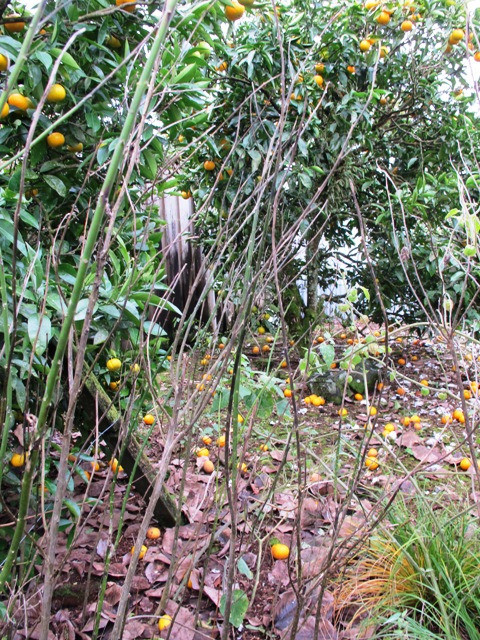
Not such a great view in winter, but what can we expect? Navel orange trees. swan plants (for the monarch butterflies) and physalis

Not such a great view in winter, but what can we expect? Navel orange trees. swan plants (for the monarch butterflies) and physalis

First published in the Waikato Times and reprinted here with their permission.
Know thine species

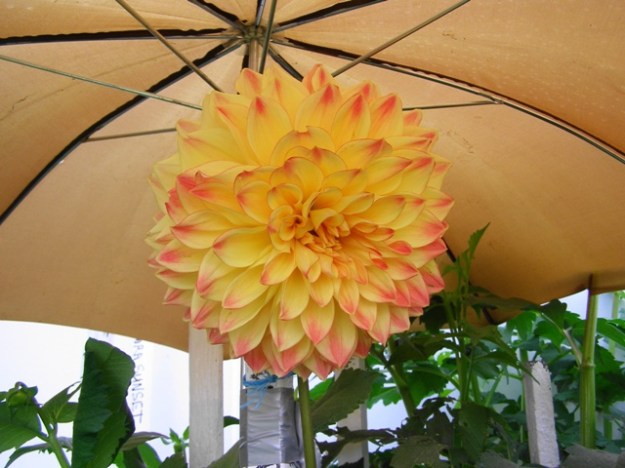
The show dahlia

The show dahlia

You can quite easily live out your gardening days without ever worrying about species and hybrids. Indeed you can, but as with most activities, many people will find that the more they know, the more they enjoy what they are doing.

At its simplest level, species are the natural form of a plant in the wild. And all plants originated somewhere in the wild.

Hybrids are mix of two different species in the first instance and after that they can quickly become a mix of many different species and resulting hybrids getting ever more complex genetic makeup. There is no value judgement in the rights and wrongs of that. Sometimes these hybrids occur in the wild without any human intervention (usually referred to as “natural hybrids”). Often it is done deliberately to try and improve plants.

A variation on controlled hybridising is line breeding – raising many seed from a plant and selecting only the very best with which to continue. Then seed from those best plants is raised time after time until it shows stability. Seed can be extremely variable and this form of line breeding is trying to edit out the less desirable aspects over several generations.

It happens all the time with edible crops. Think how much sweet corn and kiwifruit have changed over the years. The original, wild collected species of edible crops are often poor shadows of what we have now in terms of yield, reliable production, ease of handling and palatability.

It is not always true, of course. Sometimes commercial imperatives have seen us saddled with inferior tasting product – tomatoes are a prime example. And there are concerns about the loss of the wild species which are important to maintain the gene pool for food crops.

As far as ornamental plants are concerned, most of us will have gardens which are a mix of species and hybrids. There are no hard and fast rules although I have met a fair number of gardeners in my time who parade a collection of species only as a badge of status.

Species Camellia gauchowensis

Species Camellia gauchowensis

Some species have a simple charm which is lost in their showier hybrids. Others are nondescript in the extreme. Some highly desirable species are simply damn difficult to grow whereas the hybrids bring new vigour which makes them much more rewarding garden plants. Sometimes there are species which make splendid garden plants but they can be overlooked because their names are not appealing. Camellia gauchowensis has been the standout star of that family here recently and why anybody would grow the likes of Mine No Yuki instead of C. gauchowensis, I don’t know.

We have been revisiting the camellia species as we pick over the best options in the face of the devastating camellia petal blight which has so affected many of the hybrids we grow. It is not that the species don’t get it. It is just that some of them have less susceptibility and have other good characteristics which are worth looking at. More on this in the future.

Show blooms, no matter which plant family, often tend to be over-bred hybrids which are but distantly related to original species. Dahlias which are too heavy to hold their heads up without staking, bizarre daffodil forms, overblown cyclamen or chrysanthemums, enormous begonia flowers – anything that is bigger, allegedly better or a novelty genetic freak.

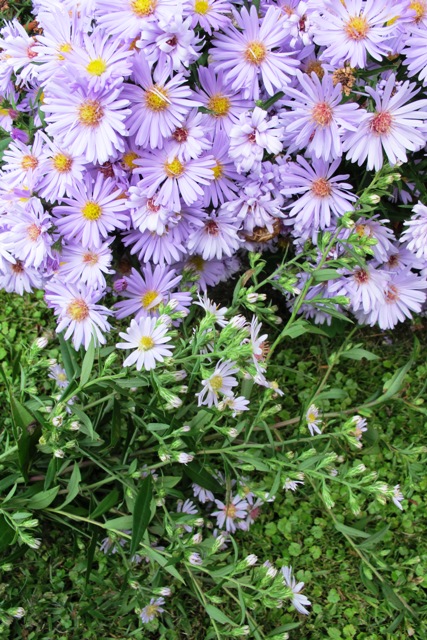
Named hybrid aster at top, self sown seedling at bottom

Named hybrid aster at top, self sown seedling at bottom

But controlled hybridising can also give us garden plants which are hugely better performers. You can see in the photograph of asters that the abundance of blooms at the top are from a named hybrid whereas the few poor specimens at the bottom are from a self sown seedling which has probably reverted closer to how the original species looks.

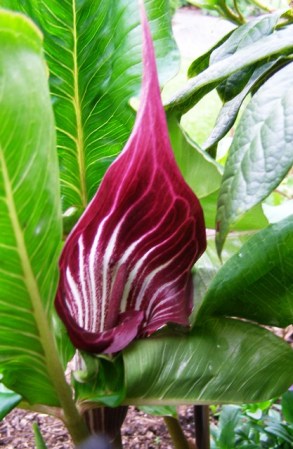
Hybrid arisaemas for our own garden

Hybrid arisaemas for our own garden

I am of course married to a plant breeder who is driven by the desire to create better performing garden plants. Sometimes it is just to get plants which will grow better in our garden here. His work with arisaemas is of this ilk. Many of the desirable arisaemas are a battle to grow in our conditions with insufficient chill and they simply don’t come back a second year. By hybridising two different species, he can get hybrid vigour which means they are much more reliable and stronger growing.

Other plants may be hybridised to look for new or improved characteristics – extending the colour range, reducing the impact of disease, getting more compact growth, better floral display, a longer season, sterility (to avoid unwanted seeding) or bringing the best features of different hybrids together in one plant. There are many reasons to hybridise and one of the final tests before selecting a new cultivar for release is to measure it against both the originating species and the actual parent plants. If it is not a significant improvement, then it won’t get released on the market.

Hybrids have their place in the ornamental garden and in the edible garden. But in a world which is squeezing the natural environment in every way possible, we need to retain the original species for reasons of ecology and bio-diversity. The more people who understand the difference the better – even more so if they can move away from the modern “green” cliché that says the original species are, by definition, better. They are not, but they are important.

First published in the Waikato Times and reprinted here with their permission.
Our world of azaleas here

Our sky carpet of Kurume azaleas in September

Our sky carpet of Kurume azaleas in September

I have never tracked the flowering season of our evergreen azaleas. Generally we would say they are spring flowering and the peak is in September. But this year, I have become aware of them coming into flower already and I have been snapping a few photos for several weeks. When I looked around, plenty have blooms out.

I googled and found references to them having a flowering season of a week or two in spring. Not here, is all I can say. For us, they are unsung heroes in the background of our garden. We have lots of evergreen azaleas and they are rarely foreground stars. But they are such an obliging plant because they grow in semi shade to shaded areas (of which we have plenty), they never get too large, they are wonderfully unfussy, don’t need deadheading and they gently flower on… and on… and on.

The evergreen azaleas are gently flowering already and will continue through til spring

The evergreen azaleas are gently flowering already and will continue through til spring

You can make them stars. You can turn them into bright, colourful clipped mounds of bloom if that is what you want in your garden. You can tastefully plant the same cultivar (to keep uniformity) as an edger alongside a driveway or path. You can colour tone for variation and mass plant out a gentle incline. Or you can ignore fashion and plant a mismatched collection as a vibrant statement of mushroom shaped mounds out in the open. With any of those options, you will probably get peak flowering for a couple of weeks and have relatively anonymous, small leafed green shrubs for the other 50 weeks of the year.

We have plenty of star plants in our garden, so we lean more to using the evergreen azaleas as understated support plants throughout. They are so obliging by nature. Even if you cut them back very hard, most will just come again. You can raise your own plants from seed if you are a patient gardener. They are widely available for sale and generally you decide what you want by leaf and flower size – some are much smaller in both than others – and by colour rather than searching out particular named cultivars.
???????????????????????????????Colours are from white through the whole gamut of pinks to pure reds. The closest to blue is lilac and the closest to orange is more coral in tone. Nor are there pure yellows. Just white with a green or yellow toned throat.

We have plantings of the fine leafed Kurume azaleas from Japan which are now over 60 years old. At about 45 years of age, Mark decided they needed some attention and rather than cutting them back hard to rejuvenate them, he set upon a course of limbing them up. It is a constant task but we take out all the lower growth and have them as an undulating carpet of blooms just above head height.

A garden visitor from Kurume came a few years ago. He spoke no English and we speak no Japanese but he managed to convey the information to us that our Kurumes were simply astounding for their age. But, and there is always a but, we should be taking better care of them. I have spent a prodigious amount of time grooming out dead twiggy bits and an excess of lichen ever since. Some gardeners choose to use copper sprays or lime sulphur to combat lichen build up on older plants.

All azaleas are rhododendrons but not all rhododendrons are azaleas. In other words, azaleas are a separate section of the rhododendron family. They then divide further into the deciduous azaleas (botanically Pentanthera) and the evergreen azaleas (at least mostly evergreen, the Tsutsuji or Tsustusti azaleas originating from Japan).

Vibrant colour in late October from deciduous azaleas

Vibrant colour in late October from deciduous azaleas

Deciduous azaleas are a different branch of the family altogether and many look more like rhododendrons with their full trusses. They are often referred to as Azalea mollis or Ilam azaleas in this country. Some bring the most wonderfully vibrant colour into the spring garden, bordering on vulgar if not placed well. You don’t get the same bright oranges in any rhododendron that I know of and the intense yellows, tangerines and reds make a big statement. For those of more refined sensibility, there are also pastels and whites. Many are strongly scented.

Deciduous azaleas are more tolerant of heavy, wet soils – even occasional flooding – and of full sun than their rhododendron cousins. Surround them with lots of green is my advice, and let them have their time to star in all their glory.

The problem with deciduous azaleas is that when they are not in flower in mid spring, they tend to be pretty anonymous plants. And in humid climates, they are inclined to get mildewed foliage by the end of summer so are not plants of great beauty in small gardens.

Nor are they always easy to source. Garden centres really only have a three week selling time on them when they are in flower because few will impulse buy outside that show time. So buy plants when you see them on offer, is my advice, rather than waiting until the precise moment you are ready to plant them.

Our garden might look a bit sad and empty without the strong showing from the azaleas.

First published in the Waikato Times and reprinted here with their permission.

Magnolia – Michelia: the evergreens

Just another Magnolia laevifolia (syn Michelia yunnanensis) selection but in this case it is our selection which we called Honey Velvet

Just another Magnolia laevifolia (syn Michelia yunnanensis) selection but in this case it is our selection which we called Honey Velvet

I was surprised this week to have someone ask me what michelias are. I realised I have never written about them in a general sense. That is because I try and separate my published garden writing from our commercial interests and michelias are inextricably bound up with the latter.

Michelias are in fact a type of magnolia. They used to be seen as close relatives to magnolias, now they have been reclassified botanically as magnolias and this has involved a complete name change for some species.

Mention evergreen magnolias and most people think of the grandifloras from the southern states of USA. All readers will know these by sight, if not by name. They have big, tough, leathery leaves and they flower in summer with large creamy white blooms.

Personally, I am not a big fan of the grandifloras. They make big, chunky trees which are remarkably tolerant of harsh weather conditions. As such they have their place but I think that place is on golf courses and cemeteries. There is a row of them as you exit Huntly to the south and I am pretty sure they are on the edge of a cemetery.

Why am I not keen on them? They don’t mass flower, for one thing. In fact the flowering is generally random and intermittent. I find them a bit chunky in the landscape and if one is going to go chunky, I would rather have our native puka. The leaves are really tough and take forever to decompose.

That said, the varieties with deep velvety brown indumentums (the furry coating on the underneath of the leaf) can look attractive in the wind. Magnolia grandiflora “Little Gem” is a tough plant with exceptionally dark forest green leaves contrasting with cinnamon indumentum and is much favoured in modern gardens. Just be aware that it is only a little gem as opposed to an extremely giant gem. It will still get quite large over time and you will never get many flowers on it.

Fairy Magnolia Blush - bringing pink into the range

Fairy Magnolia Blush – bringing pink into the range

Michelias are very different. Their foliage is smaller and much lighter in substance so they are not an oppressive plant. And they can flower and flower because they set flower buds down the stem at nearly every leaf axel, not just on the tips. Most of them peak in spring but some keep on flowering for months on end and some will have a second blooming in summer.

There are a few michelias that are widely available here. M. figo has long been referred to as the port wine magnolia and many gardeners will know it. It has small leaves and is inclined to go a bit yellow in full sun. When it starts pushing out its scent in late afternoon, it smells remarkably like Juicy Fruit chewing gum.

There are various forms of doltsopa, the most common in this country being “Silver Cloud”. It has wonderfully large, pure cream blooms which are very fragrant. But, there are always buts, the flowers are floppy and often get frosted in colder areas, the tree tends to drop most of its leaves after flowering and it gets rather larger than most people expect. M. maudiae is a better bet as a garden tree but difficult to propagate so not generally available.

What we used to know as Michelia yunnanensis is certainly a popular addition to the garden plants of this country. It had a brief flirtation with being called Magnolia dianica before its current name was settled upon. It is now correctly known as Magnolia laevifolia but you are still more likely to find it sold as M. yunnanensis. It sets seed really freely so just about every nursery around the country has made a selection and named it (including us!). You can recognise it by its small leaves and creamy cup shaped blooms. You can hedge it and clip it but it is easier to start with a variety which is more generous in the leafage department.

Several decades ago, the late Northland plant breeder Os Blumhardt released Bubbles and Mixed Up Miss onto the market and these hybrids had many advantages over the species as garden plants. They are still tidy plants when juvenile, but nothing remarkable as they mature.

Now there is an explosion of new michelias on the market. Many are just the aforementioned M.laevifolia selections. Some are hybrids. I must declare an interest here. The ones you see being marketed as “Fairy Magnolias” are ours. For we are in the midst of a longstanding love affair with the michelias.

When camellia petal blight first showed up, my plant breeding husband immediately abandoned camellias and started on michelias. After about 17 years we have many, probably into the 1000s by now but we have never counted, as he has pursued breeding goals. They are in shelter belts, hedges, around the garden, through the nursery areas – anywhere there is space. Fairy Magnolia Blush was the first release a few years ago, bringing pink into the colour range. Cream and White are being released this year.

What we love about michelias is their versatility. They can be clipped tightly, even in topiaries. They make good hedges, even pleached into hedges on stilts. Some can become specimen trees without being forest giants. They give us masses of flowers, many are scented and they are pretty much free of all pests and diseases. They are an all round useful plant family.

We would not be without them.

Our new star - Fairy Magnolia White to be released this year

Our new star – Fairy Magnolia White to be released this year

First published in the Waikato Times and reprinted here with their permission.