Tag Archives: Mark and Abbie Jury

Powerco Taranaki Garden Spectacular update

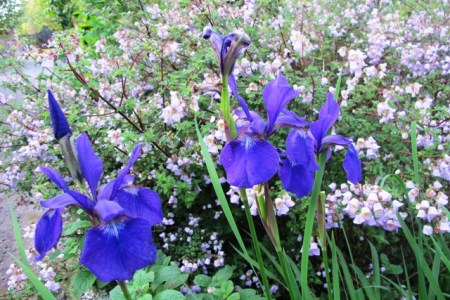
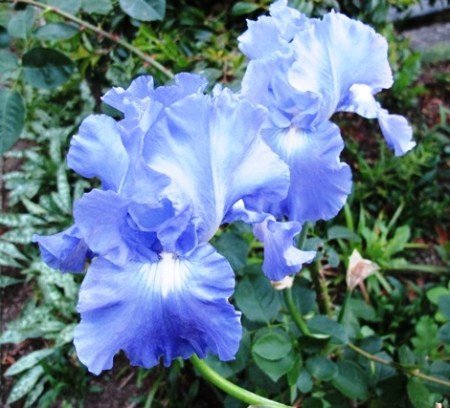
Iris sibirica and Jovellana punctata

Iris sibirica and Jovellana punctata

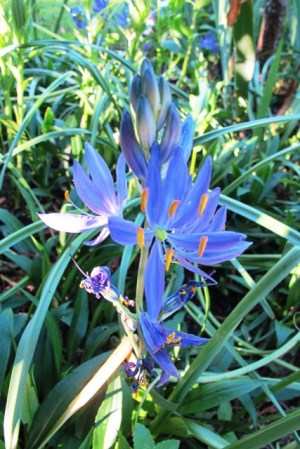
Blue cammasia

Blue cammasia

There are a mere three days to run for this year’s garden festival – the Powerco Taranaki Garden Spectacular. The pattern here has been very busy mornings and much quieter afternoons. Tomorrow is the last of our guided walks at 11am – the popularity of these has become a standing joke here. The agreement is that if there are under 10 people, Mark will lead them, over 10 and it is mine. So far, this year and last, they have all been mine. Mark is now threatening to pressgang unwilling participants should any look to fall short of the magic 10. It was closer to SIXTY on Tuesday. That was a minor challenge.

We are open from 8.30am until 5.00pm daily. Admission to the garden during Festival is $12.00 or 3 x Festival tickets. Garden entry includes tea and coffee at this time. We are open from 8.30am to 5.00pm each day. Plant sales continue until Sunday only.

589 Otaraoa Road, RD 43, Waitara 4383, New Zealand
Email: jury@jury.co.nz | Tel & Fax: +64 6 754 6671

Powerco Taranaki Garden Spectacular- day 2


Day 2 of our annual festival has passed. For us the highlight was having Guitarra playing in the garden – a wonderful blend of classical guitar with Spanish and South American influences. The gentle melodies wafting through the upper garden was a delight for garden visitors. At the time we had the Galston Garden Group from Australia visiting. I suspect there were a few ring-ins with them – can’t think that the Galston group has a catchment from Sydney to Perth.

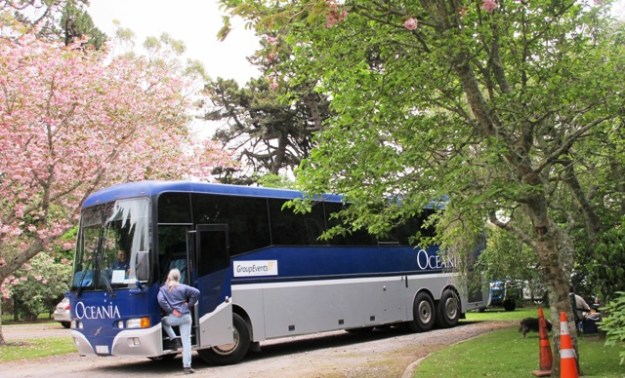
Our Lloyd, the keeper of the carpark and manager of parking at peak times, kept the coach driver entertained.

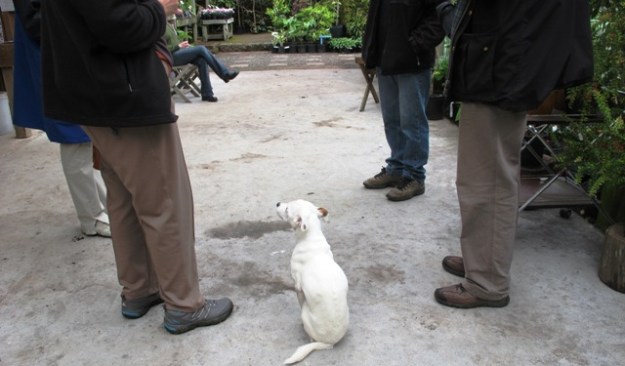
The dogs had a busy day. Spike was an attentive participant in the conversation of one group of visitors.

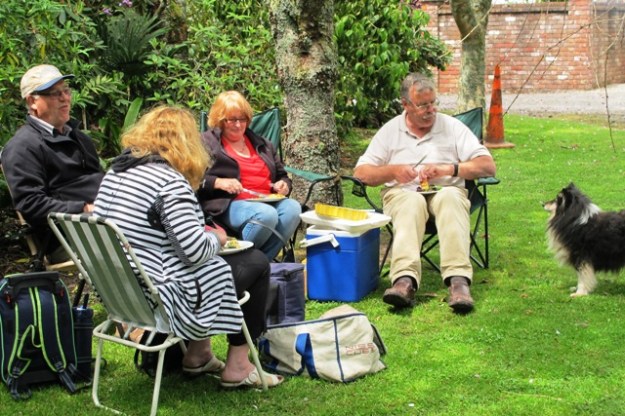
Zephyr was more interested in joining another, well organised group for their luncheon in the carpark.

If you are in the area, admission to the garden during Festival is $12.00 or 3 x Festival tickets. Garden entry includes tea and coffee at this time. We are open from 8.30am to 5.00pm each day.

589 Otaraoa Road, RD 43, Waitara 4383, New Zealand
Email: jury@jury.co.nz | Tel & Fax: +64 6 754 6671

Meet the maddenii rhododendrons

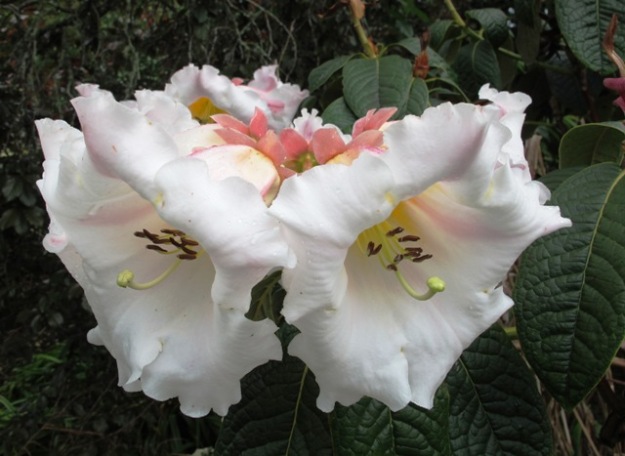
The Rolls Royce of rhododendrons - sino nuttallii

The Rolls Royce of rhododendrons – sino nuttallii

Allow me to introduce you to maddenii rhododendrons. We are pretty keen on them here, although you may not share our enthusiasm if you think all rhododendrons should have the tight ball truss of blooms which is usually regarded as typical of the family. Maddenias don’t hold their flowers in that style.

But the family does include the spectacular nuttalliis with their huge trumpets. I rate these as the most stunning rhododendrons of all with their flowers which look as if they have been cast out of wax and their wonderful, big leaves which are heavily veined – described as bullate foliage. There is nothing quite like them but they are not generally available on the market. They don’t produce much cutting material and they are not easy to propagate but many will set seed so, if you are really keen, you could try raising seed. Some of the hybrids can be found from time to time – Mi Amor and Floral Sun in particular.

There are two huge pluses for the maddeniis. Most are scented, some strongly so. R. polyandrum can waft out for a metre or two which is an indication of a strong scent. Many will pass the 30cm sniff test which is good. And if you are willing to risk the pollen on the nose, most have a sweet scent when you bury your face in the flower.

The second big bonus is that the maddeniis show much better resistance to thrips than most other rhododendrons. Thrips are nasty sucking insects that hide away beneath the leaves, sucking out the chlorophyll. This turns the leaves silver and once that has happened, they can never be turned green again though the new season’s growth will be green, at least until the thrips get hold. Over time, serious infestations can weaken a plant past the point of return. Very cold winters will kill the bugs off, but we don’t get cold enough here so there is not a whole lot one can do beyond spraying with insecticide or neem oil, or trying a cloth collar soaked in systemic insecticide wrapped around the main trunk. Or you can choose varieties which are more resistant.
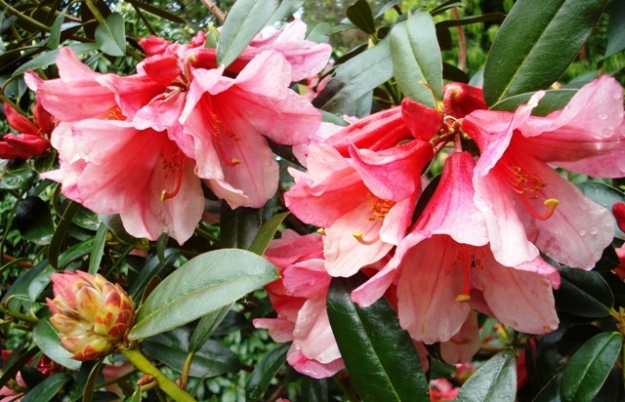
Bernice, as red as the maddeniis get

Bernice, as red as the maddeniis get

There is a preponderance of whites and pastels in the maddeniis and where there are coloured ones, they lean to the subtler, softer shades. In other words, there are no pure reds, purples, blues or oranges. We don’t mind because we can get the stronger colours in azaleas and other types of rhododendrons. Some of the hybrids flower so heavily that it can be like viewing a wall of bloom with barely any foliage visible at all.
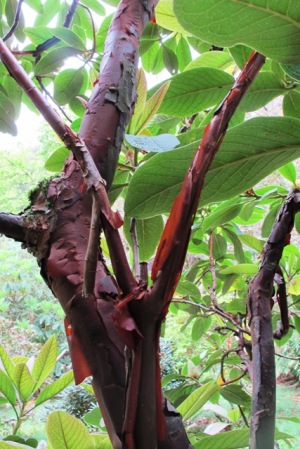
Wonderful peeling bark and bullate foliage

Wonderful peeling bark and bullate foliage

I should perhaps mention also that most of Maddenia types don’t make tidy compact little buns of bushes either. They are inclined to be more open in their growth – though by no means are all of them giants. Some can only be described as leggy, but all is forgiven when they flower. Besides, another attractive feature of these rhododendrons is the lovely peeling cinnamon bark many have. If they were bushy, dense plants, you would never see it.

Google tells me that this group were first introduced to the West in 1849 by famous plant collector Joseph Hooker – he who also visited New Zealand. For reasons which are not entirely clear, he named them after Lieutenant Colonel E Madden of the Bengal Civil Service. How random is that? Given that these rhododendrons are found in northern India, Burma, southern China and the milder areas of Tibet, maybe Lt.-Col. Madden was particularly helpful to Hooker’s expeditions.

Internationally the maddeniis are rated as subtropical and somewhat tender so they are the envy of gardeners from cold climates. Our climate in New Zealand is so temperate that you are able to grow most of the maddeniis in all but the coldest, inland conditions. They form the backbone of the rhododendron collection in our garden and, being later flowering than many others, are coming into bloom right now.

There is no simple way to determine which rhododendrons fall into the maddenii group. That is what books and Google are for. But ones you may find, or know of, include Fragrantissima, Elsie Frye, Princess Alice, Bernice, Moon Orchid, the aforementioned Mi Amor and the plant confusingly known simply as Rhododendron maddenii.

The problem is sourcing these rhododendrons. In fact the problem is sourcing any interesting rhododendrons at all in these days when specialist nurseries have fallen like flies. The best option for Waikato readers may be Rhodohill or Tikitere Nurseries in Rotorua. Failing that, try Trade Me where there is a South Island grower, RhodoDirect, producing and selling by mail order. I have seen them listing the lovely Floral Sun and there are other maddeniis in their range.
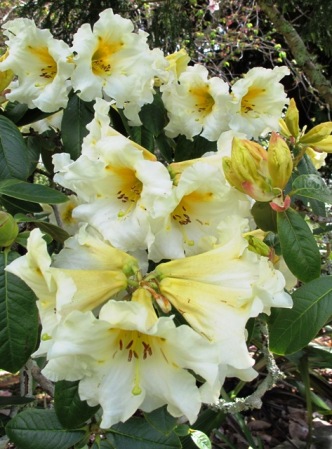
Our very own Floral Sun

Our very own Floral Sun

First published in the Waikato Times and reprinted here with their permission.

Weeding – just like outdoor vaccum cleaning, really

Edging tools, push hoes and our well-used petrol powered line trimmer

Edging tools, push hoes and our well-used petrol powered line trimmer

Weeding. It’s the garden equivalent of vacuuming really. Tedious, repetitive and while the place looks great when you have finished, all too soon you need to start again. I guess you could ignore the weeding part (if not the vacuuming) but most of us prefer a garden that is pretty much free of weeds. In fact most of us place a high priority on this state.

There is a much higher tolerance for weeds in some other gardening countries, particularly in Britain. This may well have something to do with the fact that the vast majority of our weeds in this country are imports and a fair number are in fact native to Britain and Europe – plants like dandelion and blackberry, for example. We are probably more tolerant of our self seeding native plants too. I don’t refer to the scores of nikau palms we pull out and dig out as weeds. They are merely self seeded plants in the wrong place whereas the buttercup and campanulata cherry seedlings are indubitably weeds.

I have to admit we weed spray here though Mark is trying to reduce the amount he does. Glyphosate is pretty much all that stands between us and claiming organic status, but in a large garden, glyphosate is oft described as the equivalent of a labour unit. It is much faster to whip around with the knapsack sprayer than to hand weed. Mark has spent the last decade gently worrying that research will come up with definitive arguments against the use of glyphosate. It hasn’t happened yet, to his relief. But in this day of heightened sensibilities, he is rarely to be spotted by any garden visitor with the knapsack on his back. He hides, dear Reader. True.

The rusted Niwashi, implement for flat weeds and aptly branded Wonder Weeder

The rusted Niwashi, implement for flat weeds and aptly branded Wonder Weeder

We have a repertoire of weeding implements here and do a fair amount of hand weeding too. Others swear by the Niwashi weeder, to the extent that Mark bought one and it was relatively expensive as I recall. I asked him this week if he had ever used it because I never have. Neither has he, apparently, but somebody here must have because it made the trip right through the compost heaps emerging after about a year at the other end. Mark is a push hoe man and keeps his favourite two well sharpened. However push hoes come with a warning – refer to the quote of the day below! I have heard of one public garden which banned push hoes in the hands of volunteers because they caused so much damage. I favour the precision of close up work with the cheap and cheerful Wonder Weeder – so cheap that I have several and so sturdy that they can emerge from the compost heap pretty much unscathed. These implements work best in loose, friable soil. It is much harder work in compacted earth but a breeze where it is easy to scuff up the surface and hook out or sever weeds.

We also have edging tools – ones designed for both hard edges (where grass meets a solid surface like a path) and soft edges. And let’s not forget the petrol powered line trimmer but that is excessive unless you have a large section. These are because of a strongly held opinion on Mark’s part that little looks worse than sprayed edges. You know that dead brown line others have? Not here. The lawn weeder is also well used since we made the decision not to spray the lawns. Nothing works as well on flat weeds as this handy implement.

The bottom line of weeding is that vigilance and early intervention lessens the task. There is an old saying: “one year’s seeding, seven year’s weeding”. You can never completely eliminate weeding but if you can stop seeding, you certainly lessen the load considerably. We are lucky in that we took over this garden from Mark’s father who was a vigilant weeder. True, he leaned towards the chemical arsenal to carry this out as so many of that generation did. But at least we don’t have soils jampacked with weed seeds waiting to germinate. Where a patch may have got away from us and set seed heads, we usually have a bucket on hand to receive them. If you cut them off and leave them lying on the ground, the seeds can still ripen and live to germinate another day. For the same reason, gardening clothes with pockets can be handy.

Spitting cress

Spitting cress

Get ‘em when they are small and much easier to deal with. Soon after germinating is the best time, before they have well established root systems. They are far easier to hoick out of the ground and far more likely to die instantly at that tender stage. While the saying that a weed is merely a plant in the wrong place is repeated so often it has become a cliché, I can not think that the nasty spitting cress fits this kind interpretation. Every gardener knows it – the little flat weed which can go from first appearance to setting seed in a matter of days in full summer. As soon as you touch it, it jet propels its seeds around to ensure immortality. Vigilance – that is the single most important mantra. Target the worst offenders and maybe be a bit more relaxed about some of the others.

First published in the Waikato Times and reprinted here with their permission.

Orchids as garden plants

Referred to here as the Aussie dendrobes - dendrobiums

Referred to here as the Aussie dendrobes – dendrobiums

We are at the peak of orchid season in the garden. There can be few plants which carry the aura of luxury and exotica accorded to orchids. They belong to a huge and complex family, second only to the daisy family in number and go well beyond the common cymbidium. Yet they are not a plant that is common in New Zealand gardens.

Besotted by calanthes

Besotted by calanthes

The calanthe orchids are particularly rewarding as garden plants but you need to take the long view. We use them mainly as woodland plants. The blooms are a bit frost tender. Some we had on the margins were once hit by a memorable late frost but that was a one-off event. After about five decades of building them up, we have large swathes or drifts. In fact we have so many that a gardening ingénue who saw them recently drew the conclusion that they must be an unusual but easy bedding plant. Ah, no. But for those who have the time and inclination, they are a very rewarding branch of the family. Over time, they form a string of back bulbs below ground and can be increased from these.

For orchid enthusiasts who want the technical data, we understand that it is mostly forms of striata that are showiest for us. We have a pale lemon one which flowers in early spring and a much brighter yellow form that comes later. We used to have them under different species names but have come to the conclusion that they are more likely just different striata forms. Note: I have now been informed that the pale yellow calanthe shown is in fact Calanthe ‘Higo’ (C. sieboldii x C. aristulifera) which makes sense to us. We also use the white C. arisanensis but alas we failed with a lovely lilac species and appear to have lost it. All of these are evergreen varieties, though I understand there are deciduous species as well. The fresh spring leaves are large and could, at a pinch, be thought of as looking like pleated hosta leaves. A fair number of garden visitors over the years have asked us about the yellow flowered hostas. (Hint: hostas only flower in white or shades of lilac to purple.)

The Australian dendrobiums make compact, clumping plants with many smaller flowers and are pretty as a picture in the subtropical woodland areas. They combine very well with bromeliads and ferns and are an easy care garden plant. We have them in pinks, lilacs, white and yellow. We don’t know much about the hardiness of these. Ours are in positions where they never get frosted but they will get cold and they never turn a hair. They are probably similar to cymbidiums in hardiness.

Cymbidiums give long lived blooms, even outdoors

Cymbidiums give long lived blooms, even outdoors

DIY bamboo stake

DIY bamboo stake

Cymbidiums are the usual florist’s choice and are surprisingly easy as garden plants, given the right conditions. All of ours are grown in the ground, not containers. We don’t get florist quality blooms but they last an amazingly long time in flower and put on a splendid show as long as I remember to stake the flower spikes at the right time. I see I started photographing the flower spikes a full two months ago and those same flowers are now a little weather beaten but still showy. These days I harvest stems of green bamboo which still have convenient leaf axils because I can gently engage the flower spikes in the leaf axils and don’t have to tie each one which makes staking much faster and more discreet. I admit this only works if you have a convenient stand of bamboo to harvest.

The jury is still out on whether we can get the disa orchids naturalised by the stream. They were fine for the first two seasons but the proof of the pudding is in the five to ten year cycle – whether they are still strong and flowering after that time. At this point it is not looking good. The native English field orchid, Dactylorhiza maculata, has gently ticked on here for decades but is romping away more enthusiastically now we are trying cooler, damper positions. We didn’t succeed with the masdevallias (though we probably didn’t try very hard) and the tropical orchids like phalaenopsis (moth orchids) won’t do as garden plants for us.

One of the easiest orchids to grow - pleiones

One of the easiest orchids to grow – pleiones

This week it is the pleiones which are the stars. Their flowering season is nowhere near as extended as some of the other orchids, but they form pretty carpets, are not at all tender and are dead easy to increase. Most bulbs will make one or two offsets a year. Along with the dactylorhiza, they are deciduous, becoming dormant in autumn. The yellow pleiones want more of a winter chill and have gradually died out for us but we have an abundance of purest white ones and an array of lilacs and purples.

These are not generally plants that you will find offered for sale at garden centres (which may be why they are not often seen in gardens). You probably need to find your nearest Orchid Society and enquire about sales tables. Orchid enthusiasts tend to be a different breed. At the risk of making sweeping generalisations, Orchid Society people are more often collectors than gardeners. More than any other horticultural group we have come across, orchid people have well above average technical knowledge and like to show off their treasures in bloom. They are also generous and encouraging to any novice who shows an interest. Much of our collection has come from Orchid Society people over the years. We cannot speak highly enough of them as a repository of knowledge about a very complex plant genus.

For details on how to multiply calanthe orchids, check out our earlier Outdoor Classroom on the topic.

First published by the Waikato Times and reprinted here with their permission.