Tag Archives: Mark and Abbie Jury

Plant Collector: Acer Senkaki or A. 'Sango-kaku'

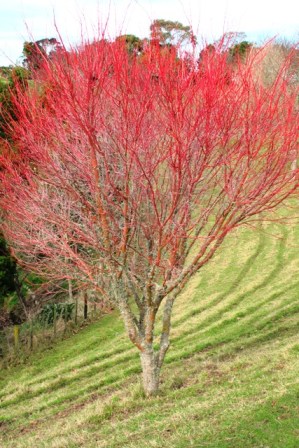
Acer Senkaki, as it is commonly referred to in NZ

Acer Senkaki, as it is commonly referred to in NZ

These vibrant red branches belong to what is commonly known as Acer Senkaki, or the coral-bark maple. I will go with Britain’s Royal Horticultural Society’s note that in fact, the correct name is Acer palmatum var. dissectum ‘Sango-kaku’. I wonder if Senkaki is the anglicising of Sango-kaku? The RHS gave it their prestigious Award of Garden Merit.

This is one of the Japanese maples with finely cut leaves (which explains the dissectum bit of the name), in five lobes or fingers (hence palmatum). The leaves are pale green tones throughout most of the season, colouring to gold in autumn. However, mostly one grows it for the glorious winter bark. It is a tree, albeit a smallish one. Over time it will get maybe five metres high by three metres wide.

I photographed this specimen in a country garden, Puketarata, where it stands as a splendid feature all on its own on a hillside, so it is able to viewed in its entirety. It really lit up a bleak winter Sunday afternoon.

Most maples need to be out of the blast of winds because their foliage is soft and relatively fragile. If the roots dry out over summer, the plant shows stress by burnt edges to its leaves. So positions which are well sheltered and moist all year round without getting waterlogged will give the best results. Grown well, the Japanese maples are lush and lacy in appearance and give superb autumn colour.

First published in the Waikato Times and reprinted here with their permission.

Tikorangi Notes: Friday 3 August, 2012

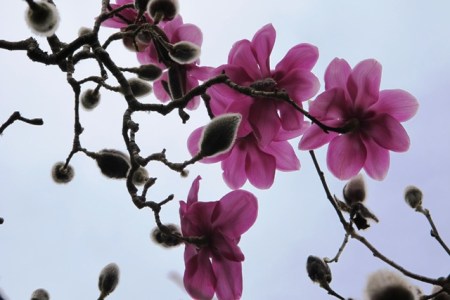
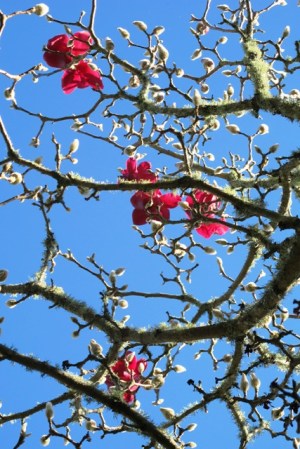
Magnolia Lanarth is coming into flower

Magnolia Lanarth is coming into flower

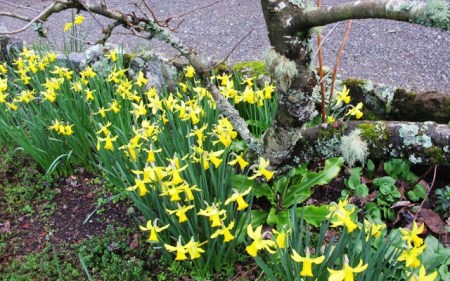
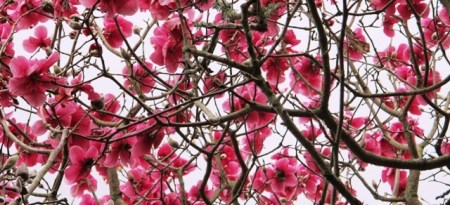
With the advent of August, our garden is now open again for the season and more is coming into flower every day. Magnolia campbellii is in full bloom, Lanarth is opening as is Vulcan, assorted unnamed seedlings are opening and the early michelias (now reclassified as magnolias) are in full bloom. Between the michelias and the many daphne plants, the garden is full of scent. The earliest of the big leafed rhododendrons (R. macabeanum and R. sino grande types) are coming into flower. And at the lowest level, there are many early spring bulbs blooming. As the snowdrops start to pass over, the early narcissi (many of the cyclamineus type) are blooming and Cyclamen coum flowers on. Mark’s efforts on his bulb hillside are bearing fruit (or maybe bearing flowers in ever increasing quantities is a better description). While we may get a cold snap or two, spring has very much arrived.

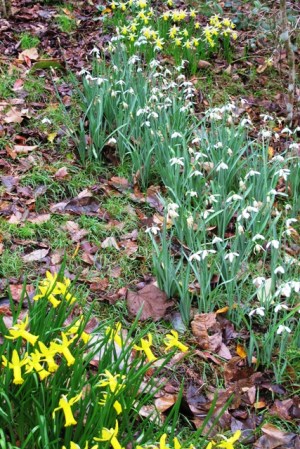
Mark's bulb hillside - Narcissus cyclamineus at the front, galanthus in the centre and Narcissus Twilight to the rear

Mark’s bulb hillside – Narcissus cyclamineus at the front, galanthus in the centre and Narcissus Twilight to the rear

We have no new posts this week to list – the gardening page of the Waikato Times has been put to one side to make additional space for Olympic sports news.

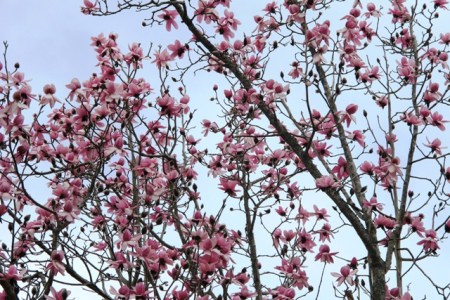
Magnolia campbellii in full flight this week

Magnolia campbellii in full flight this week

Tikorangi Notes: Friday 27 July, 2012

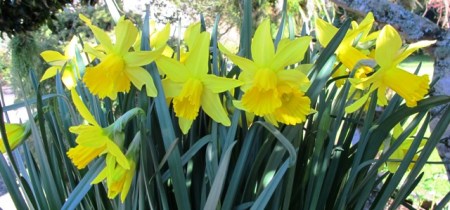
Narcissus Peeping Tom is a wonderful early season performer

Narcissus Peeping Tom is a wonderful early season performer

Helleborus x sternii

Helleborus x sternii

Latest posts:

1) The curse of the narcissus fly, also called bulb fly. Truth be told, it is not the fly that causes the damage – it is the larvae that eat the bulbs from the inside out.

2) The delight of Helleborus x sternii in our woodland areas. Green flowers have a charm of their own.

3) Grow it yourself: runner beans, or climbing beans this week.

4) I have been re-posting Outdoor Classrooms in a more user-friendly format. This takes a while and I have quite a few still to go but some are done should you wish to know how to renovate old camellia plants, or most of what you are likely to need to know about making compost (in a step by step 3 part series), maybe you fancy making a bamboo obelisk, or you need to prune your apple trees or maybe hydrangeas.

5) Spring is arriving here with its usual rush. If you a Facebook person, you can get the photos posted on your Facebook timeline if you “like” our Facebook page (http://www.facebook.com/thejurygarden) as the parlance goes.

The first blooms on Magnolia Vulcan are the very best

The first blooms on Magnolia Vulcan are the very best

The curse of the narcissus fly

A selection of early flowering narcissi from the garden this week

A selection of early flowering narcissi from the garden this week

The offending narcissi fly larva to the right of the blade point

The offending narcissi fly larva to the right of the blade point

Behold, the narcissus fly larvae. This creamy brown grub is not your garden friend. In fact, in the world of insects, grubs and greeblies that would have been better kept out of this country, the narcissus fly ranks up the scale. It is European in origin – what they call a hoverfly though not a desirable species.

I had to look it up because I only knew it as the narcissus fly. It is Merodon equestris, in case you want to know. On the wing, the adult looks inoffensive – a bit like a cross between a lean, mean bumblebee and a blow fly boasting a yellow back. It is its reproductive habits which are the problem. The female adult zips around at great speed, laying its eggs, usually one by one, at the base of the bulb foliage. When the egg hatches, the juvenile larva burrows down and makes a cosy home for itself inside the bulb where it sustains itself by eating it from the inside out, in preparation for hatching the following spring.

You can see the damage in the photograph. As I was redoing the rose garden, I was splitting clumps of bulbs in full growth (not generally recommended but I find it works out fine as long as I am replanting straight away into good conditions). Some of the bulbs were soft and sporting very few, if any, fresh roots. That is a sure sign of narcissus fly. There is something deeply compelling about squeezing the bulb and having the larva exude out the top, or splitting the bulb and digging it out. They are quite tough so difficult to squish between your fingers (I wear gardening gloves at all times, lest you recoil at the thought) but can emit a satisfying pop and explode in a very small way if you squish them below foot. Generally, there is only one per bulb.

The inoffensive adult fly (photo credit: Sandy Rae via Wiki Commons)

The inoffensive adult fly (photo credit: Sandy Rae via Wiki Commons)

While this critter is widely referred to as the narcissus fly, by no means does it limit its predations to daffodils. It attacks many members of the amaryllidaceae family. This is a fairly large family and includes snowdrops (galanthus), snowflakes (leucojum) and hippeastrums. According to bulb expert, Terry Hatch, it also attacks hyacinths but as we only have two hyacinths, we have never noticed. As an aside, hyacinths need a winter chill to flower well so are better in colder climates.

You can’t eradicate it. The fly is airborne and does not respect boundaries. A multi pronged defensive strategy is required. The fly does not like shade, so all our hippeastrums are now woodland plants because they were getting hammered by the larvae infestations. Now they are untouched.

We favour the early flowering narcissi because they are done, dusted and pretty much dormant by the time the fly is on the wing in late spring and summer. The galanthus are also back below ground by then, so it is never a major problem with them. It doesn’t seem to be a problem with the autumn flowering bulbs such as the nerines and the belladonnas, even though, sitting half in and half out of the ground, you would think they might be vulnerable.

Don’t let your daffodil bulbs become so congested they squeeze themselves above the ground and planting them in shallow bowls may be like a creche to a passing fly. Most of the advice is to leave the foliage on the bulb until it turns yellow and dies off naturally because this is how the bulb builds up strength to flower again next season. You are not meant to tie it in knots or plait it (as some tidy gardeners do) because that inhibits the photosynthesis process. However, a visiting daffodil breeder told us that in fact the bulbs only need 65 days to fortify themselves which is a great deal less than nature gives them. The daffies in our lawn are somewhere over 100 days. This is not universally acclaimed advice but if you have a problem with bulb fly, removing the foliage soon after two months and piling extra dirt or mulch on top of the bulbs may help to break the cycle. The worst that will happen is that your bulbs won’t flower well if you strip off the leaves too early.

Come spring, Mark can be found stalking narcissus fly in our rockery. They become active in the warmth of the day. They are very quick so it is hard to get them with a fly swat. He uses a little sprayer of Decis and squirts them. Decis is a synthetic pyrethroid (as is fly spray) so not a particularly nasty insecticide. Vigilance is what keeps the flies under some semblance of control here. Though he was a little wry on the day he told me he had been walking through the rockery minus his sprayer when he saw an offending fly. It was an open garden day so he looked around to check that no visitors were within view, took off his tee shirt and was stalking the offender to swat it when he noticed the woman at the side of the garden watching. “Eye candy,” I told him. “You are now officially eye candy.”


Left to right: a perfectly healthy bulb, an infested bulb which had already formed a healthy offset, the offending larva in front, and a second infested bulb with it’s larva still ensconced (but no longer – I squished it after its photo shoot).

First published in the Waikato Times and reprinted here with their permission.

Tikorangi notes: Friday July 20, 2012

The very first flowers of the season on Magnolia campbellii

The very first flowers of the season on Magnolia campbellii

Latest posts:

1) Modern perennial plantings, more in the style of Braque than Mondrian.

2) When only one plant is ever found, it could be said that this is as close to extinct as anything could be – Pennantia baylisiana.

3) Grow it yourself: cauliflower (not that we will be. Growing them, that is)

4) Floods earlier this week – on Monday in fact. These events happen here. It certainly was not the worst flood we have had but these things are still quite exciting when they occur.

Narcissus cyclamineus at the base of Acer griseum

Narcissus cyclamineus at the base of Acer griseum

July is usually the bleakest winter month here, but aside from a few cold days and torrential rain on Sunday and Monday, it has not been too bad at all. Last summer was one of the least memorable ever, but autumn and winter (so far) have been significantly better than usual.

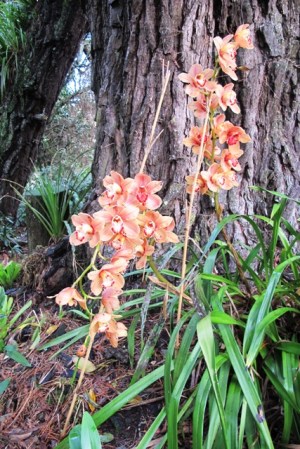
The first magnolia flowers have opened on M. campbellii and on Mark’s earliest flowering hybrids and more will open every day. The snowdrops are flowering and more and more of the narcissi are opening. Last week it was just the hoop petticoats (N. bulbocodium citrinus), this week there are various cyclamineus types opening. More camellias open every day. The cymbidium orchids are in flower (and need staking) and Cyclamen coum blooms on It is a magical time of the year and will just keep getting better as we progress into spring. We could never complain that winter is bleak here.

Lloyd is doing a major reconstruction of our steep path down to the park which has eroded badly with heavy rain. I am nearing the end of the major makeover on the rose garden – after the earlier satisfaction it has morphed into hard graft now. Three more fine days and it should be done.

Officially, we reopen the garden at the beginning of August but wait a few more weeks if you want to see the magnolias in full flight.