Tag Archives: Mark and Abbie Jury

Then and now. A magnolia (michelia) story.

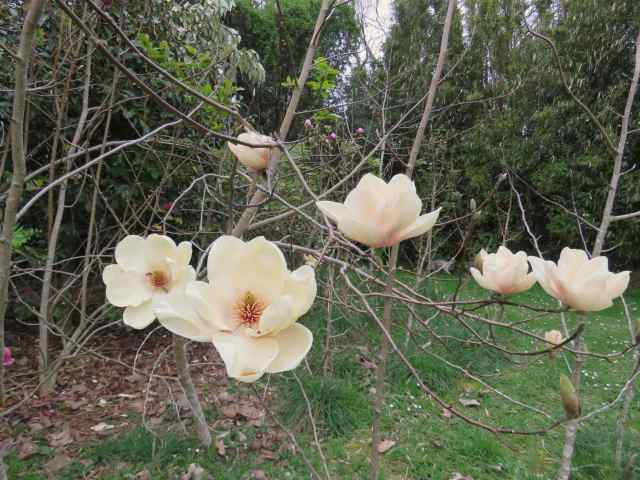
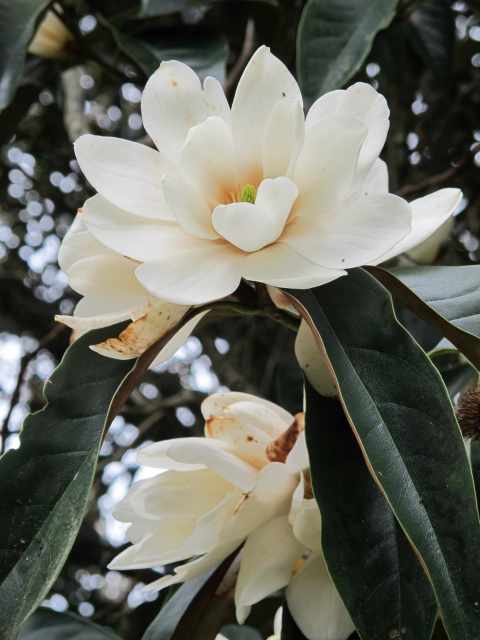
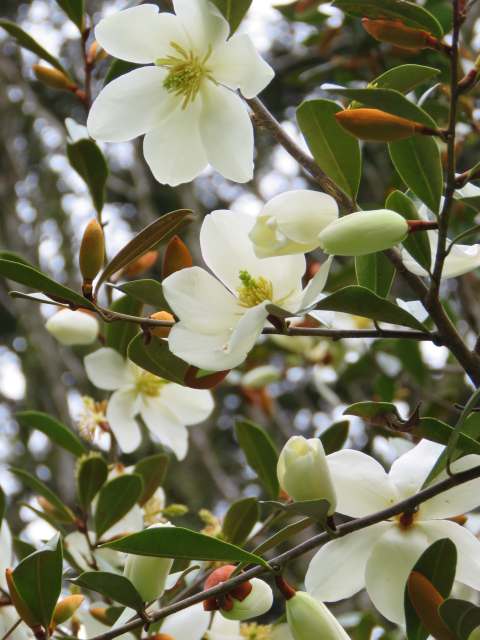
Fairy Magnolia White on the left, ‘Bubbles’ top right and the first flowers to open for the season on Fairy Magnolia Cream bottom right

In the early stages of the magnolia season, our display is dominated by red deciduous magnolias and white michelias. The other colours come later in the season and that is particularly true of the michelias, where we now have significant variations.

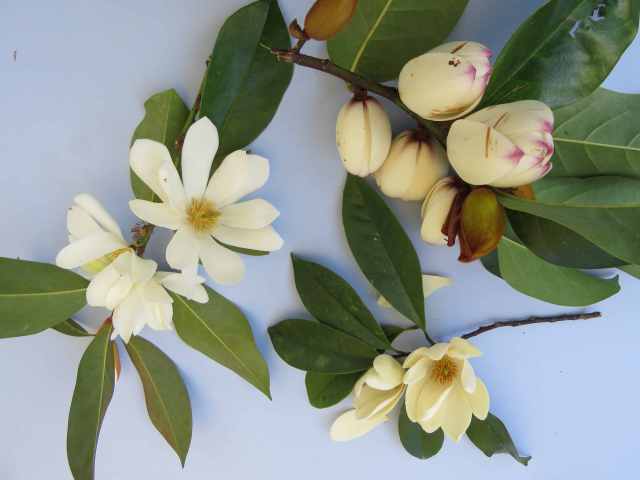
Michelias are now classified as a subsection of magnolias and technically are named Magnolia xxxx but we still find it helpful to refer to them as michelias for clarity. They are, of course, evergreen but not with the big leathery leaves of the American Magnolia grandiflora types.

Magnolia x foggii ‘Bubbles’

It was finding M. ‘Bubbles’ in bloom with flowers at a height I could pick that started me lining them up. Back in their day, ‘Bubbles’ and its sister seedling ‘Mixed Up Miss’ were breakthroughs in the world of michelias. There is a third named one in that set but I have only ever seen ‘Hint of Pink’ in Auckland Regional Botanic Gardens. They were the work of the very late  Os Blumhardt – a notable plant breeder who lived in Whangarei and is probably best known internationally for his successful deciduous Magnolia ‘Starwars’.

He didn’t raise many michelia seedlings, as far as we know just the one batch. I see we first started selling ‘Bubbles’ and ‘Mixed Up Miss’ around 1992 and we would have been onto them pretty early because Os was a personal friend and very generous with his plant material. He probably did the cross in the late 1970s, maybe early 1980s and he provided the inspiration to Mark to see what he could do with this plant family.

‘Mixed Up Miss’ at Auckland Botanic Gardens. The flowers are small and so high up on our tree that I can’t photograph it

In their day, they were terrific. ‘Bubbles’ was harder to propagate from cutting and had larger flowers and foliage. ‘Mixed Up Miss’ was the perfect nursery plant – easy to propagate, set flower buds on a young plant and looked extremely attractive and neat standing about a metre high in its pot. It has smaller flowers with slightly more colour but there isn’t a lot in it.

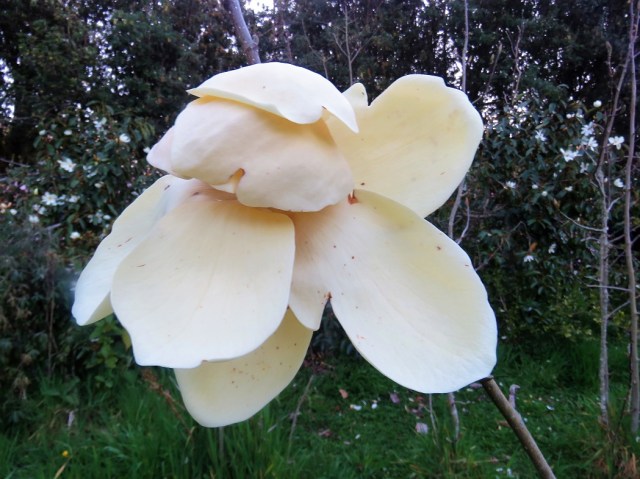
M. doltsopa flower

Os was doing this work before M. laevifolia (formerly known as M. yunnanensis but more widely marketed under a plethora of names including ‘Honey and Cream’) was even in the country. He used two of the common species that were here – M. doltsopa and M. figo. In the world of magnolias, this particular cross is referred to as x foggii (after American breeder John Fogg who is credited with the first hybrids from this cross in 1972).

All that white in the centre is our Magnolia (michelia) doltsopa. Yes, it is somewhat large

M. doltsopa is a variable species. I only have photographs of our specimen which is spectacular and takes up an area of space roughly equivalent to a small, urban apartment block. They are not all as huge as that but they do have large flowers.

Magnolia (michelia) figo.

M. figo will be better known to many readers. It is smaller growing and sold widely, particularly favoured in warmer areas. Its flowers are verging on insignificant to the point where I have never bothered photographing them so I had to grab an image from Wiki Commons. It is a handy, evergreen plant that you can keep compact by pruning often, although its foliage turns rather yellow in full sun. It is mostly grown for its strong fragrance which has always reminded me of Bubblegum chewing gum so loathed by my mother. It only gets fragrant in the late afternoons and evenings, though.

‘Bubbles’ in the centre after 35 years or so. It is in full flower but not exactly a showstopper
For comparison, Fairy Magnolia White in flower with Camellia yuhsienensis in front. The larger, more open flowers are much more distinctive

These new hybrids of Os’s were a breakthrough in terms of more user-friendly garden plants. Alas, some plants get significantly more spectacular with age but others don’t. And on a property with literally hundreds of white michelias from Mark’s breeding programme, you would not look twice at our specimens of ‘Mixed Up Miss’ and ‘Bubbles’. Picking flowers of ‘Mixed Up Miss’ defeated me because I would have to carry a ladder to the farthest reaches of our park where it is now very tall and leggy. You could keep them more compact and bushy by frequent pruning if you are in a smaller garden but the following generations of hybrids are a significant improvement.

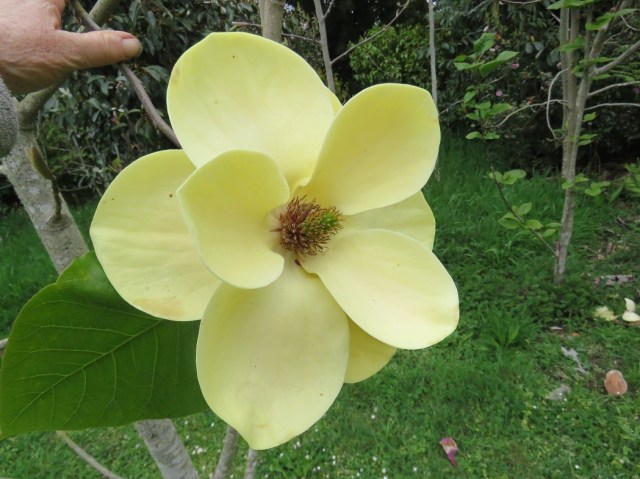
Magnolia laevifolia (formerly Michelia yunnanensis) ‘Velvet and Cream’

Mark has used both ‘Bubbles’ and, more often, ‘Mixed Up Miss’ extensively in his breeding but he also had the huge advantage of being able to add in M. laevifolia. While he has tried a few of the other species michelias we have in this country, it is line breeding with those early x foggii hybrids (so doltsopa and figo) with laevifolia that has given the huge range in flower colour and growth habit that he has reached in his later generations of michelia hybrids. The first three releases are all under the brand of Fairy Magnolia (White, Cream and Blush) and are now widely available here and overseas.  

Mark’s Fairy Magnolia Cream on the top left with Fairy Magnolia White below and a random selection of seedlings which are also coming into flower. There is a whole lot more to selecting a plant for release than just a pretty flower but even that is difficult when looking at 80 or 100 plants of the same cross, all of which are white.

None of the later selections are on the market yet although there are three coloured ones being built up for release and there will likely be another three to follow at some stage when we have made the final selections. It is not a quick process so don’t hold your breath.

Yes, we have colours coming through. Not all michelias are white or cream.
Fairy Magnolia Cream and Fairy Magnolia White. Blush has yet to open its pale pink flowers.

When your gardening life lacks a handy takahē or two

Time for the winter clean-up in the Court Garden

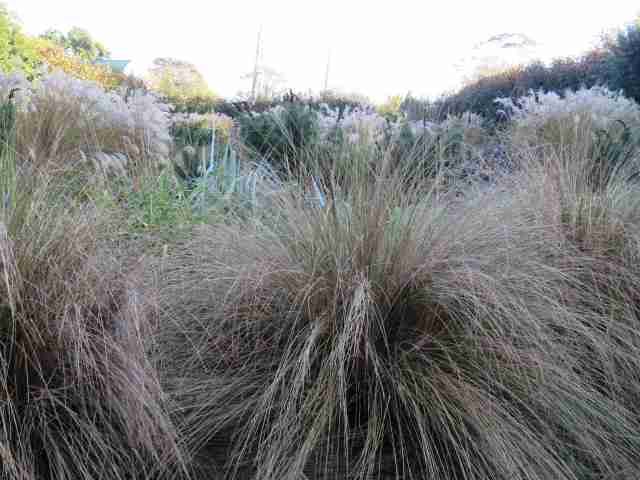
I have spent the last week on my knees. Not praying, you understand, but grooming the large grasses in the Court Garden. “What you need,” said Mark, helpfully, “is a takahē.” He had read or heard somewhere that in the wild, takahē  get right into the crown of grasses and clean the debris and dead patches out. That would be a fine thing. Besides, takahē  would look very handsome browsing amongst the chionochloa although we might have muzzle Ralph.

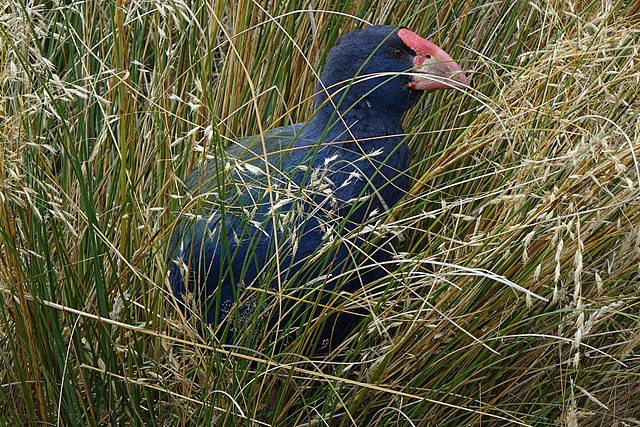
Takahē (photo credit: John Barkla via Wiki Commons)

The takahē is a large, flightless bird belonging in the group unromantically named swamp hens or rail. The North Island takahē  was likely extinct by the time European settlers arrived although the South Island takahē is something of a miracle story. It, too, was thought to be extinct by the end of the nineteenth century until its rediscovery in a remote Fiordland valley in 1948. Latest figures show there are 440 live takahe, every one known individually, as a result of human intervention to save this handsome bird from extinction. There are now enough for breeding pairs to be cautiously relocated to safe sanctuaries which are free from predators.  Their status has been changed from Nationally Critical to Nationally Vulnerable so they are a shining success story of saving a species in a country where we have managed to lose too many due to human settlement.

Ralph, wondering about his lack of ability to fly

I fear Ralph would deal to any that crossed his path. Given that his biggest regret in life is his failure to master the art of flying despite all his best efforts, I do not think he would be able to resist taking down a ground bird. Indeed, dogs are one of the biggest threats to takahē, along with contracted shooters who can’t tell the difference between a pukeko and a takahē.

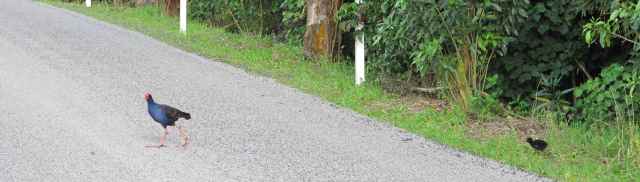
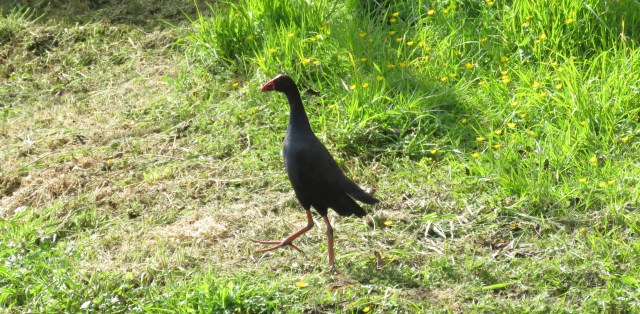
Pukeko which we have in abundance in this country
Takahē – spot the difference? (Photo credit Judy Lapsley Miller via Wiki Commons)

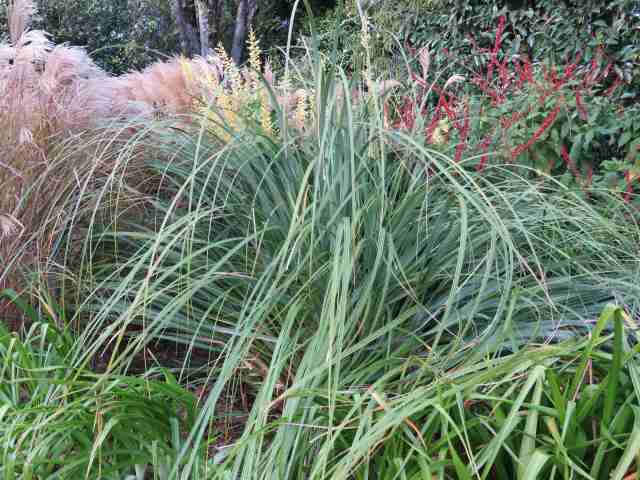
In the absence of such handy helpers, it is I who is on my knees with my trusty tools. My theory is that the native grasses we have which have a reputation of not being long lived as garden plants have an issue with a build up of debris that rots down and keeps the centre of the plant so wet that it can rot out. This is of course because our native grasses are all evergreen so they don’t shed their spent foliage. The amount of debris I pulled out from the large toe toe (Austroderia fulvida) was prodigious and there was certainly evidence of growing tips rotting out beneath the debris so I am hoping that the plants will heave a sigh of relief and stay healthy.

I probably cleaned out a third the volume remaining in dead and spent foliage – our native toe toe or Austroderia fulvida

I wrote about cleaning up the grasses last year so in brief summary, it is:

  • Deciduous plants like the miscanthus get cut to the ground when the feathery plumes all start to fall over and lose their charm.
  • Semi-deciduous plants which just look scruffy and awful – particularly the calamagrostis – also get cut to the ground.
  • Evergreen grasses – which are all our natives plus the non-native Stipa gigantea – are dead-headed and individually groomed to remove spent foliage. The exception is the smaller carexes, particular C. buchananii and C. comans. These just get left alone with excess seedlings thinned out. They are such enthusiastic seeders that if any of them kark it, there are plenty there to take over and fill the space.
  • The advice to leave these plants until spring in order that birds may find winter feed belongs in the northern hemisphere where most of their birds are grain feeders and winters are so cold that birds can die of starvation. Our winters are mild enough that there is plenty of feed and almost all of our native birds are nectar or fruit feeders.
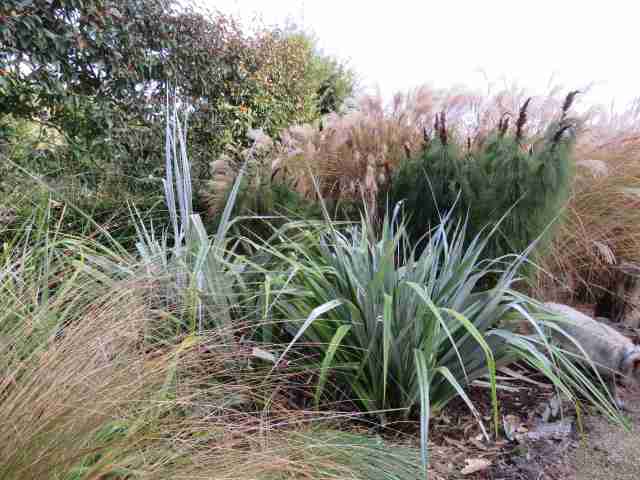
Two different named phormiums (flaxes) backed by Miscanthus ‘Morning Light’. We have just lost the names of the flaxes but they are very good.
Astelia chathamica looks a bit like a silver flax but is a different plant family. With Ralph emerging by the Elegia capensis

While I was down on my hands and knees, I also groomed the native flaxes and astelias growing in that garden, cutting off spent and damaged leaves at the base and they look a whole lot better for that. And I thinned the Elegia capensis, knocking off some of the new shoots that are appearing beyond their allotted space. No wonder it all felt quite a major clean-up this year.

Mark often refers to gardening as the act of tidying Nature. But after our discussions on the takahē, he noted that my recent efforts were ‘not so much tidying Nature in this case, as filling in an ecological gap left when humans squeezed out the birds that would have done this in the past’.
Have chionochloca. Just lack takahē.

Open season

First published in the November issue of Woman magazine. Ironically, two weeks after writing this (which, with magazine deadlines, was in September), I realised that we were done with opening the garden to the public. That was why we then announced that the garden festival just passed would be our last.
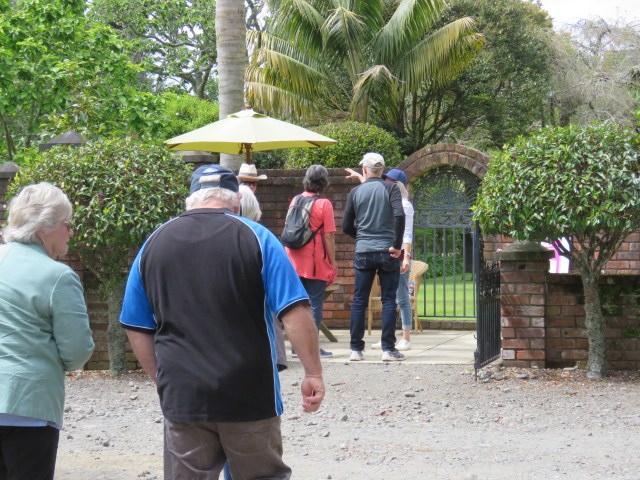
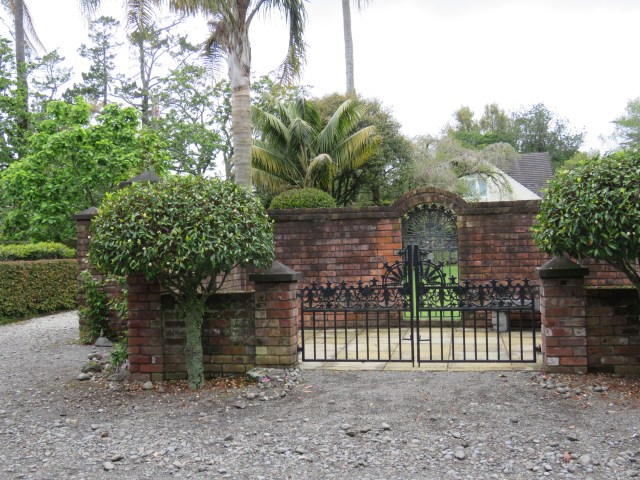
The Rimu Avenue

We do great spring gardens in Aotearoa New Zealand. Notwithstanding the usual moaning about the weather, this is a country with a mild, temperate climate, lacking extremes of temperature. We drift so gradually between seasons that our spring season extends to a long period. Magnolias, flowering cherries, daffodils, irises, early roses and much, much more – our springs are a froth of bloom. It is no coincidence that spring is the main season for garden festivals and garden visiting.

Maybe you have been thinking you would like to open your garden, to share the results of your dedicated efforts.    

The summer borders in spring

There are various reasons for opening your garden but making money is not likely to be a viable option, at least not in Aotearoa. We simply don’t have high enough visitor numbers. Most open gardens in this country will get numbers in the low hundreds to the low thousands. To be financially viable, you would need to be in the high tens of thousands and that is a whole different ball game.

Location affects visitor numbers a great deal and gardens on the tourist circuit will get higher numbers but that is also dependent on good access, excellent signage and convenient parking.

Gardens with added attractions appeal to wider cross section of the potential visitor market. Not many of us can manage a castle in a spectacular setting (here’s looking at you, Larnach’s Castle). A café or plant nursery helps but it is rare to find a place where the café or other attraction and the garden are of equally high standard.

Hosting events can be be quite high stress, especially if it is dependent on the rain holding off for long enough. There is nothing like tracking the hourly weather forecast to lift anxiety levels.

There are plenty of gardens that host events in an effort to build visitor numbers and generate income but this is not a track we have chosen to go down. My gardening and life partner, Mark, has never wanted a bar of events. As far as he is concerned, he only welcomes visitors if they want to see the garden, not because it is a venue. I flirted with a few weddings while Mark hid out of sight in his vegetable garden, quietly pretending there was nothing going on. Encountering not one but two Bridezillas put me off for life. I remember thinking of one, “Lady, you are not paying me anywhere near enough to treat me like the hired help in my own garden while you pose for wedding photographs in front of my house.”

Some level of catering, perhaps? Been there, done that. It added extra work and stress but was generally manageable until the rise to prominence of not just vegetarian options but also vegan, gluten-free, dairy-free, keto and goodness knows what else. The general public have become awfully picky eaters in recent times.

It only takes one group eating lunch in the garden to turn your formerly well-behaved dog into a shameless beggar. Few are better at working a crowd than our Dudley.

Some people open for charity and that is a laudable position, given how much work it takes to get a garden to opening standard. Some open to support an event or festival. Some may be driven by ego alone but, let’s be honest, we all want visitors to come and enjoy our place, to admire our efforts, maybe to be impressed by what we are doing, certainly to share the pleasure we find in our own garden. It can be a very affirming experience and that is the main reason we still open.

In the summer gardens

We first opened 35 years ago, which seems like an eternity. Initially we kept it to the 10 days of what was then called the Taranaki Rhododendron Festival (now the Centuria Taranaki Garden Festival and currently going stronger than ever). They were different times – simpler, more amateurish and visitor expectations were a lot lower than they are today. Mind you, most garden visitors expected free entry, too.

Bowing to pressure, we gradually extended our open times to eight months of the year.

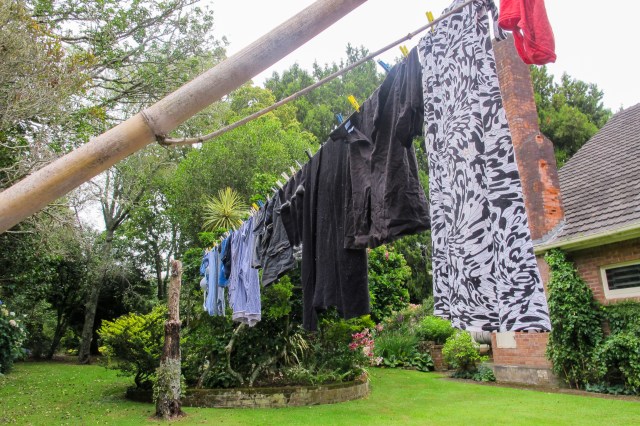
Festival is the only time of the year when I regret not owning a clothes drier. Washing on the line is a no-no.

It changes the way you look at your garden. You start looking more critically, as though through the eyes of the garden visitor. It also changes the way you manage a garden, trying to keep standards up all the time but without the staff that maintain publicly owned gardens. It even affects when you can peg your washing on the line (never in busy times or when tours are booked – at least not if you have a prominent washing line, as we do). When you are a private garden, it is not just the garden you are opening; there is a certain amount of presentation of a desirable lifestyle that goes with it. I have noticed a growing tendency in recent years to ‘dress’ or stage gardens in the manner of staging real estate.   

It is common now to see a certain level of staging or dressing a garden – best when it is witty as here at Bev McConnell’s garden ‘Ayrlies’.

After 25 years we had had enough and visitor numbers had fallen away, except for the 10 day festival period. We closed the garden entirely for 7 years, using that time to carry out major work and to fall in love with our own place again. We didn’t garden less, we just gardened differently.

Leading a garden tour around the park

Nowadays we only open for the garden festival. That is our half way compromise. It still governs how we garden for maybe half the year but the other half is ours, all ours. As an aside, it takes almost as much work to prepare a garden for a single tour group or a one-day event as it does to open for a more extended period. Do not be lulled into the thought that it will be much easier if the time length is short.

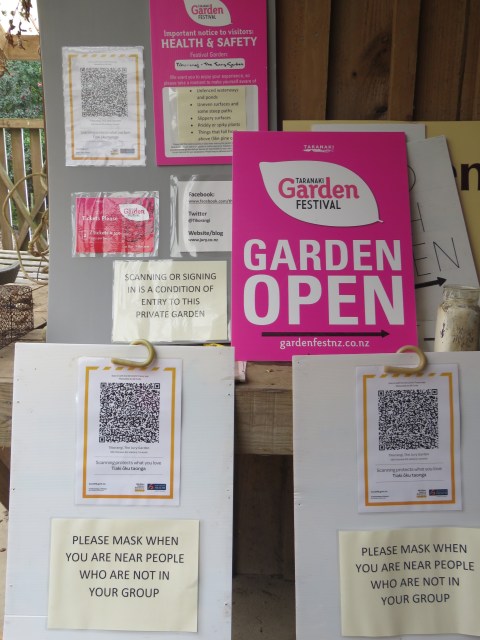
I am not sorry to have left scanning or signing-in behind.

When we re-opened in November 2020, we were not sure how we would feel and we certainly did not anticipate the impact of being in a Covid-free country with closed borders and a population suffering from cabin fever. Visitor numbers were three times higher than we expected.

Last year’s festival threatened to be a huge disappointment as Auckland and large parts of the Waikato went into lockdown and tour groups cancelled left, right and centre but numbers held at a reasonable level, given the extraordinary situation. Opening in Covid times has certainly added layers of challenge.

The day of the poocalypse was certainly a memorable occasion

When we reopened, friends came to help. I joked that for once Mark and I would be able to swan around, being gracious hosts. Ha! Chance would be a fine thing. All I can say is that I seem to spend a lot of my time worrying about carparking and clean toilets and much less time being the gracious host. You haven’t lived until the septic tank servicing the loos fails on a day when you have over 450 visitors on the property. I am hoping not to repeat that experience. A poocalypse, we called it at the time.

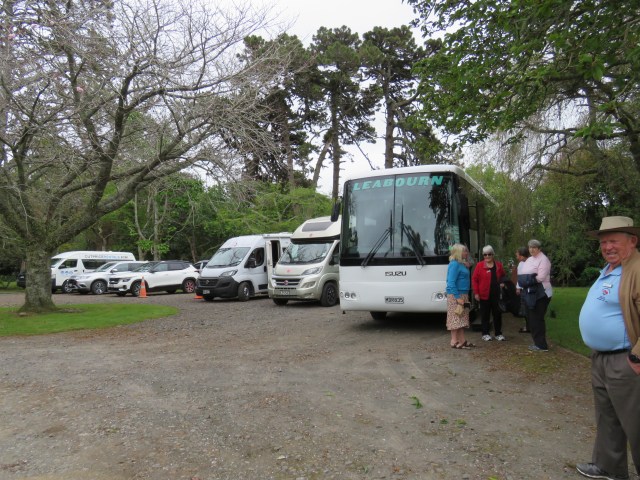
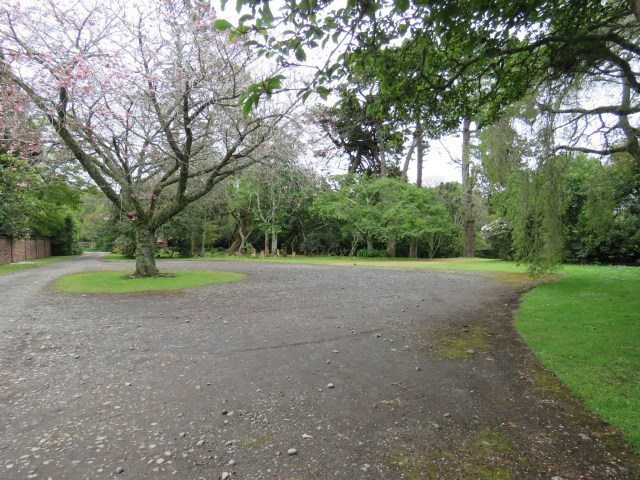
Carparking is a challenge. However, we have found that we can park 54 – or was it 57 – vehicles on our property before having to park visitors on the road but it takes careful management by two people and not too much rain beforehand.

Don’t even ask about carparking. I know more about the vagaries of drivers and parking than I need to. We still laugh, however, at the benighted but not de-knighted former Cabinet minister who visited. “It is just like Sissinghurst,” he declared as he entered. Having been to Sissinghurst ourselves, we knew that he was referring to the challenge of finding a carpark at a busy time.

I have often said that 99 out of every 100 garden visitors are perfectly pleasant, courteous and appreciative people. The 100th is not. In discussion here, we agreed that it is more like one in 500 who is not. When garden openers gather after an event, conversation often turns to the 500th visitor. We all remember them. In fact, we sometimes compare notes to see if it is the very same person. Years later, we still remember them – which is probably an indicator of how few unpleasant garden visitors there are. But if you are out and about visiting gardens, don’t be the 500th visitor. Maybe stay home instead of wilfully ruining somebody else’s day. 

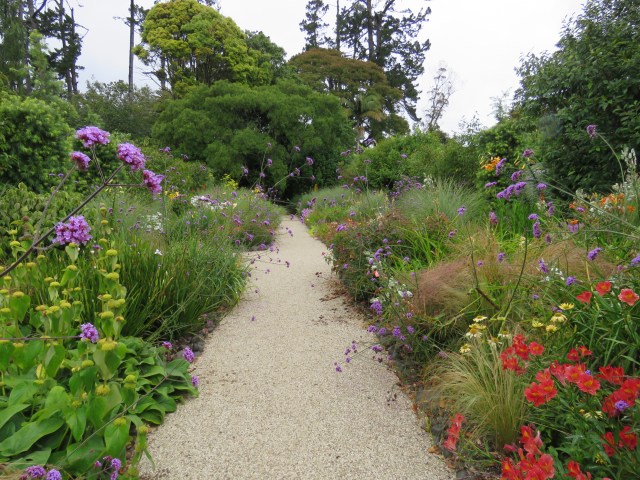
The borders, as we refer to them here

It should also go without saying that visitor books are solely there for garden visitors to write something positive, or at least pleasant. Manners matter, m’dear. If you have nothing nice to say, then don’t say anything at all – at least not in the visitor book and probably not in on-line reviews, unless you have already made your complaint or criticism in person to the garden owner. I am all for keeping standards, decorum and courtesy in the somewhat rarefied world of garden visiting.

The definitive word comes from my Mark who, when we were considering reopening, said, “You don’t garden on this scale without wanting to share it with others”. At least we agree that ten days a year is quite enough for us now.

“You’ve got to know when to go”

“You’ve got to know when to hold ’em
Know when to fold ’em
Know when to walk away
And know when to run”

I found myself humming to Kenny Rogers this morning, although I had the lyrics saying ‘You gotta know when to go”. We are not going anywhere but we have metaphorically shut the garden gates to the general public. It is very odd, the end of a personal era. But, for us, it is the right thing to do. As I have said countless times in recent weeks, ‘I do not want to be the Tim Shadbolt or Winston Peters of the gardening world.’

New Zealanders know instantly what I mean, For overseas readers, Tim Shadbolt and Winston Peters were both major players – institutions, even – on our political landscape over several decades. But they did not know when to retire and it is very sad to see old men devastated when even the patience of their most loyal voter base finally runs out. It is way better to go out on a high note.

“What a difference a day makes
24 little hours”

If I was in a small, town garden, I am sure I would enjoy continuing to open to the public and meeting many different people – but we are not. To get our garden to opening standard is such a major undertaking that I can not face doing it for another year. It is time for us to call it a day and to just accept the occasional specialist tour group to keep us on our hosting toes.

It was a very successful garden festival this year and that is a great memory to hold close as we choose to enter a new era as gardening recluses.

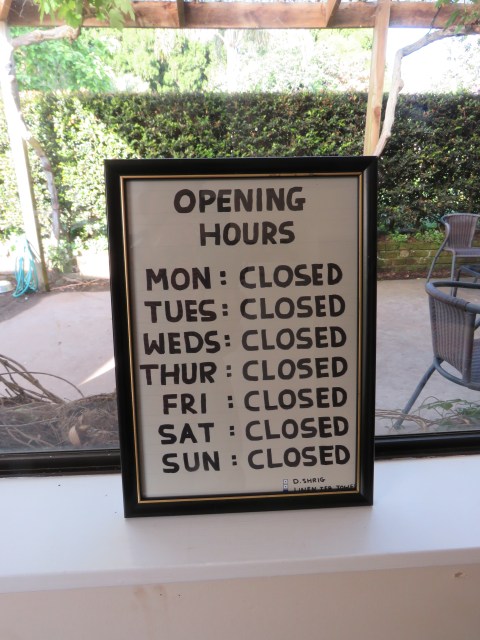
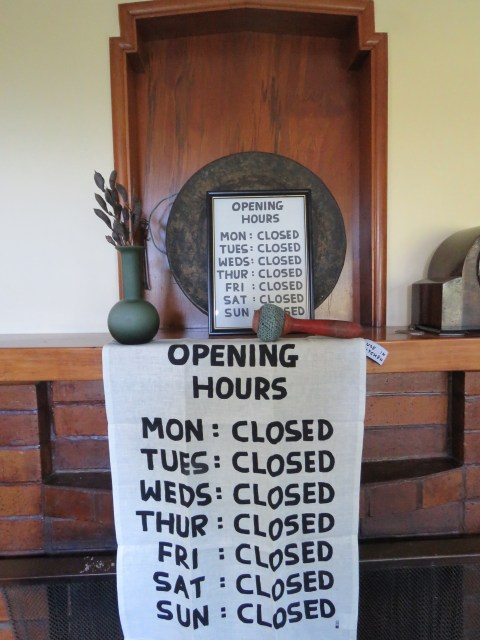
We laughed out loud when our artist in residence this festival, Jennifer Duval-Smith, presented us with the perfect present. We had been discussing linen tea towels and this one is beautiful linen. However, it was Jennifer who laughed when I rushed off the trim the packaging to fit in a frame I had in order to have a second version of it for our staff kitchen in the shed. “It is like a cat,” she said. You give it a gift and it is more interested in the box.”

I will still keep writing, taking photos and posting on line, Mark will continue breeding new plants, we will continue gardening. Zach and Lloyd are staying with us. It will be very quiet but we will enjoy that, too.

Thanks to any and all who have visited us over the past 35 years. None of us can know what the future holds but it won’t be another garden festival for us. It has been a real pleasure meeting so many of you. Thank you for coming.

Poroporoaki

Farewell,

Abbie

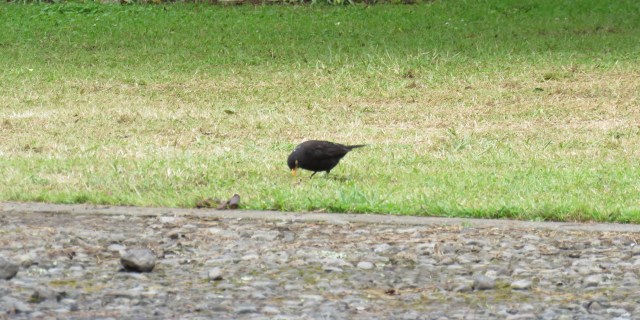
A solitary blackbird in the now-empty carpark

Despatches from our last garden festival

I will admit that I felt a sense of relief to wake this morning to the sound of rain. Experience has taught me that it means a slow start to the morning and that takes a bit of pressure off us all. It was forecast to clear later in the day and it did so that was fine.

It is a busy garden festival. Not on a par with what we refer to as the Covid festival in 2020 – that period of time when the rest of the world was in the worst grip of the pandemic but we were gloriously Covid-free in these islands of ours with no restrictions, bar a closed border. So many people were clearly suffering from cabin fever that they grabbed the opportunity to travel internally. That was also the year we reopened after being closed for seven years and the crowds came.

So not quite in that league in 2022 but we are not far off it. Clearly the message has been received that this is our last festival and we are closing to the general public as of this Sunday at 5pm. Lots of lovely people who have really enjoyed the garden – and lots of vehicles to be managed.

All blues together
A tidy row of whites

Car parking, like clean toilets, is one of those back room logistical issues that we spend a lot of time and effort managing but that is rarely noticed. Yesterday’s brief triumph by Zach was only commented on by one visitor but amused us all greatly. For one beautiful moment in time, he had the car parking area colour toned – the blues grouped together, the whites in a row, the silvers across under the trees. True, there was one blue car in the wrong place and those of us with OCD tendencies wondered if we could locate the driver to move that car to the blue section. But then somebody left and red cars started arriving. The moment was over.

“Excuse me, madam, would you mind moving your car to the blue area?”

I was doubly amused when told that our friend who helps with the parking over the weekends had been attempting to get the front row alternating black and white vehicles but had not managed that feat on the day.

La Mer in concert

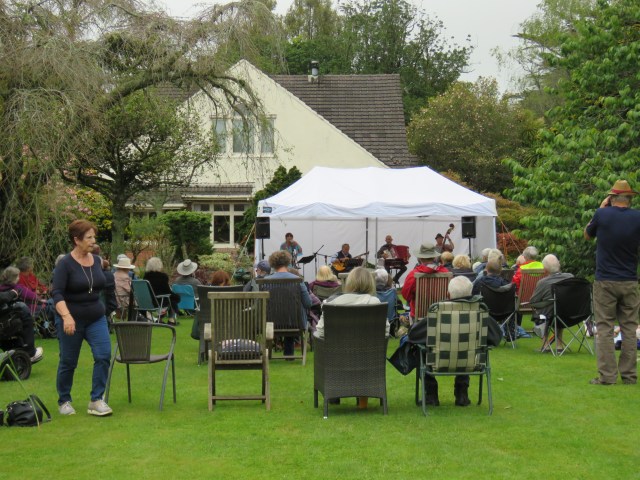
Rain caused us great anxiety on Sunday because the concert in the garden by La Mer was weather dependent. We had to make a call by 11am when the rain was still falling, albeit forecast to clear. We decided to take the risk and, miraculously, the rain stopped shortly after, any surface water drained quickly and it was full steam ahead. The carpark was controlled chaos and we had to stop latecomers at the gate to get them to park on the road, something we try hard to avoid on our narrow rural road. The contrast between the busy entrance and the calmness just through the courtyard behind the wall was magical as the strains of music wafted across the front lawn and through the house gardens. It was everything I hoped for in terms of ambience and a delightful experience.  

That is our Dudley quietly working the crowd in the hope of delicious tidbits
Small servings of these sorts of tidbits is what he was hoping for – and quite probably scored. Cakes from Rose at the Garden Cake Kitchen

True, the window of fine weather didn’t last but we had 80 minutes of music, coffee, cake and savoury platters in pleasant, calm and warm conditions before the heavy rain returned. People may have been a tad damp as they left, but at least the spell in the middle had its own magic.

A coach tour came in yesterday and large groups can come and go in something of a blur but one participant stood out. A gentleman clad in black told me he was not a gardener, he was an artist; he liked to view gardens as pictures. When he returned from his walk, the coach was waiting for him so the conversation was brief but he assured us we are true artistes. Vanitas was mentioned but Jennifer, our artist in residence, gently suggested that perhaps it was more memento mori – a reminder of our mortality and the transience of life. He mentioned one particular view that he adored – our ‘large pond’ framed so perfectly and the end point punctuated by – wait for it – a stone sacrificial altar.

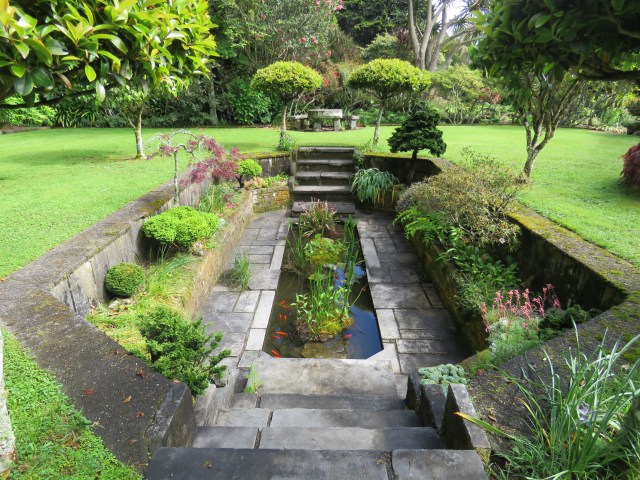
Is that a sacrificial altar I see at the end of the view-line?

The mention of the large pond had me mentally picturing down in the park meadow where we have large ponds but for the life of me I could not think what constituted a sacrificial altar in that area. Further questioning ascertained that he was talking about the sunken garden and the altar was in fact the large stone millwheel that Mark’s parents repurposed as a garden table with stone benches to sit on.

I may never look at the millwheel with the same eyes again. We are rather too down to earth to regard ourselves as true artistes here but at least he found plenty of rewarding pictures in our garden so we can’t be too bad on our proportions and definition.

I must pay tribute to the small team who back us up this week. Lloyd and Zach are a tower of strength and able to handle problems both large and small. And we are blessed to have good friends who come and help us, too. We simply couldn’t do it without them.  

The Centuria Taranaki Garden Festival finishes for 2022 this coming Sunday. It will continue next year but without us. We will be bowing out on Sunday. Three days left.