Tag Archives: Matariki

Mānawatia a Matariki

Happy Māori New Year

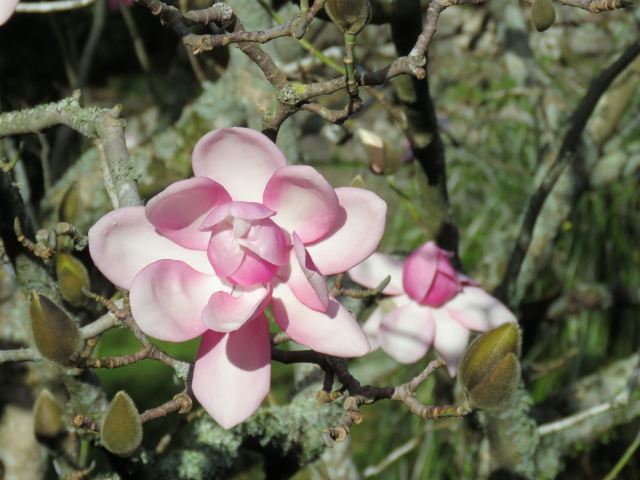
We refer to this seedling as Hazel’s magnolia

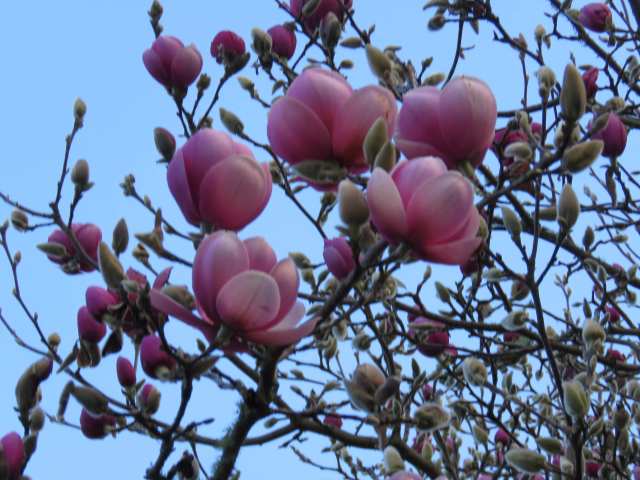
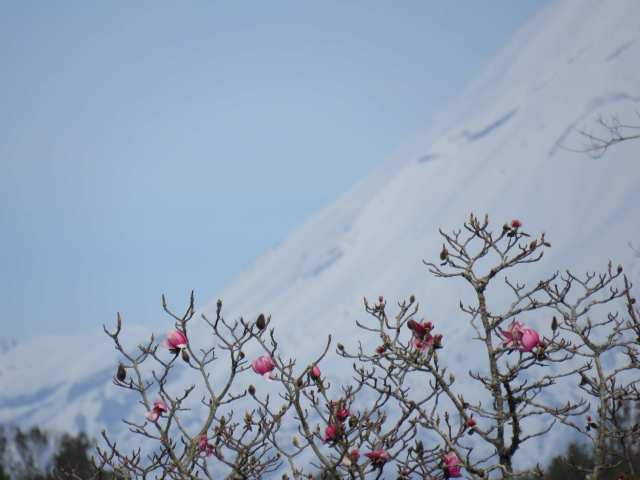
Usually I mark the time of the winter solstice and Matariki – the Māori New Year – with a photograph of the first blooms of the season on our pink Magnolia campbellii, set against our maunga (Mount Taranaki), with or without snow. The snow came in sufficient quantity last week for the low altitude ski field to open for a day or two. This week, that snow has melted away, all but a smidgeon on the peak. Such is the situation with a mountain set right on the coast.

This year, I am marking it with a seedling from Mark’s breeding programme that we refer to as ‘Hazel’s magnolia’. Several years ago, when Mark was asked to do the casket flowers for an old friend’s mother, he constructed his arrangement with the flowers of this magnolia. Her name was Hazel. In a world hurtling at breakneck speed towards one disaster after another, marked by cruelty and inhumanity, the memory of Hazel seems especially poignant. Hazel was a gem in life – one of the kindest people you could ever meet, gentle, welcoming and with natural grace.

Remembering Hazel

It gives us considerable pleasure to remember Hazel each year with this magnolia. It is a one-off plant; we won’t officially name it or release it. It flowers too early in the season for commercial release and is not sufficiently distinctive to make the cut of the very few we name but that in no way diminishes our pleasure in the blooming each year around Matariki and the winter solstice.

It seems a vain hope that the start of a new year in Aotearoa will bring optimism, hope and a return to kinder, more compassionate times. Hazel’s magnolia is a reminder for us that these qualities are possible at an individual, personal level. May you have your own personal markers of hope for the year to come and the future beyond.

Mānawatia a Matariki

It is Matariki time again – the rising of the Pleiades star cluster marking the Maori New Year. I marvel that long ago, well before the arrival of any European settlers here in the antipodes, Maori worked out the timing of the winter solstice and the rising of the star cluster that marked the start of a new year cycle. To the naysayers who deny indigenous knowledge and science, I say just look at that. Maori worked out a time that corresponds to the northern hemisphere new year, coming soon after the shortest day. It makes far more sense than having a new year start on January 1 as we go into full summer here. Matariki has become our own unique festival in Aotearoa, rooted in history and observations that go back well before the country was named New Zealand.

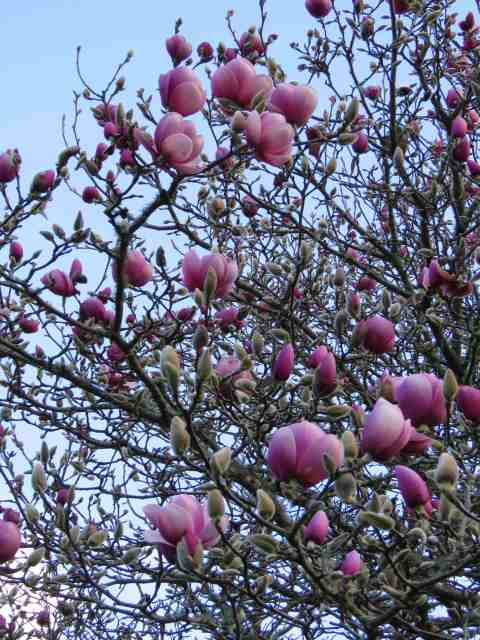
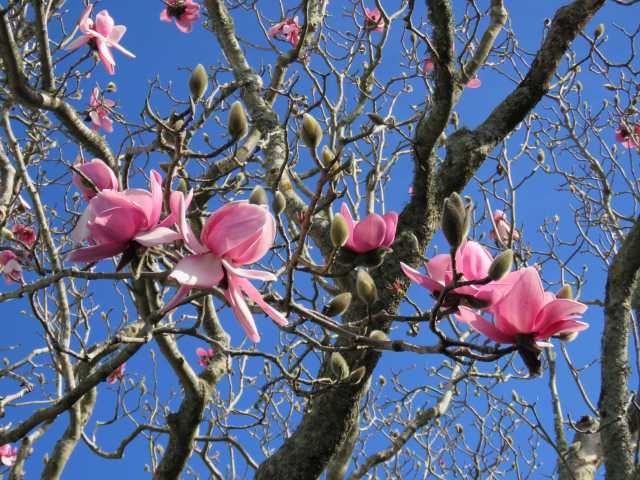
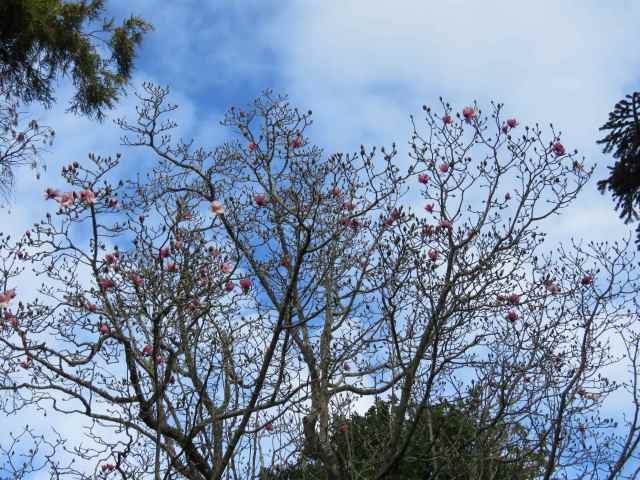
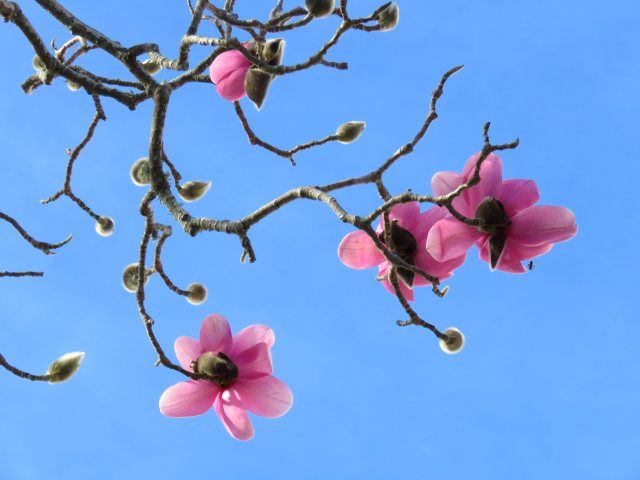
Magnolia campbellii var campbellii

I am a bit sorry that I lived most of my life without knowing a single thing about Matariki. Even before we recognised its significance, I had arrived at a similar personal recognition that, for me, a new gardening year started around the winter solstice when the first flowers on the earliest blooming magnolia opened, the magnificent M. campbellii. It makes it a richer experience to add Matariki and the historical and cultural context to the mix.

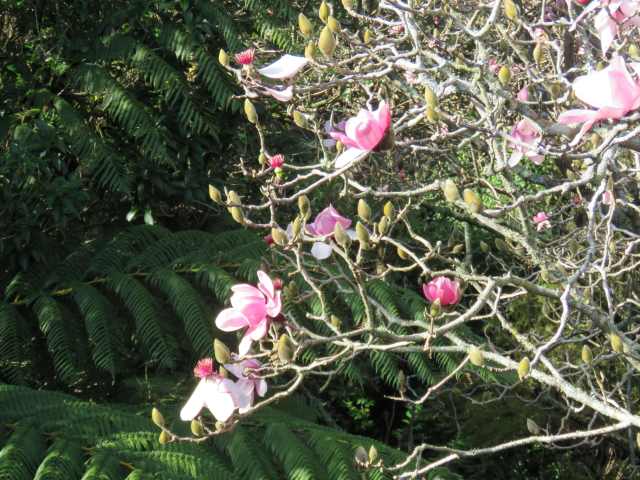
The Huatoki M. campbellii. I think there are three trees in the group amongst what are will be self-sown tree ferns
The Waitara Magnolia campbellii

I track several plants of M.campbellii. The mature trees in my local city beside the Huatoki Stream (best viewed from Powderham Street, beside the Liquorland Store) are usually the first to open blooms. The one in my nearest town, Waitara, in the grounds of St John the Baptist Anglican Church is arguably the best specimen and, being in a protected spot, usually has the most perfect blooms. It often opens a few days or a week after the Huatoki trees but was looking better than them this week.

Our specimen is still opening its first blooms

The third one is our specimen in the park. Because we about 5km inland and not surrounded by concrete and tarseal, we are cooler and always a couple of weeks behind. It is too early yet to get my photos of our campbellii blooms with the snowy slopes of our maunga, Mount Taranaki, in the distance behind. There are not enough blooms open at the top of the tree and not enough snow on the maunga yet. In fact, none of these trees are at their peak so there is time to get out and admire them in coming weeks.  All are the same clone which is the most widely grown form in this country – the Quaker Mason pink form. We are lucky it is a particularly good form because the species is variable in the wild and most commonly white.

We know that Matariki heralds the worst of winter to come in the next month. We have only had a few cold days so far and it is churlish to complain when the temperature has been hovering around 15° or 16° celsius (night time usually 8° to 9°) up until the last few days. But spring is already making a move and the season will gather pace around the anticipated cold spells.

Also flowering this week, Narcissus ‘Grand Soleil d’Or’
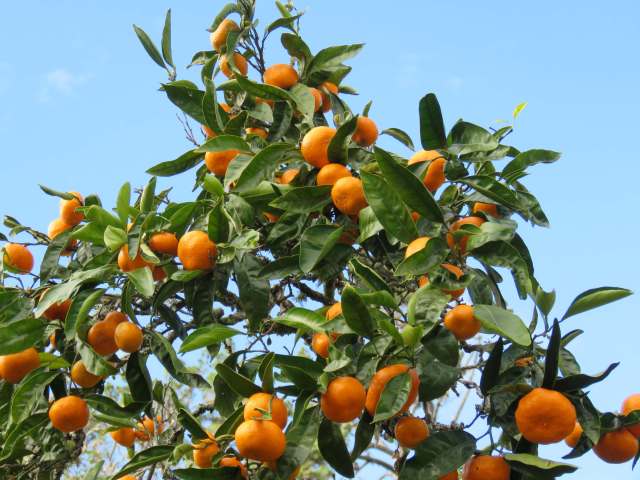
Mandarins on a winter’s day

Mānawatia a Matariki or happy Maori New Year today. We will be celebrating it with friends for lunch. May you draw breath and look forward to the next year, too.

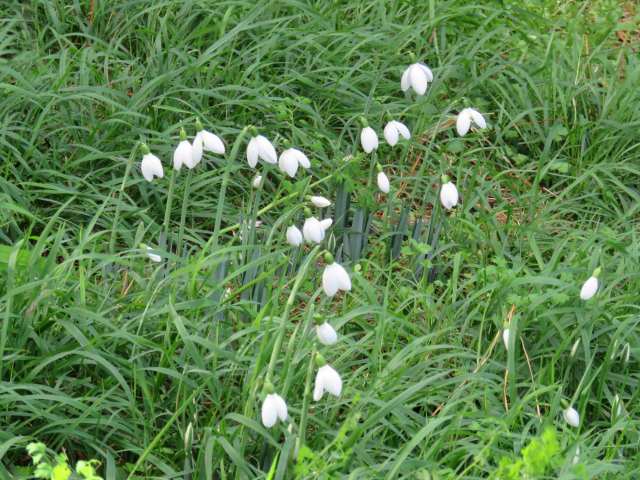
and snowdrops both in the garden and in meadow situations

Marking Matariki

My personal marker of Matariki – our maunga, Mount Taranaki, and Magnolia campbellii.

Our second official marking of Matariki, the Māori New Year, has been a curiously moving experience for me and for many others, it seems. It became a statutory holiday last year for the first time, one of eleven paid days off, alongside Christmas, Easter and the increasingly irrelevant monarch’s birthday which bears no connection whatever to the actual birth day, be it Edward V111, Elizabeth 11 or Charles 111. Curiously, I have only just discovered that it was the aforementioned Edward who moved the official date to June (he was born in November) in the hope of better weather for the day. Let that not affect those of us in the former colonies; finer weather be damned. We still keep to the midwinter date of the first Monday in June. But I digress.

I have written about Matariki before   in the context of the start of a new year and my wonder that, in pre-European times, Māori arrived at a time for celebrating the occasion that corresponds very closely to the winter solstice and the European convention for New Year on January 1, except that it is six months apart, as befits a different hemisphere where the seasons are reversed. The timing of Matariki is determined by the rising of the star cluster known elsewhere as the Pleiades.

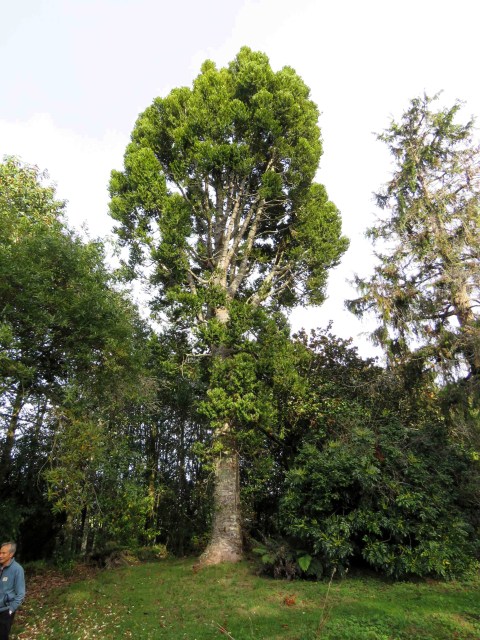
Our kauri which is the Māori name for what is botanically Agathis australis, one of this country’s most venerated trees. They can live well over 1000 years so ours is a mere baby at just 60 years. Sadly, most of the oldest trees in this country were felled in just a few decades after European settlement in the mid 1800s.

While most of our statutory holidays in this country are simply paid days off – welcomed by wage-earners and deplored by business-owners – Matariki is bringing a welcome character of its own. It is not just about the start of another year. It is about honouring the past and especially those who have died in the past year, celebrating the present and looking with hope to the year ahead. I see resistance to attempts to commercialise the day in the manner that Easter has become more about chocolate eggs, bunnies and hot cross buns than about the story of Christ. Matariki is our unique celebration here in Aotearoa New Zealand and the occasion this year has been dominated by Māori voices and a Māori perspective on marking the end of one year and the start of another. I have found it an affirming and positive experience.

Magnolia campbellii against the snow
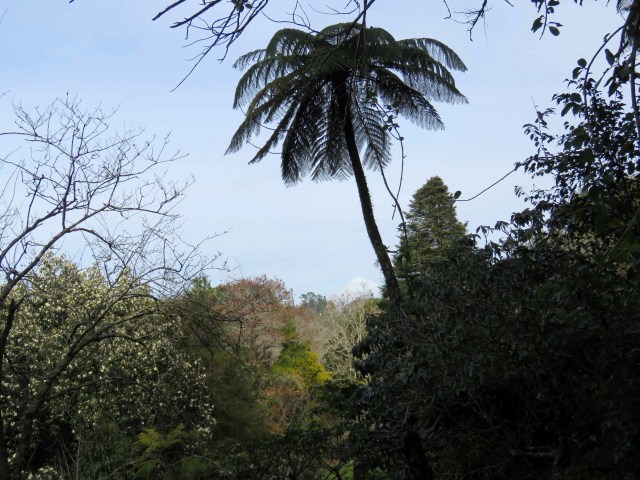
Drawing back from the camera zoom, you may be able to spot a very small white peak to the left of the trunk of the tree fern, the magnolia and a veritable United Nations of plants dominated by our native tree fern in the foreground.

Even before we started to mark Matariki officially, I saw this time as the start of a new gardening year. For me, the opening of the Magnolia campbelllii brings fresh promise in the middle of winter. I did think that I should be illustrating this post with photos of native plants in the garden, entering into the spirit of this special time. We grow a surprisingly large number of native plants but always integrated with other plants from around the world. And as we were walking around the garden with friends from Auckland yesterday, I was rather too distracted to focus on singling out specimens of indigenous flora. I may make it a project next year.

Self-sown tree ferns. We have five different species in this country; I think we have four of the five species seeding in our garden but I am a bit vague about the differences on a couple of them. They are more prized overseas than here where we take them for granted.

I have my own personal celebration of Matariki this year. I am off to Sydney on Tuesday to meet the newest member of our family – a small granddaughter who is way too young to realise that she brings together the threads of Aotearoa (her mother), France (her papa) and Australia (her birthplace). This means there won’t be a post next Sunday

Ngā mihi o Matariki, te tau hou Māori

Happy Matariki

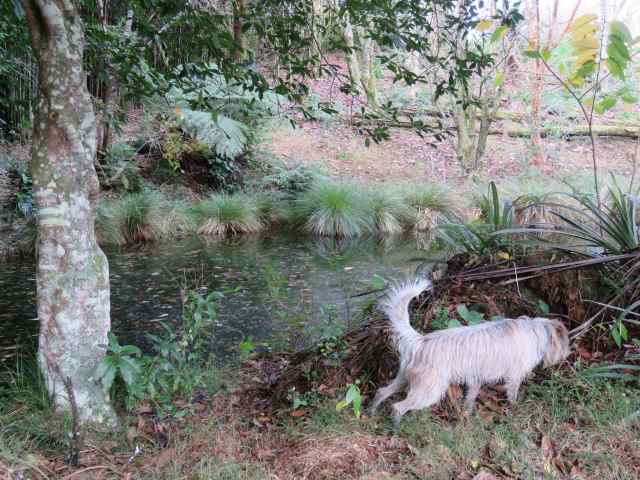
I think those are one of our native gahnia grasses (cutty grass) edging a pond in the Wild North Garden. With Ralph carrying out his usual photobombing intrusion.

The winter solstice, Matariki and the start of a new gardening year

The winter solstice – midwinter. The time when we have the longest night of the year and the shortest period of daylight. In exact terms, this means that our daylight will be 9 hours 25 minutes and 11 seconds long today in Taranaki. Tomorrow will have two seconds more of daylight. I looked it up. Close to nine and a half hours of daylight in midwinter is still quite a lot compared to many locations but it is our shortest day.

For the northern hemisphere, the start of the new year comes within ten days of the winter solstice whereas for us, New Year comes as we enter mid-summer.

It is perhaps little considered that the calendar we all use dates back to Julius Caesar in 45BC, refined to its current form in 1582. Certain things are fixed in time including the length of the individual months and dates for equinoxes and solstices because these are derived from earth’s position in the solar system.

The arbitrary date of New Year being January 1 is not fixed by such external considerations. It is a convenient convention, that is all. The world does not come to a halt because Chinese and Indian peoples have long continued to celebrate the start of a new year at different times. So too Maori, who linked the start of a new year to Matariki – the rising in the sky of the star formation known as the Pleiades and the start of the new lunar year.

It just so happens that Matariki usually occurs within ten days of the winter solstice in New Zealand, though it is a little later this year. Here in the south, the indigenous people observed astronomical patterns and arrived at a time for new year that corresponds almost exactly with the time determined in the northern hemisphere. It is six months out of step as far as the calendar goes but synchronised with the seasons.

Apparently, Matariki was widely celebrated until the 1940s but dropped from favour until its relatively recent revival. There is now a growing focus on Matariki and there is certainly a logic underpinning it that is ours, all ours, independent from the dominant northern hemisphere cultures.
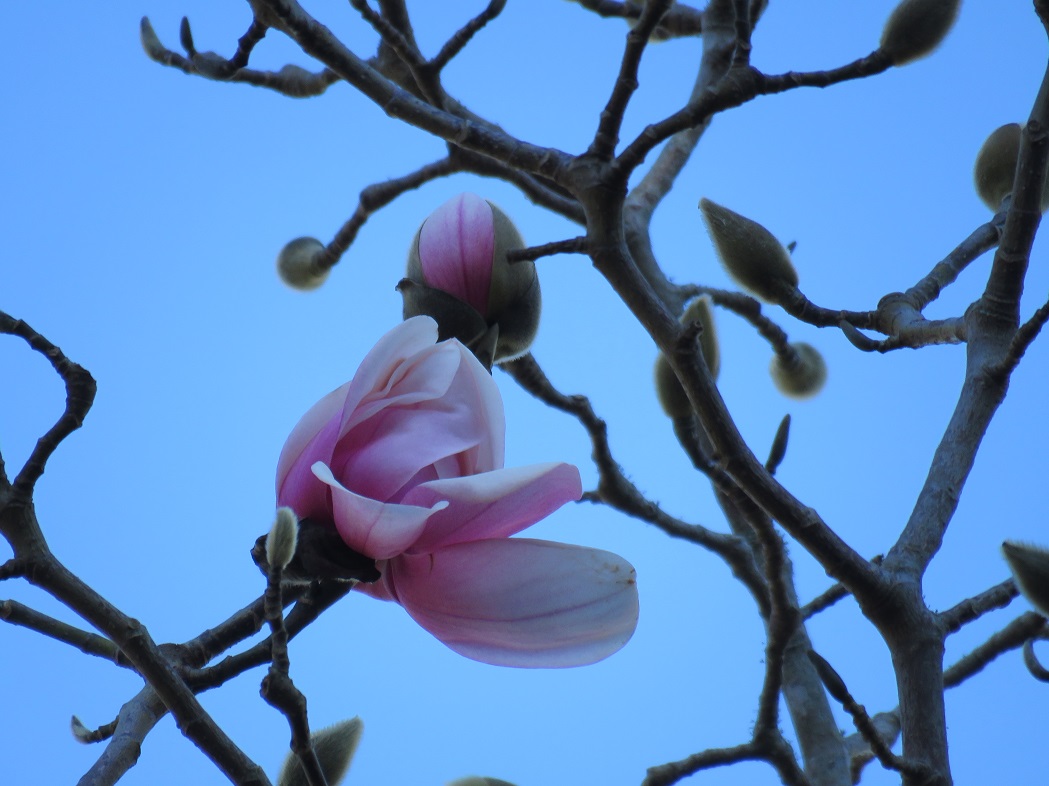
I do not expect to see the first bloom of the season on our Magnolia campbellii for another 10 to 14 days but, to coin a phrase from television cooking shows, here is one I prepared earlier. July 4 in a previous year.

This was a revelation to me because I have long declared that the opening of the Magnolia campbellii in our park signals the start of a new garden year. And the first blooms appear more or less in time with Matariki. North meets South meets the Far East because our form of pink M. campbellii originated from Darjeeling in India. In the wild, most M. campbellii are white but in Taranaki where we live, the most common colour is pink.

Magnolia campbellii is always the first magnolia of the season to open for us. Our tree was one of the first plants Mark’s father, Felix, put into the south sloping paddock behind the house in the 1950s.
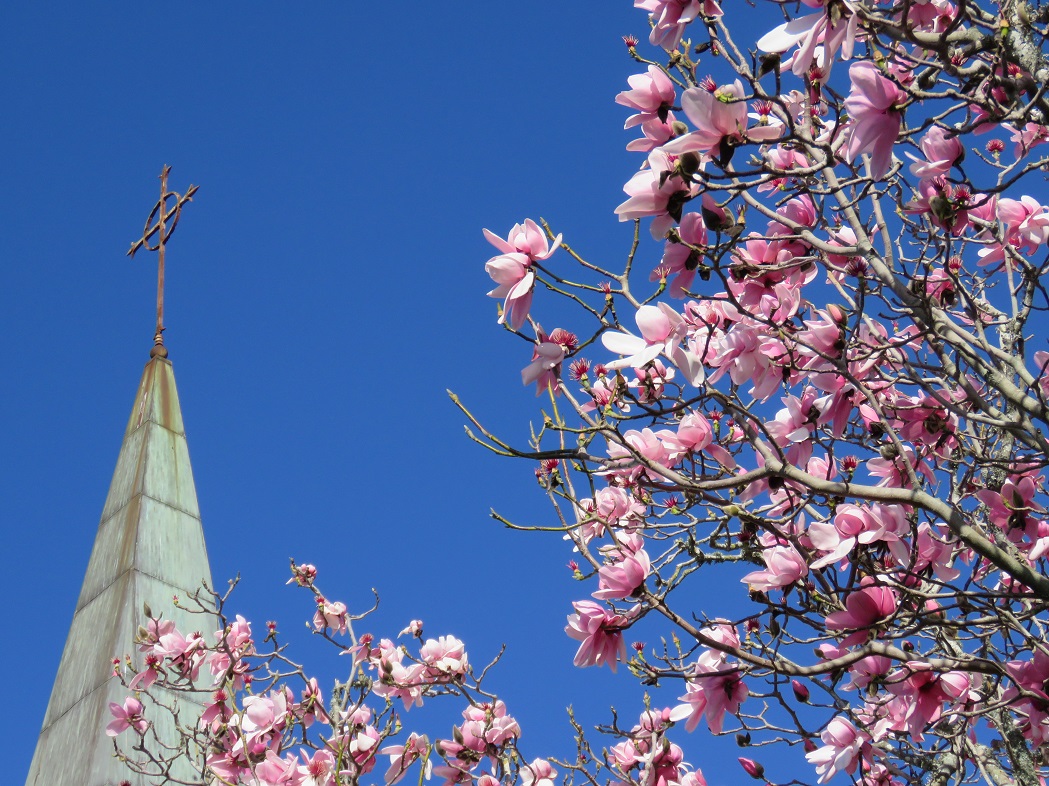
And another I prepared earlier – Magnolia campbellii at the Anglican church in our local town of Waitara, though a little later in July when it reaches full glory

The first bloom opening ten days or so after the solstice is very specific to our plant which is in the coldest part of the property. Even just two kilometres away, my friend’s plant had already opened its first bloom on June 16 and I photographed the same plant by St John’s Church in the local town of Waitara with a few blooms open on May 15. Waitara is clearly significantly warmer even though it is all of seven kilometres from us.

The winter solstice heralds the worst of winter. We drift slowly into winter and after the shortest day of the year, we get maybe four to six weeks of dreary weather through to early August, but never unrelentingly so. To see the opening of the magnolias means that, in the depths of winter, we are already seeing the palpable arrival of spring.

In terms of shaking up our world view, this map is fascinating. It shows the traditional world map that we all know in pale blue with the actual size of countries in dark blue. The difference is stark and comes down to the Mercator projection, devised in the main to assist marine navigation back in history – in 1569, in fact. Some of those northern countries are… well, quite a bit smaller than we have been led to believe.

It could, of course, equally be shown like this. It is only convention that puts the north at the top of maps and globes, nothing whatever to do with physics, geography or logic. The equator could have been chosen at the top or the South Pole and, prior to the early 1600s, they often were.

Amusingly, one of the map issues where there has been something of a change of heart in these times of pandemic is when New Zealand is left off world maps entirely. If you do a net search, this is more common than you might think and has been a source of considerable indignation. Now that we are more or less Covid-free (slightly less than more this week, but those five cases are all border-related), there is strong support on my social media for the idea of dropping NZ off ALL world maps. Many of us do not want to make it easy for people from other countries to find us at this time in history.