
Can a garden ever be frozen in time?
This train of thought came back to mind as I was sorting through the old slides of our garden dating back in its early days. We first came across the concept of freezing a garden in time when we encountered the Florence Charter being quoted twenty years ago, in the context of what are now referred to as the regional gardens here, particularly Tupare and Hollards.
I see the Florence Charter of 1981 built upon the earlier Venice Charter of 1964 and I can’t quite get my head past the glorious locations of these think-tank conferences on preserving historic monuments. Still, I doubt that the wise heads behind these charters were thinking about preserving gardens from the 1940s and 1950s. Only in colonial New Zealand do we think of 70 to 80 years warranting the descriptor of *historic*.
But how realistic is it to freeze a garden in time? For starters, it is probably limited to bulbs, herbaceous perennials or roses. Trees and shrubs grow. They can’t be lifted, divided, thinned, pruned and replanted in their original configuration. That rules out 99% of all gardens in this country; I cannot recall seeing any gardens here with no trees or shrubs in them.
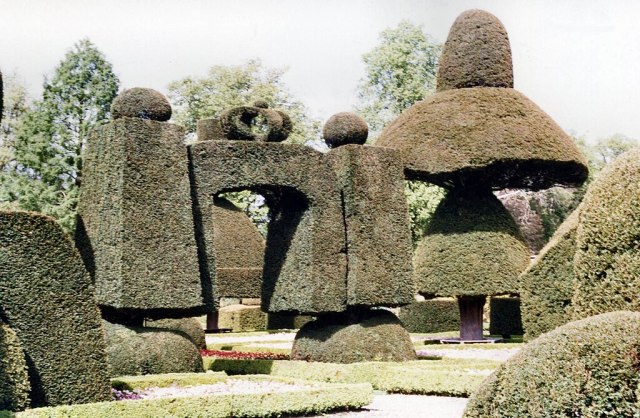
What about topiary, I hear somebody ask. Even they evolve over time. Covid robbed us of the opportunity to visit Levens Hall in the Lakes District of the UK. That garden dates back to 1690 and is claimed to be the oldest known topiary garden. Some of the yew topiaries could well be original but I doubt they look the same now as they did in 1700. Even topiary and bonsai grow, mature and evolve over time.
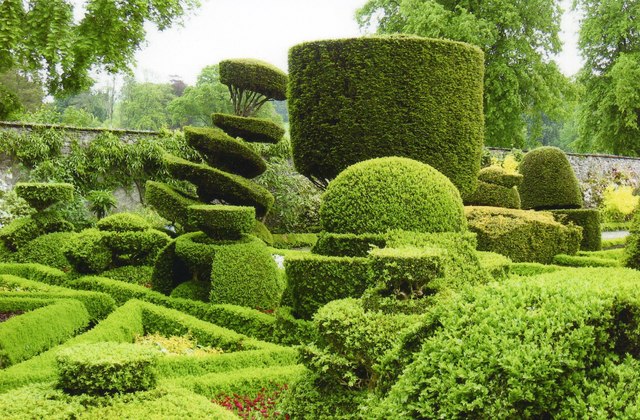
Roses and maybe some other small deciduous shrubs can be kept to the required size and shape. Besides, you could grow on replacement plants out the back somewhere and bring them in as instant substitution when needed.
Herbaceous perennials and bulbs can certainly be lifted, thinned and replanted in exactly the same configuration, although why you would want to do so eludes me.
But, and it is a big but, you can have a perennial, bulb or rose bed and dedicate your gardening life to keeping it static in display but make sure it is in the middle of open space which will stay open. As soon as a bed or border is encircled in hedging, other gardens, trees, orchard or anything else, the time-clock of change starts ticking. The micro-climate you started with will change over time as other plants grow and may no longer be hospitable at all to the initial plant selections.
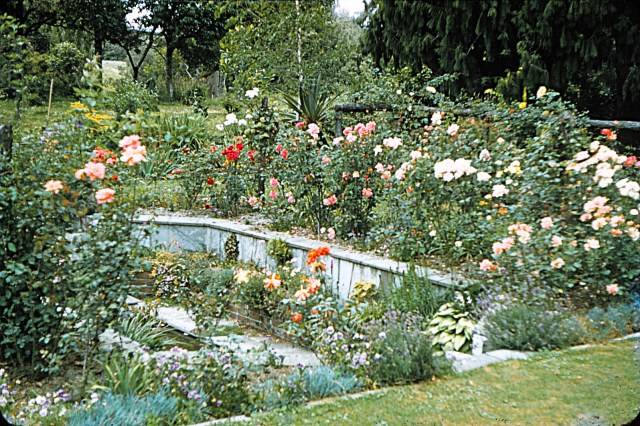
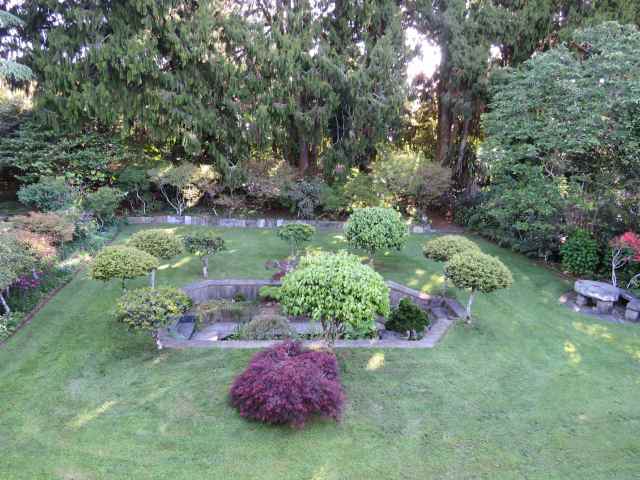
We worked this out when our best efforts failed entirely to restore the sunken garden to the glory days when Mimosa had it looking lush, abundant and flowery. In the decades since it was first planted, the rimu trees that bound it on one side have pretty much doubled in size and their fibrous root systems have spread throughout much of the area. The trees and shrubs Felix and Mimosa planted on two other sides have grown like Topsy and the garden in the middle has long since stopped being sunny and open; the area once suitable for roses is now semi-shaded, very sheltered and filled with roots from surrounding trees sucking up all the moisture and fertility. We changed tack entirely.
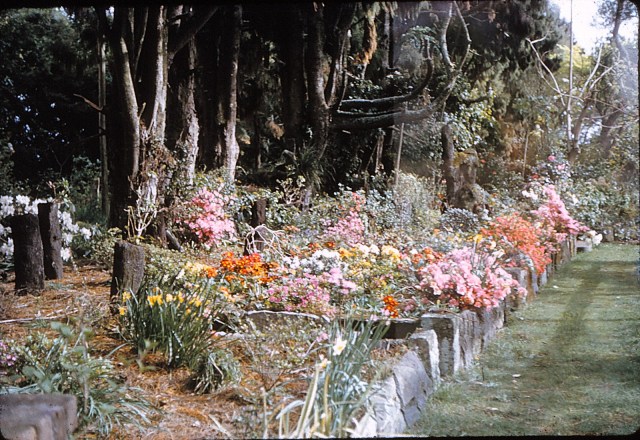
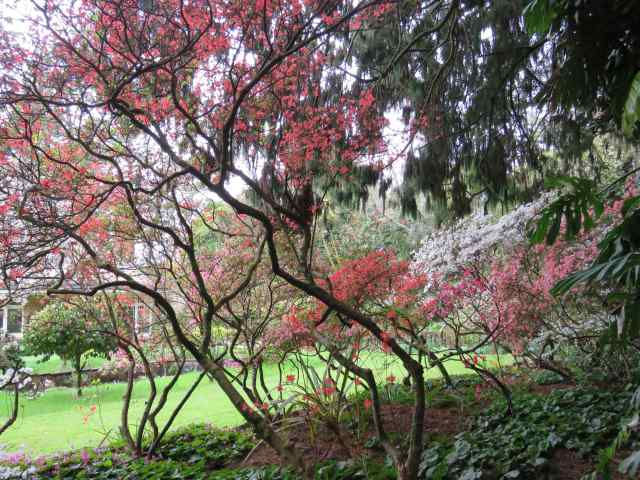
All of this begs the question of why anyone would want to freeze a garden in time. Times change and with that, expectations and gardening values change. I was going to add in changing fashions, but long term gardens are about more than fickle fashion. The mark of good gardening, in my book, is the ability to adapt an existing garden, keeping it appropriate, relevant and in tune with current values while accommodating issues of changing microclimates and external conditions. Personally, I don’t see the value of trying to freeze even historic gardens to a particular point in their development.
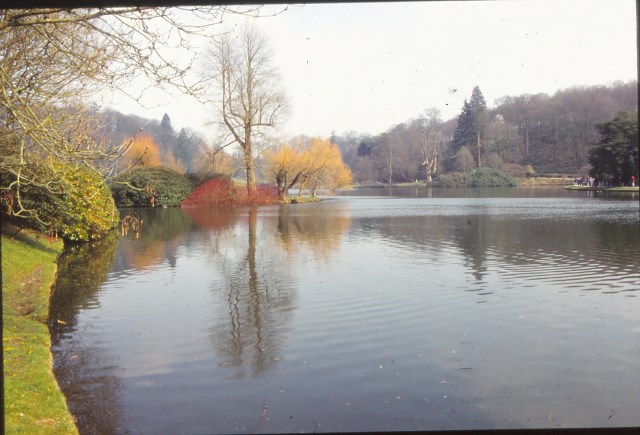
Never have Mark and I forgotten our early visit to Stourhead in Wiltshire. The garden at Stourhead was created in the style of Capability Brown – sweeping landscapes and dearie me, is that a village located just where we want to put the lake? Move the peasants out now. So, a statement of wealth, power and privilege. Visiting in spring, the magnificent display of rhododendrons and azaleas delighted the modern hoi polloi amongst the vistas and the garden follies of past grandeur.
But there was a problem. Historically, the garden at Stourhead pre-dated the introduction of rhododendrons to the UK. The original lakeside plantings were, apparently, laurel and mass-planted laurel is never going to delight anybody, really. There was a purist, historical lobby group who wanted to pull out all the glorious rhododendrons and replant with laurels, in the interests of historical accuracy, you understand.
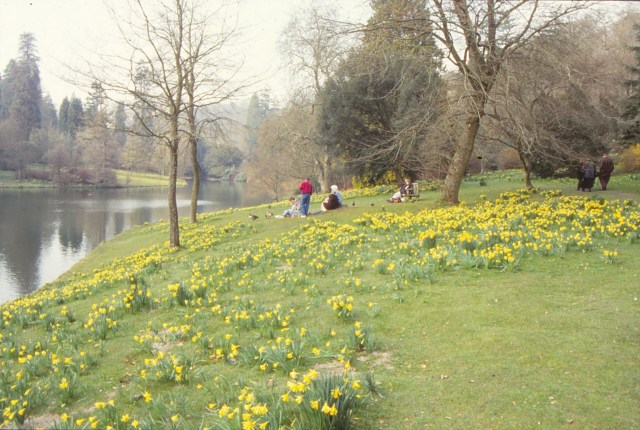
I am assuming the historical purists did not win but we haven’t been back to see. It does illustrate the downside of picking an arbitrary time frame to freeze for the long term. You can do it with buildings and monuments but gardens? Gardens, by their very essence, change over time and we gardeners need to adapt to and enhance that change, not constantly try to wind the clock back.
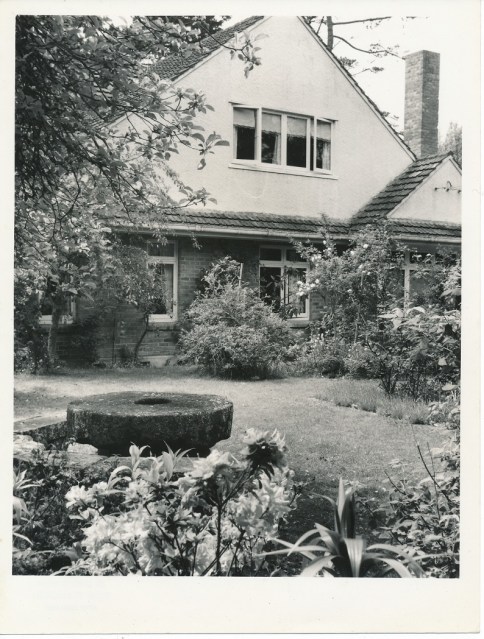
Postscript: Theoretically, a rockery largely given over to bulbs and small perennials could be maintained as a static feature. It is clear that from the very start, Mark’s parents set out to plant in a mixed style.
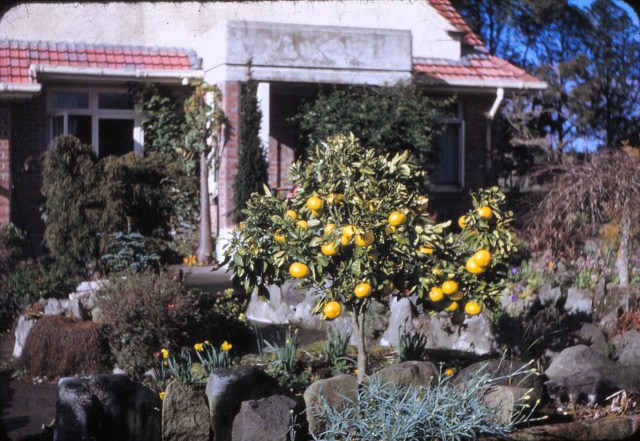
The house was built around 1949 and 1950 and the rockery must have been the first area of the garden to be created and then planted because this is as early as 1954 and many trees and shrubs are looking remarkably well established. That is a Wheeney Grapefruit which was moved out soon after.
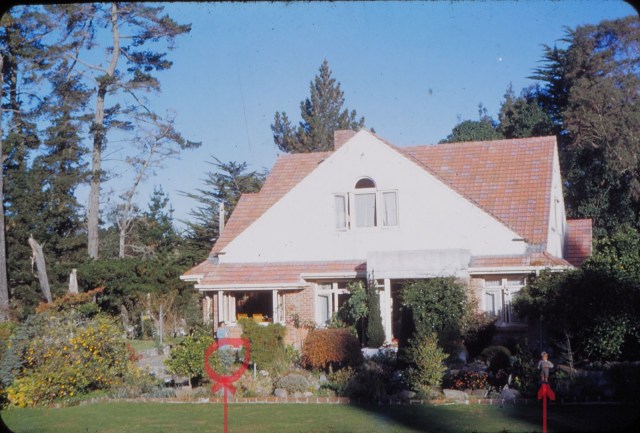
We can date this to 1954 accurately because that is wee Marky at the red arrow on the right. Mark’s mum is above the red arrow on the left but the circle is what I wanted to highlight. You won’t be able to see much on a small screen but the circle is around a very small blue conifer. It was Abies procera glauca and you can read it’s story here.
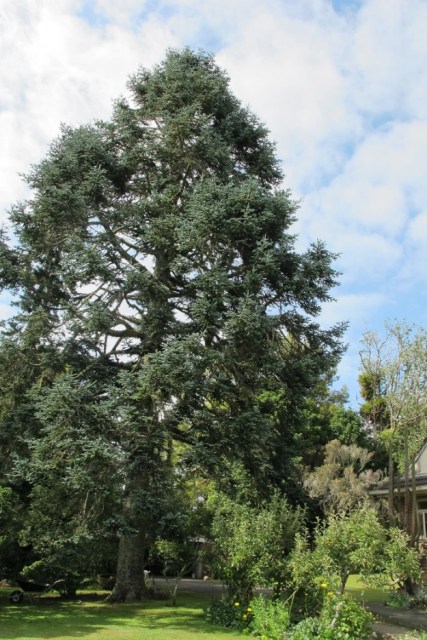
We felled it in 2019. It had been moved out of the rockery at some point in the later 1960s and by the time we dropped it for safety reasons, it looked like this.
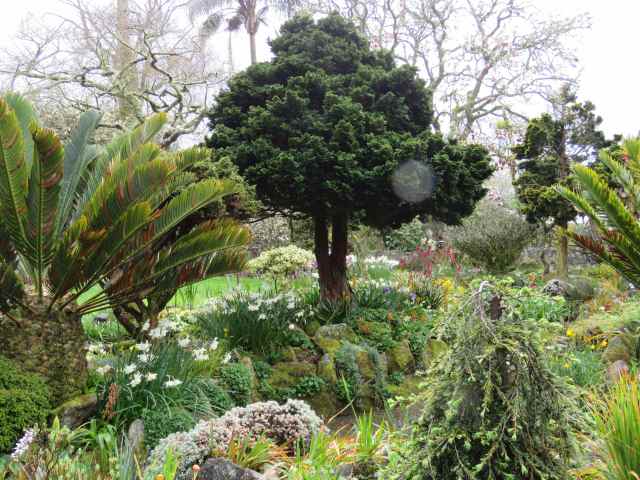
The rockery is the the area where there has been the least change in structure and design. We have carried out a few running repairs but otherwise it is pretty much as constructed by Felix around 1951. The plant material, however, is something else. The turnover of plant material won’t be quite 100% but there is very, very little left that is original.
Freezing a garden in time seems a fruitless folly, really.



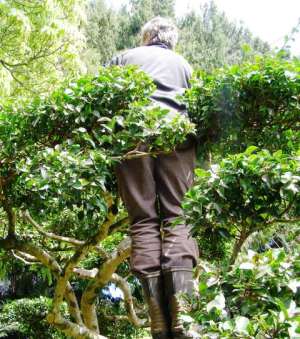
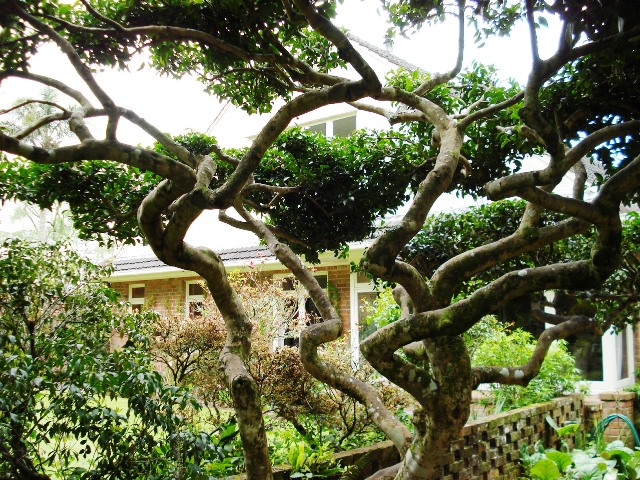
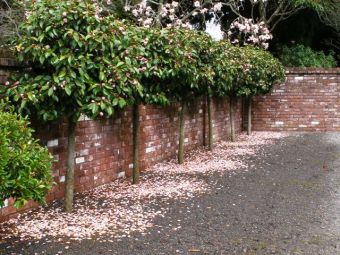
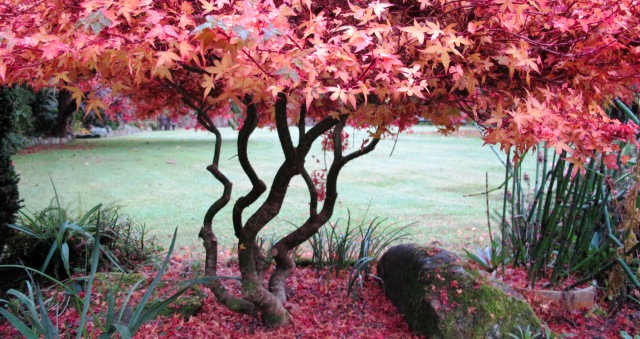
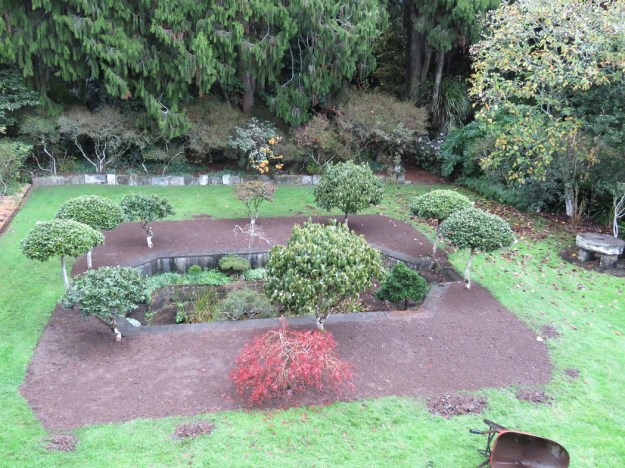 Finally, the last plants were gone at the weekend and the area was bare. Lloyd, our extraordinarily handy and obliging man about the garden, has moved in extra topsoil and raked and levelled to get it ready for sowing in grass. The eight camellias and two maples will stay and be shaped into gnarly, character, feature plants. We normally avoid growing plants in mown lawn areas and I know I will have to hand-trim the grass around the trunks but I am willing to do that. We do not like the weed-sprayed brown look of lank grass around trunks and I have no desire for the tidy, suburban look of encasing each trunk in a tidy round concrete circle planted with pansies. For those of you who want to know what the camellias are, two are the gorgeous species
 Tikorangi The Jury Garden