Tag Archives: Michelias

Then and now. A magnolia (michelia) story.

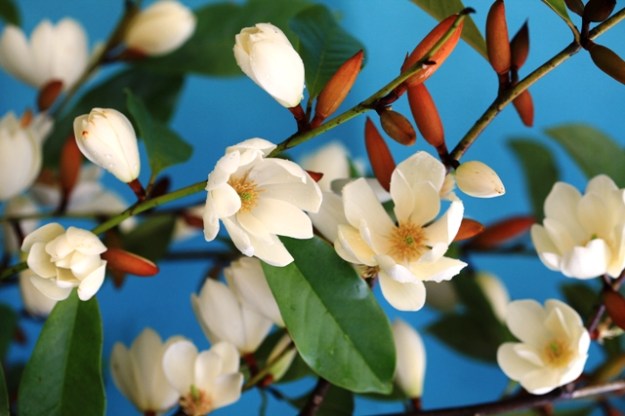
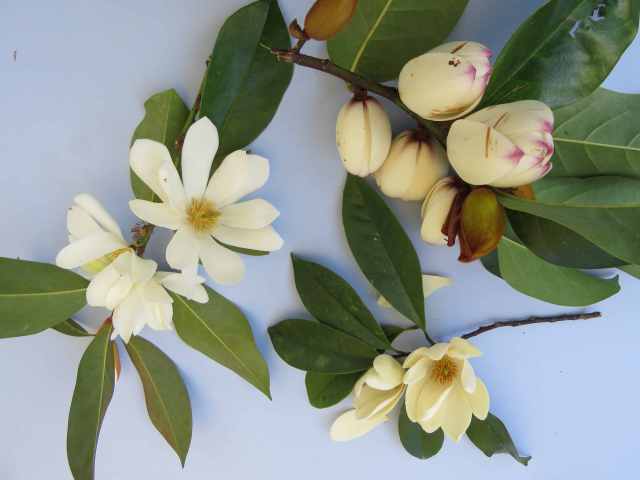
Fairy Magnolia White on the left, ‘Bubbles’ top right and the first flowers to open for the season on Fairy Magnolia Cream bottom right

In the early stages of the magnolia season, our display is dominated by red deciduous magnolias and white michelias. The other colours come later in the season and that is particularly true of the michelias, where we now have significant variations.

Michelias are now classified as a subsection of magnolias and technically are named Magnolia xxxx but we still find it helpful to refer to them as michelias for clarity. They are, of course, evergreen but not with the big leathery leaves of the American Magnolia grandiflora types.

Magnolia x foggii ‘Bubbles’

It was finding M. ‘Bubbles’ in bloom with flowers at a height I could pick that started me lining them up. Back in their day, ‘Bubbles’ and its sister seedling ‘Mixed Up Miss’ were breakthroughs in the world of michelias. There is a third named one in that set but I have only ever seen ‘Hint of Pink’ in Auckland Regional Botanic Gardens. They were the work of the very late  Os Blumhardt – a notable plant breeder who lived in Whangarei and is probably best known internationally for his successful deciduous Magnolia ‘Starwars’.

He didn’t raise many michelia seedlings, as far as we know just the one batch. I see we first started selling ‘Bubbles’ and ‘Mixed Up Miss’ around 1992 and we would have been onto them pretty early because Os was a personal friend and very generous with his plant material. He probably did the cross in the late 1970s, maybe early 1980s and he provided the inspiration to Mark to see what he could do with this plant family.

‘Mixed Up Miss’ at Auckland Botanic Gardens. The flowers are small and so high up on our tree that I can’t photograph it

In their day, they were terrific. ‘Bubbles’ was harder to propagate from cutting and had larger flowers and foliage. ‘Mixed Up Miss’ was the perfect nursery plant – easy to propagate, set flower buds on a young plant and looked extremely attractive and neat standing about a metre high in its pot. It has smaller flowers with slightly more colour but there isn’t a lot in it.
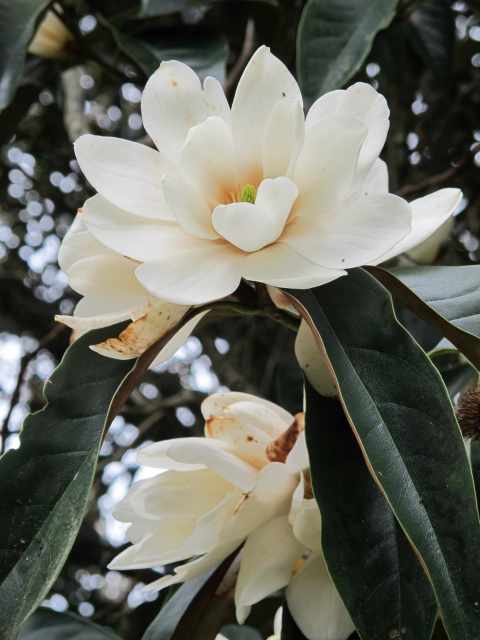
M. doltsopa flower

Os was doing this work before M. laevifolia (formerly known as M. yunnanensis but more widely marketed under a plethora of names including ‘Honey and Cream’) was even in the country. He used two of the common species that were here – M. doltsopa and M. figo. In the world of magnolias, this particular cross is referred to as x foggii (after American breeder John Fogg who is credited with the first hybrids from this cross in 1972).

All that white in the centre is our Magnolia (michelia) doltsopa. Yes, it is somewhat large

M. doltsopa is a variable species. I only have photographs of our specimen which is spectacular and takes up an area of space roughly equivalent to a small, urban apartment block. They are not all as huge as that but they do have large flowers.

Magnolia (michelia) figo.

M. figo will be better known to many readers. It is smaller growing and sold widely, particularly favoured in warmer areas. Its flowers are verging on insignificant to the point where I have never bothered photographing them so I had to grab an image from Wiki Commons. It is a handy, evergreen plant that you can keep compact by pruning often, although its foliage turns rather yellow in full sun. It is mostly grown for its strong fragrance which has always reminded me of Bubblegum chewing gum so loathed by my mother. It only gets fragrant in the late afternoons and evenings, though.

‘Bubbles’ in the centre after 35 years or so. It is in full flower but not exactly a showstopper
For comparison, Fairy Magnolia White in flower with Camellia yuhsienensis in front. The larger, more open flowers are much more distinctive

These new hybrids of Os’s were a breakthrough in terms of more user-friendly garden plants. Alas, some plants get significantly more spectacular with age but others don’t. And on a property with literally hundreds of white michelias from Mark’s breeding programme, you would not look twice at our specimens of ‘Mixed Up Miss’ and ‘Bubbles’. Picking flowers of ‘Mixed Up Miss’ defeated me because I would have to carry a ladder to the farthest reaches of our park where it is now very tall and leggy. You could keep them more compact and bushy by frequent pruning if you are in a smaller garden but the following generations of hybrids are a significant improvement.
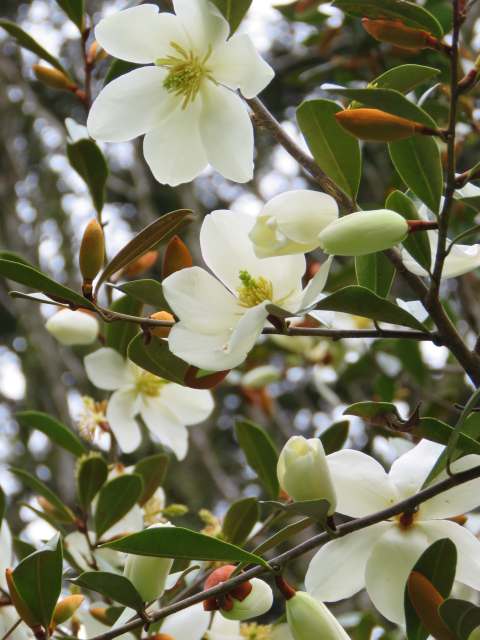
Magnolia laevifolia (formerly Michelia yunnanensis) ‘Velvet and Cream’

Mark has used both ‘Bubbles’ and, more often, ‘Mixed Up Miss’ extensively in his breeding but he also had the huge advantage of being able to add in M. laevifolia. While he has tried a few of the other species michelias we have in this country, it is line breeding with those early x foggii hybrids (so doltsopa and figo) with laevifolia that has given the huge range in flower colour and growth habit that he has reached in his later generations of michelia hybrids. The first three releases are all under the brand of Fairy Magnolia (White, Cream and Blush) and are now widely available here and overseas.  

Mark’s Fairy Magnolia Cream on the top left with Fairy Magnolia White below and a random selection of seedlings which are also coming into flower. There is a whole lot more to selecting a plant for release than just a pretty flower but even that is difficult when looking at 80 or 100 plants of the same cross, all of which are white.

None of the later selections are on the market yet although there are three coloured ones being built up for release and there will likely be another three to follow at some stage when we have made the final selections. It is not a quick process so don’t hold your breath.

Yes, we have colours coming through. Not all michelias are white or cream.
Fairy Magnolia Cream and Fairy Magnolia White. Blush has yet to open its pale pink flowers.

Petal Pushers – the Jury Michelias


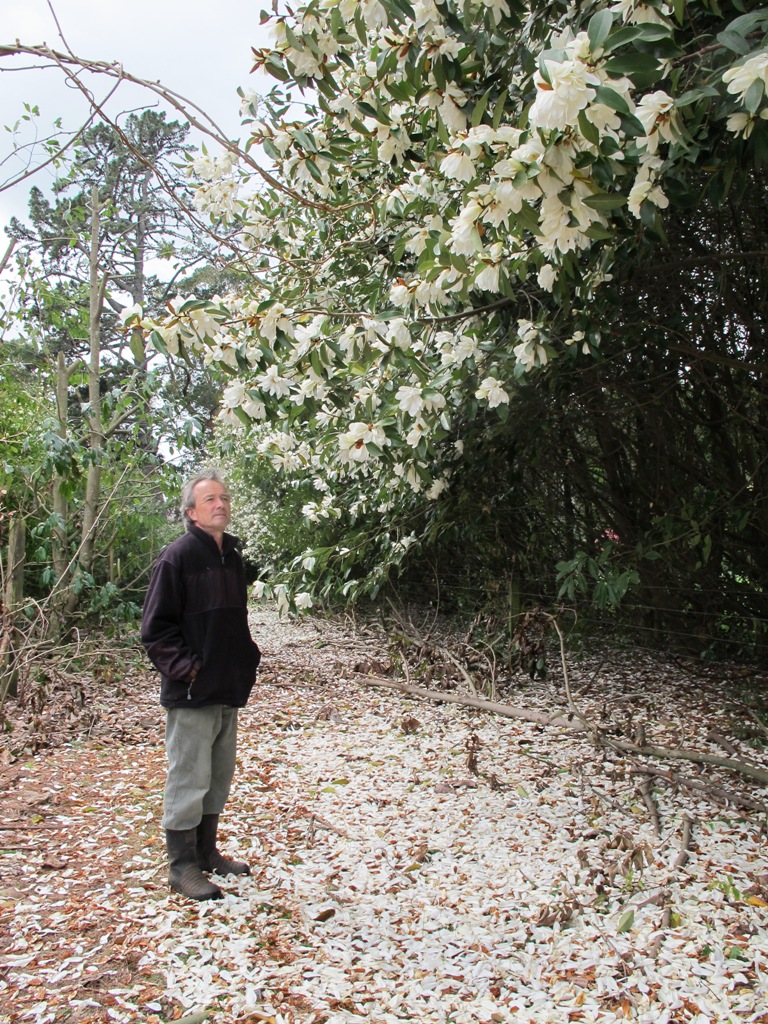
Mark Jury standing on a carpet of fallen scented petals, surveying one of his early shelter belts planted with michelia hybrids

Mark Jury standing on a carpet of fallen scented petals, surveying an early shelter belts planted with michelia hybrids

All michelias are magnolias but not all magnolias are michelias. We have always known them as very close relatives to magnolias but they sat in a group of their own. Now there has been some international reassignment after DNA testing and they have become magnolias, which has led to some confusing name changes. In common usage, they are still often referred to michelias and we are a bit betwixt and between on names.

Until very recent times, there weren’t many different michelias in New Zealand. Doltsopa (the best known cultivar being named ‘Silver Cloud’) and figo (common name of port wine magnolia) have been here for a while. It was an early cross between these two by the late Oswald Blumhardt that gave us ‘Mixed Up Miss’ and ‘Bubbles’.

Interest started to grow when yunnanensis was brought in some twenty years ago. It has spawned a gazillion named selections because it sets seed readily, but just to confuse you, it is now correctly referred to as Magnolia laevifolia. There are a few other species which are not widely available, including maudiae, and some obscure ones that are of interest to collectors only. But our borders closed to new introductions so there are a number of recent discoveries in Asia that we don’t have here. Yes, new plants are still being discovered in this world of ours but we can only look at them from afar with our bio-security rules.

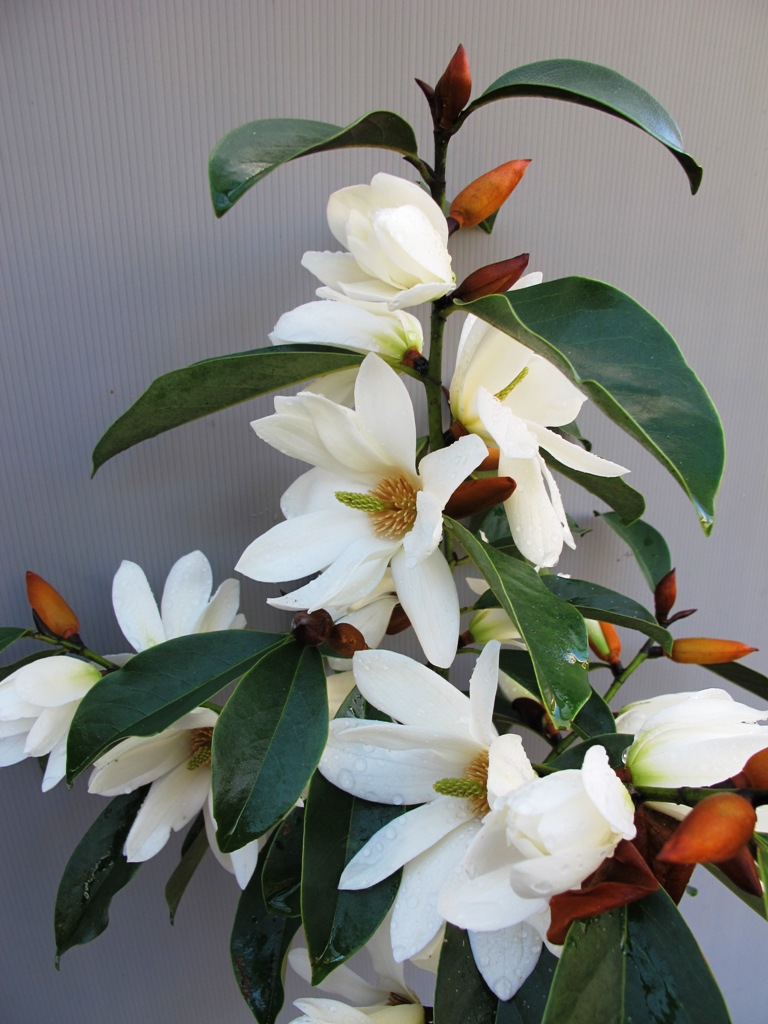
Fairy Magnolia White

Fairy Magnolia White

Mark started hybridising them here back in the 1990s. He figured there was room to improve on them as garden plants. Figo’s flowers are a bit insignificant and the foliage tends to go yellow in full sun. ‘Silver Cloud’ has a wonderful fragrance but the flowers are very floppy and lack good form. It also grows too large for many town gardens and it can defoliate – dropping all its leaves – after flowering. Laevifola (yunnanensis) can defoliate too, in spring conditions which are wet and cold. These are evergreen plants so defoliation is not a great look. ‘Bubbles’ and ‘Mixed Up Miss’ look great as juvenile plants but are pretty ordinary when they get bigger and older. Mark could see possibilities.

September and October are exciting months for us as the michelias bloom. We live and breathe michelias and magnolias at this time of the year. There are six hundred new michelia seedlings ready to flower this spring alone, part of a long term breeding programme. Out of the thousands he has raised, only three have been named and released so far.

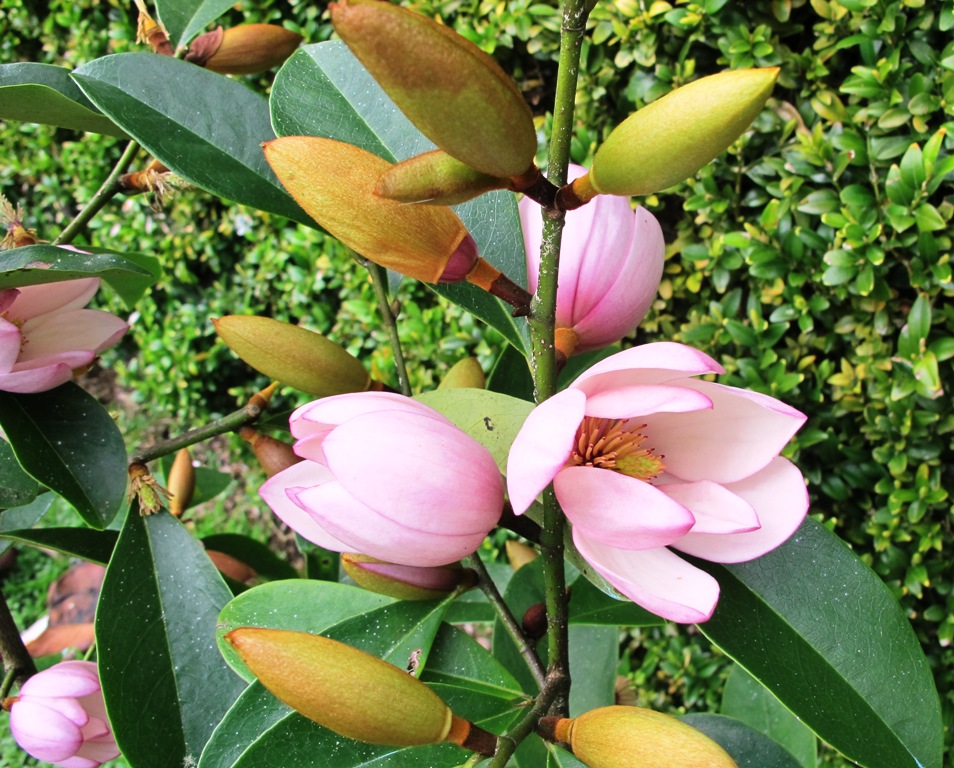
Fairy Magnolia Blush

Fairy Magnolia Blush

There is a long way to go yet but some directions are emerging. Despite the vast majority of michelias being basically white, he has reached reds, purples and deep pinks and is working on deepening the pale yellows to get stronger colour. Along the way there are an awful lot of murky colour combinations that get the chop. There is a big range of flower form, foliage and growth habits. Perfume can be an issue when two of the most fragrant species spawn offspring with no scent at all. Bringing together all the different elements to get a new plant is an absorbing and time consuming occupation.

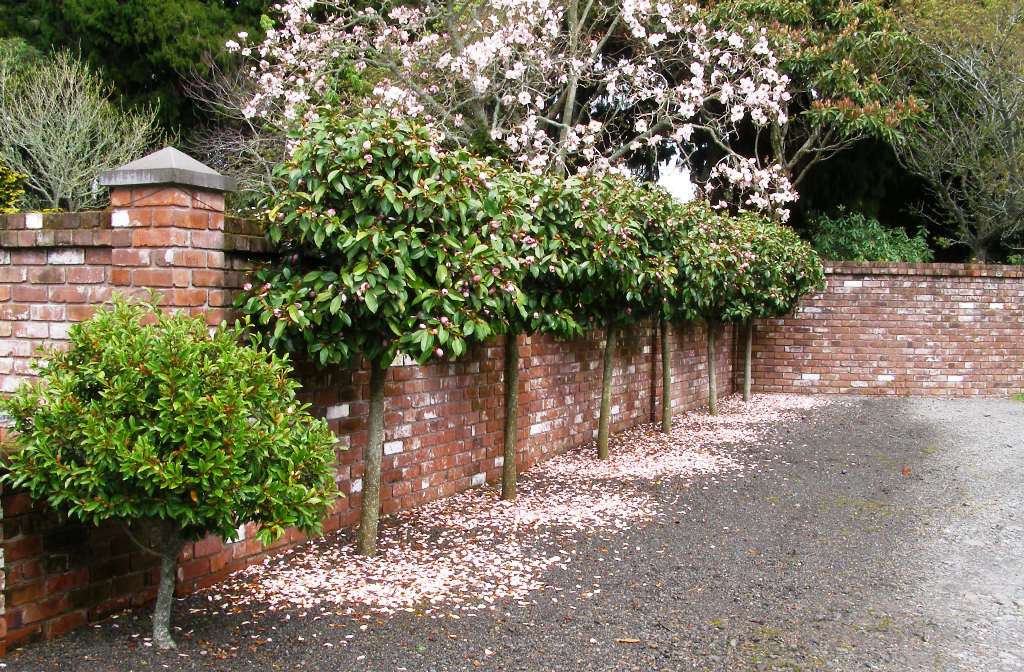
Along the way we have also learned that michelias are very tolerant of cutting and clipping and sprout again from bare wood. The row of lollipop Fairy Magnolia Blush at our entrance has been clipped and shaped over ten years now and we can keep it to the size we want by trimming just twice a year. They make excellent hedges and some of our roadside shelter belts are a feast of flower and fragrance at this time.

The sustainable wood lot

The sustainable wood lot

Regrowth

Regrowth

An unexpected bonus has been the sustainable woodlot. Because we heat our large house entirely with wood, we burn through a prodigious amount every winter. Mark had been thinking along the lines of establishing a sustainable woodlot for the future that we could harvest on a rotational basis. I even sourced a book on the very topic. But lo, he realised a few years ago that his reject michelia seedlings already filled that very niche, doing dual duty as winter feed for our very small herd of beefies that we keep to eat the paddock grass. I say very small herd – there are only four at the moment. Cut off close to the base, the plants soon shoot away again with long straight whips that could be used as poles or left to grow for firewood. Mark drags the branches into an adjacent paddock where the cattle enthusiastically eat the foliage. He then gathers the remaining trunks to cut up for next season’s firewood. It seems a good multi-purpose use of a plant breeding programme.

Fairy Magnolia Cream

Fairy Magnolia Cream

Mark’s three michelia selections to date are sold under the Fairy Magnolia brand and are widely available in New Zealand garden centres and in some overseas countries. Blush is a soft pink, Cream is very fragrant and grows in a similar, compact manner to Blush. White is a larger grower and the first in the season to flower. Mark has always seen it as a garden-friendly alternative to “Silver Cloud” with good fragrance and beautiful flower form.

First published in the September issue of NZ Gardener and reprinted here with their permission.

Lollipop Fairy Magnolia Blush at our entranceway. The smaller michelia to the left is an unnamed figo hybrid with masses of creamy yellow flowers.

Lollipop Fairy Magnolia Blush at our entranceway. The smaller michelia to the left is an unnamed figo hybrid with masses of creamy yellow flowers.

Magnolia – Michelia: the evergreens

Just another Magnolia laevifolia (syn Michelia yunnanensis) selection but in this case it is our selection which we called Honey Velvet

Just another Magnolia laevifolia (syn Michelia yunnanensis) selection but in this case it is our selection which we called Honey Velvet

I was surprised this week to have someone ask me what michelias are. I realised I have never written about them in a general sense. That is because I try and separate my published garden writing from our commercial interests and michelias are inextricably bound up with the latter.

Michelias are in fact a type of magnolia. They used to be seen as close relatives to magnolias, now they have been reclassified botanically as magnolias and this has involved a complete name change for some species.

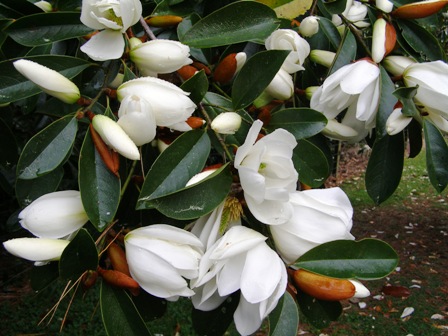
Mention evergreen magnolias and most people think of the grandifloras from the southern states of USA. All readers will know these by sight, if not by name. They have big, tough, leathery leaves and they flower in summer with large creamy white blooms.

Personally, I am not a big fan of the grandifloras. They make big, chunky trees which are remarkably tolerant of harsh weather conditions. As such they have their place but I think that place is on golf courses and cemeteries. There is a row of them as you exit Huntly to the south and I am pretty sure they are on the edge of a cemetery.

Why am I not keen on them? They don’t mass flower, for one thing. In fact the flowering is generally random and intermittent. I find them a bit chunky in the landscape and if one is going to go chunky, I would rather have our native puka. The leaves are really tough and take forever to decompose.

That said, the varieties with deep velvety brown indumentums (the furry coating on the underneath of the leaf) can look attractive in the wind. Magnolia grandiflora “Little Gem” is a tough plant with exceptionally dark forest green leaves contrasting with cinnamon indumentum and is much favoured in modern gardens. Just be aware that it is only a little gem as opposed to an extremely giant gem. It will still get quite large over time and you will never get many flowers on it.

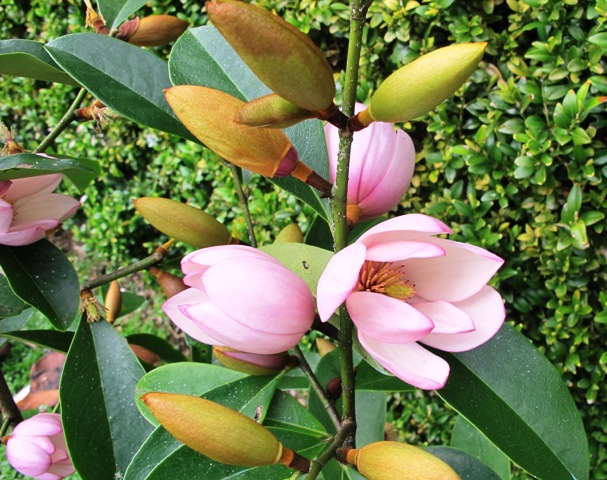
Fairy Magnolia Blush - bringing pink into the range

Fairy Magnolia Blush – bringing pink into the range

Michelias are very different. Their foliage is smaller and much lighter in substance so they are not an oppressive plant. And they can flower and flower because they set flower buds down the stem at nearly every leaf axel, not just on the tips. Most of them peak in spring but some keep on flowering for months on end and some will have a second blooming in summer.

There are a few michelias that are widely available here. M. figo has long been referred to as the port wine magnolia and many gardeners will know it. It has small leaves and is inclined to go a bit yellow in full sun. When it starts pushing out its scent in late afternoon, it smells remarkably like Juicy Fruit chewing gum.

There are various forms of doltsopa, the most common in this country being “Silver Cloud”. It has wonderfully large, pure cream blooms which are very fragrant. But, there are always buts, the flowers are floppy and often get frosted in colder areas, the tree tends to drop most of its leaves after flowering and it gets rather larger than most people expect. M. maudiae is a better bet as a garden tree but difficult to propagate so not generally available.

What we used to know as Michelia yunnanensis is certainly a popular addition to the garden plants of this country. It had a brief flirtation with being called Magnolia dianica before its current name was settled upon. It is now correctly known as Magnolia laevifolia but you are still more likely to find it sold as M. yunnanensis. It sets seed really freely so just about every nursery around the country has made a selection and named it (including us!). You can recognise it by its small leaves and creamy cup shaped blooms. You can hedge it and clip it but it is easier to start with a variety which is more generous in the leafage department.

Several decades ago, the late Northland plant breeder Os Blumhardt released Bubbles and Mixed Up Miss onto the market and these hybrids had many advantages over the species as garden plants. They are still tidy plants when juvenile, but nothing remarkable as they mature.

Now there is an explosion of new michelias on the market. Many are just the aforementioned M.laevifolia selections. Some are hybrids. I must declare an interest here. The ones you see being marketed as “Fairy Magnolias” are ours. For we are in the midst of a longstanding love affair with the michelias.

When camellia petal blight first showed up, my plant breeding husband immediately abandoned camellias and started on michelias. After about 17 years we have many, probably into the 1000s by now but we have never counted, as he has pursued breeding goals. They are in shelter belts, hedges, around the garden, through the nursery areas – anywhere there is space. Fairy Magnolia Blush was the first release a few years ago, bringing pink into the colour range. Cream and White are being released this year.

What we love about michelias is their versatility. They can be clipped tightly, even in topiaries. They make good hedges, even pleached into hedges on stilts. Some can become specimen trees without being forest giants. They give us masses of flowers, many are scented and they are pretty much free of all pests and diseases. They are an all round useful plant family.

We would not be without them.

Our new star - Fairy Magnolia White to be released this year

Our new star – Fairy Magnolia White to be released this year

First published in the Waikato Times and reprinted here with their permission.

Not one but three new Jury magnolias this year

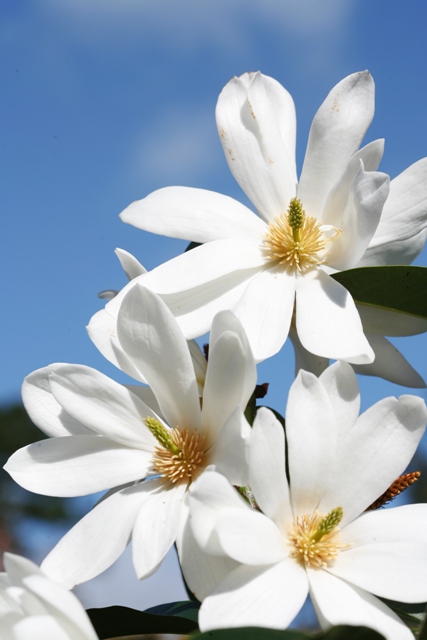
The sublime blooms on Fairy Magnolia® White

The sublime blooms on Fairy Magnolia® White


It is not often that we have three major new releases coming out in one year. And, to be honest, it takes so many years of trialling and then building up that by the time they are released, they no longer feel “new” to us. But there is a surge of pride with these three hybrids of Mark’s breeding.
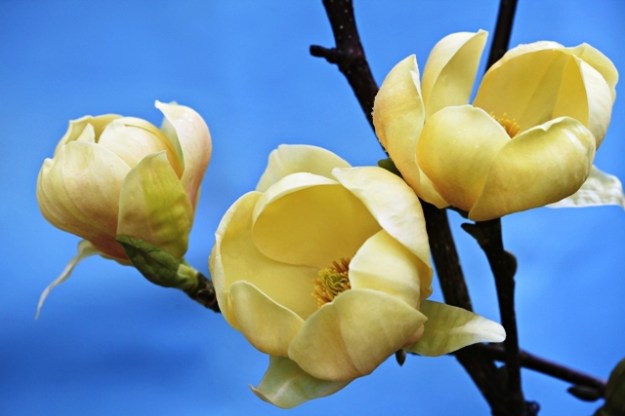
Magnolia Honey Tulip, our new yellow version of Black Tulip

Magnolia Honey Tulip, our new yellow version of Black Tulip


Mark is very particular about deciduous magnolias and had only named three – all in red tones. The fourth, to be released this year, is his first in the yellows. Honey Tulip™ is a golden honey version of Black Tulip. Given the somewhat floppy nature of most yellow magnolias with their soft petals and tendency to become paler as the flowering season progresses, we think Honey Tulip represents an advance in flower form, petal substance and retention of its colour intensity through the season. In New Zealand, where most yellow magnolias flower at the same time as they come into leaf, it is to Honey Tulip’s credit that it flowers on bare wood. Trials suggest that it will remain a smaller growing tree.

Fairy Magnolia® is the branding attached to our new range of michelias. These have been reclassified as magnolias but we wanted to differentiate these new michelias from the usual evergreen magnolias which are the leather-leafed grandiflora types. These are much lighter in growth and fill a different role in the garden and landscape. The first release was Fairy Magnolia® Blush.

Fairy Magnolia Cream - many flowers over a long season

Fairy Magnolia Cream – many flowers over a long season


Fairy Magnolia® Cream is a free flowering, strongly fragrant pure cream, opening in early spring. While of similar breeding and performance to Blush, its foliage is a brighter green and its peak flowering season extends into months. Each bloom measures at least 10cm across. Cream will take clipping well to keep it hedged, compact or topiaried or it can be left to form a bushy ,large shrub around 4 metres tall by 2.5 metres wide.

Fairy Magnolia® White (pictured at the top) comes down a different breeding chain and is a selection from a run of seedlings we have been referring to as the Snow Flurry series. The fragrant, purest white flowers are sublime, opening from brown velvet buds. It flowers earlier than Blush and Cream, starting in winter, so it is not likely to be as hardy as those two. However, we think it will prove to be hardier than existing doltsopa selections, making a garden friendly, improved substitute for “Silver Clouds”. The foliage is smaller and the plant shows no signs of defoliating after flowering (a major drawback to many doltsopas). It is much bushier in growth and will ultimately reach around 5m by 4m if not trimmed.

All plants will be available in New Zealand in limited quantities and some will be available overseas. These plants are produced under licence (in other words we only have small numbers to sell to personal customers later in the year when we open for plant sales) so ask your local garden centre. Overseas readers may like to check out Anthony Tesselaar Plants for availability.

Magnolia (deciduous) Honey Tulip

Magnolia (deciduous) Honey Tulip


Fairy Magnolia Cream

Fairy Magnolia Cream

Tikorangi Notes: Thursday August 12, 2011

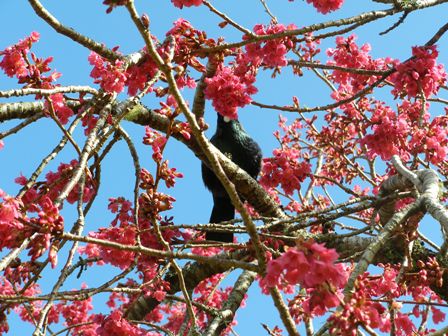
Signs of spring - the campanulata cherries are in flower

Signs of spring - the campanulata cherries are in flower

Technically it is still winter here but we are rocketing into full spring and the garden is looking very colourful. The campanulata cherries are opening and at times can appear to be dancing with the movement of the nectar feeding tui. They don’t sit still for long enough to count (and are very difficult to photograph because they move so quickly but we do seem to have them by the score (as opposed to just a few).

Beautiful but the flowers are too floppy

Beautiful but the flowers are too floppy

More magnolias are opening by the day as are spring bulbs and even the early rhododendrons. The early white michelias are flowering. We have rows of these and they look splendid and smell divine. But Mark is very picky. There is only room to name one, or maybe two at the most, and plants such as the one in the photograph are destined forever to be just part of our windbreak hedges. Its flowers are simply too floppy. The cultivars Mark selected for further trialling and the one that has been selected for release in the next year or two have much cleaner flowers which are displayed well. They are a big improvement with blooms which hold up and show excellent form.

The garden is open now but if you wait another week or so, there will be a better display of magnolias out. Mind you, the snowdrops will have finished by then but other spring bulbs are opening day by day. For us, this is a time of year we glory in. For details on plant sales this week (personal customers only, though we will hold orders for later collection if they are prepaid) click through to Tikorangi Diary.