Tag Archives: natural remedies

Toxic plants and natural remedies

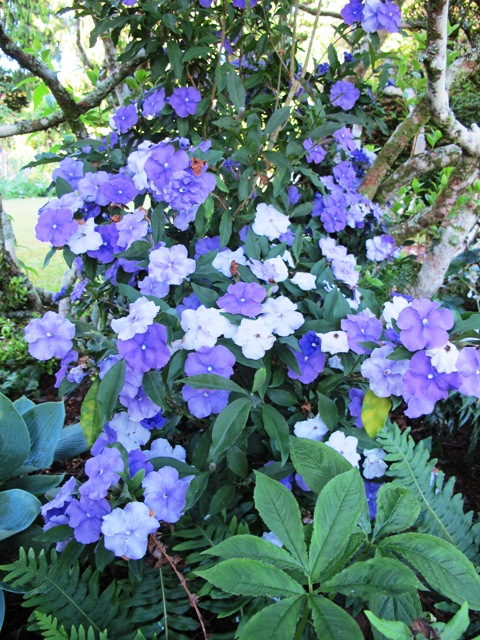
Brunfelsia, or the Yesterday Today Tomorrow plant, is highly toxic to dogs but fortunately few dogs eat flowers.

Brunfelsia, or the Yesterday Today Tomorrow plant, is highly toxic to dogs but fortunately few dogs eat flowers.

My mention of the toxicity of oleander in Plant Collector last week yielded the following comment via Twitter:
I remember seeing a photo as a kid of someone who had made a bonfire with oleander. Poor guy looked like he had been doused in acid. He inhaled some smoke and wound up in intensive care with lung damage.

Before you rush out to dispose of your oleander – if you have one – you may like to ponder that if you are determined to rid your garden of all poisonous and therefore dangerous plants, you will have to remove all daphnes, laburnum, alocasias, rhus, karaka, brunfelsia, aroids, colchicums, tulips and a whole lot more. You will end up removing half your garden. There is a certain folly to thinking that you can make your garden safe for small children and dogs by only growing non-toxic plants. Goodness, even oak and yew can be toxic to dogs.

The plant kingdom is still the prime source for most of our pharmaceutical compounds and our poisons. Aspirin was derived from willows, morphine from poppies. When a natural compound to treat cancer was isolated in Taxus baccata, British gardeners were urged to deliver their yew clippings to depots for a few years so researchers could isolate the relevant chemical compound.

Fortunately for the plant kingdom, scientists then set about re-creating the desired plant sequence in laboratories to avoid the problems of depleting natural resources.

I am sure it was Agatha Christie who alerted her readers to the fact that laburnum seeds are highly toxic and can in fact be used to poison off one’s enemy. But there are so many other sources of poisons. Cyanide is a natural compound, found in peach and apricot kernels, cassava, even apple pips along with many other sources. Ricin, one of the deadliest natural toxins, is derived from the seed of the castor plant (Ricinus communis) – as indeed is castor oil. The castor plant is highly decorative and still found in some gardens and public plantings. It was ricin that was used to murder Bulgarian dissident, Georgi Markov, in London back in 1978. He was poked with an umbrella spike in the street which transferred the poison capsule into the back of his thigh. It took three days for him to die.
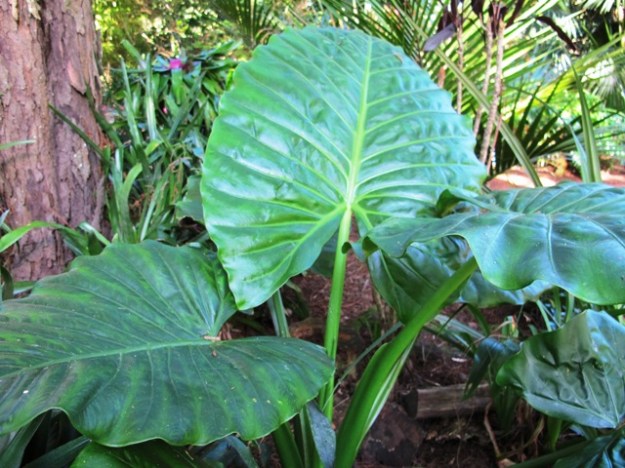
Most of the alocasias are toxic but this one particularly so. We are cautious handling it in the garden

Most of the alocasias are toxic but this one particularly so. We are cautious handling it in the garden

All this gives lie to the feel-good myth that “if it is natural, it must be good for us”. These can be powerful substances with unexpected side effects for the unwary. The potential for enthusiastic amateurs to get it wrong is just as great today as earlier.

The world has been grappling with the thin line between safety and danger in plants for over two millennia. It was the Ancient Greek Theophrastus, back before Christ was born, who is credited with first starting to try and sort out the plant kingdom into some comprehensible form, a task that was not completed until Carl Linnaeus in the 1700s. When humankind depended entirely on wild-gathered plant material for medicine, the potential for matters to go badly wrong was enormous. The majority of the populace has some difficulty in recognising different plants, even more so if they look similar. It is highly likely that there were a fair number of people out there a-diggin’ (for roots or bulbs), a-cuttin’ (for foliage or flowers) and a-gatherin’ (seeds) who subscribed to the “near enough is good enough” school of thought, especially when collecting for payment.

The pharmaceutical industry comes in for a huge amount of bad press but at least it has standardised product removed from the vagaries of human error. My elder daughter is a synthetic organic chemist who spent her later university years working on replicating a compound of great potential that had been identified in a plant native to Thailand. I was discussing herbal remedies with her recently and her comment was that, certainly when it came to ingesting a remedy, she’d rather buy it ready-made because then there is more certainty about the accuracy of the source plants and the dosage. For of course the time of the year when plant material is gathered can have a dramatic effect on the concentrations of a desired compound, let alone growing conditions. There will be much greater margin of error when it comes to home-prepared topical applications – in other words applied directly to the skin. But I would be very cautious and want certainty when it comes to swallowing or inhaling.

We are raised in this country to fear most mushrooms and toadstools. The dangers of misidentification can be fatal when it comes to eating them. That caution is not always extended to the plant world. Natural is not a synonym for safe and healthy. If you want wild gathered food skewers, use sticks of a rosemary bush not daphne or, as mentioned last week, oleander.

First published in the Waikato Times and reprinted here with their permission.

"It is natural and plant-based so it must be safer and healthier, mustn't it?"

The call went out to UK gardeners for yew clippings. Yew snowman from Helmingham Hall

The call went out to UK gardeners for yew clippings. Yew snowman from Helmingham Hall

I keep waging war on what I see as very sloppy thinking and pseudo science. The sort of thinking that says natural = good, chemical = bad, synthetic = even worse, modern medicine = corrupt multi national pharmaceutical hijack, herbalism and natural medicines = healthy alternatives. Often there’s a sort of Luddite sentimentality, a belief that the wise women and healers of long ago knew better.

Ahem. Life expectancy was much shorter, by decades in fact. And for every natural plant-based cure that worked, there were probably many more that didn’t. Poisonings went unrecorded, as did misidentification of plants. Medical misadventure was not exactly a matter of record.

The binomial plant naming system devised by Linnaeus in the mid 1700s has stood the test of time, though it is now under siege from the dumb-it-down brigade of Make Gardening Easy persuasion. Linnaeus’s plant classification system was incredibly important when it came to medicine. Until that time, there was no standard identification, naming and recording system for plants. Doctors and healers were often at the mercy of those who went out collecting the wild plants, many of whom would have had little idea of what they were harvesting. The same plant could be given many different names and vice versa – the same name could be applied to many different plants. It still happens.

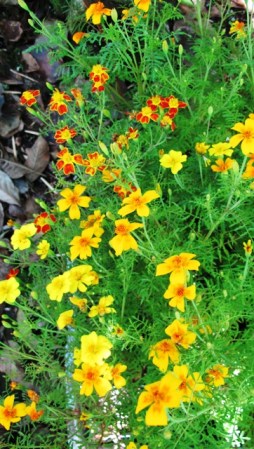
Marigolds. But which one?

Marigolds. But which one?

Take marigolds. Yes do take them. They are not my favourite plant at all. But how many readers understand the difference between calendulas and tagetes? They are entirely different plant families and we commonly refer to both as marigolds. Both are used quite extensively for their natural compounds but they are not interchangeable. If anybody is going to treat me either internally or externally with marigold extracts, I would like to think they know the difference between, for example, Calendula officinalis and Tagetes minuta, let along the various other plants entirely which are often referred to as marsh marigolds, corn marigolds or marigolds of various other persuasions. I prefer my medicine a little more exact and for that, I thank Linnaeus.

A large proportion of modern pharmaceuticals continue to be derived from plants. Aspirin originated from willow. Much work has been done on the cancer fighting properties of yew. Valerian has long been recognised for its special properties – but false valerian is a different plant family altogether.

The yew is an interesting case study for those who think synthetic copies are all bad. In the early days of cancer research into the curative properties of taxus, British gardeners were encouraged to gather all their trimmings when they clipped their yew hedges and topiary and to deliver them to collection points. If you had sufficient volume of high quality trimmings, you could even get paid for it. They responded with enthusiasm but it took an awful lot of yew trimmings to yield a very small amount of the relevant compounds used in chemotherapy. Even more problematic was the one which derived from the bark of the Pacific yew (Taxus brevifolia). You cannot continually harvest tree bark in large quantities. Clearly it would never be viable unless the researchers were able to reproduce the compounds efficiently in a laboratory. It is called synthetic organic chemistry because it is about reproducing a natural compound by synthesis. I know a small amount about this on account of having a daughter study it to a very advanced level (by which I mean post doctoral fellowship, working as part of a team isolating the active ingredients from a Thai plant with huge potential). It is not all bad. In some cases it may save the natural environment, not having to harvest huge volumes of natural products. It can even out seasonal and geographic variations in the strength of active compounds in plants. It can certainly deal to the problems of misidentification.

Most of our poisons are also plant-based. Many people know about laburnum seeds. Fewer realise the toxicity of daphne seeds. Cyanide has its origin as a plant product. So indeed does strychnine. Euphorbias exude a sticky sap which is renowned as a skin irritant. Rhus trees are problematic – so much so that after one bad encounter with some sawdust while chainsawing a fallen branch, Mark refuses to approach our rhus tree without donning protective gear similar to a beekeeper. Derris dust is seen as natural and organic – and it is because it comes from roots of certain plants but that doesn’t make it safe. Rotenone (which is sold as Derris dust) is linked to Parkinson’s Disease and is very toxic indeed.

It is a dangerous natural world out there. It’s a miracle we gardeners survive really. Which is why I am deeply suspicious of ill-informed enthusiasts rushing out to promote the use of plant remedies on the grounds that they are natural and therefore safer. A little bit of knowledge is a dangerous thing. Until herbalists and natural healers are as strong on botany and chemistry as they are on traditional “wisdom”, I will err on the side of caution.

First published in the Waikato Times and reproduced here with their permission.