
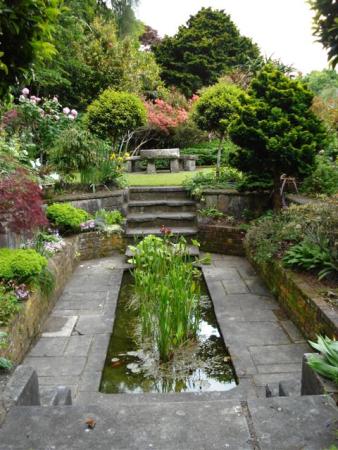
The D.I.Y. Lutyens-style sunken garden
We have been talking about the New Zealand garden. This conversation has been given new impetus by the lack of any analysis of the nature of the New Zealand garden in the lavish new book on the topic by Kristin Lammerting, which is essentially a parade of gardens that she liked, including her own, (or maybe gardens that had been recommended to her) written up in glowing terms with fabulous photographs but zilch insight into the context. We will probably continue discussing this until we die, it being a topic of never-ending interest because it is a reflection of who we are in this long, thin country of the southerly latitudes. In the main, we are a nation of gardeners. Most residential properties and indeed commercial businesses make some attempt, however meagre, to beautify their frontages. Some do better than others but there is a shared value in beautifying our immediate environment.
So I offer up the following thoughts on defining our place in the world of international gardening, with the rider that this is by no means a definitive list.
· Size. We do big gardens here. Even our small, urban gardens are actually quite large by international standards. Our traditional quarter acre section is huge as an allocation of space for an individual family. Our major private gardens are usually several acres. Space is not a luxury confined to the wealthy in this country. It is perfectly realistic for the average home gardener to own a substantial patch of dirt.
· Despite our inclination towards large gardens, we usually do all our own gardening. Hired help is not common. Skilled and qualified hired help is positively rare. Overseas visitors are frequently astounded at how much New Zealanders routinely achieve in large gardens without assistance.
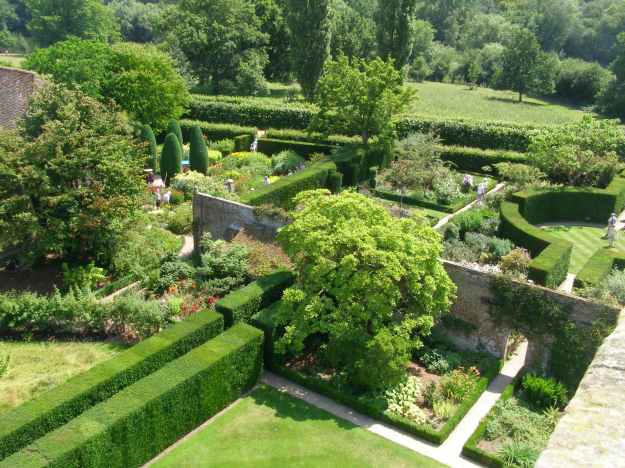
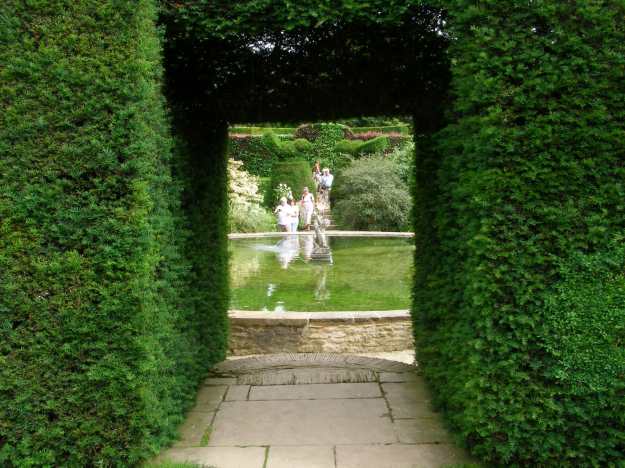
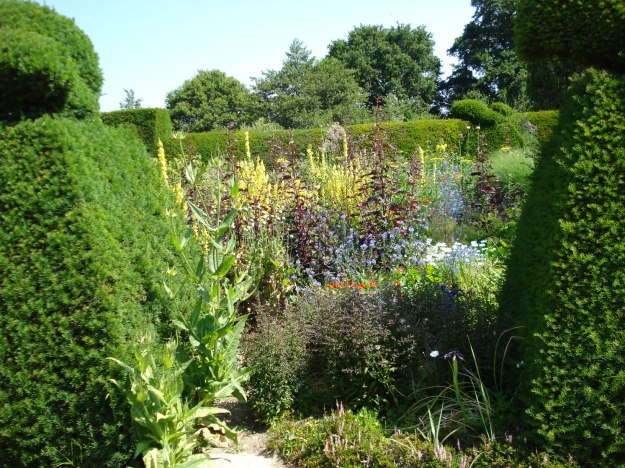
· It must be something in our egalitarian heritage which has many New Zealanders taking the ideas of the large, historic gardens – especially in Britain though sometimes from wider Europe – and attempting to re-create something similar here. We seem to be oblivious to the fact that the vast majority of the great gardens of Europe and Britain were established and maintained by the wealthy and the powerful who could afford to pay gardeners to actually do the work. So we go for high maintenance gardening styles (clipped hedges, a touch of topiary, sweeping lawns, mixed borders, buxus enclosures around statuary) – all the trappings of the gentry and the nobility which our forbears were so keen to leave behind.
· Grand designs, maybe, but on a very low budget so the D.I.Y. ethos rules supreme. In many circles, getting somebody else to design your garden for you or others to maintain it is somewhat frowned upon – a sign that you are not a true gardener. If you have wealth, you shouldn’t be flaunting it. Because very few of our gardens have a lot of money behind them, we tend to be very light on permanent structures and surfaces. It is a bit like our attitude to housing. We would not expect our wooden bungalows to be around in 300 years and the same goes for our gardens. So we don’t use a lot of stone or brickwork, leaning more to the rather short term pongas, timber (sometimes tanalised) and the utility concrete block or paver. We tend to favour grass over cobbled surfaces, keeping sealed areas for driveways and a path immediately around the house.
· What we lack in hard landscaping, we make up for in plants. Plants are cheap in this country, ridiculously cheap by international standards. Our equable climate means they grow quickly and gardening is pretty easy. We love a wide range of them, especially something new or different. We love them even more if we can multiply them ourselves and get some for nothing. So we use plants for structure, as well as soft furnishings – plants are often used instead of walls, fences and edgings. This passion for plants is quite possibly part of the British settler heritage. Most of the world’s great plant hunters (including Joseph Banks) hailed from there and even today, a curiosity for plants and a desire to stretch the boundaries of what one can grow is a characteristic of gardeners in that country. It is just easier here – we have better soils, a more obliging climate and cheaper plants.
· We did not, however, inherit a love for big trees. No danger of us taking up the champion trees scheme (where the largest specimens are identified, measured, monitored and even revered). We are more likely to chainsaw them down. Maybe it is a gut response to the somewhat intimidating nature of our native forests. I think it more likely that our houses are often cold in winter and our climate is not quite as hot as we would like so we just don’t want shade. Landscape views are common but highly prized, certainly above trees. We garden more with shrubs than trees.
· The frequent lack of a strong design element defined by permanent structure, a heavy dependence on plants for form and a dislike of big trees, all allied to a mobile population who move house frequently, means that our gardens tend to be quite ephemeral. They grow quickly. It only takes 10 years to create a very pretty tree and shrub garden here. Many gardeners regard trees of 15 to 20 years of age as mature. Never go back is the mantra of gardeners who have moved house. Odds on, the new owners will have ripped out your garden and replaced it. We don’t expect our gardens to survive past us, and very few do.
· Native plants. All our native plants in this country are evergreen and some are strongly sculptural (the cabbage tree, pohutukawa, nikau, tree ferns, even the pachystegia and tussocks). We have a huge array of indigenous flora which we generally take for granted but the integration of many of these plants into the ornamental garden is another defining feature.
· In our easy climate, most of the country gardens all year round. We don’t put our gardens to bed for winter while we retire indoors. We have flowers and foliage all the time so we don’t need to depend on hard landscaping to give winter form.
· Our reverence for immaculate lawns and the priority placed on kerb appeal are values taken more from American suburbia than Europe.
We are still magpies here – we borrow ideas from here and from there and try them out. Our settler history is still very recent. When we moved in to Mark’s parents’ house, we found the books which they used to give them ideas when planning the garden that we now own and the end result was a typically large country garden strongly modelled on the English landscape traditions, right down to the D.I.Y. Lutyens-style sunken garden pond. In the sixty years since, the form remains English but the range of plants and the way we use them are very different. It is likely that the sheer lushness of plant growth in this country will continue to define our gardening style far more than any slavish copying or reinterpretation of overseas genres.
 Tikorangi The Jury Garden