One of the privileges of taking over a family garden is being able to trace it down the decades and watching how the garden grows and changes over time. In sorting out Mark’s parents’ slide images, I found snapshots in time that I had not seen before.
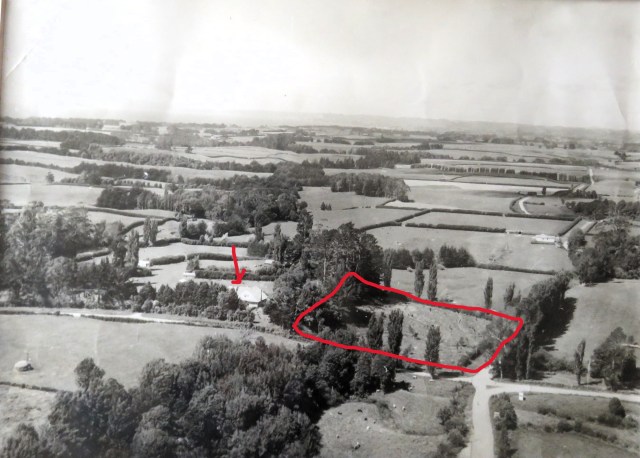
We can date this aerial black and white photo of the property to the early to mid 1950s. The house (marked with the red arrow) was built around 1950 to 1951 and key areas of the garden had yet to be laid out. The red rectangle is the area we refer to as ‘the park’ – then a sheep paddock of about 4 acres or 1.6 hectares on a south facing slope. Here, in the antipodes, south facing means it is on the cold side. Mark once studied the original, large format photo with a magnifying glass and declared that he could spot patches where his father had sprayed out the grass in preparation for planting.
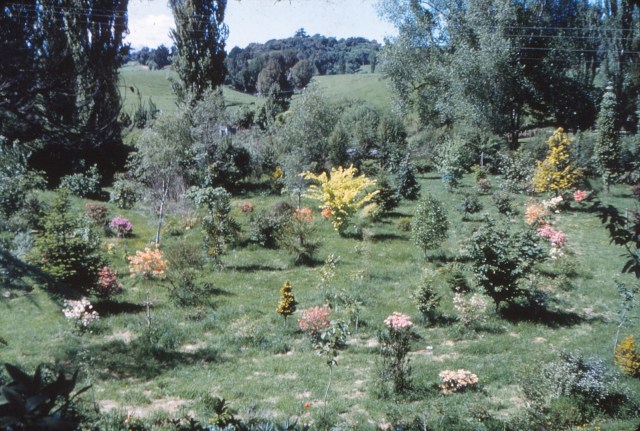
This image is undated but is one of the earliest we have after planting started. That is a lot of top quality trees and shrubs going in. I can’t remember who told me that the planting was guided by the principles of the Rhododendron Association at the time; it may even have been Felix. The plants were not grouped but individually placed so that each one could be viewed in solitary splendour from any angle. Plants grow quickly in our mild, warm temperate climate with volcanic soils, regular rainfall and high sunshine hours.
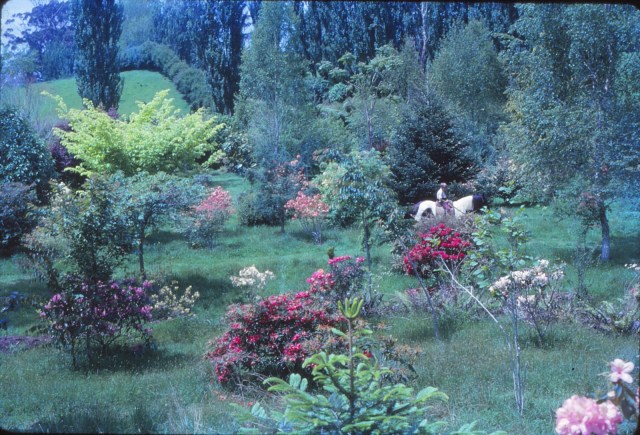
This slide was dated 1962. That is Mark’s older brother on the horse but he was only riding through. Rhododendrons in particular are toxic to stock and so are other ornamental trees like yews. Felix maintained the area by grazing a very small group of sheep in amongst the trees and shrubs. He kept to the same sheep because they learned quickly which plants made them ill and they avoided them from then on.
The park really didn’t change a great deal over the next 30 years, until a somewhat younger Mark unleashed himself in 1995. There was always a problem with flooding in the low-lying areas and rhododendrons hate having wet feet. The evergreen azaleas are more tolerant but it was an ongoing issue. Mark’s tidy grandfather, Felix’s father, Bertrum Jury had straightened the stream to run at right angles on the property to maximise grazing areas. That was around 1900. Every time it rained heavily, the park flooded and there were no natural drainage channels left.
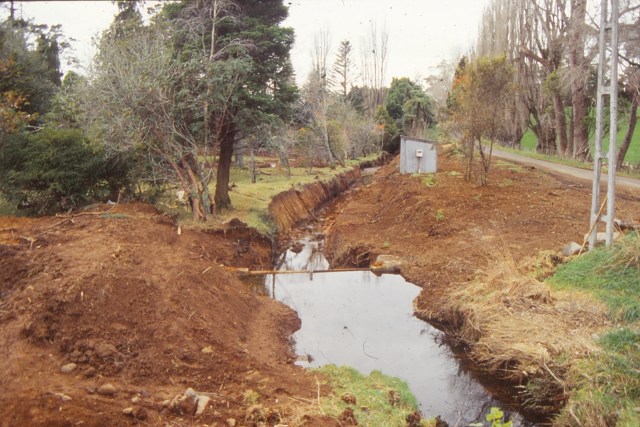
Mark’s efforts were major. That is our bottom road boundary. Grandfather Bertrum’s stream channel was deepened and turned into a flood channel controlled by a simple weir. Before anybody asks, yes he was Bertrum Jury, not Bertram or Bertrand. Flexible spelling is not recent.
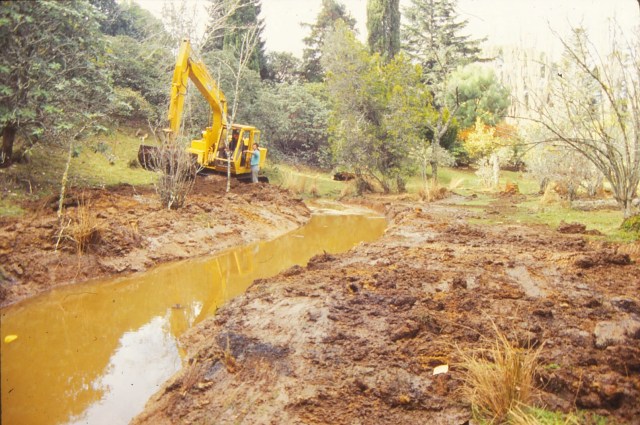
The largest flow of water was directed back through the park, opening up the original stream bed. Mark had calculated its likely route and felt vindicated when the digger excavated tree trunks and debris that had been used to fill the old stream bed when it had been closed off.
The resulting clean-up was huge. The amount of silt and clay stacked up by the channel needed to be moved because it would set like concrete and smother the roots of trees that were already deemed precious. It was winter, probably before the days of bob-cat machines and all that gluggy mess had to removed by hand because it was too wet and the spaces too tight to get machinery in. I remember Mark coming in for months on end – dog-tired and covered in mud. He hauled barrow loads to upper slopes to build tracks – one person pushing the barrow and another on a rope pulling because they were too heavy for one person. It was a pretty grim winter activity and only dogged determination got Mark through. To this day, he swears it stuffed his back.
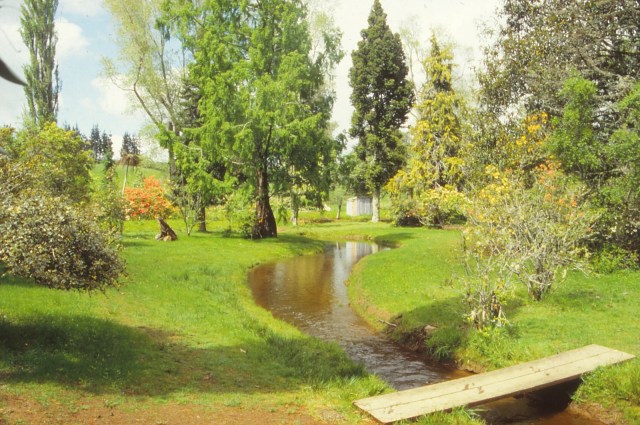
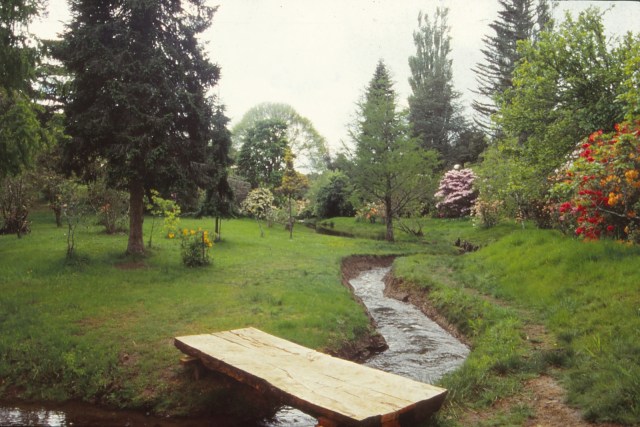
But look! Within just one season, by late spring the scars of the earthworks were already healing and we had flowing water where before there was soggy bog. These are still 1995.
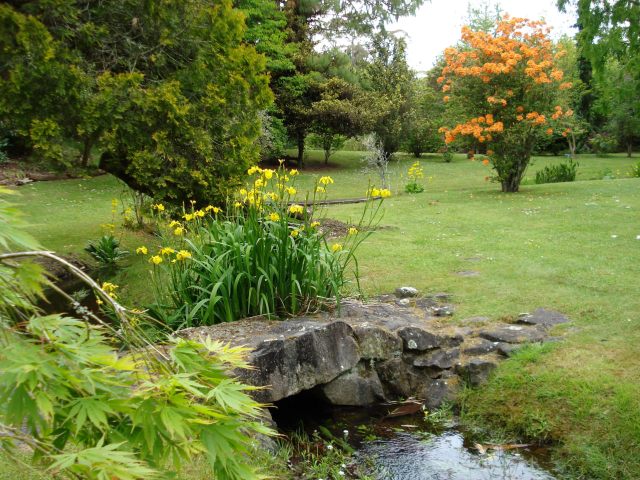
Around this time, we bought our first fancy-pants lawnmower that cost more than our car did but was capable of mowing the varied terrain in the park and maintaining stability while manoeuvring around innumerable plants. Between that and the new weedeater or strimmer, we entered the era when we maintained the area to a standard that would have satisfied even public parks and gardens. Very, very tidy, we were, with neatly mown grass.
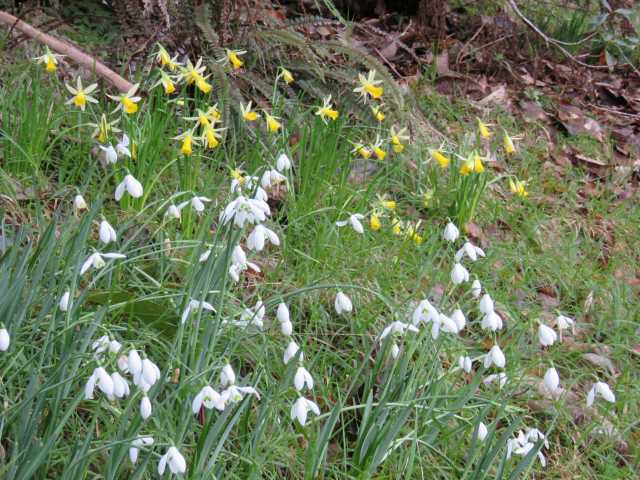
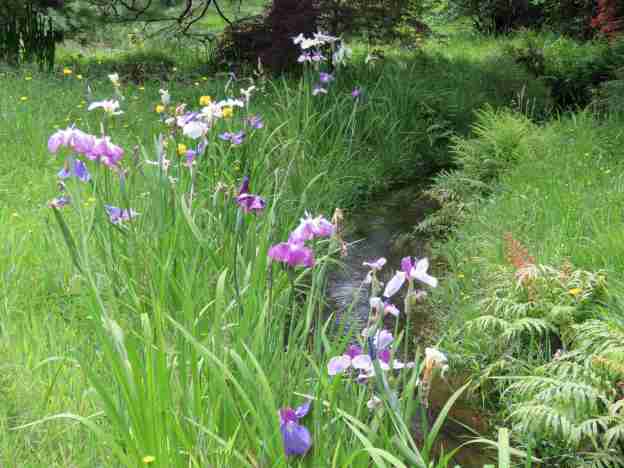
Mark then set about turning what had been plants standing in solitary splendour in a glorified paddock into more of a cohesive garden. He also started planting – bulbs and even perennial beds on a shady slope. The bulbs have worked well, especially the narcissi and galanthus. Mark went to some trouble to establish our native microlaena grass in some areas, as a replacement for paddock grass. Its finer foliage and gentler growth is much more compatible with dainty bulbs. 25 years on, we now have swathes of spring bulbs, rather than a few patches.
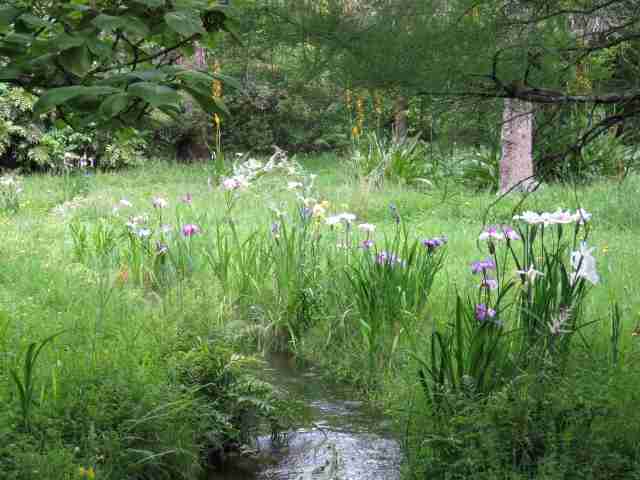
Around 2010, we started thinking there had to be a better way of managing the park. Keeping it mown and neat was not only labour intensive but we were increasingly concerned by our heavy dependence on petrol-powered motors. Enter the meadow era. We looked closely at meadows, particularly in the UK, and worked out that our situation was very different and we would have to manage it in different ways. Quite a lot of thought and discussion took place before we took the plunge.
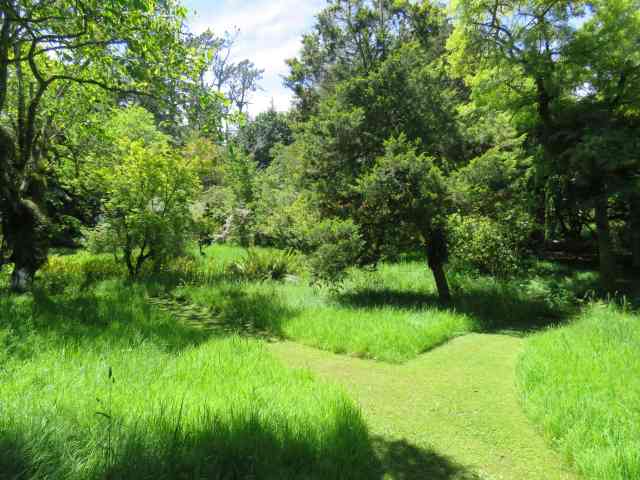
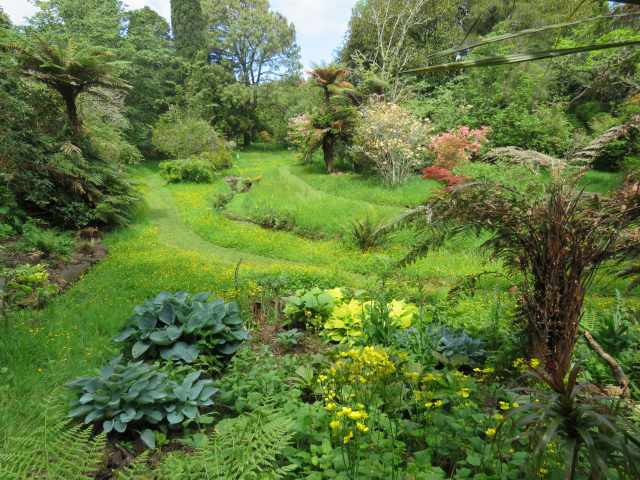
We have not regretted it. The mown park may have looked impressive but the meadow is full of soft-edged charm that delights us all the time. I have written before about how we manage it. We mow walking paths through and twice a year we cut the entire area of grass to the ground – in mid summer and again in mid winter. We don’t remove the grass because that would be too big a job. Nor do we have yellow rattle in this country to weaken the growth. We have grass growth all year round; it is why this is good dairy farming country. We had to adjust to a meadow with rampant grass growth. We work to keep out noxious weeds like thistles, tradescantia that washes down the stream from above and onion weed but we have learned to tolerate our buttercups and even the docks. They are part of what makes a meadow in our conditions.
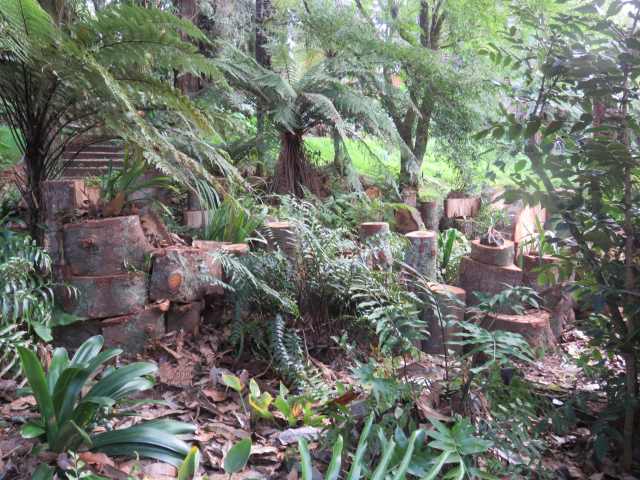
The park continues to develop. The latest two areas are our gardener Zach’s efforts. The upper photo – an area we refer to as The Barricades – was a creative means to deal with waste wood after Cyclone Dovi. Rather than burning it on site, it has been carefully arranged by Zach to create an environment for more planting – mostly orchids and ferns. It will gently moulder away and return to the earth, as indeed we hope to ourselves.
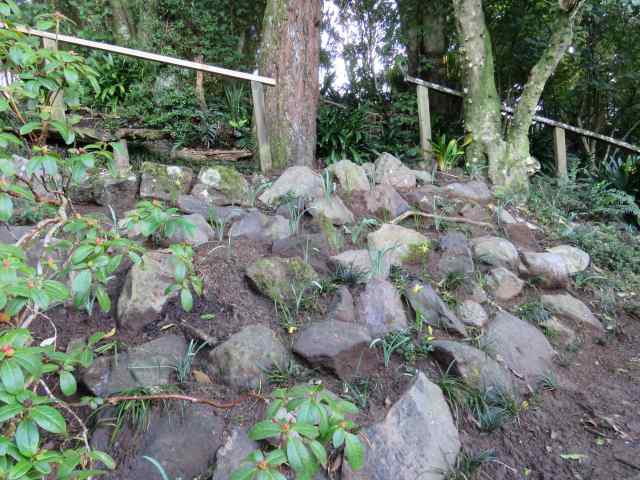
The Accidental Rockery, as Zach calls it, was his solution to retaining a bank that needed some attention by one of the paths down the hill. It wasn’t planned as a new planting area but that was a bonus to moving in rocks to retain the soil. It has filled out a lot since I took this photo soon after it emerged from his efforts.
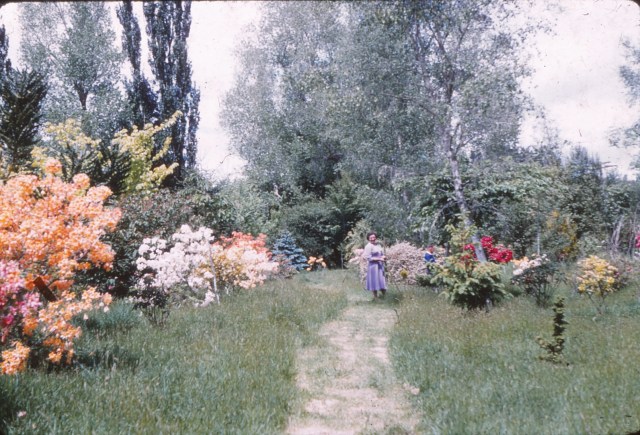
Back to earlier days, I think this image is mid 1960s and that is Mark’s mother, Mimosa, standing by the azaleas. I looked at this photo and thought, maybe we have just gone full cycle. Is that soft-edged scene with a mown path so very different to where we have ended up now, 65 years on?
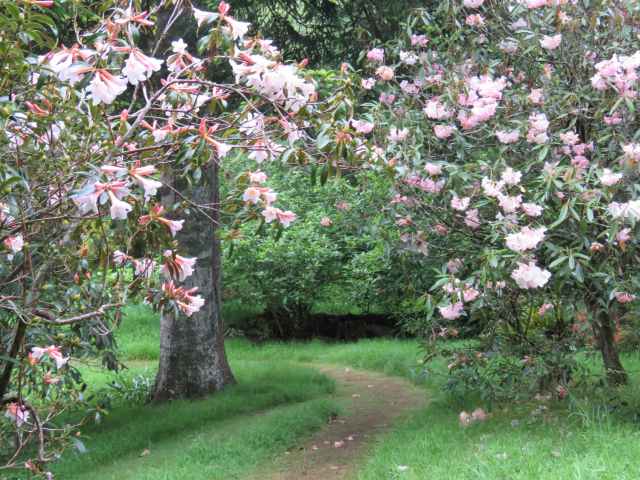
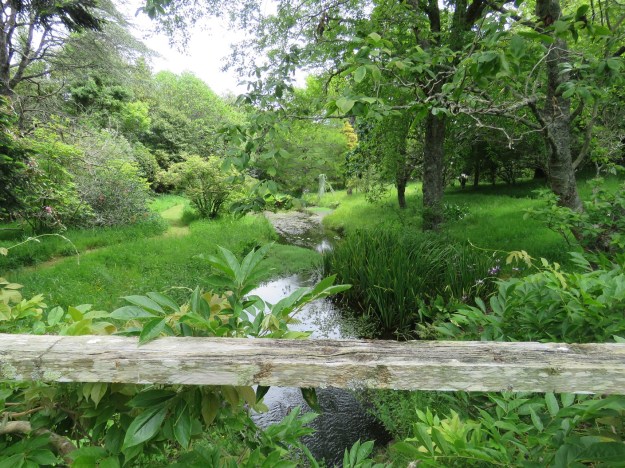


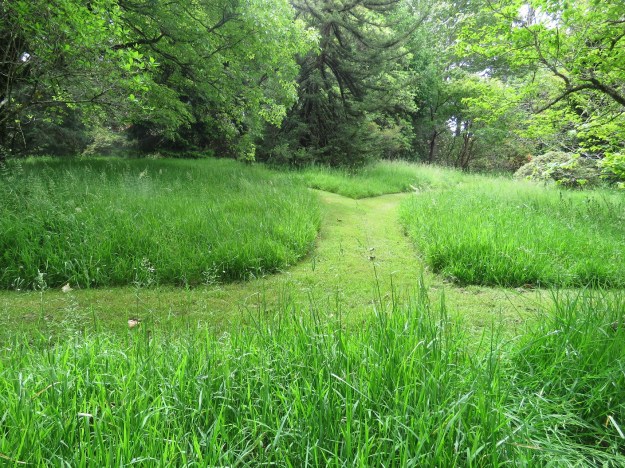 Now we have long grass with mown paths through it. After three years, there is increasing diversity in the plants moving in. Many are commonly seen as weeds and the whole debate about weeds needs more attention another time. Not just buttercups, daisies and dandelions, though we have those in abundance. We also have Herb Robert moving in (Geranium robertianum), clover pink and clover white, foxgloves, self-heal (Prunella vulgaris), Mark’s stinking billy-goat weed (a stachys), montbretia and more. I am not keen on the docks or thistles, so I try and dig those out. Mark is particularly pleased that we had a lot more brown top in the existing grass mix than he had thought because it has beautiful silky seedheads that wave in the lightest of breezes.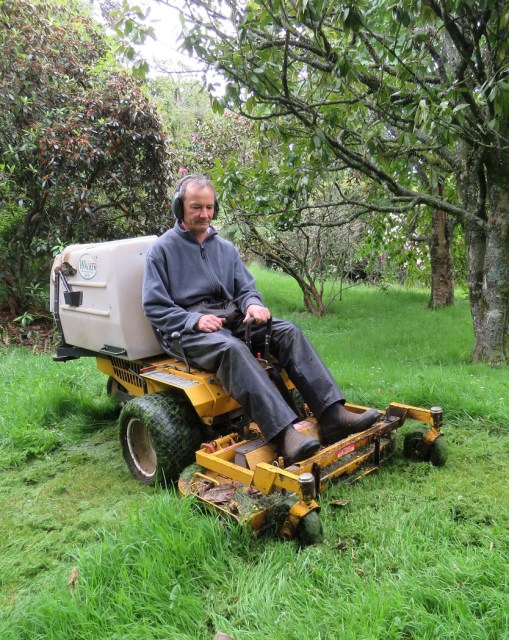


 Tikorangi The Jury Garden