
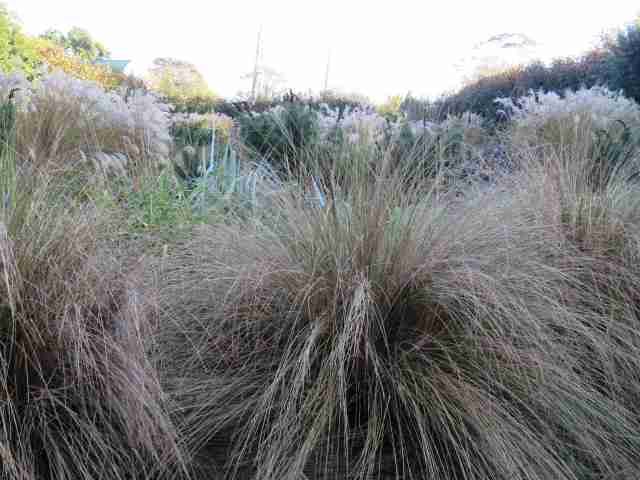
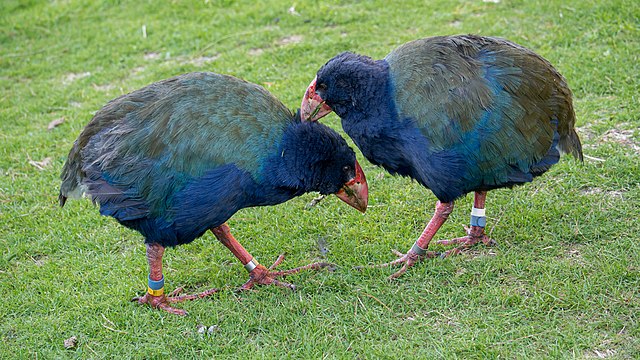
I have spent the last week on my knees. Not praying, you understand, but grooming the large grasses in the Court Garden. “What you need,” said Mark, helpfully, “is a takahē.” He had read or heard somewhere that in the wild, takahē get right into the crown of grasses and clean the debris and dead patches out. That would be a fine thing. Besides, takahē would look very handsome browsing amongst the chionochloa although we might have muzzle Ralph.
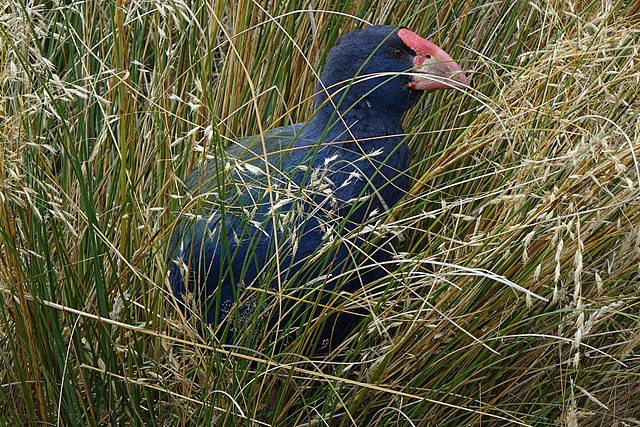
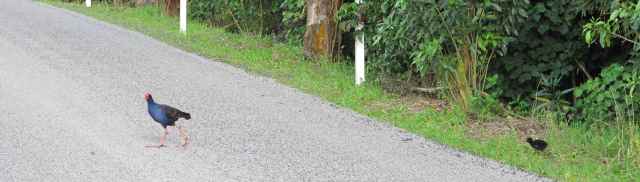
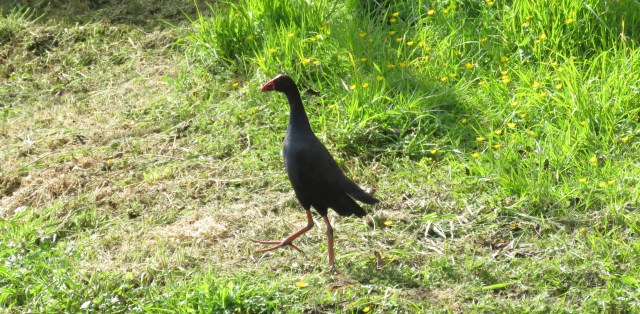
The takahē is a large, flightless bird belonging in the group unromantically named swamp hens or rail. The North Island takahē was likely extinct by the time European settlers arrived although the South Island takahē is something of a miracle story. It, too, was thought to be extinct by the end of the nineteenth century until its rediscovery in a remote Fiordland valley in 1948. Latest figures show there are 440 live takahe, every one known individually, as a result of human intervention to save this handsome bird from extinction. There are now enough for breeding pairs to be cautiously relocated to safe sanctuaries which are free from predators. Their status has been changed from Nationally Critical to Nationally Vulnerable so they are a shining success story of saving a species in a country where we have managed to lose too many due to human settlement.
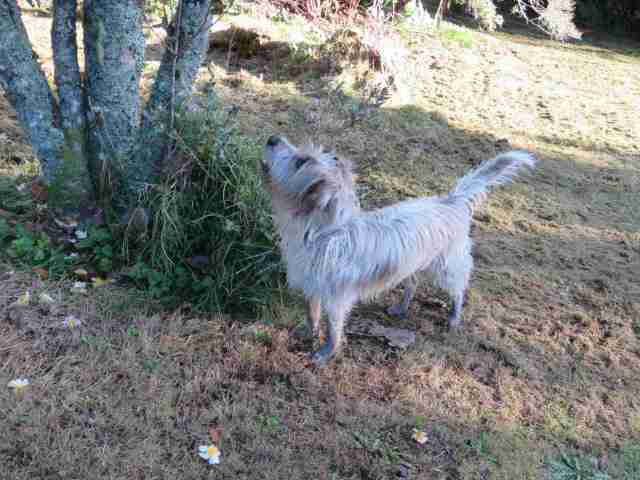
I fear Ralph would deal to any that crossed his path. Given that his biggest regret in life is his failure to master the art of flying despite all his best efforts, I do not think he would be able to resist taking down a ground bird. Indeed, dogs are one of the biggest threats to takahē, along with contracted shooters who can’t tell the difference between a pukeko and a takahē.
In the absence of such handy helpers, it is I who is on my knees with my trusty tools. My theory is that the native grasses we have which have a reputation of not being long lived as garden plants have an issue with a build up of debris that rots down and keeps the centre of the plant so wet that it can rot out. This is of course because our native grasses are all evergreen so they don’t shed their spent foliage. The amount of debris I pulled out from the large toe toe (Austroderia fulvida) was prodigious and there was certainly evidence of growing tips rotting out beneath the debris so I am hoping that the plants will heave a sigh of relief and stay healthy.
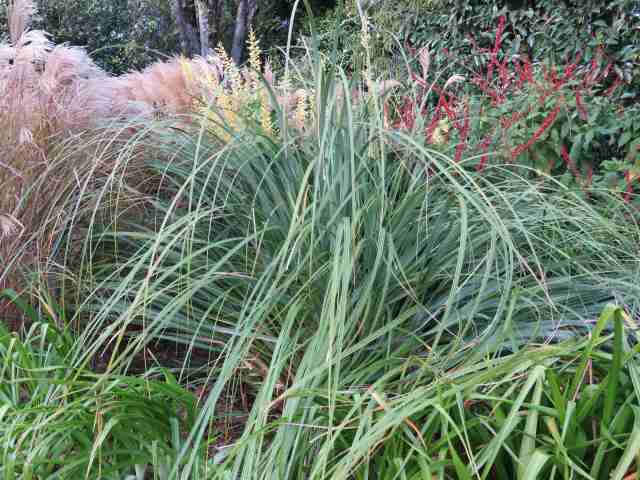
I wrote about cleaning up the grasses last year so in brief summary, it is:
- Deciduous plants like the miscanthus get cut to the ground when the feathery plumes all start to fall over and lose their charm.
- Semi-deciduous plants which just look scruffy and awful – particularly the calamagrostis – also get cut to the ground.
- Evergreen grasses – which are all our natives plus the non-native Stipa gigantea – are dead-headed and individually groomed to remove spent foliage. The exception is the smaller carexes, particular C. buchananii and C. comans. These just get left alone with excess seedlings thinned out. They are such enthusiastic seeders that if any of them kark it, there are plenty there to take over and fill the space.
- The advice to leave these plants until spring in order that birds may find winter feed belongs in the northern hemisphere where most of their birds are grain feeders and winters are so cold that birds can die of starvation. Our winters are mild enough that there is plenty of feed and almost all of our native birds are nectar or fruit feeders.
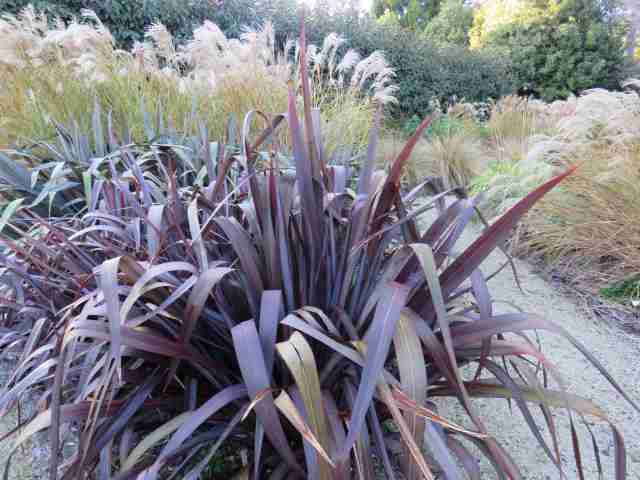
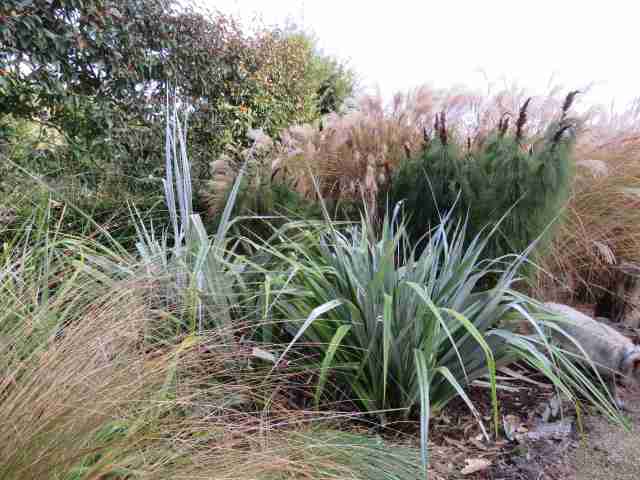
While I was down on my hands and knees, I also groomed the native flaxes and astelias growing in that garden, cutting off spent and damaged leaves at the base and they look a whole lot better for that. And I thinned the Elegia capensis, knocking off some of the new shoots that are appearing beyond their allotted space. No wonder it all felt quite a major clean-up this year.
Mark often refers to gardening as the act of tidying Nature. But after our discussions on the takahē, he noted that my recent efforts were ‘not so much tidying Nature in this case, as filling in an ecological gap left when humans squeezed out the birds that would have done this in the past’.
 Tikorangi The Jury Garden