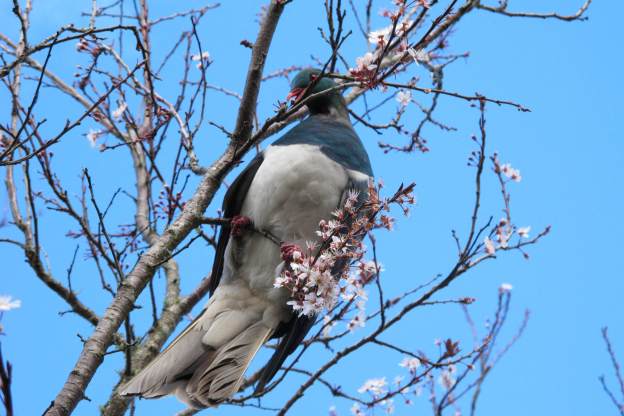
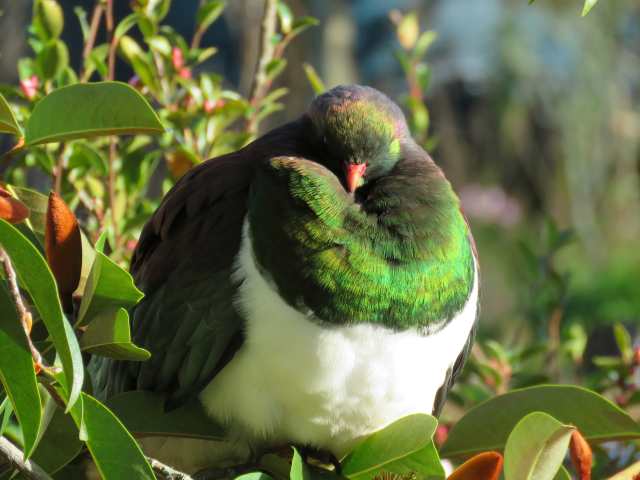
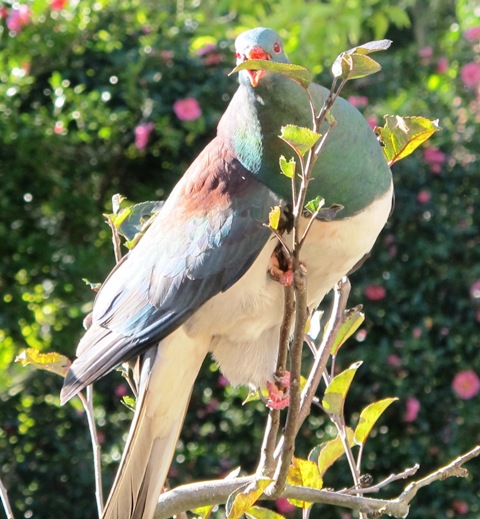
The kereru is our much-loved native wood pigeon. It was once a significant food source but is now fully protected and can not be hunted legally. Being a large, lumbering bird with small brain, I imagine it was easy to catch and an important source of protein in a country which lacked all mammals (bar two tiny bats that few have ever seen) in the days before colonisation brought both wild and farm animals.
They are a bird of beautiful plumage with a pigeon coo to be heard if you have them resident in your garden. But they are not at all beautiful or cute in the baby stage. Quail hatch out like the cutest little, feathered bumblebees, on the move very soon after hatching. Not the kereru.
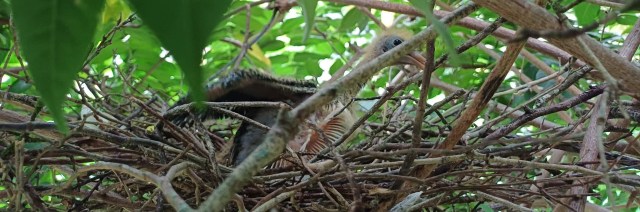
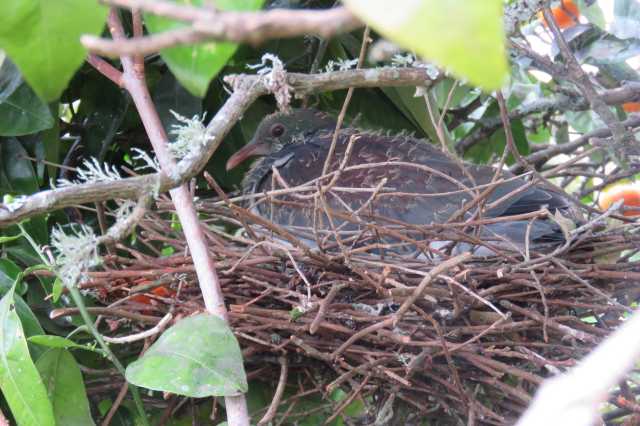
For starters, kereru parents should be ashamed of their nest-building skills. These consist of tossing a few twigs onto some sort of precarious branch and saying ‘that’ll do’. I have photographed exquisitely crafted nests by other native birds but not the kereru. They then lay a single egg and the ugliest baby hatches out and spends its first weeks perched precariously on its bunch of uncomfortable twigs.
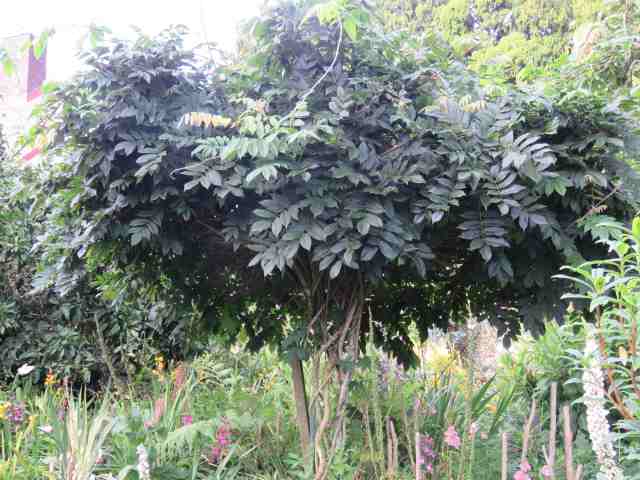
It was a kereru almost taking us out as it flapped its way to gain altitude that drew attention to its nest in the Wisteria ‘Snow Showers’, all of 150cm off the ground. It is not a particularly safe spot; we fear Ralph the dog could possible reach it at a pinch. Se we are skirting around it and trying not to disturb it.
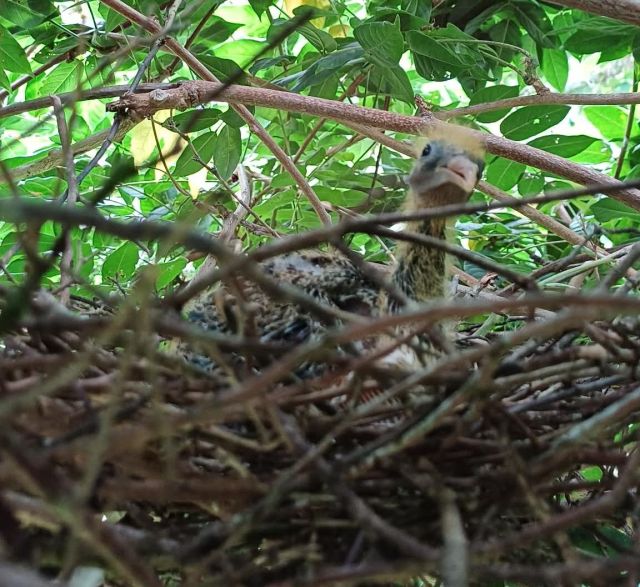
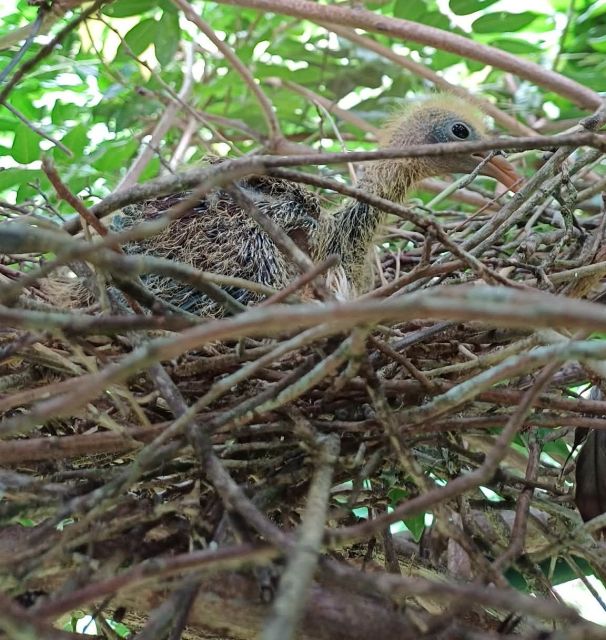
Zack spotted the scrawny little bebe about 10 days ago and came in saying, “Man that is an ugly, scrawny chick”. I couldn’t see it this week and feared it may have fallen out but no, it is still there. I photographed it yesterday morning. It is not much improved in the beauty stakes but I am sure its parents love it.
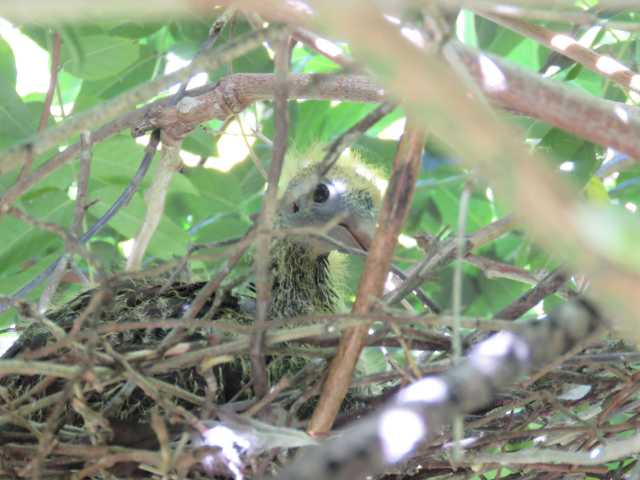
Below is a photo of one from earlier years. It has grown its feathers and is closer to fledging – a process that takes 5 to 6 weeks. There is only one chick per nest and it is a miracle any reach independence given the long process and the woeful quality of nest.
I have shown the photo below before. In front of our picture window, we have a bamboo grid suspended to stop bird strike. Our double glazed windows reflect trees and sky and too many birds thought they could fly through, killing themselves on the glass. Window decals did not work. A kereru died before our eyes just centimetres from the decals. I didn’t want net curtains in this room so Mark constructed the bamboo grid. It works. We have not had birds die from striking this window since we hung the grid.
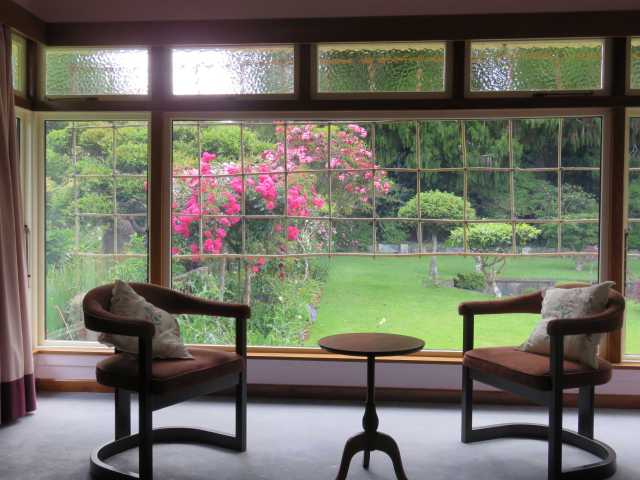
It felt like a tragedy every time we found a dead bird, especially as they were often young ones learning to fly. All that time and two parents to raise just one chick a year only for it to die soon after on our windows. For the same reason, we would never have a mirror in the garden and we deplore that modern architectural trend of putting all windowed pavilions set amongst forest trees. Somebody must pick up the bird kill but it is rarely mentioned.
Thanks to Zach for the three photos of our baby soon after hatching.
 Tikorangi The Jury Garden