Tag Archives: perennial gardening

More lessons learned. Plants to avoid

I am busy a-diggin’ and a-dividin’ perennials. While autumn is indubitably here, the soils are still warm and there should be several more weeks for the fresh divisions to settle in and start to establish before the winter chill of late June and early July. In colder climates this is more commonly recommended as a spring activity but with our distinctly wet spring season and late onset of winter, we prefer to do it in autumn.

I did not realise how much digging and dividing would be needed when we embarked on some large areas of perennials in open, sunny conditions. We have always had plenty growing in shady conditions but they are pretty self-maintaining and undemanding. Give them sun and it is a different story. Sun, mild winters, friable, volcanic soils and regular rainfall – in optimum conditions they R O M P away with gusto.

Much and all as I love Japanese anemones, they are not a good option for perennial beds because of their invasive ways

If I had my time again, there are perennials I would not unleash to start with. Some I have written about before but off the top of my head, I can not recommend planting the following:

Saponaria. Photo credit: Rosser 1954 Wiki Commons
  • Saponaria (soapworts). Pretty they may be in flower but those underground runners run both deep and far. Dangerously invasive. They are not generous enough on the flowering stakes, to justify their existence. And in the absence of a soap shortage, I do not feel the need to keep them to use the foliage as a soap substitute.
  • Jerusalem artichokes – foliage to flower ratio is way too high and they are altogether too enthusiastic at producing tubers.
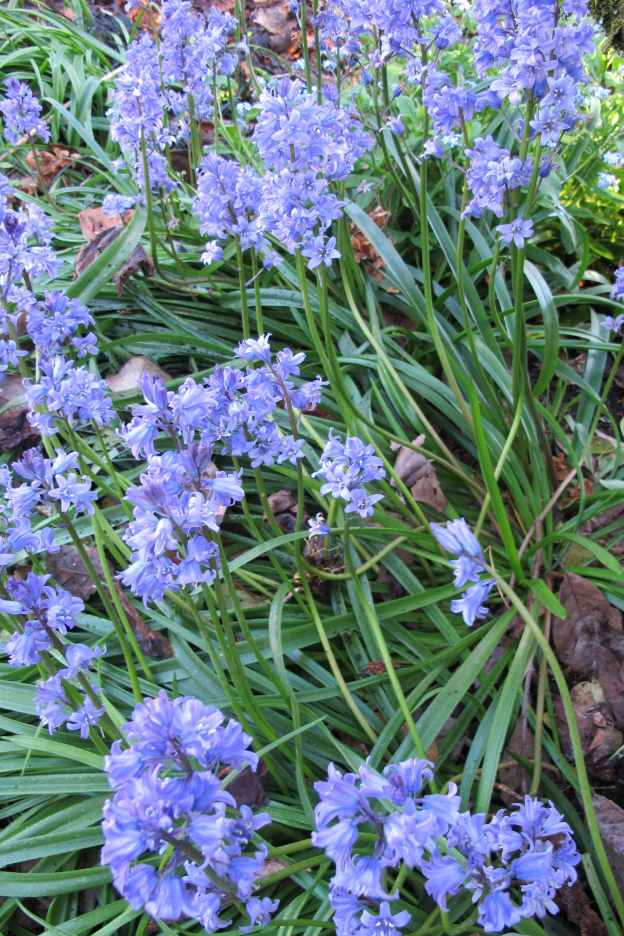
  • Bluebells in cultivated garden situations. I am digging out every one I come across, knowing there will be plenty I miss but still they are being measured by the bucket-load. They are difficult to dispose of, too. They grow rather than rotting down so I am having to send them to landfill.
Japanese anemones. The pretty flowers belie what is happening below the surface.
  • Japanese anemones. I love the flowers in early autumn but these are another invasive plant genus that either needs to be confined tightly in a garden situation or avoided from the start. Because they put out very long runners, they are difficult to get out when they creep – or sprint, actually – amongst other plants.
  • Mondo grass. Mondo grass. Mondo grass. Too much mondo grass here, there and almost everywhere. I am carefully picking out their seeds as I go, too.
  • Forget-me-nots, be they annuals or perennials. I love their sea of blue, coming in just after the bluebells and they are easy enough to pull out but I am pretty sure every single seed grows. And they are incompatible with Ralph the dog who is no great respecter of gardens and can spend months coming indoors with multitudes of sticky little forget-me-not seeds all through his fur.
  • I have now added violets to the banned list too, after spending yesterday digging out plants I am sure snuck in and weren’t planted. They may have a sentimental attachment, being Mark’s great grandmother’s violets but it doesn’t stop them being invasive. They are another plant that will entwine themselves amongst the roots of neighbouring plants so I have had to dig those out too, to extract the interloper.

There are other plants that need caution and constant management. Crocosmias and ixias are in that group. I removed yellow crocosmia bulbs by the bucket load in late summer but I am aiming for containment on those because I like them in bloom, just not everywhere.
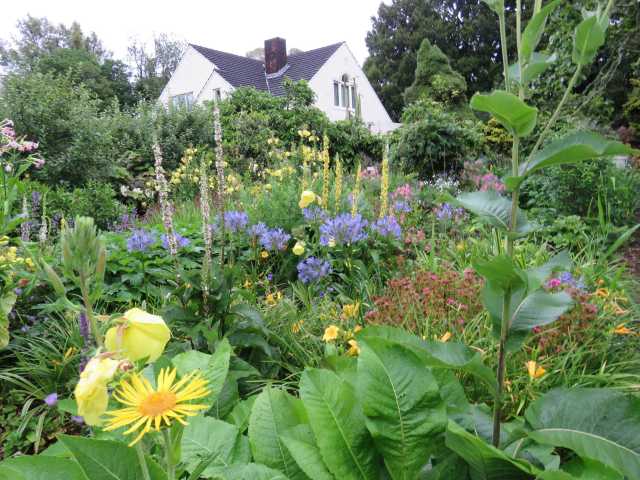
The Iolanthe garden on January 2, 2021
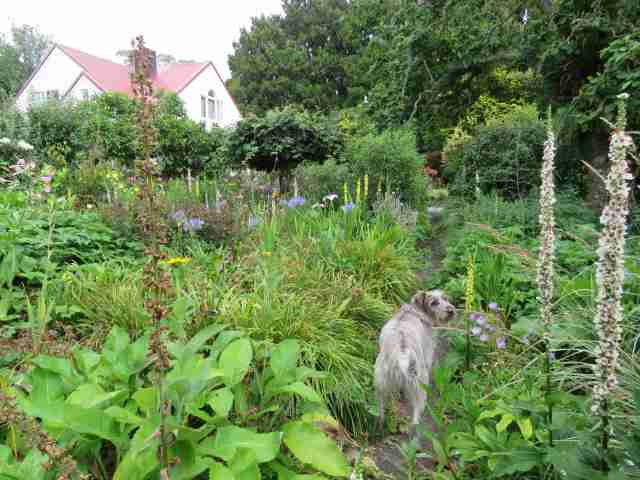
Where have all the flowers gone? The same block on December 30, four years later. Time for some attention.

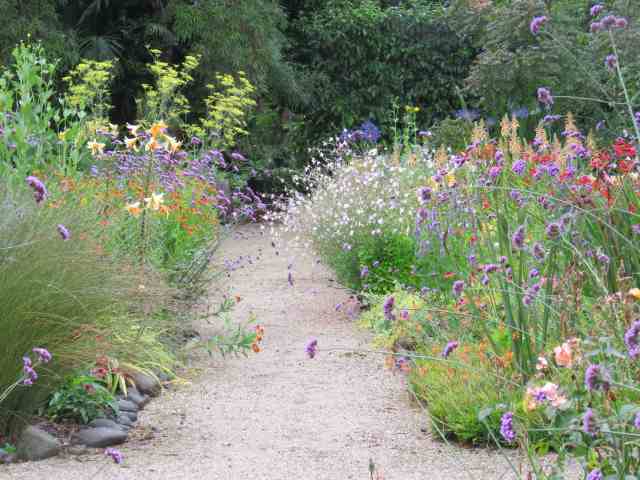
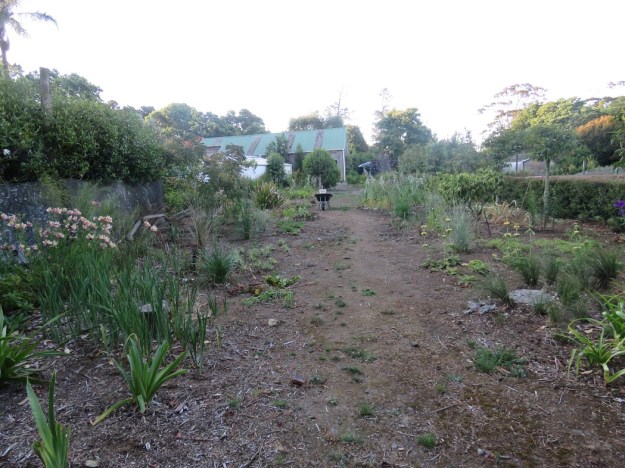
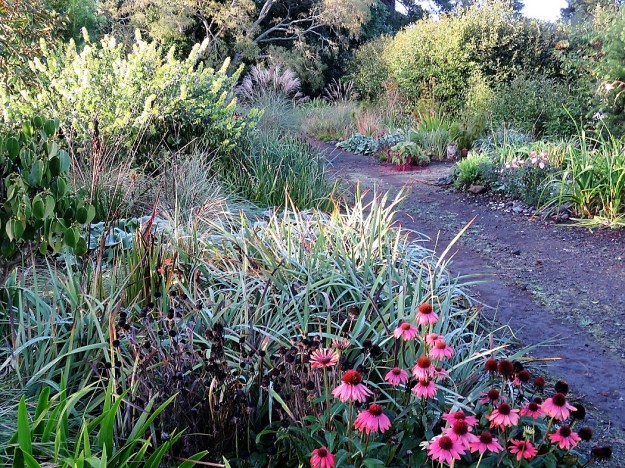
Zach and I have been working our way through the Iolanthe garden, our bee and butterfly garden which is a cross between a perennial meadow and a cottage garden. I planted the whole area up back in 2019. During summer just passed, I thought it wasn’t looking as pretty and flowery as it had been and too many of the perennials were looking scruffy and somewhat rank. I have high hopes for next spring and summer; it had better be good because a lot of work and time have gone into it so far.

The underplanting on this mixed border has never been exciting but it had crossed to line to neglected
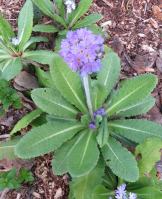
Primula denticulata – somewhere I have better photos of it en masse but goodness knows what I filed them under.

I was distracted from the Iolanthe garden for a couple of weeks onto the border at the back of the sunken garden area. We were in danger of losing the pretty Primula denticulata. At the end of a dry late summer, they were fast dwindling away to nothing.  I realise that to keep them going, I probably need to dig, divide and feed with compost every two years. There aren’t a lot of plants I am willing to give that amount of attention but they are one. Some perennials just quietly waste away if left to their own devices. Stokesias and echinaceas also fall into this category. Having started on that border, I had to keep going because the whole border, I realised, had passed over from being relatively anonymous to so unloved that I was avoiding even looking at it as I walked around. I dug the lot and did a full reorganisaton and cull before replanting. That was when I found how dangerously invasive the saponaria is. Those underground runners were up to a metre long, sending up shoots all the way along.
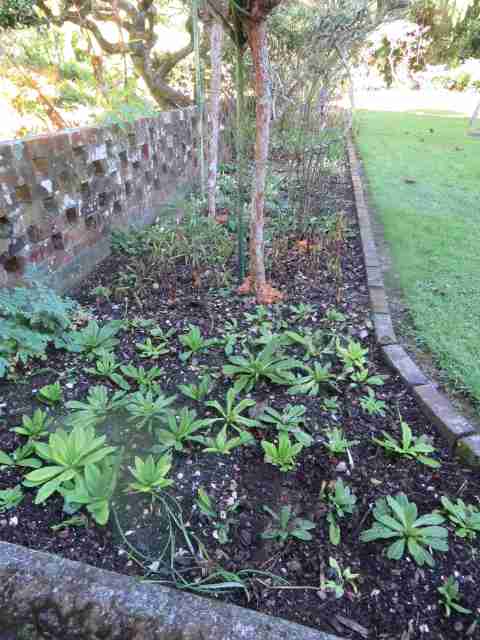
Freshly dug, divided, carefully considered and replanted all the way along. Now it is waiting for spring.

It was interesting, to me at least, moving between the two areas. The border in the sunken garden is planted in defined blocks whereas the Iolanthe garden is much more casual, naturalistic mix and match. Different styles for different areas but no matter what style we choose, we prefer complex plantings involving many different plant varieties to utilitarian mass planting of a single variety. It is  more complicated to manage but also a great deal more interesting.

It never fails to surprise me, when I lift an entire area, just how many plants it takes to fill the area back up again with fresh divisions. We want it to look well-furnished by spring and summer so I am planting fairly close together. You would not want to be buying the plants unless you have very deep pockets but the advantage of perennials is that most divide easily. I haven’t had a lot of surplus plants to compost – some sedums, campanula and stokesia but that is about it.

I am not big on anthropomorphism but I like to think of the fresh divisions heaving a sigh of appreciation as they settle back into fluffed up, friable soils still warm from the summer but now moist from the autumn rains. Hopefully, these areas will perform for another five years or so with just spot interventions before the next round of lifting and dividing is needed. This is not a low maintenance style of gardening but neither do we want that.
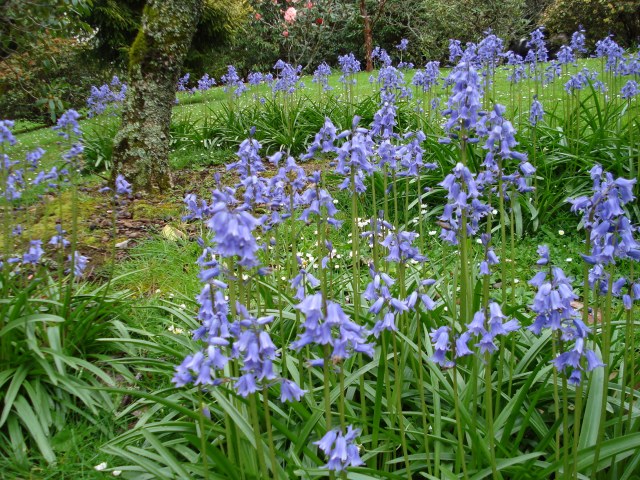
Bluebells – best kept to loose meadow or park situations. Never again will I unleash them in a cultivated garden.

“It is a good plant but we don’t need it everywhere”

Mark will only have planted a few Scadoxus katherinae at the start – maybe 3 or 4. I think we can say they have naturalised now but they are not invasive.

This is my new mantra. We have always had some level of self-seeding in the garden, some more desirable than others. We are fine with desirable plants like Scadoxus multiflorus ssp katherinae and the Himalyan lily, Cardiocrinum giganteum, deciding where they are happiest growing and gently settling in by spreading seed; we call that naturalising. Similarly, when the plants are natives, we don’t worry about them spreading around and we just decide whether we want them where they appear and weed them out if not. Nikau palms, tree ferns, kowhai and the like fit into that category.

Then there are the invaders, of whom our worst offender is Prunus campanulata. At the moment the parent plants have a stay of execution but we aim to remove every seedling we see. We cut down the parent bangalow palms (Archontophoenix cunninghamiana) because of their rampant seeding. It may be we reach a day when the prunus suffer the same fate.

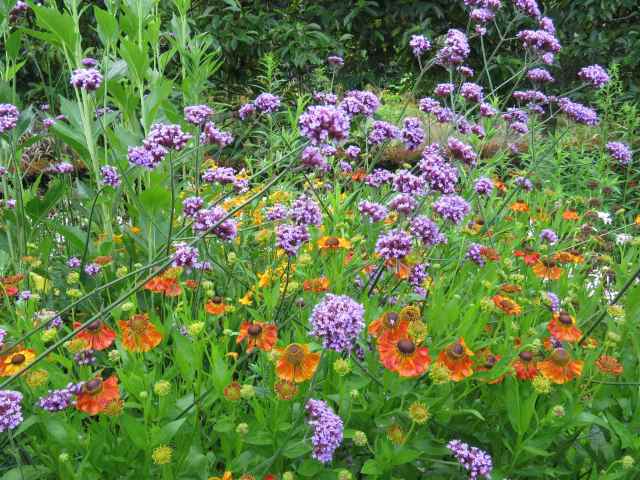
Verbena bonariensis in purple. I didn’t even plant it. It came in on something else and is welcome to stay but I don’t want it everywhere whereas it would like to be in every garden. Fortunately, it is easy to pull out.

Establishing the summer gardens has added a whole new range of plants that want to expand their territory beyond their allotted area – not for nothing are they called colonisers. The reason is that plants growing in well-cultivated soil in sunny conditions can multiply and spread exponentially, both from below ground and by airborne seed.  

When I planted the summer gardens in the years between 2017 and 2019, I made it a priority to use different plant material in each garden. While they are adjacent to each other, I wanted clear differentiation between the Wave Garden, lily border, Court Garden, back border and the twin borders while anything and everything that was left over was fine in the wilder Iolanthe Garden. I avoided repeating plants because as soon as your start using the same plant palette, they all end up losing definition and looking the same. I was pretty disciplined about it and there are only one or two repeats.

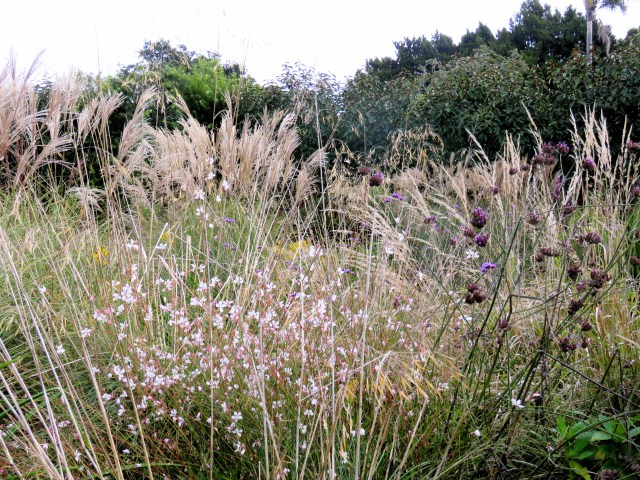
Gaura flowers for such a long time – this photo was actually April last year and the plants started flowering before Christmas. But it does seed down and not every seedling is precious.

Many of the plants have different ideas and that is escalating. Which is why I find myself saying often, “It is a good plant but we don’t need it everywhere.” I mentioned  mondo grass in last week’s post. It is very handy, both in black or green but it also sneaks all round the place both by seed and by spreading below ground. Too much. We will have much too much mondo if we don’t take charge now. Besides, it doesn’t look that great when it gets very thick and it is not easy to thin without a major effort on lifting, dividing and replanting. It needs restricting and reducing right now.

You may not believe me but you can have too many gloriosas and they can spread too enthusiastically and bury themselves so deep it is difficult to dig them out.

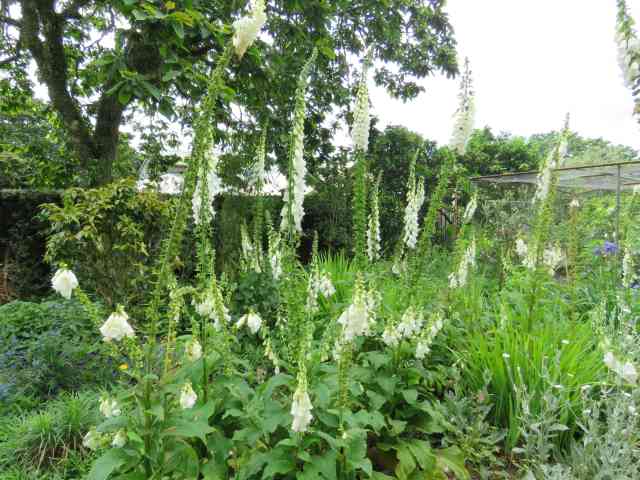
But there are so many more spreaders. Perennial lobelias, tigridias, verbascums be they chaixii or virgatum, Verbena bonariensis, crocosmia, scuttellaria, lychnis, gaura (so much gaura…), gladiolus and more. I have been gently restricting Gloriosa superba but I now think I have been too gentle and I need to get them out by the barrow-load and confine them to just two or three areas. And white foxgloves. I went to quite a lot of trouble to get a pure strain of white foxgloves established but now they want to be everywhere. Knowledgeable visitors from Europe last spring were astounded by the size of my white foxgloves, declaring that they have never seen them so large in Europe.  Therein lies the problem: foxgloves are thugs that smother their neighbours and they seed far and wide. They need to be kept to a limited number of places where they can star but not smother.

Where we are, there is little to no danger of these plants escaping into the wild but I can see how we have arrived at a situation in this country where many, possibly most, of our environmental weeds are escapees from gardens. Pretty escapees they may be, but it does not stop them being weeds when they spread uncontrollably in the wild.

We gardeners need to take responsibility for our plants.

Tigridias build up quickly and do like to move around. I have places where they are allowed to stay but woe betide those that think they can breach the boundary.

I do a lot more deadheading these days than I ever anticipated but that is basically short-circuiting what will be an even larger task if I don’t. A stitch in time and all that. We don’t generally compost seed heads. While we make hot compost, it is not always hot enough to kill off seeds and we certainly don’t want to be spreading viable seed right through the garden in the compost. Mostly, we dump them in piles in deep shade out of sight, which is possible in a large garden but not always practical in small, urban gardens.

The retired nurserywoman in me feels bad about wasting so much good plant material that has commercial value, but not to us. When we had the nursery, we mainly grew woody trees and shrubs which generally take a whole lot more skill, specialised facilities and time to get to saleable size. We used to question how some perennials could be sold at a similar price to a shrub or tree. Now I have a whole lot more experience gardening with sunny perennials and realise how easy it is to multiply most of them, I am even more amazed at the prices I see in garden centres.

Verbascum virgatum making itself right at home by the old prop houses – and about 40 metres away from here as well. From just a single plant last year, I now have them spreading alarmingly

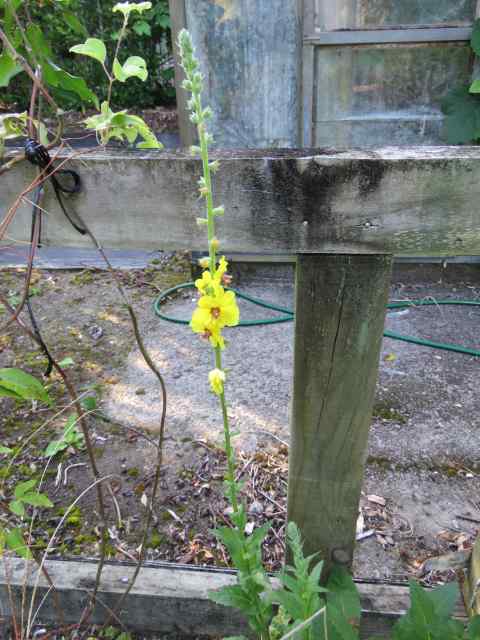
One of the interesting parts of gardening is deciding plant combinations and it is certainly easier when you have too much plant material rather than too little so that, at least, is a good problem to have. Verbena virgatum can go entirely though. It is way too enthusiastic and if I turn my back it will have infiltrated everywhere. It is pretty enough but not a good plant when it comes to behaviour. Keep to Verbascum creticum, I say. Similar large yellow flowers although in spring, not summer, and while it seeds, it has never been a problem for us.

A week of determined gardening

The first half is now all planted

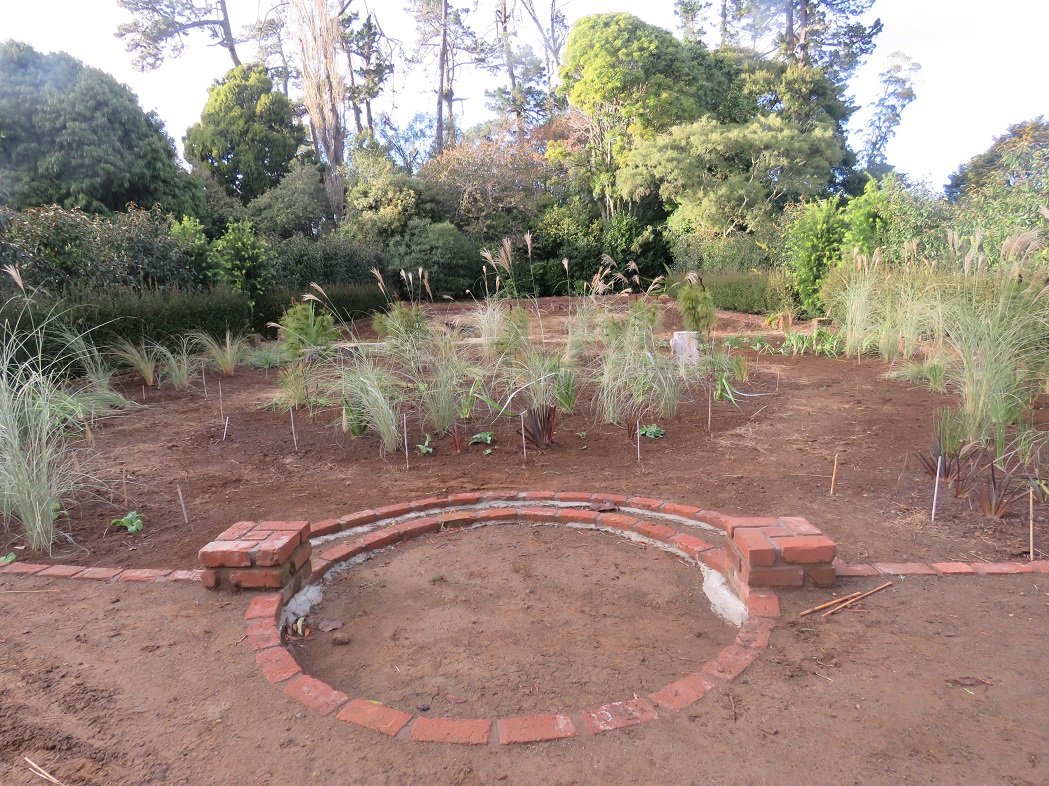
I have not been shilly-shallying around. The first half of the new court garden is planted and I have started on the second half. This is not light work. Mark has rotary hoed and I follow up with raking the area out and getting clods of roots out, as well as squishing the abundance of grass grubs. It has only just occurred to me that had I transferred all those grubs to a jar instead, we should have had enough for a meal of alternative protein. Whether grass grubs are delicious when tossed in garlic butter in a hot pan will likely remain mystery, however. I am not that intrepid.

Starting on the other half – the pressure is on to get it planted before winter sets in 

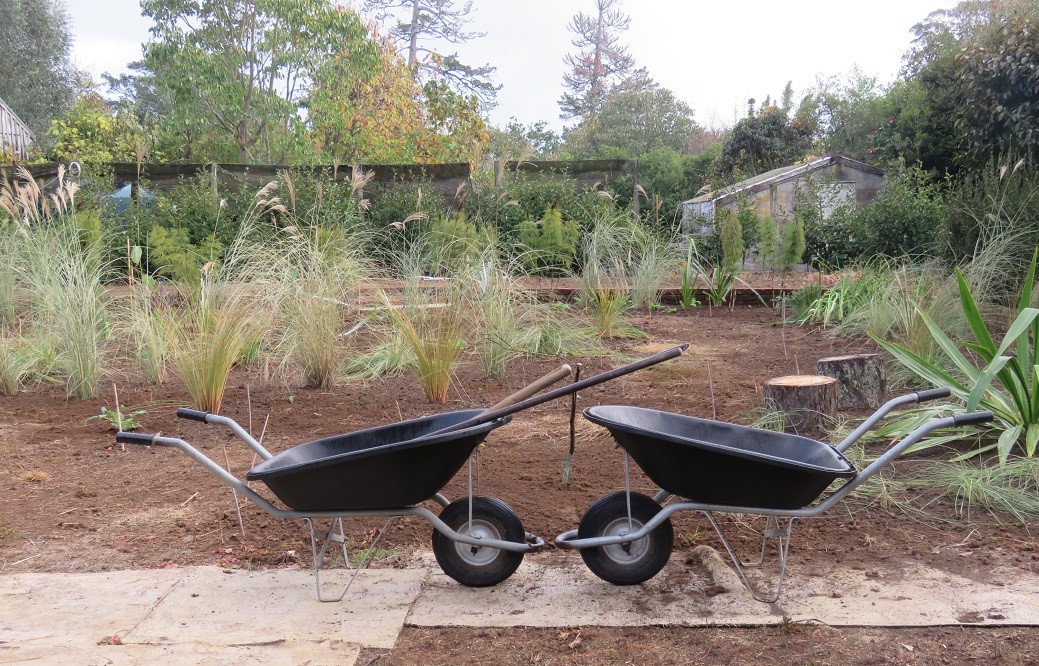
I describe this as romantic chat between two wheelbarrows (me being a two barrow gardener)

The rush is on because our soils are still warm and temperatures are mild, despite it being late autumn. I am hoping for a few more weeks of grace so the plants can start forming new roots. You would not want to be doing it this late in the season in colder climates or places with heavy soil where the plants would languish in wet, compacting ground. With our excellent drainage and friable, volcanic soils, we have much more leeway.

My plantings are neither complex nor detailed. This is a novel experience here. Most of our garden is highly detailed so going with sweeping plantings of large growing perennials is very different and way easier to put in. Because I am digging and dividing from other areas to get the plant material, it is heavy work but it means I am able to put in sizeable clumps at finished spacings. Had I bought the plants, it would be different. When you are starting with nursery-grown plants in small 10 cm pots, it is really difficult to envisage their mature size and the instinct, always, is to over-plant to get a quicker effect. That of course makes for more work in the future because that over-planting will need thinning sooner, rather than later.

B I G salvias for autumn colour, though I am having to cut back early because of transplanting them

I planted the waves of foundation plants first, using just seven different plant varieties (5 grasses, Astelia chathamica and Elegia capensis), added the blocks of a few additional plants I wanted to use (two black flaxes or phormium, a block of rushes that I have lost the name of already, the giant Albuca nelsonii and a plant of Carmichaelia williamsii which has had a hard life but I hope will survive and thrive) . Finally, I added the flowers. At this stage just the giant inula (likely Inula magnifica), big salvias for autumn flowering, pale foxgloves and Verbascum creticum. I hope I have at last found the right spot for these botanical thugs. The plant selection is fairly typical of the way we garden in that it will end up around 25% native plants integrated with exotics. We have never gone for the deliberate “native garden” but instead select native plants that will work in a mixed situation.

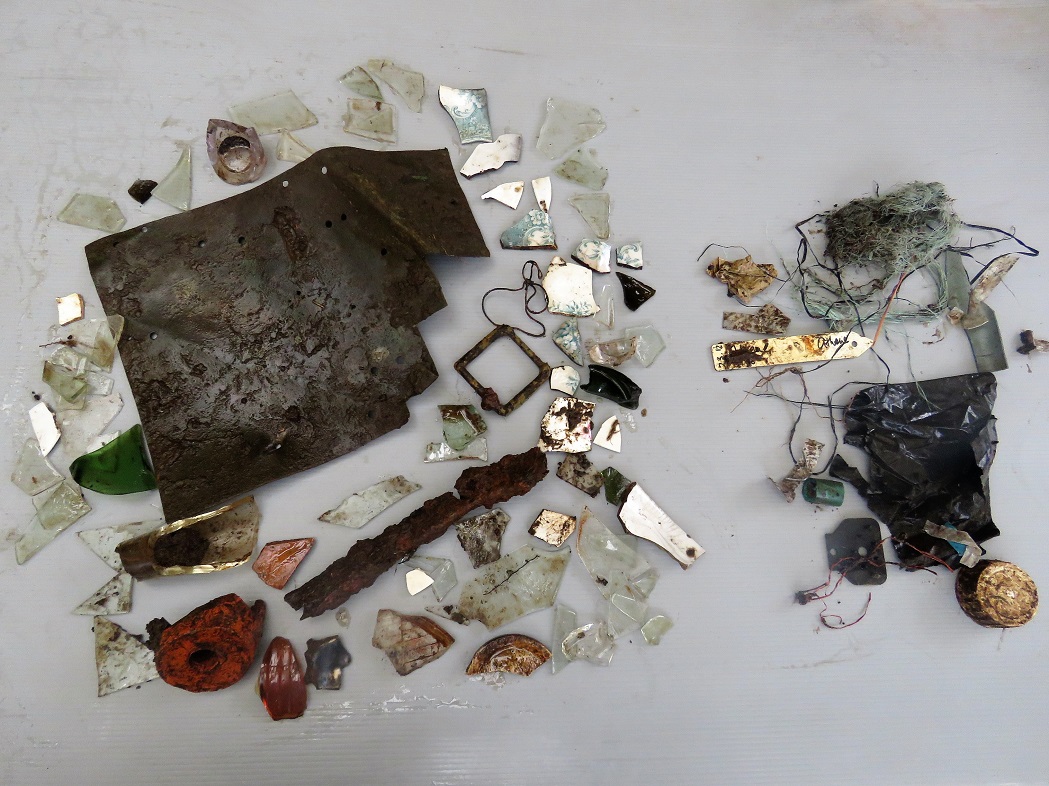
The discards of earlier generations to the left, our plastic generation to the right

There are times when working in the garden here takes on the flavour of an archaeological dig. This used to be a farm and farmers were not exactly renowned for taking their rubbish to the dump. It then became an outlying area of the garden in Mark’s father time, before becoming nursery in our time. I always gather up all the non-biodegradable rubbish as I garden and this haul interested me. Given that our nursery years coincided with the widespread switch to plastics, I was surprised that the volume of modern plastics and synthetics (on the right) was not greater. We must have been tidier than I thought. On the left is the older rubbish. Metal, glass, broken china and some pieces of clay pots, basically. There is quite a lot of broken horticultural glass there. Felix was doing his home propagation back in the days of terracotta pots and wooden seed trays covered with sheets of glass. While the broken glass would have been hazardous in the beginning, time has dulled the edges. Unlike modern plastics, I don’t think there is evidence that glass and shards of pottery enter the food chain and pollute the oceans. In this time when there is growing concern at plastics in the environment, we are relieved to be out of the nursery industry – a business that is now built on extensive use of plastics, some of which may be reused but precious little of it will ever be recycled.

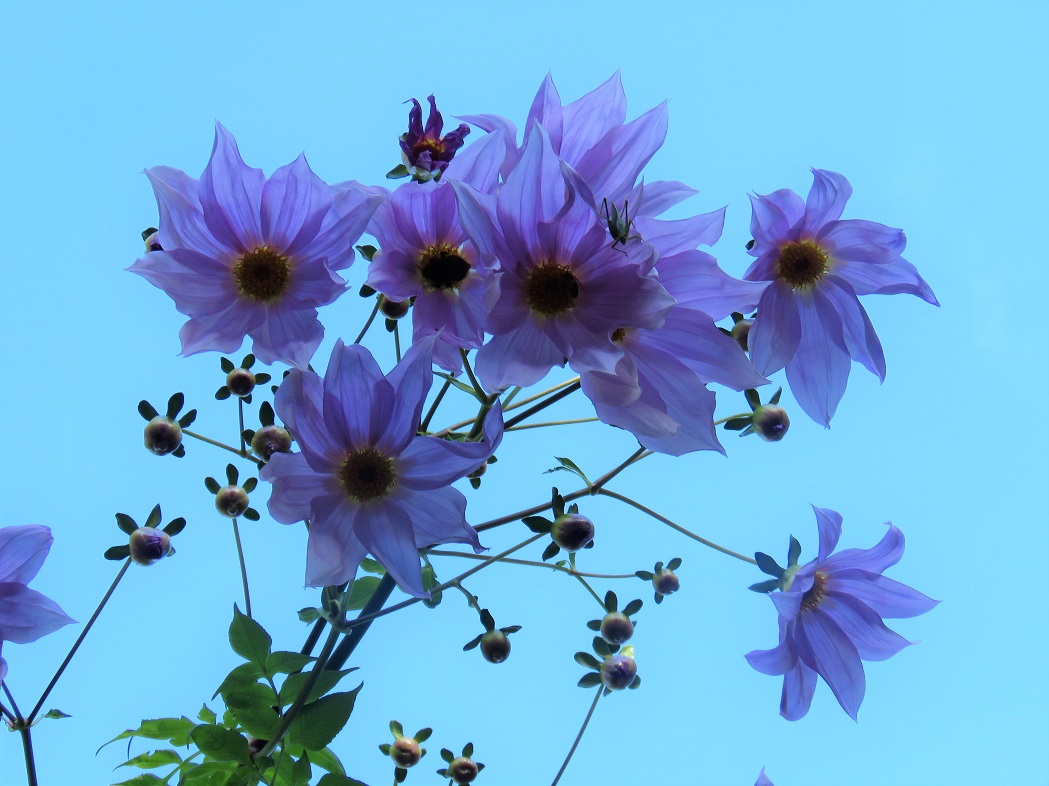
Dahlia imperialis towers some 3 to 4 metres high against the autumn sky

Finally, because I read a brave comment in a southern blog this week boldly declaring, “Even though it’s May, that most dire of months for gardens in the southern hemisphere…” (waving to my friend, Robyn Kilty) , I offer you three flowering plants this week. All are big, rangy, brittle, frost tender and come into their own just as the autumn storms hit. But are they not lovely?

This evergreen tree hydrangea is even larger. Now, I understand classified as a form of H. aspera

And the luculia season has started, bring us sweet scent. Luculia pinceana ‘Fragrant Cloud’.


What a difference a year makes

Off topic but a pretty flower to lead – Nerine bowdenii coming into bloom. The last of the season to flower and the easiest of the nerines we grow

Remember those TV programmes from ten or even twenty years ago that were all about instant makeovers? You too could have your messy back yard transformed into beautiful, landscaped space within a day. Fortunately, we seem to have moved on from the techniques that had to be used to make a photograph-ready scene immediately. Nowadays, it is more common for programmes to include a more modest, practical make-over section where the presenter talks the viewer through the process and explains how the plants will grow to fill the space, rather than trying to create the illusion of instant show garden.

The techniques of creating a show garden – reaching their zenith at Chelsea Flower Show – are very different. Those are a combination of ideas and illusion, designed for a temporary installation and they don’t have a whole lot to do with actual gardening. For starters, the plants are generally kept in their pots and packed in really tightly before being covered with a carpet of mulch to hide the evidence. But those earlier makeover TV garden shows seemed to imply that it was possible to create an instant, fully furnished garden. It isn’t. Gardening takes time.

We are blessed by a benign gardening climate where we live. Most of New Zealand has extraordinarily fast growth rates compared to other parts of the world and you can accelerate the growth rates even more if you are willing to apply large amounts of fertiliser often. We don’t do that, preferring to rely instead on home-made compost, gardening in line with our ethics. For how we can we complain about modern farming practices and the deterioration of fresh water in this country if we are doing the same thing on a smaller scale in our own gardens?

April 21, 2017

It was interesting this week to chart the growth we have achieved through photographs of the new gardens we are working on. This photograph was taken just over 12 months ago – late April. The area was a blank slate and had been nursery so laid in weed mat for three decades. This had compacted the soil badly and after planting the first few plants, I decided it was all too hard to dig and I would take up Mark’s offer to rotary hoe it.

December 2, 2017

Come December, it was pretty much planted out. I, personally, have planted every single perennial in there and added no fertiliser except some compost at the time of planting. Nothing has been watered. We garden without irrigation here. Mark often describes our place as ‘a poor man’s garden’ (excuse the gendered language – I have yet to come up with a pithy, gender-neutral term which would be more accurate). If we had to go out and buy the plants, we could never afford to garden on the scale we do. I think I bought maybe 10 new grasses to go in this garden. Everything else has been relocated from elsewhere here.

May 7, 2018


Now, in autumn, the whole area looks remarkably well furnished and under 13 months have passed. All that is needed is some tweaking. I want more blues in summer. Fortunately, Mark has a row of very good blue agastache in his vegetable garden (for the butterflies and bees, you understand) that I can raid. I am a bit worried about the phlomis which look overly enthusiastic out in the sun. They are far more restrained in their habits growing in the woodland gardens where we have them established. The Calamagrostris x acutiflora ‘Karl Foerster’ (feather reed grass) may prove to be too vigorous in our conditions. But that whole process of editing and tweaking and modifying as I learn is what gardening is all about.

The caterpillar garden this week

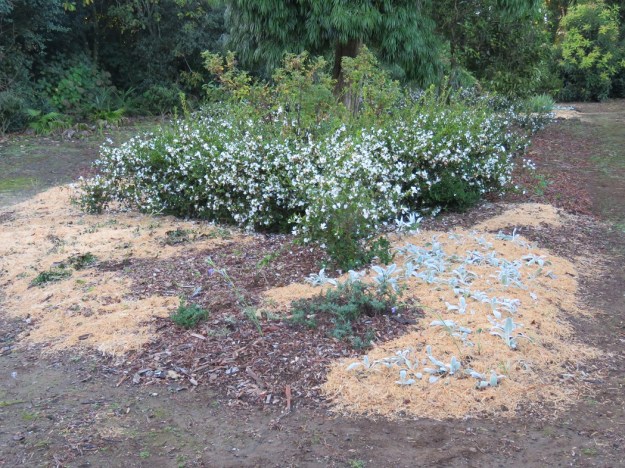
The grass garden took priority. Over on the other side of this new area, I have nearly finished planting out the caterpillar garden. It is a very different style of planting, far lower and more restrained although the area involved is similar – about 30 metres long and up to 8 metres wide. It is also under siege from the local rabbit population. I find the rabbits generally leave the plants alone if they are surrounded by wood shavings. We have tried various strategies to deal to the rabbits but have grown desperate enough to think we may have to resort to poison. For us that is really desperate. We prefer to keep to trapping or shooting vermin rather than poisoning. It will be interesting to see how quickly this area fills out. The planting has again been carried out using relocated material – from the former rose garden that I have been stripping out. No plants have been purchased. But even I am amazed at how many plants it takes to fill in a blank space – hundreds and hundreds of divisions, maybe thousands. Mind you, I am planting closely. That is how I will get a carpet covering within the year.

Gardening is not an instant activity. But a year to go from blank slate to looking well-furnished and established seems the next closest thing to instant results for us.