Tag Archives: plant combinations

Reviewing our mixed borders

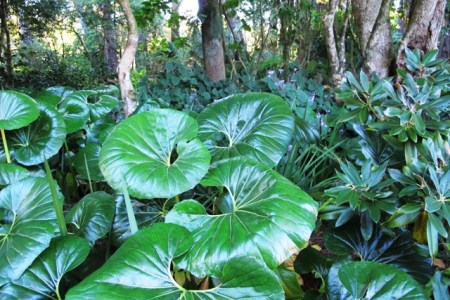
The Ligularia reniformis were gratifyingly responsive to being dug and divided

The Ligularia reniformis were gratifyingly responsive to being dug and divided

Because I garden extensively, I have a lot of thinking time. Not for me the IPod and little headphones to fill the solitary quietness. I prefer to hear the birds and be aware of all my surroundings while I talk to myself and ponder.

My thinking this week has been coloured by a book I am reading. You will have to wait a little longer for the full discourse on “The Bad Tempered Gardener” by Anne Wareham. I am still digesting the contents but it has certainly focussed my attention on some of my least favourite areas of our garden. I had figured that in one area, the fact that I didn’t enjoy gardening it at all was an indication that all was not well there.

What got me thinking was the oft repeated message in the book that it was better to keep to a more limited plant selection and to shun the bits and bobs effect of one of this and one of that. This particular viewpoint is so much at odds with a great deal that I have written that it has taken some reconciling. I have often bemoaned the boring and limited planting schemes of so many New Zealand gardens and the simple fact is that neither Mark nor I have any interest at all in visiting a garden with a totally restrained use of a very limited number of different plants. Similarly, I have been critical of the ever diminishing range of plants on offer to the home gardener as nurseries continue to refine their production. To us, a garden that is all form and no plant interest is boring. To the author of this book, a garden that is all plant interest and no form is just as bad.

As always, the answer lies somewhere in the middle. And that was what led me to A Revelation. The messy borders and beds I dislike maintaining and sometimes find myself walking past with eyes averted, are frankly messy beds with too many bits and bobs at ground level. The underplanting, in other words. Too often there has been a gap so I have tucked something in to fill the space – and ain’t that the way many of us garden? And all these areas are mixed borders.
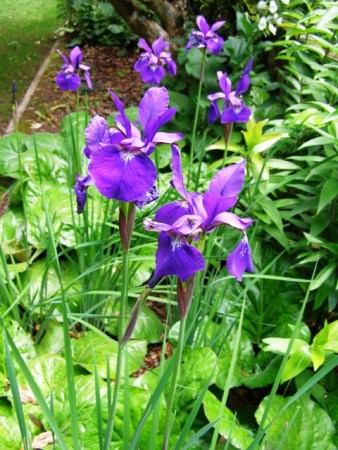
The combination of Siberian iris and Bergenia ciliata works very well

The combination of Siberian iris and Bergenia ciliata works very well

Mixed borders are by far the most common method of gardening – planting woody shrubs, maybe trees, and underplanting with herbaceous material and bulbs. I am not a huge fan of this style of gardening, though we have plenty of examples here. They are probably the least successful areas of our garden. But the remedy, I think, lies in revamping that bottom layer of mostly herbaceous material and getting more unity and harmony in managing the combinations.

Not carpet bedding. It is only a short step up the social scale from bedding plants on roundabouts to carpet bedding nepeta (catmint) beneath your roses, or swathes of uninterrupted mondo grass around your topiaried bay trees. It is just as utility and unimaginative, merely in better taste than marigolds.

That is where my thinking, coming from the other end of the spectrum to the author, met up with hers. The magic is in the plant combinations. If you are going to narrow your plant selection, it matters a great deal more which ones you choose and how you put them together.

I am revisiting my intense dislike of mass plantings. I realise now that my out of hand dismissal had much to do with all those Bright Young Landscapers who dominated the garden scene in this country in the decade through to the global financial downturn. Often with big budgets and other people’s gardens, they rejected plantsmanship in favour of form. Lacking any technical knowledge of plants themselves, or indeed any interest in plants beyond their role as soft furnishings, they claimed superior status as they used some of the dullest plants on earth to create gardens which ideally looked the same for twelve months of the year.

The hallmark of good gardens, in my opinion, is the ability to combine both form and detail, which involves thoughtful and original plant combinations. They don’t all have to be wildly unusual plants. One of my successful recent efforts was a cold corner where I used Bergenia ciliata (that is the one with big hairy leaves and pink and white flowers in spring) with deep blue siberian irises. It is unusually restrained for me, but the combination of the narrow upright leaves of the iris and the large but low foliage of the bergenia looks good even without flowers. I hasten to add, I only have about six square metres of this planting. Had I done the entire length of the border the same, it would have been over forty square metres and that I would have found extremely dull.

The same principle of contrast applies to an area where I dug and divided Ligularia reniformis (that is the enormously popular tractor seat ligularia). It was so grateful it romped away and stands large, lush and over a metre tall. With a backdrop of a common plectranthus which has pretty lilac flowers at this time and interplanted with the narrow, upright neomarica, it is simple but pleasing to the eye.

Now my mind is focussed on the messy borders that don’t work. I am pretty sure that if I refine the bottom layer of plantings, that will set off the upper layers. I can’t wait to start.
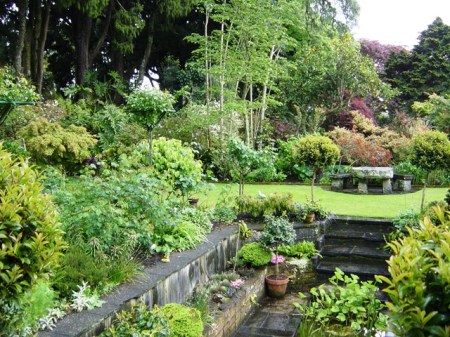
First up for a revamp

First up for a revamp

First published in the Waikato Times and reprinted here with their permission.
Bring back plants! Please.

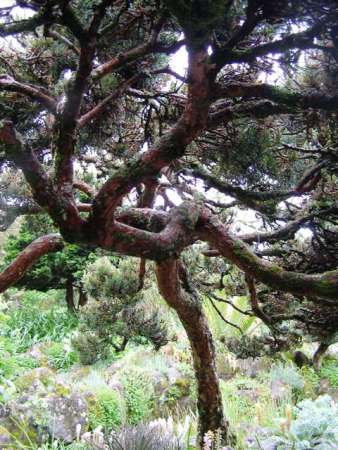
Even after 60 years, Pinus sylvestris Beauvronensis keeps getting better and maturing well, even though it remains under 2 metres tall

Even after 60 years, Pinus sylvestris Beauvronensis keeps getting better and maturing well, even though it remains under 2 metres tall

Until recent times, maybe only a decade or so, New Zealand gardens used to be all about plants. Sophisticated design concepts were rarely seen and terms like spatial relationships referred to Cape Canaveral. These days garden design is cock of the roost and plants are very much a secondary consideration for many people.

Good design is ageless and not to be derided in any way, but I mourn the devaluing of the role of plants in a garden. Frankly, you can only get so far with clipped hedging (usually buxus, sometimes lonicera or teucrium), renga renga lilies, mondo grass (be it black or green), catmint groundcover (nepeta) and white standard roses (be they Iceberg or Margaret Merrill). Maybe kumquat or mandarin trees in planter boxes or large containers. You can achieve a perfectly nice, tidy garden using those run of the mill plants which are in everybody else’s garden as well, but it is never going to be anything special, no matter how good the design framework.

To lift a garden above the ordinary, good design needs to be complemented by interesting plants combined in interesting ways. Mind you, I would say that. I have always believed that mass plantings of a single variety are best in public parks and on traffic islands. I find it exceedingly dull in home gardens. It takes more gardening skill to marry together a whole range of different plants but that is the fun part of gardening.

Start with trees. You can not magic up instant trees. You can buy advanced grade specimens but they are still going to be juvenile and take years to reach maturity. There is simply no shortcut with trees so the sooner you get them planted in the right positions, the sooner you will see some results. And make at least some of those trees good long term specimens. Some trees just get better with age, others look better in youth and get scruffy and past it too soon. Learn to tell the difference so when you cut out the short term filler trees, you are left with some good specimens. Pretty trees such as many flowering cherries, Albizia julibrissin, the blue flowered paulownias and some of the pillar conifers are great for quick impact but rarely age gracefully. Really good trees will take future generations into the next century so they need to be chosen carefully for the right position and given time to grow. They don’t have to be forest giants but you may need to do some research to make good choices. Not a day goes by here when we don’t mentally thank Mark’s great grandfather who left us a legacy of fine trees planted in 1880, and his father who added to it with many rare specimens in the 1950s. Trees give stature and backbone to a garden, be it large or small.

Search out treasures. If you have ever been on a garden safari where you visit many gardens in quick succession, you may have noticed how they can start to look very similar and meld in the memory because they use the same palette of plants. With an ever diminishing range of plants being offered for sale in this country, this scenario is going to get worse, not better. It clearly doesn’t matter if you don’t mind having a garden that looks the same as everybody else’s, but as a nation we tend to favour an element of uniqueness. We don’t want to live in a street where every house is identical, even to the floor plan, but we are leaning in that direction when it comes to our gardens. Good gardeners regard the sourcing of rare or unusual plants as being like a treasure hunt.

It is plant combinations, mixing and matching, that gives interesting detail to a garden

It is plant combinations, mixing and matching, that gives interesting detail to a garden

Experiment with plant combinations. While it is easy and quick to plant a swathe of the same plant, putting together a mix of different foliages and flowers that please the eye is more satisfying. Done well, there is an overall harmony which is pleasing at first glance while the detail invites you to linger and look more closely. Done badly, of course, it looks a hodge podge but you can always learn from that. If you are mass planting using only one or two different varieties, there is no reason to linger and look – you are just after the first glance impression.

In brief, the two rules of thumb in creating good combinations are to think of layering so that not everything is the same height and to get contrasts in foliage. Grasses are never going to look dramatic planted alongside other grasses but combined with a big leafed plant like a canna lily, a Chatham Island forget-me-not or pachystegia, they will have a great deal more zing. Plant combinations are about more than trendy colour toning.

There are a fair number of good designers around whom you can pay to give you a well planned garden in terms of the use of space but good designers who are passionate and knowledgeable about plants are as scarce as hens’ teeth. Good gardens are usually owned by good gardeners who know a great deal about plants themselves. And it is the plants which give the dynamic aspect to a garden and so bring life to the space.