Tag Archives: pleione orchids

Faffin’ around

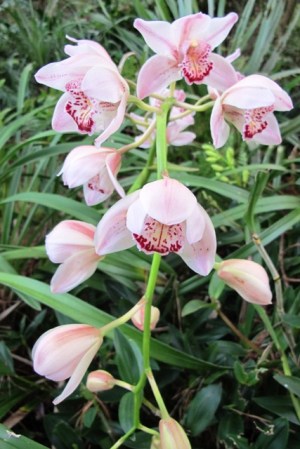
This lemon cymbidium orchid has not flowered before that any of us can remember but it is a little charmer. The lilac is a Dendrobium Bardo Rose.

I am a faffer in the garden. At times it feels like an indulgent use of time but really, the greatest pleasure I find in the state commonly called ‘retirement’, is being time-rich. I have the time to faff and I derive a great deal of pleasure from paying attention to detail to get things right, in my eyes at least.
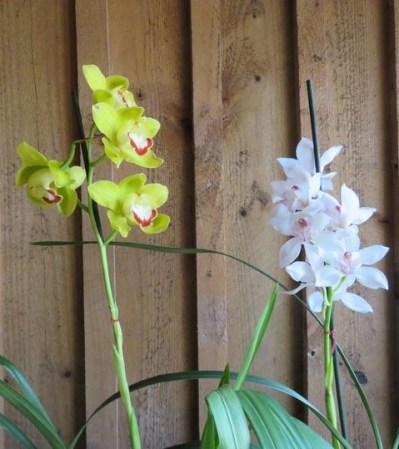
Our gardener, Zach, brought us two orchids he picked up at the local orchid show, knowing that we wanted to extend the cymbidiums beyond the ones Mark and our daughter gathered several decades ago. We wanted clean colours that could light up a space and provide contrast to the rather large number of brown cymbidiums we have. Brown was the fashion colour back when our young daughter became the recipient of generous gifts from enthusiasts wanting to encourage her.

Zach and I placed them where we thought they would work and he planted them in slightly raised mounds of coarse woodchip and bark that we gather on site. As soon as I looked, I knew they were wrong but I was a bit reluctant to say anything after he had gone to the trouble of planting them. Then Mark came in and started to say, “I was walking down the far end of the Avenue Garden when something startled me.” I have lived with him long enough to be able to finish his observation for him – “a lime green orchid?” “Yes,” he replied. “I didn’t realise when it was sitting on the bench that it was such a synthetic, fluorescent colour. Maybe it would fit in better in a more shaded area surrounded by green foliage.”
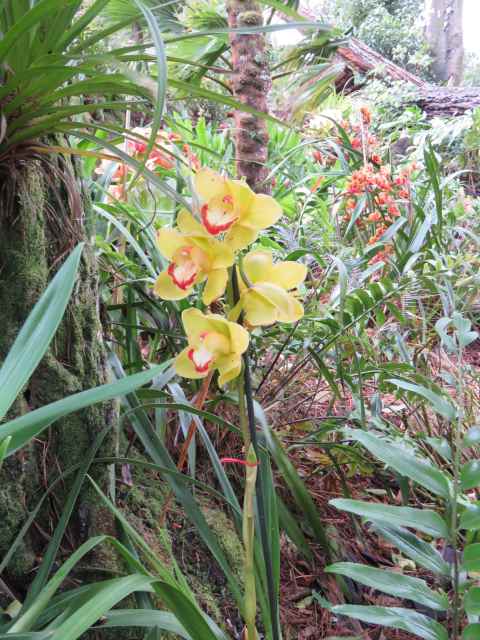
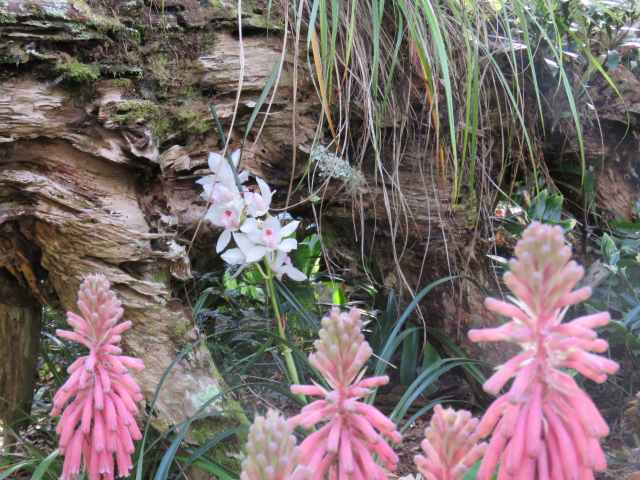
Better when placed more discreetly and not out on its own shouting ‘look at me! Look at me!’ The photograph has come out more gold and the earlier lime colour seems to be changing as the flower matures.
I think the white will bed in more harmoniously than where we had it
I originally placed it by this massive red-brown orchid but it was too stark a contrast and instead of adding a light touch, it simply looked out of place. This one may be brown but it has at least nine very long flower spikes laden with bloom.

Zach, bless him, is very obliging and willing to see the garden through our eyes. We found what we hope are final homes for the new orchids. The white one was also misplaced and looked far too starkly bridal amongst the browns but fits in more naturally in another place entirely. While we were about it, he moved one I thought was hideous – a caramel brown in tone with a startling red throat – to a less prominent position where it fits in with the colours of the clivias as opposed to being beside a pretty, pink cymbidium.
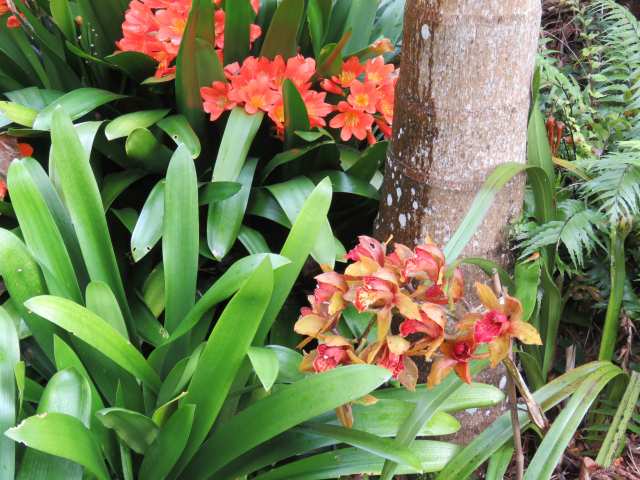
Not my favourite cymbidium

I am much happier with the result. Zach has been quietly dividing and relocating bits to extend the orchid display and feeding them with compost. The plants are responding most gratifyingly after decades of benign neglect. What the cymbidiums may lack in subtlety, they make up for with their exotic character and the many weeks they last in good bloom in the garden.
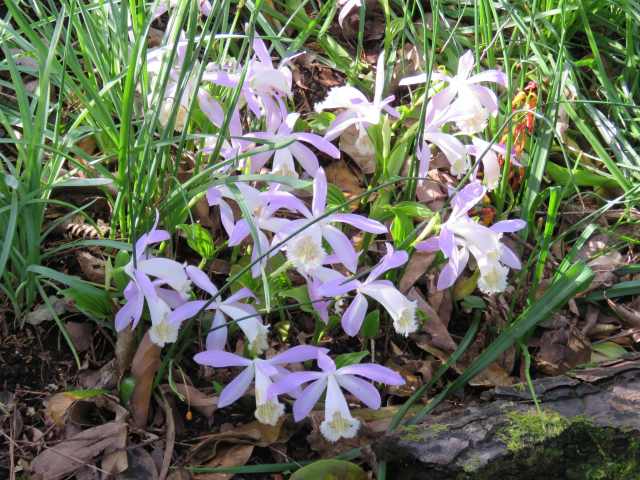
Pleione orchids flowering now

The pleiones are pretty rather than exotic and very much a seasonal delight. Their flowers are much more delicate and they have a short season. They also need more attention each year to keep them going. Without looking after them and replanting most years, we would lose them. We like them enough to be willing to fuss over them.
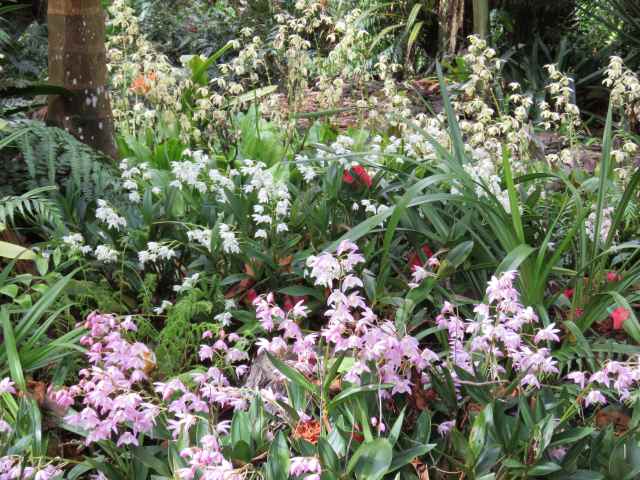
Dendrobiums in pink and white, backed by the primrose calanthe orchids that are passing over now

The Bardo-Rose dendrobiums are also dainty but not as pernickety as the pleiones. They too can survive on benign neglect with minimal attention.
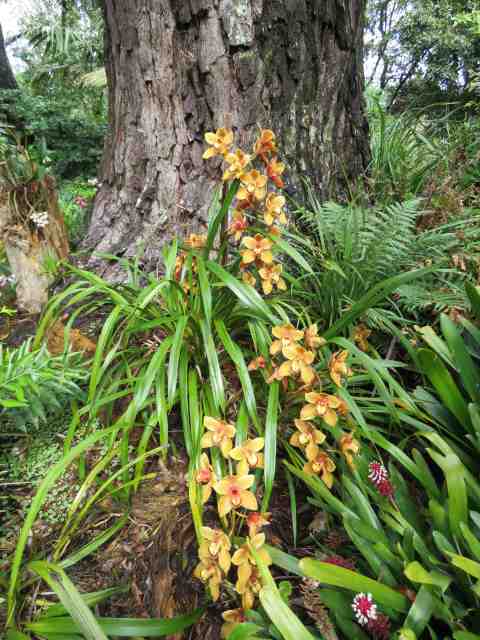
We have brown brown, red brown, murky brown, caramel brown and golden brown. Six flower spikes so we can’t complain.

Faffing about pays dividends in my book. We garden on a pretty large scale for a domestic garden but it is the detail within that larger scale and landscape that keeps it interesting for us all year round.
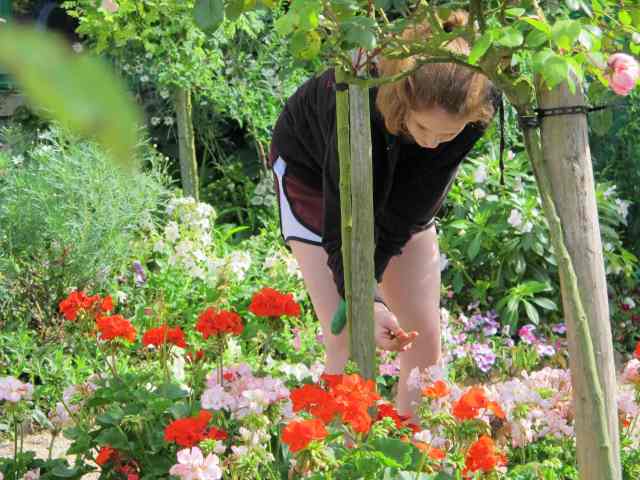
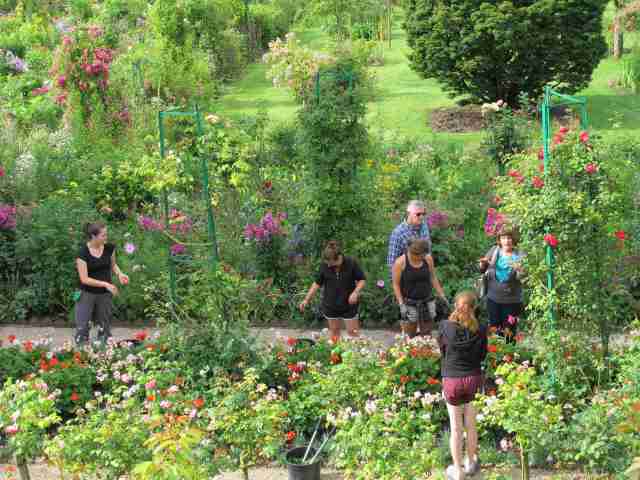
In Monet’s garden – taking garden grooming to ridiculous lengths

Attention to detail is not to be confused with immaculate gardening. I have been in a fair number of immaculate  gardens in my time – not a leaf out of place, not even a blade of grass. Preternatural tidiness. It is much admired by some but really only achievable by extraordinarily precise, tidy people who have a small garden, because it needs attention every day. And maybe these immaculate gardeners only maintain this pristine perfection when their garden is open to the public. Even if we aspired to that level of garden grooming it is neither achievable nor sustainable across the 10 acres that we actively manage as garden. Fortunately, it is not one of our garden goals. I have never forgotten the sight of four young gardeners at Monet’s  garden in Giverny, picking over the pelargoniums. They were not dead-heading; they were literally dead-petalling – picking off the spent petals from each individual bloom. I was riveted by the sight but honestly, I couldn’t think that it was worth paying four sets of wages to pick off dead petals for the visiting hordes. That is much too much attention to detail.
Hues of lilac

Today is brought to you by the colour lilac. Well, mostly lilac but also leaning towards purple, pink and blue. It is a colour I love although I can not think it is a colour I ever wear in clothing so maybe I only love it in the garden.

Primula denticulata

The Primula denticulata have been bringing me pleasure for weeks. We were given seedlings of it a couple of years ago. While the ones I planted in the Iolanthe Garden have largely survived, they are clearly not as happy in the sunny conditions there because these ones in heavier soil and partial shade have romped away with enthusiasm and are putting on a good show.

The ‘pink’ form of the Spanish bluebell is more mauve than pink

The lilac bluebells are commonly referred to as pink but really they are more mauve than pink, I think. This week we have swathes or drifts of bluebells blooming in various areas and I forgive them for their weedy, seeding ways. They do need to be actively managed, however, or they will take over in quick time. The white and mauve-pink bluebells are a delightful addition to the blue but in moderation – overall, think about 70% blue to 30% of the other two colours. If you have all white, people may mistake it for onion weed. The fact that the flower spikes are standing up straight tell you that these are Spanish bluebells, not the more desirable English species. Besides, only the Spanish ones come in colours other than blue.

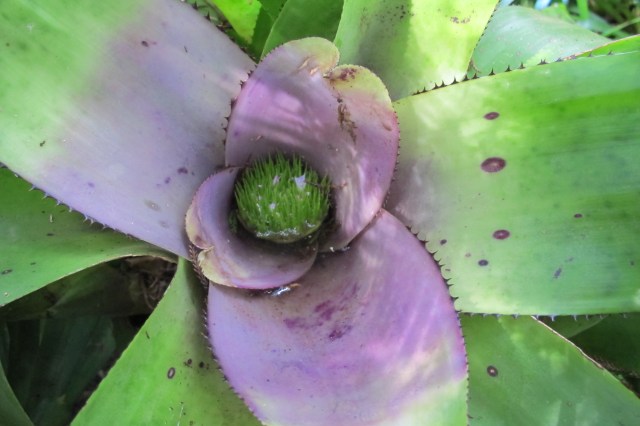
A neoregelia, I think

This week has seen me working my way along beneath the Rimu Avenue at precisely the same time I did the big sweep through last year – five weeks before we open for the Centuria Taranaki Garden Festival. I like the look of the bromeliads and the atmosphere they lend to this woodland area but I don’t like having to handle them on account of many of them being prickly, very prickly in some cases.

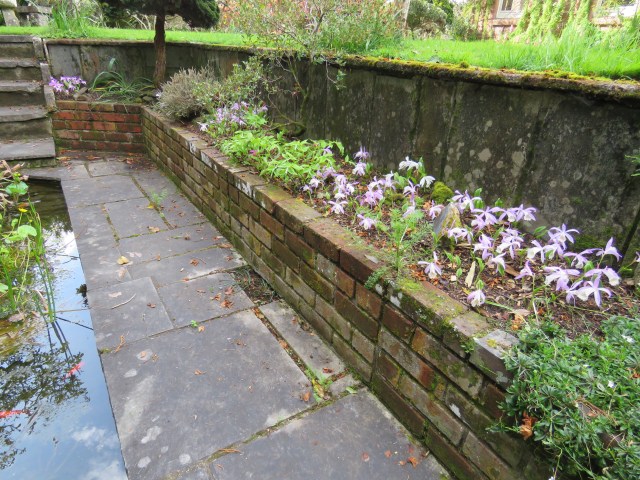
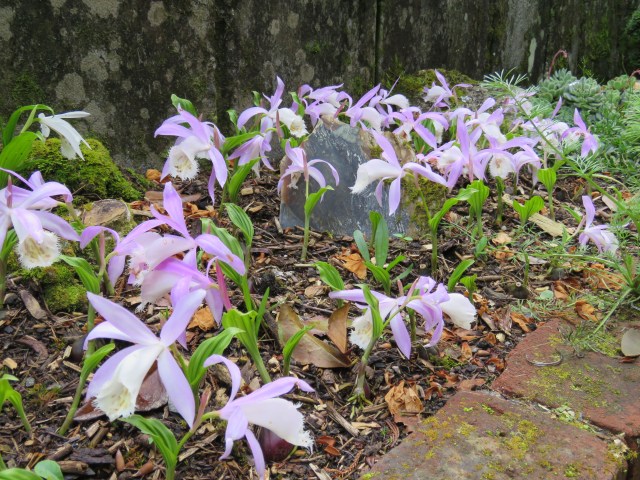
Pleione orchids on the shadier side of the sunken garden
As garden plants, the pleiones need good drainage and a location where they will not get swamped by their neighbours

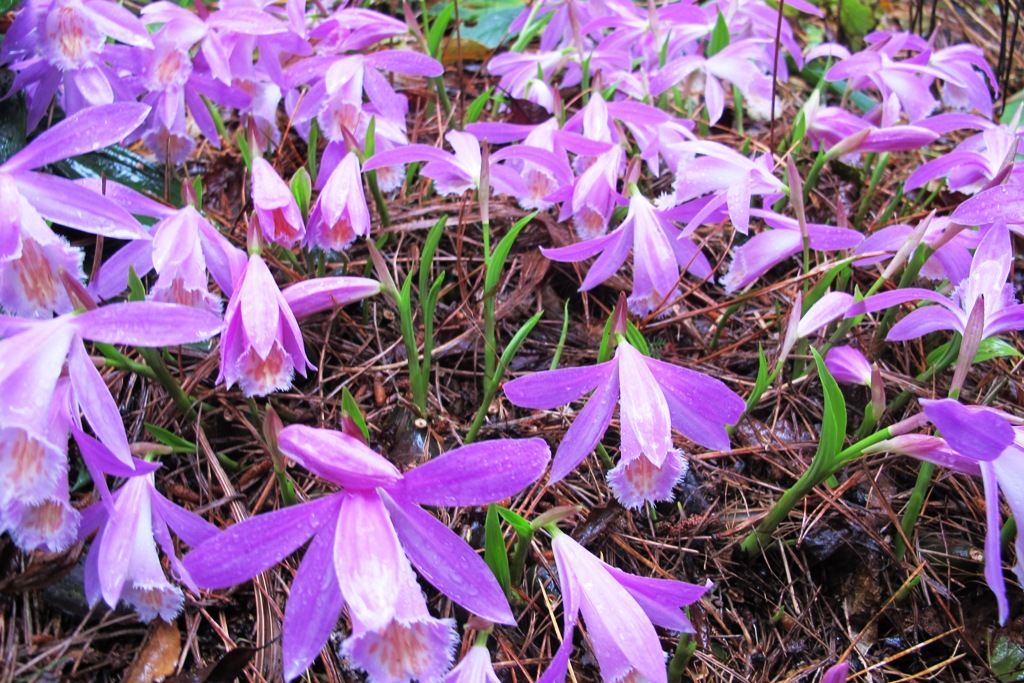
In the sunken garden, the pleione orchids are in full bloom. They don’t last as long as the cymbidiums and dendrobiums but they are an obliging seasonal pleasure which don’t require much attention year on year. Most of ours came from the late George Fuller and are his named hybrids although we have lost track of the names since George died. This one may, however, be the one he called ‘Lilac Beauty’ if the depths of my memory serve me right.   

Just an unnamed seedling but from a controlled cross

I post this photo of a pretty, lilac rhododendron less for the flower but so those in the know can admire the clean foliage. Back when we had the nursery and rhododendrons were a popular line, Mark spent some seasons breeding to get plants with full, ball trusses which keep healthy foliage. Burned or silver foliage (from thrips) is all too common in our humid, mild conditions and this plant has never seen even a whiff of spray but keeps excellent foliage. He succeeded – and with plants which flower in various colours – but too late for both our nursery and for public demand which had fallen away. None have been named or released and it is frankly not worth it commercially so we just get to enjoy them ourselves. For rhododendron lovers, this lilac one is ‘Susan’ X R. metternichii.

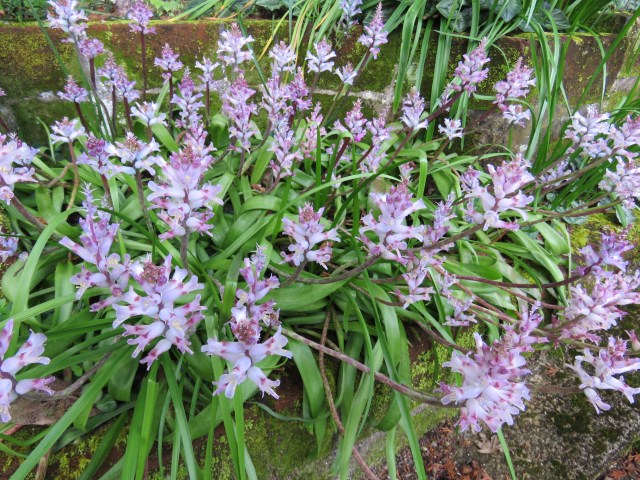
Lachenalia glaucina happily ensconced and multiplying well in the rockery

The later flowering lachenalias are in full bloom. Of the so-called blues, we have most success with Lachenalia orchioides ssp glaucina in the garden. Some of the less common varieties are not overly vigorous and this is one plant family that Mark tries to keep going with back-ups grown in pots under cover so we can keep the range going.

Lachenalias are much more varied than many realise, although not easy to source in this country

For those who have only seen the common orange and red form (Lachenalia aloides but still occasionally misnamed as Lachenalia pearsonii in this country) the huge range of other lachenalias may come as a surprise. They are native to South Africa and Namibia. We collected every obscure species we could find but they are very mixed and the names have never been particularly accurate because there is a lot of variation even within the same species.

Lachenalia aloides vanzyliae to the left and we are unsure of the identity to the right

Finally, off the lilac theme, I was looking at the lachenalias and picked these two. The one on the left is a variation on the most common species – the red and orange one that I think looks like a garish plant you might buy from The Warehouse – but in this case is Lachenalia aloides vanzyliae. It is nowhere near as vigorous as its less refined sibling. Of course it isn’t, the desirable plants never are, but it is so pretty and distinctive. The one on the right is mislabelled as L. arbuthnotiae but that may well be our mistake. Looking on line, I wonder if it is L. pustulata despite the lack of pustules on the leaves which generally give a characteristic warty look but maybe some reader with more expertise will know? It is a pretty and unusual colour combination, with good, strong stems.

Happy gardening this week.

Spring pinks

Pink froth of Prunus Awanui  currently at its peak

I am a big fan of pink and not just in flowers, but my theme this week came because of two pink plants in bloom.

The balls of viburnum are at the front of the vase

The first is one of the Virburnum × burkwoodii cultivars. I am not sure which one it is but we have it planted beside the drive where it is largely anonymous for 51 weeks of the year. In the 52nd week, it opens its flowers to rounded balls of exquisite fragrance – strong enough to hang in the air several metres away. We would be lucky to get a full 7 days out of it but I am sure it does better in other climates – it probably wants it drier and colder. I picked a few balls to put in a vase with pink bluebells and late flowers of Mark’s Daphne ‘Perfume Princess’ (which still has flowers and has had since late March). It was lovely but the viburnum flowers promptly died overnight. They last longer than that on the bush, though not by much.

The view with our morning cuppa

Magnolia Serene

A prodigious carpet of petals beneath

The second pink to give me daily delight is Magnolia ‘Serene’ – bred by Felix and the marker of the end of the deciduous magnolia season for us. As we sit having our morning cup of tea, it is framed in the corner window of our bedroom. Not this morning, though. With daylight saving, it was a bit dark at 7am to see it so that may herald the end of that particular seasonal pleasure, too.

Rhododendron Coconut Ice

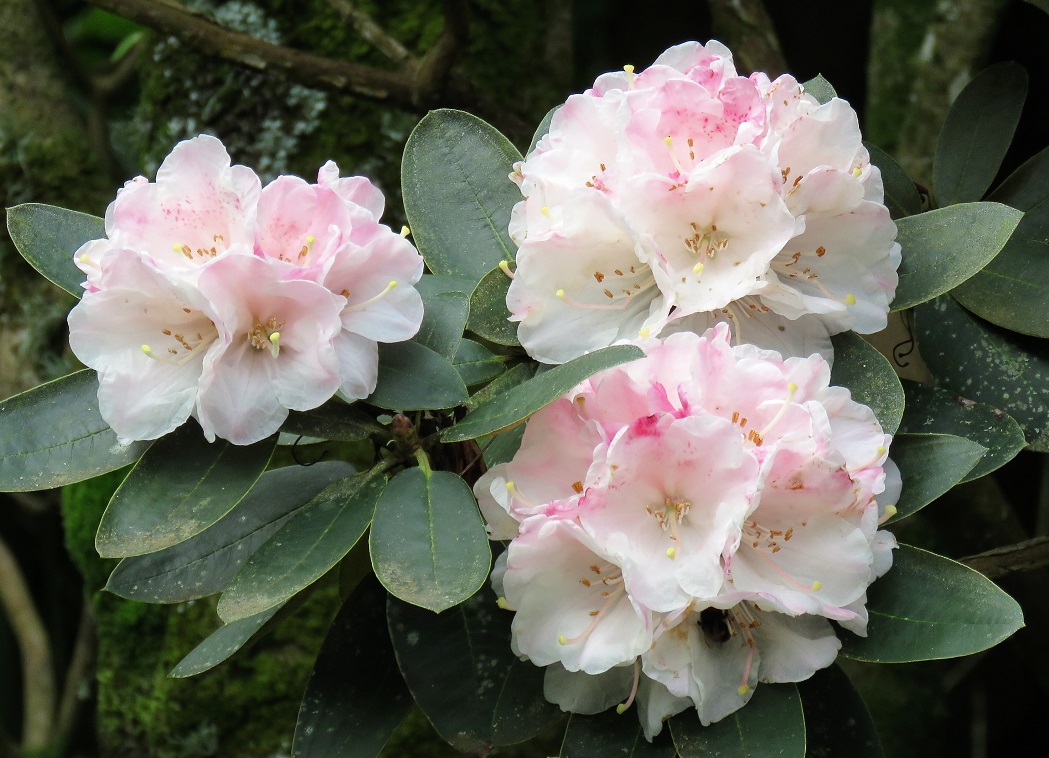
I am not the world’s biggest fan of the ball truss type of rhododendron but ‘Coconut Ice’ was looking particularly pretty earlier this week. Sadly, it is browning off already. Flowering is an ephemeral pleasure. Mark observes that the delight of rhododendrons lies in watching the buds for a long period of time before finally opening over a period of a couple of weeks. There is then a week, maybe 10 days, of full glory – sometimes cut shorter by an ill-timed storm – and then it is time to dead head it. In practice, we don’t dead head all our rhododendrons – just those that set large amounts of seed which can weaken the plant over time.

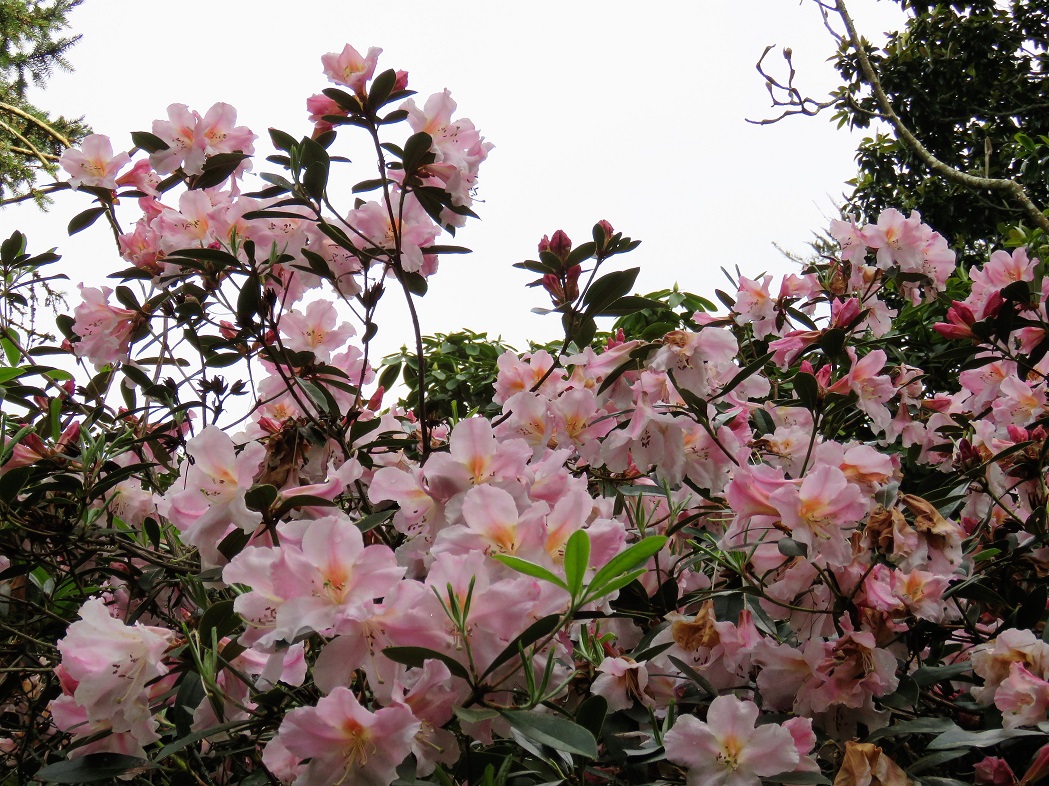
My rhododendron preference is for those with looser trusses that are sometimes so abundant that they can cover the plant.

Rhododendron Anne Teese

It took a couple of goes for Mark to remember the name of this beauty – Rhododendron Anne Teese. It is an Australian-bred hybrid coming from the Teese family (in this case the father, Arnold) who are well known through their nursery, Yamina Rare Plants in Monbulk, Victoria. Mark thinks it was named for the mother, presumably married to Arnold. Whatever, it is very lovely and I would be happy to have it named for me. It is a Maddenia hybrid (R.ciliicalyx x R.formosum) so scented and with a heavier petal, more weather resistant than ‘Charisma’, a similar R.ciliicalyx selection that used to be widely available here.

Rhododendron Floral Gift in a swathe of bluebells

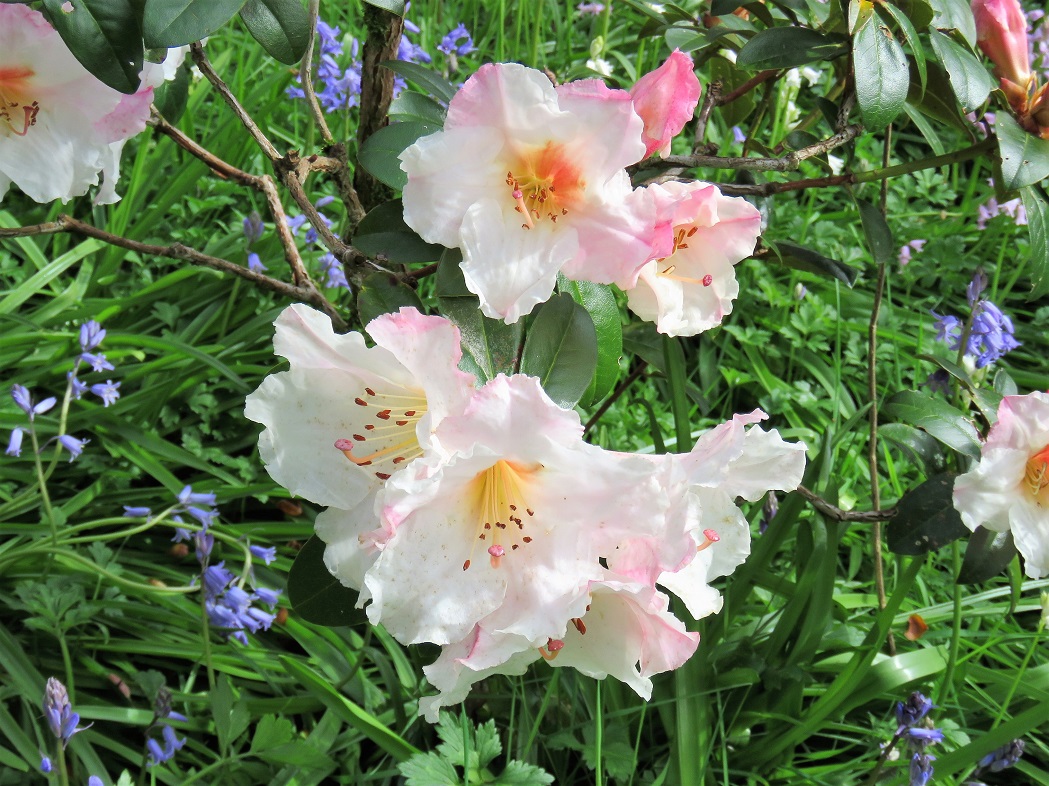
With one notable exception – Magnolia ‘Felix Jury’ – Mark doesn’t name his cultivars for people. Or when he does, it is by oblique reference at best so an in-house tribute only. So this, his most fragrant rhododendron is ‘Floral Gift’, not ‘Abbie Jury’. It takes a while to get established but it is lovely and can be seen performing really well at Pukeiti Rhododendron Gardens. There are a whole lot of hybrids in this genre of scented, white flushed pink loose trusses; the best known is ‘Fragrantissimum’.  What sets ‘Floral Gift’ apart is the large flower and the very heavy petal texture giving it good weather resistance.

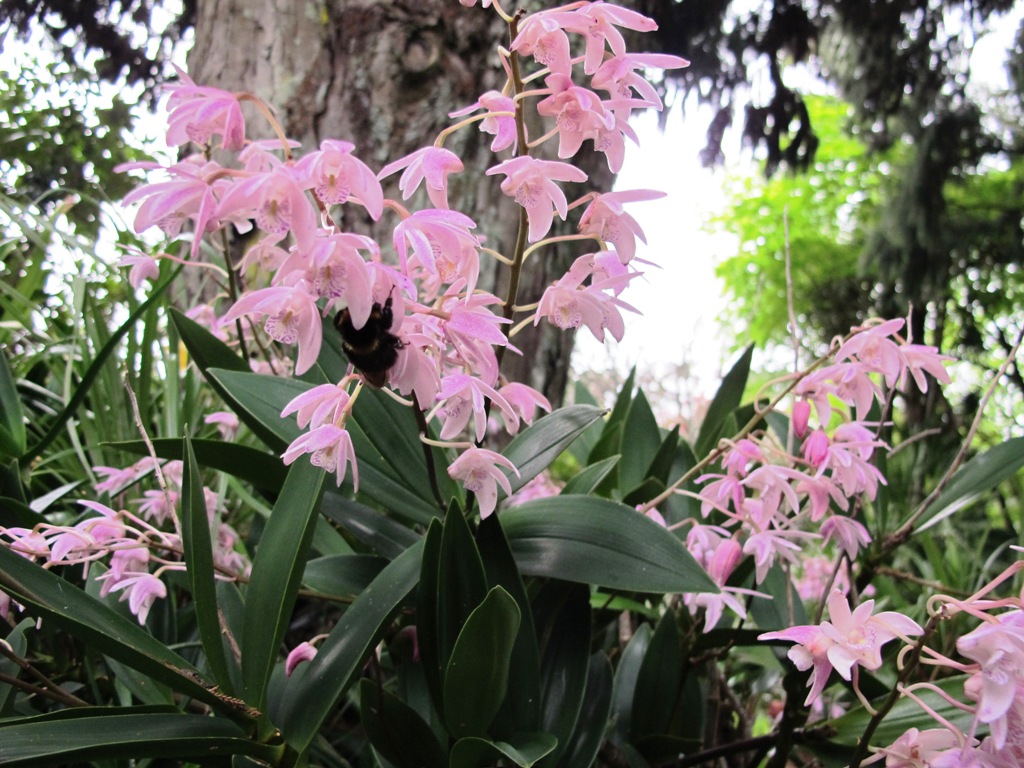
The reason I often reference weather resistance is because our spring flowering coincides with the spring equinox when we get the most unsettled weather, as evidenced this weekend – which, for us, means very heavy rain and wind which can wipe out fragile flowers in a matter of hours. And a few more pinks to finish off – this is one of the Dendrobium ‘Bardo Rose’ group of orchids which thrive in our open woodland areas. They flower for a long time and the scale is right for detailed woodland plantings – by which I mean, not as big and dominant as the cymbidiums.
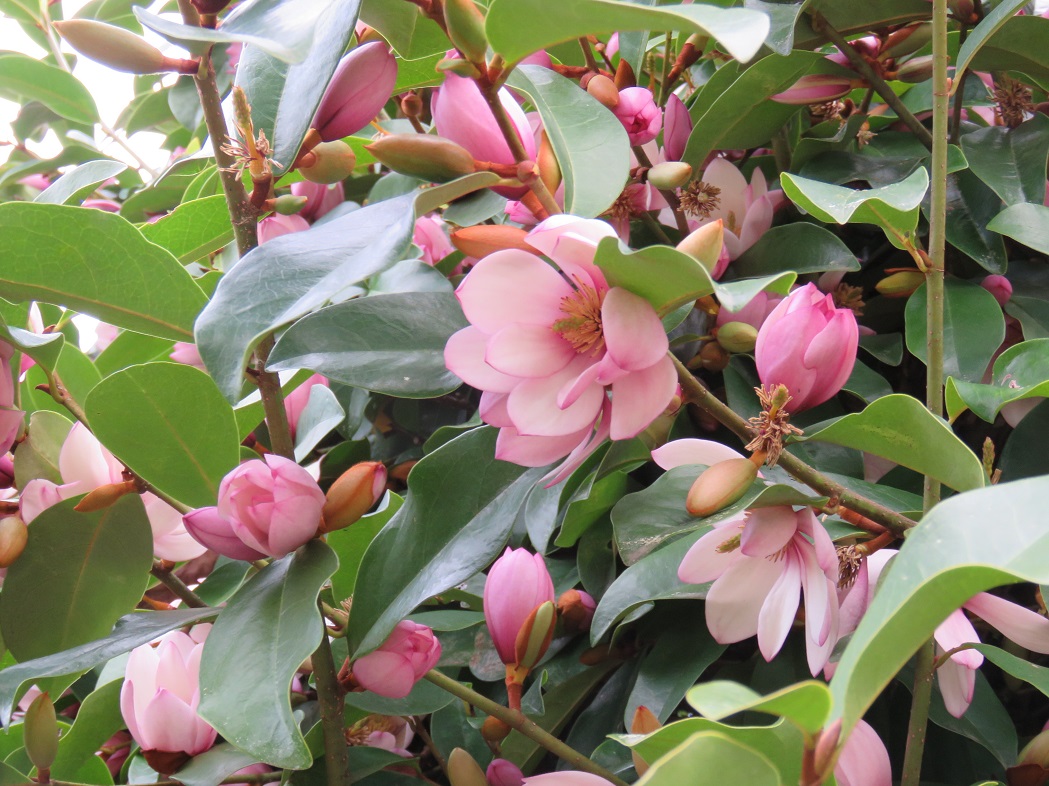
Fairy Magnolia Blush

Fairy Magnolia Blush has a good, long flowering season, currently at its most charming stage of peak bloom. More lilac than pink, it is pleione orchid time. This is another group from the orchid family that thrives in pretty laissez-faire woodland conditions (in other words, benign neglect) but the flowering season is much shorter than the dendrobium ‘Bardo Roses’.

And the final bar of pink can be left to the evergreen azaleas. We have so many different ones that we get many months in flower but they are currently at their showiest.

Exotica in the shade

Shade gardens we have a-plenty

Shade gardens we have a-plenty

Glory be, but I do love spring.  This month subtropical bulbs and orchids shout out to be noticed.

We have extensive shade gardens. It is an inevitable result of a large, mature garden with many evergreen trees dating back as far as 1870. We do a lot of what we call lifting and limbing – taking off lower branches and keeping areas open to the light, for there are not a lot of plant options when it comes to deep, dark shade. Beneath the mighty tree canopy, it is dry but frost-free with dappled light. Over the decades there has been much trial and error to find what will thrive in these conditions and the plantings have become increasingly complex.

Dendrobium Bardo Rose

Dendrobium Bardo Rose

By this time in spring, we are over peak season for cymbidium orchids but the Australian dendrobiums are a delight. These are much smaller and more mounded or clumping in appearance and they take care of themselves. We have found the Bardo Rose group to be particularly obliging and free-flowering in woodland conditions. Ours all came from the local Orchid Society, an organisation that we have found combines generosity with superior technical knowledge.

Pleione orchids in the woodland

Pleione orchids in the woodland

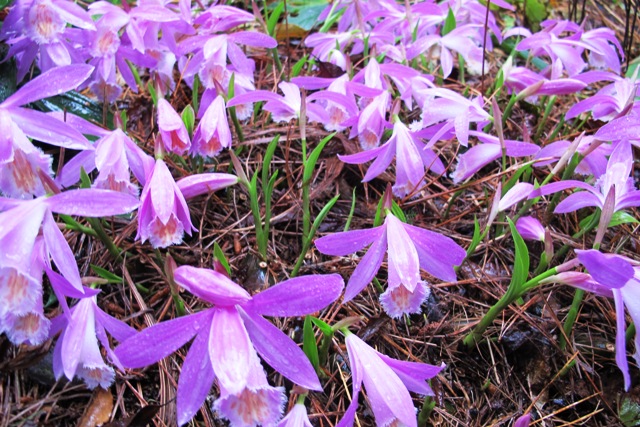
Pleione orchids do not last as long in bloom as many of the other orchids. Their flowers are soft rather than waxy but oh my, they make such a pretty carpet. It is easy for them to get swamped so we try and keep the area around them open but beyond lifting and dividing every few years, we just leave them alone. In our experience, the lovely yellow varieties do better in a climate where they get more winter chill. I think all our yellows have died out now but we have plenty in shades of lilac, purple and pure white. Most of our successful varieties came from the late George Fuller, orchid expert and former curator of Pukekura Park, and seem to have formosana in their parentage. If you want to build them up, a single bulb will usually set 2 offsets each season so you can double them every year.

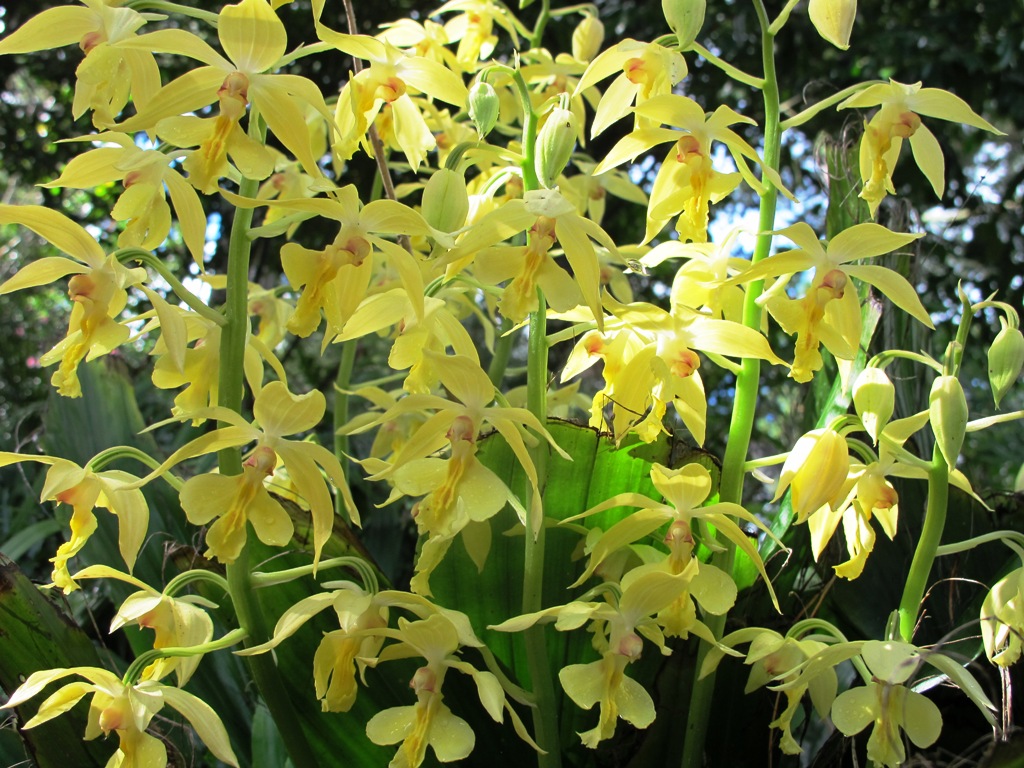
Calanthe orchid - CopyThe calanthes are ground orchids and we have big clumps now because these obliging plants can just be left to quietly increase in size. These are fully evergreen and somewhat frost tender but they are a delightful sight through spring and they combine very well with clivias, ferns and even hostas.
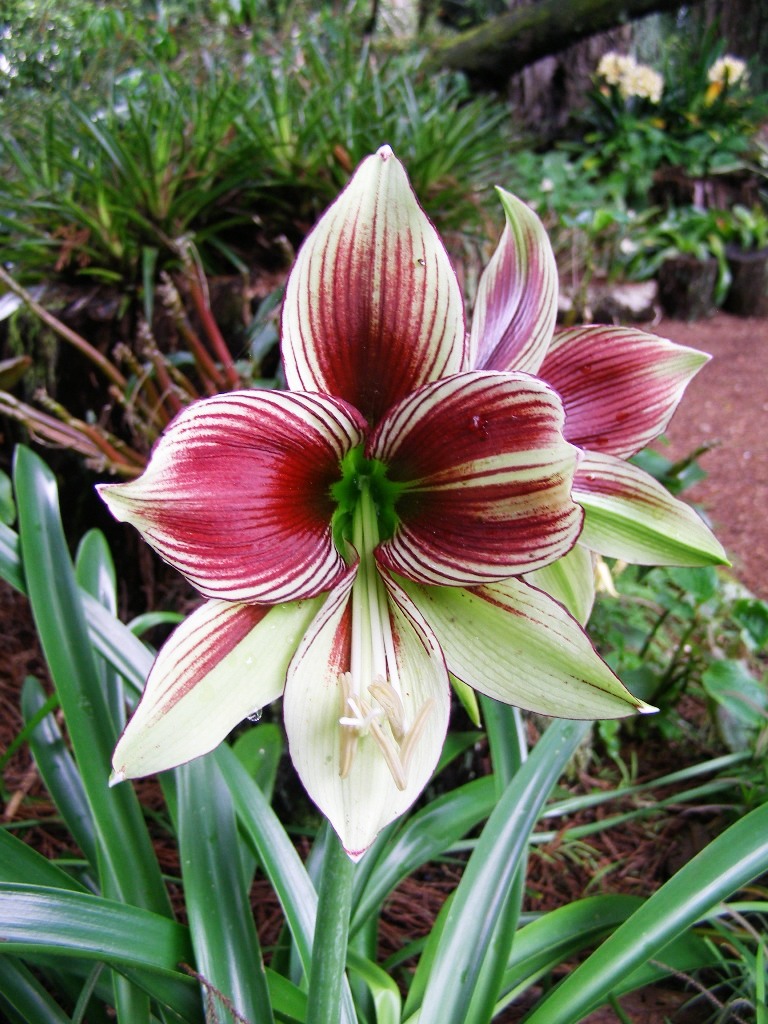
Hippeastrums are a plant family that has been much hybridised but I am not entirely convinced that has been to their advantage. It is two species that we rely on, both South American. It was by chance we found they settled happily into woodland conditions. In full sun, they were ravaged by narcissi fly but in high shade they are fine. Apparently nazi flies, as they are often called, don’t like shade. H. aulicum is one of our early to mid spring mainstays, flowering consistently year in and year out while multiplying most satisfyingly. To me, they look like beautiful Jacobean lilies in the woodland.

Hippeastrum aulicum, one of our woodland mainstays

Hippeastrum aulicum, one of our woodland mainstays

Hippeastrum papilio has been a more recent acquisition for us and it is certainly spectacular, looking more like an orchid than the butterfly for which it was named. It is offered for sale but be prepared to pay a lot for a single bulb – maybe $30 if it is flowering size – because it takes several years to get to that point. I can’t think that we would have started with more than just one or two bulbs at that price. I see with a bit of dividing and replanting we now have about sixty but not all are flowering size yet. Mark has done some hybrids of aulicum x papilio to increase numbers and get some variety, but they have yet to bloom.

Hippeastrum papilio

Hippeastrum papilio

I will have to leave the arisaemas, trilliums and the Paris polyphylla for another time but will finish with Scadoxus puniceus from South Africa. Many readers will be familiar with the summer flowering red S. multiflorus ssp. katherinae, especially in the Auckland area because it was, and maybe still is, much beloved by landscapers. It is a mainstay of our summer woodland, but in spring it is the lesser known S. puniceus that is the showstopper. Growing from large bulbs which are slow to increase, the foliage is lush and the large blooms are curious rather than beautiful. S. puniceus is not widely available, but if you can find somebody with it, it is easy enough to raise from fresh seed as long as you are willing to wait quite a few years to reach flowering size.

The rewards are there for patient gardeners.

The lesser known Scadoxus puniceus

The lesser known Scadoxus puniceus

Text first published in the October issue of NZ Gardener and reprinted here with their permission 

Orchids as garden plants

Referred to here as the Aussie dendrobes - dendrobiums

Referred to here as the Aussie dendrobes – dendrobiums

We are at the peak of orchid season in the garden. There can be few plants which carry the aura of luxury and exotica accorded to orchids. They belong to a huge and complex family, second only to the daisy family in number and go well beyond the common cymbidium. Yet they are not a plant that is common in New Zealand gardens.

Besotted by calanthes

Besotted by calanthes

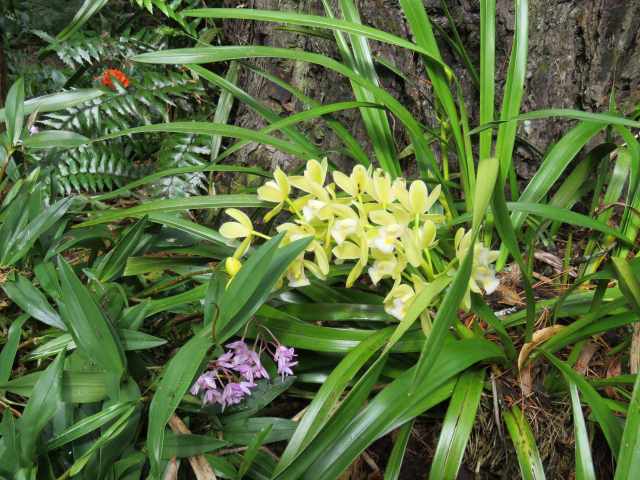
The calanthe orchids are particularly rewarding as garden plants but you need to take the long view. We use them mainly as woodland plants. The blooms are a bit frost tender. Some we had on the margins were once hit by a memorable late frost but that was a one-off event. After about five decades of building them up, we have large swathes or drifts. In fact we have so many that a gardening ingénue who saw them recently drew the conclusion that they must be an unusual but easy bedding plant. Ah, no. But for those who have the time and inclination, they are a very rewarding branch of the family. Over time, they form a string of back bulbs below ground and can be increased from these.

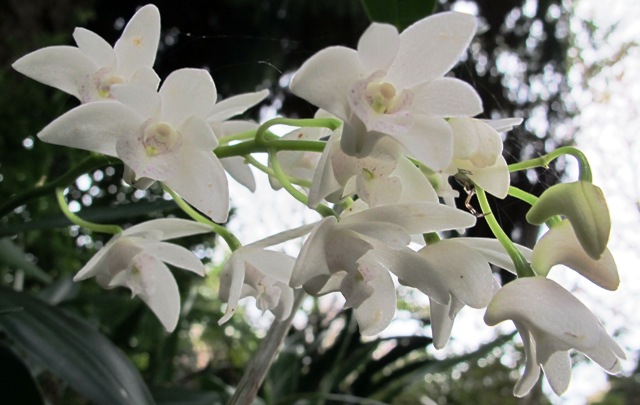
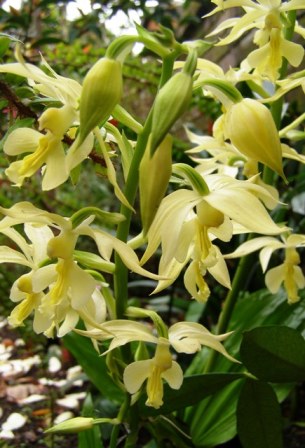
For orchid enthusiasts who want the technical data, we understand that it is mostly forms of striata that are showiest for us. We have a pale lemon one which flowers in early spring and a much brighter yellow form that comes later. We used to have them under different species names but have come to the conclusion that they are more likely just different striata forms. Note: I have now been informed that the pale yellow calanthe shown is in fact Calanthe ‘Higo’ (C. sieboldii x C. aristulifera) which makes sense to us. We also use the white C. arisanensis but alas we failed with a lovely lilac species and appear to have lost it. All of these are evergreen varieties, though I understand there are deciduous species as well. The fresh spring leaves are large and could, at a pinch, be thought of as looking like pleated hosta leaves. A fair number of garden visitors over the years have asked us about the yellow flowered hostas. (Hint: hostas only flower in white or shades of lilac to purple.)

The Australian dendrobiums make compact, clumping plants with many smaller flowers and are pretty as a picture in the subtropical woodland areas. They combine very well with bromeliads and ferns and are an easy care garden plant. We have them in pinks, lilacs, white and yellow. We don’t know much about the hardiness of these. Ours are in positions where they never get frosted but they will get cold and they never turn a hair. They are probably similar to cymbidiums in hardiness.

Cymbidiums give long lived blooms, even outdoors

Cymbidiums give long lived blooms, even outdoors

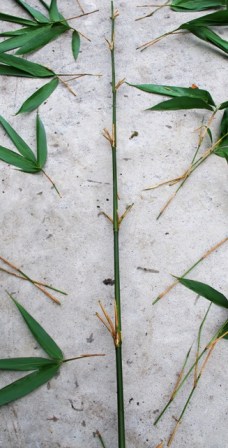
DIY bamboo stake

DIY bamboo stake

Cymbidiums are the usual florist’s choice and are surprisingly easy as garden plants, given the right conditions. All of ours are grown in the ground, not containers. We don’t get florist quality blooms but they last an amazingly long time in flower and put on a splendid show as long as I remember to stake the flower spikes at the right time. I see I started photographing the flower spikes a full two months ago and those same flowers are now a little weather beaten but still showy. These days I harvest stems of green bamboo which still have convenient leaf axils because I can gently engage the flower spikes in the leaf axils and don’t have to tie each one which makes staking much faster and more discreet. I admit this only works if you have a convenient stand of bamboo to harvest.

The jury is still out on whether we can get the disa orchids naturalised by the stream. They were fine for the first two seasons but the proof of the pudding is in the five to ten year cycle – whether they are still strong and flowering after that time. At this point it is not looking good. The native English field orchid, Dactylorhiza maculata, has gently ticked on here for decades but is romping away more enthusiastically now we are trying cooler, damper positions. We didn’t succeed with the masdevallias (though we probably didn’t try very hard) and the tropical orchids like phalaenopsis (moth orchids) won’t do as garden plants for us.

One of the easiest orchids to grow - pleiones

One of the easiest orchids to grow – pleiones

This week it is the pleiones which are the stars. Their flowering season is nowhere near as extended as some of the other orchids, but they form pretty carpets, are not at all tender and are dead easy to increase. Most bulbs will make one or two offsets a year. Along with the dactylorhiza, they are deciduous, becoming dormant in autumn. The yellow pleiones want more of a winter chill and have gradually died out for us but we have an abundance of purest white ones and an array of lilacs and purples.

These are not generally plants that you will find offered for sale at garden centres (which may be why they are not often seen in gardens). You probably need to find your nearest Orchid Society and enquire about sales tables. Orchid enthusiasts tend to be a different breed. At the risk of making sweeping generalisations, Orchid Society people are more often collectors than gardeners. More than any other horticultural group we have come across, orchid people have well above average technical knowledge and like to show off their treasures in bloom. They are also generous and encouraging to any novice who shows an interest. Much of our collection has come from Orchid Society people over the years. We cannot speak highly enough of them as a repository of knowledge about a very complex plant genus.

For details on how to multiply calanthe orchids, check out our earlier Outdoor Classroom on the topic.

First published by the Waikato Times and reprinted here with their permission.