
First published in the Weekend Gardener and reproduced here with their permission.
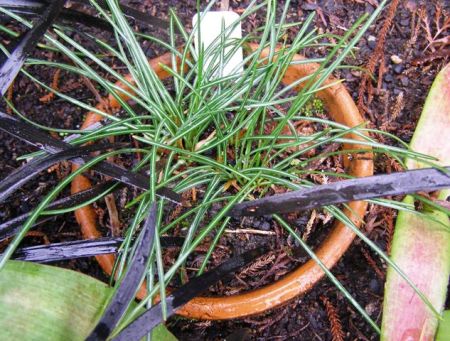 Plunging is a gardening technique that has been around for a long time but is not often seen in New Zealand. It is simply burying a porous pot in the ground so that only the lip is visible. Traditionally, in the United Kingdom, it was often done to stop the roots of the plants from freezing in cold winters. It also stopped terracotta pots from shattering in severe frosts. It is also done to equalise moisture and to stop plants getting either waterlogged or too dry. If you visit the alpine houses at the RHS Wisley Gardens, you will see that all the alpine treasures are grown in pots which are plunged into beds of compacted sand.
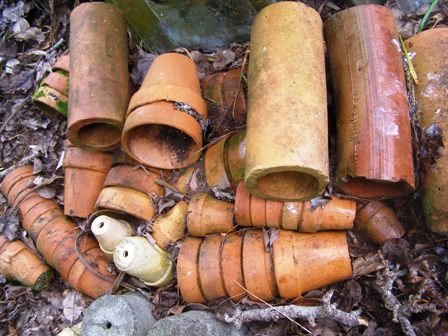 Plunging is a technique I have been using around our garden for a variety of purposes. It is important to note that it only works with porous pots. Fortunately, I inherited a collection of aged terracotta pots and drainage pipes in various sizes which fit the bill. If you use glazed or plastic pots, the water cannot move between the surrounding soils and the plant’s roots in the pot.
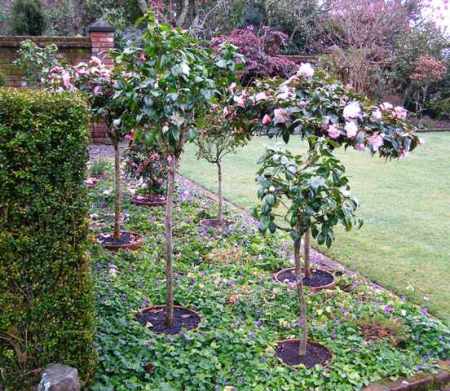
1) I had some rather special camellias which blew over every time it was windy and which dried out too quickly in summer because I was erratic with watering. They were also getting too heavy to move easily and root pruning and repotting became difficult as the plants grew ever larger. I did not want to plant them out in the garden because I still wanted to feature them as a group. Plunging the pots into a border was one solution. They never blow over. They do not need anywhere near as much hand watering because the moisture from the surrounding soil keeps the pots damp and cool. They remain featured as individual plants. Where some were badly root-bound, I cut off the base off the pots to allow the roots to get into the soil. The remaining plants are treated as container plants and repotted every two years with fresh mix.
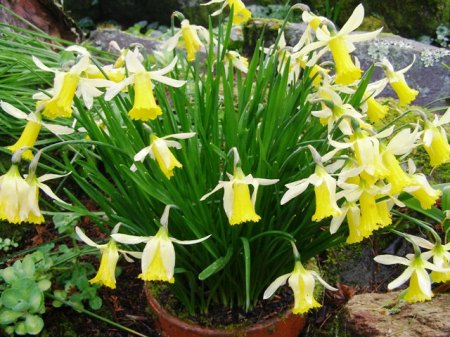
2) I frequently plunge pots of seasonal bulbs to add colour and interest in key spots. When they are past their best, they can be removed out of sight and replaced with something else instead. This particular pot is Narcissus Twilight, One of Felix Jury’s cyclamineus hybrids.
3) Plunging is one way of keeping track of special plants, especially bulbs which are easy to lose when they are dormant.
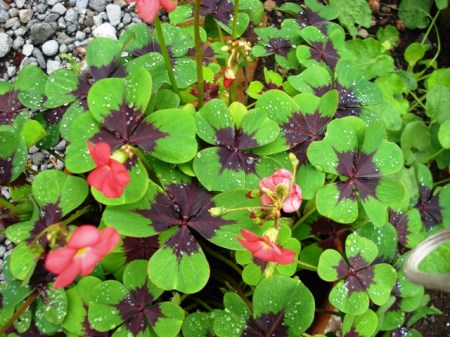

4) Equally, plunging can be used to keep invasive plants confined. It won’t work where a plant spreads by setting seed but it is successful in keeping runaway plants under control. Most of the mint family have this tendency, as do many of the ornamental oxalis.
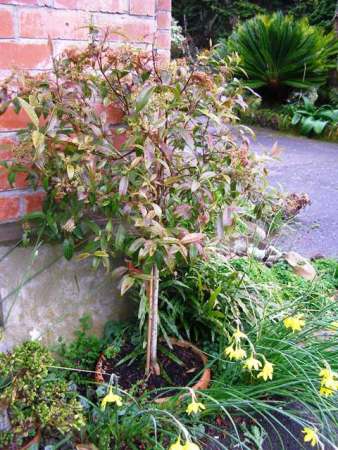
5) Plunging can be used to restrict growth and to keep plants reduced in size, so it is a rough form of bonsai. I wanted this deliciously fragrant lemon myrtle (Backhousia citriodora) by the house but left unchecked, it would become a tree. Similarly, I have plunged a pot of rosemary to check its growth and also because the position near the back door was in heavy soil which this Mediterranean type of shrub would not enjoy. The pot gives it hotter, drier conditions.
Plunging is essentially container growing in the ground.
Points to remember:
- Plunging does not eliminate the need for all watering in summer. It merely reduces it. Plants still require watering every pots every two or three days in hot, dry weather. Making sure there is a gap between the level of the potting mix and the top lip of the pot makes watering easier and any water which drains straight through is still going to be available in the surrounding soil.
- It is important to remember that plunged pots are still container plants so they will need repotting from time to time and they will need feeding in between. All container plants should be repotted in fresh mix every two years with slow release fertiliser. That fertiliser can last about nine months. Topdress after that as required.
- If plants start to look deeply stressed with yellow leaves and poor performance, it is likely that they have either run out of food or they are root bound. If the plant starts to drop leaves and look utterly miserable, check that it has not blocked the drainage holes with thick roots. When this happens, the pot becomes a reservoir for water and the plant starts to slowly drown. It will die if left unattended.
 Tikorangi The Jury Garden