Tag Archives: Primula denticulata

Very pink

Justicea carnea and Kalmia latifilia ‘Ostbo’s Red’

It is satisfying when a plan comes together and this particular border has been giving me pleasure this week. It is very pink and not necessarily a shade of pink that I love but the combination of the piped icing-like kalmia, Flower Carpet roses and pink candlewick flowers of the Justicia carnea  works.
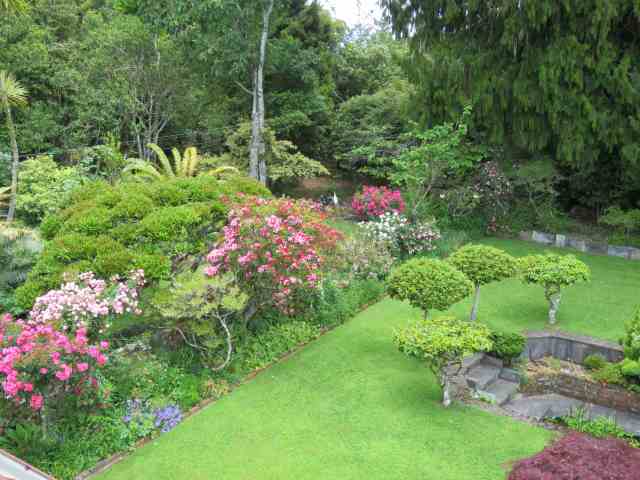
The view from an upstairs window this week
From decades ago – Mark’s mother’s rose garden

When Mark’s parents built the house in 1950, they set about creating picture views from every window. Over the years, we have had to work hard on this particular view, despite the solid structure of the sunken garden being the central feature. It was once a froth of old roses. Mark’s mother loved old roses but in the time since the area was first planted, the huge rimu trees (Dacrydium cupressinum) along the back have doubled in size, their roots have reached out a similar distance and other trees have grown, meaning the area is no longer open and sunny.
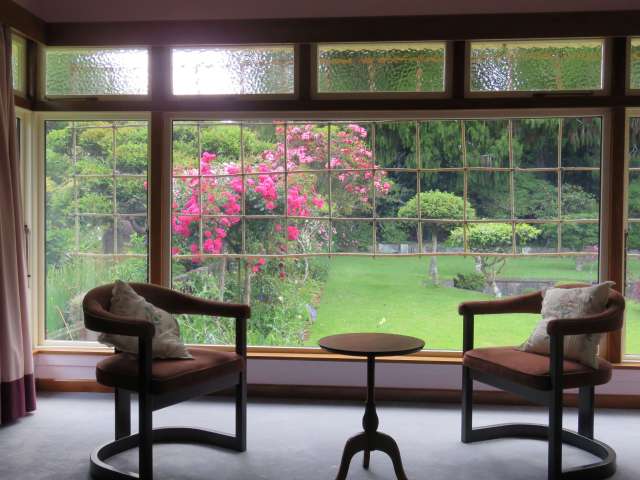
And the view from downstairs. The bamboo screen on the outside of the window is to stop birds flying into the windows and killing or injuring themselves, which used to be a frequent occurrence.

Over the last 30 years, we have made many changes, including removing all the struggling borders bar one and removing all the old roses, bar one. I have wondered about removing this last side border because I don’t enjoy maintaining it and that is usually an indication that something is wrong with it. But it is the view from our sitting room (more like a ‘front parlour’ of old except it is not at the front but it is a room we use when we have guests, rather than every day). And, from upstairs, it is the view from our second daughter’s bedroom (no matter that she left home more than two decades ago – our children still have their own rooms here). As I go in each fine morning to open windows and again late afternoon to close them, I look out the windows. This week, I decided it could definitely stay because every time I looked, the combinations delighted me.
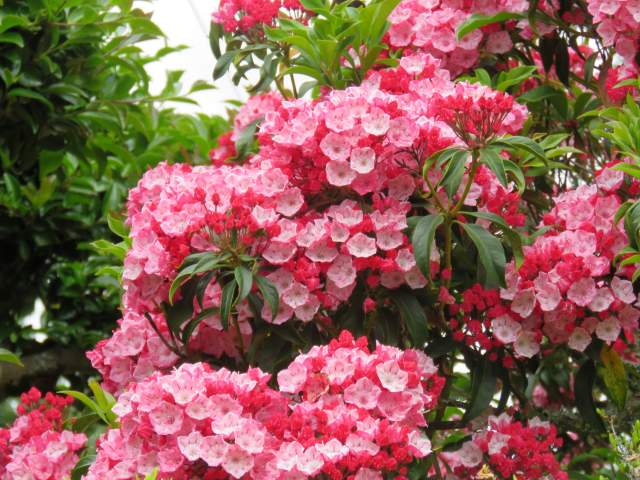
Like piped icing – the resilient flowers of Kalmia latifolia ‘Ostbo’s Red’

We only have a couple of kalmias in the garden and every year, their blooms are a fresh surprise. They look remarkably like skilled cake decorations from piped icing.
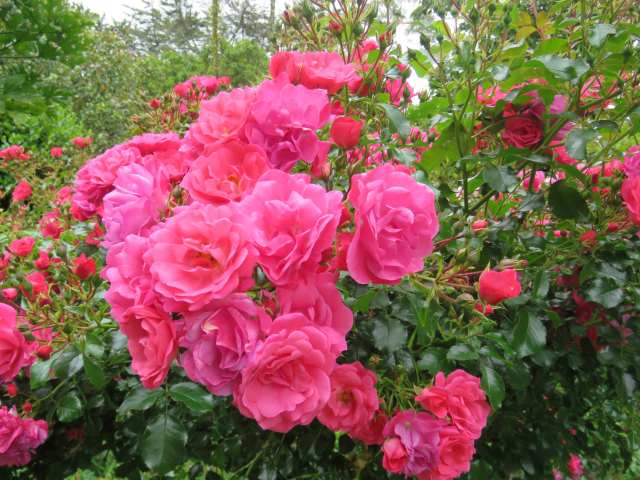
Rose Flower Carpet Pink
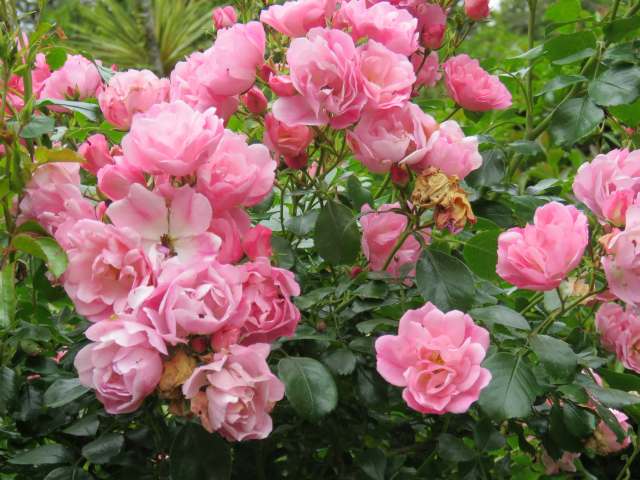
Rose Flower Carpet Appleblossom

When it comes to roses, I tried hard to find roses that would grow in our climate without spraying. Our high humidity and sheltered conditions are difficult when it comes to roses and I expect more from a plant than just beautiful blooms. We have tucked a few into the Iolanthe Garden where the froth and volume of perennials masks their diseased foliage and defoliated branches. But in this border, I want better performance and trial and error narrowed them down to Flower Carpet Roses – Pink, Appleblossom and White, mostly grafted as standards which gives elevation and more air movement. They keep much better foliage and mass flower, even if they are perhaps more utilitarian than romantic. The bright pink and white forms repeat flower for us, on and off for months, the softer pink Appleblossom less so and it can ball in the wet but it is the prettiest of them so I forgive that. At least its foliage stays healthy.
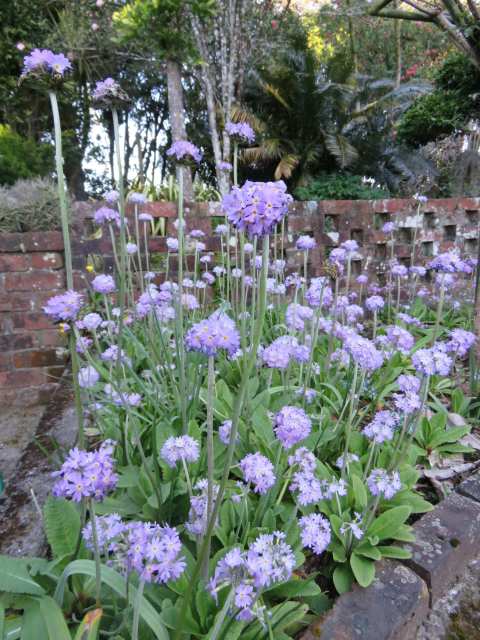
Primula denticulata in early spring

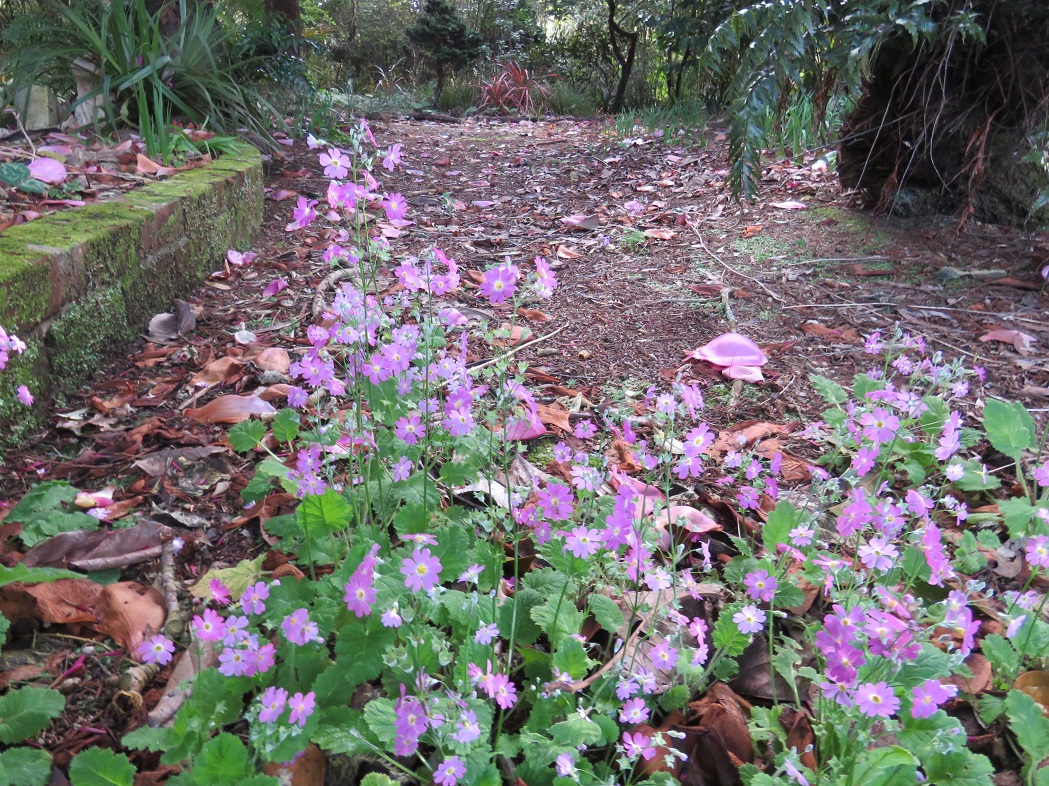
It is not the shrubs in this border that trouble me so much as the under plantings. Conditions range from heavy and wet at one end – perfect for the thriving Primula denticulata in September but there is not much else that flowers for the other eleven months of the year – through various degrees of shade to sun but with considerable root competition from trees and shrubs, to bone dry, impoverished conditions at the far end nearest the rimu trees. I need to come up with better ground cover combinations than we have but 30 years of trying hasn’t yet solved that to my satisfaction. Maybe I am just being too picky, after all.
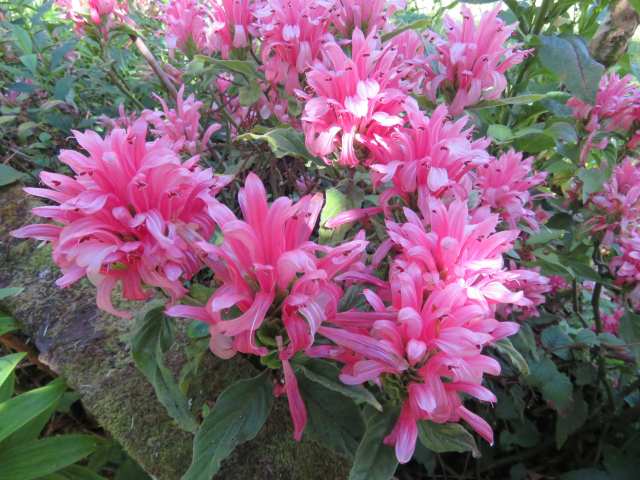
Memories of candlewick bedspreads which were very common in the 1960s and starting to become threadbare and motheaten in the 1970s – Justicia carnea

Hues of lilac

Today is brought to you by the colour lilac. Well, mostly lilac but also leaning towards purple, pink and blue. It is a colour I love although I can not think it is a colour I ever wear in clothing so maybe I only love it in the garden.

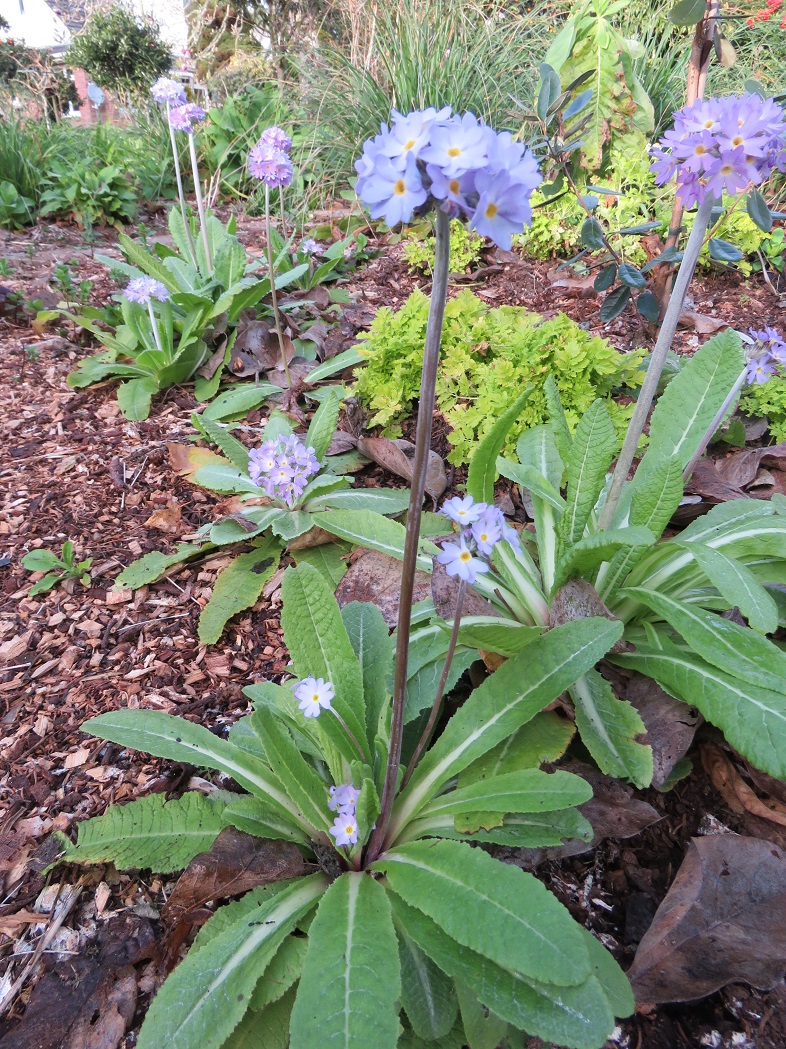
Primula denticulata

The Primula denticulata have been bringing me pleasure for weeks. We were given seedlings of it a couple of years ago. While the ones I planted in the Iolanthe Garden have largely survived, they are clearly not as happy in the sunny conditions there because these ones in heavier soil and partial shade have romped away with enthusiasm and are putting on a good show.

The ‘pink’ form of the Spanish bluebell is more mauve than pink

The lilac bluebells are commonly referred to as pink but really they are more mauve than pink, I think. This week we have swathes or drifts of bluebells blooming in various areas and I forgive them for their weedy, seeding ways. They do need to be actively managed, however, or they will take over in quick time. The white and mauve-pink bluebells are a delightful addition to the blue but in moderation – overall, think about 70% blue to 30% of the other two colours. If you have all white, people may mistake it for onion weed. The fact that the flower spikes are standing up straight tell you that these are Spanish bluebells, not the more desirable English species. Besides, only the Spanish ones come in colours other than blue.

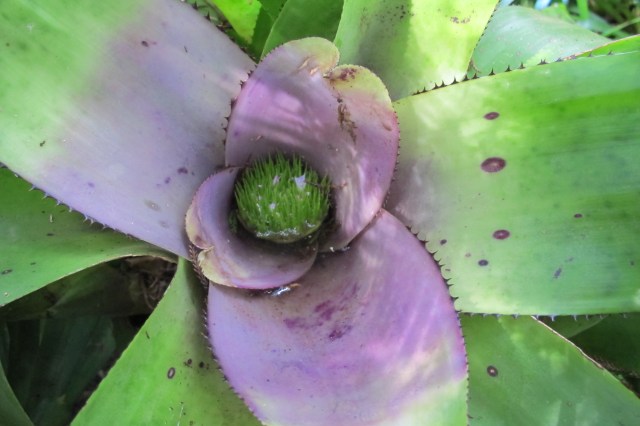
A neoregelia, I think

This week has seen me working my way along beneath the Rimu Avenue at precisely the same time I did the big sweep through last year – five weeks before we open for the Centuria Taranaki Garden Festival. I like the look of the bromeliads and the atmosphere they lend to this woodland area but I don’t like having to handle them on account of many of them being prickly, very prickly in some cases.

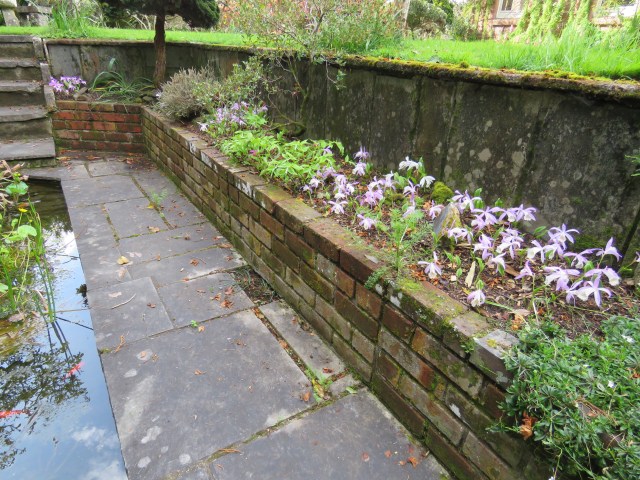
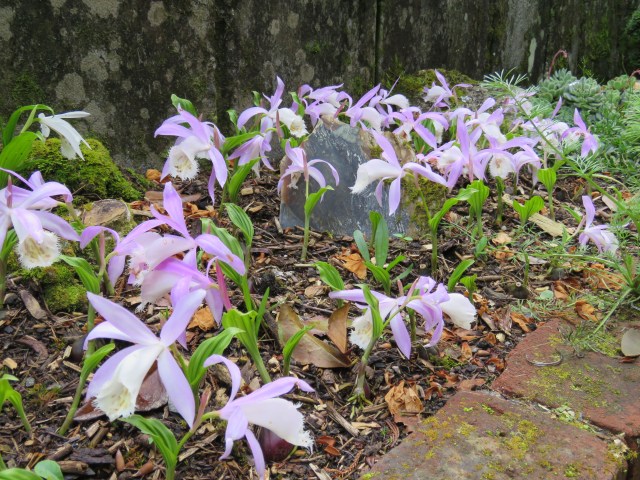
Pleione orchids on the shadier side of the sunken garden
As garden plants, the pleiones need good drainage and a location where they will not get swamped by their neighbours

In the sunken garden, the pleione orchids are in full bloom. They don’t last as long as the cymbidiums and dendrobiums but they are an obliging seasonal pleasure which don’t require much attention year on year. Most of ours came from the late George Fuller and are his named hybrids although we have lost track of the names since George died. This one may, however, be the one he called ‘Lilac Beauty’ if the depths of my memory serve me right.   

Just an unnamed seedling but from a controlled cross

I post this photo of a pretty, lilac rhododendron less for the flower but so those in the know can admire the clean foliage. Back when we had the nursery and rhododendrons were a popular line, Mark spent some seasons breeding to get plants with full, ball trusses which keep healthy foliage. Burned or silver foliage (from thrips) is all too common in our humid, mild conditions and this plant has never seen even a whiff of spray but keeps excellent foliage. He succeeded – and with plants which flower in various colours – but too late for both our nursery and for public demand which had fallen away. None have been named or released and it is frankly not worth it commercially so we just get to enjoy them ourselves. For rhododendron lovers, this lilac one is ‘Susan’ X R. metternichii.

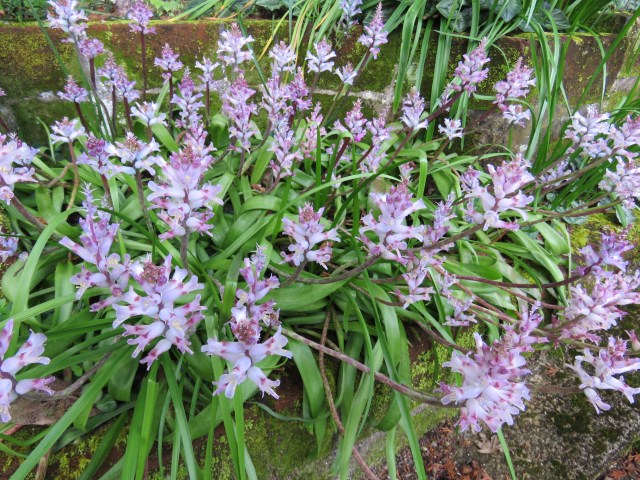
Lachenalia glaucina happily ensconced and multiplying well in the rockery

The later flowering lachenalias are in full bloom. Of the so-called blues, we have most success with Lachenalia orchioides ssp glaucina in the garden. Some of the less common varieties are not overly vigorous and this is one plant family that Mark tries to keep going with back-ups grown in pots under cover so we can keep the range going.

Lachenalias are much more varied than many realise, although not easy to source in this country

For those who have only seen the common orange and red form (Lachenalia aloides but still occasionally misnamed as Lachenalia pearsonii in this country) the huge range of other lachenalias may come as a surprise. They are native to South Africa and Namibia. We collected every obscure species we could find but they are very mixed and the names have never been particularly accurate because there is a lot of variation even within the same species.

Lachenalia aloides vanzyliae to the left and we are unsure of the identity to the right

Finally, off the lilac theme, I was looking at the lachenalias and picked these two. The one on the left is a variation on the most common species – the red and orange one that I think looks like a garish plant you might buy from The Warehouse – but in this case is Lachenalia aloides vanzyliae. It is nowhere near as vigorous as its less refined sibling. Of course it isn’t, the desirable plants never are, but it is so pretty and distinctive. The one on the right is mislabelled as L. arbuthnotiae but that may well be our mistake. Looking on line, I wonder if it is L. pustulata despite the lack of pustules on the leaves which generally give a characteristic warty look but maybe some reader with more expertise will know? It is a pretty and unusual colour combination, with good, strong stems.

Happy gardening this week.

Simple things – appreciating primula species

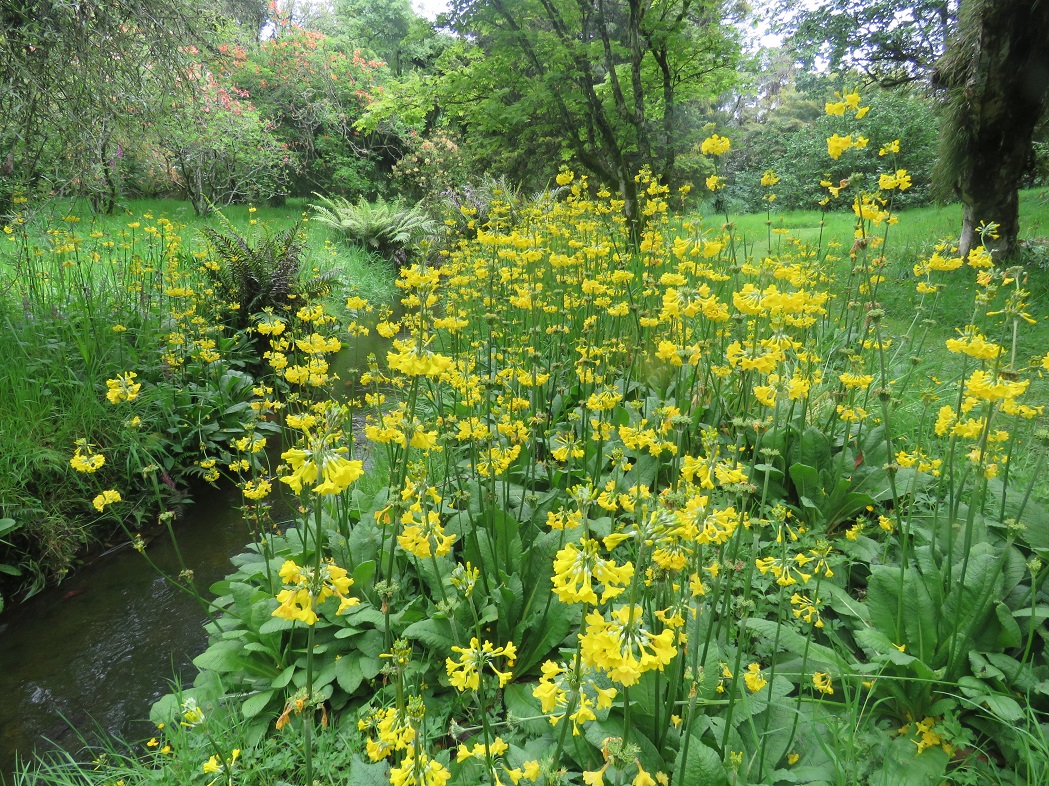
Many square metres of Primula helodoxa

Mark wasn’t particularly optimistic about the primula seedlings we were given some months ago. “We can’t do primulas well,” he said. I went away and thought about this and came back to him, pointing out that we can do Primula helodoxa rather too well, Primula obconica has stayed in one patch of garden for at least two decades despite minimal attention and the annual Primula malacoides pops up prettily around the place and would pop up everywhere if we didn’t restrict its spread. What he meant, I figured, was that we have not succeeded with the choice species like Primula vialii and the Inshriach hybrids which brought a range of different colours, did well initially and then just faded out.

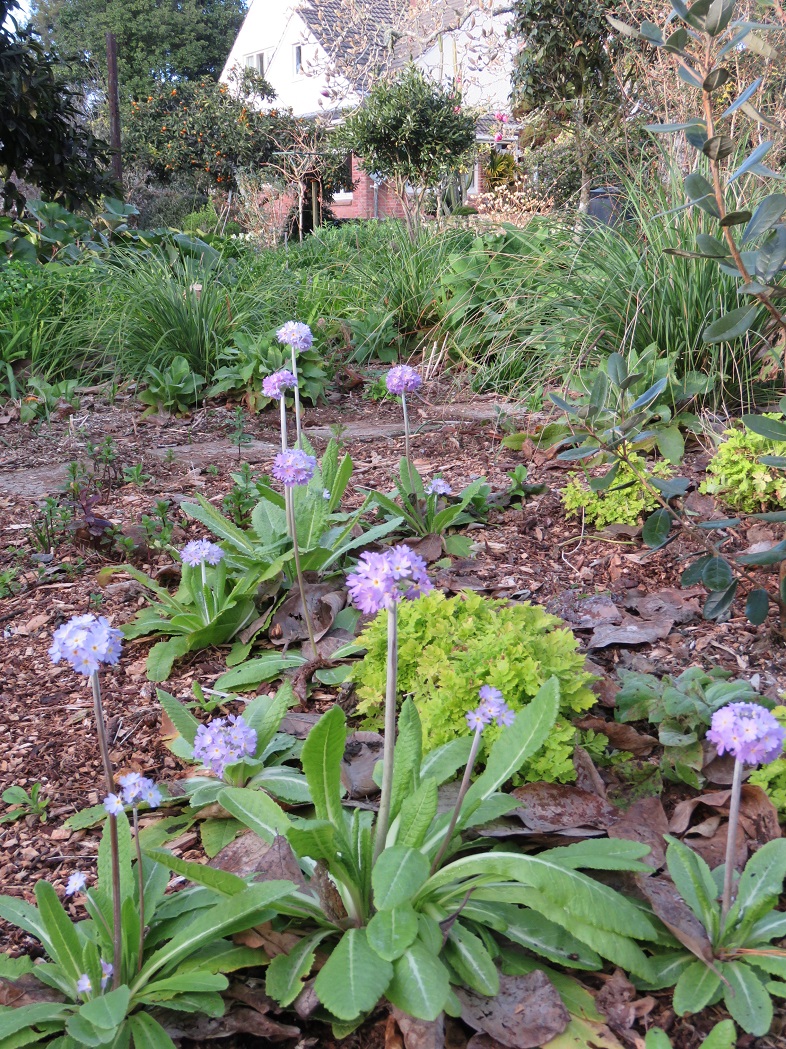
Primula denticulata in the recently planted perennial meadow of the Iolanthe garden

More than one flower spike is forming in many of the plants which is a good sign.

This new primula is a wild form of  P. denticulata, so nothing too out of the ordinary or fussy.  It put up its first flowers a few months ago and, to my delight, is a pretty lilac blue. I am very hopeful it will do well here because it is a colour I really like. To be honest, it is more lilac than blue but that is fine. It has a good strong stem and holds its round flower head up well at 30 to 40cm above the foliage. What is particularly pleasing is that the stronger plants are putting up multiple flower heads. It is always encouraging to get a new plant and even better when you get given over 20 of them rather than buying a single plant and then trying to build it up. Time will tell if it settles in happily over several years and whether it is a suitable candidate for naturalising in meadow conditions but the early signs are good.

The only two polyanthus I kept on the left, Primula vulgare or the wild English primroe in a tiny bunch of nostalgia on the right

The primula family is huge with around 500 or more species. The English primrose, Primula vulgaris, was one of my English mother’s favourite plants in every garden she made – and in her lifetime she made many. I just have one patch of it because the foliage to flower ratio is rather too high in our mild climate but I like to keep it out of nostalgia. As a child, my mother encouraged me to pick flowers (always with long stems, she stressed, and the rule of thumb was that I could pick anything except the roses) and my bouquets were often primroses and grape hyacinths.

Primula malacoides – easy to pull out if it is in the wrong place but charming enough to allow it to gently seed around some areas

Polyanthus and auriculas also belong to the primula family. I am never sure whether I like auriculas. I can admire the curious flower markings but I am not sure how or where one would place them in a garden situation without having them look like a fake flower that was bought from The Warehouse. Maybe this is one of the reasons for that odd feature of the auricula theatre favoured by some UK gardeners – they couldn’t work out how to place them effectively as garden plants, either. Fortunately, this is an academic question here because auriculas are a plant that does way better in colder climates than ours.

Primula obconica has staying power here

Polyanthus are a cheap and cheerful late winter and early spring plant in many gardens. When our children were little, we would sometimes call in to a local hobby grower and let the children select the colours they liked to plant at home. Over time, I have cast out all polyanthus here except for a pure yellow one that I keep in one spot and a good performing white that I have in another area. They lack the refinement of the species that I now prefer; they need regular digging and dividing to keep them performing well and they tend to attract weevils. The weevil larvae show as wriggly white wormy things, usually about half a centimetre long. Years of nursery work instilled a fear of black vine weevils. Perfectly healthy-looking trees and shrubs in the nursery could suddenly flop overnight and forensic examination would reveal that the plants had been ringbarked by weevils just below the level of the potting mix. It took a lot of effort, changed practices, expense and the use of a rather strong chemical to eradicate weevils from the nursery. I am not keen on getting major infestations of these critters in the garden.

My rule of thumb is that I squish any white wriggly things I find in the garden soil. I don’t mind doing that for the new lilac blue prims if they settle in here for the long haul.

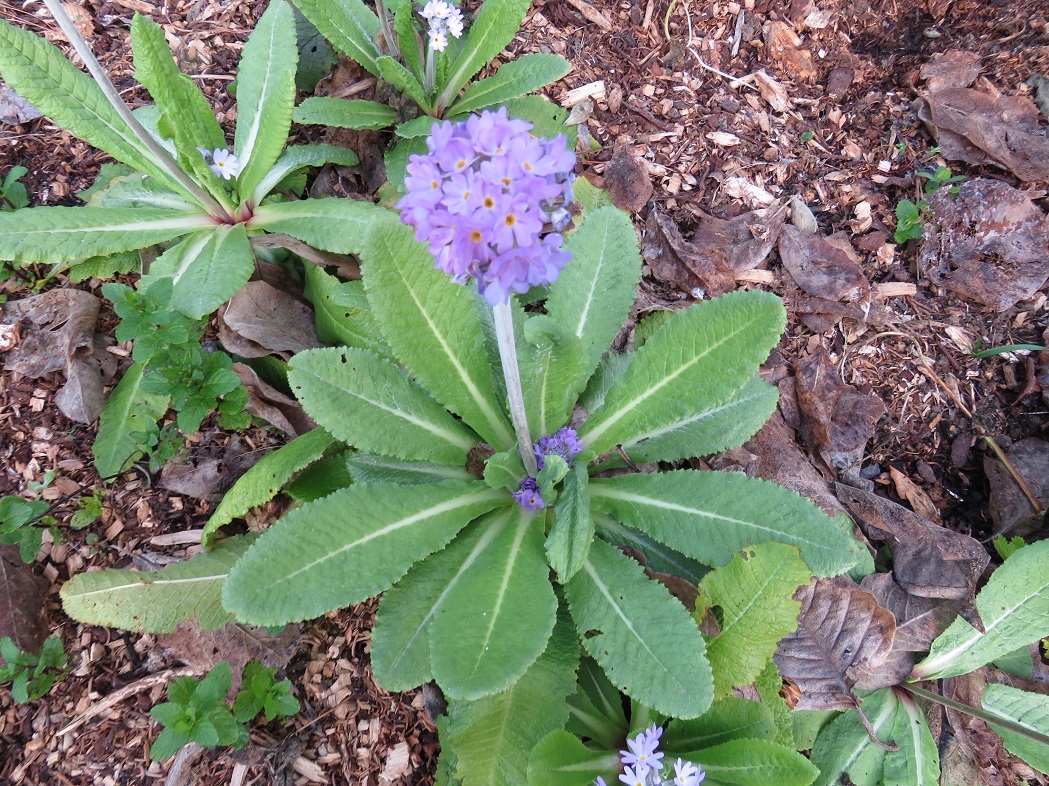
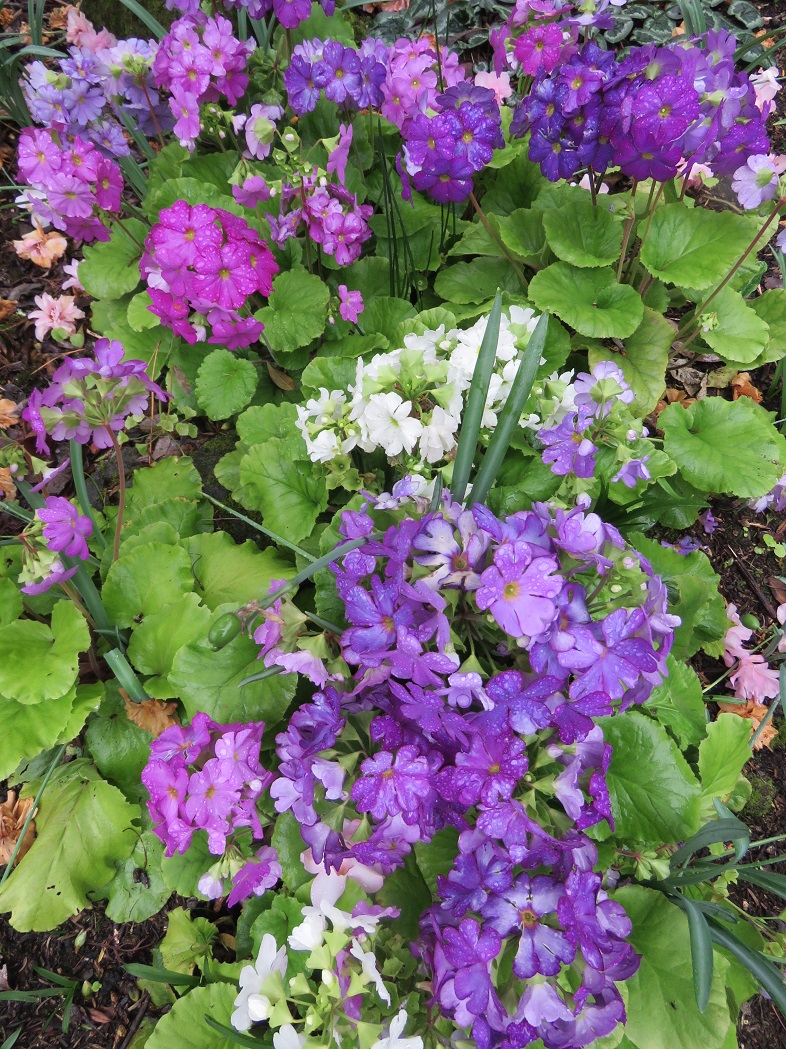
Primula denticulata – seedling grown so there will be variation in the flowers