Tag Archives: prune grapes

Garden lore

“The gardener has a great faith in names; a flower without a name, to put it platonically, is a flower without a metaphysical idea; in short, it has not a right and absolute reality. A flower without a name is a weed.”

The Gardener’s Year
by Karel Čapek (d. 1938)
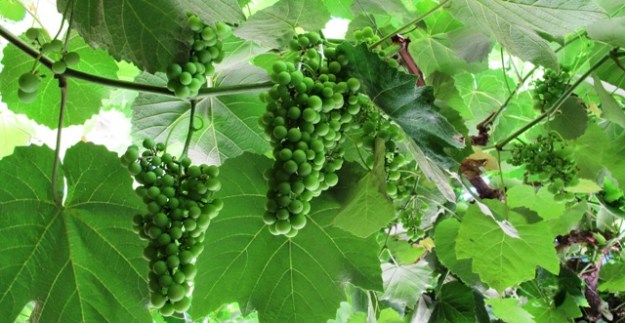
001 - Copy

Summer grapes

Grapes are not a fruiting vine that can be left to their own devices if you want a harvest. They need hard pruning in winter and a follow up in summer. If you haven’t yet summer pruned your grape, then get onto it immediately. Cut all the laterals (side growths) back to six leaves. This allows light to reach the bunches of fruit and concentrates the plant’s energies on ripening the fruit rather than supporting extra foliage.

At the first signs of the fruit ripening, get bird netting on. Our feathered friends rarely wait for fruit to ripen to the stage humans prefer. If you can keep the birds from pecking the fruit, it will reduce their attractiveness to wasps.

By far the most successful, outdoor grape variety we have found in our marginal conditions is Albany Surprise. It is an American hybrid and should grow well in areas which are not known for grape growing because of humidity, rainfall and mild temperatures.

First published in the Waikato Times and reprinted here with their permission.

In the garden 28/11/2008

  • Spring flowering shrubs are best pruned and then fed as they finish flowering, which, by definition, most will have done by now.
  • Stop putting off deadheading rhododendrons and get onto them asap.
  • Stay on top of weeds which are growing vigorously.
  • Scarlet runner beans can be planted. It is the last opportunity to get kumaras, yams and sweet potato variants into the ground. If you are still planting potatoes and tomatoes, they will be late crops so don’t delay on getting them in.
  • Keep successional sowings of peas, green beans, corn and all salad vegetables. These are all crops that need to be sown fortnightly to ensure continued supply.
  • Stop picking your asparagus immediately, no matter how great the temptation. They need the late shoots to build up strength in the crowns for next year.
  • Prune grapes, shortening the new growth to two leaves above the bunches and removing the enthusiastic lateral growths. This improves fruit yield considerably.
  • Brassicas are under siege now from white butterflies and other pests and diseases so unless you are prepared to spray, give up on trying to grow them (including rocket and mustard) until the cool of autumn descends.

Amongst life’s random and probably useless pieces of information is the news that the growing of the Giant Jersey cabbage has been in major decline over the past fifty years. This is clearly a terrible shame because not only are the leaves suitable for using in soup or feeding to cattle while the roots can be carved into thimbles. But the greatest use of the Giant Jersey cabbage (which has a proud history in the Channel Islands) is that it used to be cultivated for the production of gentlemen’s walking sticks. It did take three years to develop a stem worthy of a walking stick for a Victorian gentleman, but it sure beats cutting down a tree.