Tag Archives: Prunus campanulata

Plant Collector – Prunus campanulata

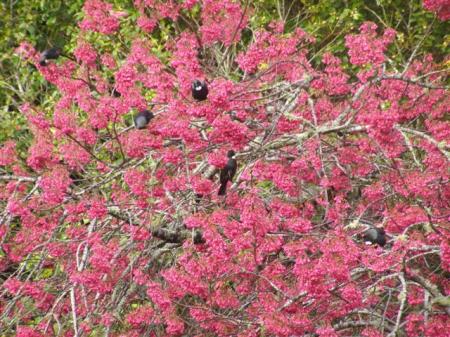
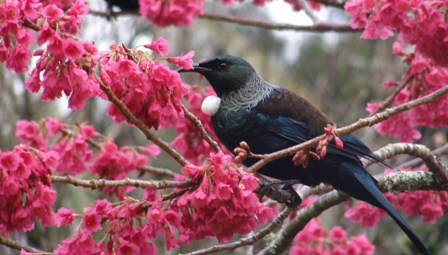
It took many attempts to capture the tui in the campanulata cherry

It took many attempts to capture the tui in the campanulata cherry

The cherry trees which have been in flower in recent weeks are the campanulata or Taiwanese cherries. Sometimes you will still see them referred to as Formosan cherries which may require a lesson in history for anybody under the age of about 60. True, the colours can be a little harsh in carmine pink, cerise and sugar-candy pink tones but on a bleak early spring day, who is going to quibble about the mass of flowers which appear on bare branches? The biggest bonus of the campanulatas is their attraction to tui who feed on the nectar. Our native birds are wonderfully unconcerned about whether or not their food sources are indigenous plants. We can have upwards of 30 tui bickering and squabbling for territory in a single tree, but they don’t stay still long enough to count accurately.

Campanulata cherries are not as hardy as the later flowering Japanese types but this is rarely a problem except in the coldest parts of the country. They are also more disease resistant and healthier in our climate and don’t succumb to the dreaded witches broom which can be a problem in other types. If you plant several (and being a tree of light stature, they are easy to fit in alongside other trees), you can have them flowering in succession over many weeks which keeps the tui at home. The big disadvantage is that many forms set seed freely and germinate readily. They are such a problem that they are on the banned list in Northland unless it is a known sterile form which doesn’t set seed. If you border native bush or a national park, make sure you search out forms advertised as sterile but otherwise you just have to be vigilant with your weeding.

(first published in the Waikato Times and reproduced here with their permission)
Tikorangi Notes: Thursday August 12, 2011

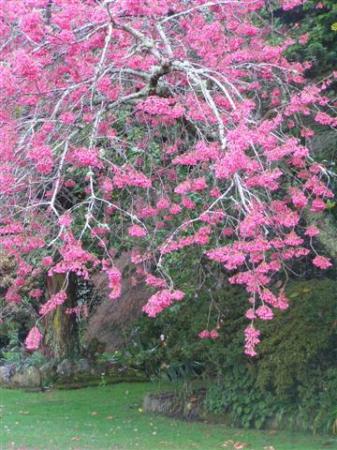
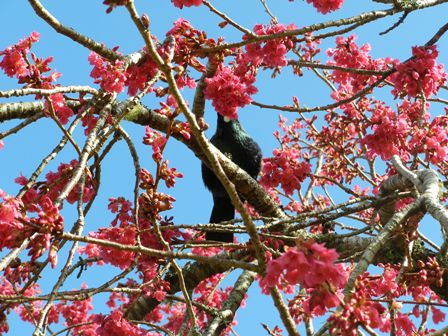
Signs of spring - the campanulata cherries are in flower

Signs of spring - the campanulata cherries are in flower

Technically it is still winter here but we are rocketing into full spring and the garden is looking very colourful. The campanulata cherries are opening and at times can appear to be dancing with the movement of the nectar feeding tui. They don’t sit still for long enough to count (and are very difficult to photograph because they move so quickly but we do seem to have them by the score (as opposed to just a few).

Beautiful but the flowers are too floppy

Beautiful but the flowers are too floppy

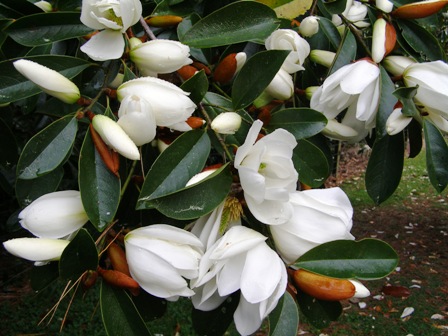
More magnolias are opening by the day as are spring bulbs and even the early rhododendrons. The early white michelias are flowering. We have rows of these and they look splendid and smell divine. But Mark is very picky. There is only room to name one, or maybe two at the most, and plants such as the one in the photograph are destined forever to be just part of our windbreak hedges. Its flowers are simply too floppy. The cultivars Mark selected for further trialling and the one that has been selected for release in the next year or two have much cleaner flowers which are displayed well. They are a big improvement with blooms which hold up and show excellent form.

The garden is open now but if you wait another week or so, there will be a better display of magnolias out. Mind you, the snowdrops will have finished by then but other spring bulbs are opening day by day. For us, this is a time of year we glory in. For details on plant sales this week (personal customers only, though we will hold orders for later collection if they are prepaid) click through to Tikorangi Diary.

Tikorangi notes: Friday August 20, 2010

Nectar-feeding tui in a Prunus campanulata

Nectar-feeding tui in a Prunus campanulata

LATEST POSTS:
1) Breeding woody trees and shrubs like magnolias and camellias is a long term commitment over many years, so it was an absolute revelation to Mark in the mid nineties to be taken to visit hellebore breeder, Robin White, to see just how far and how fast you could get with a whole new type – the double hellebores.
2) In the garden – our hints for garden tasks this week and more on the topic of killing moss with washing powder.
3) Grow It Yourself Vegetables, by Andrew Steen. At last, a new book in this country where the author is actually writing from more than just one year of experience in growing vegetables. Enough from ingénues and novices – we would rather learn from people who actually know what they are writing about and have extensive background experience.
4) Planting an easy-care hanging basket using succulents was certainly not part of our own repertoire of experience, but neighbour Chris (wife of our garden right hand man, Lloyd) was keen to demonstrate how simple it is in the latest Outdoor Classroom.

Campanulata for the tui

Campanulata for the tui

TIKORANGI NOTES:
One of the unspoken conventions of garden one-upmanship in this country is how many tui you can boast of in your garden, particularly in spring. The tui (one tui, two tui – the plural does not have an s added) are native nectar feeding birds distinguished by the white tuft of feathers at the throat (along with a disconcerting ability to mimic other sounds). At this time of the year, we can number ours in scores as they move back from wherever their winter feeding grounds are to feast, particularly on the campanulata cherries and the single camellias. Being a territorial bird, they will bicker and squabble over prime spots and indeed over ownership of an entire tree. While I was out with the camera looking at this tree, the big, bully senior tui flew in and gave very short shift to the dozen or fifteen already ensconced. They were not going to argue the point and moved on quickly. No matter where we look at this time of the year, we see them feeding in the garden – tui will come if there is plenty for them to feed from but in order to keep them around, you need a succession of nectar producing plants.

Prunus campanulata

campanulata (Small)
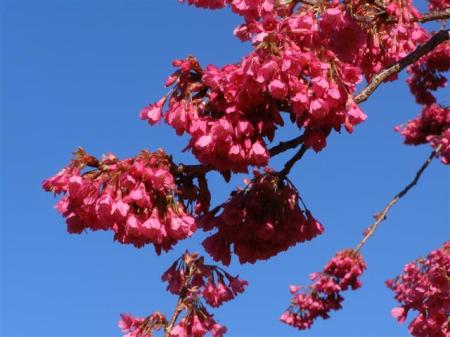
Most people call these flowering cherries and locals tend to take them for granted, unlike those people who live in colder parts of the world where they can not be grown. The ones flowering now are the Taiwanese or Formosan cherry (although only readers over about sixty will recall when the island of Taiwan was still Formosa). They range in colour from mid pink through bright sugar pinks to cerise or carmine and almost red. The reddest form on the market just happens to be called Prunus Felix Jury. We have a series which come into flower over a period of weeks and at times it can seem as if the trees are erupting with feeding tui. While it is hard to take a census (the birds won’t stay still long enough), it is common to find about 20 in one tree at any hour of the day. We think we must currently have at least 50 resident tui.

The downside to campanulatas is that some forms can seed down badly. If you are within a few kilometres of the national park or a nature reserve, make sure you search out forms advertised as sterile (in other words they don’t set seed). These late winter flowering cherries combine well with the early magnolias and because they are not a heavy looking tree, you can often tuck them in nearby so their mass of small flowers contrasts with the over the top magnolia blooms of campbellii or Vulcan. Campanulatas appear to be more disease resistant and healthier in our climate and are not susceptible to witches broom.