Tag Archives: rabbit deterrent

A postscript – or maybe an update –  to my last two posts on digging ‘n dividing and bluebells.

I photographed this patch of asters trimmed to the ground because I thought it was a good example of when not to let sleeping asters lie. Digital photography is very handy for dating things and I see it is only three years since these were last dug and divided. It had become a seamless carpet of aster in the time since. Both Zach and I noted that it did not look as good as it should have last summer. They weren’t helped by getting hit by mildew which has not happened before, but there was no mass flowering.
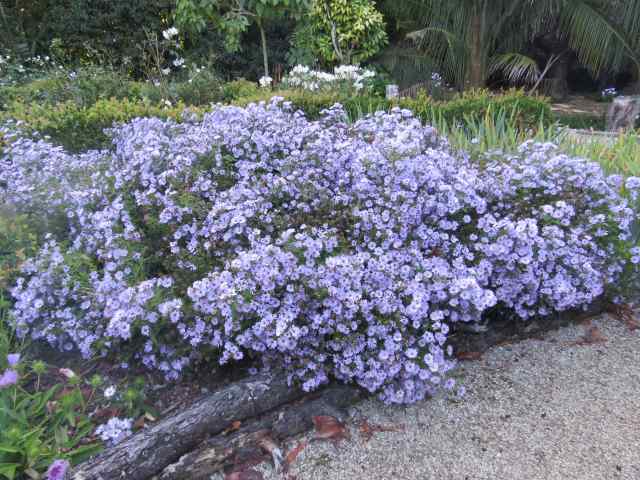
It should have looked like this last summer, but it didn’t. This is from summer 2024.

Time for a dig and divide, which Zach did this week. A perennial that has to be lifted and split every two to three years is on the high maintenance side and we don’t have many in that category. My friend, Sue, who leads the team of volunteers at the pretty Te Henui cemetery, told me she is culling plants that are too high in maintenance for their labour resources and this aster might fit that category. I must ask her for her latest list of culls. Fortunately I have Zach to carry out such tasks or I might be casting around for a less demanding plant option.
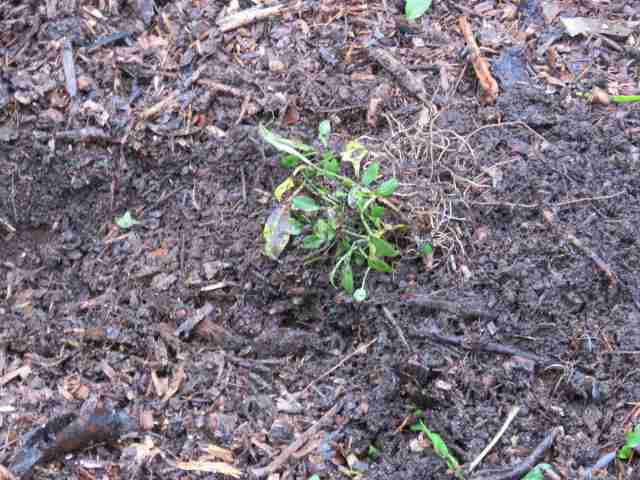
Enter the rabbits. After a quiet few months on the rabbit front, they are back and there is nothing they like more than an area of soft, freshly dug garden and mulch to dig. I sent Zach a text yesterday telling him that the rabbits were undoing his work. He was equally unimpressed but at least the photo shows you the size of division he split off from the previous carpet to replant.

I have just replanted the casualties, filled in the holes and spread blood and bone. The rabbits don’t like blood and bone and will stay away from that area but it does need to be replenished after rain and we have had plenty of that this week.
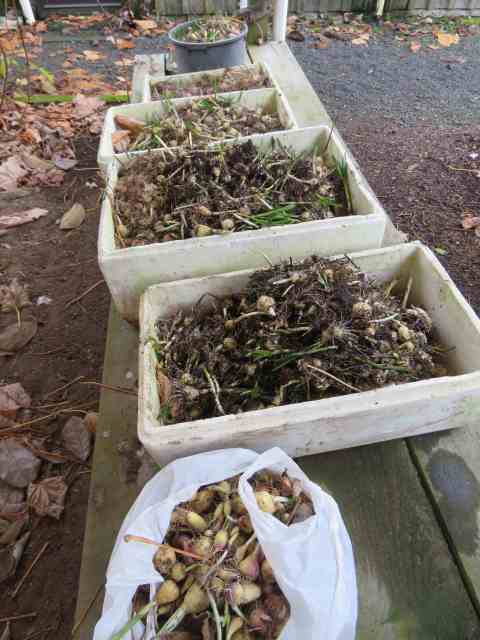
A whole lot of bluebell bulbs, just from the Iolanthe garden. There were more. I have already disposed of some.

The war on bluebells continues and I am at an advanced stage of boredom. I took this photograph as proof that I am not exaggerating. This is by no means all of the bulbs I have dug out of just the Iolanthe garden. Most were never planted there but I will have spread a few when I planted that area in 2019. Some have already been disposed of and still there are more to be dug.
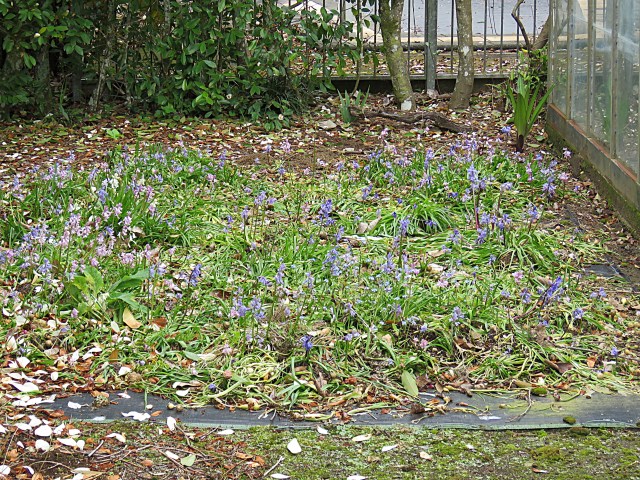
They did not dehydrate in the summer sun. They grew instead.

Bluebells have no place in the cultivated garden. I found a couple of photos from last year, recording our attempts to deal with some culled from the Avenue Gardens. I worried about how many we were dumping on our wild margins and they don’t rot down in the compost. I had the idea that if we spread them thinly on weedmat, they would dehydrate and die in the summer sun. They didn’t. They kept growing. I then thought they might compost in plastic bags in the sun, as wandering tradescantia does. Some did over the summer months but others in those bags were still firm and viable. Responsible disposal is quite a big problem.
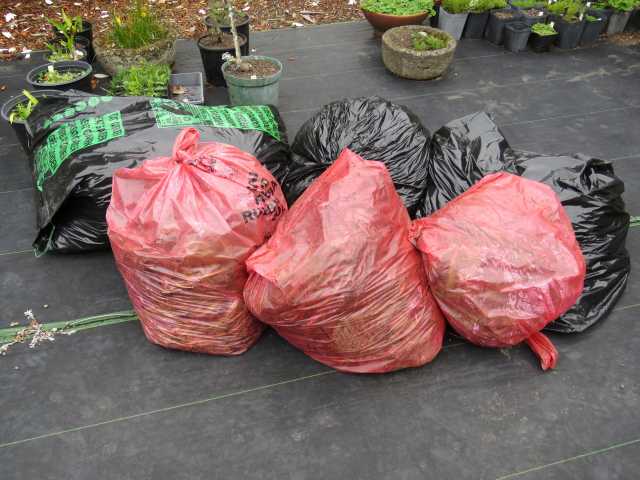
Nor did they rot down in the plastic bags, as I hoped.

We have a lot of bluebells in the park and the Wild North Garden and they can stay there. To get rid of them, we would have to go for repeated use of some heavy-duty sprays and we try and avoid that. Besides, they are very pretty in spring. Ours are all Spanish bluebells or hybrids; the more desirable English bluebells are extremely scarce in this country. I don’t think I have ever seen them.
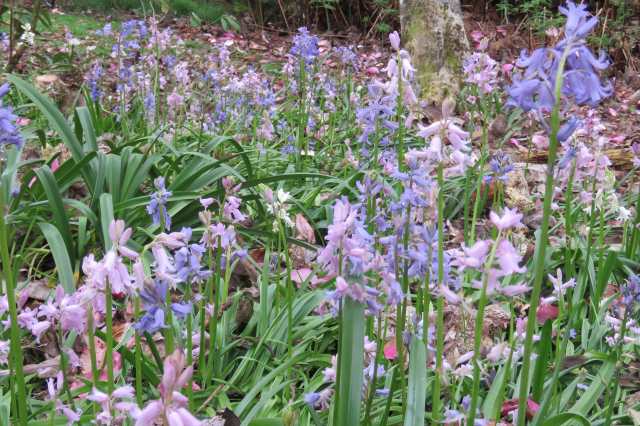
“If they stank like onion weed, they would be seen as a weed,” said Mark. “They are a weed,” I replied.

If we had our time over again, we would think twice about introducing them to our property. Mark put a bit of work into building up numbers in the first place. A decade or so on, I am putting a great deal more work into digging them out from some areas, all but sifting the soil to get the baby bulbs. You have been warned.
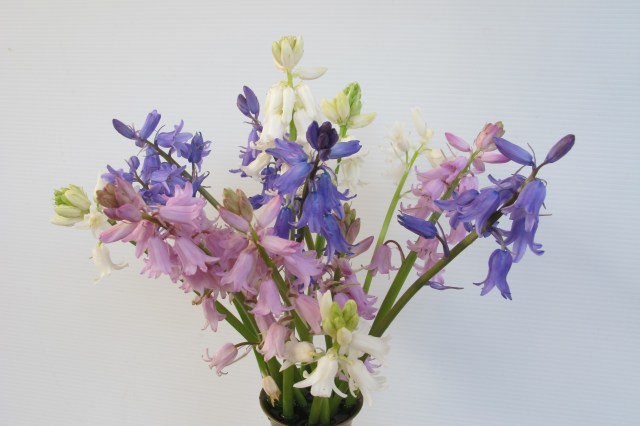
From happier bluebell days

Tikorangi notes: a week of pests and petals

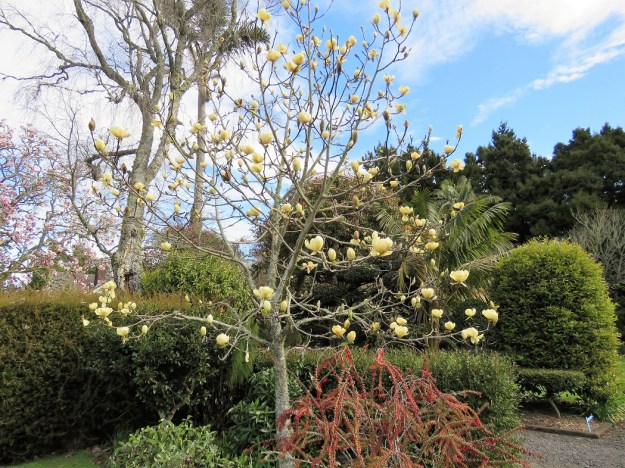
Magnolia Honey Tulip

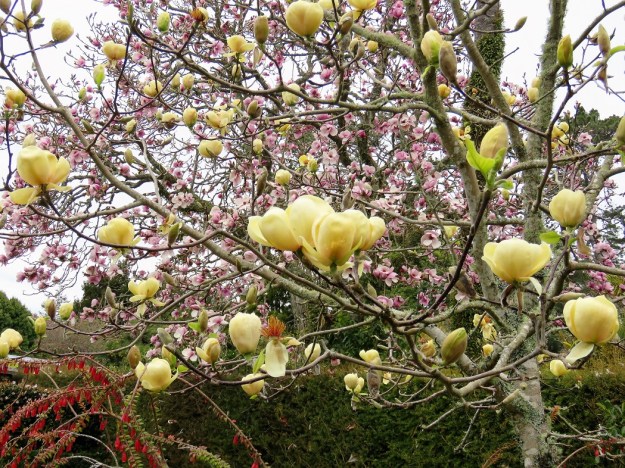
Honey Tulip is going from strength to strength as the tree matures

The magnolia joy this week has been ‘Honey Tulip’. Mark is a modest plant breeder and inclined to describe a number of his best plants as a stroke of luck. I know how hard he works to get these so-called lucky breaks and there is not much left to chance. As we looked at a prominent specimen of ‘Honey Tulip’ at our entrance this week, he expressed relief again that it is indeed excellent and that we have not released a dog of a plant on the market. And he mused (again) that out of that particular controlled cross, he only got two yellows amongst the offspring and only one of those was of merit. That is what he calls a lucky break. I don’t think he is happy unless he gets a run of several – or many – very good similar seedlings worth considering but even then he worries into the future whether he picked the best one at the time to name and release! So the annual display that ‘Honey Tulip’ puts on for us is both a relief and a delight as it continues to go from strength to strength.

The battle with the rabbits continues. After the new lily border was decimated last year, it was a priority to try and get them up this year. While the bulbs will likely survive one year with all their growth having been chewed off, two years is stretching it. First, I spent a day erecting a mesh fence along the border. It was more diversionary than rabbit-proof. In an environment filled with tasty edibles, I just hoped they would take the hint and change their route. But the little fockers laughed at me. When the first shoots were chewed back to ground level in a single night, I started putting cut lengths of drainage tubes over the damaged ones. That works but there are literally hundreds of bulbs in that border and Mark didn’t think it was a realistic option for the whole area. He tried the expensive rabbit repellent spray we bought last year but they laughed at his efforts too.

Netting and tubes in an attempt to deter rabbits

Blood and bone works. Mark now does a daily round. He sprays water on the fresh shoots and sprinkles a light application of blood and bone on the wet surface. The moisture makes it adhere which means that he will only have to repeat the application after heavy rain. It requires vigilance and routine. We need to get them above maybe 40cm so the rabbits can’t chew off the top and the shoots can keep growing. It won’t matter then if they chew off the lowest leaves.

Blood and bone lightly sprinkled on damp foliage is the best rabbit deterrent so far

The longer term solution is obviously to reduce the rabbit population. Mark does daily rounds with the gun. The dogs have found the odd burrow of small ones, to their delight, but are pretty useless once they are larger and on the loose. We got desperate enough to buy some rabbit poison but it is also poisonous to dogs so it requires putting out at night and gathering it back up in the morning. On the first morning, not only had the rabbits totally ignored the bait but our Dudley dog ate one bait before Mark’s eyes. It put him off using it again. The option of getting a cat again is still on the table. It is the first time we have ever hoped a stoat may move back onto our territory to do a clean out of the rabbits. Not for the first time, we have muttered curses at the early British settlers in this country who introduced this pest so they could continue their what-ho-jolly-hunting traditions.

A magnolia bud that has been eaten out, usually by possums but we are now wondering if rats are also to blame

While on pests, a possum – or maybe rats – have wrought havoc this year on some of the magnolias in the distant parts of our property. You can see from the photograph how the offender has eaten into the bud and nipped out the centre at the point when the flower buds were forming. Every single bud on this tree was taken out, which is why Mark is wondering about rats as well as possums. It is very discouraging. Mark is the chief pest control officer here and he generally manages to maintain some sort of equilibrium with a combination of ongoing trapping and the gun but this year appears to be particularly bad.

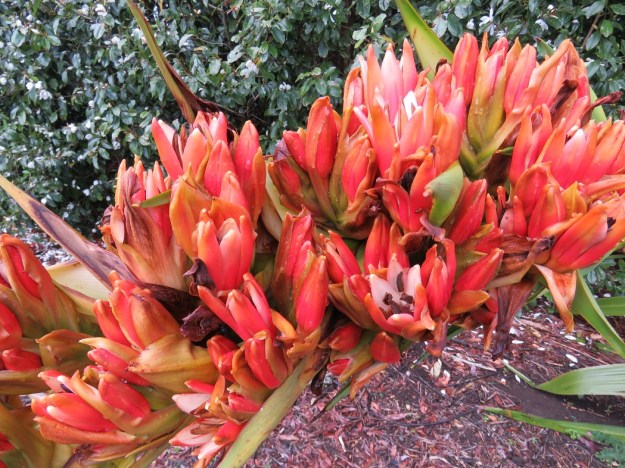
Doryanthes palmeri or the Queensland spear lily

Two months on from when I first mentioned the Doryanthes palmeri coming into flower,  I am coming to the conclusion that it does not open any more than this. I had envisaged that massive stem covered in open blooms but I think it may just gently continue for a long time yet, opening blooms in sequence without that mass display. The bees love it. Every time I pass, I can hear the audible hum and most of the open flowers have a bee foraging within them.

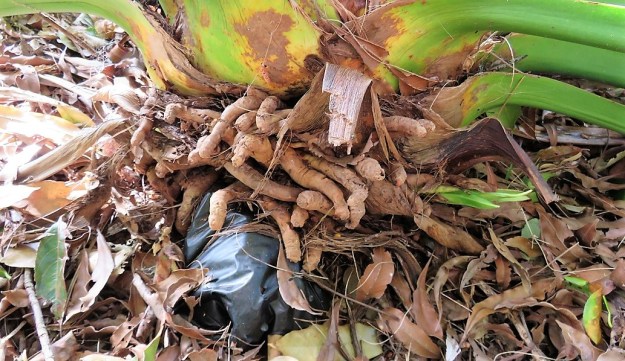
I mentioned it as a nursery relic cast aside. And indeed, I found confirmation of that this week as I was clearing around the plant. Behold, the original black planter bag, still around some of the root system. Some plants are tough and determined. It was not going to stay constricted by a pathetic little PB as we call these nursery bags.
Dainty and fragrant Narcissus jonquilla

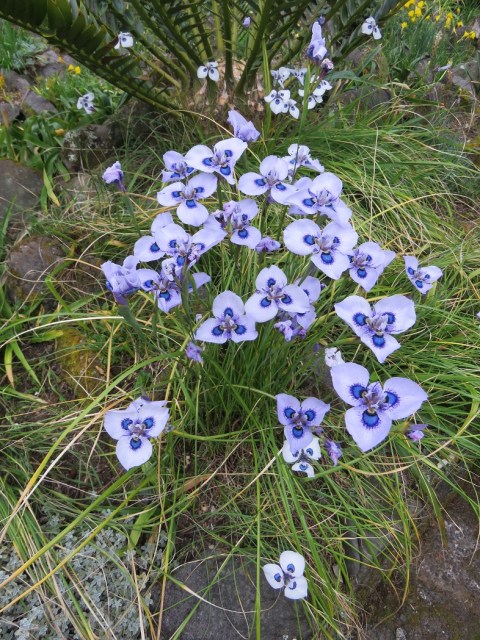
Finally, because we love the tiny as much as the large, here are two little scenes from the rockery. Spring is a glorious season here, never more so than when we get over a week without rain to enjoy the blooming. But suddenly we are on the cusp of the point where a long spring no longer beckons but instead we are under pressure to get the new plantings done before it is too late and we are too dry and too warm.

Moraea villosa or the peacock iris