Tag Archives: red magnolias

The story of the red magnolias

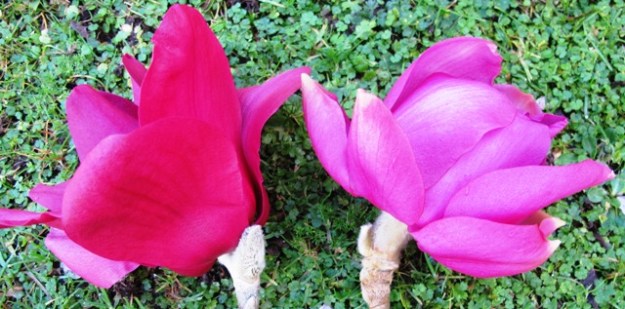
Vulcan to the left, Lanarth to the right

Vulcan to the left, Lanarth to the right

Few people realise that the story of the red magnolias is a New Zealand story. Probably even fewer realise that when it comes to stronger colours in magnolias, we get the best colour in the world here.

I am talking about deciduous magnolias. The evergreen grandiflora types are resolutely white in bloom and adding colour to the softer-leafed, evergreen michelias is very much a work in progress. But deciduous reds, we do well.

Most deciduous magnolias are in the white and pink colour range and very lovely many of them are too. But with many plant genus, there is always that quest to extend the range of flower form and colour, to build on what happens in nature to get a better performing, showier garden plant. Some of it is about pushing boundaries to see what can be done. A truly blue rose is still an unfulfilled quest but it is highly likely it will come sooner or later.

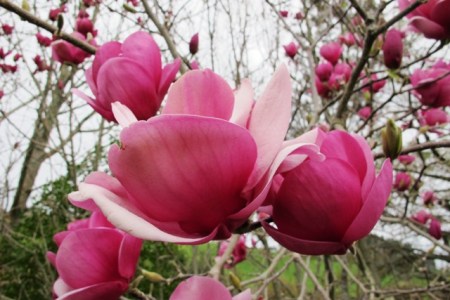
Some would argue that we do not yet have truly red magnolias and there is truth in that. There is no scarlet, no fire engine red. All the red varieties on the market still retain a blue cast to them and fade out to pink or purple tones rather than to the orange end of the colour spectrum. But if you line one of the red magnolias up against a purple one, it is clear that they are a different colour.
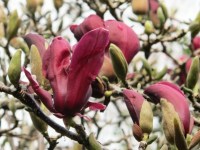
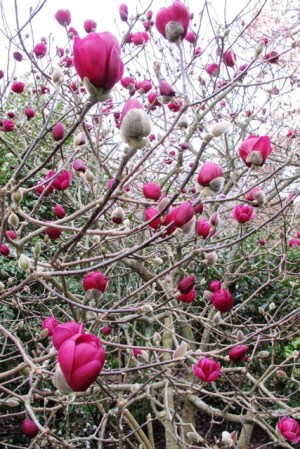
This (liliiflora 'Nigra')

This (liliiflora ‘Nigra’)

I started by saying that the story of red magnolias is a New Zealand story. In fact it started as our family story. Back in the 1970s, Felix Jury wondered if he could get a large flowered, solid coloured red magnolia on a smaller growing tree. He started with the red species – M. liliifora ‘Nigra’. In itself, ‘Nigra’ is a nice enough, low spreading magnolia but nothing showy. He crossed it with the very showy, indubitably purple ‘Lanarth’ (technically M. campbellii var. mollicamata ‘Lanarth’). The rest, as they say, is history.
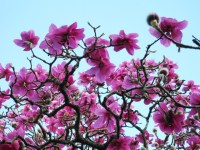
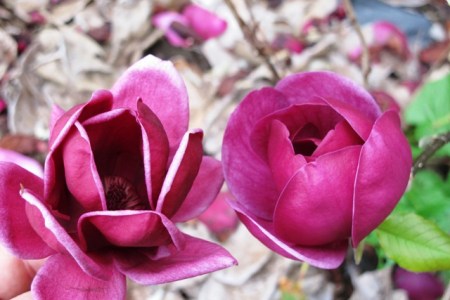
crossed with this (Lanarth)

crossed with this (Lanarth)

‘Vulcan’ took the magnolia world by storm. This was the break in colour and form. It is not perfect. We know that. The flowers do not age gracefully. It flowers too early in the season for some areas. It does not develop its depth of colour or size of bloom in colder climates and is a shadow of its own self in most UK and European destinations. But after more than 20 years, it is still hugely popular and very distinctive, particularly in Australia and New Zealand. It set the standard and it opened the door to other cultivars.

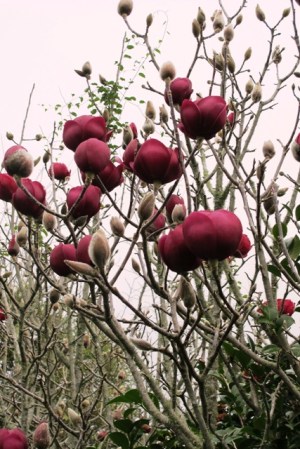
... and the result was this: Vulcan

… and the result was this: Vulcan

In due course, but slowly, slowly, Mark followed on from his father. He raised hundreds of seedlings and named ‘Black Tulip’ (the darkest of the reds), ‘Felix Jury’ and ‘Burgundy Star’.

Fellow breeder, Vance Hooper, started his programme on the reds and he has named several. The best known is ‘Genie’. Like Mark, he is continuing determinedly down the red magnolia line in the quest for perfection, although improvement or variation will do as steps along the way.

There are other reds on the NZ market now, though none from sustained breeding programmes to match those undertaken by Mark and Vance.
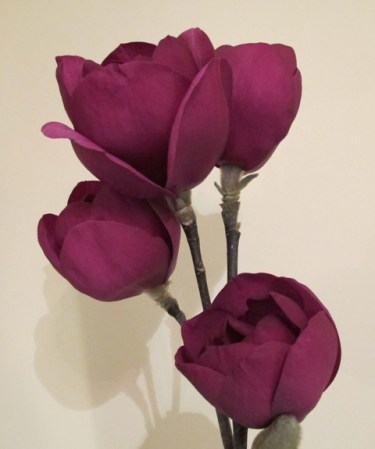
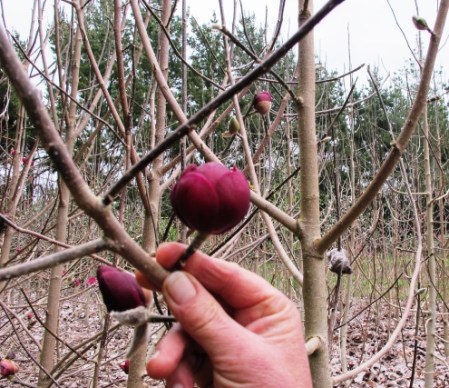
Black Tulip - the first of the second generation red magnolias

Black Tulip – the first of the second generation red magnolias

It appears that it is ‘Black Tulip’ that has enabled the rise of new selections in UK and Europe. It sets seed and every man and their dog is now raising seed and naming selections. Mark is a little wry as he comments that he raised hundreds of plants to get one ‘Black Tulip’ whereas others raise a few seed and name several. He has an ever-decreasing level of patience for amateurs who, as he says, “raise five seedlings and name six of them” based on the first or second flowering only, when he is still assessing seedlings which are 20 years old and showing their adult form, habit and performance.

So New Zealand is about to lose its position of world domination in the red magnolias. But we still get better colour here than others do overseas. There is no certainty yet as to whether that is related to our mild climate, our soils, the root stock used or the quality of light – likely a combination of all. ‘Felix Jury’, which can flower strong red for us is more an over-sized pink flamingo so far in European gardens. We are just relieved that it achieves full-sized flowers and plenty of them, even if it is not red in their conditions.
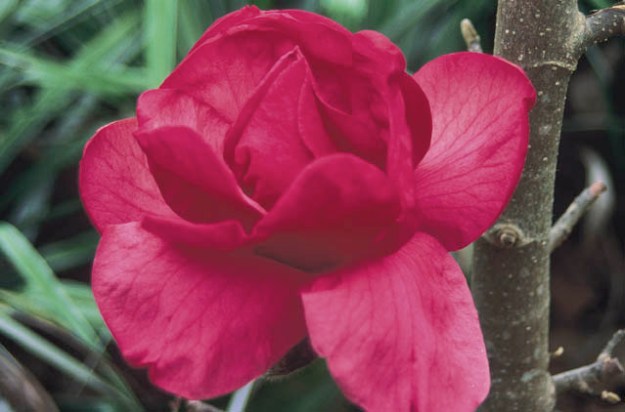
Magnolia Felix Jury at its best here

Magnolia Felix Jury at its best here

The quest for truer reds continues. A red that loses the magenta hue. Mark is assessing several with which he is quietly very pleased. They are not scarlet but they are an improvement in colour. Just don’t hold your breath. This is a long haul.

Finally, while NZ leads the world in reds, it was USA which gave us yellow magnolias. These all descend from one yellow American species – M. acuminata. I just say that for the record. Credit where credit is due.

First published in the Waikato Times and reprinted here with their permission.
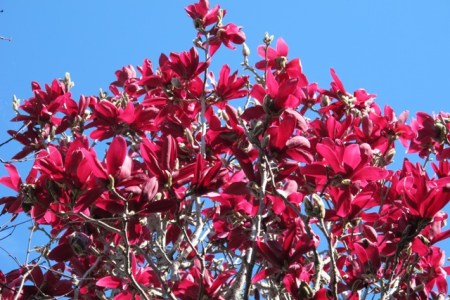
Plant Collector: Magnolia Burgundy Star

Magnolia Burgundy Star in full glory

Magnolia Burgundy Star in full glory

It is perhaps not widely realised that New Zealand leads the world when it comes to red magnolias, both in terms of breeding them and in the intensity of colour we get. We put this down to a combination of soil conditions and light. What flowers with good rich colour here can look pretty washed out and murky at times in the UK and Europe. New Zealanders tend to take the red colours for granted while magnolia enthusiasts overseas turn green with envy.

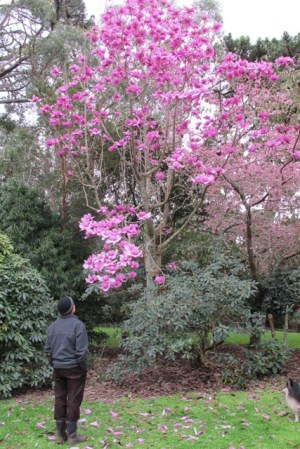
This one is Burgundy Star. It forms a narrow pillar shaped tree, not wider than two metres maximum. Because of this shape (described as fastigiate), it makes a splendid feature where space is limited, such as beside driveways. It gives height without much width. The flowers are towards the stellata (or star) magnolias in form but much larger and with firmer petals so they don’t get as floppy. And red. The stellatas are predominantly white, sometimes tinged pink. Because it sets flower buds down the stem, the season is extended. Magnolias which only set buds on the tips have a big display and are then pretty much over for the season.

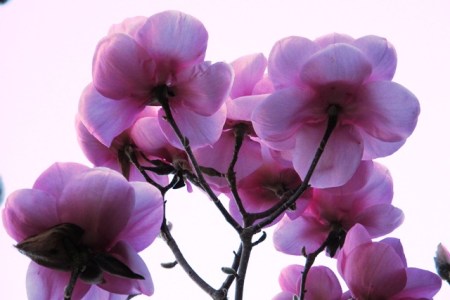
Any of the deep coloured magnolias look best when planted in a position where the flowers are viewed with the light shining from behind.

First published in the Waikato Times and reprinted here with their permission.
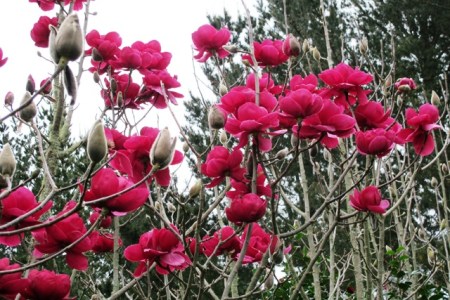
Magnolia Diary 15 (but the first for 2012) August 26, 2012

It might as well be Felix, but it's not

It might as well be Felix, but it’s not

Baby Tulip - a small version of Black Tulip

Baby Tulip – a small version of Black Tulip

Magnolia time. Many are surprised to hear that Felix Jury only ever named eight magnolias. Mark has only named and released three so far (with a fourth in the pipeline) despite raising and trialling hundreds. Why so few? We are picky. With the benefit of hindsight, we would probably have released only seven of Felix’s eight. Atlas was named for flower size but really is not up to the quality of the others in terms of long term performance.

We can do plenty of ring-ins, generic copies, slight improvements or variations. But while roses and camellias are like buses (there will be another one along in a few minutes), we see magnolias as being for the long haul. They are nowhere near as easily hiffed out and replaced and most people can only fit one or two into their garden. To name something new means it must be a breakthrough, a major improvement on what is already available. It takes years to trial and select a new magnolia and we like to be very confident with our releases. We took another walk around this afternoon, looking at the lookalikes. At this early to mid season stage, it is still the stronger colours that dominate. I will update as the pales and whites come into full bloom.

Or how about Bambino Tulip?

Or how about Bambino Tulip?

It's not Black Tulip, but it might as well be

It’s not Black Tulip, but it might as well be


Genie to the left, our seedling to the right

Genie to the left, our seedling to the right

Ruby

Ruby

Our equivalent of Ruby

Our equivalent of Ruby

Lanarth sets the standard.  Is this significantly better? Probably not.

Lanarth sets the standard. Is this significantly better? Probably not.

Plenty of generic soulangeanas here

Plenty of generic soulangeanas here

Too much like Iolanthe

Too much like Iolanthe

But maybe there is a future in patio magnolias?

But maybe there is a future in patio magnolias?

Tikorangi Notes: August 27, 2011

Magnolia sargentiana robusta came through last week's winter unscathed

Magnolia sargentiana robusta came through last week's winter unscathed

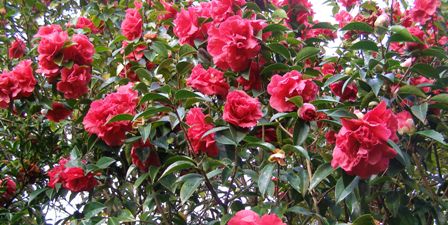
The reticulata camellias are in full bloom

The reticulata camellias are in full bloom


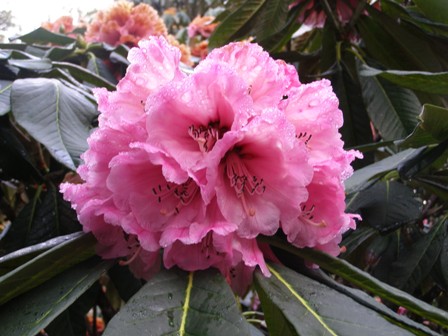
R. protistum var. giganteum "Pukeiti" - with the frosted version just visible behind

R. protistum var. giganteum "Pukeiti" - with the frosted version just visible behind

Tikorangi notes: August 27, 2011
Last week it snowed, followed by a frost in the coldest few days we can ever remember. This week it is indubitably spring. Certainly there is damage in the garden – many of the early magnolias and michelias did not appreciate it at all, though M. sargentiana robusta appears to have come through unscathed. The same cannot be said of the big-leafed rhododendrons. I was searching to find an undamaged bloom and Mark felt that one of my shots of an R. grande hybrid showed we could rename it as Hokey Pokey (a reference to a favourite NZ icecream which has streaks of butterscotch coloured candy throughout). The big leafs have gone the same way as Magnolia Lanarth – 2011 may be the least memorable flowering ever. The campanulata cherries are alive with native tui, the reticulata camellias are in peak flower, the lovely daffodils continue to flower in succession and, just to prove that even in frost and snow, our climate can’t be all that bad, a vireya rhododendron, R. konori, is flowering beautifully and completely untouched in the rose garden area.
The beautiful, fragrant and touchy vireya R. konori flowers on regardless

The beautiful, fragrant and touchy vireya R. konori flowers on regardless


Mark has been poddling about with his calanthe orchids while I am grooming the rockery. Winter pruning is complete (fruit trees, hydrangeas, roses, wisterias and the like). Now we are laying mulch on many of the garden beds – we favour our home made compost for this.
Our first garden visitors for the season have started arriving but if you want to see the magnolias at their peak this year, hold off for another week or two to allow more to come out. That said, Magnolias Felix Jury and Black Tulip are recovering well from the earlier ravages by the weather and there are some lovely flowers showing now.
Magnolia Black Tulip - for those who prefer a more understated size of flower

Magnolia Black Tulip - for those who prefer a more understated size of flower

Tikorangi Diary: Thursday August 18

The lovely blue Lachenalia glaucina

The lovely blue Lachenalia glaucina

The coldest spell of winter weather we can remember still continues. While Mark was entranced by the unbelievable event of snow falling here on Monday, there is no doubt that the unusual experience of a major hailstorm followed by an exceptionally heavy frost, culminating in snow and a second frost this week has knocked the early magnolia display. Magnolia Lanarth has been particularly badly hit and we may just have to look back to previous years to remind ourselves of how fantastic it usually is. (Check out the Magnolia Diary I kept two years ago). Usually we are peaking with the first flush of magnolias in bloom around now and we have an unsurpassed display of red flowered types at this time. Not yet. Many of the new cultivars set flower buds down the stem so will open fresh blooms but it appears that we will be particularly grateful for the second peak we get in early September with the mid season varieties, including the magnificent Iolanthe.

With the threat of frost, I have upon a couple of occasions rushed out with sheets of newspaper to cover the planting of Lachenalia glaucina that we have in the open. Sheets of newspaper work because if they blow off in the night, it means we have sufficient wind to disperse the frost. We grow a wide range of lachenalia in the garden to give us flowers over many months and only a few are vulnerable to cold temperatures in our conditions – glaucina is one. It is a lovely thing and for the first time in years, we have pots of it for sale ($10). They are only just starting to put up their flower spikes so I had to resort to a photo from previous years. Lachenalias come in blues, lilac, pink, red, yellow, orange, green, white and various colour mixes – we have available for purchase the red bulbifera, white contaminata, blue glaucina, yellow reflexa hybrid and an odd, predominantly green form of aloides.

We are open for plant sales every Friday and Saturday (other days by appointment) and we have Eftpos here but we only sell to personal customers. Sorry, no mailorder. If you want to check what else we have available, check our Plant Sales