Tag Archives: repeating plants

Seeing through another’s eyes and TMF here

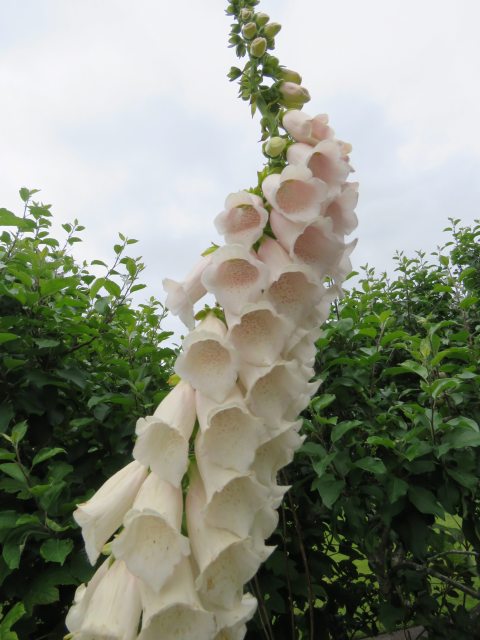
I am fine with the foxgloves in the Iolanthe Garden but there are no common pink ones

We no longer open for the springtime garden festival here but it is still a time of year when out-of-town friends come to see the garden. One such friend is an Auckland garden designer. I never ask for advice because I think seeking free advice is not much different to asking a medical professional for personal advice at a social event. Some lines should not be crossed. On the flip side, both Mark and I have a policy of not offering unsolicited advice in somebody else’s garden, no matter how tempting at the time, so this may all be a bit self-defeating. Our designer friend has a similar approach but he asked one simple question. We were looking at the Court Garden and he said three words, “Why the foxgloves’?
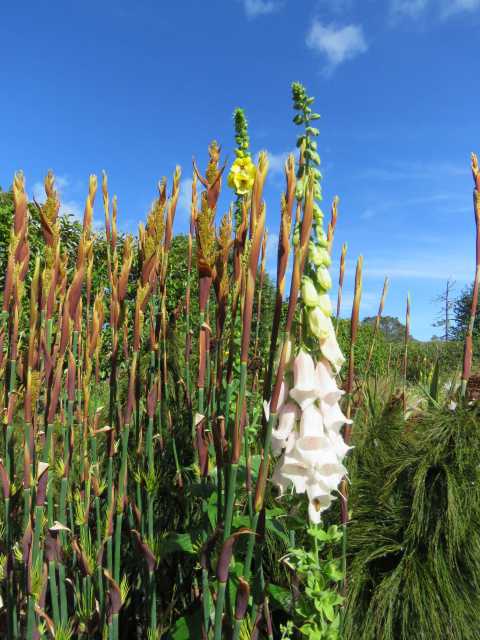
The large flowered yellow Verbascum creticum is fine but the foxgloves were just wrong in that situation

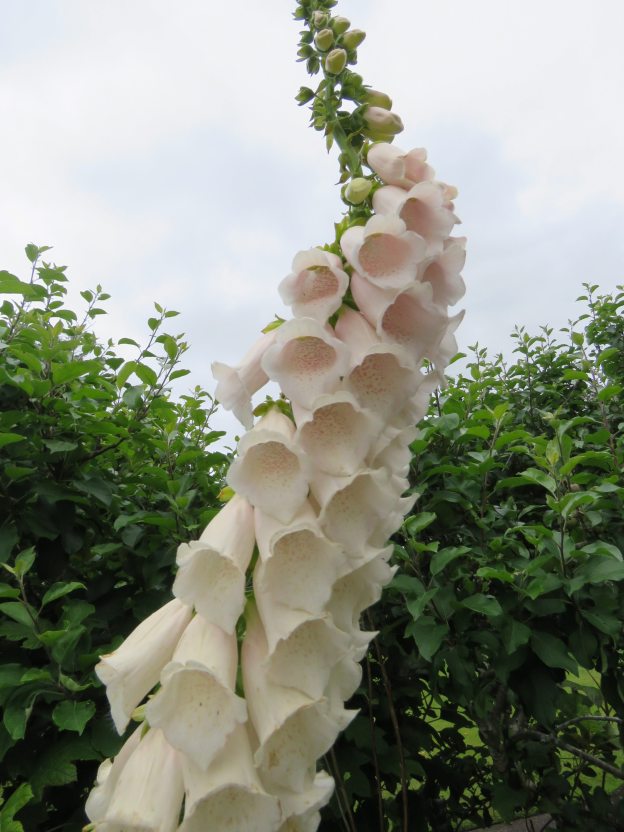
I suddenly looked through his eyes and indeed it was a good question to ask. I went to some trouble when I planted the garden back in 2019 to add palest, pastel coloured foxgloves to add some height and flowers in spring and I have let them gently seed down. Well, at the time they were meant to be pure white ones but they turned out pastel. I had not questioned their presence since but when I looked with different eyes, it occurred to me that they are, in fact, insipid in that situation. I looked at them for the next two days and on the third day, I pulled the lot out. When I sent a text to my friend to say they were gone, he just replied with the single word “Good”.
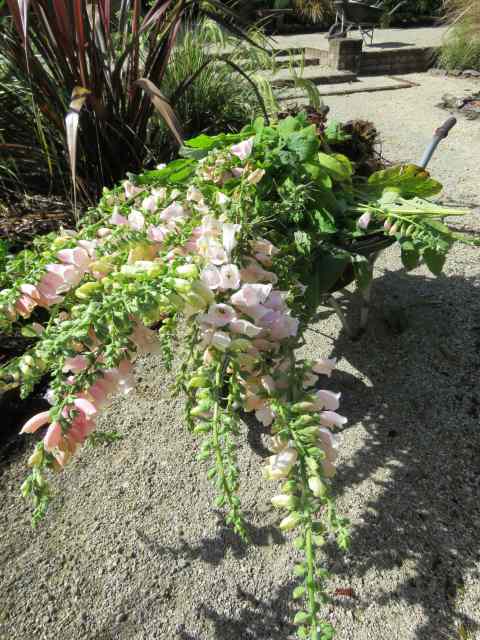
Flowering or not, once the decision was made, they had to go

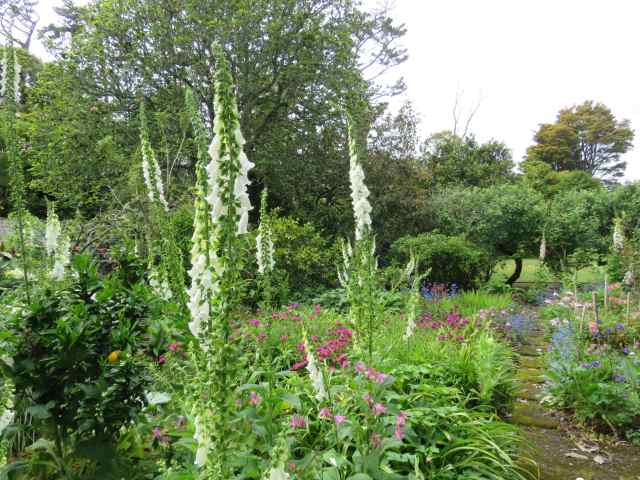
Besides, we were running the danger of TMF – Too Many Foxgloves. For years, I have been so focused on pulling out every common pink one and even paler pink versions of it (because foxglove seed will naturally revert to the unattractive pink form) that I hadn’t looked at the overall picture. While I am particularly fond of the pure white form, especially in the Iolanthe garden which is more perennial meadow than anything else and down in the park, we don’t want them everywhere. It is time to review all locations where we have allowed them to grow and time to limit their range.
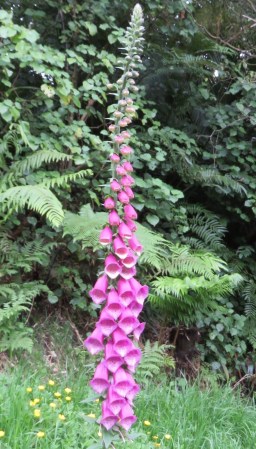
It is not even an attractive pink and it doesn’t combine well with other colours. I regard it as a weed.

I went to see a garden during the recent festival which I hadn’t seen for many years and now has new owners. It was a very nice garden and well maintained but as I walked around, I thought to myself that if they asked me for advice, it would be to pull out 90% of their dark pink foxgloves (Digitalis purpurea) , if not the lot of them, leaving just the white ones. They have let them seed everywhere and, to my eyes, it was a definite case of TMF. They didn’t ask, so I didn’t comment. But it made me more aware of letting them grow here in our garden.

No matter how good a plant is, it is still a mistake to have too much of it. I refer not just to foxgloves but also forget-me-nots, mondo grass, common verbascums, Verbena bonariensis, pansies, aquilegias and a host of other plants that self seed around the garden. In our garden, I would also add tree ferns, nikau palms (Rhopalostylis sapida) and kawakawa (Macropiper excelsum) to that list.
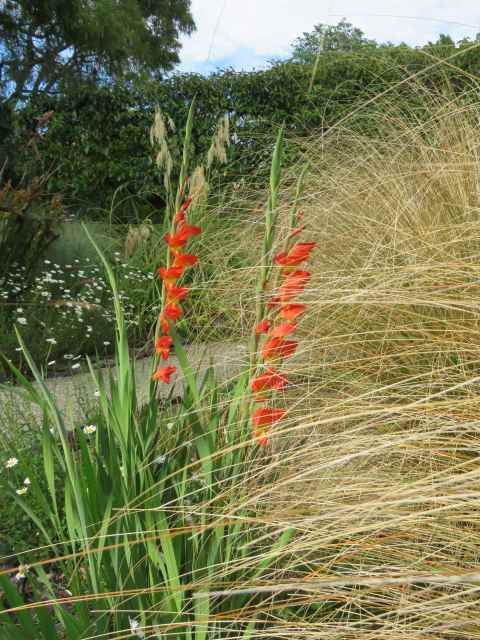
It wasn’t the gladious that was the problem; it was the foxgloves

Interestingly, as soon as I removed the pastel foxgloves from the Court Garden, having decided they were the wrong plant and too pallid, the anything-but-insipid Gladiolus dalenii syn natalensis no longer looked out of place at all; it changed from looking somewhat garish to vibrant instead. It can stay after all. It has only just dawned on me that the reason the foxgloves looked insipid in that location is the background. In the Court Garden, they were surrounded by plants that were either pale green hues or silver or many shades of brown. They look more charming in situations surrounded by masses of darker or brighter shades of green. I should have noticed this earlier.
A garden is never finished and even with an established garden, fine tuning it is what keeps it interesting. Sometimes, seeing it through somebody else’s eyes can be very helpful and small changes can make a big difference. I might ask for more advice from people whose opinions I value. Maybe it is not the same as asking my dentist about toothache over social cocktails after all.
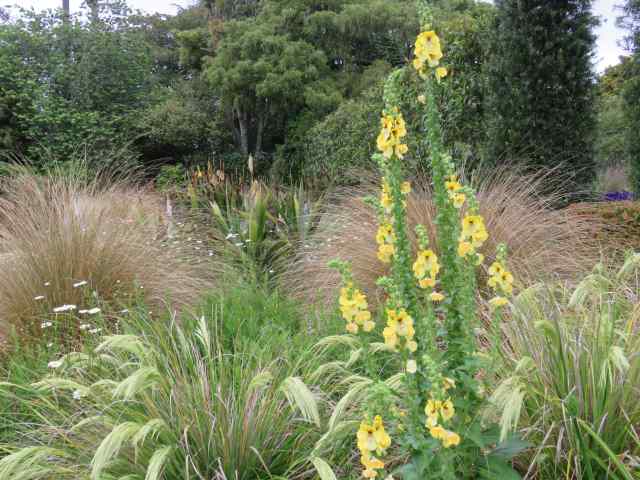
The Court Garden with Verbascum creticum but no foxgloves any longer

Rhythm and repetition

The borders springing into fresh growth afer their winter hiatus

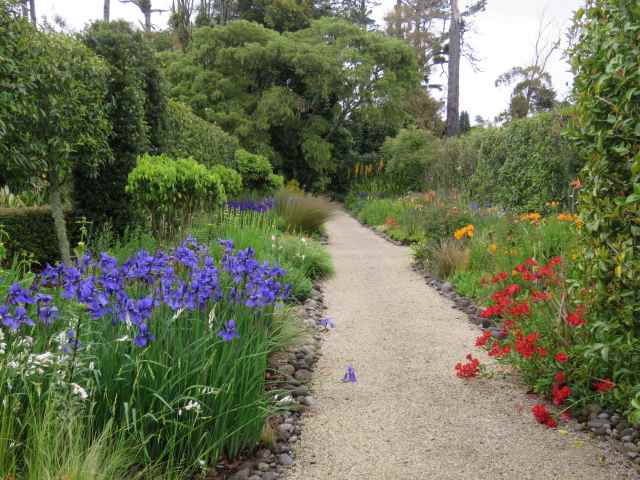
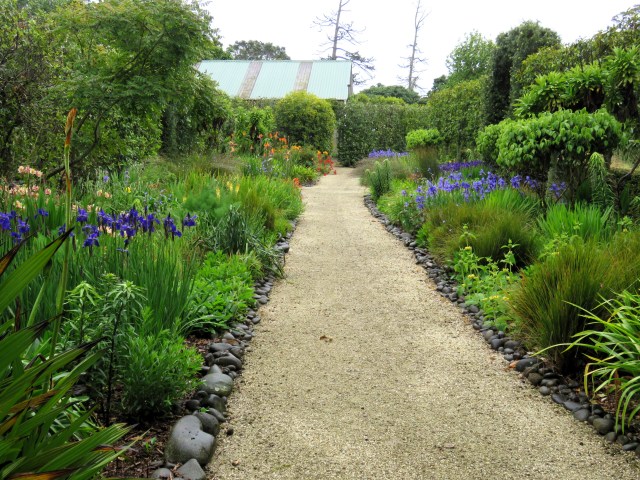
Oh my, but the summer borders are looking pretty. From being fairly empty and dull a few weeks ago, they have sprung back into life. When I planted them back in 2016, I remember muttering words like ‘rhythm’ and ‘echo’ as I was placing plants, with English designer, Dan Pearson, firmly at the front of my mind. I see I once recorded that I was working with about 120 different plant varieties in that area, starting with a blank canvas, so placing plants to achieve some continuity of rhythm was important in avoiding a mishmash. It is only this spring that I looked at it and thought, ‘yes, that continuity makes sense’.

Looking back from the other end
I have highlighted in blue the patches of blue – I counted ten all up

It is the repetition of a colour, not so much the same plant, that made the whole visually pleasing. At this time of the year, it is patches and threads of blue down the length that lifts my heart. Later in summer, it will be more about orange and yellow with splashes of purple leading the eye down the full length.

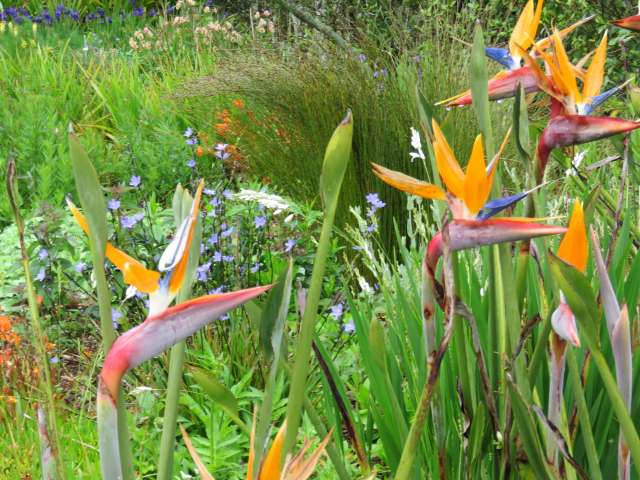
Strelitzia bring the blue, orange and red together in a single, very odd bloom. When those flowers die, they always remind me of a horse’s head.

Years ago – at least twenty years, maybe longer – the oft-repeated mantra of planting was to unify a garden by repeating plants throughout. I see in 2012, I wrote a piece querying this common wisdom and asking whether in fact that repetition just makes a garden downright dull. If you are using renga renga lilies (Arthropodium cirratum),  or even clivias, then yes, it will look dull and repetitious. It is not that simple.

If you are going to use a lot of just one single plant variety repeated or threaded through a larger area, it needs to be very carefully chosen, not just what is cheap, available and easy to grow. It needs to be bold and strong enough in its own right to work visually and not just when it is in flower. I have seen it done with euphorbia which has good foliage, reasonable form and flowers that can smack you in the eyeballs. It is not my choice because I find the acid yellow a bit too strident and that is a matter of personal taste. But it can indeed keep a big perennial planting knitted together as a cohesive whole.

Not our garden. This is English designer, Tom Suart-Smith’s exquisite terrace at Mount St John in Yorkshire using clipped buxus mounds repeated through exuberant perennials.

I have seen tightly clipped shrubs used amongst perennials – usually tightly clipped buxus mounds and that can work well – better scattered randomly in my eyes than placed with mathematical precision. We have used the lesser-known Camellia yuhsienensis down one side of the borders – but only five of them. I clip and shape them but not to a uniform shape – more to keep them to a certain size and they give some winter interest when there is not much happening at ground level.

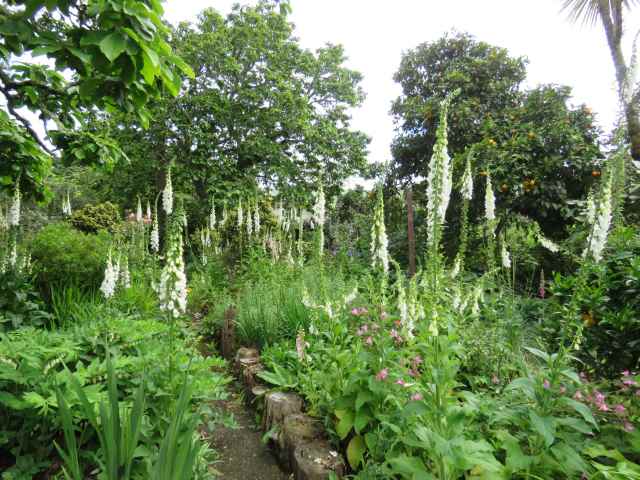
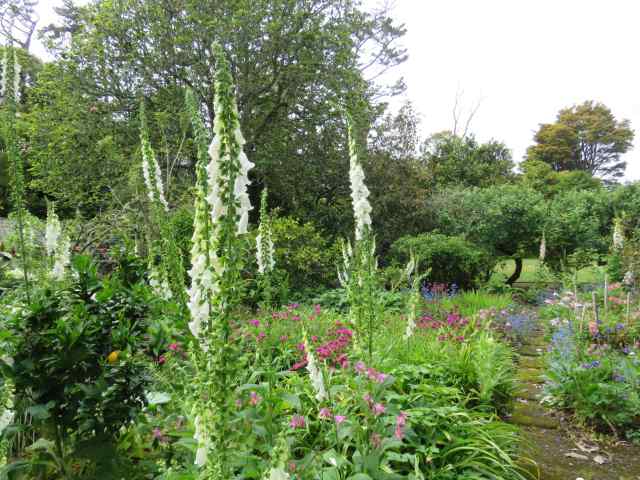
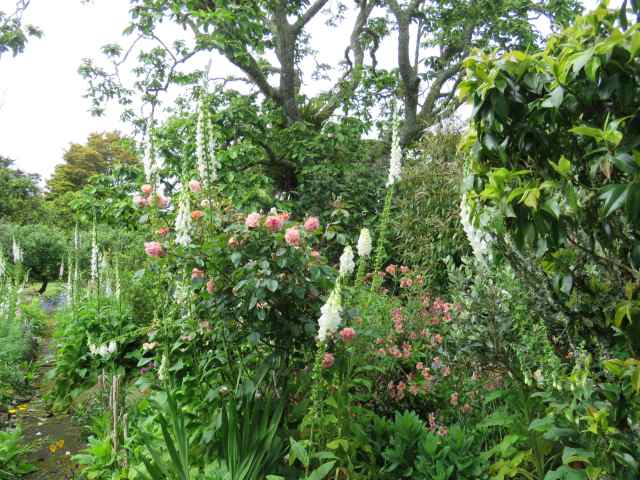
White foxgloves giving some stature and unity to the very loose plantings in the Iolanthe garden here

At this time of the year, it is the over-the-top white foxgloves that keep the loosely ordered chaos of our Iolanthe garden working visually. They are thugs, more perennial than biennial in those conditions and some are towering clumps over two metres tall, all in pure white. I need to thin them (‘edit’ them in modern parlance) because we are getting too many but those tall spires randomly spread through the area hold it all together visually. I admit the foxgloves are serendipity, not forward planning.

We watched an old documentary on the UK’s royal gardens earlier this week, and King Charles’ plant choice was tall delphiniums which are equally seasonal, a whole more work and arguably classier than my white foxgloves. He had them as the bold statement plant in many areas at Highgrove.

Iris sibirica ‘Caesar’ Brother’ in the foreground and Iris sibirica ‘Blue Moon” at the top of the photo

It is the repetition of colour that is working in our twin borders and that comes down more to rhythm than simply repeating the same plant. True, it is the bold blocks of Iris sibirica that give the mass of blue at this time of the year but they not the same variety of that iris and there are also blue bearded iris in flower and plenty of the dainty blue Orthrosanthus multiflorus, which is an Australian native that looks like a blue flowered libertia.

Orthrosanthus multiflorus is a very handy little plant

If your garden is very small, then you treat the area as a whole and picking one bold plant to thread through can certainly hold it all together visually. In a larger garden, it can make it all look the same if you insist on repeating the same plant on a much larger canvas. It is a lot more interesting to ring the changes and create different atmospheres in different areas. You can also achieve unity by repetition of form, not necessarily the same plant.

The orthrosanthus – apparently known as the morning iris – sits gently amongst the daintiest kniphofia, fennel foliage and alstromeria, adding to the thread of blue that holds the overall display together at this time of year.

Or you can do it by colour and that is what is giving me joy. I did plan it, though in my mind and not on paper, so it is not by chance or good fortune. It is even more pleasing to see a plan coming together and for me, it is about rhythm and harmony, rather than controlled repetition.

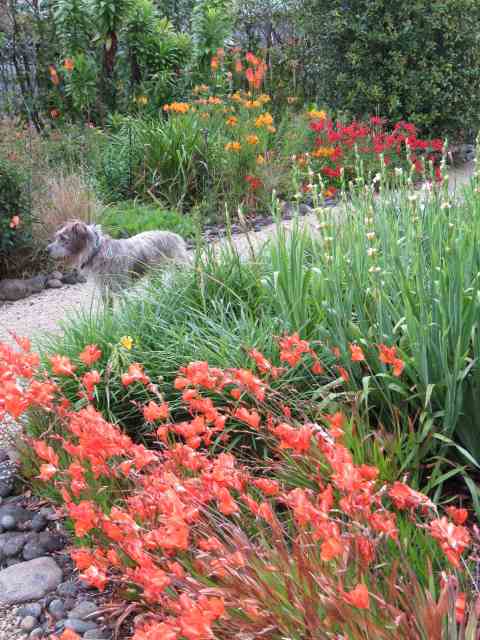
Not just blue – here we have orange tritonia echoing across the path to kniphofia and alstromerias. With Raplh, as per usual

Repetition – unifying a garden or downright dull?

A surfeit of renga renga lilies repeated throughout your garden is highly unlikely to unify it

A surfeit of renga renga lilies repeated throughout your garden is highly unlikely to unify it

How often have you heard the advice to repeat the same plant in your garden to achieve continuity? It has almost achieved truism status though I would argue that this is one piece of so-called garden wisdom that too few people ever question. In fact I would go so far as to suggest that you are better to cast that piece of clichéd advice out to the wilderness and ignore it.

I don’t know where it originated, though I would hazard a guess it was from within the landscape sector. Now it is just repeated mindlessly as a golden rule.

The first time I was aware of a plant being repeated through a garden was with Dahlia Bonne Esperance. It is a baby dahlia with pink daisy flowers and increases readily (lights should be flashing here for you, dear Reader) and it featured throughout this person’s garden. Far from giving continuity, in fact it looked like a cheap, gaudy dot plant (as in dotted around everywhere). Therein lies the problem. When the advice is dispensed so glibly that you should repeat a plant to give continuity, there never seems to be any corresponding advice as to what types of plant are most effective. And in the absence of such advice, too many gardeners fall upon an option that is cheap to start with and easy to increase.

Acanthus mollis or bears' breeches - too close to weed status to be a desirable repeat planting

Acanthus mollis or bears’ breeches – too close to weed status to be a desirable repeat planting

I am sorry to say that many plantings of renga renga lilies are not going to enhance and unify your garden. The same goes for mondo grass, liriope, catmint (nepeta), the dreaded aluminium plant (lamium), common hostas which bulk up readily, Acanthus mollis, or Ligularia ‘Britt-Marie Crawford’. They are just going to look boring and repetitive when used again and again throughout.

Truly, you can have too much, even of a good thing. I have seen gardens which suffer from the ABC syndrome (another bloody clivia), or the oh no, TMBBH trait (too many big blue hostas). You need a deft hand and very good eye to make it work well.

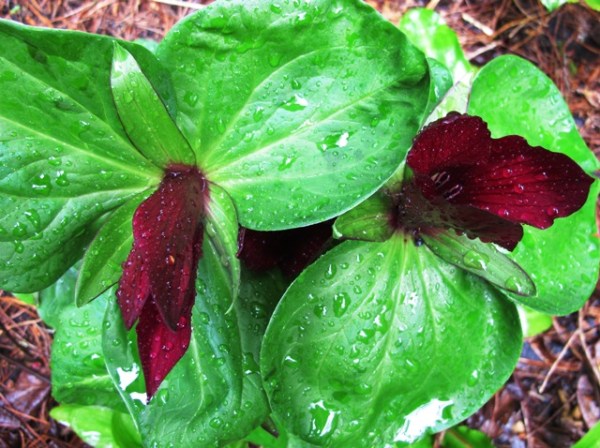
There may be a difference between large and small gardens here. It is a long time since I have had a small garden but I can see that restricting the plant palette and using a repeating motif could help mitigate the bitsy effect so many gardens suffer from. But if you are determined to repeat a plant, try and make it a choice one. Trilliums are good. Paris, too. Though there is a possibility that the originator of the recommendation was thinking more in terms of pencil cypress or topiary yew – a woody plant rather than a perennial. I am fairly sure he or she was not thinking of Dahlia Bonne Esperance or renga rengas.

In a large garden, hmmm. As far as I am concerned, a large garden succeeds better when it has distinct changes of mood and style. To repeat a plant or plants throughout renders it too much the same and that is when large gardens become rambling, indistinct, and not very memorable. Unless you want to be remembered as, “Oh, that was the garden with all the orange clivias/acanthus mollis/buxus hedging/catmint/day lilies.” (Strike out those which do not apply.) We prefer to aim for different groups of plants in different areas, rather than mixing and matching throughout or streaming one particular plant through the lot.

That said, there are exceptions. We are steadily drifting English snowdrops throughout (on the grounds that you can’t have too many fleeting seasonal wonders and they are satisfyingly compatible with most situations – and transient, not year round). Mark has observed before that it is rhododendrons that form a backbone of continuity to our garden. But it is not just the one rhododendron that we have repeated. While we favour the nuttalliis (the rhodo equivalent of trilliums, one could say), we have multiple different varieties used in different combinations throughout. I don’t think that is what is meant by repeating a plant for continuity.

If I have failed to convince you that the interest in a garden lies in different plant combinations, interesting plants and variety, then I would at least make a plea for considering seedling variation. Mark and I looked at a planting in a garden – a hillside of red rhododendrons all the same. They will be showy in flower and look unified in conformity when not in bloom. They are also, to our eyes, dull, utility and public sector amenity planting (and it was a public garden too). What sets a private garden apart is the opportunity and scope to detail such a planting. Had it been done in seedling raised rhododendrons (collected from the same parent plant), there would have been the overall unity but subtle variation to add interest. The same goes for a range of plants – from pohutukawa to hostas. Raising them from seed takes time but gives interest and detail which is lacking when you order in a mass of one plant only.

But then we never have been fans of mass planting and massed display. The devil may be in the detail but so is the gardening interest.

If you are determined to unify through repeat planting, at least pick something with bragging rights - desirable dark red trilliums, perhaps

If you are determined to unify through repeat planting, at least pick something with bragging rights – desirable dark red trilliums, perhaps

First published in the Waikato Times and reproduced here with their permission.