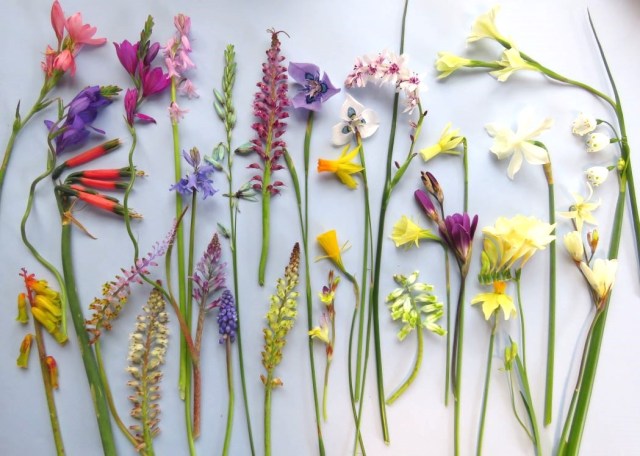
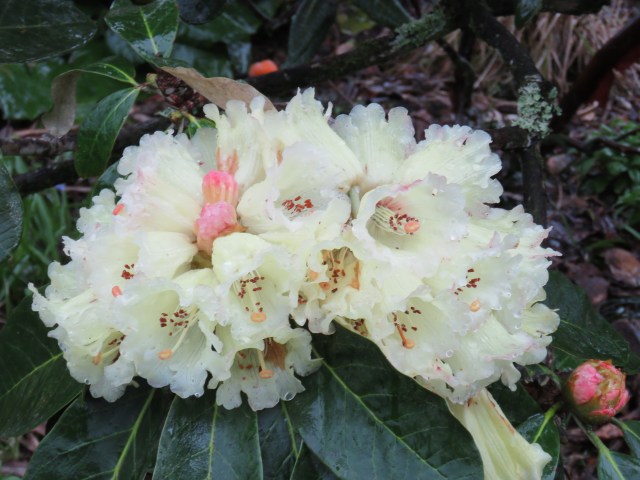
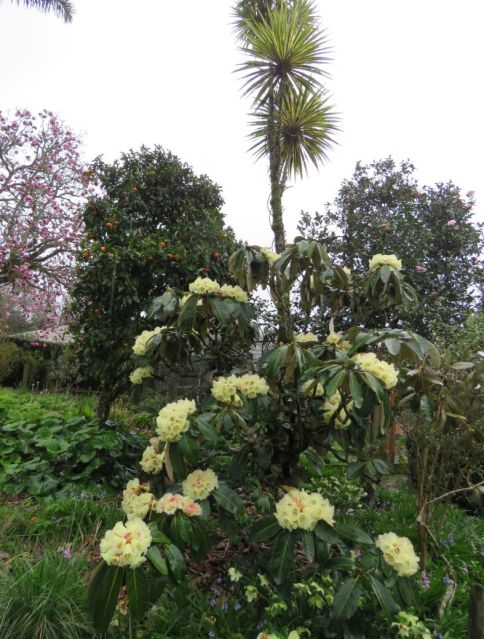
I was thinking about writing about rhododendrons this week. The big-leafed Rhododendron macabeanum that was *temporarily* heeled into the Iolanthe garden years ago, pending relocation to a more suitable spot, is looking absolutely splendid. It is clearly in its forever home where it is. And the firecracker R. spinuliferum never fails to delight me, but the rain has returned, interfering with photo opportunities. Apparently four consecutive fine days is all we can expect. Besides, for all the grandeur and stature of the fine rhododendrons, it was the simple sight of a few flowering bulbs down in the Wild North Garden that gladdened my heart more.
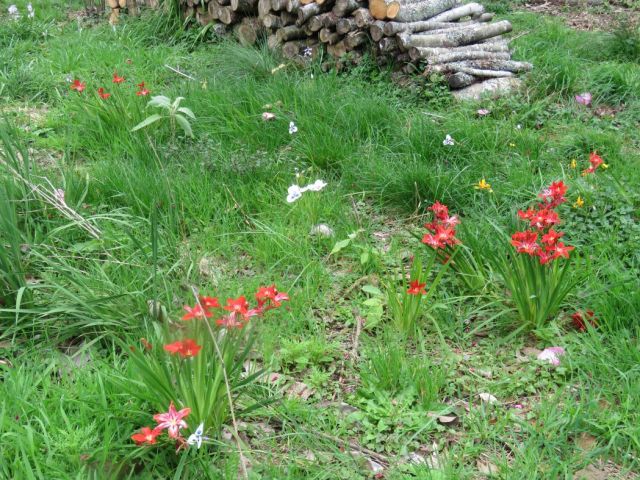
Have I mentioned before how much we love gardening with bulbs? Of course I have. The Wild North Garden is now largely the project of our garden apprentice, Zach. I give him surplus bulbs from the more cultivated house gardens that we think may be able to bed in and compete in the more naturalistic environment and he plants them where he thinks they may thrive.
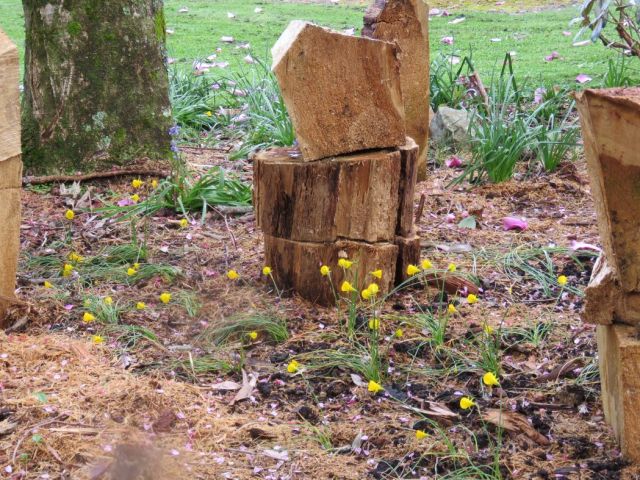
Zach has also been tidying and replanting the area where the fallen giant gum tree laid waste when it fell in Cyclone Dovi last February. Because there are enough trees and shrubs in the area that will recover over time, we have taken advantage of the more open conditions to thread rivers of surplus bulbs through below.
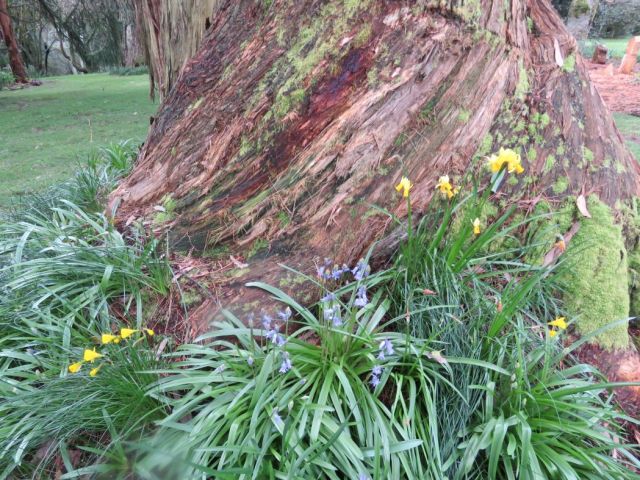
Wilder areas need tough, robust bulbs that are capable of surviving competition. That means bluebells, snowflakes (leucojum), snowdrops, some of the vigorous smaller narcissi and lachenalias, peacock iris (Moraea villosa), valottas and the like. The more delicate, pernickety bulbs are given prime positions in well-tended areas like the rockery where we can guard them from being out-competed by stronger plants.
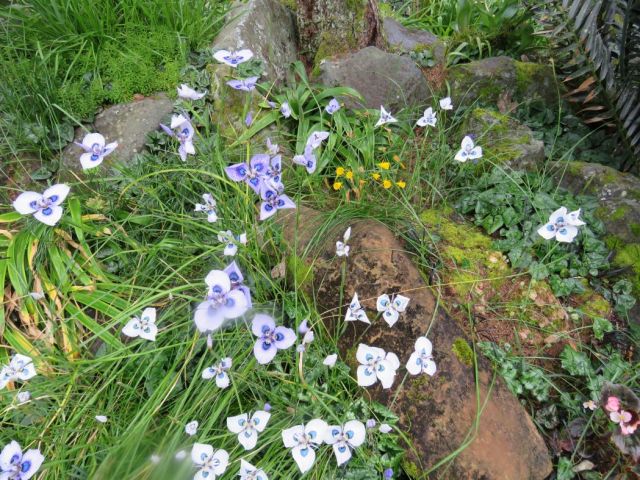
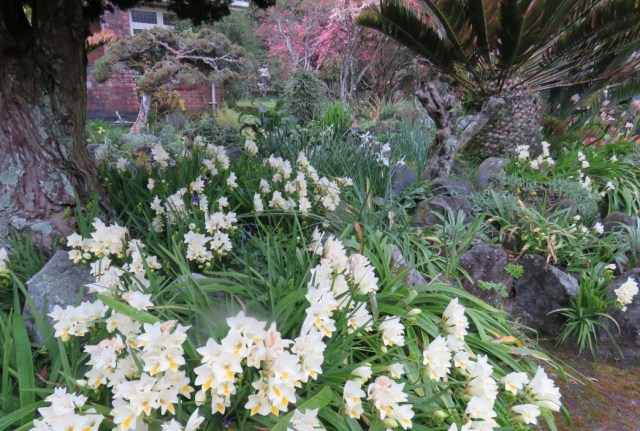
The most interesting bulbs also have back-ups kept in pots, sometimes in a covered house. They don’t get a lot of love and attention but the conditions mean they are more likely to survive and enable us to replenish the garden when they may have died out or to extend existing plantings. This is particularly true of some of the more interesting lachenalias, especially the blue forms.
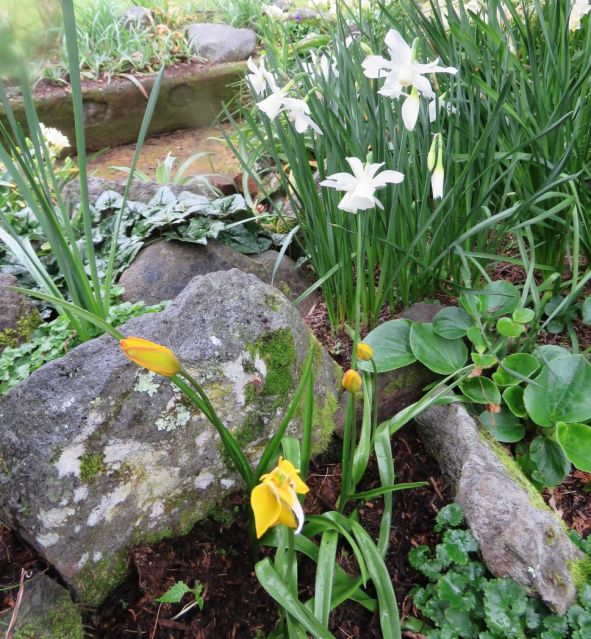
It takes ongoing attention to keep the detail in a garden and it is the high level of detail that brings both Mark and me most pleasure and interest on a daily basis. Vistas, views and big pictures – a beautiful magnolia in full bloom or the aforementioned R. macbeanum – are great but they are only part of the gardening experience.
“Why do you like the dwarf narcissi?” Ruud Kleinpaste once asked Mark’s dad, Felix. when in the garden filming a story on magnolias for the TV garden programme hosted by Maggie Barry.
“Because they are small,” Felix replied.
I know exactly what he meant. I did, however, pop out briefly in the rain to snap the macabeanum for readers who prefer bigger, showier pictures.
 Tikorangi The Jury Garden