
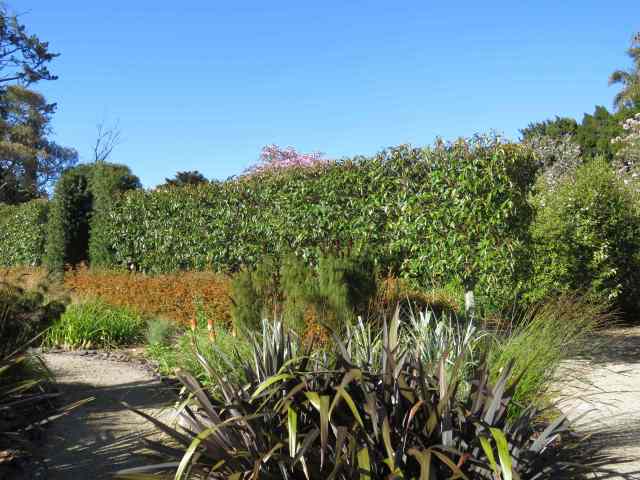
Behold our pleached rows of Fairy Magnolia White! I am delighted. A goal has been achieved. It has taken 10 years and that was starting with big plants. In retrospect, I admit that it seems quite a long time but such is the way of gardening. It has looked fine and established for maybe 6 or 7 of those intervening years but finally, we have it how it was envisaged.
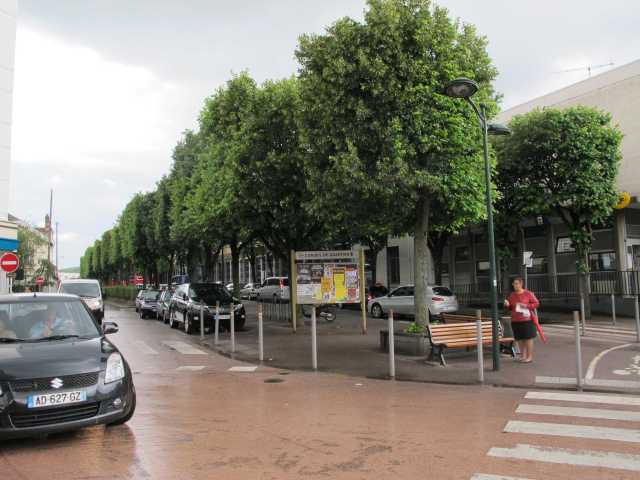
Pleaching is creating a hedge on stilts where the foliage is knitted together to form a length that is more or less flat on two sides but uninterrupted in its length. I photographed pleached street trees in Vernon, the small French town closest to Giverny back in 2014 but I think it was Mark who drew my attention to them because he already had the plan of pleached rows defining our summer gardens, on which we had started the groundworks back at home.
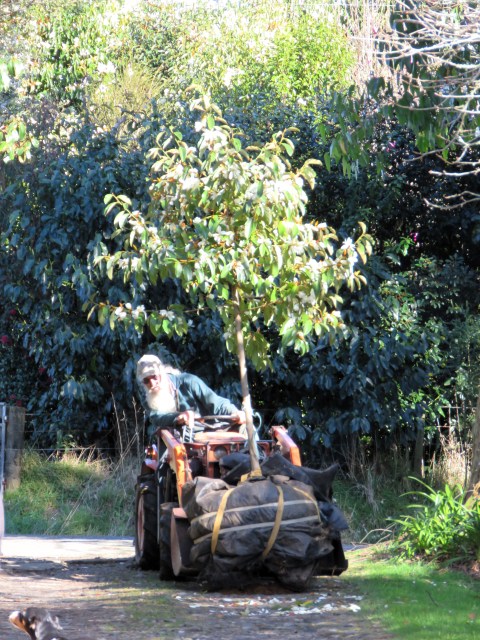
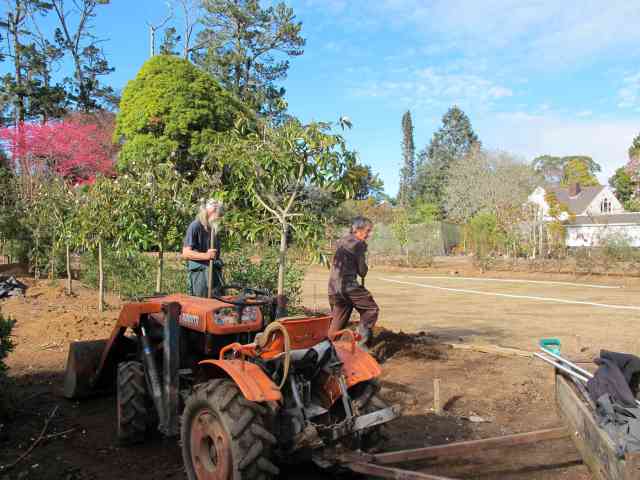
So it was Mark’s vision and his and Lloyd’s hard work that saw large plants going into the new ground in the spring of 2014 and autumn of 2015. We already had the plants growing in a field on our property across the road. They were our original stock plants from when we first released Fairy Magnolia White and they were trained to a strong central leader or trunk. It was no mean feat digging them and getting them across the road and planted but Mark and Lloyd were 10 years younger then. As an aside of useful advice, as soon as they were planted, Mark removed about a third of the foliage, which seemed brutal at the time but was all about reducing the stress on the plants after transplanting.
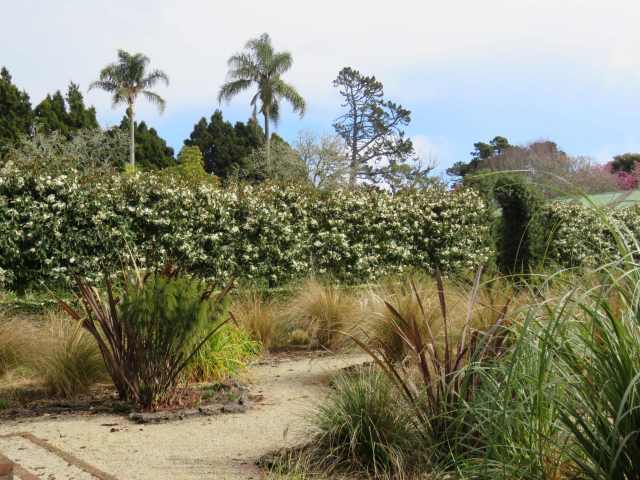
In the years since, they have been trimmed once a year – as flowering finishes – to get them to the form we want but it was when our gardener, Zach, joined us that it all started to come together. This must be the third or maybe fourth year that Zach has trimmed them and he has it just right now. As garden tasks go, it is not a massive job – I think it only took him just over two days – and the heaviest part is managing the ladders, which are large. But it is a skilled, precise job. It is all secateur and handsaw work – not hedge clippers.

It will look sharper when the hedge of Camellia Fairy Blush beneath also gets its big trim this week and the gap between that hedge and the pleached michelias above is fully defined. I was impatient to record my delight with the clearly defined, more-or-less two dimensional appearance (height and length but little width).
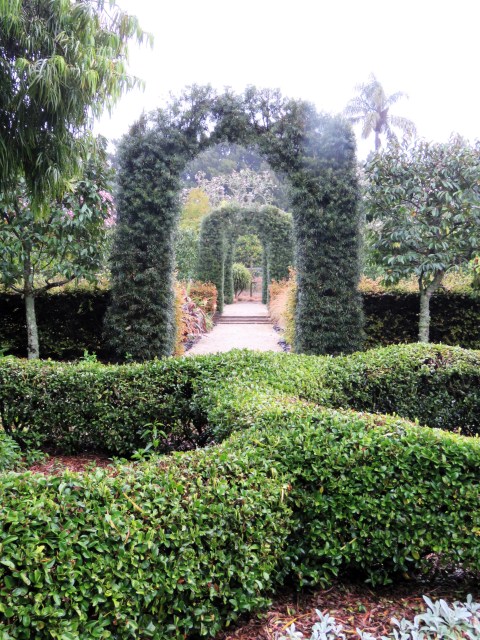
Credit to Zach, too, for creating the archways of Podocarpus parlatorei in the same garden. Mark had always planned either arches or gables – to echo the gables on the house. Realistically, had it been left to us, I am guessing we would probably have taken the easier route and just trimmed to tight columns but Zach has trained them over to be arches and they have almost filled out to final thickness. They are tied in, in case you are wondering how he did it. The key is getting it tied in when the new growth is soft enough to bend. When it has hardened, it will break. The podocarps are trimmed annually but he has kept the arch tied and trimmed every few months. Again, getting the ladder into place is the most onerous part of this task. Mark, Lloyd and I are all getting a bit old to be carting the largest ladders and working at height. This is just yet another reason why I appreciate younger generations.
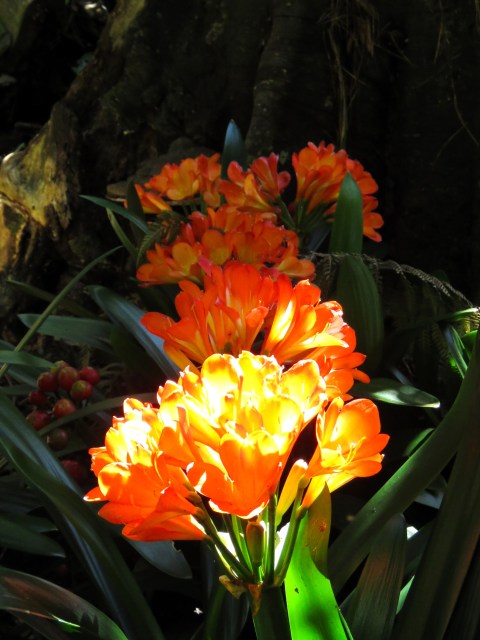
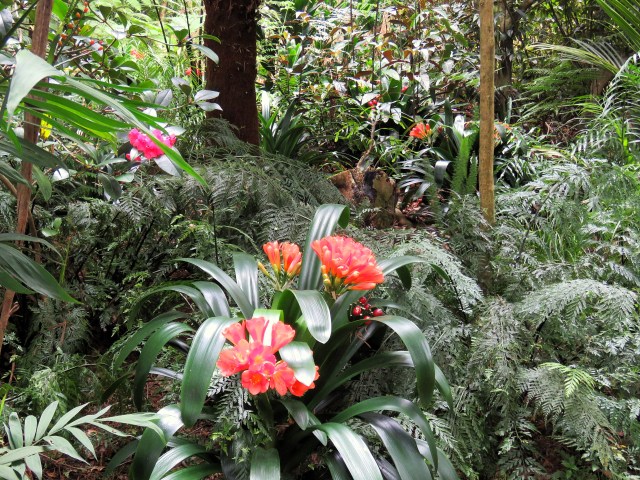
Time, too, has seen our clivia plantings go from strength to strength and they are certainly starring this spring. You can have too many clivias in a garden; the orange and red ones are very strident. I am not a fan of mass plantings of clivia but we have integrated them amongst other plants in shady areas and they glow. Ours are almost all seedlings raised here from controlled crosses. This means that Mark has taken the pollen from ones he thinks are good and used the pollen on other selected specimens, marked the pollinated flowers and gathered the ripened seed to sow in nursery conditions. It is quite a bit of faffing about but increases the likelihood of getting superior seedlings rather than leaving it all to Nature. We now have so many that we just weed out seedlings and thinnings.
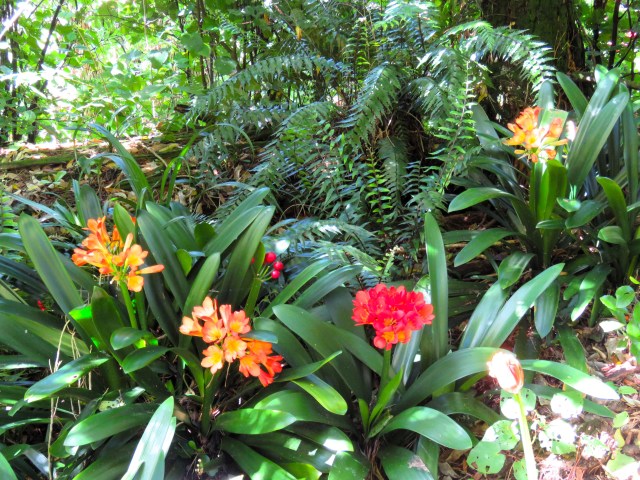
The reason why clivias are usually expensive to buy is that they are slow growing. It takes much longer than most common perennials to get them large enough to set flowers and sell in garden centres – years more, in fact.
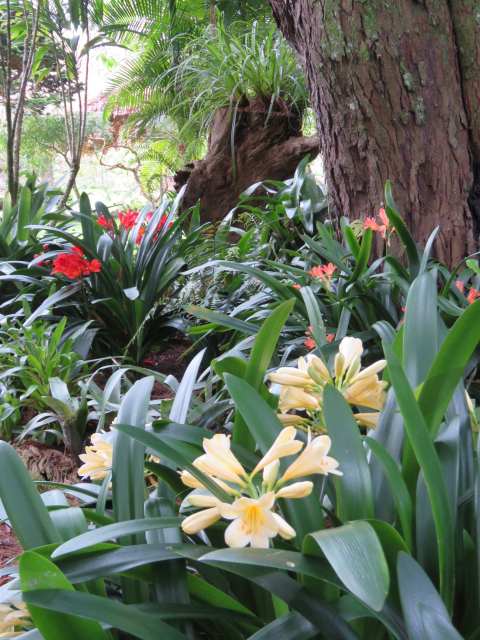
Gardening really is about the longer game but it is particularly rewarding when you see visions realised and areas that get better as plants mature.
* The heading is a reference that it is likely only New Zealanders will understand. Cheese. Yes cheese. A reference to a long running advertisment for a brand of tasty cheese.
 Tikorangi The Jury Garden