
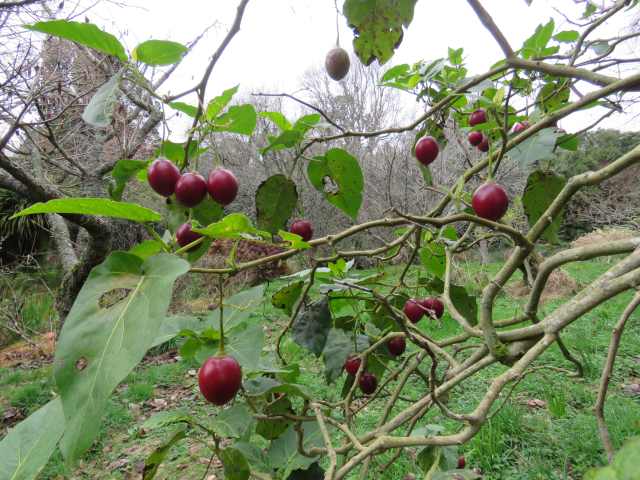
The unsung hero of our winter salads is tamarillo. We eat salads most days all year round and finding mixed contents in the depths of winter can be problematic. Mark is Chief Salad Maker here and he is a good forager. Perish the thought that we buy salad ingredients, especially out of season salad ingredients like tomatoes and cucumber. Winter salad staples include random foraged greens (from chickweed to amaranth leaves to juvenile beet foliage), avocado, bean sprouts, finely diced onions, citrus and… tamarillo.
Tamarillo*** are what the oldies amongst us may remember as tree tomatoes, a South American fruit renamed by in this country by a fruit marketing board, just as we renamed kiwifruit from China. Botanically, it is Solanum betaceum and the solanum tells you it is in the same family as tomatoes and potatoes, which means it is frost tender. This is not a plant for everybody, but for those who can grow one, it is worth it, fruiting as it does through the depths of winter.
If you buy one to plant, it should fruit for you within two years. Ours are self-sown seedlings so we really are foraging.
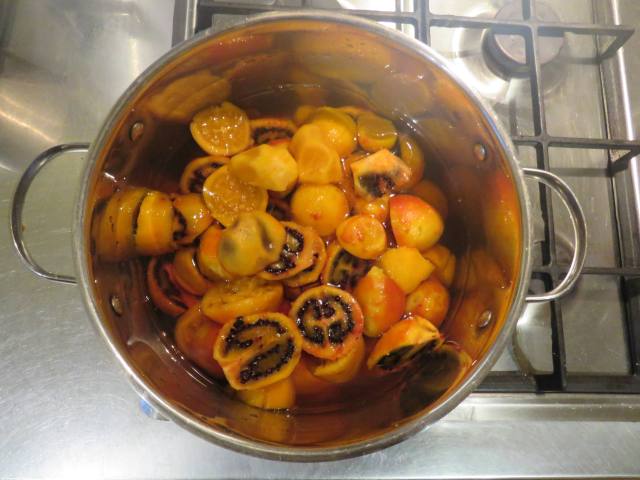
In my childhood, I think I was probably served them as dessert, stewed with a fairly large amount of added sugar. As a young adult, I encountered my mother-in-law’s winter salad standby of finely sliced onion, sliced raw tamarillo and a sprinkling of brown sugar. We have done away with the sugar now for salads. When we gather a surplus, I blanch them to remove the skins and then stew them before sieving them to remove the pips, adding gelatine and a small amount of sugar to turn them into a fresh fruit jelly. The usual way of eating them is to blanch them by pouring boiling water over to remove the skin and stem, slicing them and sprinkling them with sugar. I prefer them jellied to have with my breakfast muesli. They are very much a feature of our winter diet – both savoury and sweet.
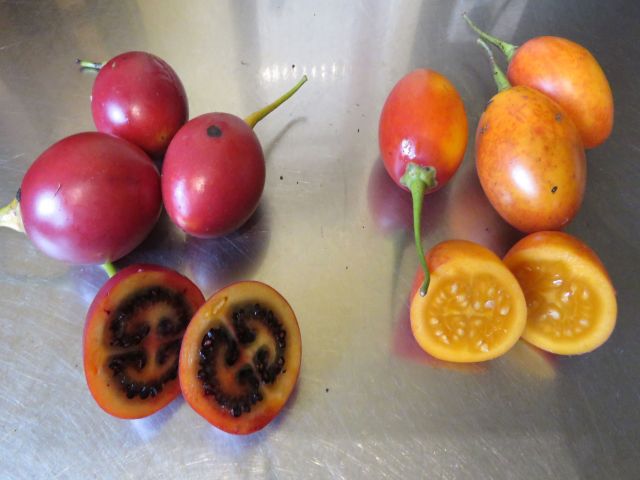
We are currently eating from two of three volunteer plants. In the depths of the Wild North Garden is a seedling that was presumably spread by a bird pooing on the wing. It is a red one, which is by far the most common form. On the wilder margins of the summer gardens, we have another two plants, one of which is an orange form which is milder and slightly sweeter to taste. Mark prefers to use the orange one for his dinner salad assemblages.
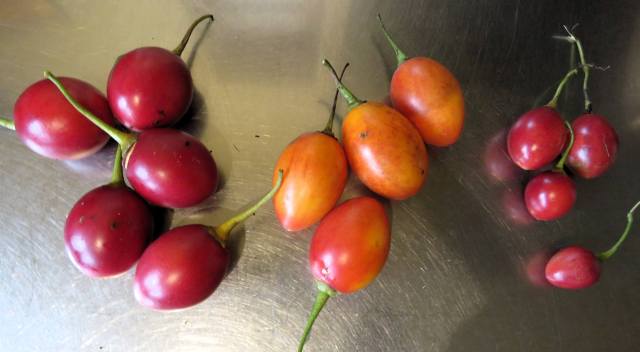
The third plant is a red which cropped brilliantly for a couple of years. Last year it surprised us with just as many fruit but they were tiny and this year they have remained tiny. We were puzzled why but now think it may have been affected by the dreaded potato psyllid which is a recent pest in this country that is cutting a swathe through commercial solanum crops.
Tamarillos are not long-lived plants but they are easy to root from cutting or raise from seed if you don’t want to buy one from the garden centre. We never spray or prune ours. They are not the world’s most exciting or delicious fruit but we have found them to be one of the most useful – trouble-free and adaptable at a time of the year when options are limited by winter.
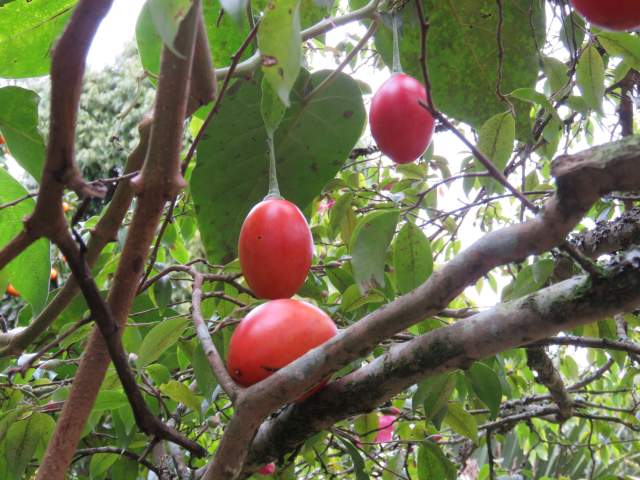
*** The name tamarillo is specific to Aotearoa New Zealand. This fruit is grown in mild to subtropical areas around the world and has many different common names, depending on which country they are in.
 Tikorangi The Jury Garden