Tag Archives: spring bulbs

The bulbs of October

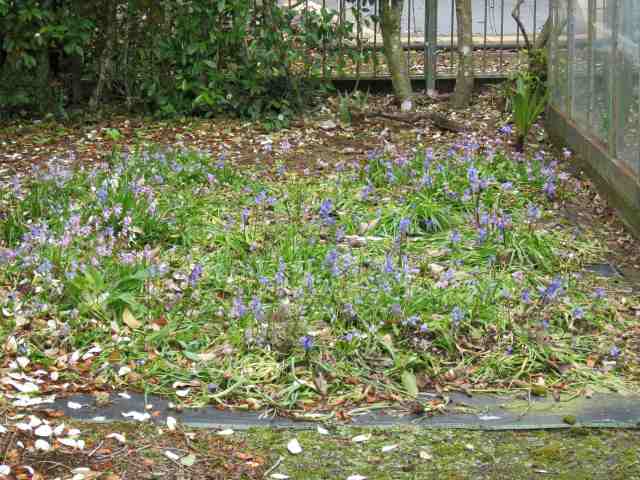
Bluebells in abundance but now all but passed over for another year

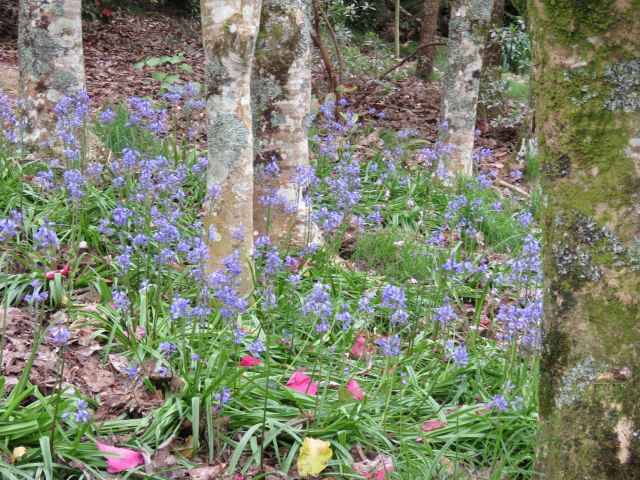
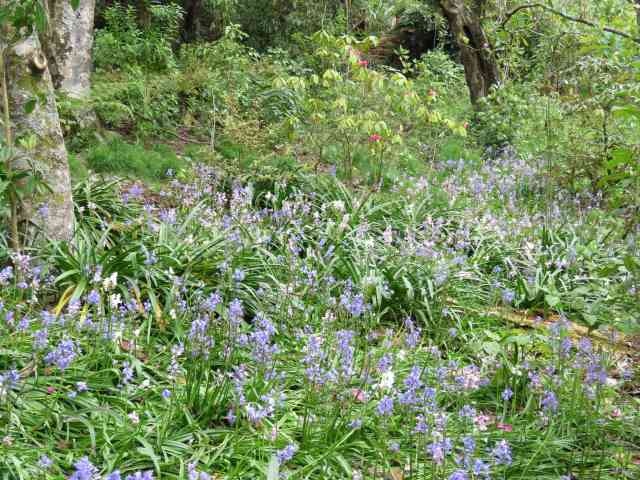
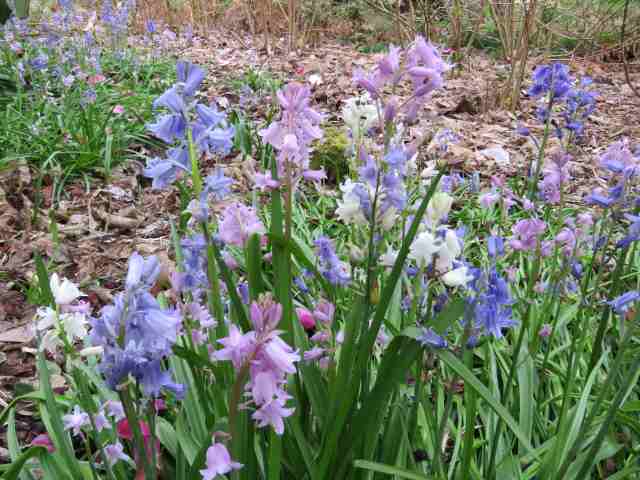
October opened with the bluebells, the pinkbells and the whitebells. I don’t want these in cultivated garden areas any longer but they are very pretty in wilder areas. In terms of a single colour sweep, blue is always best. White might as well be onion weed. Pink is a bit novelty-ish. When it comes to a colour mix, blue should still be in the highest proportion, as it is in the wild. At least that is the rule of Abbie if you are after a naturalistic, sweeping meadow effect.
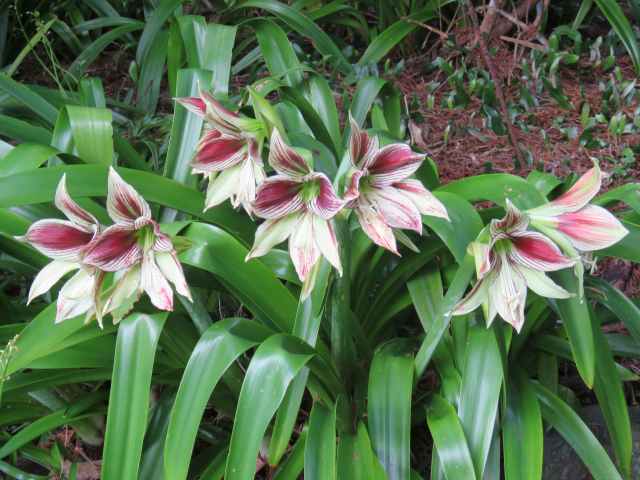
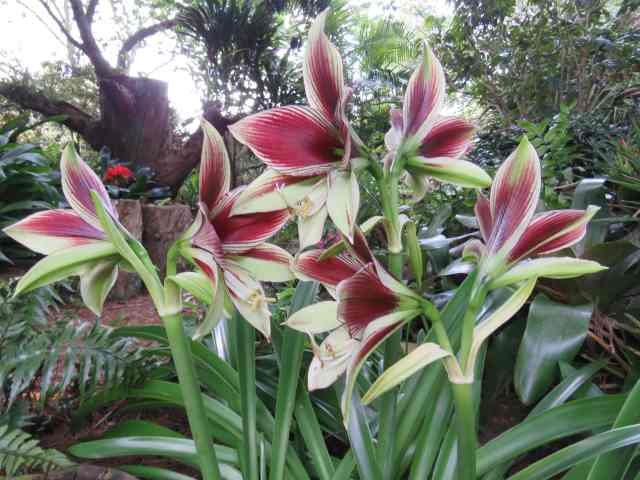
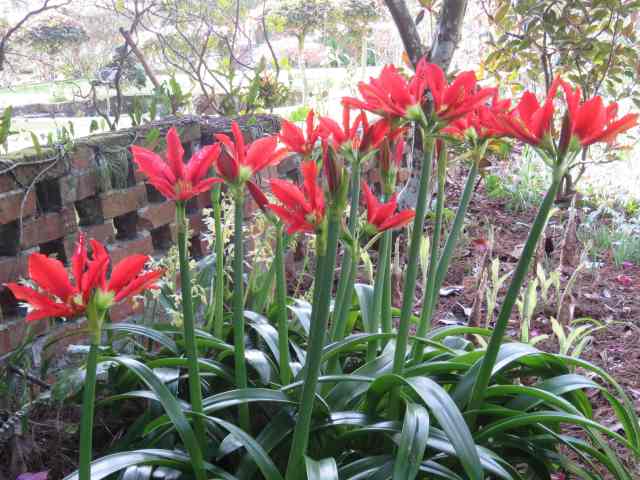
This was as good as the Hippeastrum papilio got in the unusually prolonged spring rains
Looking happier in previous years – Hippeastrum papilio

Last month belonged to red Hippeastrum aulicum. This month opened with Hippeastrum papilio. It has taken a few years but we now have plenty of this bulb, able to be counted by the score rather than single figures. It is available for sale and it is expensive to start with – probably around $25 or $30 a bulb. But it is not difficult to grow and it multiplies at a reasonable rate if you quietly lift and divide it every year or two, replanting into well cultivated soil with some compost added. Its flowers are large and showy. Its season was somewhat shortened this year with The Rains. It feels as though it has rained most days this spring. The magnolias and michelias did not appreciate the very wet season and were particularly disappointing. H. papilio tried to bloom and did well enough for me to get this photo. Alas, when I looked a few days later, even with their heavy texture, the blooms had largely sogged out and given up.
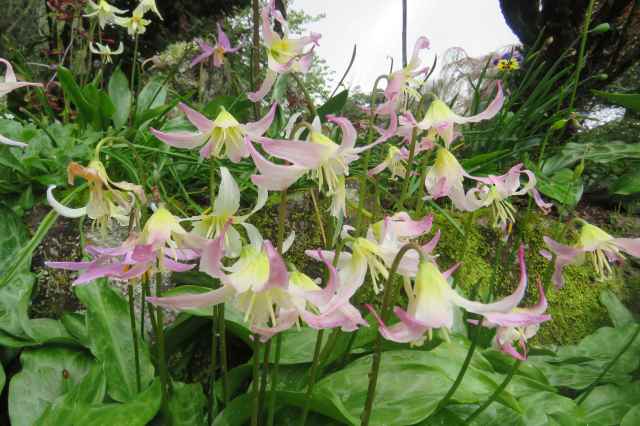
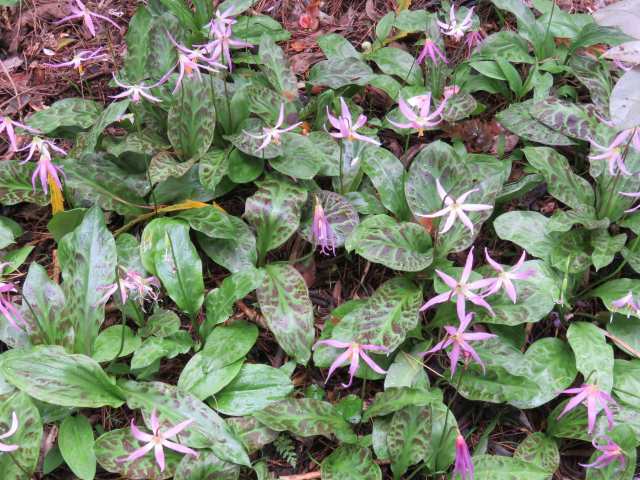
The erythroniums in a previous year

The dogs tooth violets – Erythronium revolutum – are marginal with us at the best of times. Their very soft blooms can mush up in our spring rains so I had to reach into my file photos, given that there were a few brave blooms at best. The Fritillaria meleagris is equally marginal our climate and has also been and gone for the season. These are plants that are very charming but they will love your conditions more if you can give them more winter chill and less spring rain.
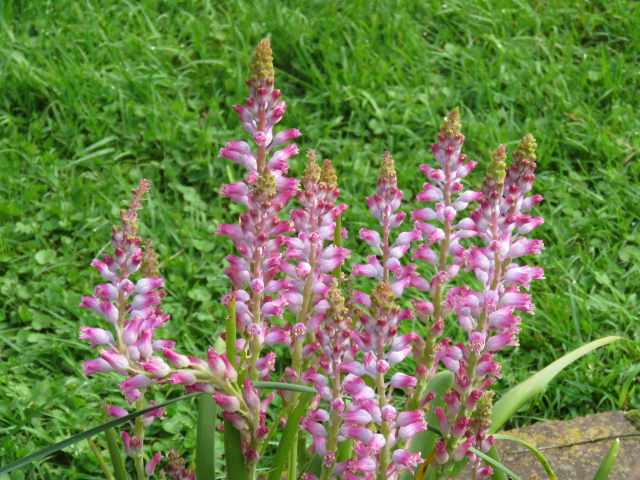
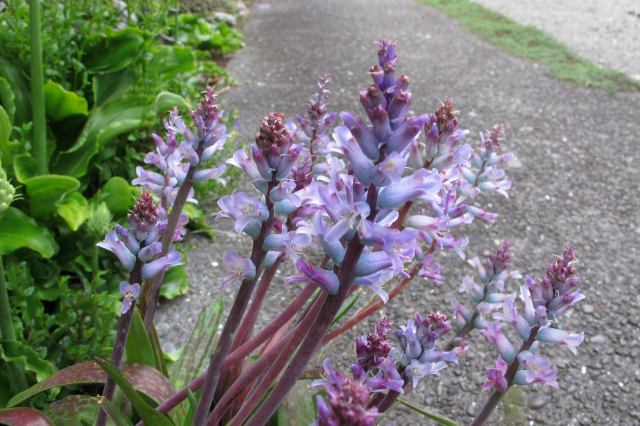
We have failed to get a species name for this striking, late-season lachenalia. Its pink, blue and pale colouring is almost luminous.

The lachenalias have proven more weather hardy for us. Now that the early ones have long gone, we are onto the late bloomers, particularly this rather striking pink and blue number and the white species L. contaminata.
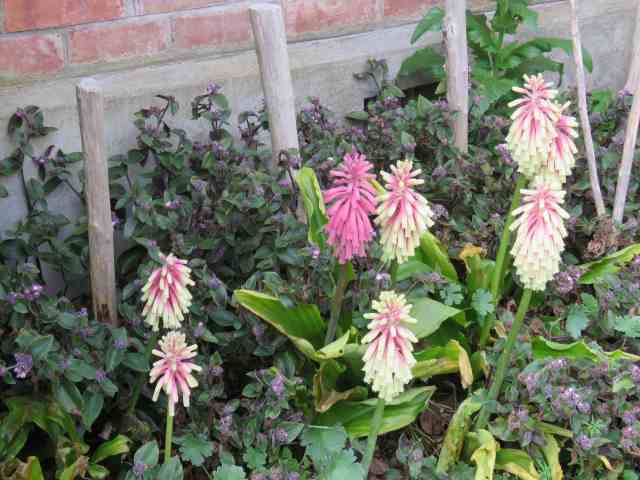
Veltheimias – ‘Rosalba’ is prettier than the more common pink V. capensis

The veltheimias are another large bulb that has surprised us with its willingness to settle in and naturalise. It is a South African native, triggered into growth by autumn rainfall but otherwise happy in dry, conditions. We assumed it would want full sun but Mark’s efforts scattering seed through the woodland areas has seen it settle in without fuss and gently establish in shade as well as sun. Veltheimia capensis is the pink form and it is common enough and reasonably hardy; the prettier lemon and pink form is less common, probably less hardy and is Veltheimia capensis ‘Rosalba’.
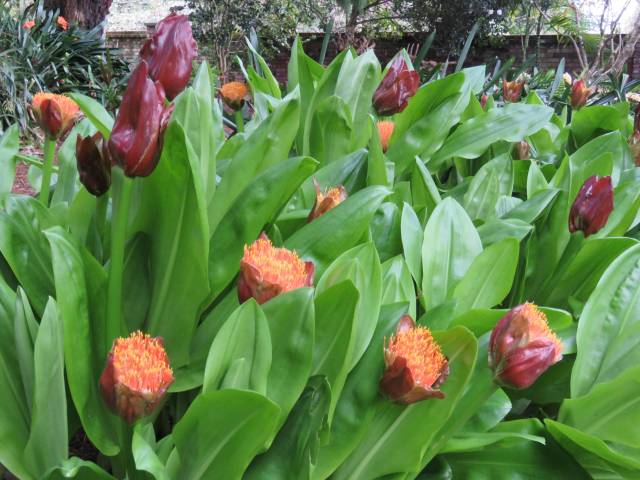
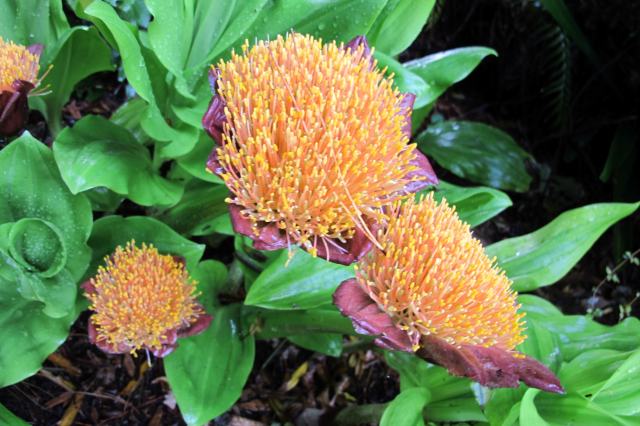
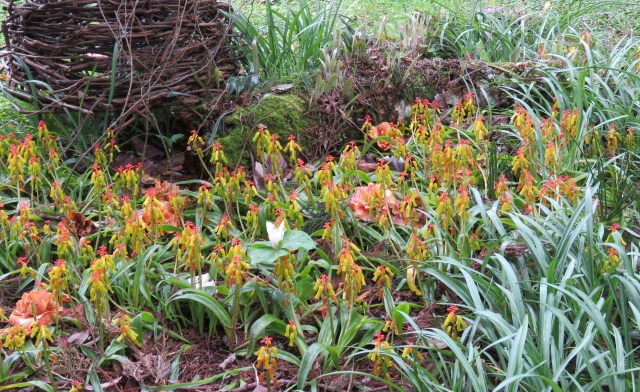
Scadoxus puniceus

Our other stalwart this month and into early November is Scadoxus puniceus. Part of the family oft referred to as blood lilies, this species is not common. You will be lucky to find it offered for sale in New Zealand. The summer flowering Scadoxus katherinae (technically S. multiflorus ssp katherinae) is readily available, although certainly not cheap. We have both gently seeding down in woodland where they make big, bold statements with their presence. If you are a patient gardener, you can build these up from a single bulb, as we have. If your conditions are favourable, you may even get them to naturalise over time, as we have.
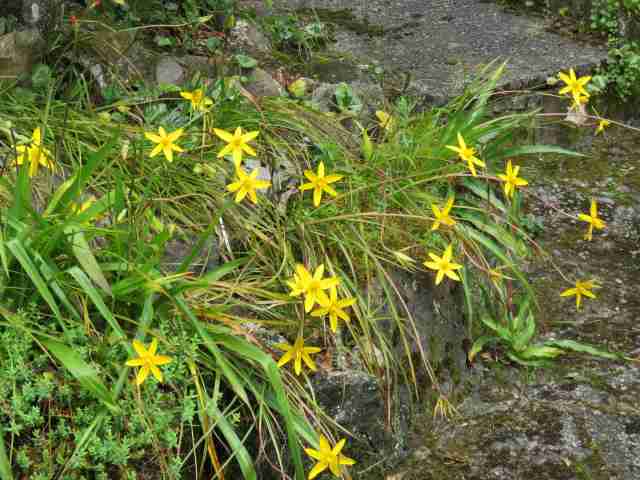
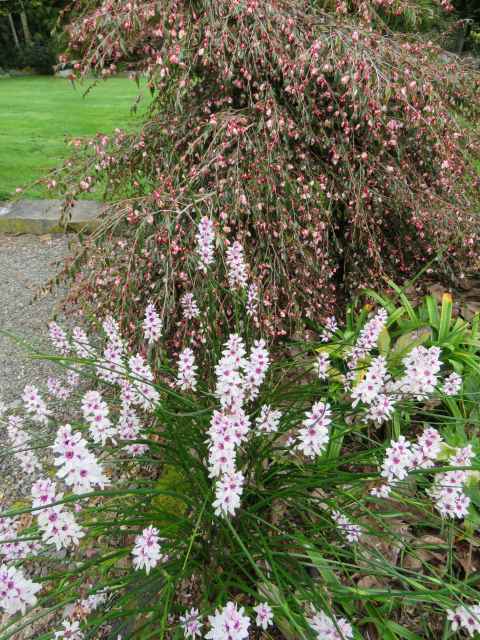
It may remain a spiloxene to us, although it seems it is now reclassified as a pauridia

I am not writing a comprehensive book so I am not doing a full listing of which bulbs flower this month. There are too many, from pretty Albuca canadensis through to Phaedranassa cinerea,  that sit on the choice, less common end of the bulb spectrum. There are families that we tend not to think of as ‘bulbs’ like alstromeria (we must have those blooming every month of the year) or the vast iris family. And there is that whole cluster of somewhat messy bulbs which often seem to overlap categories – babiana, sparaxis, ixia, vallota, tritelia, brodiaea, spiloxene syn  pauridia and more – many coming into flower now.  I say messy because a fair number of them come up with foliage that starts to die off as the flowers open. There are times I think greater separation between flowers opening and foliage browning off would be preferable.
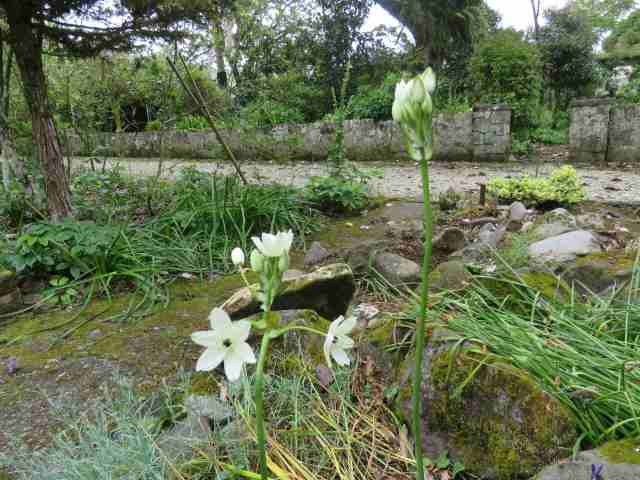
Ornithogalum arabicum

I will mention Ornithogalum arabicum, sometimes referred to as black-eyed Susan but it shares that name with other plants too, which all goes to show that common names can be problematic. Arabian star flower or star of Bethlehem are perhaps preferable options. It is not that O. arabicum is particularly rare but it does exercise great mystique for me as a prime example of random reinforcement. Every few years it pops up flower spikes but it clearly does not wish to be taken for granted because it doesn’t do it every year. It makes it a fresh surprise and pleasure when it deigns to bloom.
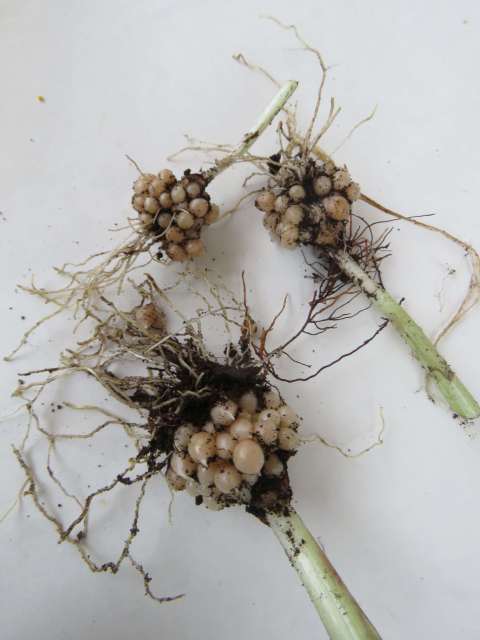
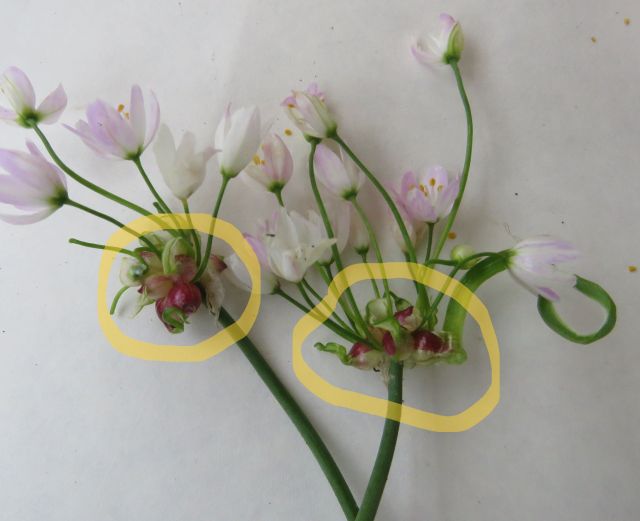
Look at that set of bulb offshoots. Every one will grow, given half a chance.
Even more bulblets forming at the base of the flowers

Unfortunately, I am also dealing with An Incident – The Incursion of the Allium Bulbs. “Oh, that is the one Dad tried to get rid of,” Mark said as he passed. It is probably a species that was sold at some stage but, with over 1000 species of alliums now identified, I have no idea which it is. There are not too many of that thousand that I would accept these days, excepting onions and garlic, of course. Look at how many bulbs a single stem is creating. And not just at the base. If you look at the flowers, you can see a whole lot more babies forming at the base of each bloom. This is a scary rate of reproduction. I shall continue attempting to get rid of it here, even though total eradication does not seem possible. 
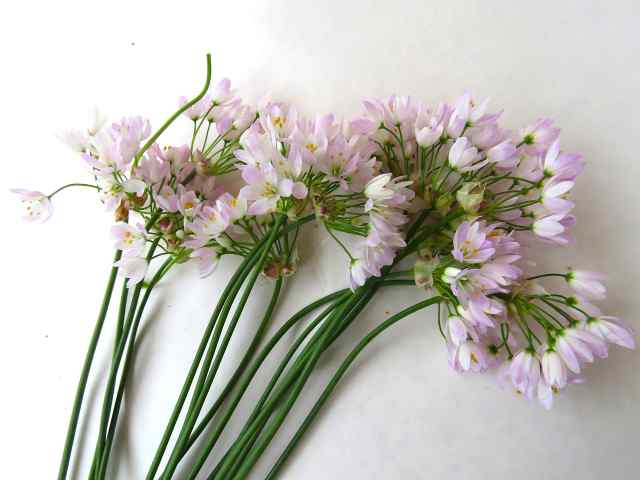
Do not be fooled by the pretty flower with the strong onion scent. Let this in at your peril and future generations of gardeners will rue your decision.

Bulbs of September

Hippeastrum aulicum – we plant it in semi shade to shaded areas because it will still flower and the dreaded narcissi fly only attack plants in sunny spots

Maybe I will do a monthly post on the bulbs in flower here during each month, I thought in August. I am pretty sure that we have bulbs, corms and tubers of one sort or another flowering twelve months of the year. But August came and went and here we are, well into September and peak spring.

Hippeastrum aulicum

Ah well, there is always some crossover. The narcissi and the Hippeastrum aulicum both started in August and are still in full bloom. The aulicums bring us great pleasure and are a significant feature as winter breaks to spring in our garden but are probably beyond the reach of most people. It is not that they are difficult to grow but they are not widely available and, purchased individually, they will be expensive. Mark’s dad probably started from one or maybe three bulbs, as was his and now our way, and the results here have been achieved over about seventy years of quietly lifting, dividing and planting around the garden, now with many hundreds of bulbs in various locations. Not every gardener has the time, patience and willingness to achieve this, let alone the longevity of stay in one garden location.

Narcissus Twilight

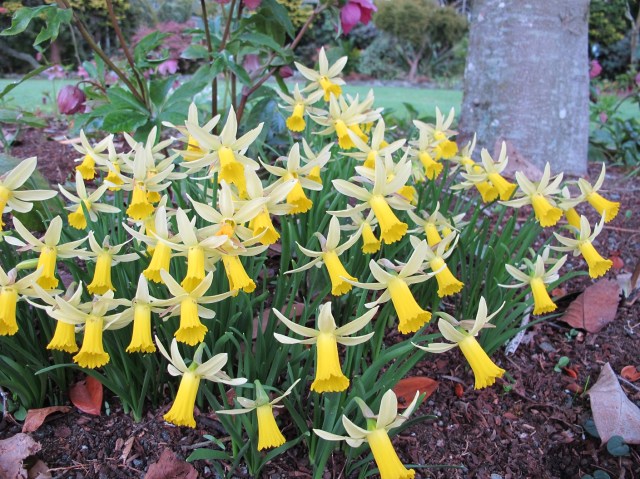
The narcissi are more achievable and will give a quicker result. We grow as many different types as we can, bar the modern hybrids (the King Alfred types) that are most commonly sold. They are better as cut flowers (the weight of the bloom often bends them over in the garden) and are better in places that don’t have issues with narcissi fly. We favour the earlier flowering dwarf narcissi. Growing a range of different species, named hybrids and seedlings raised here on site extends the season into many weeks from early August right through September.

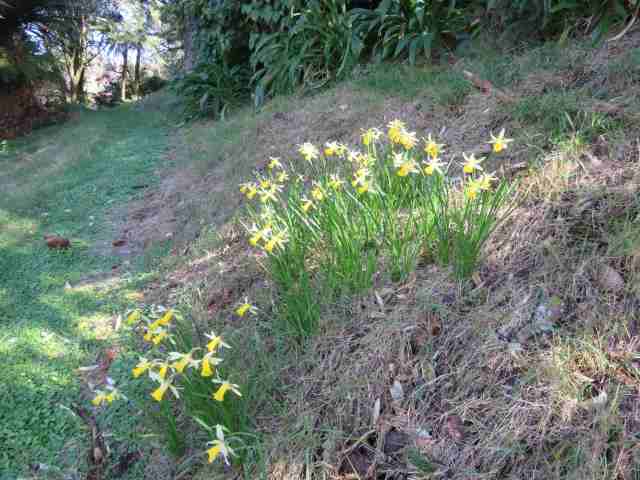
Narcissus cyclamineus seedlings growing on one of our bulb hillsides

We use narcissi everywhere really, the major consideration of sites being that they won’t get swamped by larger growing plants and that they will star as rays of sunshine in their time each year.

Lachenalia aloides

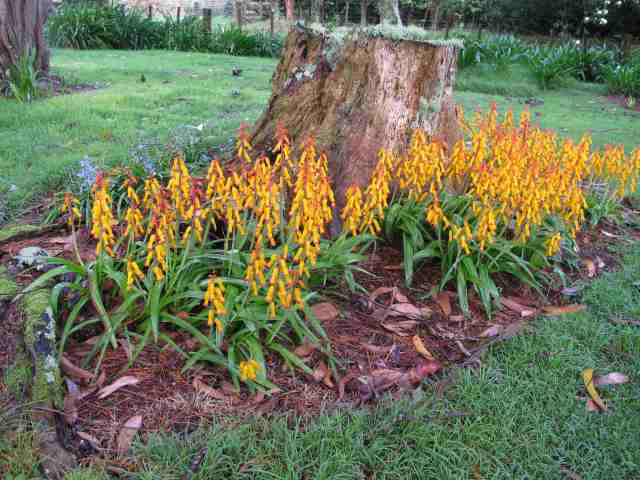
The lachenalias also star through spring. It is the boldest and the brightest that bloom first. Lachenalia aloides is the common form that is widely grown. Cheap and cheerful, might be the best description. Placement is everything when it comes to this bulb. I don’t like it as a garden plant but I think it is great on the margins and in wilder areas.

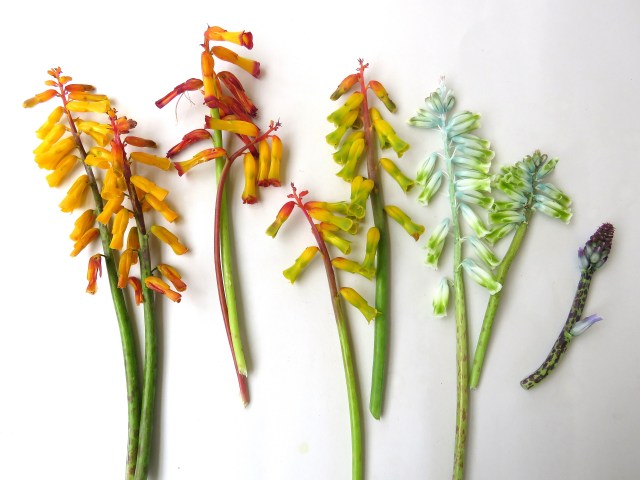
I am officially giving up on trying to understand the plant classification and nomenclature of lachenalias. Last time I looked, these were all forms of the species L. aloides. I even staged a photo to support my comment that a single species can be very variable. So we have straight aloides, quadricolor (already passing over – it is even earlier), tricolor, vanzyliae and glaucina which was barely opening a week ago. Now I look and I see they have been split. Glaucina is back with L. orchiodes, while quadricolor and vanzyliae seem to have been elevated to the status of being in species classes of their own and I have no idea where tricolor sits. They can remain a mystery for me.

Lachenalia glaucina

From a garden perspective, I always notice that it is the orange, yellow and red lachenalias that flower first (the yellow being Mark’s reflexa hybrid, the red we have is bulbifera). The most desirable so-called blues come later. I say so-called blues because that casual grouping takes in those with the faintest blue genes that are really shades of cream, pink and lilac as much as pure blue. We have gathered every one we could find over the years and by far the most reliable is the aforementioned L. glaucina.

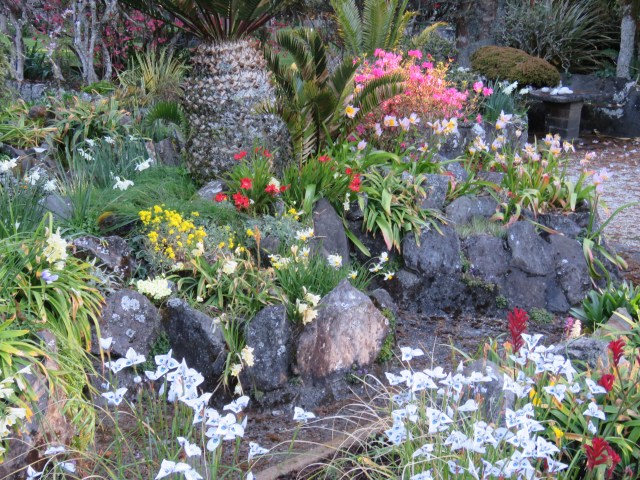
And without writing a book on topic, I can only continue by listing bulbs that I spotted on a perfunctory wander around the rockery and areas where we have done informal swathes of different bulbs. We find the bulbs add depth and detail which we value highly.

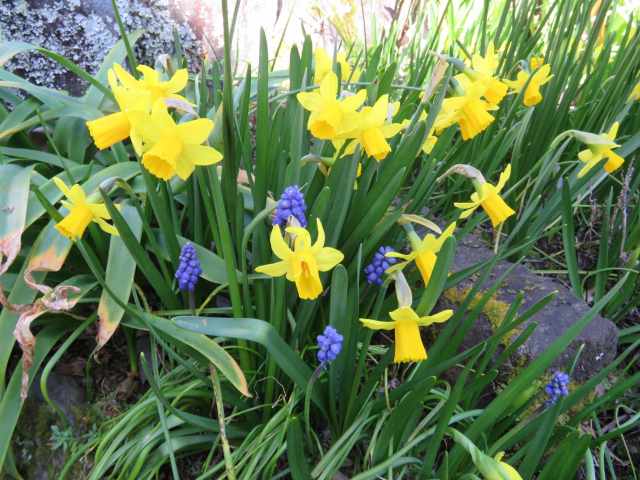
A touch of grape hyacinth is enough. Seen here with Narcissus Tete a Tete.

We are not too snooty about the common bulbs. While the snowdrops finished last month, the undervalued snowflakes (Leucojum vernum) flower on. We are thinning out both the grape hyacinths (muscari – foliage to flower ratio too high in our climate and spreads a bit too much) and bluebells (way too invasive) but not aiming for total eradication.

Once was dipidax, then onixotis but now, apparently a wurmbea
Seedling anemone

The blue anemones seed down and have quietly naturalised in the rockery without being a problem. I once planted a couple of bags of anemones and ranunculus and they all flowered the first year. From then on the ranunculus, the double anemones and all colours except blue quietly faded away but I like the simple blue and I like even more that they are self-maintaining. The Wurmbea stricta which we used to know as an onixotis and before that was a dipidax is another common bulb but one without a widely-used common name so most often greeted with words to the effect of “Is that what it’s called? My mother used to grow that – I never knew its name.” Dutch iris are another early spring option. I like my blue ones but I am not a particular fan of the family generally.

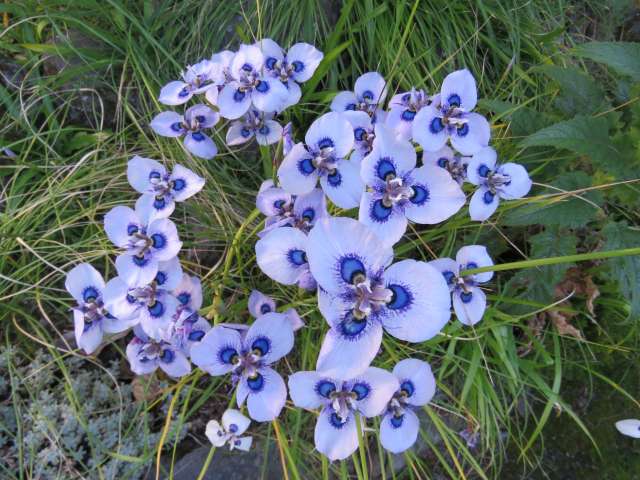
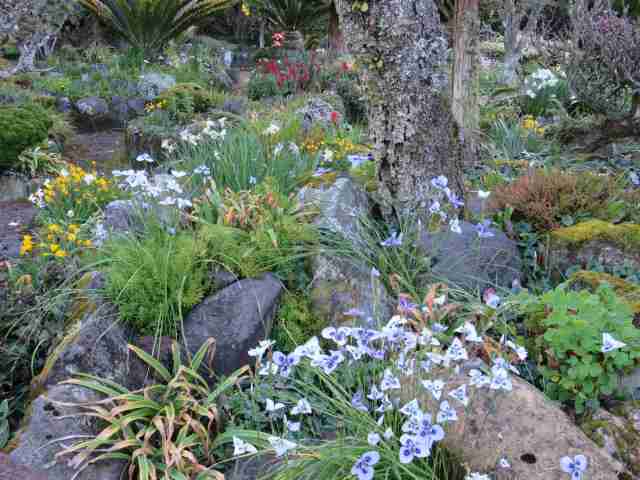
The blue moraea villosa are the most desirable but the white with blue eye are the most common

There is a large group of somewhat messy bulbs that are terrific in flower but their seasonal foliage is often dying, either just before they bloom or while they are in flower. So they are not nice, tidy, neat bulbs but they are generally showy. The Moraea villosa float like ethereal eyes of the peacock feather, moving in the breeze and they are a delight, even though I may feel irritation at their messy foliage in a few weeks’ time. The freesias (plain cream ones here), sparaxis, valotta, tritonia, Gladiolus tristis and babianas all fall into the same category and are flowering now. We grow them all, but more in the rockery for choicer ones and in meadow plantings for vigorous ones. Their foliage issues are less intrusive than in a tidy border planting.

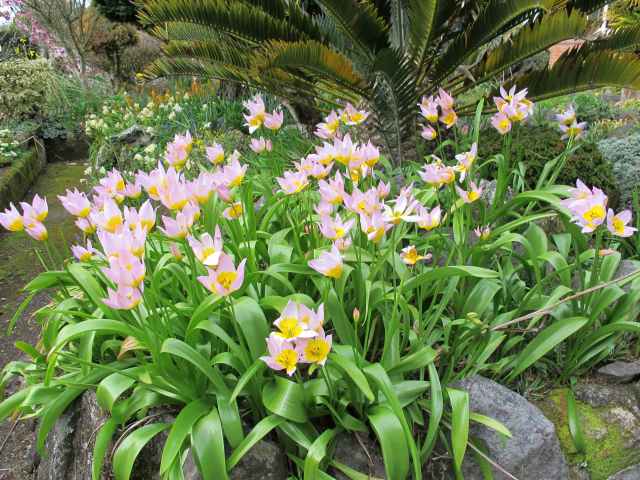
Unlike the Dutch hybrids, Tulipa saxatilis just keeps quietly increasing and returning to bloom every year

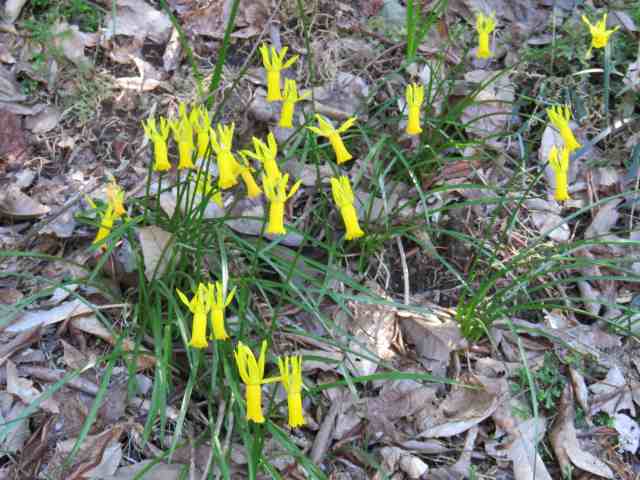
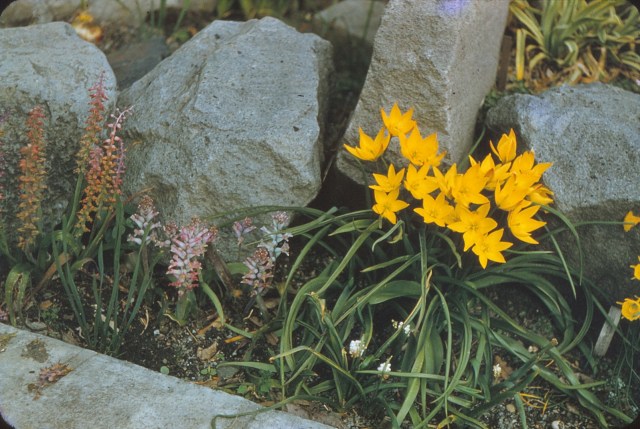
Tulips – we don’t grow the Dutch hybrids but we are enamoured with the Cretan species Tulipa saxatilis. And we have a dainty yellow species that may be a form of T. sylvestris, or it may not. Amongst Mark’s parents’ slides, there was a photo of it in the newly constructed rockery so around 1952 or so. Amusingly, seventy years on, we still have it but only in similar quantity to that in the early photo. It is clearly not going to naturalise and reproduce much here.

We know this is a very early photo because the rocks have not a skerrick of moss or lichen on them.
Ferraria crispa

Then there is the Ferraria crispa, the starfish iris which is only worth the space if you are fascinated by oddities and freaks. Erythroniums, dog’s tooth violets which prefer colder, drier winters, are a seven to ten day wonder with us but charming and dainty for that time and no bother for the rest of the year. Veltheimias in pink and in cream are a mainstay for us in both sun and shade, the pleione orchids are coming into flower and Hippeastrum papilio has opened its first blooms – I could go on.

Why did I start with the month that is probably the busiest of the year in the varied world of bulbs? There will be more that I have missed. If I end up having to retire to a very small town garden, there will be no roses, lavenders or easy-care mondo grass. I am pretty sure I will be growing bulbs.

The rockery is at its busiest at this time of year

Too many bluebells!

So pretty beneath the trees in an area that is not cultivated garden

The romantic haze of blue of a drift of bluebells – how delightful. And yes, it is but only in the right place. I have written about bluebells down the years and we went to some trouble to establish drifts here. Ironically, back in 2007, I wrote: “The bluebell planting was a bit of triumph for Mark. He had been gently nurturing a patch in the vegetable garden to build numbers and came up with about 2000 this year. Now 2000 bluebells may sound a large amount to most people but his mission, he explained, was to try and get that 2000 to look more like 20 000. It takes a huge number to have much impact in a large area.”

I was first inspired by a natural bluebell wood in Scotland back in the early 1990s and I loved bluebell season when our friends, Bruce and Lorri Ellis, had Te Popo Garden. I have a childhood memory of my mother’s treasured bluebells. She was a good English gardener, my mother, and she encouraged us to pick flowers as long as we picked them with long enough stems to be put in vases. But the bluebells were prohibited; we were allowed to pick the common, blue grape hyacinths (muscari) but not the bluebells.

We also enjoy the bluebells in wilder areas, These all grew from seed Mark scattered. The presence of pink and white ones tell you that they are Spanish bluebells.

I once spent some time unravelling the differences between Spanish and English bluebells  and came to the conclusion that what we have here are all Spanish bluebells, or maybe Spanglish hybrids, but not the more desirable English species.

Our mistake here has been to allow some into cultivated areas of the garden. Bluebells are best kept to wilder situations. I speak from experience. Bluebells are thugs; in well cultivated garden conditions, they are more than thuggish and can spread at a frankly alarming rate. Not only do the bulbs multiply over-enthusiastically , but the seed disperses freely and germinates happily where it lands. We started trying to deadhead our garden bluebells some years ago. Now we – as in Zach and I, but mostly Zach – are trying to eradicate them from some areas and to drastically thin them where eradication is not possible. Bluebells may be pretty but we don’t want them everywhere.

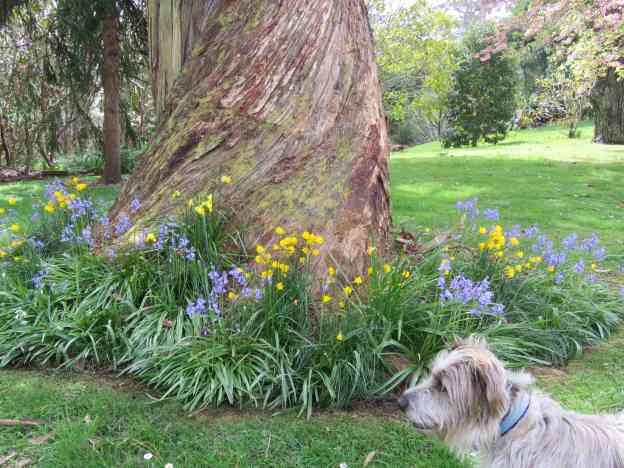
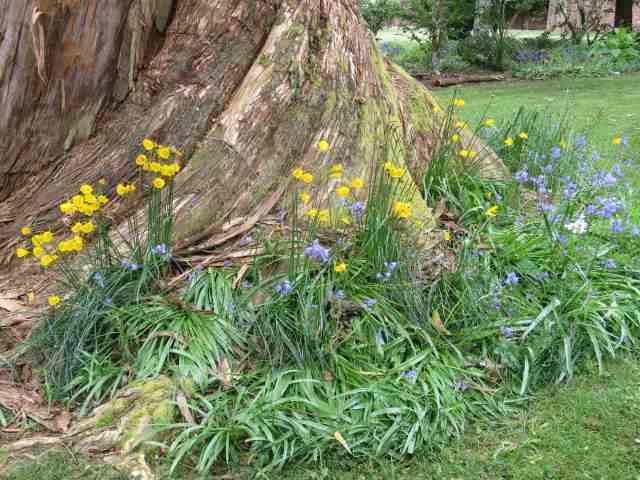
Bluebells are fine in this situation, around a tree trunk where they are contained by mowing. The narcissi are bulbocodiums and you can tell the tree is a eucalyptus by that interesting twirl on the trunk.
I am sure we could hit them with spray but that is a last resort here and we haven’t quite reached that stage of desperation.

What to do with all the bulbs that have been dug is the question that is now troubling us. I don’t want to give them away seeing we have decided they are weedy. They can’t go into the compost because they won’t die in there. Some of the early ones went into buckets of water to see if they will rot down but that is taking a long time and we don’t need buckets of water so much as tanks or drums. Also, we won’t appreciate stagnant water as temperatures rise and mosquitoes become active.  

I don’t think they are going to die here, even sitting on weedmat

Some have been spread on a stand-out area covered in weedmat in the hope that they will dry out and dessicate. But they are actually growing and flowering there. Maybe when the heat of summer comes, we can keep turning the heap and drying them out but I reckon they are tough enough to survive.

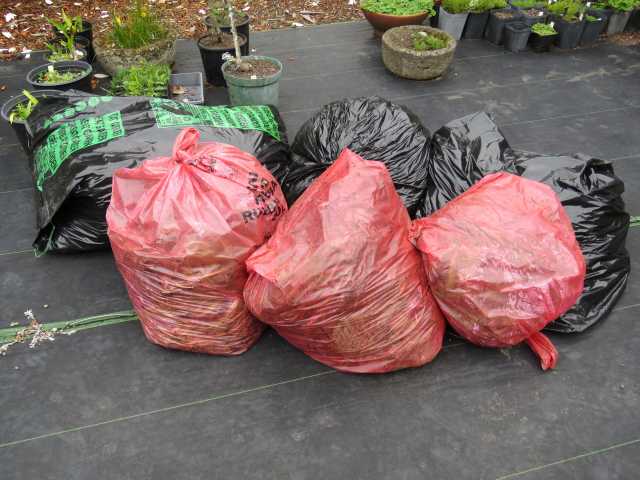
We have resorted to removing the foliage and putting them into plastic sacks. The theory is that black sacks will heat enough over summer to cook the plants inside them and it mostly worked on wandering willie (wandering jew or tradescantia) in the past but the volume was considerably less.

Our landfill wheelie bin is not to be used for green waste unless it is noxious weeds. I may make a professional decision that bluebell bulbs are indeed noxious weeds and start putting a bag a fortnight into the landfill bin but it will take months to clear them.

Any helpful ideas?

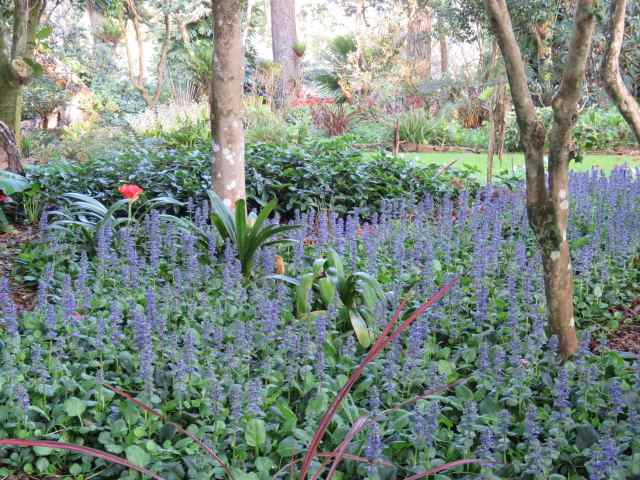
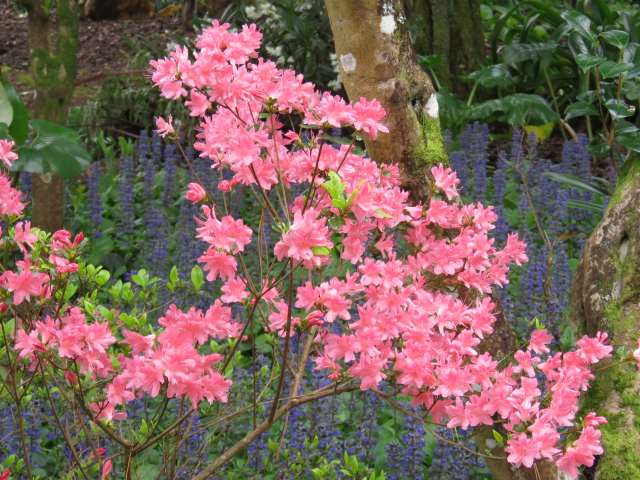
Ajuga – a better behaved blue drift in a garden situation

The moral of this story is not to repeat our mistake and allow any bluebells at all into garden beds. Ajuga is a much more garden friendly option to create a blue haze.

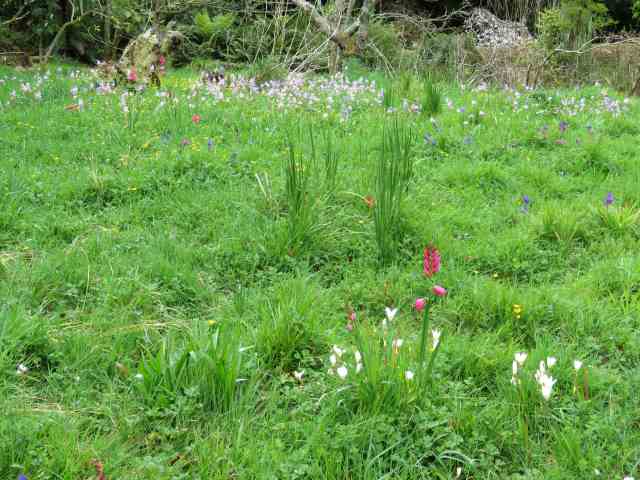
The meadow we are developing in the Wild North Garden with a scatttering of bluebells, but mostly pinkbells, at the top of the photo

It has taken us years to learn how to create a sustainable flowery meadow in our conditions of high rainfall and high fertility but I feel we are succeeding in the Wild North Garden. Looking at it this week, I thought that a flowery meadow that goes from spring to autumn is more rewarding than a bluebell drift that looks lovely for three weeks of the year.

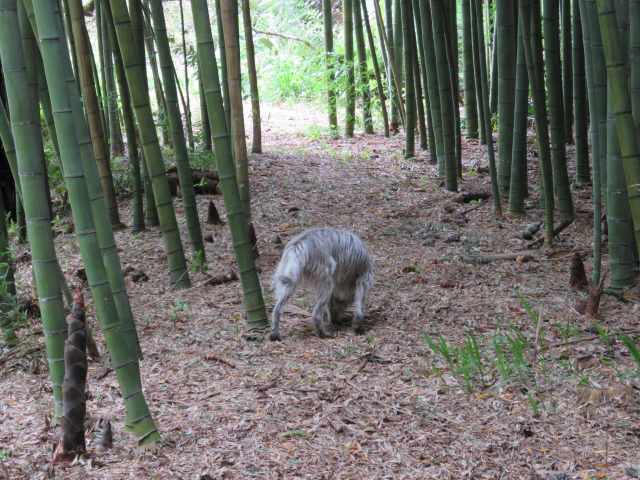
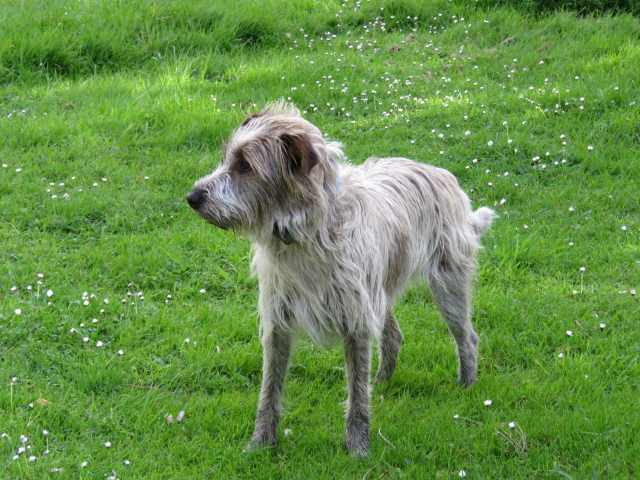
Ralph, back to sniffing out rabbits or maybe rats down in the bamboo grove

For those of you who expressed concern about our dog, Ralph, after last week’s post, I am pleased to report he is not far off being back to his normal self. He appears to have some damage to his lungs with a persistent cough. We have our fingers crossed that this may heal over time. Organ damage is a known side effect of the poisons he ingested but whether it will be permanent remains to be seen. Otherwise, he is back to his usual exuberance and if he were human, he would thank you for your concern. We are deeply relieved.

Spring in the woodland gardens

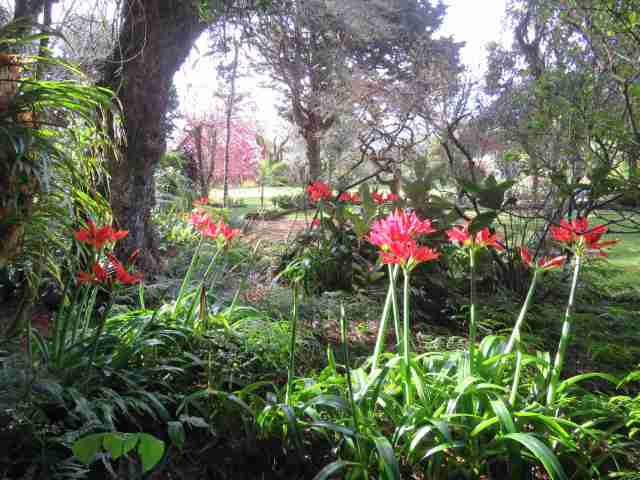
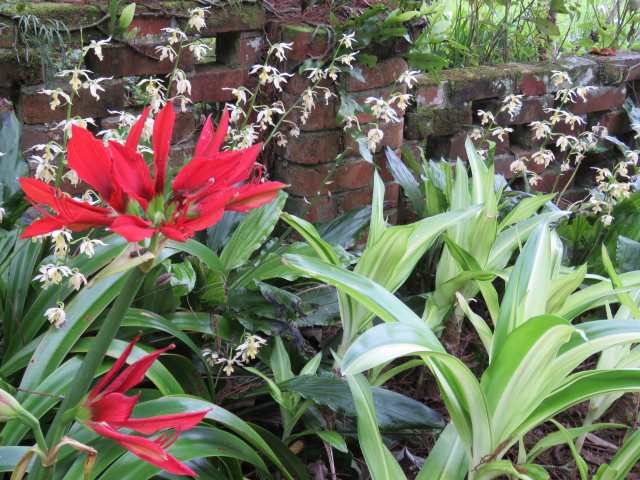
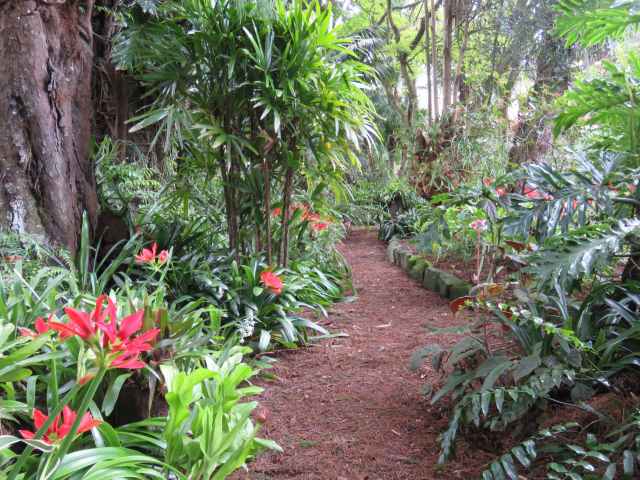
Red Hippeastrum aulicum, pale yellow calanthe orchids and Crinum moorei varegata are all mainstays of our woodland plantings

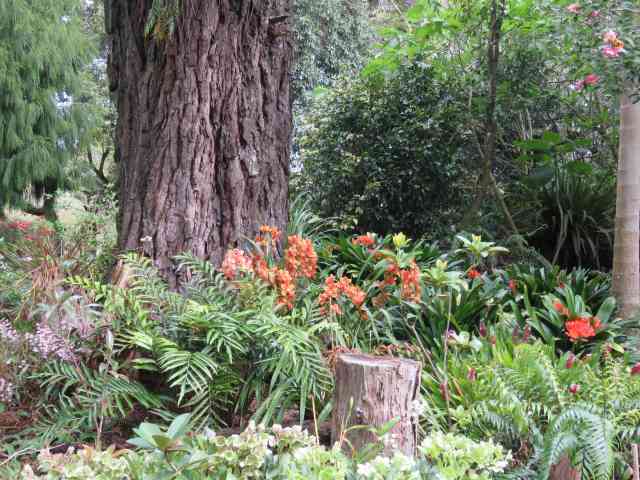
It has been a difficult week, so all I have to entertain readers with this week is scenes from the spring woodland. We like highly detailed woodland.

High shade is the key – here in the Avenue Garden

The key to woodland gardening here is to manage light levels. The charming scenes we see of European and British woodlands – the expanse of white birches underplanted with snowdrops and crocuses and that sort of thing – are beneath deciduous trees which let light in during winter and shoulder seasons.

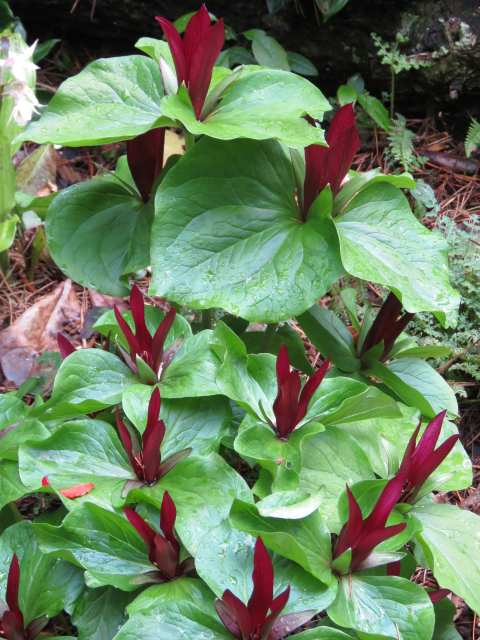
Trilliums are a bit marginal in our climate so it is always a thrill to see their understated charm
Scadoxus, however, are so happy here that they have pretty much naturalised themselves. This is S. puniceus which flowers in spring. S. katherinae will feature in summer.

In Aotearoa, somewhere over 99% of our native flora is evergreen and most people tend to garden with exotic evergreens as a preference. In our years of retail, I encountered many gardeners who would reject anything deciduous. As a result, we don’t get the seasonal light coming into shaded areas. Also, with our rapid growth rates, trees tend to grow much larger. As UK author and horticulturist, John Hillier inscribed in our copy of Hiller Manual of Trees and Shrubs, ‘double heights and halve the time for New Zealand’. Dare I say it, UK woodlands often look quite spindly to my eyes.

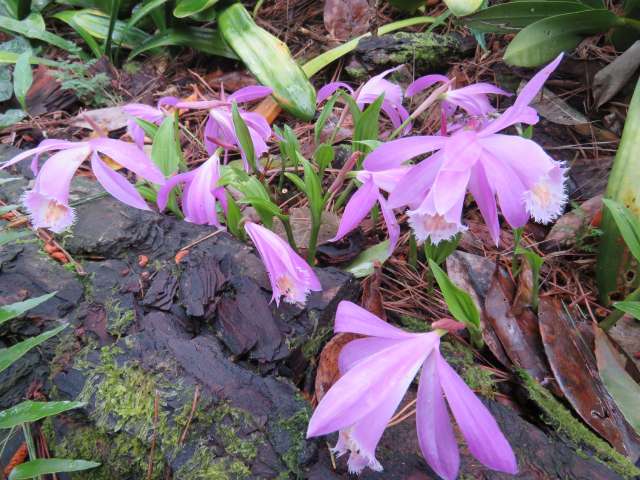
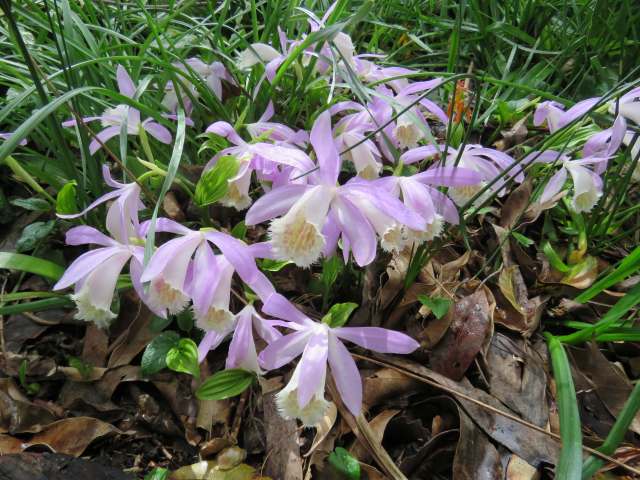
Orchids, we have a few. These are pleiones. We lost all the yellow ones that need more of a winter chill but the purple, lilac and white varieties thrive under laissez faire management in the woodland garden.
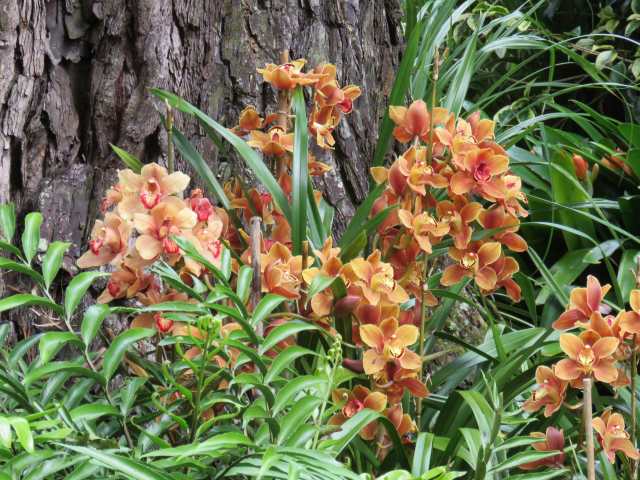
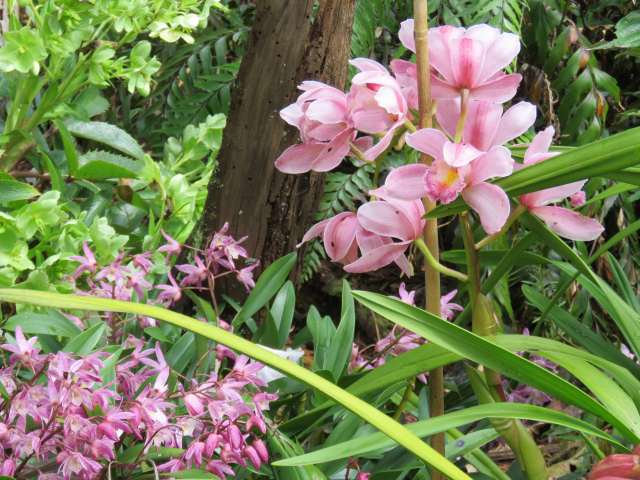
More orchids – dendrobium to the left and cymbidium to the right

Woodland gardening means dappled light and some shade, but not deep shade. There aren’t many flowering plants that will perform in deep shade. Lifting, limbing and thinning are needed to create high shade and to allow reasonable light levels below.

The Rimu Avenue has such a dense network of roots from trees that are now over 150 years old that we have had to rebuild soil below to allow underplanting

There are also times when the soils below will need some extra texture, volume and replenishment in order to get small plants established. Small plants at ground level won’t thrive if they are bedded in amongst dense tree roots which have dried out the surface.

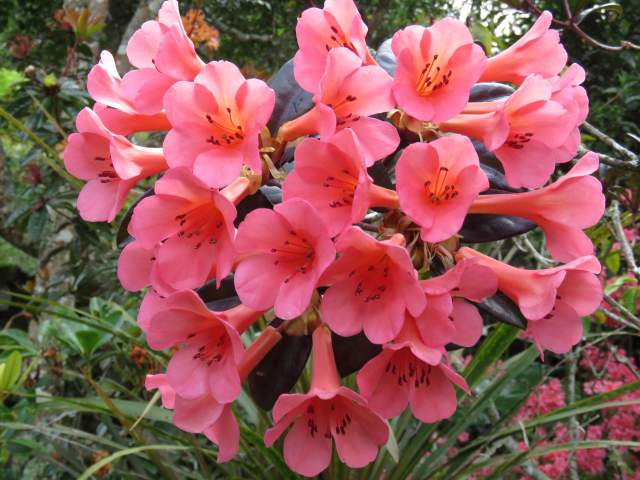
It is not all bulbs in our woodlands. Azaleas, vireya rhododendrons, camellias, hydrangeas and other shrubs add mid-level detail and height.

On the upside, even high shade and dappled light is enough to hugely reduce weed growth and the visual delight lies both in the detail below and the play of light. It is much lower maintenance than gardening in full sun.

Why a difficult week, you may wonder. We nearly lost our beloved dog Ralph to poison – not our poison and not deliberate but traumatic, nonetheless. We thought he was going to die on Tuesday night. He is still recovering and we are now confident he will survive, although there is a possibility of long-term organ damage.

Ralph in happier times

It is perhaps little understood in this country that our predator-free goals are only achievable with the extremely widespread use of slow-acting poisons, one of which has no antidote. There is a pretty gung-ho attitude and light regulation when it comes to the use of poison. We choose not to use it and will trap and shoot instead. Ralph’s ordeal this week is a reminder to us of why we made that decision. Our lives would have been so much poorer had he died so needlessly and in distress.

Charming erythroniums or dogs tooth violets – best left undisturbed as much as possible because their long, thin bulbs sit vertically in the soil and are fearfully easy to snap when digging.
Lachenalia aloides tricolor on the margins of woodland where light levels are higher. With a white trillium popping up through them and snowdrop foliage to the right.

Spring has sprung

Spring has sprung

The grass has riz

I wonder where the boides is.

I had to do a little search on that bit of doggerel from my childhood and it appears there are multiple versions – although this one is the most common – and it may or may not have originated from Ogden Nash. But here we are; spring has indeed sprung. A visiting friend last weekend got out of his car and stood, momentarily transfixed by all the bird song he could hear so that was a nice way to start a visit. We don’t need to wonder where the boides are because they are here.

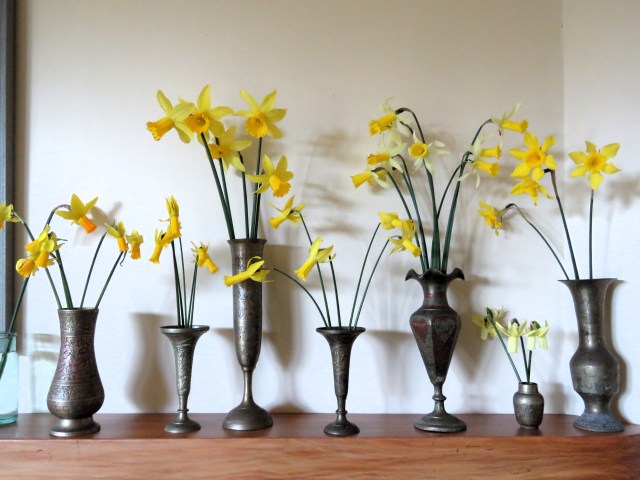
With Daffodil Day officially scheduled for the last day of winter next Thursday, all I have to offer today is a host of golden narcissi, that your heart, like William Wordsworth’s, may fill with pleasure and dance with the daffodils.

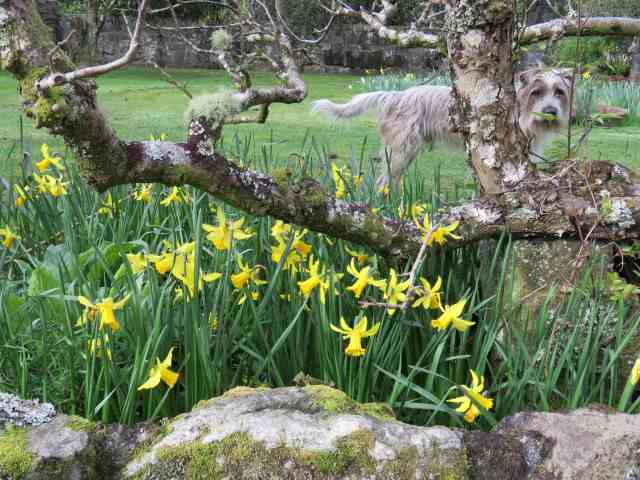
Ralph is no respecter of the garden but he does add a certain ambience to the ‘Peeping Toms’ beneath the old apple tree.

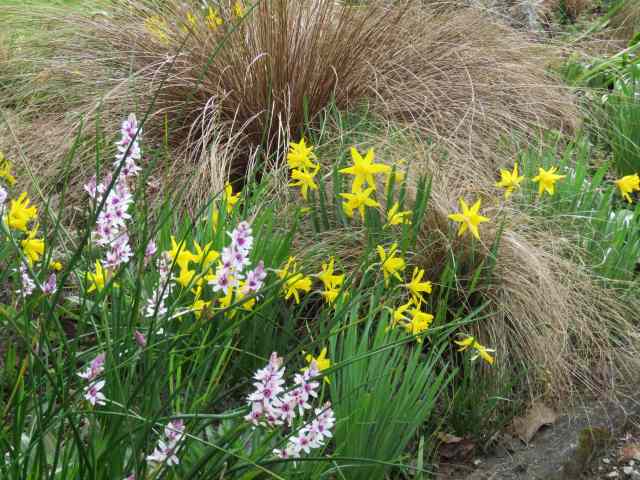
I see the pink and white Onixotis triquetra has been reclassified by some as a wurmbea but I am not sure I can cope with that; it is seen here with cyclamineus hybrids and our native brown carex grasses. We favour the early flowering dwarf narcissi and those within the cyclamineus group are hands down the best performers in our climate.

While we have many narcissi in more cultivated areas of the garden, it is the clumps that have naturalised well on the grassy banks of the park that make our hearts sing the most. There is something magical about seeing bulbs naturalised in more casual settings. This one is ‘Twilight’, a most successful cultivar bred by Mark’s dad, Felix Jury.

We favour early flowering varieties because they are pretty much over and dying down before the narcissi fly is at its most active. And we opt for the dwarfer types because we like their more delicate, somewhat refined appearance and they generally hold their heads up better. The larger the flower, the heavier it is and they are much more vulnerable to being beaten down by early spring storms.

The snowdrops are all but over, the magnolias are not yet peaking. This week belongs to the golden narcissi.