Tag Archives: spring flowers

The graveyard incident

Truly I have a terrible story for you this week. Well, maybe not terrible in the greater scheme of things but fairly astonishing. Despite its location, it does not involve death.

Does the world really divide in two groups of people? There are those who understand instinctively that pretty, seasonal floral displays in public places are there to bring pleasure to all.

And then there is the other lot. Those who think that the same pretty flowers are in fact their personal picking garden and it is their right to pick bouquets with no thought at all that they might be depriving others of pleasure. First in first served and all that.
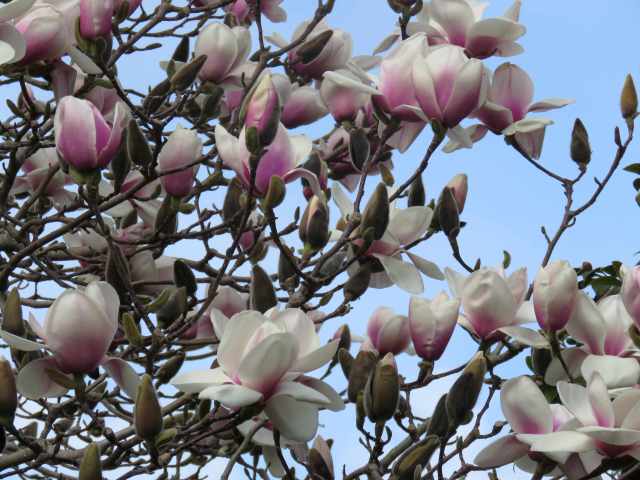
Magnolia Athene

The Te Henui cemetery in New Plymouth is known to many, not just locals but also from further afield. The repository of the dead going back well over a century, it is also a popular dog-walking route. But, for many of us, it is a place to visit to see the flowers.
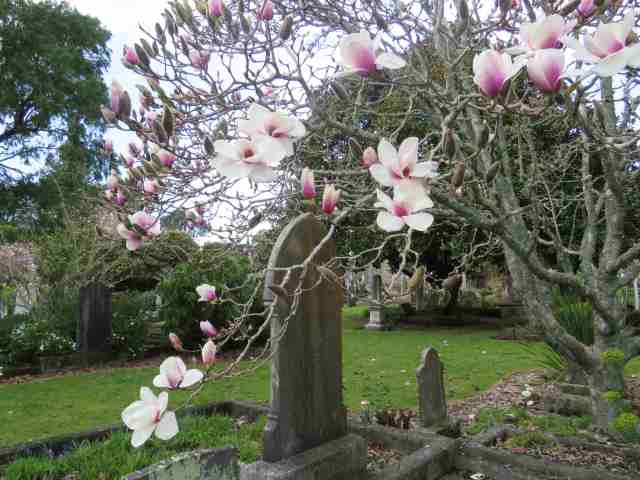
Magnolia Milky Way

Part of that is the designation of the cemetery which allowed for recreational use (hence the urban dog-walkers) but also the planting of trees which are less common in graveyards on account of their root systems breaking up all that concrete. But most of the credit for the current floweriness all through the year must go to a small group of dedicated volunteers who spend a large part of every week tending the detailed plantings on and around the graves.

Theft is always an issue, especially with plantings in public places. The volunteers at the cemetery have learned to deal with it but it doesn’t stop their frustration and disappointment.

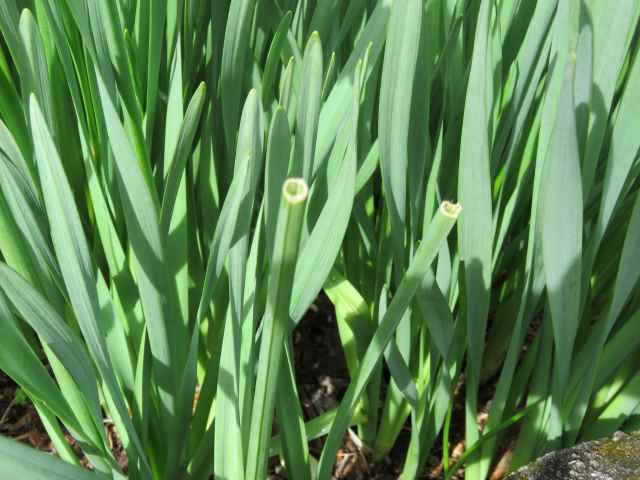
Last week, one entitled woman took it to new heights. She was seen helping herself to tulips and daffodils. When challenged about her actions, she became angry. How dare anybody rain on her parade? Most of us would be embarrassed but not her. She phoned the police and claimed she was being intimidated. Two officers turned up with remarkable promptness. She was waiting for them, holding just one daffodil (having dropped the others along the way to the exit, you understand), claiming she was being harassed for picking a single flower.

No further action was taken but it is hard to believe that this woman has learned her lesson. Volunteer gardener, Susan, made sure to retrace her steps and retrieve the flowers she had thrown away, showing them to the police after the woman had left. While this woman is by no means the only person picking flowers, she is the only one who had the nerve to call the police in retaliation for being challenged.
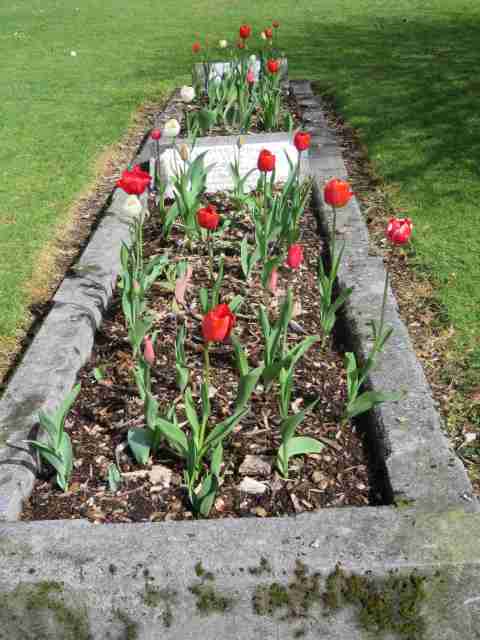
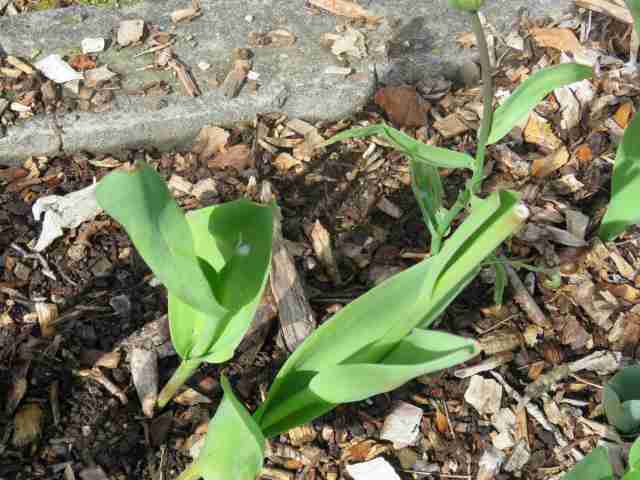
The poor tulips, being taken before they have even opened.
Evidence!

Susan tells me: “We have lost 17 tulips from the grave opposite the tomb and 8 from the grave on the eastern side – so far. It doesn’t sound many but the season is not over yet and the tulips are expensive and don’t reliably re-flower in subsequent years. So tulip losses in particular are very aggravating. We pay for the tulip bulbs.

We deliberately plant the tulips by the road so that the rest home vans can drive past with residents and the residents can view them from the van (most have mobility issues).”

The moral is clear. Don’t steal flowers (or indeed plants). Especially don’t think it is okay to raid them from public places where they are tended by volunteers. Also, the police have better things to do than to be used as a back-up for some entitled, selfish person.

What is wrong with some people?
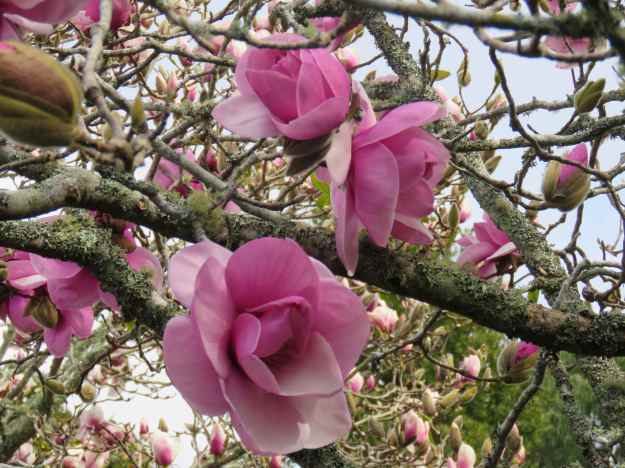
Magnolia Atlas

On a more positive note, the magnolias in the cemetery are looking splendid this week.
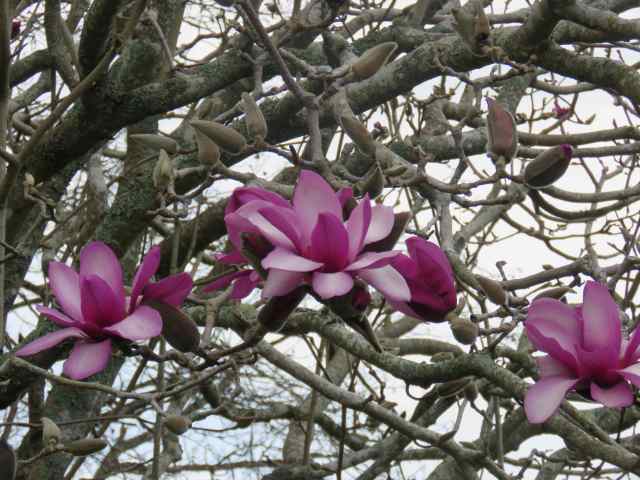
Magnolia Apollo
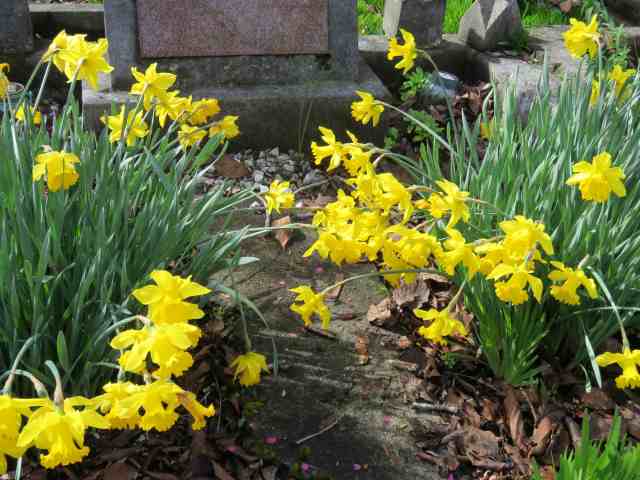
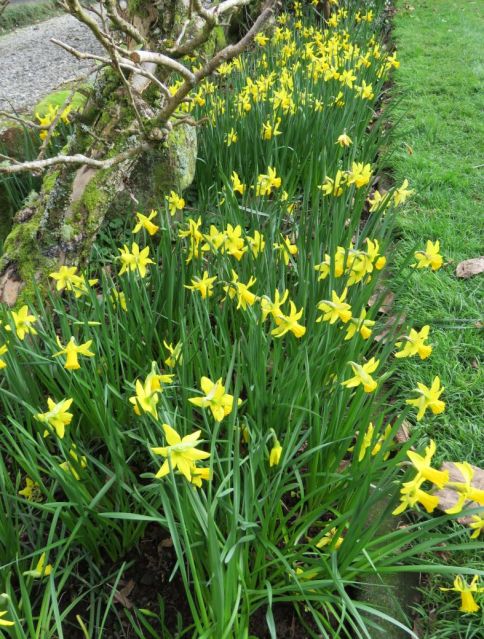
I took this photo as an illustration of a recurring theme – narcissi where the flowers are too large and heavy to hold up straight. Excellent cut flowers – but not if you are helping yourself to them in a public space – but not so good as garden plants.

Seeing through another’s eyes and TMF here

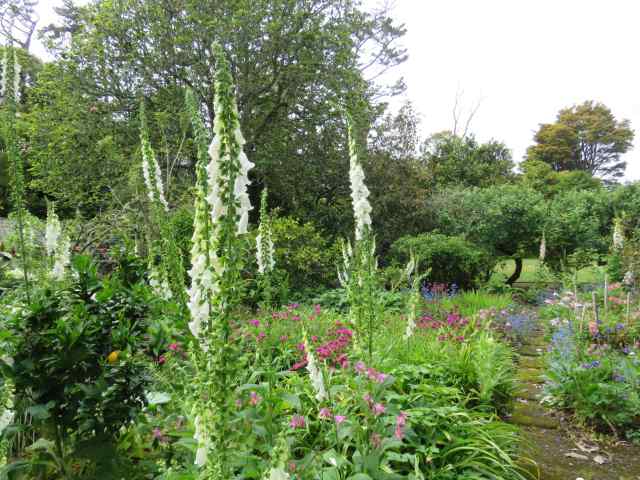
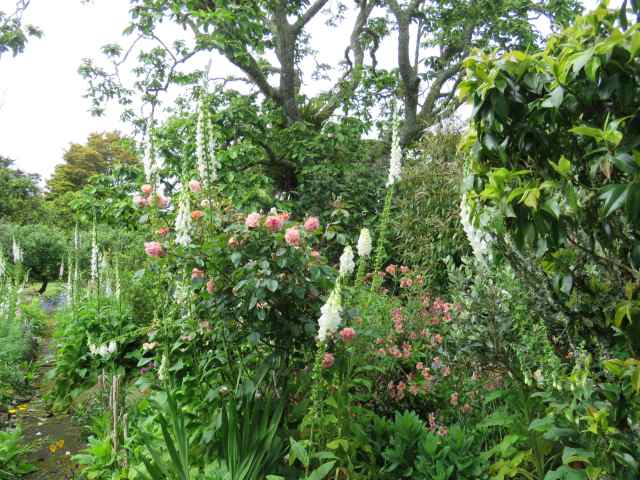
I am fine with the foxgloves in the Iolanthe Garden but there are no common pink ones

We no longer open for the springtime garden festival here but it is still a time of year when out-of-town friends come to see the garden. One such friend is an Auckland garden designer. I never ask for advice because I think seeking free advice is not much different to asking a medical professional for personal advice at a social event. Some lines should not be crossed. On the flip side, both Mark and I have a policy of not offering unsolicited advice in somebody else’s garden, no matter how tempting at the time, so this may all be a bit self-defeating. Our designer friend has a similar approach but he asked one simple question. We were looking at the Court Garden and he said three words, “Why the foxgloves’?

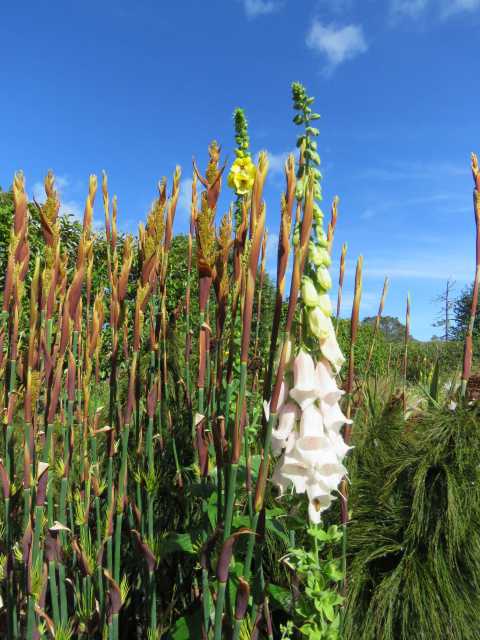
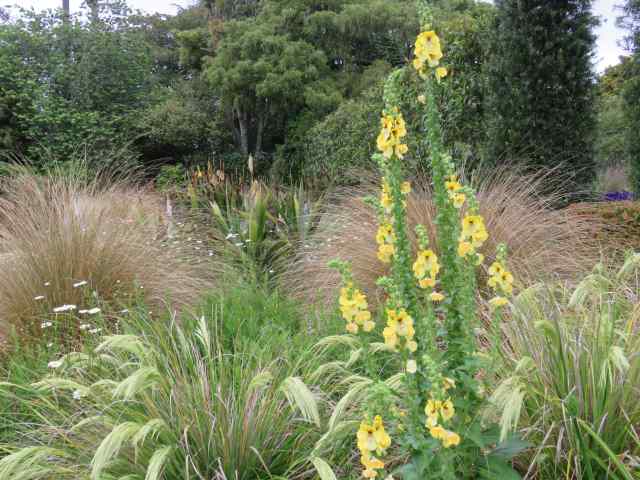
The large flowered yellow Verbascum creticum is fine but the foxgloves were just wrong in that situation

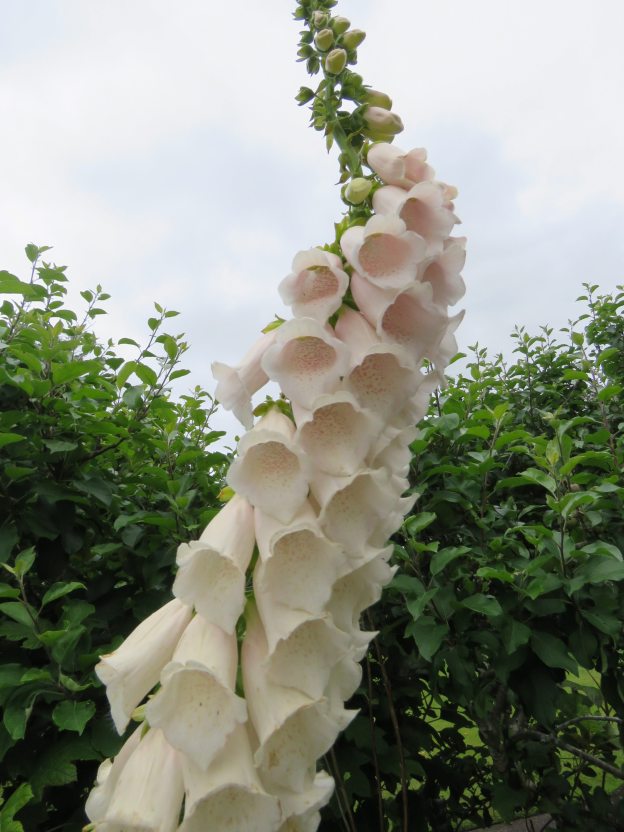
I suddenly looked through his eyes and indeed it was a good question to ask. I went to some trouble when I planted the garden back in 2019 to add palest, pastel coloured foxgloves to add some height and flowers in spring and I have let them gently seed down. Well, at the time they were meant to be pure white ones but they turned out pastel. I had not questioned their presence since but when I looked with different eyes, it occurred to me that they are, in fact, insipid in that situation. I looked at them for the next two days and on the third day, I pulled the lot out. When I sent a text to my friend to say they were gone, he just replied with the single word “Good”.

Flowering or not, once the decision was made, they had to go

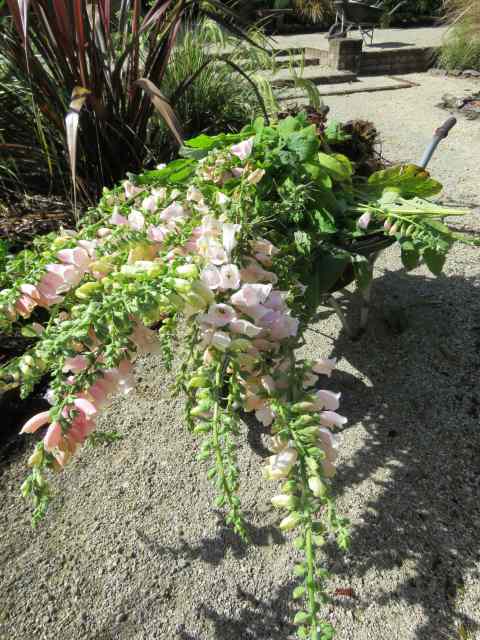
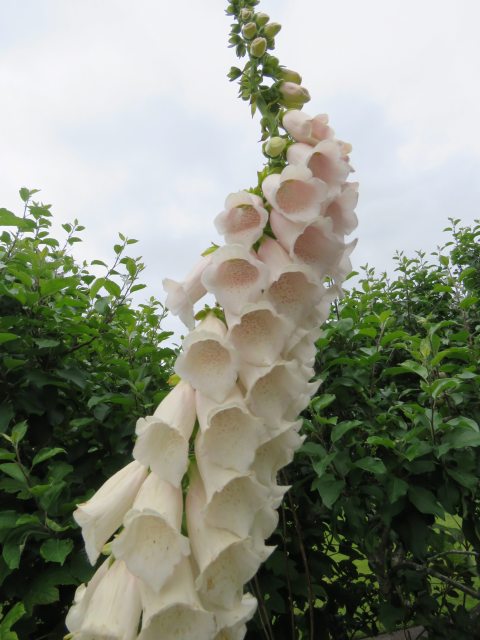
Besides, we were running the danger of TMF – Too Many Foxgloves. For years, I have been so focused on pulling out every common pink one and even paler pink versions of it (because foxglove seed will naturally revert to the unattractive pink form) that I hadn’t looked at the overall picture. While I am particularly fond of the pure white form, especially in the Iolanthe garden which is more perennial meadow than anything else and down in the park, we don’t want them everywhere. It is time to review all locations where we have allowed them to grow and time to limit their range.

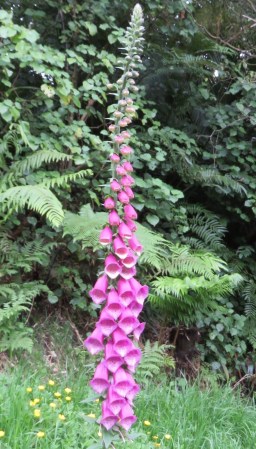
It is not even an attractive pink and it doesn’t combine well with other colours. I regard it as a weed.

I went to see a garden during the recent festival which I hadn’t seen for many years and now has new owners. It was a very nice garden and well maintained but as I walked around, I thought to myself that if they asked me for advice, it would be to pull out 90% of their dark pink foxgloves (Digitalis purpurea) , if not the lot of them, leaving just the white ones. They have let them seed everywhere and, to my eyes, it was a definite case of TMF. They didn’t ask, so I didn’t comment. But it made me more aware of letting them grow here in our garden.

No matter how good a plant is, it is still a mistake to have too much of it. I refer not just to foxgloves but also forget-me-nots, mondo grass, common verbascums, Verbena bonariensis, pansies, aquilegias and a host of other plants that self seed around the garden. In our garden, I would also add tree ferns, nikau palms (Rhopalostylis sapida) and kawakawa (Macropiper excelsum) to that list.

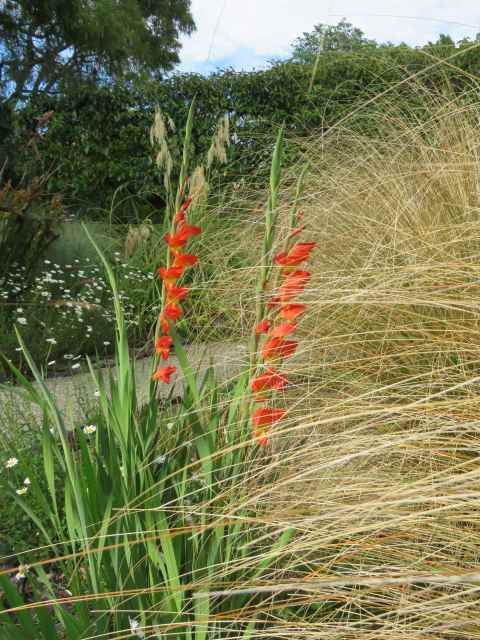
It wasn’t the gladious that was the problem; it was the foxgloves

Interestingly, as soon as I removed the pastel foxgloves from the Court Garden, having decided they were the wrong plant and too pallid, the anything-but-insipid Gladiolus dalenii syn natalensis no longer looked out of place at all; it changed from looking somewhat garish to vibrant instead. It can stay after all. It has only just dawned on me that the reason the foxgloves looked insipid in that location is the background. In the Court Garden, they were surrounded by plants that were either pale green hues or silver or many shades of brown. They look more charming in situations surrounded by masses of darker or brighter shades of green. I should have noticed this earlier.

A garden is never finished and even with an established garden, fine tuning it is what keeps it interesting. Sometimes, seeing it through somebody else’s eyes can be very helpful and small changes can make a big difference. I might ask for more advice from people whose opinions I value. Maybe it is not the same as asking my dentist about toothache over social cocktails after all.

The Court Garden with Verbascum creticum but no foxgloves any longer

Show time!

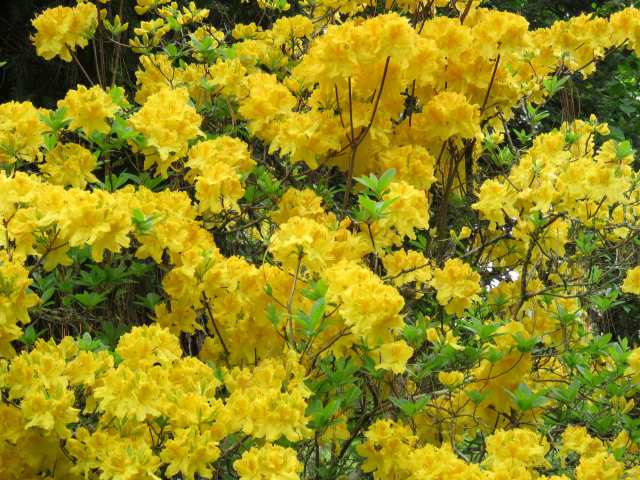
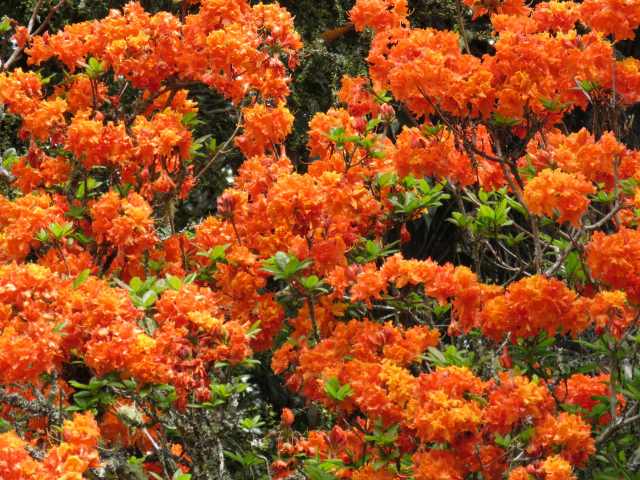
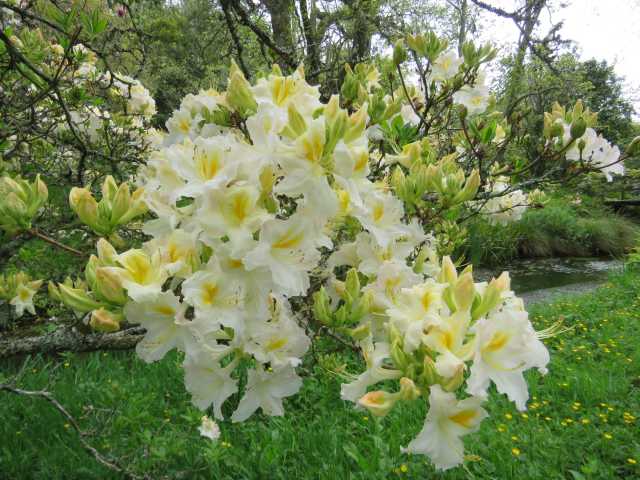
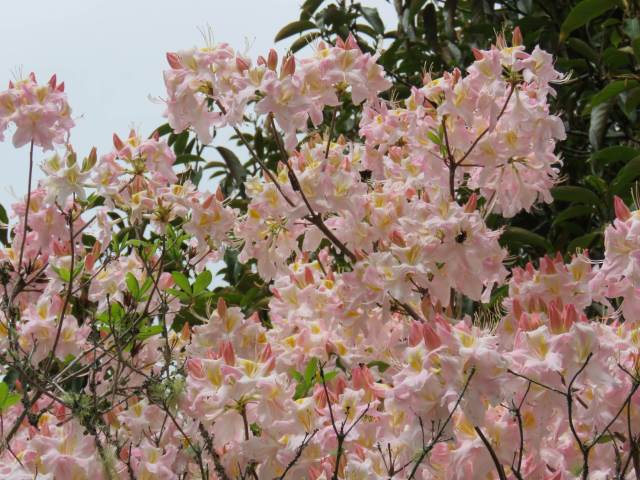
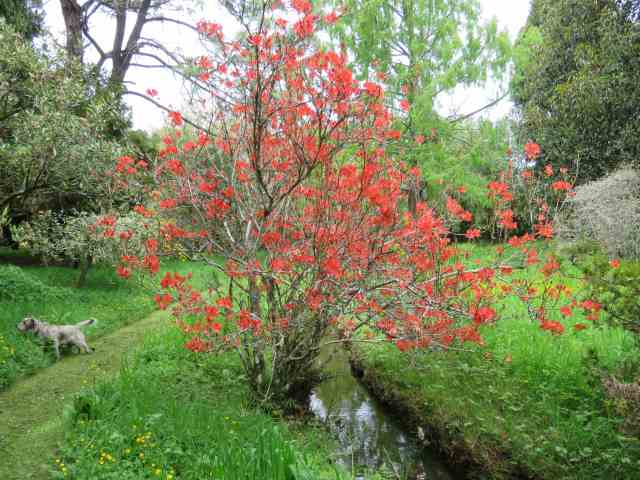
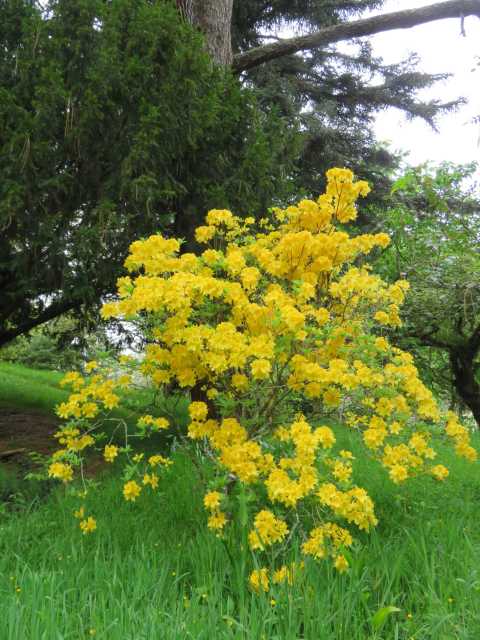
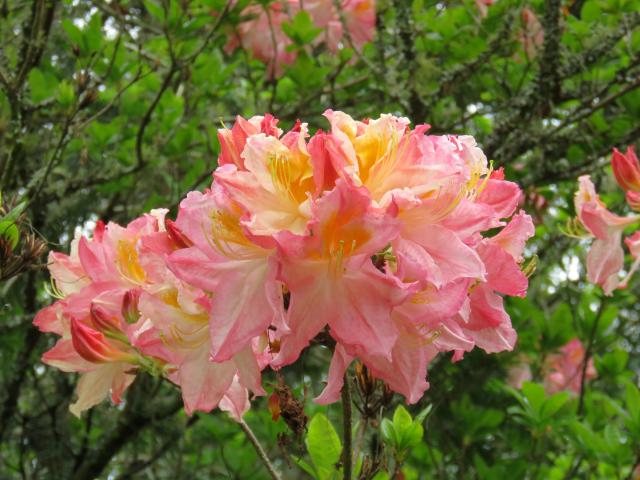
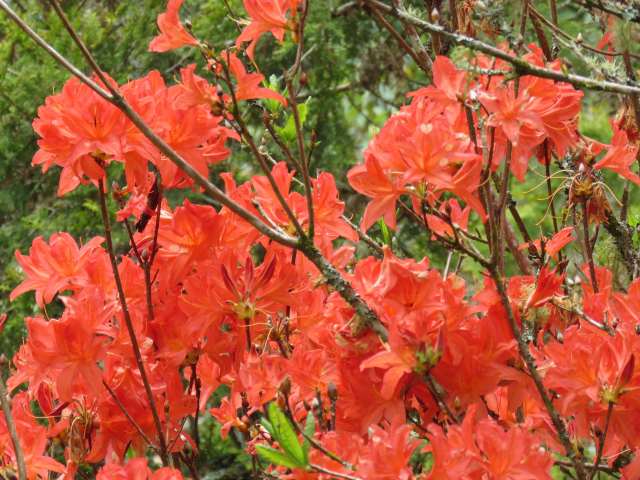
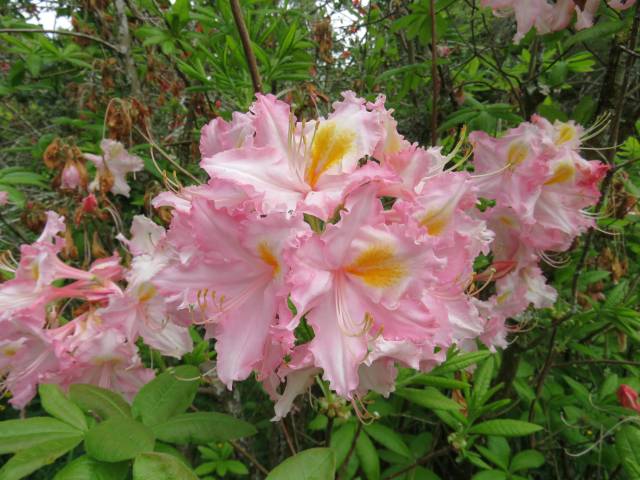
It is the time of the year when the deciduous azaleas star and there aren’t too many plants that star in bloom as they do. For 49 weeks of the year, they are largely ignored and then boom!

If you set aside the flower power, deciduous azaleas are a fairly unremarkable plant, at least in our conditions. I have never seen one with exceptionally attractive form. In winter when they have no leaves, they tend to look twiggy, scruffy and dead. With their fresh foliage in spring, they are generally unremarkable. By the end of summer, in our mild, humid conditions, the foliage is often mildewed. As I went around photographing ours on Thursday, I thought they would look better if we did a big round on taking out the dead wood, which we haven’t done for some years. This is a task best done when the plants are in leaf because in winter, it is hard to tell the difference between dead wood and live wood. But even when we clean them up in this way, it is still very hard to turn an azalea shrub into a good form which stands on its own merit because their growth habit is so twiggy, so formless.

These shortcomings are forgiven when they come into bloom. Masses of bloom, often strongly scented and the colour range is extensive. Some have a vibrance and mass that is rarely equalled. ‘Look at me! Look at me!’ they shout. Others are much more restrained in hue if you can’t think how to integrate the pure colour of the oranges, reds and yellows.

We have a fair swag of them, mostly planted between the 1950s and the 1960s. Some came into the garden as named varieties but the names have been lost in the mists of time. Felix Jury immediately used these in controlled crosses and raised more from seed. Mark also dabbled in turn, particularly with getting double flowers. Deciduous azaleas are one member of the rhododendron family that I think you can safely buy based on flower colour alone, without worrying about searching out particular varieties.

Most of our azaleas are surrounded by large expanses of green. And a rhododendron is not going to survive being planted right on the streambank like this azalea (which is itself a member of the rhododendron family but let us not be pedantic).

Azaleas are useful because they are nowhere near as touchy about growing conditions as most rhododendrons, particularly wet feet, as we refer to heavy soils that never dry out. In those earlier days, our park was prone to flooding. They will also tolerate dry and exposed conditions, living and growing when many rhododendrons will quietly give up the ghost and die. We only have a few deciduous azaleas in the cultivated gardens around the house; most are in the looser areas of the park and the  Wild North Garden. And therein lies a lesson on placement. I don’t think they are an easy plant to place well in smaller, urban gardens, especially the strong coloured varieties.

It is hard to place a plant as dominant as this when in bloom in a smaller, town section planted in the soft pinks of springtime.

I drive past such a small garden every time I go to town. Freshly planted, my guess is that the owners went to the garden centre in spring and bought everything in flower that they liked. It has been particularly pretty this spring with both Magnolia Felix Jury and Iolanthe putting on a show despite their small stature at this early stage, along with some very pretty cherry blossoms, rhododendrons and camellias. And, this week, one garish deciduous azalea in bright yellow. I can see why they bought it but it does rather stand out as lacking harmony with the rest of the garden. The more restrained colours are easier to integrate.

I think our brightest azaleas work because they are standing pretty much in isolation surrounded by masses of green. When they have finished flowering, they will just be another shrub down in the park, like a neutral coloured cushion on a sofa. It is much harder to place them well in a small garden.

If you are in New Zealand and want to buy a deciduous azalea or three, do it right now. This is not a plant that fits modern methods of production and retail so you are unlikely to find them easily when they are not in bloom. Garden centres are not keen on them because they only sell when in flower.

I briefly attempted to disentangle the differences between deciduous, mollis, Ilam and Ghent azaleas, to name just a few groups. Mark gave me a potted history of the azalea in Aotearoa New Zealand and names like Exbury, Stead, Yeats and Denis Hughes all came up, along with notable collections around the country when they were a very popular plant several decades ago. Alas, I am not so fascinated by the genus as to give the time to fact check it all. I will say that if you use the broad term of ‘deciduous azaleas’, it will encompass the lot.

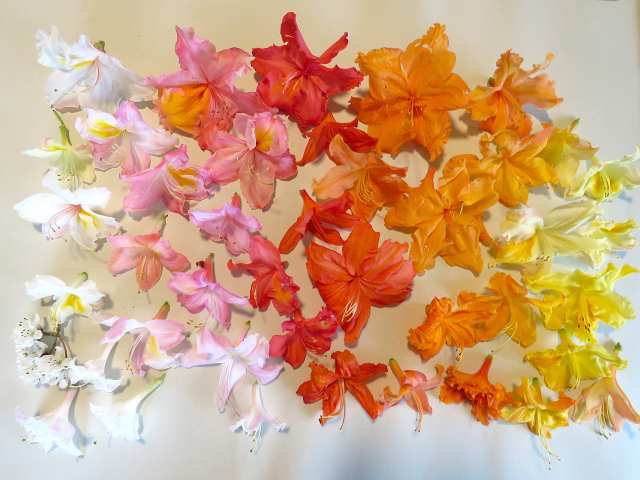
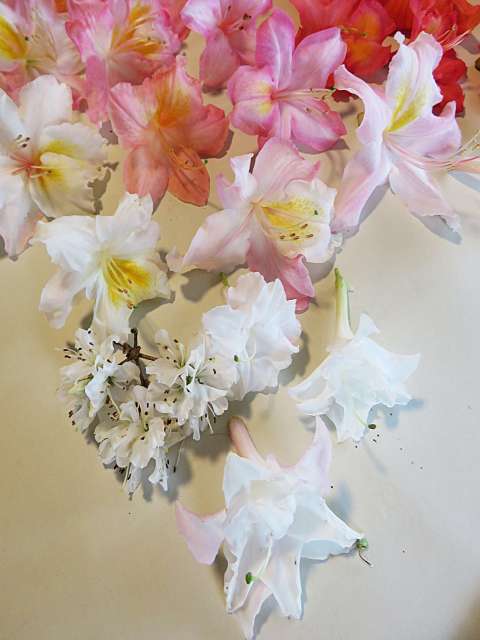
I picked one flower from each azalea that I could reach currently in flower, just to show the range of colour, size and flower form.
The three double white flowers are Mark’s efforts. I did not know this until he saw me laying out the flower board selection.
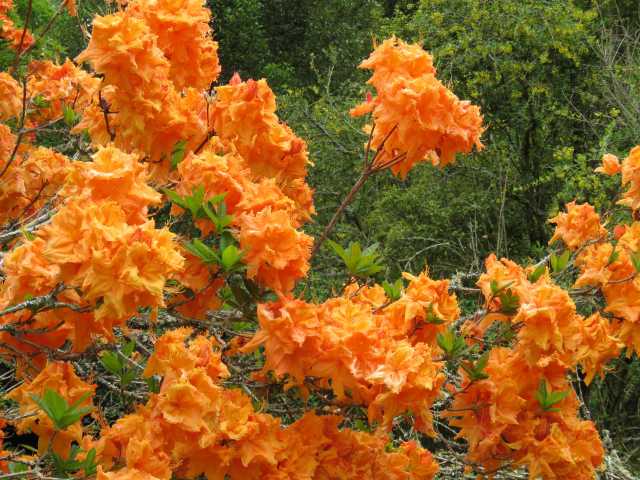
Too much? I admit there is a whole lot of this orange wonder in its location in a wilder area of the park where it has thrived, untouched by human hands for decades.

Elevating herbs

I have been elevating the herbs. Literally.

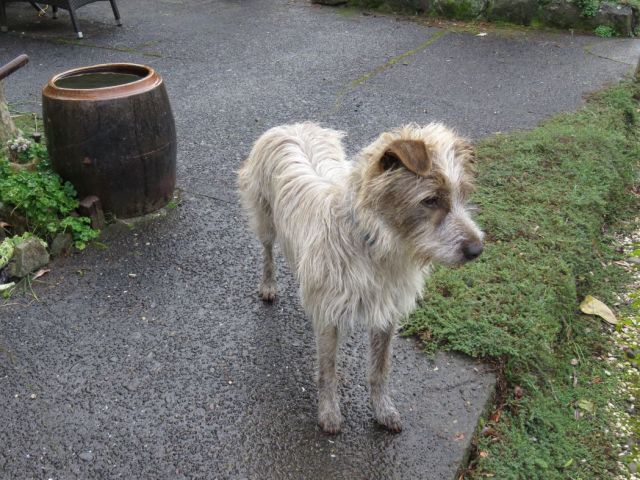
New dog Ralph is no respecter of gardens and one recent morn, I looked out the window to see him standing in the middle of my self-sown patch of parsley having a pee. Now I can never use that parsley again. Mark suggested washing it well might suffice but I think not.

New dog Ralph. That is a prostrate thyme at ground level that the bees love when in flower but I don’t pick because it has almost no aroma at all so I assume the flavour content is also lacking.

Then I found something even worse in the mat of marjoram. I have no idea if that was Ralph, Dudley or Thor who likes to visit from next door, but enough is enough.

I am no expert on herbs but I like to use them fresh. None of those dusty packets of dried leaves for me, thank you. I don’t even like buying pre-stuffed chook or herby-coated chicken in the supermarket because all I can smell are those dried herbs.

I keep the herbs I use all the time close to the back door so I can get to pick them without having to put on shoes. Oregano, marjoram, tarragon and rosemary are in the dry, hot border beside the house. Parsley, mint, chives and thyme are in the parallel border just across the drive. I have to walk a little further to get the bay leaves, the self-sown coriander, the second area of self-sown parsley and the less-favoured sage whereas the fennel I harvest and store the seeds. Sometimes Mark will grow basil in the summer vegetable garden. There are many more herbs that can be used but those are the staple herbs we favour.

I have only written about herbs once before that I can remember and that was back in 2009. At the time, I advised never to plant herbs on the corners of garden beds because that is where dogs will pee and cats will spray to mark territory. As far as I know, that has worked for us in the past when we favoured smaller dogs. But Ralph is larger and more energetic.

In that 2009 article, I also queried the merit of the designated herb garden which was pretty fashionable back in those days. Different herbs need different growing conditions. In the days of yore, the medieval herb gardens were much more extensive and more focused on medicinal herbs than culinary options. Scaling it down to a small modern garden is not likely to be successful in providing the different conditions needed to grow them well. Besides, while some herbs are pretty enough on their day, as a group of plants they are utility more than ornamental.

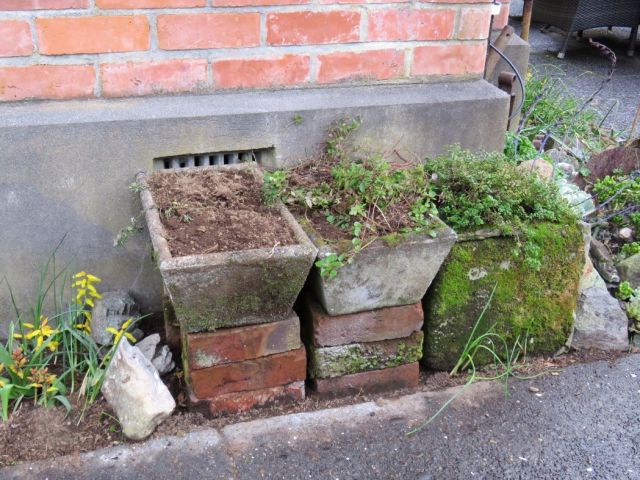
Concrete laundry tubs recycled to elevate herbs

Fortunately, we are an establishment rich in stored resources so elevating my back door herbs was not such a major exercise and cost no money. Tucked out behind the grapehouse were the old twin concrete tubs which we discarded when we renovated the laundry 20 years ago. We elevated them further using concrete pavers and blocks and I think they are high enough. They now hold mint, thyme, chives and some small parsley plants that need to grow before I can harvest them.  

Two concrete troughs and an old concrete planter repurposed in the pursuit of herb cleanliness

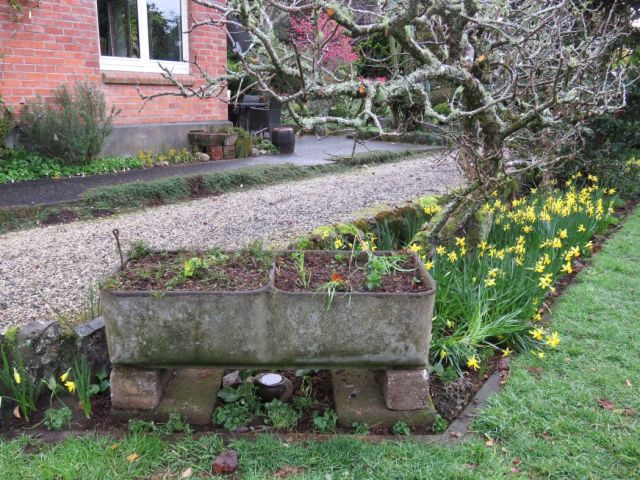
The oregano and marjoram need hotter, drier conditions to build up flavour. These are still in the dry house border but now elevated in smaller concrete troughs that Mark’s dad Felix made back in the 1950s in the days before you could pop along to the shop to buy such things (though mostly in plastic these days).

The narcissi in the apple border behind the trough, now minus the parsley plants – all Peeping Tom at this time of the year, although a ground hugging blue campanula and yellow daisy Doronicum orientale will take over later in the season.

I protected the drainage holes with broken pieces of terracotta pots and put in a thick layer of gravel at the base of all the tubs because drainage is everything for herbs generally (mint is the exception). I then used a 50/50 mix of top soil and homemade compost for the plants to grow in. They may need the occasional water in dry times but there is a nearby tap.

Mark has just come in and commented that Thor-from-next-door paid a visit and was lurking around the area out from the back door, peeing everywhere, including against the container holding the herbs which, fortunately, are now safely out of the way. So this new configuration has at least passed that test.

Finally, because my elevated herb planters are not very exciting visually, a few photos from yesterday morning. Spring has sprung here.

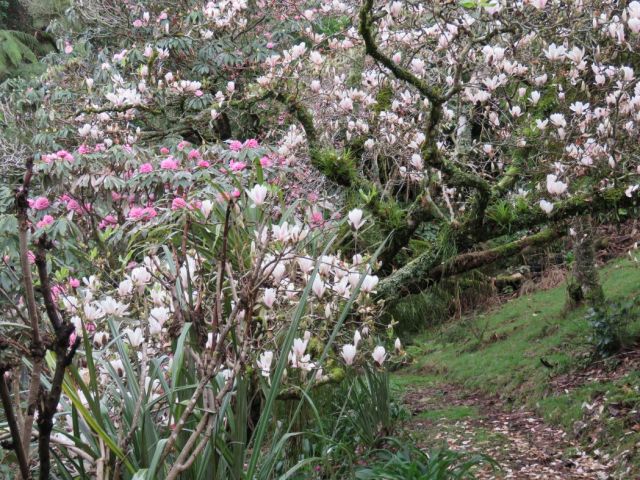
Magnolia x soulangeana ‘Alexandrina’ and Rhododendron protistum var. giganteum ‘Pukeiti’
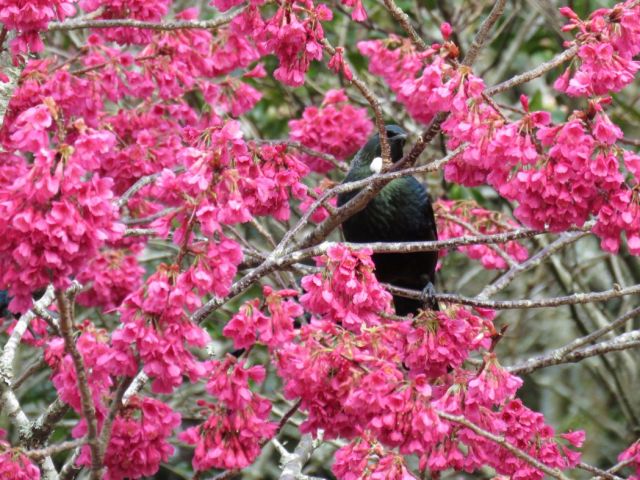
Prunus campanulata is controversial in NZ because of its seeding ways but our trees are so full of nectar-feeding tui that we are constantly in danger of being taken out by low flying tui heading from tree to tree.
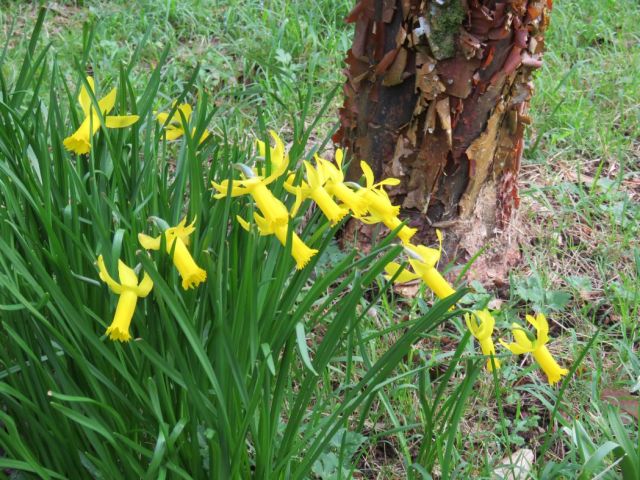
Narcissus cyclamineus seedlings growing in the park meadow agains the peeling bark of what may or may not be Acer griseum
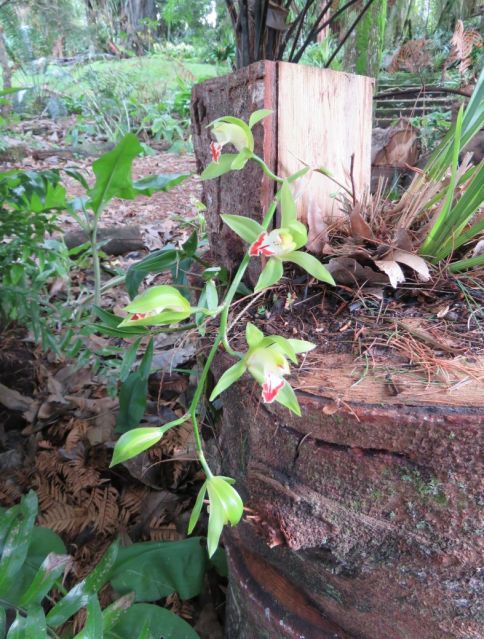
Our garden apprentice, Zach, has created an orchid garden in the barricades and was stoked to see the first plant in bloom this week.
All I have to offer are flowers

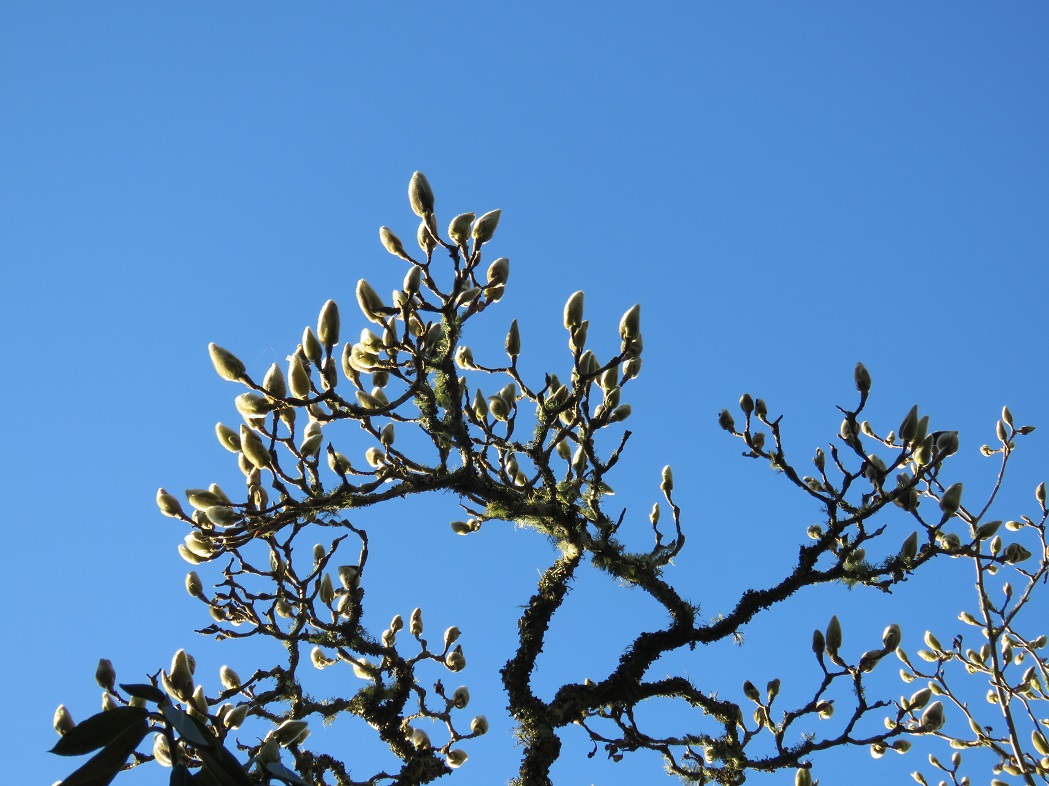
Or the promise of flowers. The morning sun is shining on magnolia buds (or sleeping bags for mice, as our children used to call the bud casings)

All I have to offer this week are flowers.

Just another unnamed seedling – one of the series that saw that only ‘Felix Jury’ named and released

It has been a difficult week in New Zealand. After more than 100 days of a return to Covid-free ‘normal life’, where the only major change has been closed borders and an absence of international travel in or out of the country, we are now on high alert with a fresh outbreak. Auckland is back in level 3 lockdown, the rest of us in level 2. It is a case of déjà vu.
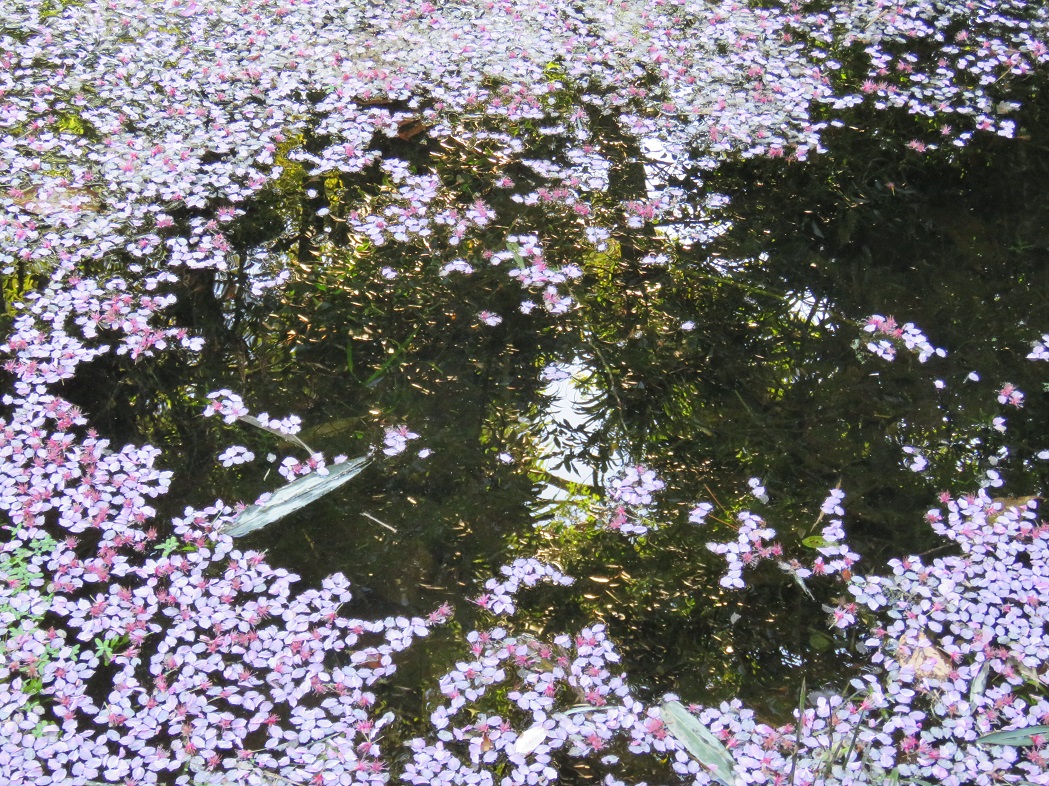
Fallen cherry blossom petals on a pond in the wild North Garden

For overseas readers, our highest level of lockdown, level 4, was one of the tightest lockdowns in the world. Level 3 sits at what most other countries called their lockdown so still stringent. We are in level 2 here which means practicing physical distancing, signing or scanning in and out of shops, adjusting to the thought of wearing masks – and a high level of personal anxiety. So pretty much the state of most of the world. It is tough when only a few days ago, we thought we had left all that behind us.

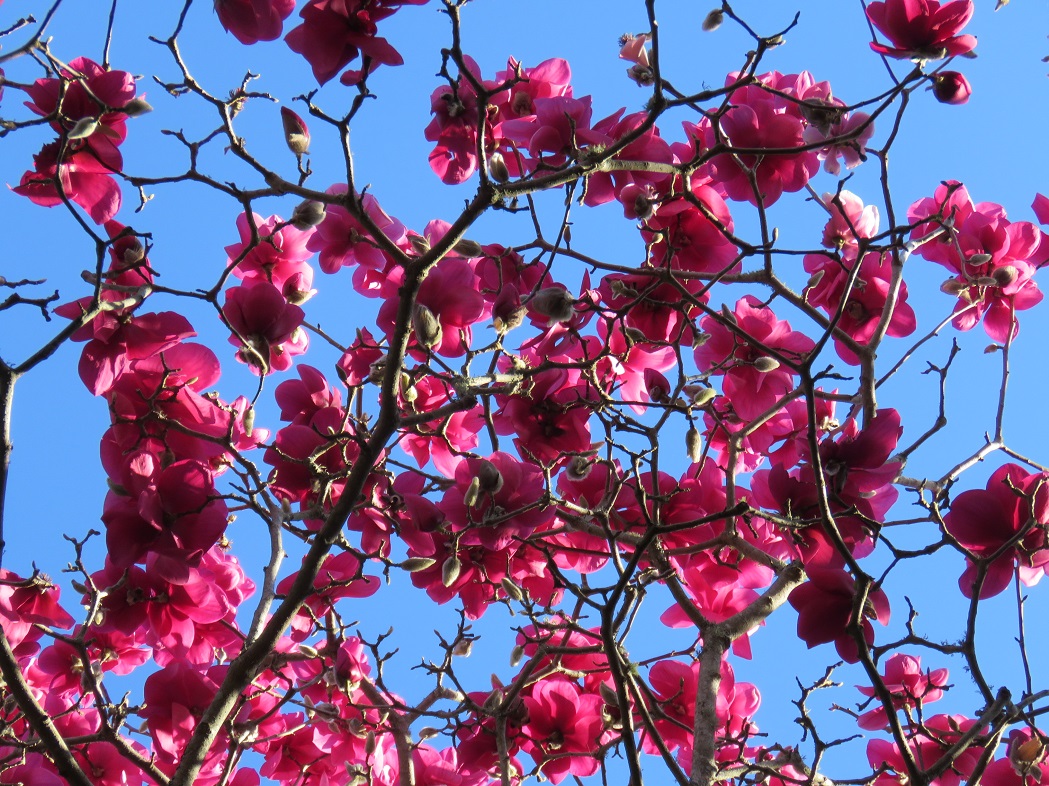
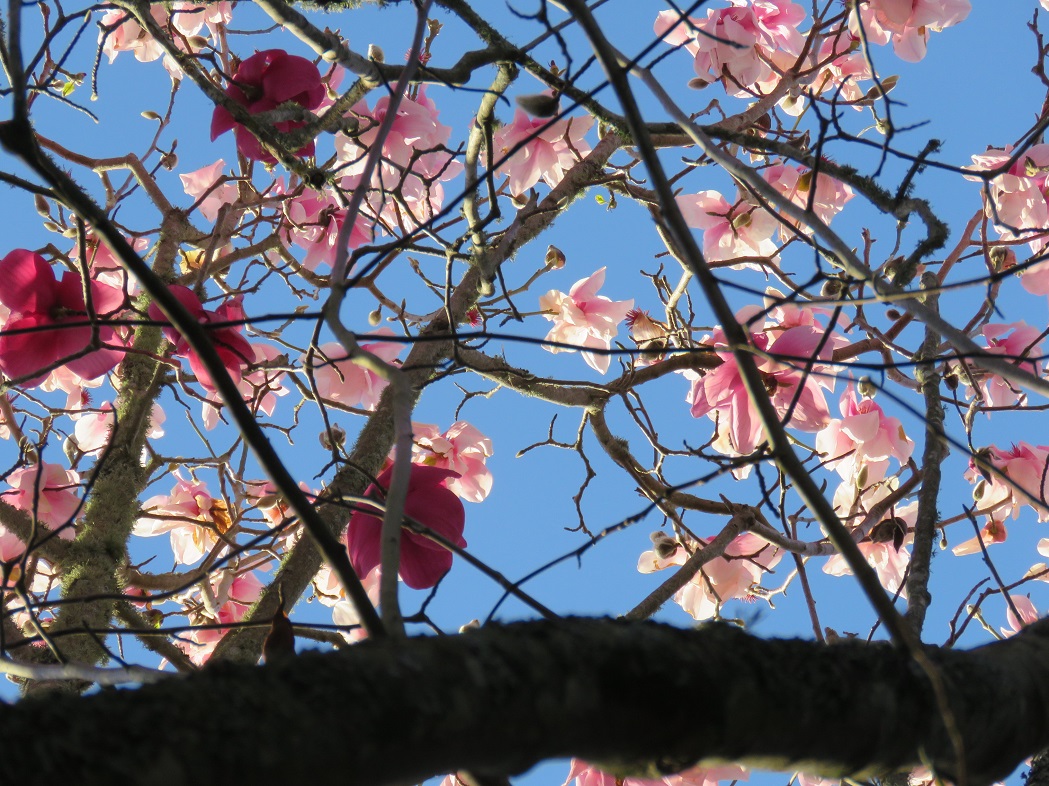
Floral skypaper

It is still early days in the pandemic. There is so much we do not know. My tolerance for the strident voices calling for opening the border, ‘learning to live with the virus’, returning to the old normality for the sake of businesses and The Economy (caps deliberate) is less than zero. There is no ‘old normality’ anywhere in the world and we had better get used to that for the next year or two at least. It is not locking down that is damaging business; it is Covid19. Business can not thrive in a situation with rampant Covid just as most can not thrive under lockdown. The choice is of an open business environment with uncontrolled community transmission, sickness, death and a very high level of anxiety and fear in the population or going for a safe but limited environment that is Covid-free most of the time. It is a stark choice but we have seen how that latter option works and I am happy to back that as the lesser of two evils.

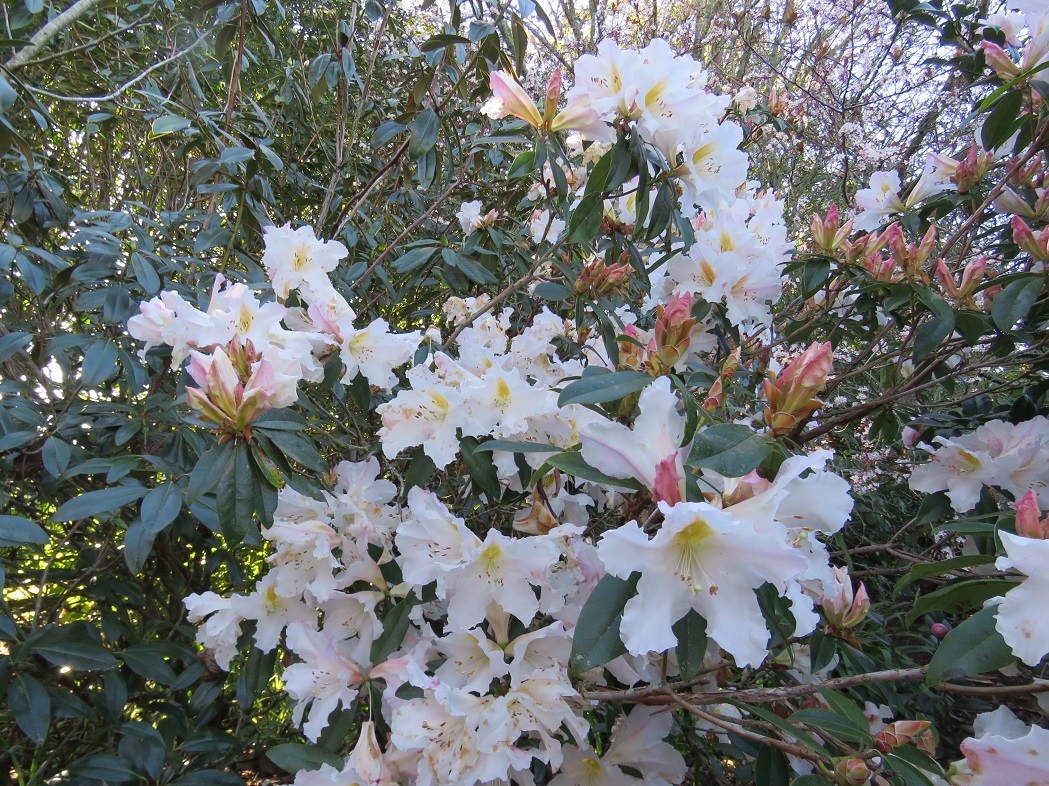
I wish I could share the scent of Rhododendron cubittii in flower

So, we have battened down the hatches again. Like many around the rest of the country, I am grateful to the people of greater Auckland who are cooperating with efforts to stamp out this latest cluster. As I write this, it does appear to be just a single cluster, all connected to one source.

Just an unnamed seedling in the wilder reaches of the garden

But the seasons and the plants are Covid free. It is wonderfully reassuring that the environment continues on its normal cycle even as the human inhabitants can not.
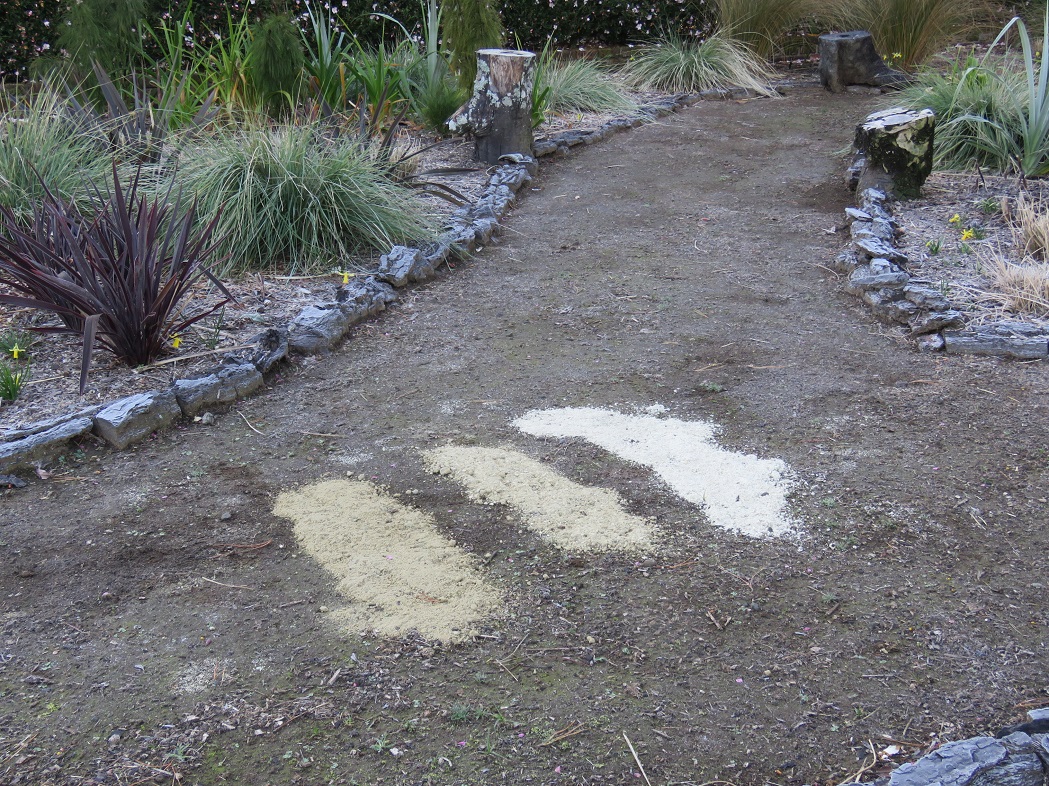
I brought home samples of three options for laying the paths in our new summer garden. The palest option is crushed limestone. While it is not as starkly white as some I have seen, I think we have decided it will be too bright, given we are going to have large areas of it. I am okay with the darker option which is largely crushed shell, though it is a little darker than I wanted. The middle one is a mix of the two and I think we will try for that one. All will compact down to give a fairly smooth surface. They are used widely on farm tracks and cattle races because they compact and don’t have sharp pieces to damage the hooves of livestock.

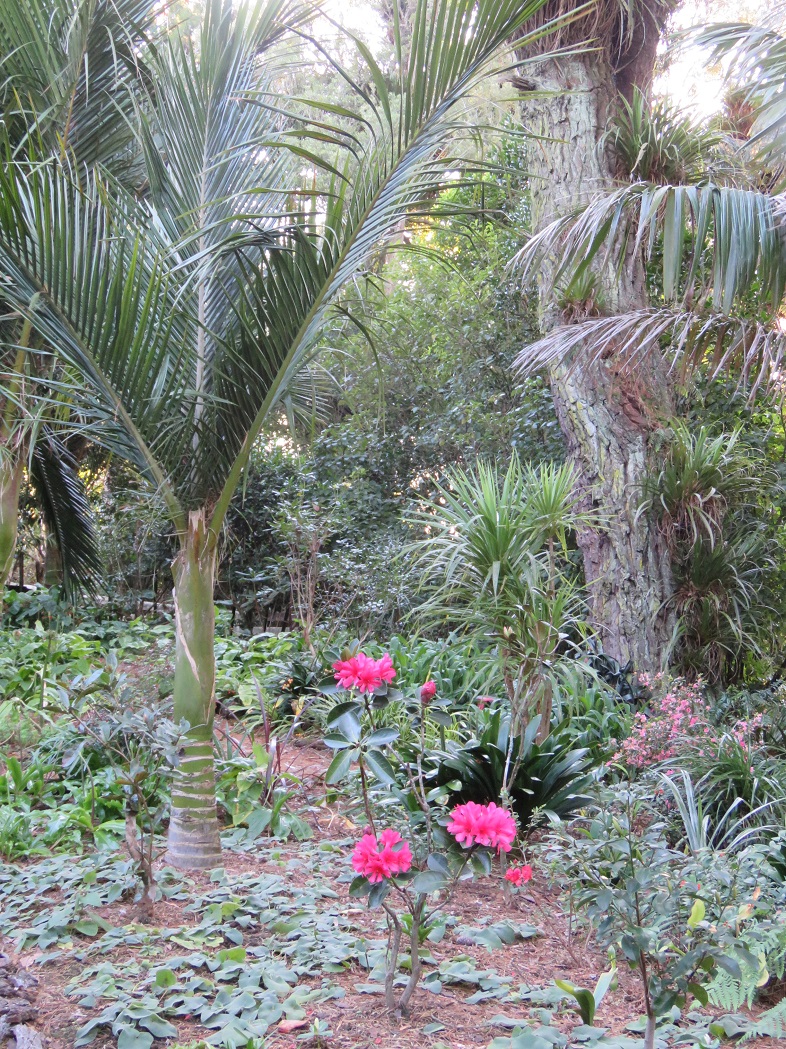
Self-sown nikau palm to the left of the vireya rhododendron

I retrieved this vireya rhododendron from a neglected area at the back of Mark’s vegetable garden and moved it into the Avenue Garden, where I was redoing all the underplanting two months ago. Working in our woodland areas, it occurred to me that if this garden is ever abandoned and left to its own devices, it would revert to a forest of nikau palms, puriri, kawakawa (pepper tree), tree ferns (ponga), karaka and seedling prunus, I pull out seedling nikau palms by the score and remove every seedling prunus that I come across.

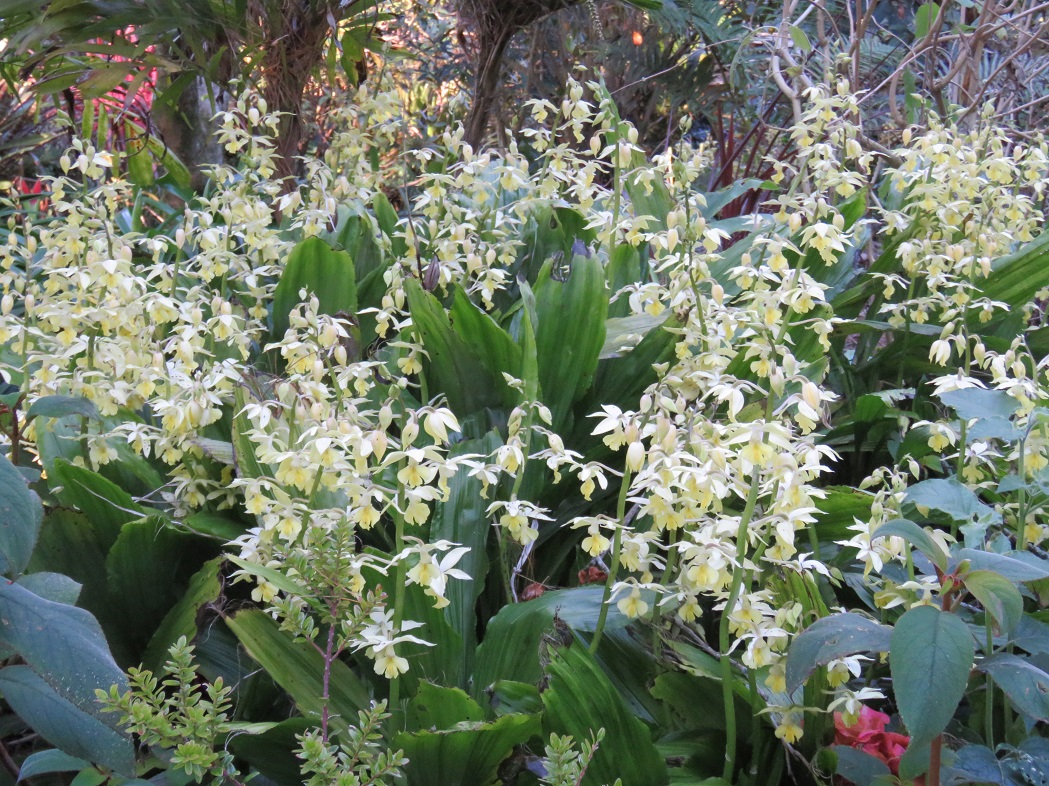
Pretty calanthe orchids in abundance in the woodland areas

In times of uncertainty, there are still flowers and gardens. Kia kaha, readers. Stay safe and stay sane.

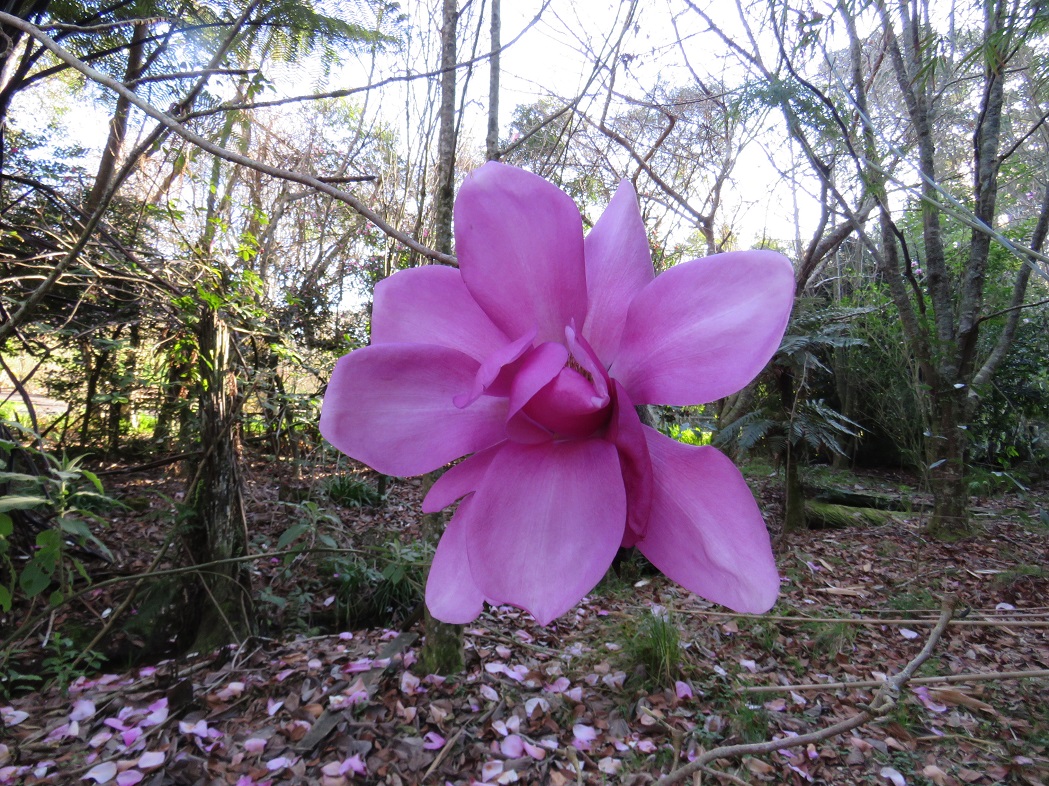
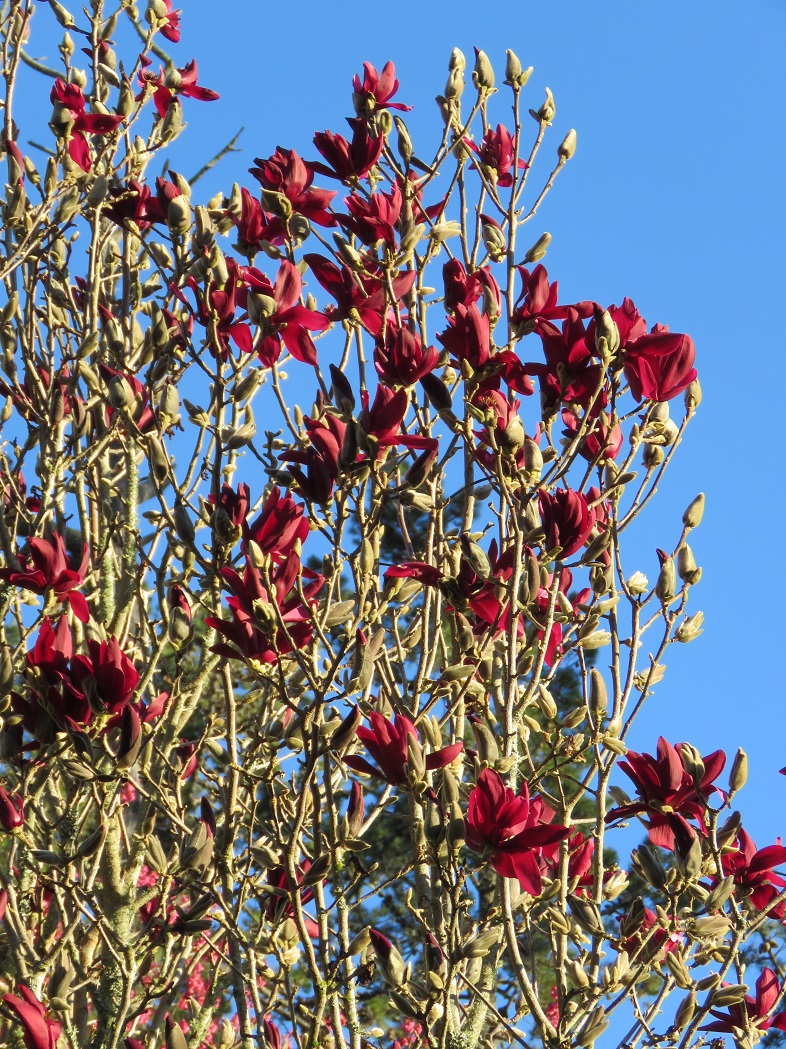
Magnolia Burgundy Star opening its red starry blloms.