Tag Archives: sterile campanulatas

Of matters related to fertility and sterility

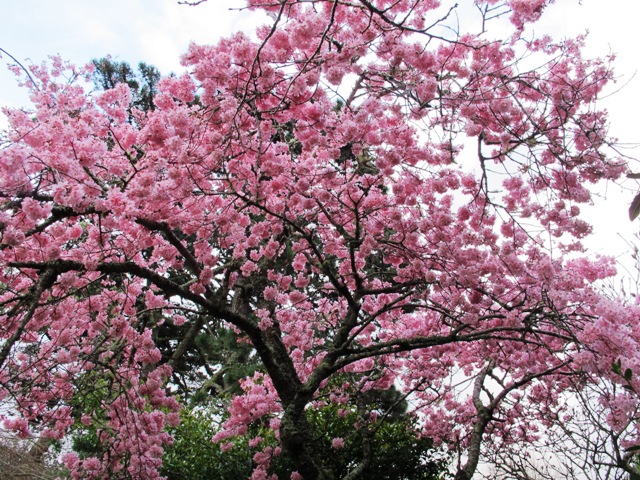
Prunus ‘Felix Jury’ by our driveway. It is a handy, small tree with good colour but beware its seeding ways.

I received a phone call on Friday from a garden centre in another area. The caller wanted me to confirm that Prunus ‘Felix Jury’ was sterile. Their regional council had asked them to remove their plants from sale because they seed everywhere but their supplier had assured them it was sterile.

Reader, Prunus ‘Felix Jury’ is NOT sterile. The woman on the other end of the phone was perfectly pleasant and thorough and said she would immediately remove the remaining plants from sale. All credit to her.

I feel like I am shouting into the abyss when I say that Prunus ‘Felix Jury’ is not and never has been sterile. I have even written to a nursery and garden centre to advise them of this fact when I saw them advertising it as sterile. I was ignored. They are still advertising it as sterile. The original plant was raised here by Felix himself and it was Duncan and Davies Nursery who named it for him and put it into production. So it is a Jury plant but not one that we have any control over at all in the market place and Felix was never paid for it.
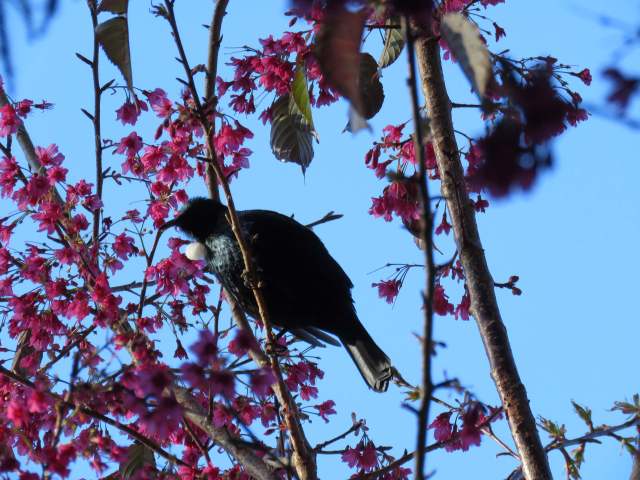
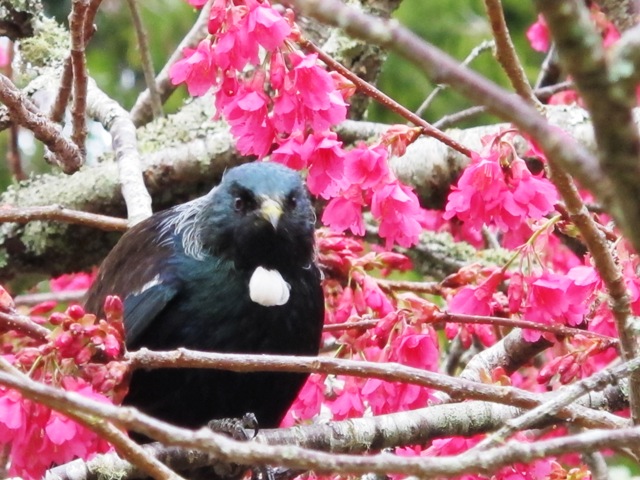
Our native tui, feeding from ‘Felix’

Times were different 50 years ago. We didn’t realise that campanulata cherries would become invasive weeds which are extremely difficult to eradicate because if you just cut them down, they grow again. The seed is spread far and wide by our native birds who eat the small cherries that form after flowering and excrete the inner pit or seed as they fly. Back then, they were just a pretty, flowering tree providing valuable food to tui, who adore them, in late winter. Now they are on the banned list – as in banned from sale, not banned entirely from gardens – in a number of areas and for good reason.

Once and for all: PRUNUS ‘FELIX JURY’ IS NOT STERILE.

If it was sterile, there wouldn’t be a problem because none of the seed is fertile so it can’t spread. The only Jury-bred campanulata hybrids that are sterile are ‘Pink Clouds’ and ‘Mimosa’ and they are sugar pink, not the carmine red of the campanulatas.
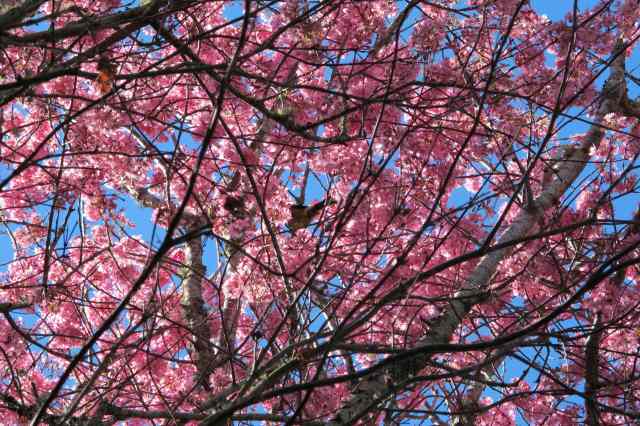
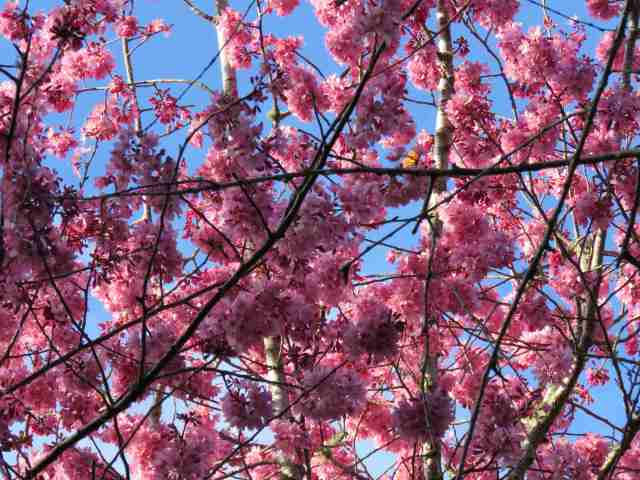
Prunus ‘Mimosa’, named by Felix for his wife. I took this photo to try and capture the korimako, our native bellbird, in the very centre.
I only add this photo because in the top left quadrant, you may spot the orange wings of a monarch butterfly feeding on ‘Mimosa’

We haven’t cut out our campanulatas and seeding cherries… yet. We derive a great deal of pleasure from watching scores of tui making the trees dance with movement as they feed and then fly on to the next tree. Mark is making mutterings about them. I think it likely we will keep the trees in the areas we actively garden; we are vigilant weeders and constantly pull out seedlings at a very early stage. We can manage them. But the ones on the margins and in wilder areas where we don’t spot the seedlings until they are too large to pull out by hand may get the chop in the next few years. It will be a big job because not only do they get the chop but the stumps have to be poisoned to prevent regrowth.  

I would be thinking twice before planting one and, were we still in the nursery trade, you can be sure we would no longer be selling them. Times change, knowledge grows and we need to recognise that and respond.
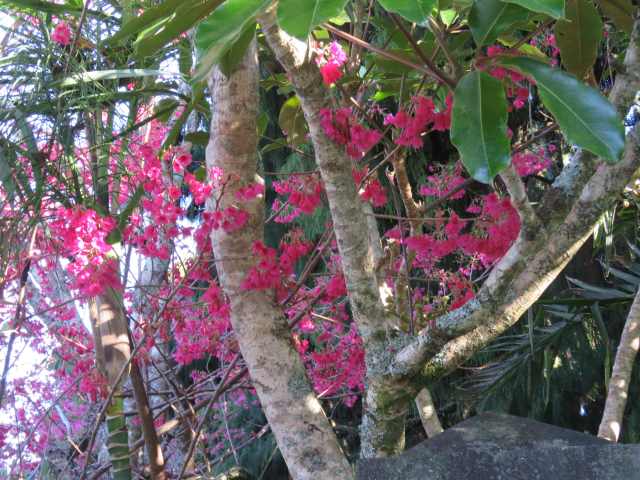
‘Felix Jury’ again

The pros and cons of the campanulata cherries

Manna from heaven for the tui

Manna from heaven for the tui

Taiwanese cherries, Fomosan cherries, Prunus campanulata – they are one and the same and around this time of the year are explosions of candy pink which bring tui to the garden. In our case, it is not one or two tui. We could count them by the score if they would just sit still long enough for us to carry out a census.

Mark was not too sure about the tui which seems to have mastered the sound of vuvuzela. But I digress.

Love the trees or hate them, the tui have no qualms at all. The nectar is manna from heaven to them. And therein lies the problem. I was contacted recently by someone who is crusading against the sale and planting of campanulata cherries and I was only relatively sympathetic because I think we are in danger of throwing out the baby with the bathwater.

The problem is the seeding habits of some campanulatas. Many set prodigious amounts of seed which is then spread far and wide by our bird population. There is an alarmingly high rate of germination. The seedlings grow rapidly and after the second season, plants are too big to hand pull out. If you cut them off, they grow again. So bad is the problem that they have been banned in Northland and this correspondent would like to see them banned everywhere.

“There are loads of better trees for Tui such as Kowhai, Rewarewa that can be available at the same time” he claimed. I don’t want to be picky with someone who genuinely cares for the environment, but on a property packed with food for the birds, I have never seen a plant as attractive to tui as the campanulata cherries. Besides, in late winter, neither kowhai nor rewarewa are in flower yet.

I mentioned babies and bathwater because the problem is seeding. There are sterile forms of campanulata and both gardeners and tui alike may rue the day if ALL campanulatas get banned, even the named forms that never set seed. This is a problem we gardeners have brought upon ourselves. The record of garden escapes into the wild is not a proud one and too many gardeners don’t take responsibility for their weeds.

Prunus Pink Clouds - one of the sterile forms raised here by Felix Jury

Prunus Pink Clouds – one of the sterile forms raised here by Felix Jury

Mark’s father, Felix, was a fan of the campanulatas and he bred a few. “Pink Clouds” has an attractive weeping habit and an avenue of them has been a feature at Auckland Regional Botanical Gardens. I assume it is still there. “Mimosa” is more upright and flowers a little later. “Petite Pink” is probably no longer available commercially but is a dear little tree that never gets much over two metres in height but has all the appearance and shape of a proper tree. The thing that sets these three apart is that they are all sterile. They don’t set seed so are never going to become weeds. All three are in that candy floss pink colour range.

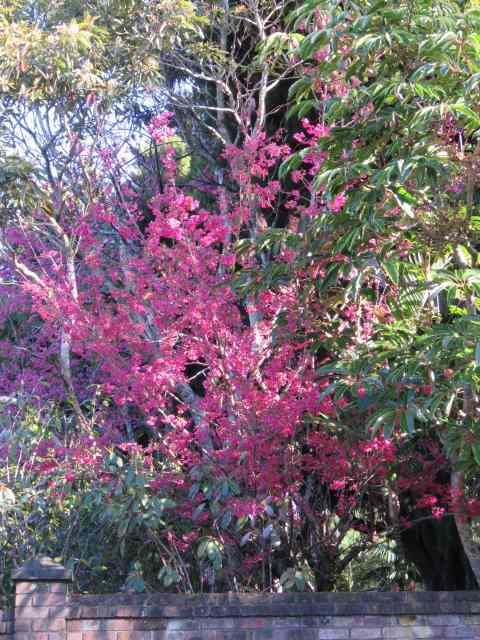
Prunus “Felix Jury” was named for him by Duncan and Davies (it is not the done thing, dear readers, to ever name a plant after yourself) but it was of his raising. It is a much deeper colour, carmine red, and a small growing tree. What it is not, alas, is sterile so if you see it being advertised as that, the nursery or garden centre is wrong.

It seems to be quite difficult to find reliable information on the seeding habits of other cultivars on the NZ market. If anybody knows more on this topic, please let me know. Every year at this time, Mark starts to talk about doing some more work with campanulatas to raise more sterile forms. We know which ones are sterile in the garden but the best one is a rather large tree for most people on small urban sections. It would not allow you to fit your house on the plot as well.

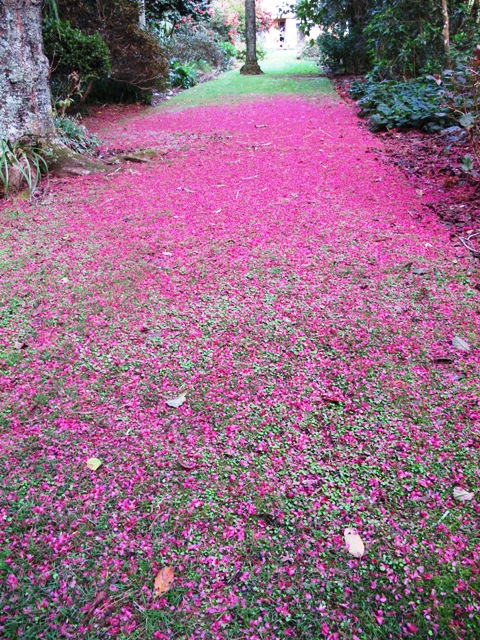
Petal carpets supreme

Petal carpets supreme

I can also tell you that one of our most common weeds here is seedling cherries and we are vigilant and persistent. If you live anywhere near native bush or a reserve, you should take great care to grow only sterile forms or to avoid them altogether if you are not sure. If you live in town with a seeding specimen, your neighbours probably grit their teeth at the seedlings that pop up in their place.

If you can manage the weed potential, the explosion of bloom in late winter is wonderful. Taiwanese cherries flower much earlier than their Japanese counterparts and are nowhere near as susceptible to root problems in wetter climates, so they live longer. Nor do they suffer from witches’ broom which can take over the Japanese types. It is when part of the tree grows much more densely and vigorously and fails entirely to flower. Left to its own devices, witches’ broom can take over the entire tree and the only way to deal with it is to cut out affected sections. It is very obliging of the campanulatas to be resistant.

The tui would be most grateful if we could just get this right for them before all campanulata are banned are noxious weeds.

First published in the Waikato Times and reprinted here with their permission.