
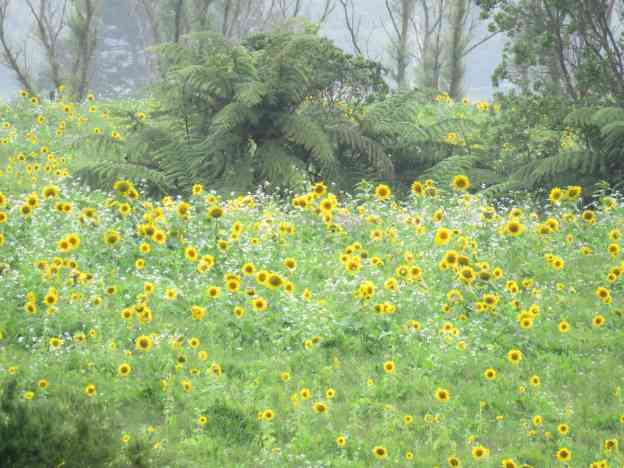
A field of sunflowers down the road from us caught my attention as the blooms opened. I speak of ‘down the road’ in rural terms. A couple of kilometres and a couple of roads and corners in-between but on my main route to town. When I stopped to photograph it on a grey day as the rain stopped, it was imbued with soft light and appeared almost mystical.
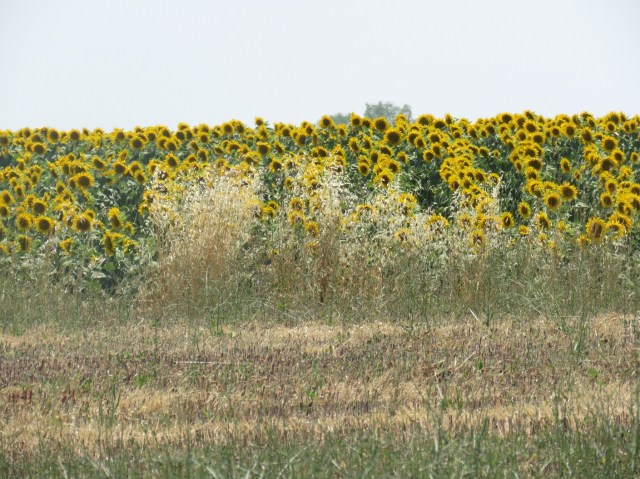
I can only remember seeing three different fields of sunflowers. The first was in Italy, on the road from Sermoneta to the famed garden of Ninfa. It was industrial farming – commercial production for either seed or oil but that whole setting of a phalanx of sunflowers in the dry, arid landscape seemed imbued with the charm and romanticism that is steeped in the very ground and most things above in that pocket of rural Italy.
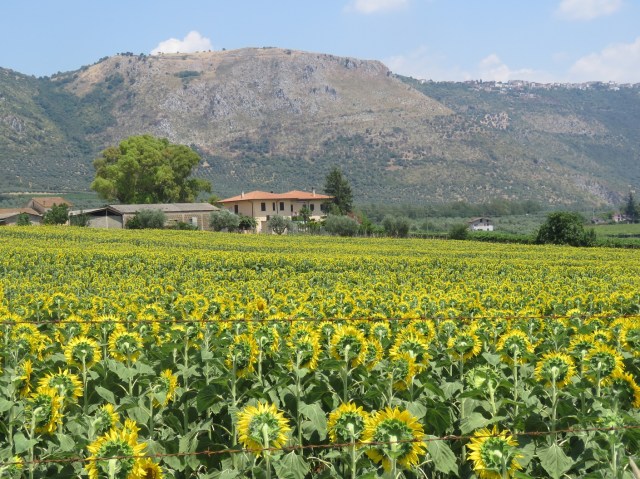
It was also the first time I saw en masse the characteristic of heliotropism – the habit of both foliage and young flowers following the sun during the day. I was amused by the following sentence in the Wikipedia article: ‘Sunflowers move back to their original position between the hours of 3am and 6am, and the leaves follow about an hour later.” That is very specific information. Apparently that movement stops when the flowers age and they settle to face the rising sun in the east.
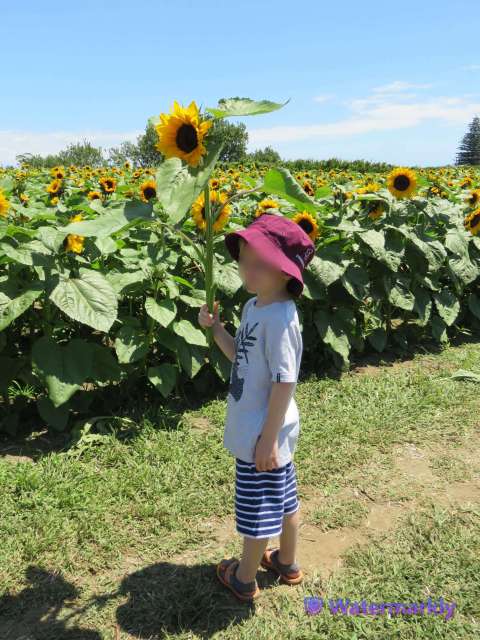
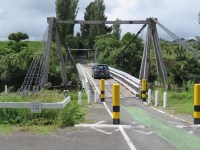
The second sunflower meadow was, as we say, ‘just across the bridge’ from us in Huirangi. We can cut across the historic swing bridge and be there in minutes. Our eldest daughter, grandson and I first went about 3 summers ago and were pretty impressed by the appeal of the place as a destination. An Instagram event, daughter declared. A very popular Instagram location at that with hay bales, strategically based old tractor or two, provision to select and cut your own sunflowers and I am pretty sure there was icecream. It was clear that others were as delighted as we were at being in the midst of fields of sunflowers.
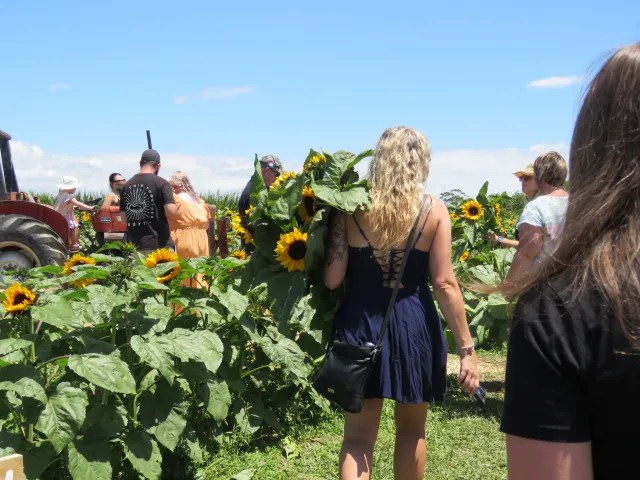
Their Facebook page tells me that their season is later this year and that they are opening next weekend and the following two weekends, through til March 1.
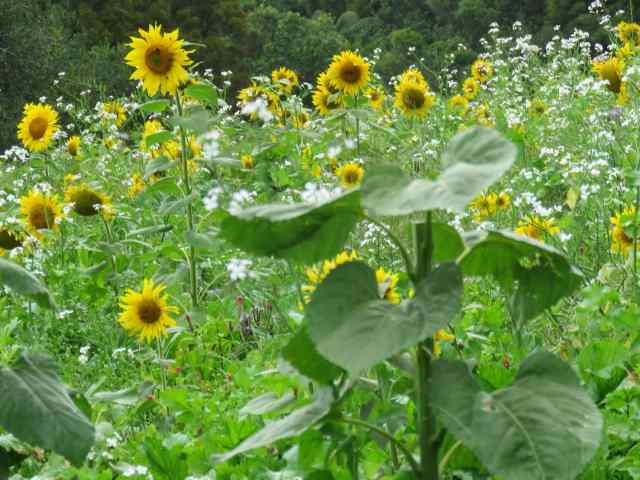
The third sunflower meadow down our road is different. It does not seem to be either for commercial harvest or as a visitor destination. It appears to be part of a regenerative agriculture system. The sunflowers are of a squatter physique – lower growing and sturdier – and interplanted with a white flowering brassica and probably other selected plants as well. I didn’t feel I could scale the fence to check out the pasture composition but did spot the yarrow and blue chicory in the adjacent paddock pasture so it would seem more herbal ley than monoculture.
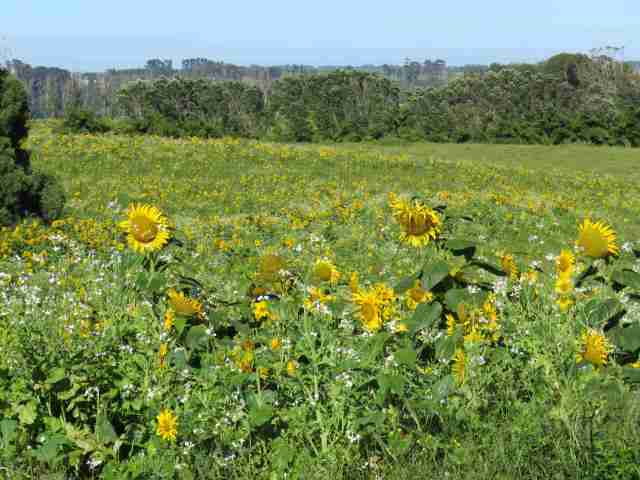
We live in an intensive dairy farming area, one which grows grass all year round in our milder climate which means stock graze outside all the time. It is often described as a ‘green desert’ because the main focus is on encouraging maximum grass growth, aided by nitrogen-heavy fertilisers. The contrast from that to herbal ley and sunflower plantings could not be more extreme and I am sure the meadow contributes a huge amount more to a sustainable ecosystem rich in biodiversity and feeding beneficial insects and microbes.
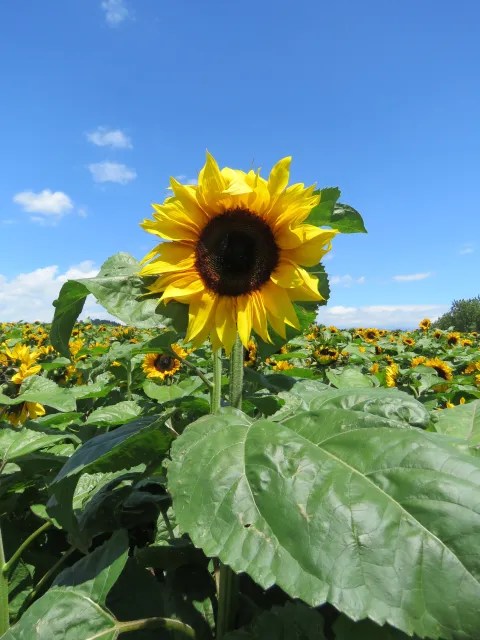
The common sunflower is Helianthus annuus – helios being Greek for sun and annuus meaning it is an annual. Curiously, given that all helianthus are native to north, central and just a few to south America, the annual sunflower is now the national flower for Ukraine. I am guessing it is a commercial staple for that country, which is a grain bowl of Europe.
Like many families, we grew sunflowers with the children when they were young and into competitive school gardening. To this day I remember the sunflowers one of them was growing, towering over 2 metres tall, only to fall in an overnight storm. Disappointment seared on my motherly brain.
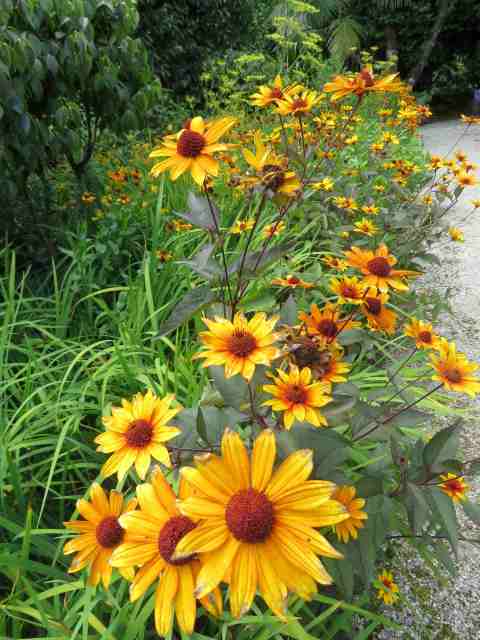
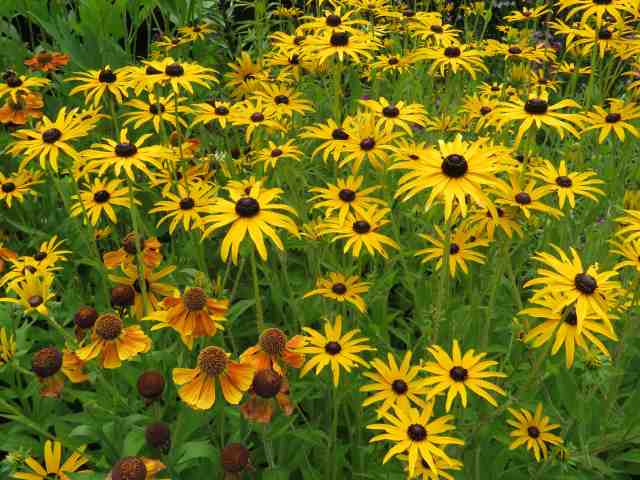
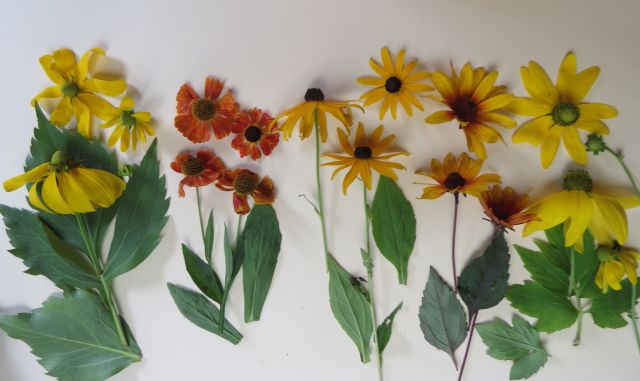
Nowadays, I grow a few of the different, smaller, perennial species in the summer gardens. There are around 70 different species of helianthus, or sunflowers, including Jerusalem artichoke. I have a mental block when it comes to remembering the differences between helianthus, heliopsis and helianthemum (and that is without going to helichrysums, heliotropes and other plants starting with heli). Similarly, I have trouble each summer remembering the differences between some of the helianthus, echinaceas, rudbeckia, heliopsis and ratibida and which is which in the summer gardens. But I am pretty sure these are helianthus with either species or cultivar names that I have even less chance of remembering when I struggle to remember they are helianthus.
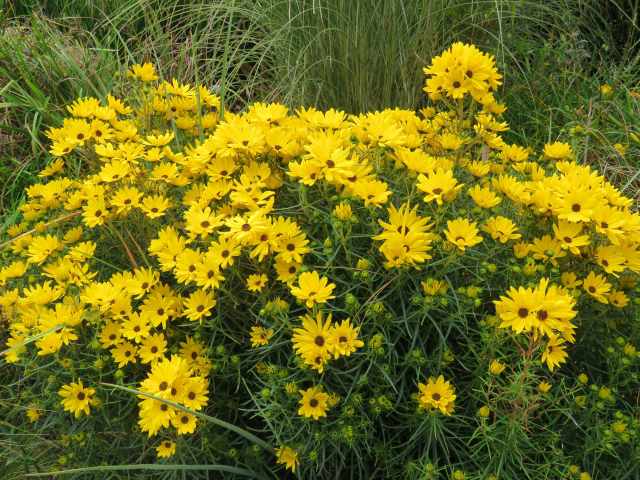
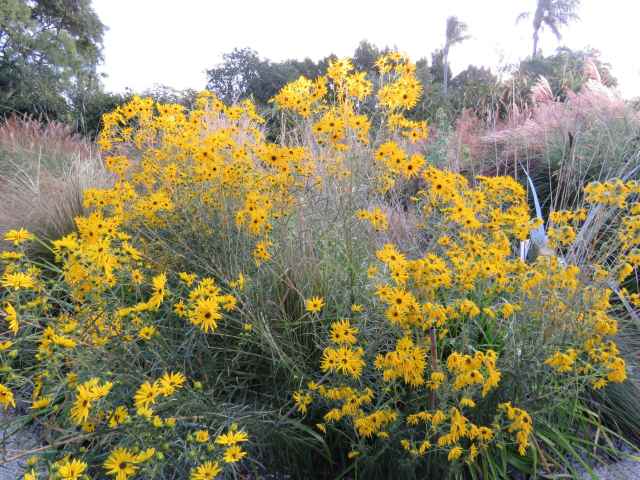
Summer gold, indeed.
 Tikorangi The Jury Garden