Tag Archives: Taranaki gardens

In the Garden this week: Friday 13 May, 2011

* The Chief Weed Controller here (aka Mark) advises that the weeds are germinating in abundance and to make a weeding round a priority. If you get on top of this wave of weeds, you should have a largely weed-free winter and delayed start to spring infestations, especially if you lay a mulch after dealing to the blighters. We are a bit too wet now and there is not enough heat in the sun to make push hoeing effective unless you rake it all up immediately and remove it. Hand weeding or glyphosate (weed spraying, on a dry day) are the usual techniques for this time of year.

* If you are a less than enthusiastic gardener, get out to do the big autumn clean up before the weather turns cold and miserable. Otherwise you will spend the winter looking out the windows at a messy garden. If you do a trim, tidy and weed now, you can get through the next few months with the occasional mow and raking up the debris.

* Rake up autumn leaves in discreet piles so they can break down to give you rich leaf mould to rake back out onto the garden later. They will rot down more quickly in a heap.

* Cover your compost heap or bin, if you have not yet done so. It keeps the compost warmer and stops the goodness being leached out by the winter rains.

* Gardeners in inland areas should be battening down the hatches in preparation for early frosts. Take cuttings of frost prone plants like fuchsias, begonias and vireya rhododendrons as an insurance. Coastal gardeners probably don’t need to worry about this in our milder conditions.

* Remove saucers from beneath container plants, both indoors and out. It is not good for plants to sit around in cold water during winter. Cut back your watering of indoor plants – they are better kept on the dry side now.

* Part of your tidy up round of the vegetable garden is to sow all vacant areas in a green crop – urgently. Lupins, oats, even plain ryegrass will help. Green crops condition and nourish the soil in preparation for spring planting but even more helpfully, their roots stop the ground from compacting and make it much easier to dig over later, particularly in heavy soils.
Tikorangi Notes: Friday 6 May, 201

Latest Posts: Friday 6 May, 2011
1) Breaking the mould of the modern New Zealand garden – the dreams at Paloma. I admit I only worked out after writing this piece just why the two arboretums are named the Matchless Arboretum and the Norton Arboretum or I would have included reference to them by name.
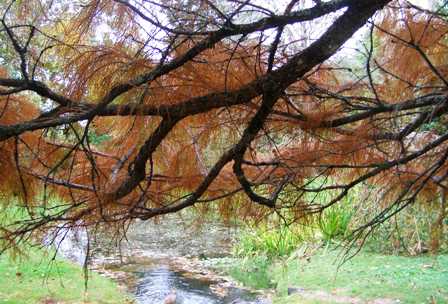
2) The autumn colour on Taxodium ascendans “Nutans” in Plant Collector this week.
3) Garden tasks for the week as we descend into a somewhat wet and dreary spell but at least it is still mild enough to want to garden.

Taxodium ascendans "Nutans" in our park

Taxodium ascendans "Nutans" in our park

Tikorangi Notes: Friday 6 May, 2011
Driven indoors by yet another passing shower, I commented to Mark that the little corner garden by the garage that I was renovating was taking some time. “Ah,” he pontificated. “Regular maintenance and periodic overhauls – that is what it is all about.” I was slightly startled by this tripping off his tongue so readily but he admitted that he had just read that phrase in the paper. However it does sum up the nature of maintaining a large garden like ours, however pompous it may sound.

In the garden this week: Friday April 29, 2011

Prunus serrula would have been better kept to a single leader when it was a young plant

Prunus serrula would have been better kept to a single leader when it was a young plant

• Get any spring bulbs planted without delay. They need to be growing now to give you the anticipated display later.

• Rhubarb is a clumping perennial and benefits from being lifted and divided. It is a gross feeder and likes really well cultivated soil. So double dig the area (dig, then dig again) and add plenty of compost before replanting big divisions.

• Broad beans can be planted now for harvest in spring. Picked when young and tender, they are truly tasty. If they get away on you and go old and tough, dry them. They are also known as fava beans and are delicious when soaked, skinned and used in bean dishes or added to falafel.

• A reminder to get your strawberry runners planted without delay so they can get established and build enough strength to start cropping on cue in spring.

• It is only tradition that says garlic should be planted on the shortest day of the year. We have had good success planting considerably earlier, in May. The plants are stronger and better able to withstand the very wet early spring weather we can get here when temperatures are still cold. If you are going to plant your garlic early (and long keeping brown onions can be done at the same time), prepare the ground now. Dig it over well, adding plenty of compost and maybe some animal manure. Then leave it to sit for a few weeks before planting. These crops need excellent drainage, but they do better when the soil has settled a little rather than being freshly fluffed up.

• It is good pruning and shaping time on woody trees and shrubs (though best done when the overhead branches are not showering you in water). A good pruning job is when it is not clear by looking at the plant where you have been, despite the mountain of branches on the path beside you. Rather than hacking the entire bush, being selective about which branches you remove or shorten and cutting flush to the main stems makes a big difference. However, there are times when drastic action is required – such as the shabby camellia in Outdoor Classroom this week.

• Most trees are best kept to a single leader – one trunk. Where a trunk is forked near the base, it is a structural weakness in the tree which can lead to it eventually splitting apart. The earlier this is done to a tree, the easier it is to train what remains to a good shape.

In the garden this week: Friday 15 April, 2011

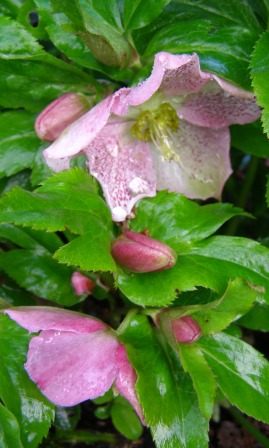
A little attention now will ensure a better winter display from hellebores

A little attention now will ensure a better winter display from hellebores

* It is time to give hellebores (winter roses) a little attention. We go through at this time and cut all the old leaves off, removing them to the compost heap. This gets rid of any aphid infestations, allows the flowers which will start emerging in a few weeks to be visible and the fresh foliage is much more attractive than tired old leaves. You can go through with a slasher if you wish. A weedeater is faster but tends to leave chewed looking stems. Feed and mulch the crowns.

* Most hellebores, particularly the common H.orientalis, are not the most amenable plants to divide. They take several years to build up to a good size so if you plan to divide a clump, make them large divisions. We prefer to go through and remove all the seedlings to prevent too much competition, leaving the large plants alone.

* Autumn is a good time for pruning and shaping most woody trees and shrubs.

* Sow lawns without delay while the weather is still mild. If you don’t do it straight away, you will have to wait until spring because grass seed won’t grow in winter.

* In response to phone calls, the pumpkin crop we grew for hull-less pumpkin seed was called Austrian Oil Seed and we bought it from Kings Seeds. Only the seeds are edible although the pumpkin may be suitable for stock food.

* In the curious world of vegetables, Sydney daughter reports that amongst the various bok choy/ pak choi variants at the market, she found a different veg called kang kong which she thought looked like a weed so she bought some to try. She says it was “quite nice”. Upon looking it up, she worked out why it looked like a weed. It is a convolvulus. I have yet to see kang kong offered here. Most Asian green leafy vegetables are quick maturing so ideal for a short term crop.

* While on the topic of seeds, the new autumn catalogue from Franchi Seeds is available on line at http://www.italianseedspronto.co.nz. These are predominantly summer crops but you may like to browse the traditional tastes of Italy in anticipation of sowing seed later in the year. Mark is planning to try some of the tomato crops and I am encouraging him in this because the most delicious tomatoes I have ever eaten were in the south of Italy. By no means are all tomatoes equal in the flavour stakes. Make the most of the pleasant autumnal weather which is brilliant for gardening. We frequently get the first wintery blast over Easter. No matter when Easter falls, the weather gods spy the event, not the date.

Tikorangi Notes:

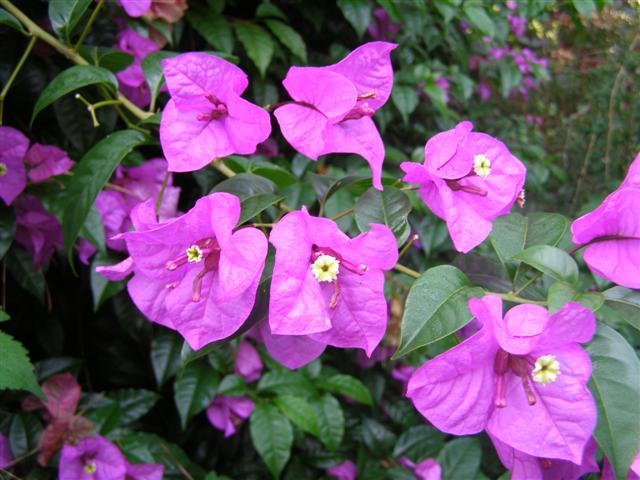
Decidedly rampant, extremely spiny but quite spectacular - the bougainvillea

The Battle of the Bougainvillea

Latest posts: Friday 8 April, 2011

1) One of the very best ornamental oxalis (or wood sorrel, if you prefer euphemisms) – purpurea alba in Plant Collector this week. And it is not in the least bit invasive so comes with our recommendation as garden safe.
2) Nostalgia rules, but it takes time. Relearning the old ways while getting to grips with new technology (aka freezing tomatoes and making grape jelly while learning about power points) – Abbie’s column.
3) Garden tasks for this week – from gathering swan plants and walnuts to sowing green crops.

Tikorangi Notes: Saturday 9 April, 2011

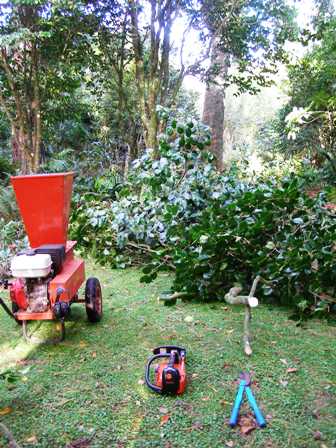
Dealing with the mountains of debris

Dealing with the mountains of debris

Ours is a typical large New Zealand garden in that we maintain a fair area with a minimum number of people. In our case it is about 25 acres or 10 hectares, although only 7 acres of that is intensively maintained garden but we do that with only three of us. Inevitably there are areas that we maintain but do not intensively garden. By that I mean we tidy, prune and groom, keep the area weed free, mulch it and refill large gaps but we do not spend large amounts of time actually beavering away gardening it in detail. But as we plan relatively large new gardens (these ideas can be slow in the gestation phase), I feel the need to make sure we can manage the area we already have. For the past sixteen months, this has meant a major reworking of well established areas. I am now well on the way in the Avenue Gardens which is a bit like the last major frontier. It never ceases to amaze me how much we can prune, saw, rake, trim and haul out from the borders to be cleared away without it being obvious at all what has gone. That, of course, is precisely the result we are aiming for. The gap between woodland garden and impenetrable forest is only a few years. Today has been the Battle of the Bougainvillea and those who have never grown one of these plants may not realise that they are armed with extremely sharp spikes all over. Allied to ambitions for world domination. The pruning is done. Now I am just deeply grateful that our Lloyd will be back at work on Monday. He is a whizz when it comes to dealing with garden rubbish – abracadabra and soon there is nothing remaining.