Tag Archives: Taranaki gardens

The story of the red magnolias

Vulcan to the left, Lanarth to the right

Vulcan to the left, Lanarth to the right

Few people realise that the story of the red magnolias is a New Zealand story. Probably even fewer realise that when it comes to stronger colours in magnolias, we get the best colour in the world here.

I am talking about deciduous magnolias. The evergreen grandiflora types are resolutely white in bloom and adding colour to the softer-leafed, evergreen michelias is very much a work in progress. But deciduous reds, we do well.

Most deciduous magnolias are in the white and pink colour range and very lovely many of them are too. But with many plant genus, there is always that quest to extend the range of flower form and colour, to build on what happens in nature to get a better performing, showier garden plant. Some of it is about pushing boundaries to see what can be done. A truly blue rose is still an unfulfilled quest but it is highly likely it will come sooner or later.

Some would argue that we do not yet have truly red magnolias and there is truth in that. There is no scarlet, no fire engine red. All the red varieties on the market still retain a blue cast to them and fade out to pink or purple tones rather than to the orange end of the colour spectrum. But if you line one of the red magnolias up against a purple one, it is clear that they are a different colour.
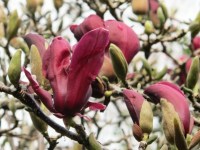
This (liliiflora 'Nigra')

This (liliiflora ‘Nigra’)

I started by saying that the story of red magnolias is a New Zealand story. In fact it started as our family story. Back in the 1970s, Felix Jury wondered if he could get a large flowered, solid coloured red magnolia on a smaller growing tree. He started with the red species – M. liliifora ‘Nigra’. In itself, ‘Nigra’ is a nice enough, low spreading magnolia but nothing showy. He crossed it with the very showy, indubitably purple ‘Lanarth’ (technically M. campbellii var. mollicamata ‘Lanarth’). The rest, as they say, is history.
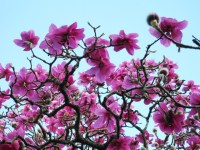
crossed with this (Lanarth)

crossed with this (Lanarth)

‘Vulcan’ took the magnolia world by storm. This was the break in colour and form. It is not perfect. We know that. The flowers do not age gracefully. It flowers too early in the season for some areas. It does not develop its depth of colour or size of bloom in colder climates and is a shadow of its own self in most UK and European destinations. But after more than 20 years, it is still hugely popular and very distinctive, particularly in Australia and New Zealand. It set the standard and it opened the door to other cultivars.

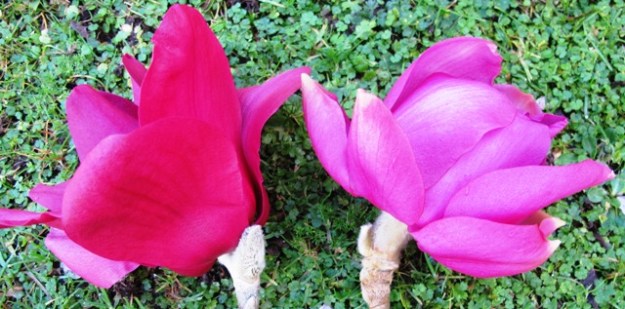
... and the result was this: Vulcan

… and the result was this: Vulcan

In due course, but slowly, slowly, Mark followed on from his father. He raised hundreds of seedlings and named ‘Black Tulip’ (the darkest of the reds), ‘Felix Jury’ and ‘Burgundy Star’.

Fellow breeder, Vance Hooper, started his programme on the reds and he has named several. The best known is ‘Genie’. Like Mark, he is continuing determinedly down the red magnolia line in the quest for perfection, although improvement or variation will do as steps along the way.

There are other reds on the NZ market now, though none from sustained breeding programmes to match those undertaken by Mark and Vance.
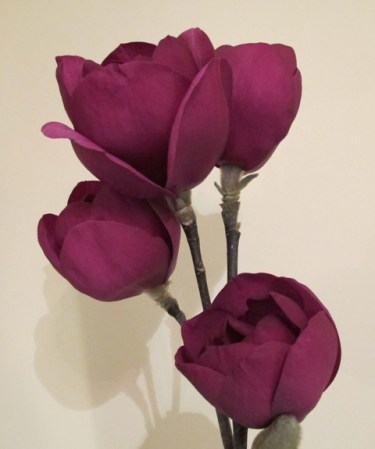
Black Tulip - the first of the second generation red magnolias

Black Tulip – the first of the second generation red magnolias

It appears that it is ‘Black Tulip’ that has enabled the rise of new selections in UK and Europe. It sets seed and every man and their dog is now raising seed and naming selections. Mark is a little wry as he comments that he raised hundreds of plants to get one ‘Black Tulip’ whereas others raise a few seed and name several. He has an ever-decreasing level of patience for amateurs who, as he says, “raise five seedlings and name six of them” based on the first or second flowering only, when he is still assessing seedlings which are 20 years old and showing their adult form, habit and performance.

So New Zealand is about to lose its position of world domination in the red magnolias. But we still get better colour here than others do overseas. There is no certainty yet as to whether that is related to our mild climate, our soils, the root stock used or the quality of light – likely a combination of all. ‘Felix Jury’, which can flower strong red for us is more an over-sized pink flamingo so far in European gardens. We are just relieved that it achieves full-sized flowers and plenty of them, even if it is not red in their conditions.
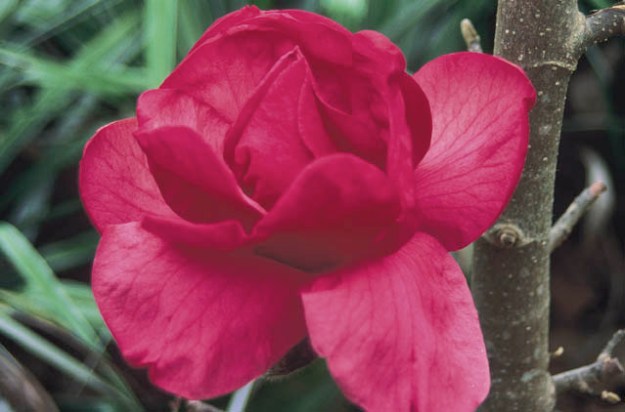
Magnolia Felix Jury at its best here

Magnolia Felix Jury at its best here

The quest for truer reds continues. A red that loses the magenta hue. Mark is assessing several with which he is quietly very pleased. They are not scarlet but they are an improvement in colour. Just don’t hold your breath. This is a long haul.

Finally, while NZ leads the world in reds, it was USA which gave us yellow magnolias. These all descend from one yellow American species – M. acuminata. I just say that for the record. Credit where credit is due.

First published in the Waikato Times and reprinted here with their permission.
Plant Collector: Rhododendron ‘Pukeiti’

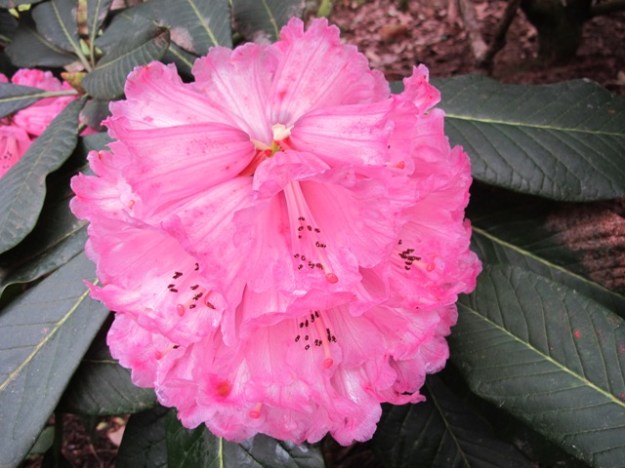
One of the big leafed rhododendrons, "Pukeiti" (otherwise known as R. protistum var. giganteum)

One of the big leafed rhododendrons, “Pukeiti” (otherwise known as R. protistum var. giganteum)

This is the iconic plant of Pukeiti, the rhododendron gardens set near Mount Taranaki. It is one of what is widely referred to as the big leafed rhodo group, grown in those gardens in the Valley of the Giants though this plant is on the cold hillside of our park here at Tikorangi. In the rhododendron world these are big – big leaves can be up to 50cm long and big flower trusses on large growing plants which, over time, can reach 5 metres tall by about 8 metres wide. These are not plants for the urban garden. While the plant itself is hardy, an untimely frost can turn the blooms to something resembling caramel icecream.

“Pukeiti” is a selection of R. protistum var. giganteum which itself a straight species. It was grown from seed collected by the intrepid plant hunter, Kingdon Ward, in the highlands of North Burma in 1953. It has a deeper colour than most of the other big leafed types we grow, with a big full truss of 30 individual blooms. These are described as funnel shaped and campanulate in form – slightly flattened, tubes which flare out to a frilly edge in non-technical language. The display this year is particularly good. We are hoping we don’t get a late frost.

First published in the Waikato Times and reprinted here with their permission.
Garden lore

“What a pretty flower, I’ve never seen one like it; there’s no one like you, Oriane, for having such marvellous things in your house,” said the Princess de Parme, who, fearing the General de Monserfeuil might have overheard the Duchess, sought now to change to the conversation. I looked and recognized a plant of the sort that I had watched Elstir painting. “I am so glad that you like them; they are charming, do look at their little purple velvet collars; the only thing against them is – as may happen to people who are very pretty and nicely dressed – they have a hideous name and a horrid smell. In spite of which I am very proud of them. But what is rather sad is that they are dying.”

Marcel Proust, Remembrance of Things Past (The Guermantes Way, 1920).

??????????????????????????????? Moving rhododendrons

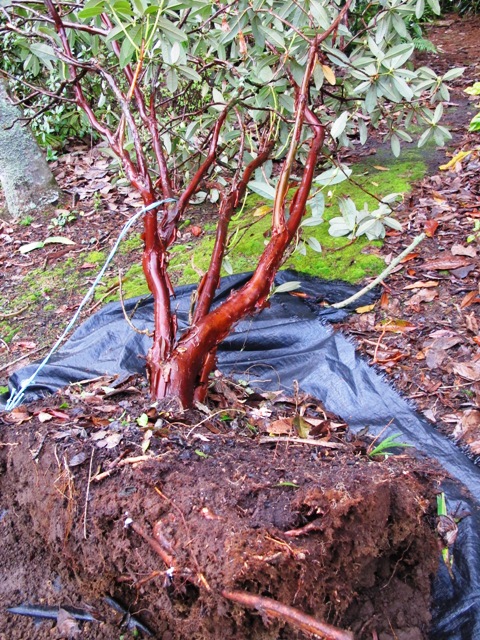
While some plants put down huge, deep root systems, rhododendrons are surface rooting. This means they have a large, fibrous root system close to the surface which makes them relatively easy to move. This plant is getting on for twenty years old. Its root system is over a metre across but only 20 to 30cm deep. It has been moved on a large piece of weedmat to keep the roots and dirt intact. We will prune the top after replanting to compensate for the stress and shock, reducing it by at least 25%. Because it is going into a sheltered position, it should not need staking but it would if it was going into the open because it will take a year or two to anchor itself securely again. Mulching it with compost after planting will protect the roots from drying out and give a gentle feed to the plant.

Now is the time to move large plants so they can settle in before summer. Plants with a tap root – a strong central root which goes straight down into the ground – are usually impossible to move successfully unless they are wrenched well in advance.

First published in the Waikato Times and reprinted here with their permission.

The Winter Garden

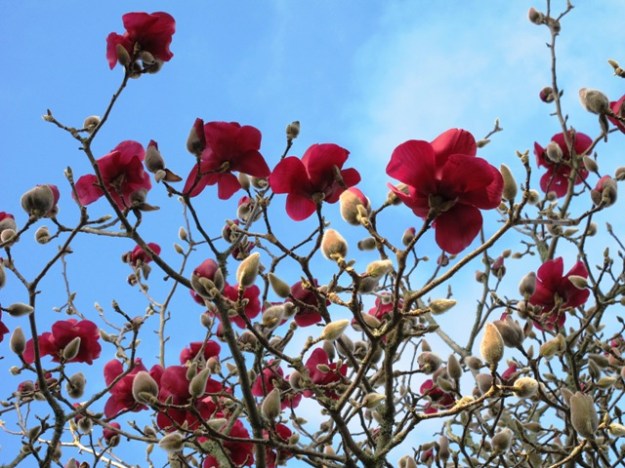
Magnolia Lanarth has a short but glorious season

Magnolia Lanarth has a short but glorious season

I have been away for a couple of weeks. To the tropics, no less, but I need to let the experience percolate in my brain a little longer before I can translate it to anything of relevance for gardeners in our temperate climate.

What amazed me was coming home to our winter garden. When I left in mid July, the earliest magnolias were just showing colour and the first blooms, along with some of the narcissi. By early August, we have trees full of bloom. The garden is awash with scores of tui as the campanulata cherries flower. I briefly thought of writing about plants for winter colour but there is just so much in flower that it would quickly descend to a boring list.

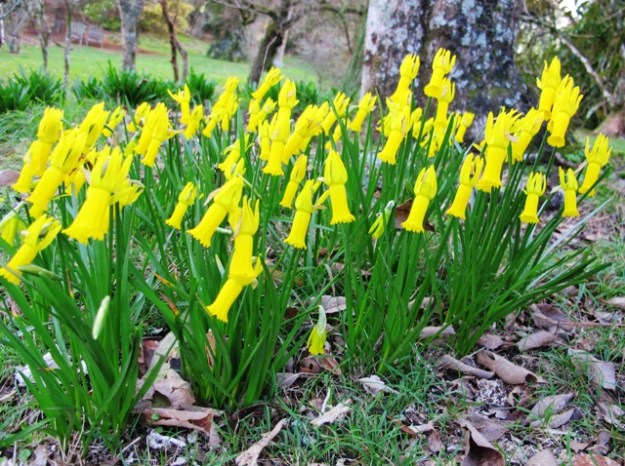
If narcissus could look startled, these cyclamineus  growing in the park certainly do

If narcissus could look startled, these cyclamineus growing in the park certainly do

This is our winter, dear readers. Technically spring does not start until September 1. Gardening is different here to many countries.

If you have looked at British and northern European gardens, there is a long spell in winter when nothing happens. People basically put their gardens to bed and retreat indoors. A heavy dependence on deciduous perennials means that gardens which are full of foliage and bloom in warmer months look dead in winter. The majority of their trees are deciduous so become bare skeletons. It is why the definition of form becomes hugely important because that is all there is to look in the depths of winter. Hardy plants like buxus, yew and conifers give accents which are often the only statement plants in those cold months.

The same is probably true of many inland areas in the world (outside the tropics) where temperatures plummet. My Canberra-resident daughter is always astonished when she comes home in winter to see how lush and colourful we are compared to her arid, hard conditions.

Those who shun deciduous plants miss out on the wonder of plants like Magnolia Vulcan

Those who shun deciduous plants miss out on the wonder of plants like Magnolia Vulcan

For starters, our native plants are all evergreen. So too are most of the ornamental plants we favour in our gardens. Over the years, I have met a swag of customers who point blank refuse to have anything deciduous in their garden, which I think is a bit of a short sighted view. Some of the showiest plants of all are those which go dormant in the colder months and then leap into spectacular display – magnolias, for example. To my mind, there is a place for both evergreen and deciduous plants in gardens.

I do, however, find it curious when I see people unquestioningly grabbing the fundamentals of garden design from other climates without considering the application to our conditions. Most of us like some element of design and definition in our gardens, though there are looser styles which don’t rely on these – meadow, woodland, prairie and food forests are examples. But that definition is not essential to give us something to look at in winter.

Similarly, I am inclined to silently snort when I hear people pontificating that foliage and form are the most important elements in plants because flowers are but transient (or worse, vulgar). I think we should celebrate living in a climate which is so temperate that we can have flowers and seasonal colour twelve months of the year, that we don’t need to put our gardens to bed for winter (or indeed for hot, dry summers) and that the clarity of light and the brightness of the sun seems just as great in July and August as it is in January. We just have shorter daylight hours, lower temperatures and a few more storms.

Being so temperate, few gardeners in this country have conditions where there is a sharp seasonal change. Most of us just drift imperceptibly from one season to the next with flowering extended over longer periods. The mid season camellias are at their peak here – more winter than spring flowering in this country. The snowdrops are passing over, but the dwarf narcissi are flowering all round the place and many of the lachenalias are blooming. Daphne scent hangs heavy in the air. The earliest rhododendrons are blooming already, michelias are opening.

And the magnolias. Do not forget the magnolias. Lanarth has a short but spectacular early season. M. campbellii is at its peak, red Vulcan is opening more flowers every day. The most spectacular time of our gardening year is upon us already, and it is still winter.

I rarely complain about the winter garden here.

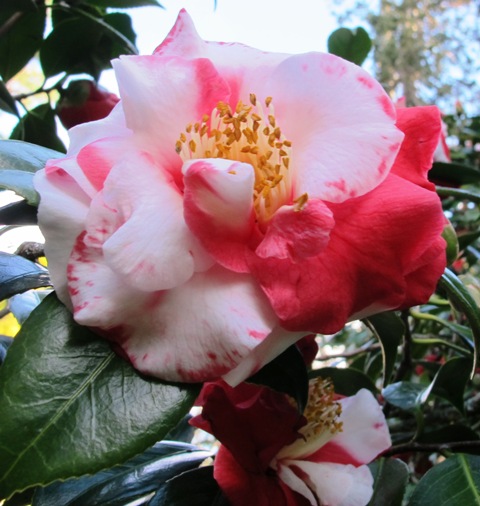
While not usually fans of variegated flowers, The Czar var on the back lawn is an exception

While not usually fans of variegated flowers, The Czar var on the back lawn is an exception

First published in the Waikato Times and reprinted here with their permission.

Plant Collector: Galanthus S Arnott

What can be prettier than snowdrops in the depths of winter?

What can be prettier than snowdrops in the depths of winter?

Are there any bulbs more charming than proper English snowdrops? Except that they are not English at all, having been introduced from Europe where they have a wide distribution. I had thought they were called ‘snowdrops’ because they often peek through snow (a light covering, I assume because they only grow about 15 to 20cm high) to herald the coming of spring, but I see the botanical name translates from Greek as milk flower. Because we lack the chilly temperatures and snow here, we are limited in the range of galanthus that we can grow well. There is such a word as a “galanthophile” – one who is obsessed with the genus but you would have a hard job earning that epithet here in the mid north. Easily the best performing snowdrop for us is Galanthus S. Arnott which never fails to delight and increases satisfyingly well. We keep gently increasing its spread around the garden and that also staggers the flowering because it will come in later in colder parts.

You don’t get a long flowering season but oh they are so very charming. The proper snowdrop has a little inner trumpet of three petals surrounded by a skirt of three outer petals which look like little wings. Sometimes people refer to the stronger growing snowflake, often seen in paddocks, as a snowdrop. But it is not. It only has the inner trumpet of petals and lacks the delicate charm. It is also a different genus, being a leucojum.

First published in the Waikato Times and reprinted here with their permission.