Tag Archives: Taranaki Rhododendron and Garden Festival

Taming the Wilderness – workshop notes

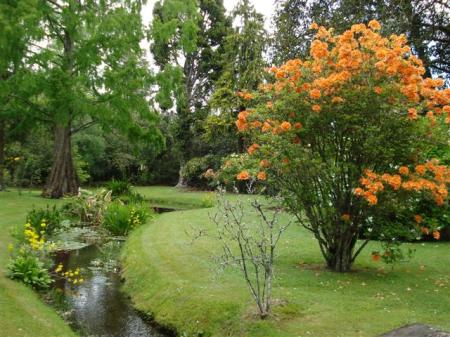
Create space around individual plants to avoid an overgrown, unkempt look

Create space around individual plants to avoid an overgrown, unkempt look

TAMING THE WILDERNESS

Handout notes from the workshop taken here in our garden November 7, 2009 as part of the Taranaki Rhododendron and Garden Festival.

  1. If you are new to the garden, don’t charge straight in immediately and start dropping trees and shrubs. Ideally, give it about nine months to go through the seasons so you can see what is there before you do major felling and removal. In the meantime you can be clearing the lower grade plants – most plants that sucker, clump or seed down can be safely attacked.
  2. Track the path of the sun so you can see where your winter sun and summer shade positions are.
  3. Unless you know what you are doing, seek advice as to which trees are quality, long term trees worth preserving. Somebody at the botanic garden or public park, or an enthusiastic member of a group such as the International Dendrology Society will likely know more than a tree surgeon (whose skills often lie more in safely felling a tree and using chainsaws than in deciding which trees are of value).
  4. Overgrown gardens lose the detail and small treasures, but can give you a framework and maturity to work with. Don’t reduce it all to a blank canvas by clearing everything.
  5. Stand at each window in the house and plan views if possible. Also spend plenty of time looking from every angle in the garden to work out potential view shafts, sun and shade through the seasons.
  6. Make the most of maturity of plants. LIFT AND LIMB. Allow light through underneath and build up layers of garden. Many, if not most, young gardens are badly overplanted to get a quick effect. It is likely that you will need to thin out a number of these plants.
  7. Mature gardens are usually about shade conditions. LEARN TO GARDEN WITH SHADE. Don’t try and turn it all back to sun and a juvenile garden.
  8. CREATE SPACE AROUND PLANTS. The fresh appeal of young gardens is often because each plant stands alone in its own space. As gardens grow, that space gets swallowed up and the plants become entangled. Creating a sense of space again is good for the plant (less competition, more light and more air flow) and creates a more cared for look in the garden. Most gardens need to restrict the size of trees and shrubs.
  9. LEARN ABOUT PRUNING – especially the right times of the year to prune plants and the general rules of pruning. A good pruning saw is worth the expense, as are good loppers. Supervise chainsaw operators carefully – you can not glue branches on later.
  10. Widen paths. Remove anything spiky or prickly beside the path. Creating a sharp edge between a path and garden immediately makes a place look better cared for.
  11. As a general rule, woody trees and shrubs are best left well alone in the root area. Just a feed (preferably in spring) if the plant is looking hungry and pile on the mulch. Herbaceous or clumping plants prefer friable or fluffed soil and in a neglected garden may need to be lifted, divided and rejuvenated.
  12. If you are gardening on a slope or even on a hill, trim the branches and prunings and lay them around the contours of the slope and use them to start building up layers of humus. It is all part of the natural cycle. Bare earth is not a good look.
  13. Be a vigilant weeder from the start. It saves a great deal of time and effort later. Once an area is weeded, lay mulch to suppress fresh young seedlings. You will have many dormant weed seeds in your soil which will spring into life with a bit of light and cultivation.
  14. In our opinions, gardens need some logic to them and this usually means that detailed and tightly maintained areas of the garden are closest to the house, to living areas and entranceways. As you radiate out further, the theme becomes looser and more casual. Most people use outdoor living areas which are close to the house, rather than at the bottom of the garden.
  15. Vegetable gardens need full sun.
  16. As a general rule, water features are best in full sun.

Maintaining social status if not economic value – the rhododendron in Taranaki

DSC01880 (Small)

The generic pink rhododendron photo - in fact an unnamed seedling from our park


2009 may not go down in history as having the best ever display of rhododendrons in Taranaki because spring came somewhat early this year and festival dates are somewhat late. But it is rather a happy collision of different occurrences that sees us wearing a rhododendron crown in the first place. It is not that we grow them hugely better than everywhere else. We just happen to have Pukeiti here and that organisation and identity has given an enduring regional focus to the plant genus, along with our longstanding annual garden festival. In fact going back in history, that garden festival was first floated by Pukeiti and owned and run in the early years by the Taranaki Rhododendron Group.

Why rhododendrons? Just as tulips commanded prestige and price well beyond their actual worth in Holland in centuries past, rhododendrons were the high status and high prestige plant for the post World War 11 gardeners and we had a cluster of serious gardeners in Taranaki at the time.

Douglas Cook, the father of Pukeiti, bought land here primarily for rhododendrons because it was clear to him that these aristocrats from lower mountain slopes in Asia would never be an option for his first choice location near Gisborne, where he set up Eastwood Hill with its heavy focus on drought tolerant deciduous trees.

Around the same time, a number of Taranaki gardeners and plantspeople were creating their gardening masterpieces. These included Bernard and Rose Hollard near Kaponga, Russell and Mary Matthews on Mangorei Road (Tupare), Les Jury at Sunnybank on Tukapa Street, Harold Marchant and Les Taylor near Stratford, Jack Goodwin at Pukekura Park and Pukeiti – and Felix and Mimosa Jury in the garden here at Tikorangi. The rhododendron family featured large in their plans and individual collections were highly prized.

Historically, back in those mists of time around the late forties and fifties, Duncan and Davies were becoming the major force in commercial production and that happened in Taranaki partly because all plants were field grown in those days (in other words in the ground in real soil, rather than in containers and planter bags in modern nurseries). With its friable, volcanic soils, high sunshine and regular rainfall for 12 months, Taranaki just happened to have the best conditions in the country for field production. It needs also to be said that the charisma and dynamism of V.C. Davies was a major influence.

Times keep changing. These days the market value of a rhododendron plant has plummeted so far that you can go to any plant shop and buy one for around the same price as a perennial, a clipped bay tree, even a semi-clipped buxus or a large succulent. I can tell you, dear Reader, that there is a vast amount more skill and time required to get that rhododendron onto the shop floor than the other plants and that they are dreadfully underpriced, almost without exception. I am frankly astonished that rhododendrons have to some extent kept their elevated status in theory, even though reality has them relegated well down the plant equivalent of the social scale. It is a conundrum.

But then we still lay claim to the rhododendron in Taranaki even though the local nursery industry continues to dwindle away (we certainly can’t claim to be the Southern hemisphere power house of plant production these days!) and even though most home gardeners would rather plant a fruit tree than a rhodo. The rhododendron gives a focus, an icon, to our garden festival which sets it a little apart from others all round the country – except for Dunedin who shamelessly (though quite justifiably) continue to challenge our claim to having the Rhododendron Festival.

As our festival starts today, never underestimate the importance of this annual event on our regional garden calendar. It is the single event which keeps Taranaki right up at the top nationally in the garden scene. The 10 days of festival deliver more visitors into most of our open gardens than will be seen on the other 355 days of the year. It is the single event which makes it worthwhile to maintain gardens to the high standards we currently reach. Without festival, there would be no incentive to keep lifting gardening standards and setting the benchmarks.