Tag Archives: The plant collector

Plant Collector – Taxodium ascendans "Nutans"

A blaze of autumn colour on Taxodium ascendans "Nutans"

A blaze of autumn colour on Taxodium ascendans "Nutans"


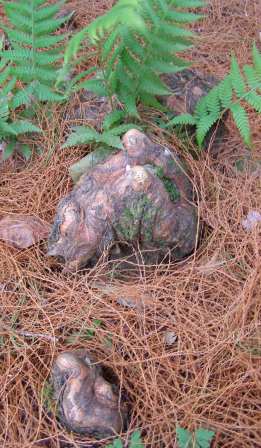
Nubbly knees

Nubbly knees

We will take spot autumn colour where we can get it here. Big mass displays of fiery autumn shades are more typical of drier, less windy climates with sharp seasonal change (hotter summers and colder winters) and predominantly deciduous native flora. Think the maples of Canada. But this taxodium puts on a splendid orange display. It is a conifer, believe it or not, and yes there are a few deciduous conifers. This one comes from the south east of USA and makes a handsome, columnar tree with short branches, a little upwardly curved. Our tree is about 10 metres high after 40 years. It is notable also for its ability to grow in waterlogged conditions, as will its close relative the swamp cypress or Taxodium distichum. Taxodiums are also renowned, along with a few other swamp trees, for pushing up nubbly protruberances above ground. Attached to the roots, these are commonly referred to as knees and you certainly can not mow beneath these trees. Apparently the knees only appear when they are growing in wet conditions – this tree is by a stream- but it remains unproven why these growths occur.

Plant Collector: Vireya Rhododendron Rio Rita

Large, luscious and fragrant - vireya Rio Rita

Large, luscious and fragrant - vireya Rio Rita

Rio Rita was bred by the late Os Blumhardt, one of this country’s foremost plantsmen and plant breeders in his time. It was named for the irrepressible Rita Watson and it always makes us smile because the flower is so well suited to the bold personality and immaculate grooming of the namesake. Rita was very keen on vireya rhododendrons and her North Shore garden boasted some of the best grown plants we have ever seen in a garden situation though we were told she subsequently gave up growing vireyas and took up line dancing instead. Rio Rita is a leucogigas hybrid (crossed with Dr Sleumer) and the flowers are voluptuous and fragrant. There are five flowers to a truss and this photograph is of two trusses side by side, which is why it looks quite so full. Each flower is about 10 cm across, which is large.

Most vireyas don’t have a set flowering season because they come from the equatorial areas where day and night length is pretty much the same all year. This means you can have some in flower all the time if you have sufficient plants and different varieties. However, they won’t tolerate more than a degree or two of frost and wet feet will kill them very quickly. As a guide, the bigger and more lusciously fragrant the flowers are and the larger the leaves, the more susceptible they will be to cold temperatures and less than ideal conditions. This means that Rio Rita is by no means the easiest vireya to grow well, let alone keep alive at all, but if you have the right conditions, it certainly puts on a show.

Plant Collector: Ilex cornuta “Burfordii” and Raphiolepsis indica “Enchantress”

Ilex cornuta “Burfordii” - berrries galore if the birds don't find them

Ilex cornuta “Burfordii” - berrries galore if the birds don't find them

Many readers may fail to identify this immediately as a holly on account of the fact the berries are greenish yellow and the leaves lack the common prickly appearance that we associate with the family. The reason the berries are not red is because I had to get in, despite the rain, and photograph the astonishing crop before they ripened. As soon as they show colour, the birds strip them very promptly and without hesitation. Hollies don’t usually berry well in this climate – they need a greater winter chill – but this selection which is native to China and Korea is a notable exception. I can’t help but think that the reason why holly and ivy are so closely associated with an English Christmas might be that, in their cold climate, there are not a lot of other candidates which are amenable to being picked in the depths of winter and the red holly berries contrast well with snow. Presumably their birds are not as voracious as ours, particularly our kereru or native wood pigeon. Ilex are very slow growing – this one was maybe a metre and half high and wide after many years but this form is apparently widely grown as a hedge in USA. A holly hedge is one way of making sure that people only enter your property by the designated pathway and not via shortcuts. Burglar deterrent plants, really.
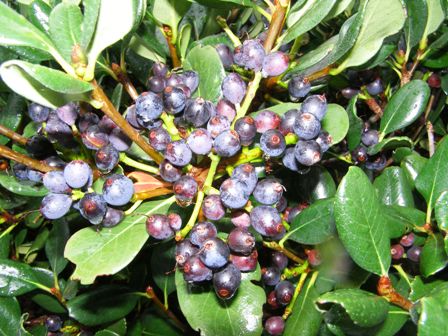
Raphiolepsis indica “Enchantress” - enchanting may be a slight case of hyperbole but the berries are amazing

Raphiolepsis indica “Enchantress” - enchanting may be a slight case of hyperbole but the berries are amazing

Planted adjacent to the ilex in a town garden, is Raphiolepsis indica “Enchantress” which is a similar sized, bushy evergreen shrub from South China. While “Enchantress” might be slightly over-stating the case, the pretty apple blossom-like flowers have matured to a remarkable display of deep purple berries. They look like blueberries so I asked the garden owner if they were poisonous. A man of impeccable horticultural and botanical credentials (it was George Fuller), he replied that as far as he knew the berries had no toxic properties. With its dark foliage and dark berries, it is not a landscape plant that will stand out in the distance but there is a definite shortage of well behaved evergreen shrubs which stay tidy and dense in a smaller garden rather than becoming leggy triffids. This plant is worth growing for its berries, let alone its other attributes.

Plant Collector: Rhopalostylis sapida

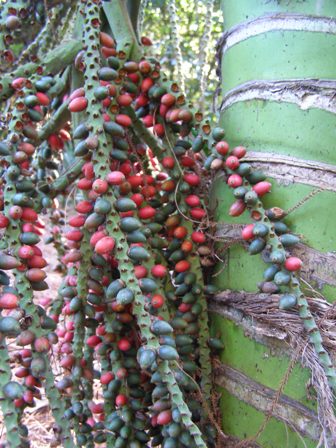
The ripening seed on the Pitt Island nikau palm

The ripening seed on the Pitt Island nikau palm

The botanical name for this native plant does not trip off the tongue easily. It is much easier to refer to it as a nikau palm. And yes, it is indeed a palm. In fact it is the world’s southernmost palm. This form is even more south eastern than most, as it is from Pitt Island. Nikaus are often regarded as very slow growing but it is curious fact that the variation that is endemic to the Chatham Islands (which includes Pitt) is much faster growing and sets viable seed years earlier than the mainland form. They are hardy throughout most of New Zealand (except for deep inland or alpine areas) but not widely seen internationally because they don’t like extremes of heat, dry conditions or the cloaking of cold, dry arctic air which is very different to the chilly air movement that we get with wintery blasts.

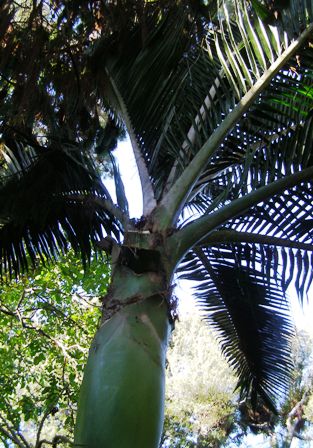
The handsome crown of the nikau palm

The handsome crown of the nikau palm

Nikaus are exceptionally handsome plants but they get large. This plant is already around eight metres to the top of its crown and the arching fronds are about four metres long. It will keep growing and get larger. In the juvenile stage, the unfurling fronds wrap around the whole plant and the shape is reminiscent of an old fashioned shaving brush or feather duster but that hardly does justice to these handsome plants. We find that they seed down very readily throughout our garden and we just dig out those plants in inappropriate places. They are not the easiest plant to transplant as they get larger. Their roots go straight down and you have dig well below the base plate to extricate them without damage. The seed turning red is a sign that it is ripe.

Plant Collector: Oxalis purpurea alba

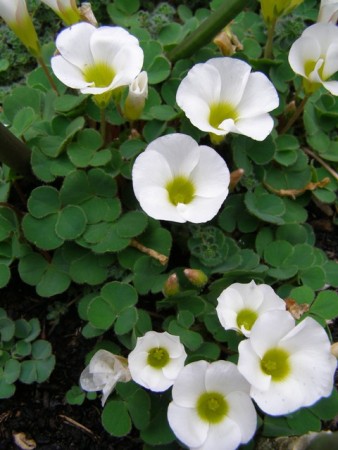
Oxalis purpurea alba - one of the very best forms

Oxalis purpurea alba - one of the very best forms

At this time every year, I embark on a crusade to win new converts to the world of oxalis. The whole oxalis family suffers from the bad habits of just two or three members and it means that many people miss out on the seasonal delights of some of the highly ornamental forms. Purpurea alba is one of the very best. It is not in the least bit invasive and I have no problem at all in recommending it for sunny spots in the garden where it forms a flat mat of slightly hairy, clover-like foliage topped with big white flowers with a yellow throat. Where it excels above most others is in the length of its flowering season. It is one of the first to flower and continues through to pretty much the end of the season in winter.

Oxalis purpurea is a highly variable species. The red leafed form with big pink flowers comes into growth much later and is invasive. Decorative but dangerous so keep it confined to a pot. The green leafed form with big pink flowers shares a long flowering season almost on a par with alba and does not appear to be invasive. There are apparently yellow forms of this species too. Overall, there are large numbers of different oxalis. They occur in both South America and South Africa but it is the African ones which give us most of the showy varieties for garden use. Most come into growth with the autumn rains and they have to be planted in full sun because they don’t open their flowers unless it is sunny. They make a wonderful show in shallow containers on a sunny doorstep and you can always refer to them euphemistically as wood sorrel, if you don’t want to own up to growing oxalis.