Tag Archives: this week

August 1, 2008 Weekly Garden Guide

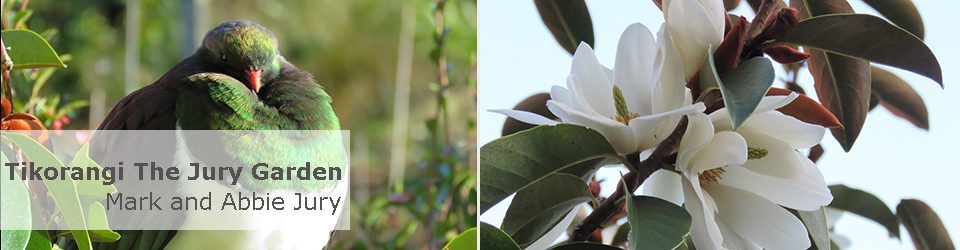
If your magnolia tree is opening misshapen and severely damaged blooms, the likely culprit is a possum which has beaten you to the tree and eaten out the centre of the bud.

Mark performs autopsies on all possums shot here and there are often one or two per season with stomachs full of magnolia buds. You have two alternatives – trapping or high velocity lead. It is usually only one that has discovered the taste treat so you don’t have to eliminate the entire population as long as you catch the guilty one.

  • Roses are starting to move. Don’t be panicked by that, but you are probably safe to prune now even in colder areas. Pruning forces the plants into strong new growth but by the time that happens, we will be nearing the end of August and the main risk of severe frosts will be over for most.
  • Lawn purists will be raking out the mosses from their grassy swards and dethatching the build up of residue from dead leaves. Certain grasses such as fescues do not rot down quickly and can build up a thatch over time. Bare areas can be over sown now. While you can feed the lawn at this time, most people will wait until the temperatures warm up a little.
  • If you feel your garden is lacking in winter interest and colour, look to the hellebores, cyclamen coum, the miniature narcissi (daffies) many of which are flowering now, snowdrops, early camellias and daphnes.
  • Nandina domestica Richmond is a stunner at this time of the year with its brilliant festoons of bright red-orange berries. If you have a plant which is not berrying, alas you have probably bought a seedling which may never berry. Give it a couple more years and if it fails to berry profusely, rip it out. Plant nurseries should know better than to sell nandina seedlings but it does happen.
  • In the vegie garden, prepare beds and plan. Planting season will be on us within a few weeks and it helps if you are ready to move straight in with ground that is already prepared.
  • The art of keeping garden pests under control is to get in early before they get established so the winter copper and oil spray of fruit trees is the single most important spray of the year. Ditto for roses.

While most of us dislike weeding, Clare Leighton wrote in 1935:

There is some hope in weeding, for the weeds may one day be defeated, but the tidying of a garden is as exacting and unending as the daily washing of dishes.

July 25, 2008 Weekly Garden Guide

Spring can not be far away. The earliest flowering magnolias are the campbelliis and already they have opened their first blooms. Check the trees in the Victor Davies Park next to the radio station on Powderham Street if you live in town. The campanulata cherries are just starting to break into flower for us which the tuis will be looking forward to. Another gardening year is about to start.

  • All this means that the pressure is coming on to get the winter pruning round underway – roses, wisterias, deciduous fruit trees, grapevines, many clematis and hydrangeas (the buds are already swelling on ours) are the main candidates for an annual winter haircut. Leave cherry trees alone (these get pruned in summer) and resist the temptation to be too drastic with late winter and spring flowering trees and shrubs or you will be cutting off their flower buds. We admit we have yet to prune our raspberries but they too should have been attended to by now. Cut off last year’s fruiting canes because the plant produces its fruit on new wood. Shorten the new canes to manageable height.
  • Take time to smell the daphnes. If you are planting daphne, they prefer to be out of full sun and in humus rich soil. Because they are winter flowering, they are usually best planted by pathways or entrances so you can smell them as you dash past under an umbrella.
  • If you have early potatoes in the ground, earth them up as they shoot so you are creating a mound. This is standard practice. It allows the soil to warm faster, kills the weeds, can protect emerging shoots from frost and gives a thicker layer to prevent the greening of the young tubers later on. You can plant potatoes any time now as long as you can protect them from frosts.
  • Peas, brassicas, silver beet and its allies, even an early sowing of carrot seed can be put in now. Broad beans can still be sown to give a late crop.
  • In the current wet spell, watch citrus trees for botrytis (the leaves go brown and fall off). You may need to give them a copper spray.
  • Roses and all deciduous fruit trees benefit from a winter spray of copper as part of the clean up round.

· Cora Lea Bell, who was presumably American with a name like that, wrote:

An addiction to gardening is not all bad when you consider the other choices in life.

July 18, 2008 Weekly Garden Guide

We are told that while it is certainly true that apricot trees do not generally perform at all in Taranaki, there are two exceptions – one in Hawera and one in New Plymouth. The latter tree is available on the market under the name Apricot Fitzroy (guess where the original plant is growing?) and has performed well for many years. We intend to plant one here. We have yet to track down the Hawera tree.

  • Continue the winter pruning round in the ornamental garden – roses, hydrangeas, wisteria, clematis, deciduous fruit trees and the like. As the autumn flowering sasanqua camellias finish, it is the time to clip and shape them.
  • Be very cautious when pruning the roses. They harbour some really nasty fungi and bacteria and most health professionals will have tales of severe infections as a result of wounds incurred when pruning roses. Older people are particularly susceptible so take even minor scratches and splinters seriously. Rose prunings should be burned, as should the fallen leaves and debris under them. Most people do not have compost that heats up sufficiently to kill the unwanted greeblies. Roses need full sun, lots of air movement and will stay healthier (without spraying) if you keep the ground clean and mulched beneath them. If you are not into meticulous rose pruning, lay an old sheet below them to catch the debris and give them a pass over with the hedge clippers. It does not look as tidy initially but once they come into leaf, the results are usually fine. If you are more into the detail, cut out all dead wood, all spindly growth and branches which cross. Then cut back the remaining branches to an outward facing bud. Hard pruning is the order of the day with roses.
  • You can get a jump start on spring vegetables by starting them now in pots for planting out later. All the brassicas, lettuce, spinach, salad veg, even peas can be started now.
  • Plan to rotate crops in the vegetable garden. Medieval gardeners knew what they were doing with crop rotation and one fallow year. You can get away without leaving the ground fallow by planting quick maturing green crops and using compost but the rule is not to keep planting the same type of vegetables in the same bed every year. A four to six year rotation around the area will reduce the build up of diseases. Deal in plant families, not individual veggies. So an area which grew potatoes, capsicums, aubergines or tomatoes last season (all solanums) may be planted in brassicas (caulis, cabbages etc), legumes (peas and beans) or root crops like carrots or onions this year.
  • If you have yet to plant your garlic, get it in this weekend. This is a crop worth growing. The product is infinitely better than the imported stuff often sold in the supermarket. There is a world of difference between good garlic and rather tasteless, cheap bought stuff.

A wry thought to finish, from the Curious Gardener’s Almanac:

Don’t send me flowers when I’m dead.

July 11, 2008 Weekly Garden Guide

There we were last week, contemplating another week of dreary wet weather and instead we have had bright sunny days after some alarmingly frosty mornings. Such frosts are a good reminder to place frost tender material carefully.

  • It is time to contemplate the major winter pruning round. Roses, wisterias, fruit trees, grape vines, most clematis and even hydrangeas in coastal areas can be pruned now. Take wisterias back to about three or four shoots from the main branch structure. Don’t cut wisterias or hydrangeas off at the ground unless you are planning a one-off major renovation because they flower on last year’s growth and you won’t get any flowers if you level them. Most clematis can be cut back to ground level but don’t do it to Clematis Montana – the rampant pink (or sometimes white) one that flowers first in spring.
  • If you are planning to plant fruit trees this winter do not delay on buying them. The word from garden centres is that they are selling at an astounding speed and if you leave it too long, you won’t find any. Apples, pears, feijoas and plums are the most reliable croppers in Taranaki, with kiwifruit, tamarillos and citrus in warmer, coastal areas. Peaches can be marginal, nectarines even more so and cherries and apricots are rarely worth the space here.
  • Be careful of stomping on bare patches in the garden where you have plants which are currently dormant. Some will be pushing new shoots towards the surface already. Also take care around the emerging leaves on bulbs, especially if you are weed spraying.
  • Hostas can be dug and divided now. It is easiest to dig the whole clump and hose off all the dirt so you can see what you are doing. Divisions need both roots and growth shoots, preferably plenty of both.
  • The first snowdrops are flowering here, although fortunately we don’t get the snow. These are a bulb that can be dug and divided when in full growth, if you have some of the little charmers.
  • Early spring is the busiest time in the vegetable garden and experienced producers are preparing their garden beds now so they are ready to meet the spring challenge. But you can be planting broad beans now. Asparagus crowns are available bare rooted in the shops now. You will have better success with asparagus if you start the divisions off in trays or pots and delay planting them out until are well established. Asparagus is a permanent plant and because it needs to be planted deeply, if the divisions are small or weak they can fail to reach the surface and grow.

As you start the winter pruning round, console yourself with the words of that great British gardener, Vita Sackville West:

The true gardener must be brutal – and imaginative for the future.

To which Anonymous may have replied:

Gardening is the slowest of the performing arts.

July 4, 2008 Weekly Garden Guide

Given that the current round of very wet and dreary weather is forecast to continue for some days yet, we doubt that anybody is going to be doing much in the garden this week. We see our peers giving advice in other publications that this is the time to tend to your tools, oil the handles and sharpen the blades.

Bah, humbug. Good gardeners have generally learned to look after their tools all the time and not just in winter. Novice gardeners generally learn quite quickly that cheap tools are not worth having, especially as far as secateurs, spades, forks and trowels go. Buy quality and look after them. Don’t leave your metal wheelbarrow full of debris out in the rain or it will rust. We speak from experience here.

  • If you are suffering from cabin fever, get out your gardening books. You can at least use winter to gather fresh ideas and gain some inspiration.
  • When the weather is really bad, real gardeners have a shed where they hide away and sow seed and repot their treasures.
  • It is fairly early, but Mark has been pruning his grapevines which are under cover. Cut back all last year’s growth to one or two strong buds from the main trunk and thin out weak stems. Drastic but necessary. In moments of creativity or boredom, you can weave creations from the grape prunings. In the past, Mark has made some most attractive teepees for clematis by splitting giant bamboo lengths into four at one end only and weaving lengths of grape vines to hold the lower ends asplay. We need to refine the process of anchoring them to the ground (they tend to blow over) but they look a great deal more folksy than the cheap metal supports you buy which then rust out.
  • Think about a hierarchy of flowers. Doing a random net search on myself (as some of us do in moments of boredom), I found a new piece on the Yahoo d*hlia chat room accusing me of having no more class than a petunia. Moi? The irony of a d*hlia fanatic accusing me of having no taste or class does not escape me. But what did the poor petunia do to warrant having such aspersions cast upon it? While I quite like petunias, I did feel that my first love of magnolias might rank slightly higher up the social scale of flowers than the dreaded d*hlia.

Geoffrey Charlesworth wrote in 1988:

What do gardeners do in winter? They accumulate fat.

Oscar Wilde gave us memorable dialogue in The Importance of Being Earnest.

Cicely: When I see a spade, I call it a spade.

Gwendolen: I am pleased to say that I have never seen a spade. It is obvious that our social spheres have been widely different.