
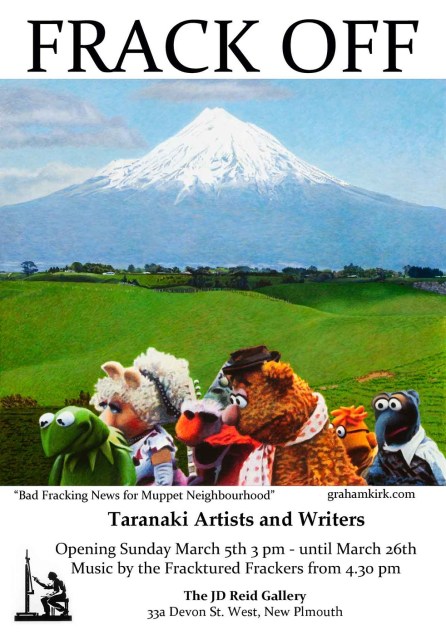
I haven’t posted about the petrochemical development all around us for some time. It is not that it has gone away. No sirree, not at all. It became a situation where I had to change my personal coping strategies. Being asked to contribute a piece of writing for the ‘Frack Off’ exhibition that opened yesterday was a poignant experience, focusing my thoughts on what has happened in the area I call home and the extent of the personal impact. Which is why I titled this piece:
It’s very personal
I live in a place more beautiful than I ever dreamed possible. It is also a place that is now in the evacuation zones for two separate well sites and not so far from another dozen sites on this side of the river. Fracking and petrochemical development is very personal for me. I live with it day and night. Every day and every night.
From 2012 to 2014, I worked with others campaigning for better management of rampant petrochemical development, fighting to save what remains of pre-industrial Tikorangi, the area where I live. It nearly broke me.
My adult daughter sent me an iPod so I could listen to music and shut out the environmental noise when outdoors, as I am most days. How ironic that one of my favourite tracks was the original version of ‘Ring of Fire’ at a time when we often had only one quadrant of the night sky that was not lit up by gas flares.
Oddly, it was a single word – solastalgia* – that enabled me to refocus my life and to learn how to live with the changes beyond our garden boundary. Naming a condition is a remarkably powerful tool and the discovery of solastalgia made me realise I was not over-reacting or going mad. I was in grief, desolated even.
I circled the wagons and looked inwards. Moving is not an option for us. The family roots go very deep here, back to 1870. Quite simply, this is our place to stand.
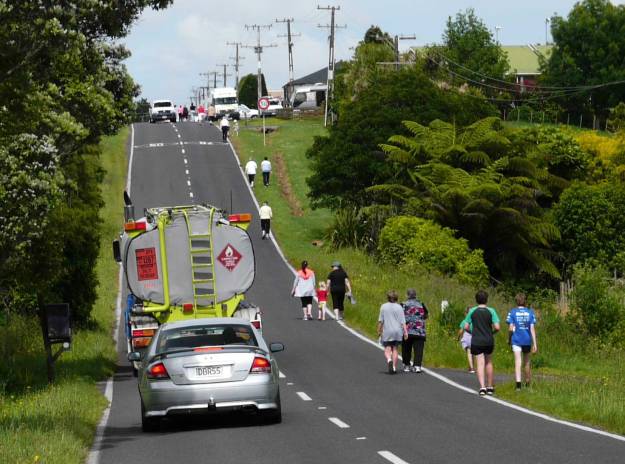
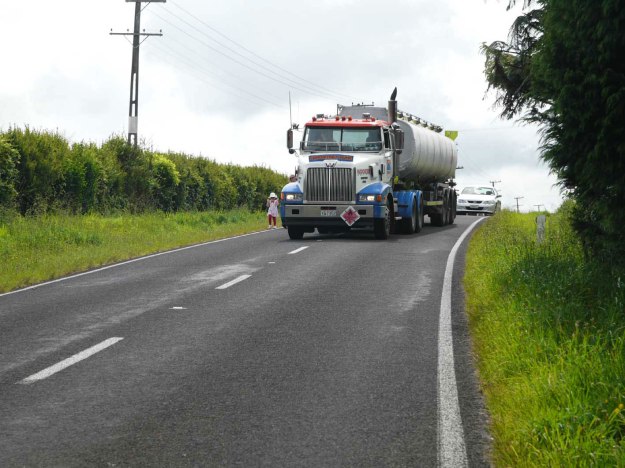
Petrochem is a sunset industry exploiting a finite resource. I hope I live long enough to see the day the companies exit Tikorangi. But if I am not alive, others will be resident in this place where I currently live. They will see the return of dark nights, unlit by the burning of gas flares and high intensity site lighting. They will listen to the return of silence – the absence of huge volumes of heavy transport, generators priming up to frack, the underlying roar of the gas flare, the sound of a drilling rig, the frequent helicopters and all the clamour that accompanies the fossil fuel industry.
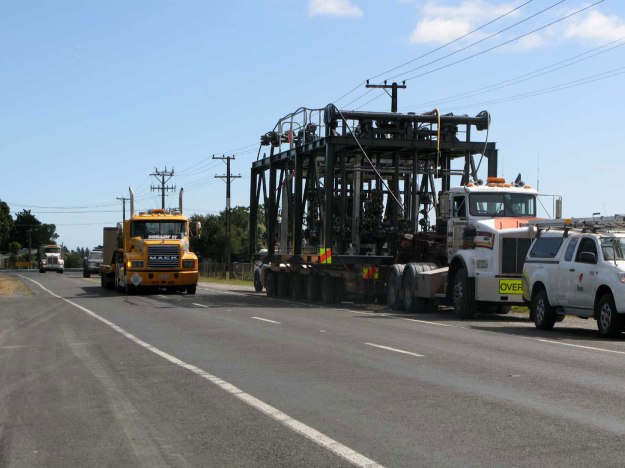
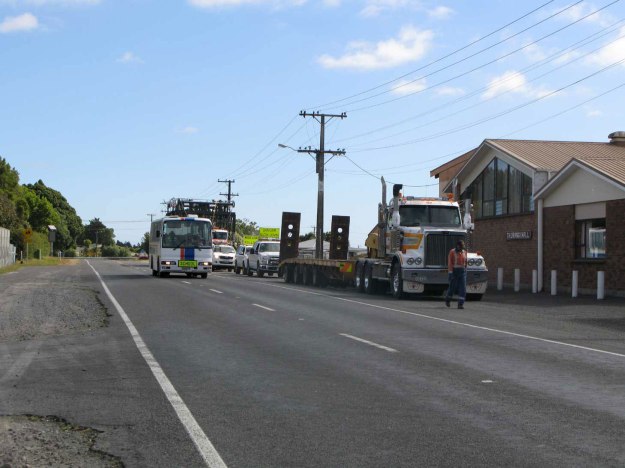
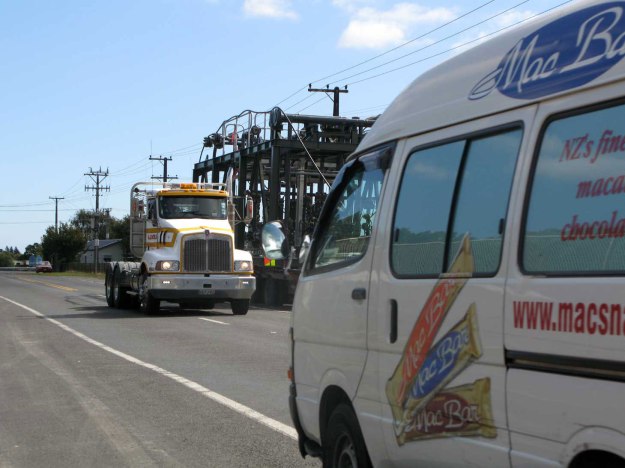
Beyond the boundaries of our property, Tikorangi has changed forever, despite our efforts from 2012. The raising and strengthening of the roads for heavy transport has removed any vestige of usable road verge. The many installations above ground may be removed – the well sites and the pumping stations with their hostile security fencing, maybe even the high-tension pylons and lines. But the network of pipelines below ground, crisscrossing almost every local road and at times running the length of the road beneath the seal, will presumably remain.
None of us can know the long term impact of frequent fracking and deep well reinjection. Will the contaminants find their way closer to the surface? We have to hope that the companies and regulators are correct when they claim it is safe but this is recent technology and the bottom line is that nobody knows.
In many ways my world has grown smaller. I used to look beyond those circled wagons to the wider community. I learned that in order to survive, I had to narrow my focus. At least this little area where I stand, ringed by trees, can endure.
Solastalgia “It is the ‘lived experience’ of negative environmental change. It is the homesickness you have when you are still at home. It is that feeling you have when your sense of place is under attack.” (Glenn Albrecht, philosopher).
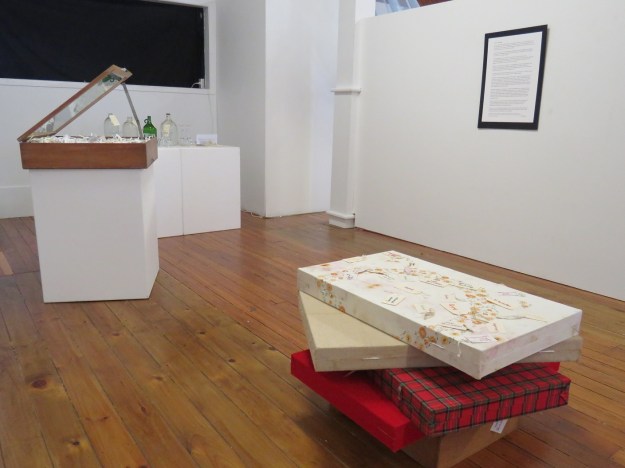
Our Tikorangi corner of the exhibition
I feel honoured to have been invited to contribute to this exhibition – awed even, to be in the company of such New Zealand literary luminaries as Elizabeth Smither and David Hill, let alone the visual artists. But our Tikorangi corner was haunting for me, for we are on the front line.
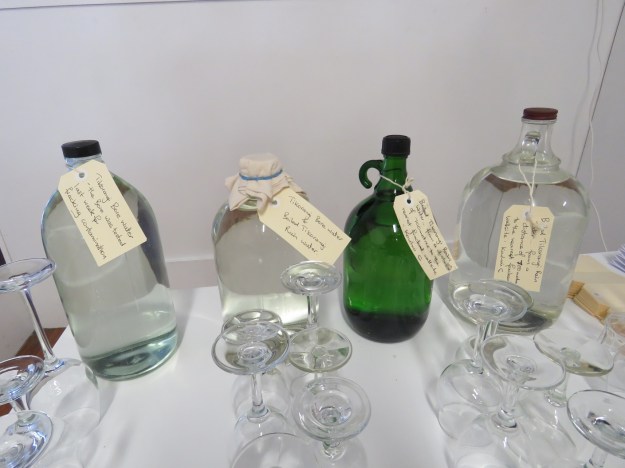
What can I say? That is our tap water to the left.
Fiona Clark is both a good friend and a neighbour. She is best known for her photography and has an exhibition opening later in April with American artist, Martha Rosler, at Raven Row in London. For ‘Frack Off’ she chose to go with an installation rather then photography and video.
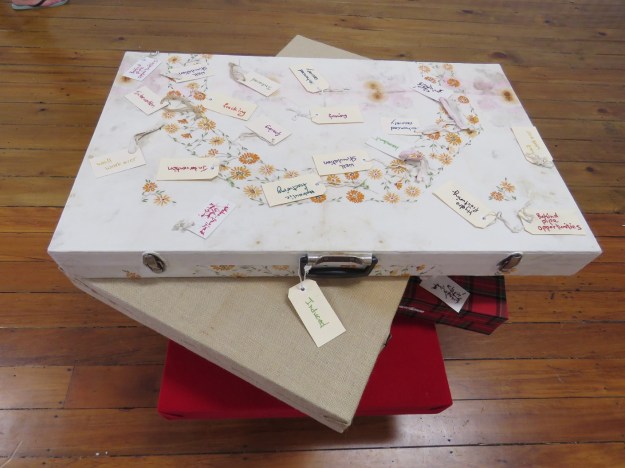
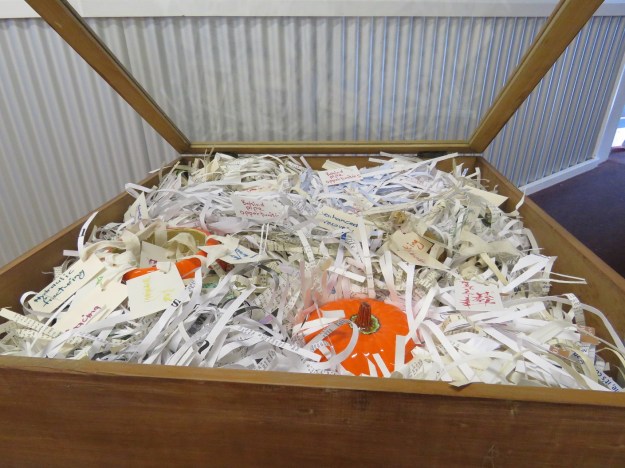
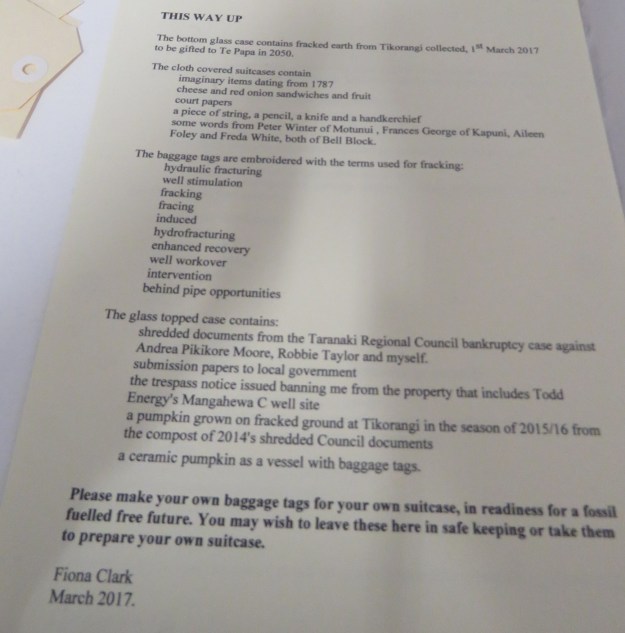
I add Fiona’s words, for those who wish to understand the significance of her display cases.

Oh the irony, the irony, to walk out of the Frack Off exhibition and there, all along the main street of New Plymouth are flags and banners welcoming the upcoming petroleum conference. 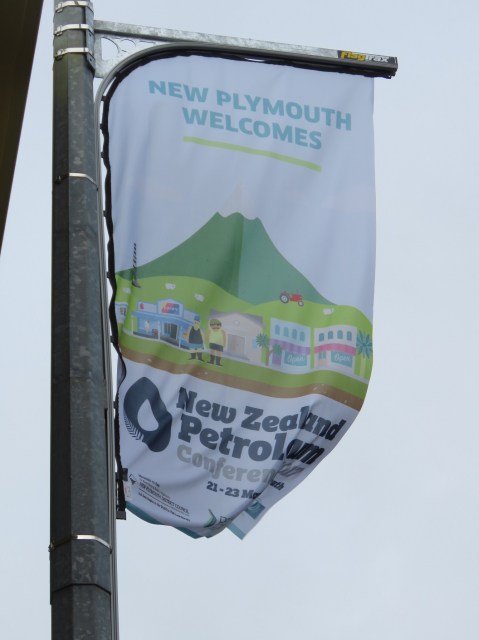
Not MY New Plymouth. That is all I can say.
‘Frack Off’ has been curated by Graham Kirk whose own work is the Muppet poster. The exhibition is open until March 26 at the J D Reid Gallery at 33a Devon Street West which is down the bottom of the dip where the Huatoki Stream is piped beneath the the city, near the intersection with Brougham Street.
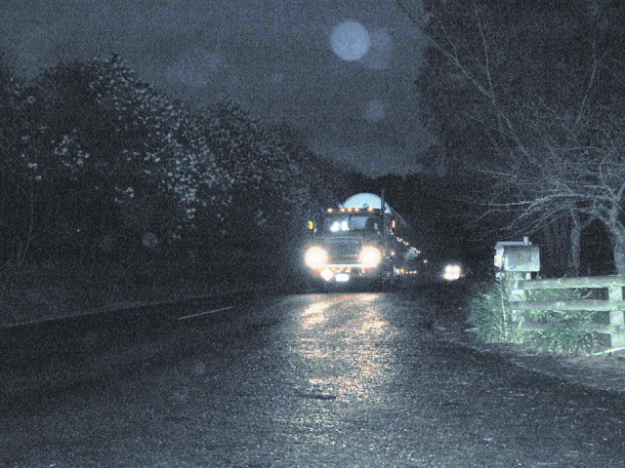
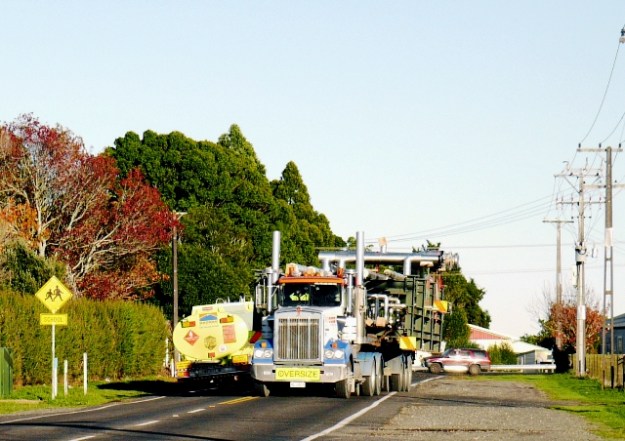
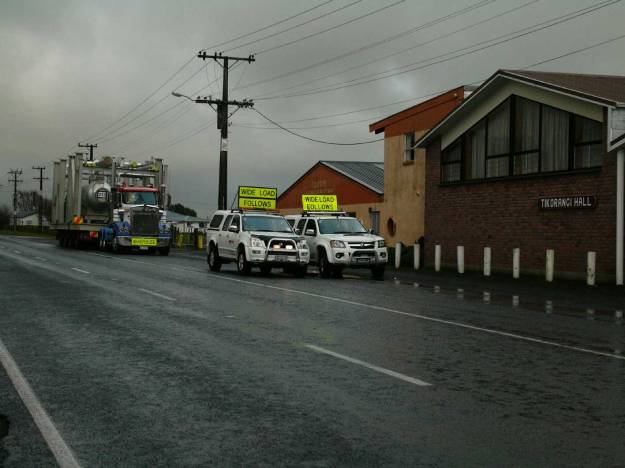
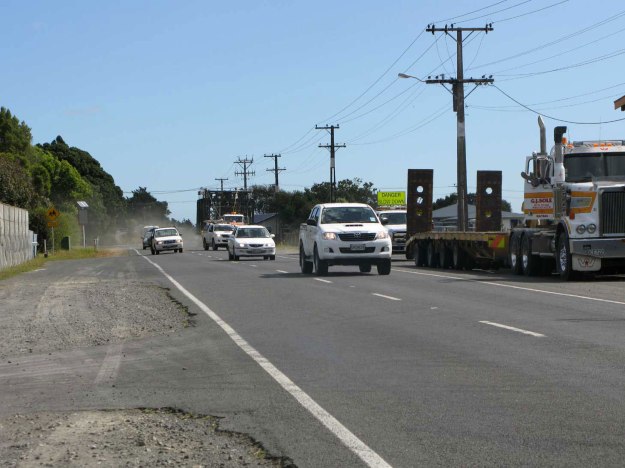
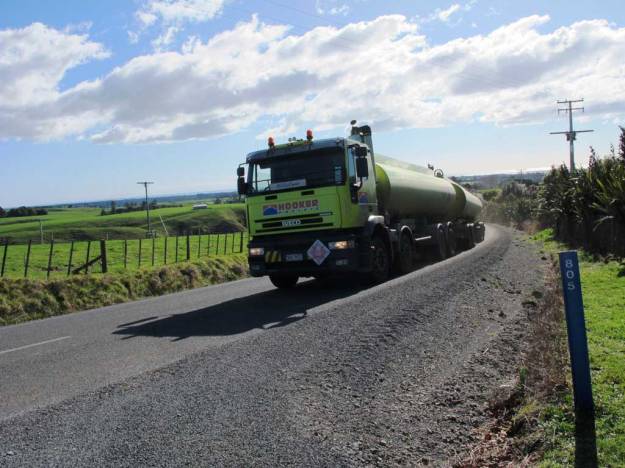 We protested modern road design with such step sides that nobody can ever pull to the side let alone walk, cycle or ride a horse alongside. We see this as a major loss of rural amenity.
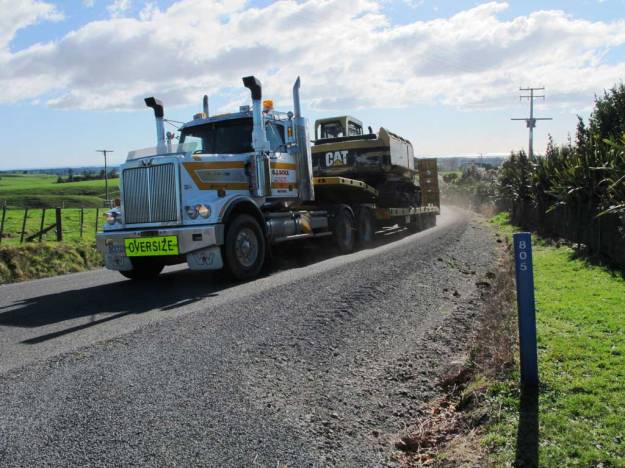 We tabled a concern that this type of hostile road design is incompatible with these roads being part of a designated cycle route. There is nowhere for bikes to go when challenged by frequent heavy transport.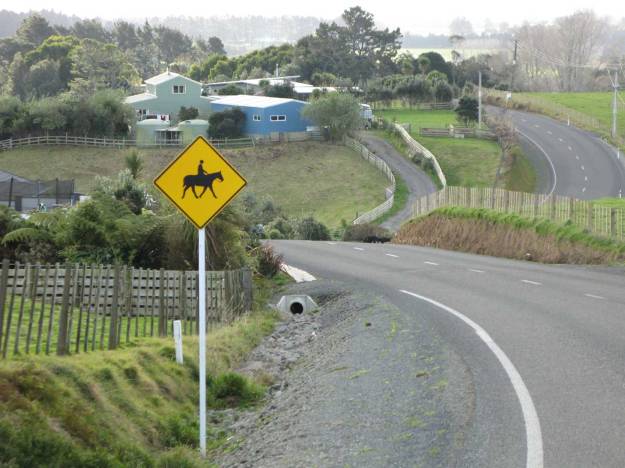
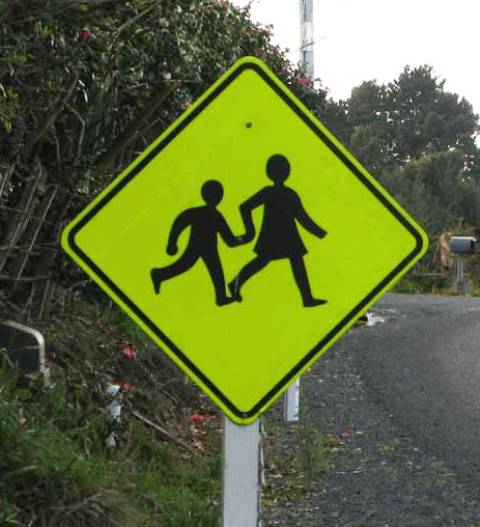 We asked that Council make every sign count. We have so many signs and road cones now that few people take notice. Children crossing signs where locals know no children have lived for decades, horse signs (above) where no horses can be ridden any longer and ever more company signs.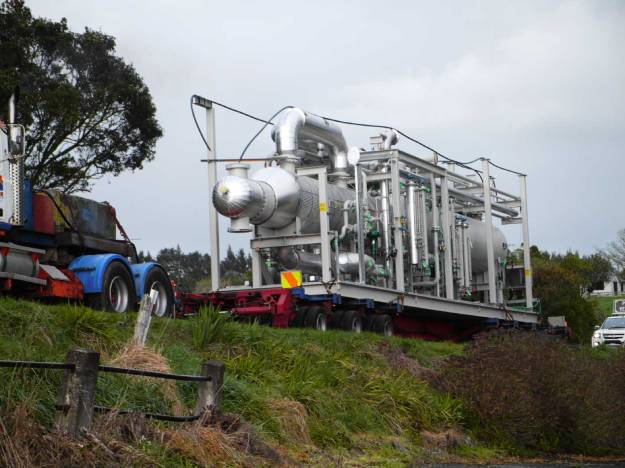
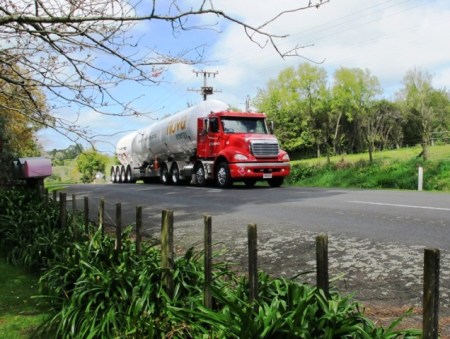 Oh there have been some jokes. Shame the newspaper photographer didn’t stick around to snap these men with a petrochemical tanker and trailer unit bearing down on them at speed from behind, more than one person said. Where are their banjos and rifles, another quipped. Goodness, even Jed Clampett and the Beverley Hillbillies have been mentioned. But what on earth made these men think it was all right to attempt to discredit me, then get into their vehicles to drive down and pose outside Mark’s and my place, resembling a Wild West posse? I can only assume they meant to look intimidating and confrontational when all they had to do was to pick up the phone and ask a few questions.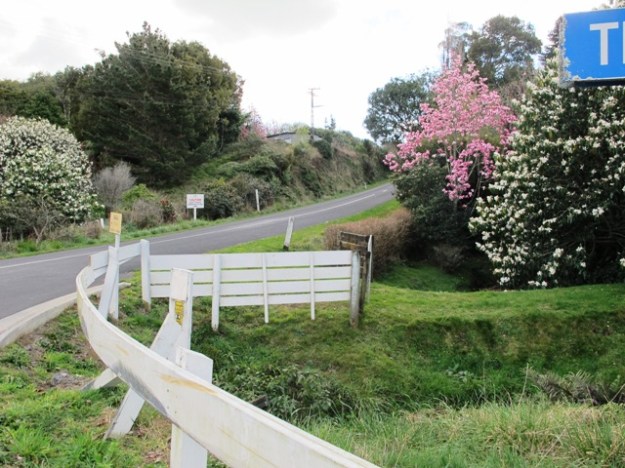
 This is Kowhai C site as seen from Mangahewa E site. These sites belong to two different companies drilling right on their boundary which happens to cut through Tikorangi.
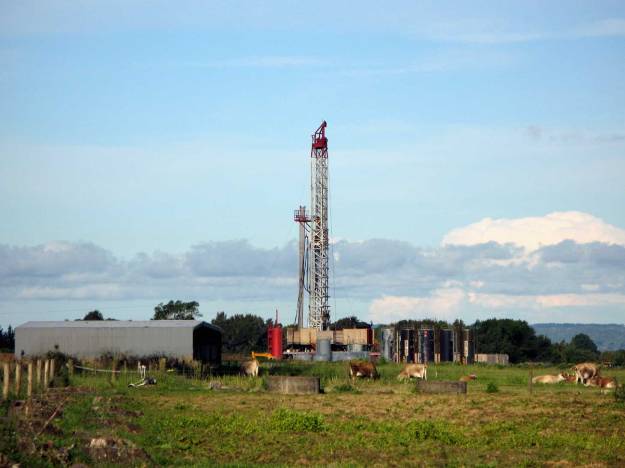 Here we have Kowhai C site – the one this community said it didn’t want but got anyway. This photo was taken 150 metres to the side of Kowhai B site in order to get a clear view. Both sites belong to the same company – Greymouth Petroleum. Kowhai B is consented for 8 wells. Only one has been drilled so far. Close by, so very close that one wonders why the company needed a second site, Kowhai C is consented for 4 wells.
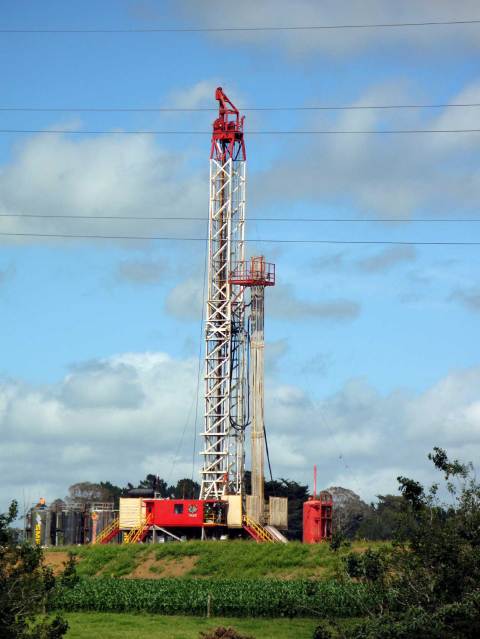 Kowhai C again, this time from Otaraoa Road. It is one of about 10 well sites Greymouth Petroleum has in Tikorangi. I know of 9 that have been consented – I am not sure of the current status of Urenui A (which is not in Urenui but is in Tikorangi).
 This photo taken about August last year – the rig has now gone but it was on Mangahewa C, as photographed from Kowhai C. It is like a quadrilateral of sites, already. These two belong to separate companies again.
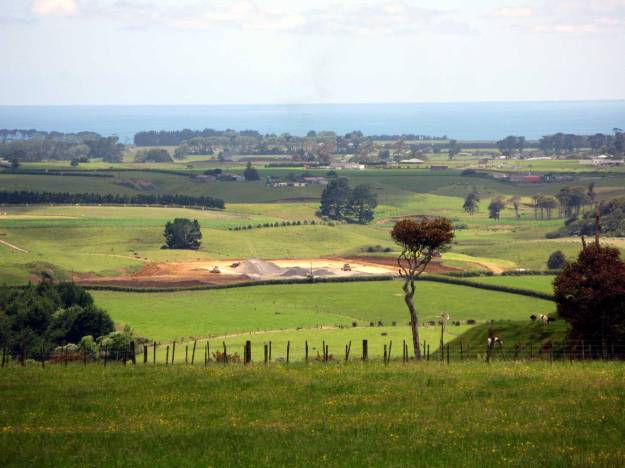 Mangahewa E site from Stockman Road (near Mangahewa C site). These two Mangahewa sites are Todd Energy’s but, to be fair, it should be pointed out that Mangahewa C site has 8 wells drilled on it so is at capacity on its current consent.
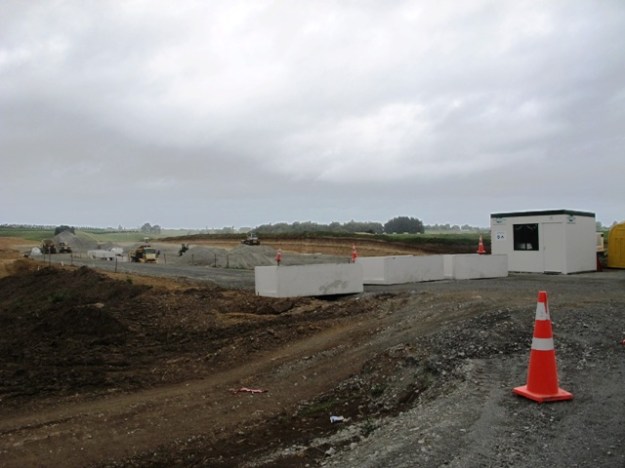 Work progresses on the new Mangahewa E site.
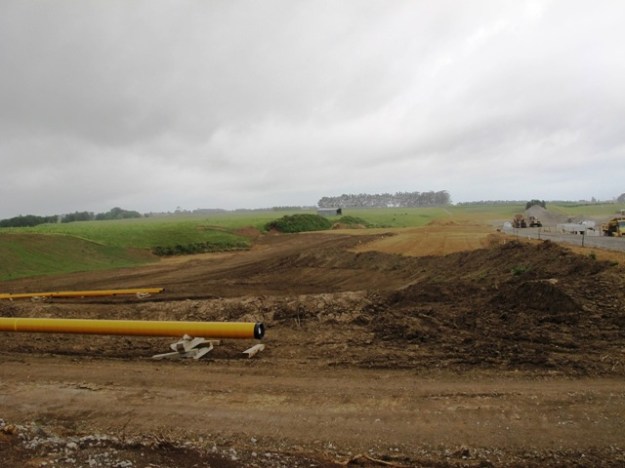 Mangahewa E site again. It is often stated that this petrochemical development (still called “exploration” but they are long past exploration in Tikorangi where it is decades since a dry well was drilled) is “temporary”. Does this look temporary? How can these developments be temporary when the majority of consents are open ended with no expiry date? Only the most recent three sites have a time limit on the consents – 15, 20 and 30 years. In whose books is this “temporary”?
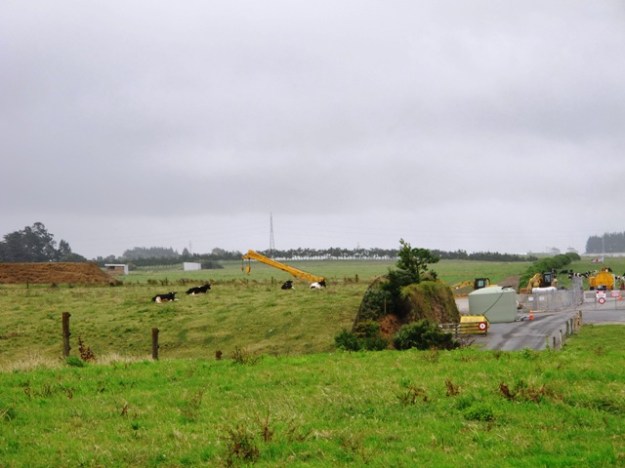 And work progresses on extensions at Turangi A site. These are the other company’s sites (Greymouth Petroleum).
 But wait, there are more. Turangi C site is, according to the company (Greymouth Petroleum) “about” 850 metres from Turangi A site. It can’t be any more than that from Turangi B site, in that case, because it is pretty much set back between the two. Neither Turangi A nor Turangi B have been drilled to capacity. So why does the company need a third site and could they not have deviation drilled from one of the other two sites? Who knows? Only the company and neither New Plymouth District Council nor Taranaki Regional Council seem inclined to ask them why. It looks mighty like speculative consenting to some of us – described by the company rep to me as “future proofing”. Right-o then. That is future proofing the company, not Tikorangi.
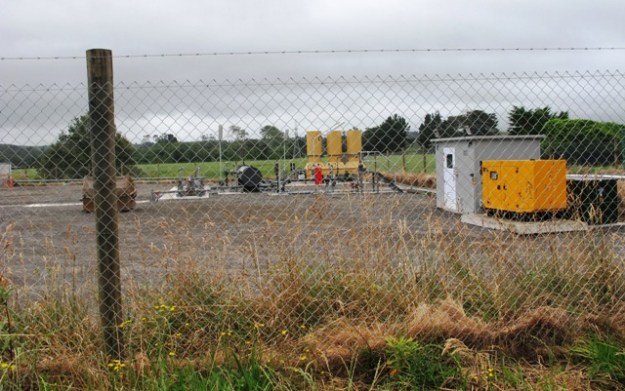 And Kowhai B site with one hole drilled, as viewed from the neighbour’s property. It doesn’t look “temporary” and it was anything but silent on the day I took this photo. It has a significant impact on the neighbour’s adjoining paddock and could well affect his future property options but he was never deemed an “affected party”. I think, to the right of centre at the front of the photo, that is an example of the screen planting done by the company. It’ll be quite a few years before anything is screened by that sort of planting.
 Tikorangi The Jury Garden