While I think of early spring and autumn as Peak Bulb Blooming Time here, January must take the crown of Big Show-off Bulb Time. With big bulbs as well as a big display, notably the lilies and scadoxus.
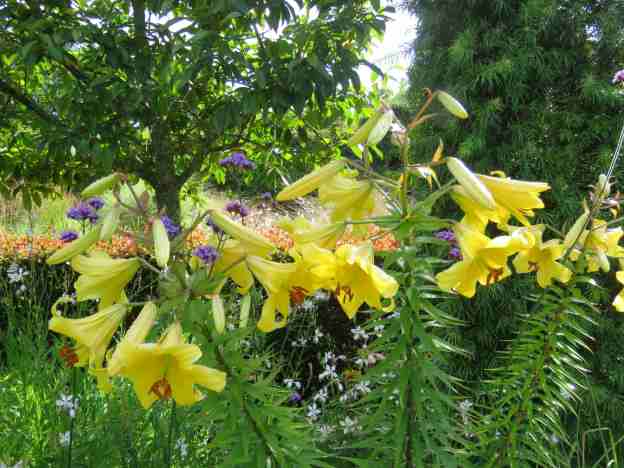
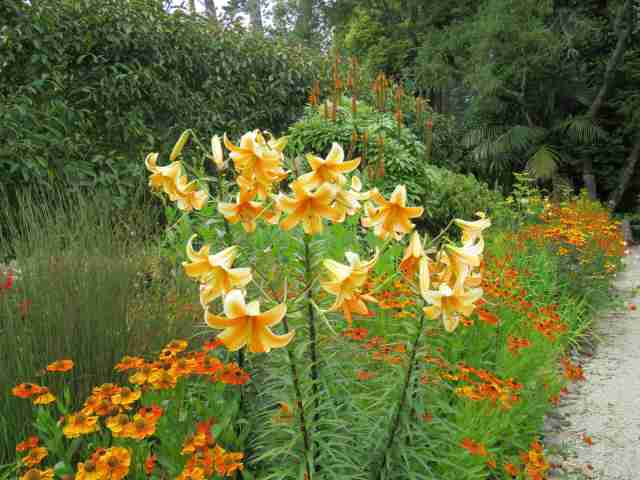
Mark’s Aurelian hybrids in yellow and apricot orange.
Beat the drum to announce lily time. The month starts with the yellow and apricot-orange Aurelians, for which I give full credit to Mark. We have never made them available on the market so any Aurelians you buy won’t look quite look ours and probably will have fewer flowers to the stem. They are truly lovely in their 2 to 3 week season. Nicely scented too.
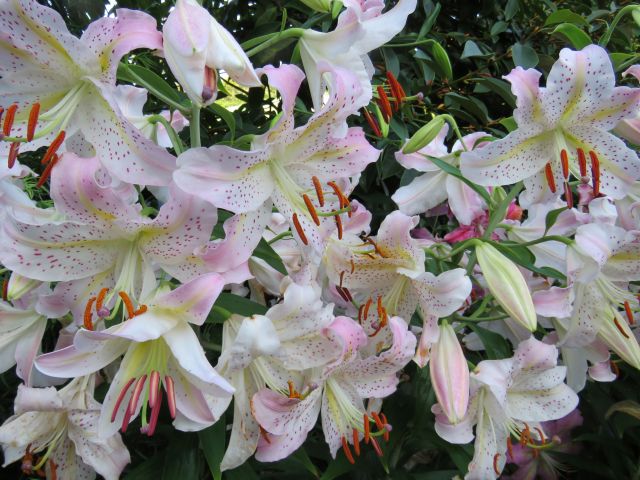
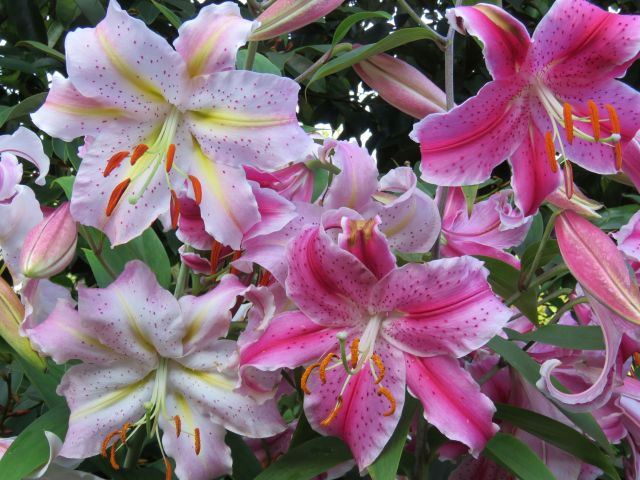
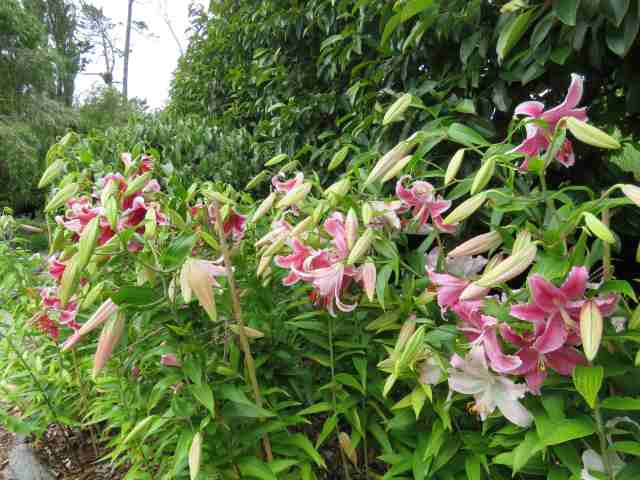
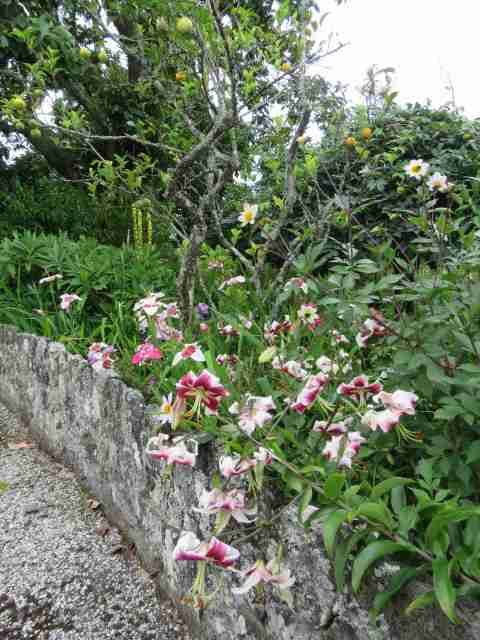
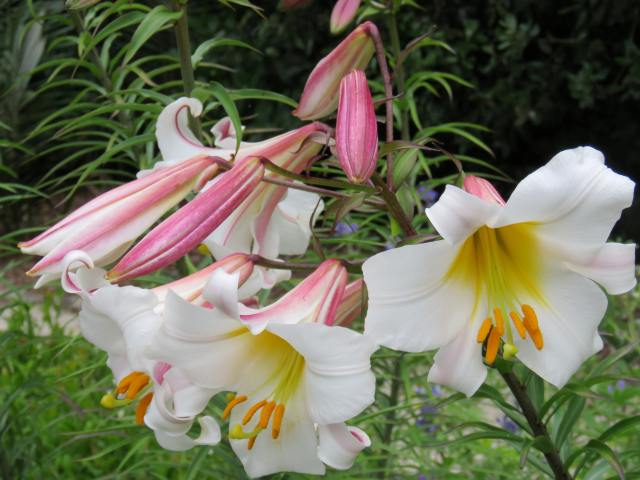
Auratum hybrids – all outward facing
As the Aurelians pass their peak, the auratums hit their stride and they are an astounding sight in full sun and in the open woodland areas of the Avenue Gardens. We have a few, as I say in a major understatement. Some date back to Felix who dabbled with lilies in the 1960s and 70s, and even further to Les Jury (his older brother) selecting for deep red shades amongst others, but particularly for outward-facing flowers. Upward-facing lilies are probably better for florists but they also gather dust and leaves and suffer more from pollen staining so they are not as good as garden plants. We select for plants that perform as garden plants.
A 30 metre border of auratum lilies plus a whole lot more in other areas. Did I mention we have a few?
Back in our mailorder days, we named and sold a few of Felix’s selections but the more recent hybrids from Mark have never been put into commercial production. Pure and simple, he raised many plant from controlled crosses for our garden (by which is meant he chose the parents and manually pollinated rather than harvesting wild pollinated seed). He was after outward-facing blooms, big flowers, strong stems and a range of colours from white through pinks to what passes for red in the auratum family. He succeeded in this endeavour and every year, the auratums are a sensory joy with both looks and heady fragrance.
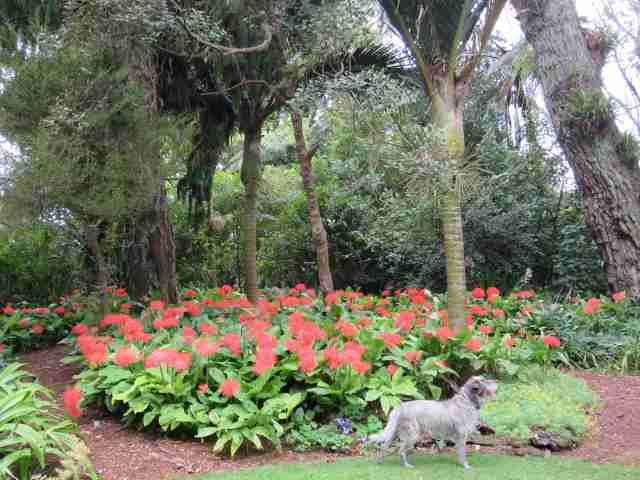
We have a few Scadoxus multiflorus ssp katharinae too.
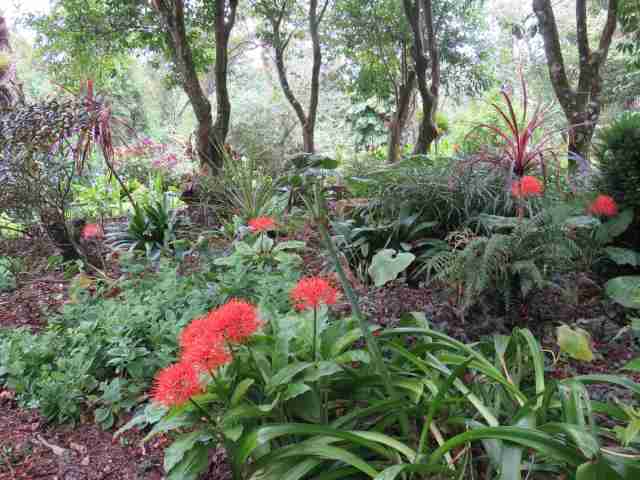
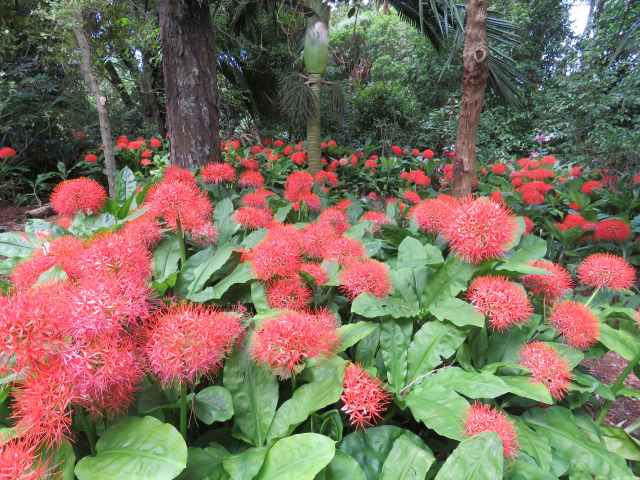
The Scadoxus multiflorus ssp katharinae continue to thrill and delight us with their sheer scale here. I am not sure I have much else to say that I have not said before. This particular patch is one of our unique features. It is more usual for these bulbs to be nurtured as single specimens in a pot. While they have naturalised here, their spread is not on such a scale as to be described ‘invasive’; they are easy to control but we are fine with them gently popping up in nearby areas. As a general rule, we favour complex scenes of mixed plants rather than mass plantings, so much the better if they are choice plants finding their own happy place.
Gently spreading in the woodland
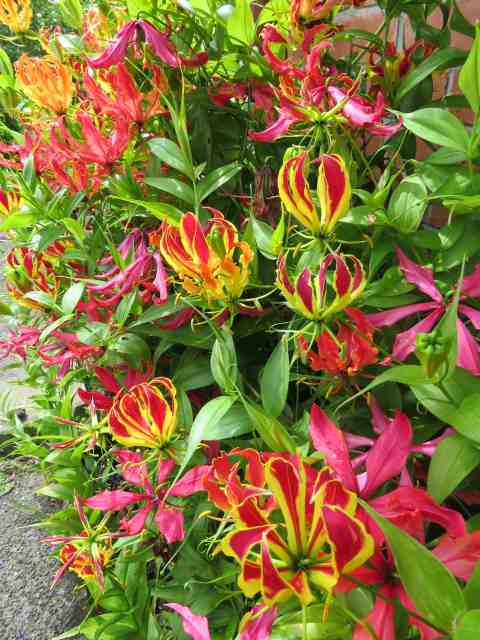
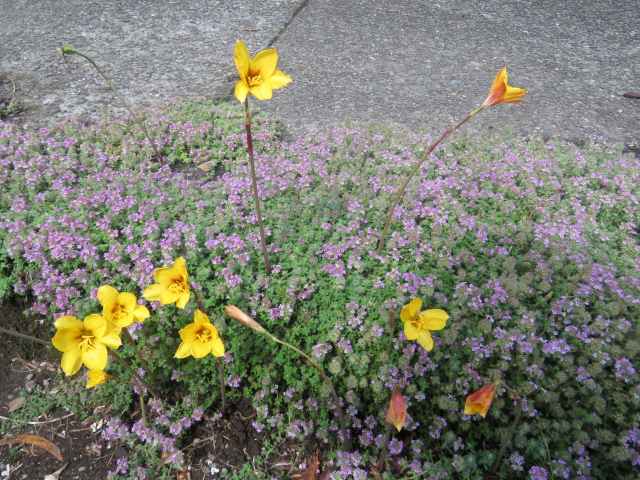
Gloriosa superba in a dry border that never gets watered and the only moisture is runoff from the concrete beside
It is also gloriosa time. While they are commonly referred to as climbing lilies, the lily connection is but distant and the colchicums are much closer relatives. Gloriosas are highly prized by many until they multiply to the point where they become a bit of a weed. We are at that point. They are a handy plant to have in super dry conditions like the narrow, hot, dry border at the front of our house where little else thrives. I am not convinced about them in other areas and am trying to restrict their spread. Also, I feel they ramble as much as climb. I wouldn’t mind if they would climb neighbours to hold themselves up but they are more inclined to sprawl and need staked areas to keep them more upright.
Crinum moorei var rates as a choice bulb for its foliage alone, even before the white flowers appear
It may be C. moorei (non variegated) or it may be one of the other species. Nowhere near as choice but pretty enough in casual woodland
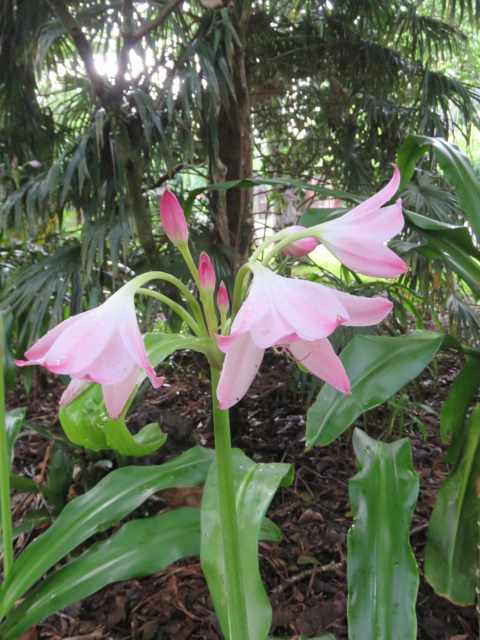
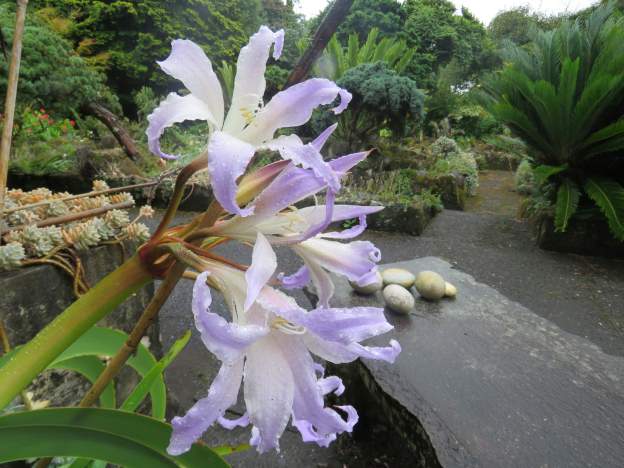
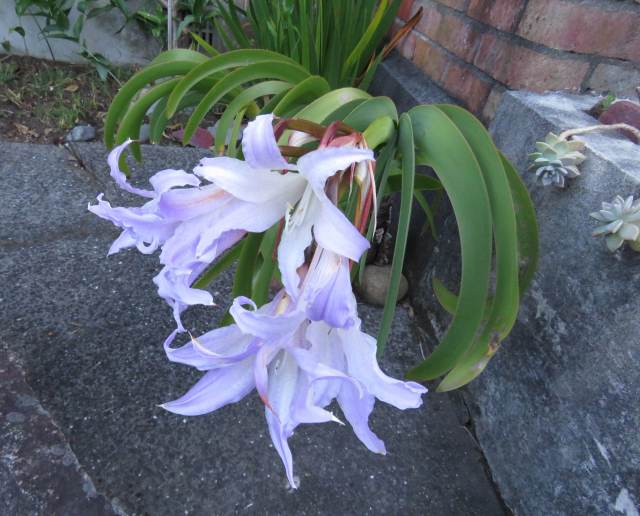
The stars of our crinums are the many bulbs we have of Crinum moorei variegated but they are only just starting to put up their pure white flower spikes this week so they can wait til February’s instalment. We have other crinums flowering soft pink. I have never unravelled the different species; Mark tells me we have two different species, one of which is the common form of moorei (non-variegated) and one of which is a different species that he has forgotten the name of and I never knew so its identity may remain forever a mystery. These all-green foliaged plants are rangy in foliage, utilitarian but useful bulbs for shady areas and pretty in bloom.
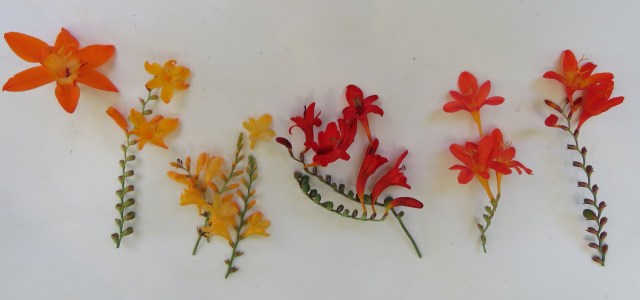
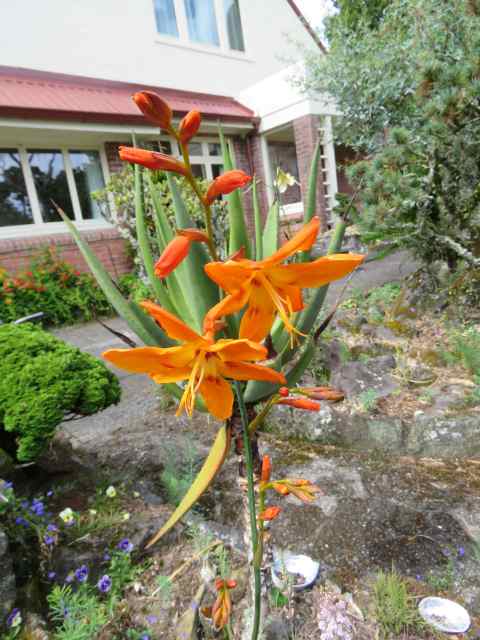
Crocosmias – pretty but most are on the rampant side
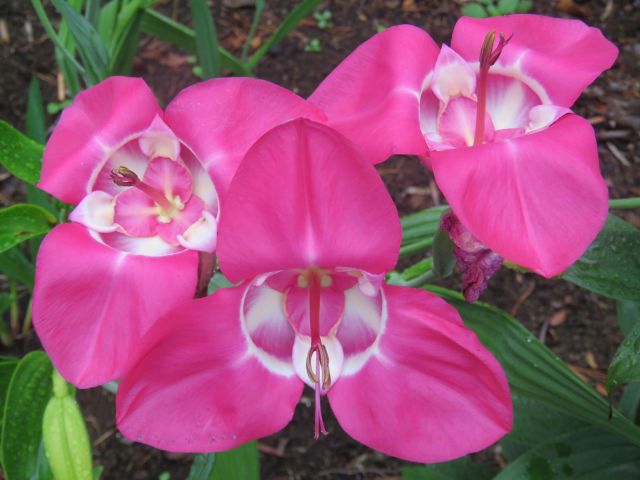
Tigridias – we have them with and without spots in white, red, yellow and a variety of pink hues
In the showy/utilitarian/potentially weedy category, we are flowering tigridias (jockey caps), crocosmia and zephyranthes. Tigridias hail from central America, Tigridia pavonia which is the common garden species is from that area around Mexico and Columbia. Crocosmia are a grasslands bulb from southern Africa.
Zephyranthes or habranthus? I was going to say at least we can call them rain lilies but they are not even lilies because they belong to the amaryllis family instead.
The zephyranthes are from the Americas, oft referred to as ‘rain lilies’ because flowering is triggered by rain. Zephyranthes or habranthus, you may ask. As I did. I have no idea now. We have always called them zephyranthes but ten years ago when I wrote this piece they appear to have been reclassified as habranthus. Now, a decade on, it appears that habranthus have been swept up – along with sprekelias – and moved back to zephyranthes. This is all based on botanical analysis and DNA and who am I to challenge that? I can continue with zephyranthes which is easier for this old brain to remember because we used to have a family dog named Zephyr. These are plants for the casual, sunny areas of the garden – more wildflower than tidy bedding plant.
A casual planting of a smaller flowered auratum and tigridias beside the drive in the Iolanthe Garden
As if the disappointing summer is not bad enough, I see we already have the first flowers opening on Cyclamen hederafolium and even the autumn snowdrop. Sigh.
Special thoughts to those in the north and on the east coast who have been hit hard by extreme weather in the past week. We see you, we hear you, we feel for you even as we know that is about as useful as Trump’s ‘thoughts and prayers’ or, in the rural vernacular, as useful as tits on a bull. May the weather settle soon that you can start the process of recovery.
Crocosmia – possible ‘Star of the East’. Unlike the others we grow, this has exceptionally large flowers, is VERY slow to increase and never in any danger of becoming a weed or wildflower. This is why it is allowed in the rockery.
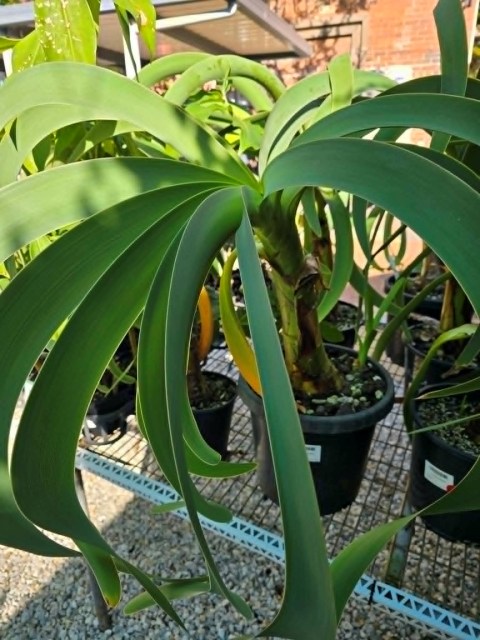
It seems that our highly prized Worsleya procera is more highly valued than we thought. I mention it most summers because it is lovely, really lovely, in bloom, usually late January to early February for us. It is unusual and even more so to manage it as a garden plant, which we do. In cultivation, it is commonly kept to a container and grown in controlled conditions. That is unless you happen to live on a granite cliff beside a waterfall in Brazil, that being its natural habitat.
How beautiful is the worsleya in flower?
I knew it wasn’t common and that is because it is very slow to produce offsets (new baby bulbs), that while it can be grown from seed, it is not usually self-fertile and you need two different clones to get viable seed. Then it is likely to take 15 years or more from seed to get a bloom. So it is not what is known in the trade as a ‘good commercial plant’. I doubt that it is available for sale in this country.
I discovered recently that it is highly prized in Australia. It popped up on a Facebook page for aficionados of unusual bulbs in that country. Canberra daughter is developing an interest in unusual bulbs and she tells me the worsleya is a hot fashion item. She stunned me with a photo of a single bulb, close to flowering size, that she photographed at Sydney Botanic Gardens.
It is a good plant but the price is next level
$980. Australian dollars. For a single bulb. That is $1141.74 New Zealand dollars on the day I write this. You could have knocked me over with a feather, even allowing for the bulb being blooming size. Small bulbs are available in Australia at $A90 for a one year old and $A180 for a three year old. They may flower in a decade’s time if you take care of them.
That is an astonishing price, to me at least.
Tulip mania is the term coined for the time from 1634 to 1637 when a peculiar event happened in the Netherlands and a single tulip bulb of a desired clone could be valued as highly as ‘four fat oxen’.
Similarly, but a great deal more recently, a single bulb of a special snowdrop (Galanthus) sold in the UK in 2022 for £1,850 ($4317.09 NZ at today’s exchange rate).
The worsleya has yet to reach these heady levels but we do not have a snowdrop with a bright yellow ovary in our garden. Nor do we have a seventeenth century tulip called ‘Viceroy’. But we do have about a dozen worsleyas, of which maybe four are flowering size. Maybe the rest will bloom before we shuffle off the mortal coils in a decade or two.
I am not sure that Mark ever paid above $15 for a single bulb of any plant and he probably had to have a cup of tea and a wee lie-down to recover from that extravagance. With inflation, we might pay $30 or $35 if it was something we really wanted and we were reasonably confident it would grow and flower here, in our conditions.
We lead a life that is rich in Scadoxus katherinae if not so rich in dollars. But I think we could flood the market if we dug them all up to sell.
I was shocked enough to be told that somebody our Zach witnessed was paying around $40 per bulb for single potted specimens of Scadoxus multiforus ssp katherinae which were not yet flowering size. We have a very large amount of it here and it is easy to grow, to increase and to naturalise. The same can not be said of the Worsleya procera so maybe its sale price matches its rarity.
Or Merry Christmas from New Zealand. Although, as one who favours ‘seasons greetings’ for those of us who are not affiliated to any church, maybe it is time I worked on committing “ngā mihi o te wā” to memory.
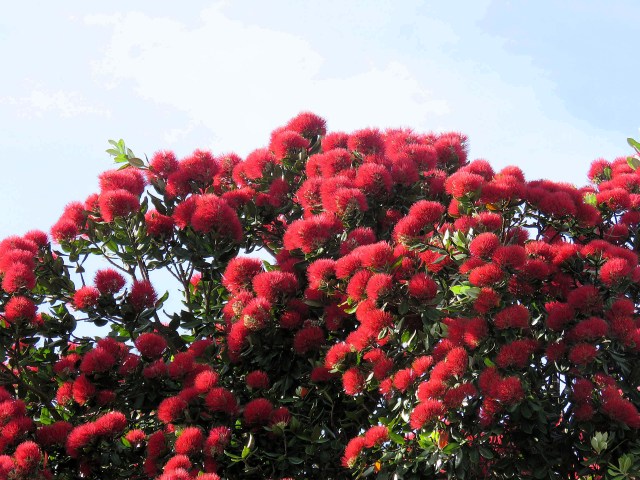
The flowers are what is often referred to as the New Zealand Christmas tree (on account of it blooming around Christmas), known here as the pōhutukawa (botanically Metrosideros excelsa).
Given its natural distribution is roughly a west-east line from where we are in North Taranaki across to Gisborne, I sometimes wonder how people in more southerly climes feel about it being the designated national Christmas tree. It is a remarkable tree with its capacity to grow in perilous positions on windswept coastlines. Being an archipelago of fairly small islands set midst vast oceans, we have pretty wild coastal areas. Our nearest small town of Waitara is right on the coast and there are two trees that dominate that urban setting, two trees that will not just survive, but thrive in that exposed situation. One is the pōhutukawa, the other is the Norfolk Island pine (Araucaria heterophylla).
I set out to find a good specimen of the pōhutukawa in Waitara to photograph. I don’t want to burst sentimental bubbles, but this is a variable species. Not all pōhutukawa are equal when it comes to blooming. They all seem to grow well enough but quite a few flower more brown than red, some have but a sparse display of blooms and some don’t seem to flower at all. Also, maybe I had better whisper that its season in bloom is but short. I had to pass a lot of trees on the waterfront and on streets to find this one that stood out for its floral display.
In its urban context in the town of Waitara. A street planted with pōhutukawa, one of many such streets, where this specimen stood out as blooming particularly well.
I am sure I have noted before that many, if not most, pōhutukawa that are sold are seedlings. They will be variable and looking at the make up of the ones in this area, the majority will vary to the less showy side. If you are going to plant a single specimen, buy a named form because it should have been selected for its good flowering and propagated from cutting so will stay true. If you are going to plant many, find a good seed source because the percentage of better forms in the seedlings will be higher.
Go well. Stay safe. And may 2026 bring at least some of what you hope for.
Sprawling might be the best description of Albuca nelsonii in flower
We have always grown the large Albuca nelsonii and its green and white bells have often featured in any Christmas floral staging I do because it cuts well. I included it when I planted the Court Garden and I worried about its somewhat unwieldy habits. Staking those tall, curvy flower spikes was… challenging, shall I say? All that changed when I looked up the albucas in an attempt to get a species name on its half-sized cousin with very similar flowers. I found a reliable site that described the characteristic of the plant that the flower spikes naturally become pendulous to prostrate. Why fight nature? I now allow them do as they wish.
Apparently useful for warding off sorcerers when mixed with one of the red hot poker species
Randomly, I also found the information that an “infusion made from Albuca nelsonii bulbs and tubers of Kniphofia species, known as icacane, is taken as an emetic as protection against sorcery.” Just in case you need that handy hint.
Albuca batteniana, I believe. If you look carefully, you will see a few tufts of orange that appear as the flowers open but disappears soon after.
Often mistaken for A. nelsonii is its half-sized cousin. As far as I can make out, this is Albuca batteniana. The little orange tuft – actually the calyx that holds the petals – that appears at the top of the flower spike when it first starts opening is a distinctive characteristic. The flowers, bulbs and foliage are very similar to A. nelsonii and it is a better-behaved garden specimen in that somewhat suburban, tidy manner. Its flower spikes do not lie down on the job; they stay obediently erect. It is a good garden plant which I have used in the twin borders but it doesn’t make me smile as the more exbuberant and wayward big A. nelsonii does.
Dainty but prolific Cyanella capensis
These days, the abundant blue mist that shrouds the rockery is not the bothersome geissorhiza, about which I have written often. It has taken years for me to encourage the dainty Cyanella capensis with its tiny blue flowers across a long blooming season. Only now am I thinking I may be getting too much of it. At least its bulbs are large and easy to remove. I just have to be a bit more vigilant on deadheading it because it is spreading by seed, not bulb.
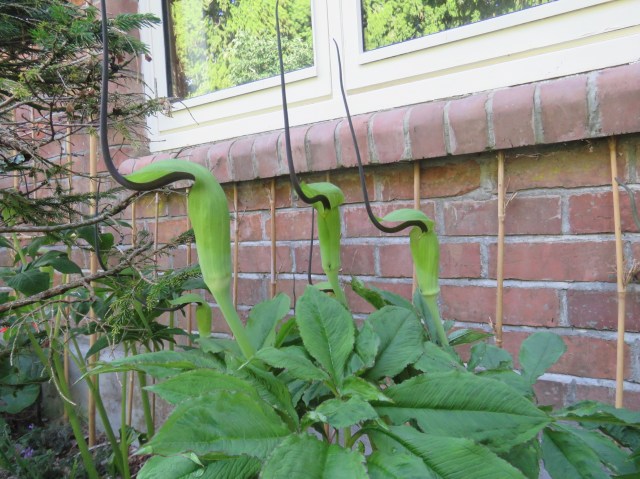
Arisaema tortuosum holds its head above the foliage, unlike many of the arisaemas. It also spreads too enthusiastically if the seed heads are not removed.
I have missed the arisaemas in previous months’ bulb articles. We have a reasonable range of arisaemas, some of which are much more choice than others. But it is really only the easy and common A. tortuosum that makes me think of them as the meerkats of the plant world. I deadhead them thoroughly and weed out strays because I do not want the alert meerkats of plant world all over the place but in their allotted space, they are an annual delight. And quite bizarre.
There is not much subtlety in Gladiolus daleni
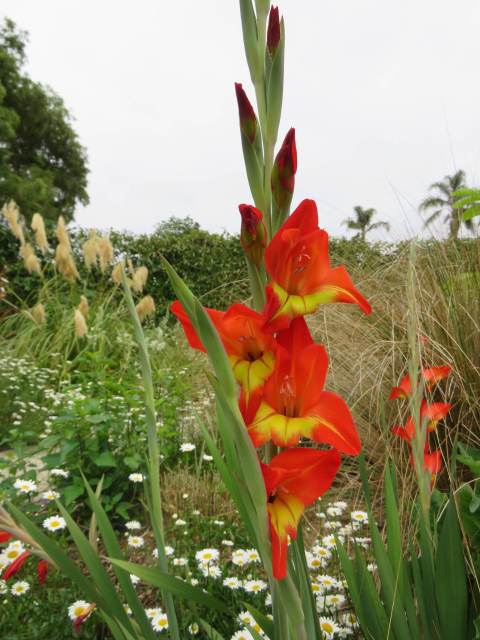
Gladiolus – there are a few that I appreciate, mostly species. And a few that I tolerate. The overbred, overblown hybrids of Dame Edna fame have never appealed but I accommodate the ones that date back to Mark’s mum. As she died back in 1986, I feel a begrudging respect for those that have survived down the years and they seem to fit in okay to the exuberant and largely uncurated floral abundance of the Iolanthe garden. Gladiolus dalenihas been in flower for a few weeks now but the star this week is the gorgeous red Gladiolus papilio X ‘Ruby’. One of the problems with gladiolus, though, is that they open their flowers in succession so no matter how attractive the freshly unfurled buds are, they share their stem with ones that have withered, browned and died. It seems a design flaw to me.
A legacy from Mark’s mother
The four gladioli on the left are all survivors from Mimosa Jury, top right is the amazing burgundy of papilio x ‘Ruby’ and beside it the usual species form of Gladiolus papilio. Lower right is daleni which is clearly a breeder parent of the one on its left which is larger and more coral coloured with a less obvious yellow flare.
The topic of gladiolus reminds me of this passage I wrote in a book review some years ago. I am still quite proud of it.
By the way, Penguin (Publishers) , it is time you dispensed with the auto spellchecker. The author of this book winning prizes for exhibiting her Gladys rivals a previous author counselling readers to throw out their Algarve. The author may have been using the colloquial term of gladdies, but even that is inappropriate for the text on page 164 and 165 where poor Gladys has her name taken in vain repeatedly. Gladiolus stands for one, gladioli for more than one. Gladdie is the vernacular, not the common name. Gladys is somebody’s grandmother.
What we call a Christmas lily here is Lilium regale
The first of the Christmas lilies is in bloom and the buds are fattening on the golden Aurelian lilies. But I think we will leave the lilies for January when the auratums star.
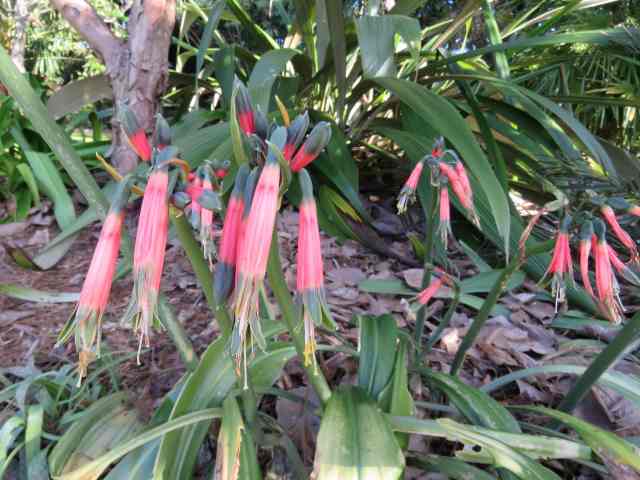
There are of course, other December bulbs in flower. That is a Phaedranassa cinerea above (great name!). From Ecuador, no less. I can’t think we grow many plants from Ecuador. And what we still call Urecolina peruviana (from Peru, presumably) but may be more accurately called Stenomesson miniatum blooms on. One day I might sort out which bulbs we have are South American as opposed to the majority that are from South Africa.
Stay safe and our thoughts go to Australians in this week. Mass shootings are so rare in this part of the world that it shakes our nations to the core when they happen.
Written for and first published in the International Magnolia Society journal. In the time since writing the text and publication, we are now able to release details of the three new deciduous magnolia hybrids being released internationally.
The Jury magnolia reputation rests on just twelve deciduous magnolias so far. Soon there will be fifteen and it may end up at seventeen in total. Despite originating on a farm in far-flung New Zealand, some of those plants have had a significant impact in the international magnolia world.
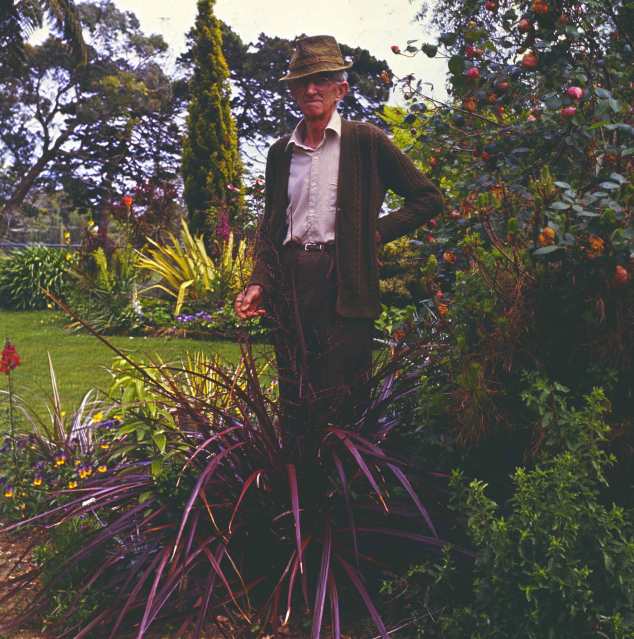
Felix in his garden, 1985. Photo credit: Fiona Clark
Felix Jury was a farmer who decided he would rather garden. He handed over the family farm to his second son as soon as he could and devoted his time and energy to building a large garden. He started by buying plants, importing new material from around the world. It was the failure of many of these to thrive in our warm temperate conditions that started him on the hybridising path. He was a self-taught amateur; like many of his contemporaries of the day, he became proficient at raising seed, striking cuttings, budding and grafting across a wide range of genus but it was always on a small scale, hobby basis. For an amateur, some of his plants have stood the test of time across the world. Phormium ‘Yellow Wave’ is still being produced internationally in surprisingly large numbers and Camellias ‘Dreamboat’ and ‘Waterlily’ have remained household names in the camellia world. He never received a cent in payment for any of these plants. Over time, it is his magnolias that have firmly cemented his name in international gardening.
Mark Jury was Felix’s youngest son. By the time Mark and I returned to the family property in 1980 with Mark planning to set up a plant nursery, his father had scaled down his adventures with plants and quietly retired to the garden. It was a privilege for both father and son to have seventeen years working closely together in remarkable harmony. Felix was able to transfer all his knowledge and experience to Mark who was keen to continue the garden development and to take the plant breeding to the next level. Unlike his father, Mark needed to generate an income. Also self-taught, Mark started the nursery, literally building up from one wheelbarrow to a successful boutique business doing mail-order, wholesale and on-site retail.
Felix didn’t raise large numbers of magnolias from his controlled crosses. They would probably number no more than fifty and over a few years only in the 1960s. Of these, eight ended up being named and released commercially. Technically, there were nine but we will return to the irritating matter of the ninth later. He would have named more but Mark vetoed that. From an early stage, Mark took the view that fewer and more stringent selections were better than more when it comes to a genus with the potential to be long-term trees in the landscape.
Magnolia ‘Atlas’
Magnolia ‘Iolanthe’
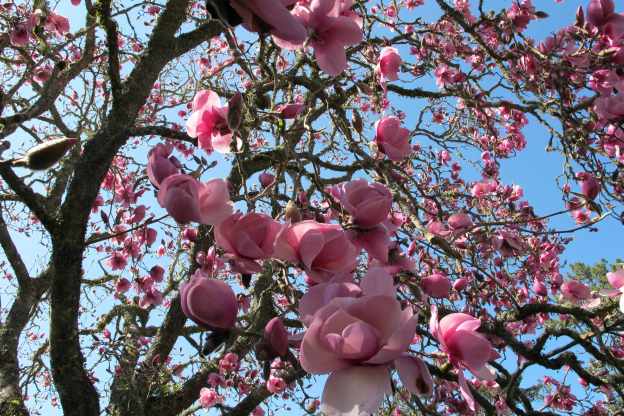
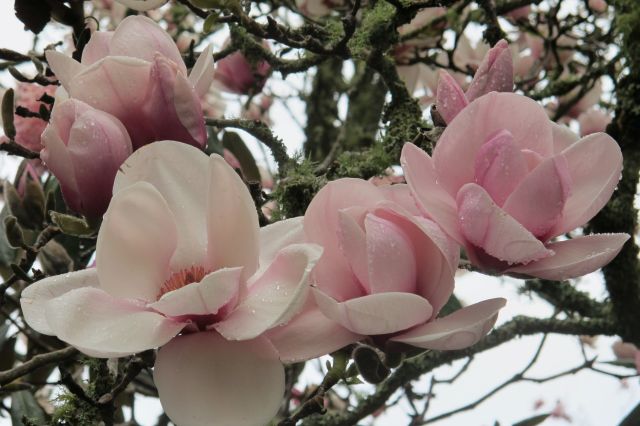
Of those eight, Mark has felt that probably only six should have been named. He singles out sister seedlings ‘Milky Way’ and ‘Athene’ as two that could have been narrowed down to one. For a long time, he said the same thing of ‘Iolanthe’ and ‘Atlas’ but has had to change his tune. While we regard ‘Iolanthe’ as a flagship magnolia, arguably one of the best two Felix bred in New Zealand conditions, it has never performed as well overseas and is certainly not rated as highly elsewhere. ‘Atlas’ has a larger bloom and is a prettier pink but its flowering season is short – by our standards – and we don’t often see it in its full glory because the petals are too soft and get badly weather-marked. But ‘Atlas’ appears to be hardier in overseas climates and a better performer elsewhere than it is here.
Magnolia ‘Milky Way’
and ‘Athene’. Even we have trouble telling them apart at times, particularly in photo close-ups. We can usually tell by looking at the tree and time of flowering or side by side comparisons, but we have to think about it every time.
In those days, the range of magnolias available commercially was small. Felix’s initial goal was to see if he could create hybrids that would flower on young plants and stay a garden-friendly size. It was generally accepted that when a magnolia was planted, it was realistic to expect a delay of between about seven and fifteen years to get the first blooms. He also liked the cup and saucer flower form and he wanted more colour. Of his named hybrids, six of the eight had a chance hybrid in their parentage. It was the cross he received from Hillier’s Nursery as a seedling of M. campbellii var mollicomata ‘Lanarth’. Mark has always referred to it as his father’s secret weapon. When it flowered, it was clear it was not ‘Lanarth’ but a hybrid, presumed to be with M. sargentiana robusta. He duly named it for his favourite son so it is known as Magnolia ‘Mark Jury’.
Felix’s breeder parent – M. ‘Mark Jury’ – is always distinctive with its very large blooms and pronounced recurved petals
Felix’s two greatest achievements were in creating large-flowered hybrids that bloomed on young plants and in introducing the breakthrough to red shades with his cultivar ‘Vulcan’.
Possibly under-appreciated are the additional factors of heavy textured petals, solid flower form and the setting of flower buds down the stems so blooms open in sequence, rather than just tip buds that all open at once for a mass display that may only last a fortnight. Our springtime is characterised by unsettled weather; Mark refers to the magnolia storms. One overnight storm can destroy the display of softer booms like M. sprengeri var. ‘Diva’ or wipe out the tip bud display of ‘Sweetheart’ (a ‘Caerhays Belle’ seedling).
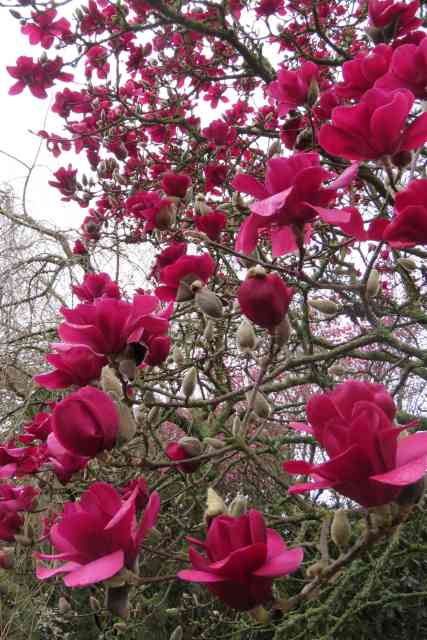
Magnolia ‘Vulcan’ at its early season best
The performance of ‘Vulcan’ around the world has been well documented and ranges from brilliant to undeniably disappointing.
I will say that ‘Vulcan’ was the only plant we have ever put on the market which we could track its flowering by the phone calls we received year on year. Being a long, thin country in the southern latitudes, magnolias open first in the warmer north and then in sequence heading down the country. The phone would start ringing in early June from the north and continue through August from more southern areas. That is a stand-out plant.
Whatever its flaws, ‘Vulcan’ opened the door to the plethora of red hybrids now available internationally and it remains a key foundation plant in the development of new hybrids.
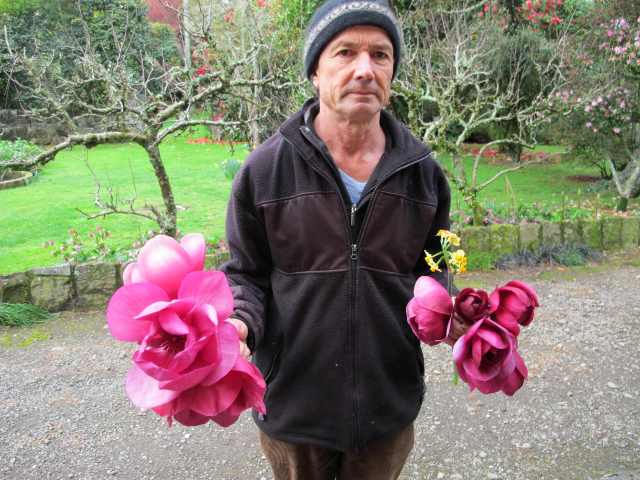
Mark, picking seedling blooms to compare back in 2013
Like father, like daughter. I recently found this photo of our second child holding her father’s blooms from twenty years earlier – likely the first blooms from some of Mark’s earliest crosses
Mark started hybridising magnolias in the 1980s, picking up where his father had left off and using the same genetic base. He has raised many more controlled crosses than his father ever did. We have never counted how many but it will be well into the thousands. Of those, only four have been named and released and there is another tranche of three which are being built up for release internationally. That makes seven Mark Jury magnolias and all are distinctly different.
Ill health has cut short Mark’s breeding programme and we are now assessing the final batches of his breeding efforts. He has already decided that he has done as much as he can with the reds so he has ruled out the next generations of those and we are now looking at his yellows. We are hopeful that we will get maybe two final selections so he may end up with nine named magnolias in total.
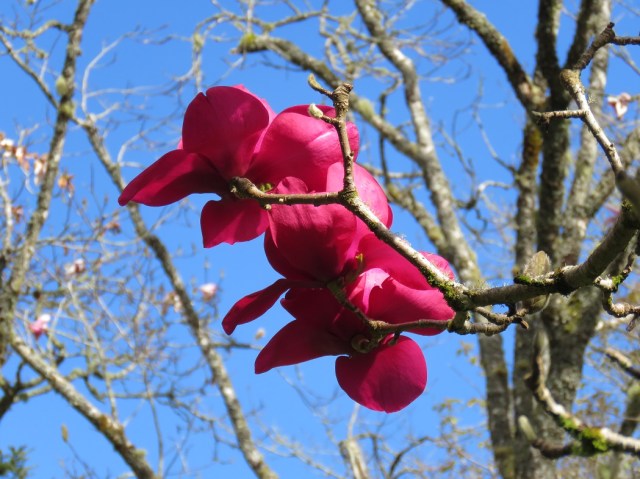
Magnolia ‘Felix Jury
He has always been particularly proud of the cultivar he named for his father, Magnolia ‘Felix Jury’. He reached the goal Felix had set – a tree that will not get excessively large but with very large, colourful blooms from an early age. It has always delighted us that Felix was still alive to see it bloom. In our climate, the colour can vary from rich pink through to deep red, at its best. Over the years, we have learned that the colour in magnolias can bleach out, particularly in colder climates, and we get exceptionally rich colour in New Zealand. Presumably this is related to the very clear light that we have, along with the soils and mild climate (never very hot and never particularly cold). ‘Felix Jury’ keeps its size and form in different climates and even when the colour is lighter in shade, it is an acceptable pink, albeit not the stronger shades we see here.
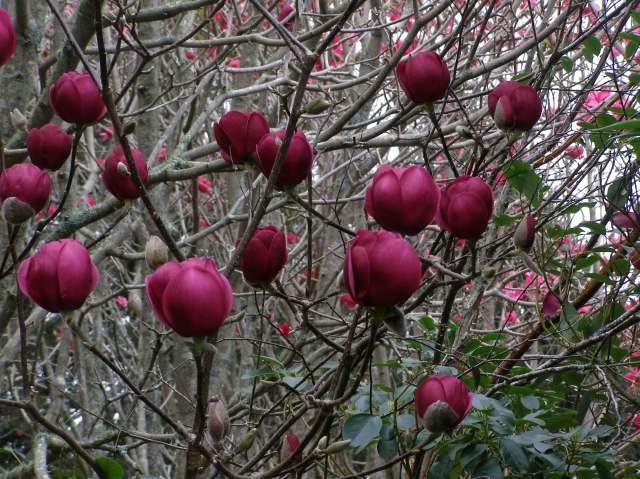
Magnolia ‘Black Tulip’
Both Mark’s ‘Black Tulip’ and ‘Felix Jury’ are showing up in the breeding of countless cultivars across the magnolia world and are clearly having long-term influence. ‘Black Tulip’ sets seed readily and it seems every man, woman and their dog have raised seedlings, judging by the photos we have seen. None appear to be an improvement on the parent to our eyes and not many have taken it in a different direction. But its impact on the development of new hybrids is clear to see. Mark has raised hundreds of his own ‘Black Tulip’ hybrids so we see many, many lookalikes but few stand-outs.
Mark’s best red, ‘Ruby Tuesday’
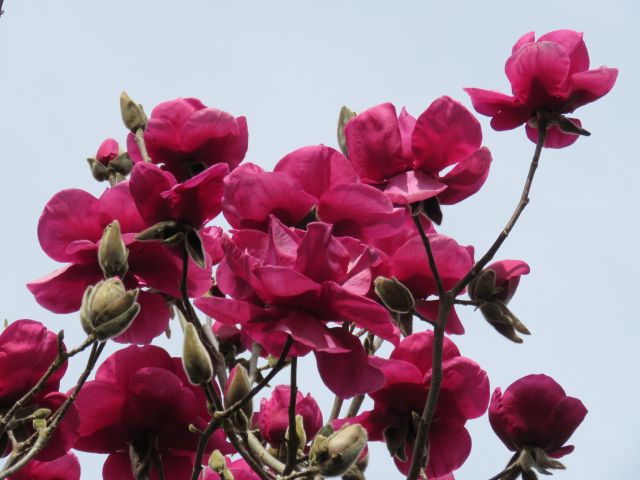
We have high hopes of the last red he has selected which is one of the three new ones to be released. He bypassed ‘Black Tulip’ and went back to his father’s ‘Vulcan’ as one of the parents. We don’t rush selections based on flower alone; this one goes back 20 years but its shade of red stood out from the start and the original plant has never had an off-season. It has lost the muddy purple undertones of ‘Vulcan’ and keeps its rich shade of red right through the exceptionally long flowering season. It starts a little later than ‘Vulcan’ so is less vulnerable to late frosts and the late season blooms are as good as the first ones. We describe it as a ‘Vulcan’ upgrade. It has kept the best features but eliminated the undesirable characteristics. Only time will tell if this is true in other climates but keep an eye out for this ruby red selection in the coming years.
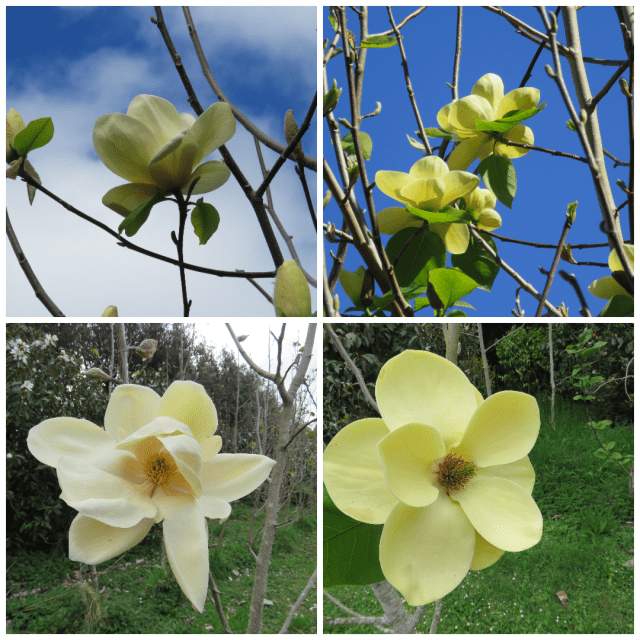
Mark turned his attention to the yellows. The magnolia world is awash with yellow hybrids, so many that it is hard to pick out the ones that are superior. Mark’s dream was of a big, pure yellow flower in the cup and saucer form of M.campbellii but on a tree that opens its flowers before its foliage appears, and in a garden-friendly size. A yellow ‘Iolanthe’ or ‘Felix Jury’, so to speak.
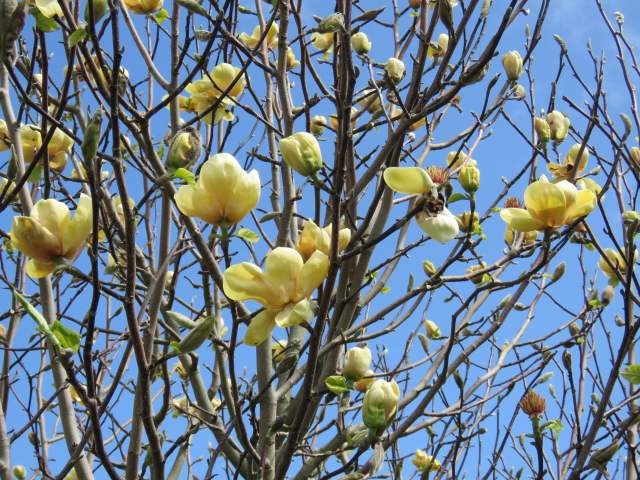
Magnolia ‘Honey Tulip’ – the only yellow Mark has named so far
His ‘Honey Tulip’ was a step on the way. It was a break away from the pointed buds, narrow petals and small flowers that come from the dominant M.acuminata parentage. It isn’t the butter yellow he wanted but it met the brief of solid flower structure and thick texture, flowered before leaf-break and stayed small enough for most gardens. Importantly, the colour does not fade out as the season progresses.
The next generations have taken it further. He has the strong, clear yellow he wanted, the large flower size, the flower form, the slightly earlier blooming season to beat leaf-break and the garden friendly habit of growth. He just doesn’t have them all on the same plant.
If we could just take the best aspect of each of the seedlings and get them all onto one plant, that would be good.
The goal of a big, pure yellow, cup and saucer magnolia is achievable but Mark has run out of time and energy. It will take another generation of plant breeder to reach it. That said, there are probably a couple of good yellows that are significant steps along the way that we should get out of the last batch of seedlings. One, in particular, is a very pretty lemon-yellow (so not the strong colour he wanted but still yellow) with the desired flower size and form and it is blooming from an early age although the flowers coincide with leaf-break. It is hard to reach perfection.
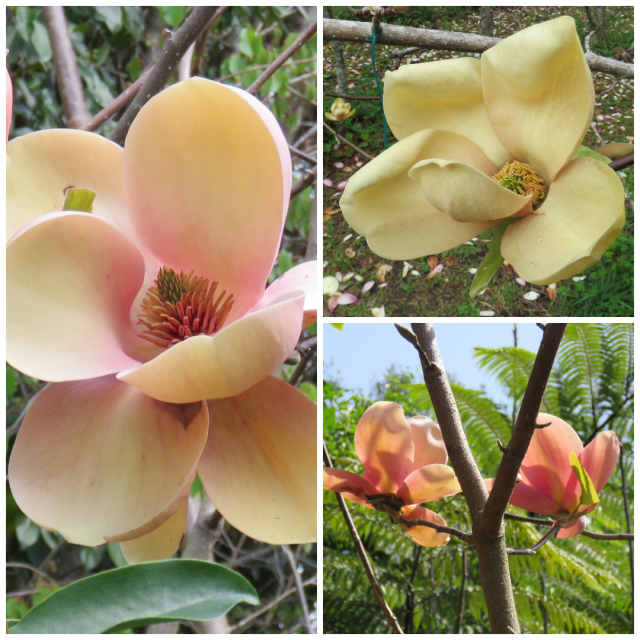
Sunset shades and caramel shades but none good enough to select yet
There are a few striking sunset mixes of strong colour on goblet shaped blooms but none of them look good enough to select. Plant selection is always made on a variety of criteria but Mark’s personal preference for solid colour is strong. Every magnolia he has named is one colour inside and out because that is what he likes. I had to twist his arm to even look at the sunset mixes; he does not think pink and yellow is a pleasing combination. He is also dismissive of what he calls ‘novelty blooms’. I marked one seedling that had distinctive, caramel-coloured blooms. Viewed close-up, they are interesting but I had to concede he was right. On the tree, they will just look like they have been hit by frost.
Always, we are selecting for plants that will look good over time in the landscape. Looking interesting as a cut flower in a vase is not enough, given the magnolia is a landscape tree with long term potential.
I mentioned the irritating ninth Felix Jury hybrid at the start. It is Magnolia ‘Eleanor May’ and I wouldn’t even reference it except I saw a photo lauding its merits in the UK this year. I don’t have a photo of it in my files which indicates the low esteem we hold it in. While it is a seedling from Felix’s breeding programme, we don’t claim it as a Jury hybrid. It is a full sister to ‘Iolanthe’ and a rejected seedling. Felix provided material of it to the nursery Duncan and Davies to use as a good root stock. From there, the nursery sent out a few failed grafts of ‘Iolanthe’ to garden centres by mistake. One plant was purchased by a customer who was observant enough to pick the difference when it flowered. He then took it upon himself to name it for his wife which may have been legal but was certainly lacking in courtesy. As far as we are concerned, it is inferior to ‘Iolanthe’, had already been rejected in selection and was an escapee by mistake. Besides, when we question releasing two of the same cross – ‘Iolanthe’ and ‘Atlas’ – why would we want to claim a third of the same cross? We have a property filled with sister seedlings which we would hate to see unleashed onto an over-crowded magnolia market.
Starting with predominantly white genus, Mark has reached into the pinks, purples, peach tones and lemon as well as bicolours.
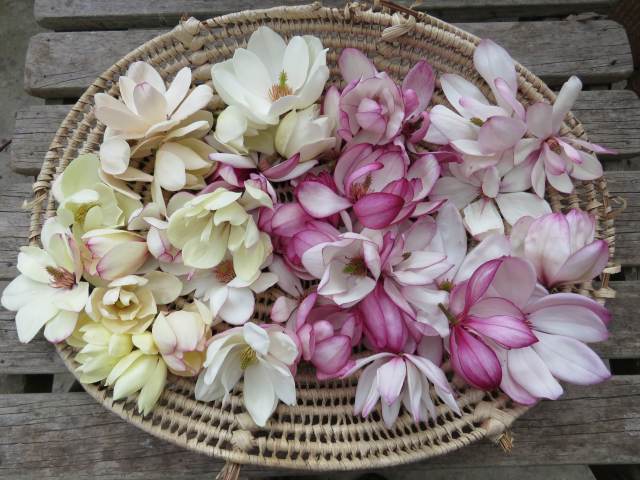
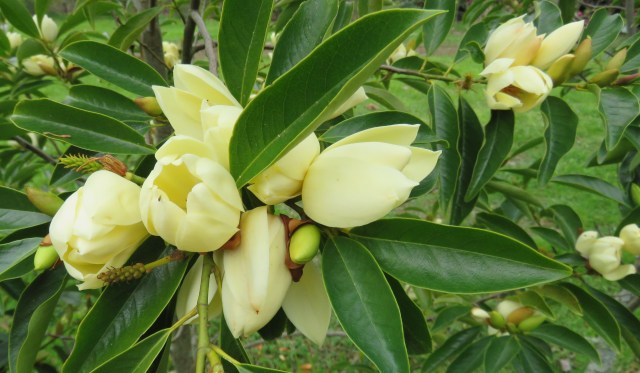
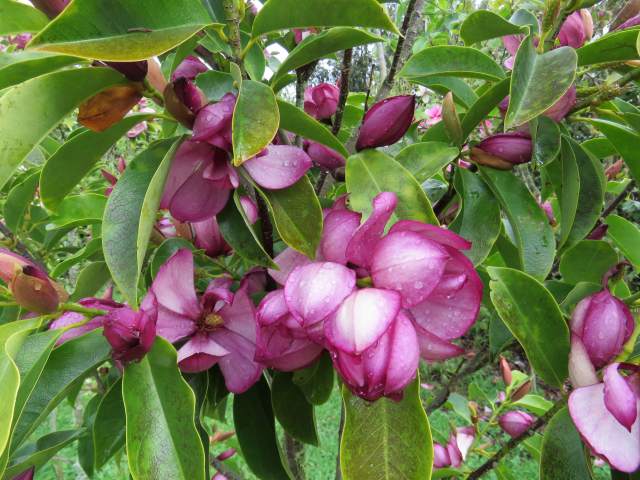
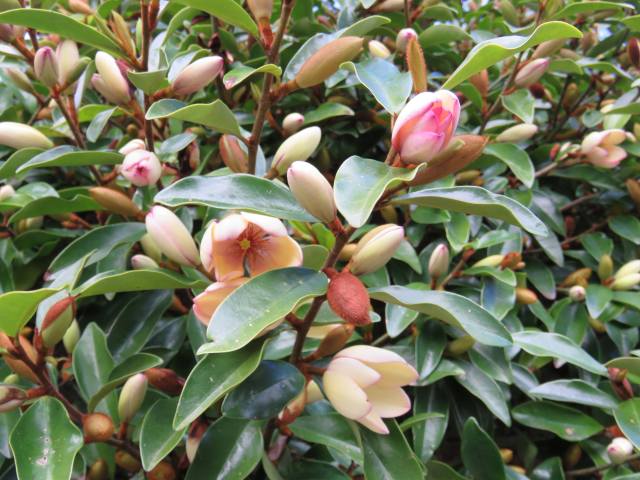
Mark’s more recent work with hardier members of the michelia group is another story. The first three selections are on the international market under the Fairy Magnolia® branding. They are in white, cream and soft pink and the next two on the way are in shades of peach and blackberry ripple. We are now onto the final round of selections which are into the bicolours and purple.
Getting there – definitely lemon but not yellow enough
The dark pinks and purples have been more rewarding than the yellows
Again, he has come up short on a strong yellow that is good enough to select and, regretfully, the really pretty apricot ones have not made the grade. But we know that those colours are within reach without sacrificing hardiness. Mark wryly describes his work on michelias as ‘RFI’. That is Room for Improvement. It will take another breeder to get there but there is plenty of promise and scope to take them further.
Labelled ‘FM Baby’ in my files, this new selection is being released as Fairy Magnolia® ‘Petite Peach’
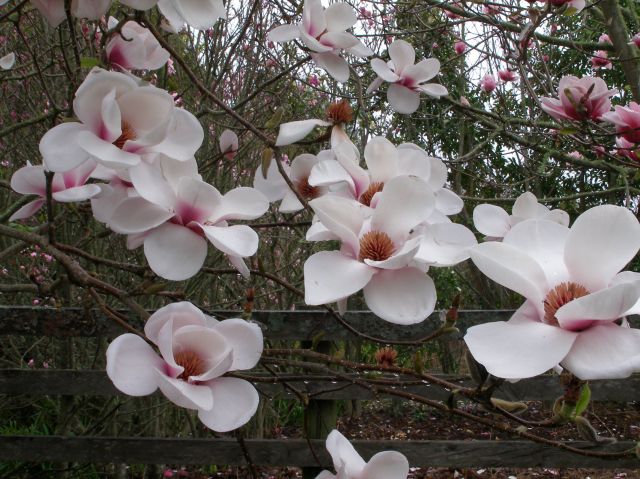
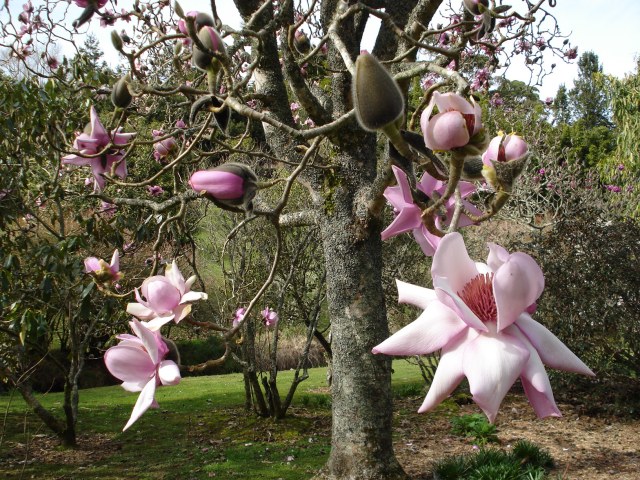
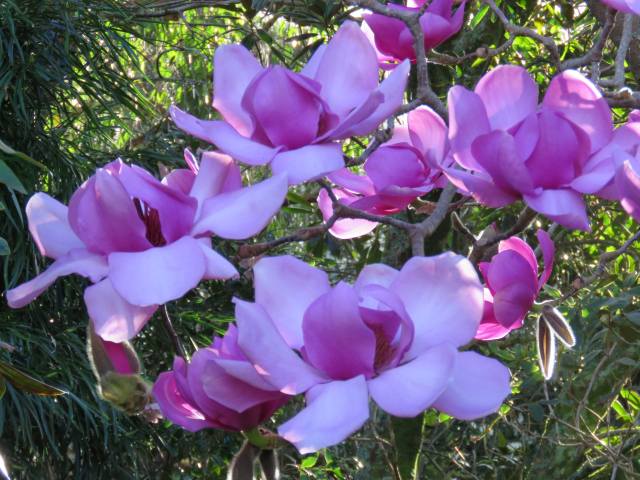
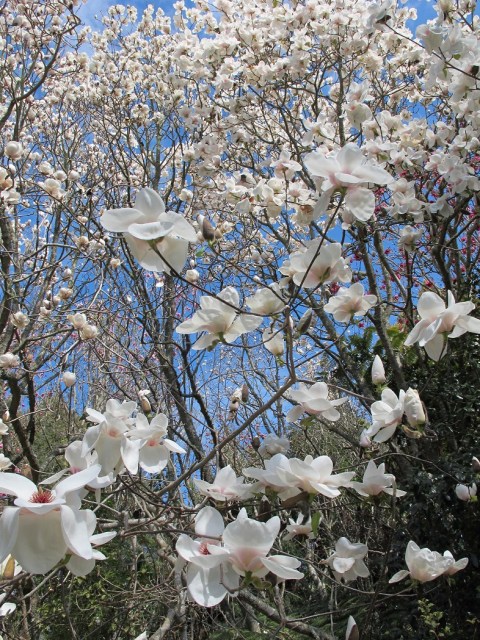
Felix Jury magnolias
Apollo(probably liliiflora nigra hybrid x campbellii var mollicomata ‘Lanarth’)













 Tikorangi The Jury Garden