I see it is exactly 364 days ago that I published a piece on deciding to establish a tussock walkway. It is entirely coincidence that I return to it today.
From a different part of the garden, that is Carex buchananii at the front with the orlaya and verbena and Carex comans behind.
I have no idea if other countries talk about tussock or tussockland. Overseas readers may like to enlighten me. Maybe it is our term and other countries have prairies, steppes and grasslands? Our tussock areas are our native grasslands and I am not even sure that many New Zealanders realise that our native grasses are not only largely unique to us but also varied and interesting with many good garden candidates. Contrary to what some think, a tussock is not a specific grass, it is a term for the growth habit of a number of grasses that include our chionochloa, poa, festuca and – sometimes – carex.
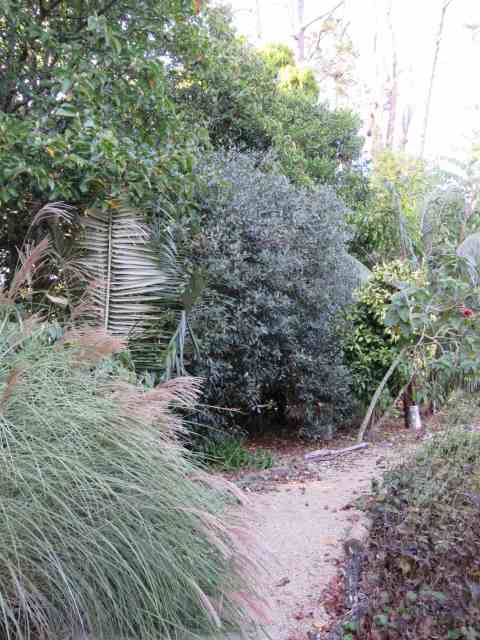
Not exactly well furnished yet but on the way
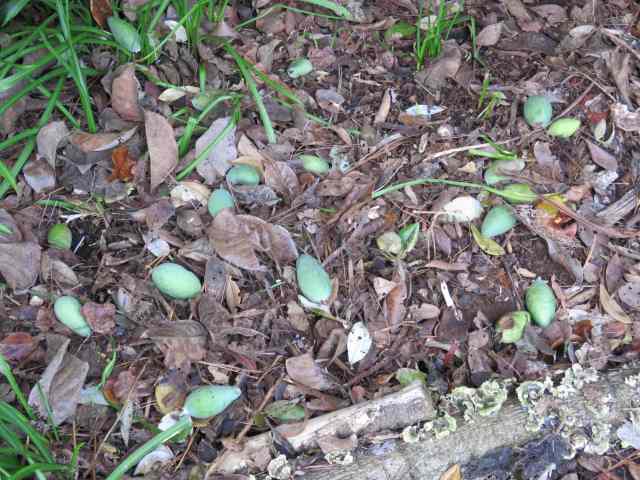
I opted for carex in this area, specifically Carex buchananii and Carex comans ‘Bronze” because I had them to hand. I will admit that they got off to a slow start because I shifted them, divided and replanted in high summer. While well watered-in, they had to endure a long, dry summer and autumn and not all of them lasted the distance. But it will not matter. They are seeding down with great gusto, on a scale I had not expected. Not only do I anticipate it being a fully clothed tussock area by this time next year, I think I will have to thin them. Most of these look to be the more upright C.buchananii at this stage but I am hoping for some of the fountaining C.comans as well.
That is a whole lot of self-seeding happening in a short space of time
The purity of vision with which I started – that of a rippling grassland of bronze tussock with no defined paths – has been watered down a little. When we broke up the two concrete paths that defined the site of the old propagation house that formerly filled most of this space, I made the call to get Lloyd to lay some crazy paved stepping stones through it and that may be a good call in terms of keeping some clear pathways, given the dense seeding of the plants.
Adding native celmisia to the Carex buchananii
Next Mark asked me, “What are you going to do to add some seasonal interest and colour?” And those words are the death knell of pure visions. I added some celmisias – our native mountain daisy – and I really like the look of those with the carex. There were some legacy plants that survived the removal of the propagation house and I feel Cordyline stricta can stay, even though it is Australian. Another tropical-looking cordyline has popped up and it may or may not be C.petiolaris. A bit of seed is blowing in and I will have to manage Verbena bonariensis and the white nicotiana because, while a few plants are charming enough, we don’t want them everywhere and they seem to want to be everywhere. And I admit I planted a swag of dwarf narcissi. For spring interest, you understand.
An Australian interoper – the blue flowered Cordyline stricta (not Ralph)
Zach refers to this area as ‘the prairie’, albeit a very small prairie. I shall keep referring to it as the tussock walkway because the grasses at least will remain the dominant plant and they are native tussocks.
First published in the November issue of Woman magazine. Ironically, two weeks after writing this (which, with magazine deadlines, was in September), I realised that we were done with opening the garden to the public. That was why we then announced that the garden festival just passed would be our last.
The Rimu Avenue
We do great spring gardens in Aotearoa New Zealand. Notwithstanding the usual moaning about the weather, this is a country with a mild, temperate climate, lacking extremes of temperature. We drift so gradually between seasons that our spring season extends to a long period. Magnolias, flowering cherries, daffodils, irises, early roses and much, much more – our springs are a froth of bloom. It is no coincidence that spring is the main season for garden festivals and garden visiting.
Maybe you have been thinking you would like to open your garden, to share the results of your dedicated efforts.
The summer borders in spring
There are various reasons for opening your garden but making money is not likely to be a viable option, at least not in Aotearoa. We simply don’t have high enough visitor numbers. Most open gardens in this country will get numbers in the low hundreds to the low thousands. To be financially viable, you would need to be in the high tens of thousands and that is a whole different ball game.
Location affects visitor numbers a great deal and gardens on the tourist circuit will get higher numbers but that is also dependent on good access, excellent signage and convenient parking.
Gardens with added attractions appeal to wider cross section of the potential visitor market. Not many of us can manage a castle in a spectacular setting (here’s looking at you, Larnach’s Castle). A café or plant nursery helps but it is rare to find a place where the café or other attraction and the garden are of equally high standard.
Hosting events can be be quite high stress, especially if it is dependent on the rain holding off for long enough. There is nothing like tracking the hourly weather forecast to lift anxiety levels.
There are plenty of gardens that host events in an effort to build visitor numbers and generate income but this is not a track we have chosen to go down. My gardening and life partner, Mark, has never wanted a bar of events. As far as he is concerned, he only welcomes visitors if they want to see the garden, not because it is a venue. I flirted with a few weddings while Mark hid out of sight in his vegetable garden, quietly pretending there was nothing going on. Encountering not one but two Bridezillas put me off for life. I remember thinking of one, “Lady, you are not paying me anywhere near enough to treat me like the hired help in my own garden while you pose for wedding photographs in front of my house.”
Some level of catering, perhaps? Been there, done that. It added extra work and stress but was generally manageable until the rise to prominence of not just vegetarian options but also vegan, gluten-free, dairy-free, keto and goodness knows what else. The general public have become awfully picky eaters in recent times.
It only takes one group eating lunch in the garden to turn your formerly well-behaved dog into a shameless beggar. Few are better at working a crowd than our Dudley.
Some people open for charity and that is a laudable position, given how much work it takes to get a garden to opening standard. Some open to support an event or festival. Some may be driven by ego alone but, let’s be honest, we all want visitors to come and enjoy our place, to admire our efforts, maybe to be impressed by what we are doing, certainly to share the pleasure we find in our own garden. It can be a very affirming experience and that is the main reason we still open.
In the summer gardens
We first opened 35 years ago, which seems like an eternity. Initially we kept it to the 10 days of what was then called the Taranaki Rhododendron Festival (now the Centuria Taranaki Garden Festival and currently going stronger than ever). They were different times – simpler, more amateurish and visitor expectations were a lot lower than they are today. Mind you, most garden visitors expected free entry, too.
Bowing to pressure, we gradually extended our open times to eight months of the year.
Festival is the only time of the year when I regret not owning a clothes drier. Washing on the line is a no-no.
It changes the way you look at your garden. You start looking more critically, as though through the eyes of the garden visitor. It also changes the way you manage a garden, trying to keep standards up all the time but without the staff that maintain publicly owned gardens. It even affects when you can peg your washing on the line (never in busy times or when tours are booked – at least not if you have a prominent washing line, as we do). When you are a private garden, it is not just the garden you are opening; there is a certain amount of presentation of a desirable lifestyle that goes with it. I have noticed a growing tendency in recent years to ‘dress’ or stage gardens in the manner of staging real estate.
It is common now to see a certain level of staging or dressing a garden – best when it is witty as here at Bev McConnell’s garden ‘Ayrlies’.
After 25 years we had had enough and visitor numbers had fallen away, except for the 10 day festival period. We closed the garden entirely for 7 years, using that time to carry out major work and to fall in love with our own place again. We didn’t garden less, we just gardened differently.
Leading a garden tour around the park
Nowadays we only open for the garden festival. That is our half way compromise. It still governs how we garden for maybe half the year but the other half is ours, all ours. As an aside, it takes almost as much work to prepare a garden for a single tour group or a one-day event as it does to open for a more extended period. Do not be lulled into the thought that it will be much easier if the time length is short.
I am not sorry to have left scanning or signing-in behind.
When we re-opened in November 2020, we were not sure how we would feel and we certainly did not anticipate the impact of being in a Covid-free country with closed borders and a population suffering from cabin fever. Visitor numbers were three times higher than we expected.
Last year’s festival threatened to be a huge disappointment as Auckland and large parts of the Waikato went into lockdown and tour groups cancelled left, right and centre but numbers held at a reasonable level, given the extraordinary situation. Opening in Covid times has certainly added layers of challenge.
The day of the poocalypse was certainly a memorable occasion
When we reopened, friends came to help. I joked that for once Mark and I would be able to swan around, being gracious hosts. Ha! Chance would be a fine thing. All I can say is that I seem to spend a lot of my time worrying about carparking and clean toilets and much less time being the gracious host. You haven’t lived until the septic tank servicing the loos fails on a day when you have over 450 visitors on the property. I am hoping not to repeat that experience. A poocalypse, we called it at the time.
Carparking is a challenge. However, we have found that we can park 54 – or was it 57 – vehicles on our property before having to park visitors on the road but it takes careful management by two people and not too much rain beforehand.
Don’t even ask about carparking. I know more about the vagaries of drivers and parking than I need to. We still laugh, however, at the benighted but not de-knighted former Cabinet minister who visited. “It is just like Sissinghurst,” he declared as he entered. Having been to Sissinghurst ourselves, we knew that he was referring to the challenge of finding a carpark at a busy time.
I have often said that 99 out of every 100 garden visitors are perfectly pleasant, courteous and appreciative people. The 100th is not. In discussion here, we agreed that it is more like one in 500 who is not. When garden openers gather after an event, conversation often turns to the 500th visitor. We all remember them. In fact, we sometimes compare notes to see if it is the very same person. Years later, we still remember them – which is probably an indicator of how few unpleasant garden visitors there are. But if you are out and about visiting gardens, don’t be the 500th visitor. Maybe stay home instead of wilfully ruining somebody else’s day.
The borders, as we refer to them here
It should also go without saying that visitor books are solely there for garden visitors to write something positive, or at least pleasant. Manners matter, m’dear. If you have nothing nice to say, then don’t say anything at all – at least not in the visitor book and probably not in on-line reviews, unless you have already made your complaint or criticism in person to the garden owner. I am all for keeping standards, decorum and courtesy in the somewhat rarefied world of garden visiting.
The definitive word comes from my Mark who, when we were considering reopening, said, “You don’t garden on this scale without wanting to share it with others”. At least we agree that ten days a year is quite enough for us now.
Gardening a cyclic affair. I see I write about foxgloves every few years at this time of the season and here we are. It is this time of the year, I get around the garden to pull out the nasty pink ones.
There are about 20 different species of foxglove and we have tried a few of the different ones, particularly in honey and soft yellow shades but really, it is only the common Digitalis purpurea which lasts the distance. The other species are much pickier and won’t naturalise for us.
It is the shade of pink, I think, that bothers me so much I won’t even tolerate them in wilder areas of the garden
What is it I dislike so much about the pink form? It really is the colour and the status of the plant as a countryside weed, though I think I would be less worried about the weed aspect if it was a prettier colour. I do, after all, grow wild fennel in the summer gardens. That murky, hard pink is just not a colour I like. I like it even less in a garden situation because I feel it lacks any refinement or charm.
Whites and pastels gently seeding in the gravel heap. They were a little more impressive earlier in the season before the rains came in the last week.
The whites and pastels are no less thug-like in their growth habits but I like the height and the flower form and I am fine with letting them seed around in a gentle sort of way. We have a patch of self-sown seedlings growing in a small gravel heap – the contents of the capillary beds back in the days when we had a nursery on site. It is quite handy having a stash of fine gravel to use in some situations and it is not doing any harm where we stockpiled it. The foxgloves are happy to grow in straight gravel.
Red ribs to the left are meant to mean pink flowers but no, this is not always the case. Green ribs to the right, however, usually indicate white flowers
I can categorically state that this plant has white flowers with a few red freckles inside, despite those clear red ribs on the foliage
It is because I keep track of that patch, that I have worked out that the advice to cull any seedlings that have red ribs to the leaves if you want to get rid of the pink ones and keep the whites and pales is not in fact accurate. It may be true that all dark pink ones have red ribbing on the foliage but it is not true the other way round – so, too, can some of the whites and pales. For a brief while, I thought that only the white foxgloves with freckles or spots inside the thimble flowers had red ribs but no, so too do some of the all whites with no freckles.
All white forms in the Iolanthe garden where their thuggish and wild ways are fine
The white foxgloves are simply a variant of the same species, Digitalis purpurea, but the dominant gene is clearly pink so if you are not vigilant on weeding out the stronger pink forms, you will end up with a dwindling number of white seedlings. You have to pull the plants out and remove them from the site as soon as the colour is obvious. If you leave them to flower, the bees which constantly work these blooms will transfer the pollen from one to another so the genes in the seed will not stay the more desirable white.
The common pink to the right is not acceptable to me; the second from the left opens white but matures to the same pink tones I dislike so must also be removed in its prime
I also pull out plants which are clearly pastel forms of the same pink parent rather than the peachy hues of some I have and I pull those plants that think they can outwit me by opening white and then changing colour to pink as the flowers mature. Were I truly dedicated to the genus, I might start selecting for different habits – more compact or with larger sized thimbles for example – but I don’t love them enough for that. I am fine with keeping to pure whites in the Iolanthe garden and pastel peach in the Court Garden.
If I lived in a drier climate, I might expend the same random energy on lupins – another plant that hovers on the margins between being a delightful garden plant, wildflower or even noxious weed. But lupins don’t like our high rainfall, high humidity conditions so I must make do with foxgloves.
Our native red tussock (Chionochloa rubra) with the Eurepean ox-eye daisy (Leucanthemum vulgare)
We visit Australia fairly frequently on account of all three of our children living there these days and their native birds never fail to astonish me. Big, brash, vibrant, colourful and varied, they have an astonishing range of exotic birds. Aotearoa New Zealand also has a huge range of native birds but ours are far more restrained. Our iconic kiwi is, after all, all brown, lives on the ground and only comes out at night so is rarely seen in the wild. Most of our birds are in muted colours and need the light or a closer view to catch the iridescence in the feathers or the charming fluffy chests. But our birds sing sweetly whereas those brash Aussie birds squawk raucously.
Our tui at the top – and I admit it can look plain black with just a white fluffy pompom at its throat without the light coming at the right angle; just one flock of Australia’s showy parrots below
So too, are our native plants of a more restrained persuasion in the showy, flowering stakes. Many of our natives have very small flowers while those of a bolder persuasion can have very short flowering seasons. A kowhai (Sophora commonly tetraptera) is spectacular but only for a week or 10 days if we are lucky. Similarly, our iconic pohutukawa (Metrosideros excelsa) is but brief in its Christmas raiment. We have very few native bulbs and we lack the range of flowering native perennials that many countries have.
Not a native forest at all but our Rimu Walk which we often describe as sub-tropical woodland and where exotic bromeliads are a dominant planting. But the big trees are rimu (Dacrydium cupressinum) and you can see both tree ferns and Dracophyllum latifolium – all native and it is our indigenous vegetation which forms the backbone and much of the canopy for the exotic imports below.
Our native forests are commonly referred to as ‘bush’ in this country but really, it is better to think of those remnants of original vegetation as neither bush nor forest but more as cool-climate jungle. At least it is jungle without snakes or other threatening wild life. The risks in our native bush are more to do with getting lost, falling over concealed cliffs or making very slow progress through dense growth in areas where deer, possums, pigs and goats (all introduced animals) have been kept under control.
Our native Chionochloa flavicans (sometimes referred to as ‘miniature toetoe’) in the foreground backed by Stipa gigantea and more ox-eye daisies because they are most rewarding in the flowering stakes if cut back regularly.
What we DO have in this country is a large range of very distinctive and unique plants – trees, shrubs and grasses – which are remarkable in their foliage, form and structure in the garden. Many are highly prized overseas – including our tree ferns, flaxes, grasses, cordylines and hebes.
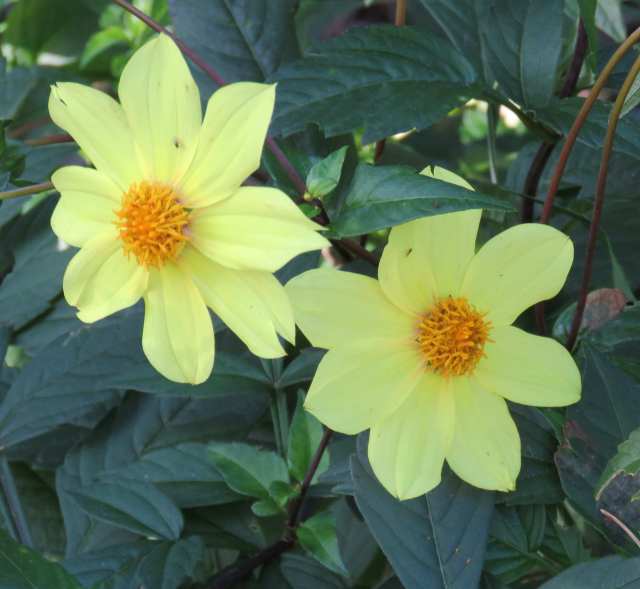
I like foxgloves which have a wide natural spread in Europe, North Africa and western Asia but I don’t like them in the common deep pink shades. What I like even more is how our Chionochloa rubra combines with seasonal flowers. As the season progresses, the giant inula, single dahlias and helianthus will take over from the foxgloves and verbascums.
We have always opted for a mid-line in gardening terms – using native plants but in conjunction with exotics. A few purists may go native only with the pinnacle of moral rectitude being eco-sourced plants from the local environment, while at the other end of the scale are those who eschew natives as ‘boring’.
The showy Verbascum creticum – from Crete – with phormiums which are commonly referred to ‘coloured flaxes’ here
I was looking at the combinations of flowers and foliage that pleased me in the Court Garden and it is that mix of native and exotic. Of the structural plants I chose, nine are native and seven are exotic but all the pretty filler flowers that lift the scene are exotic. That was not by deliberate design although I did lean towards native grasses where I had a choice. I think it shows how effective some of our native plants are as bold, structural statements and how we make up for what we lack in showy flowers with some top-notch grasses.
Left to right, we have my favourite Chionochloa rubra, Astelia chathamica (both natives), Elegia Capenis from South Africa and Miscanthus ‘Morning Light from eastern Asia.
There is plenty of material to work with. Gardens do not generally replicate the natural environment but I find incorporating a range of our native plants satisfying in a faintly patriotic way. It is of course the access to a wider range of our unique native flora that makes NZ gardens different to those around the world. And when all is said and done, flowers are seasonal and ephemeral whereas form, substance and structure is with us all year round. Because our native plants are evergreen, they are ideal for filling that role.
My constant companion is Ralph, who is sniffing out rabbit trails here, so I end up with rather a lot of photos of his rear end disappearing under foliage. In this photo is Chionochloa rubra with our toetoe (Austroderia fulvida) behind. These native grasses make splendid garden plants where there is sufficient space.
“You’ve got to know when to hold ’em Know when to fold ’em Know when to walk away And know when to run”
I found myself humming to Kenny Rogers this morning, although I had the lyrics saying ‘You gotta know when to go”. We are not going anywhere but we have metaphorically shut the garden gates to the general public. It is very odd, the end of a personal era. But, for us, it is the right thing to do. As I have said countless times in recent weeks, ‘I do not want to be the Tim Shadbolt or Winston Peters of the gardening world.’
New Zealanders know instantly what I mean, For overseas readers, Tim Shadbolt and Winston Peters were both major players – institutions, even – on our political landscape over several decades. But they did not know when to retire and it is very sad to see old men devastated when even the patience of their most loyal voter base finally runs out. It is way better to go out on a high note.
“What a difference a day makes 24 little hours”
If I was in a small, town garden, I am sure I would enjoy continuing to open to the public and meeting many different people – but we are not. To get our garden to opening standard is such a major undertaking that I can not face doing it for another year. It is time for us to call it a day and to just accept the occasional specialist tour group to keep us on our hosting toes.
It was a very successful garden festival this year and that is a great memory to hold close as we choose to enter a new era as gardening recluses.
We laughed out loud when our artist in residence this festival, Jennifer Duval-Smith, presented us with the perfect present. We had been discussing linen tea towels and this one is beautiful linen. However, it was Jennifer who laughed when I rushed off the trim the packaging to fit in a frame I had in order to have a second version of it for our staff kitchen in the shed. “It is like a cat,” she said. You give it a gift and it is more interested in the box.”
I will still keep writing, taking photos and posting on line, Mark will continue breeding new plants, we will continue gardening. Zach and Lloyd are staying with us. It will be very quiet but we will enjoy that, too.
Thanks to any and all who have visited us over the past 35 years. None of us can know what the future holds but it won’t be another garden festival for us. It has been a real pleasure meeting so many of you. Thank you for coming.