
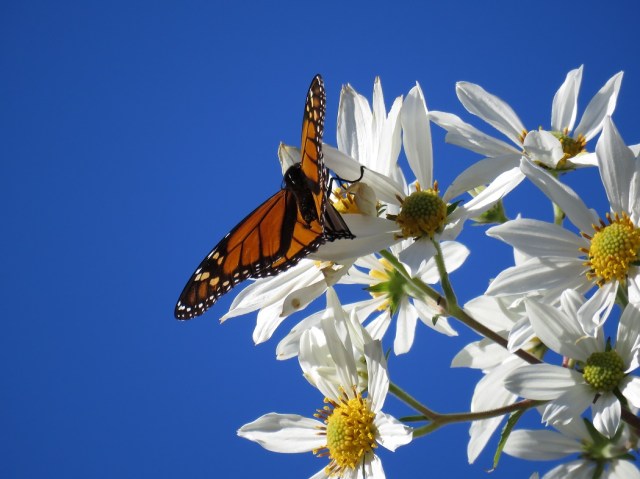
I have often said that because I garden a lot, I have a lot of solitary thinking time. “What do you think about?” a fellow gardener asked us here this week. I hadn’t actually thought about that side of things.
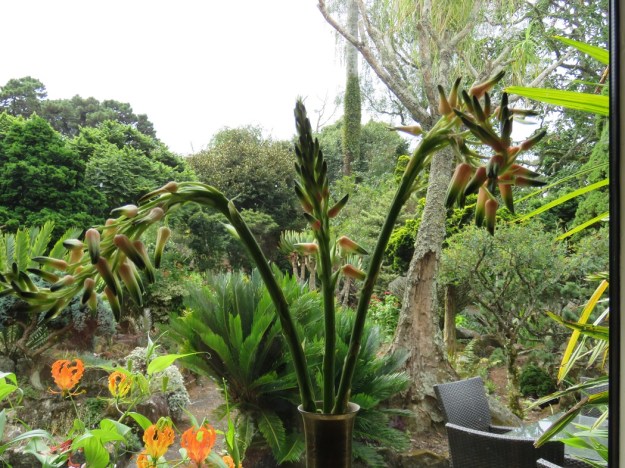
We are told that gardening is soothing, good for the spirit and the soul, a welcome antidote to a world that has often felt as if it is spinning beyond our control in the past year. I have no doubt that being surrounded by plants and the cycle of the seasons, by birdsong and the beauty of endless small scenes whether it be a butterfly landing on a flower, the buzzing of bees, the unfurling of a flower bud or the discovery of a plant that I had forgotten about – all these are immediate delights in a chaotic world. Gardens anchor us to a small place in time and space.
But if you take the end product and the goals along the way out of the equation, what about all those hours spent alone in our own headspaces? Our panel of three (Mark, our gardening friend Susan and me) is hardly a conclusive study but we all came up with responses that were remarkably mundane. Mark said he largely focuses on the task at hand. He used to like listening to the radio but since Radio NZ has taken its programming off the local AM band, that is no longer an option. The FM band is too unstable when he is constantly moving. I notice Lloyd mostly listens to music. I used to do that when I was trying to block out the omnipresent noise of the petrochemical industry surrounding us back around 2011 to 2014 and listening to music certainly puts one into a very contained headspace without many external influences. But I prefer listening to the sounds of nature if I can.
My thoughts range far and wide with a constant inner monologue (and sometimes an audible monologue when I talk to myself) but I admit, it is not a particularly profound discussion with myself. At its best, I may come up with the words that had been eluding me in a piece of writing or some clarity of insight into something that had seemed murky and confused. At its worst, I replay grievances in my head – whoever said that gardening is ‘soothing’ and ‘healing’? But in the main, it can be a pretty mundane conversation with myself and I was somewhat surprised to find that, considering I spend large parts of my day in this solitary state. I think that is what Susan was angling at too, when she asked the question.
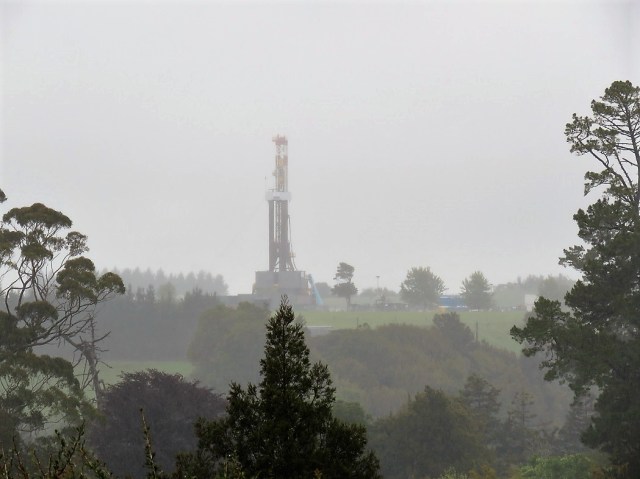
Of late, in fact since Wednesday December 9 to be precise, that inner monologue has been underpinned by constant low-grade anxiety nagging away at my inner peace. That was the day that our *friendly* petrochemical company, Todd Energy, unveiled its plans at a community meeting in Tikorangi to apply to extend the already large Mangahewa C gas well site from the existing eight wells to twenty wells, making it the largest site in the country, as far as I know. That site is close to us. It is literally on the farm across the road on our bottom boundary.
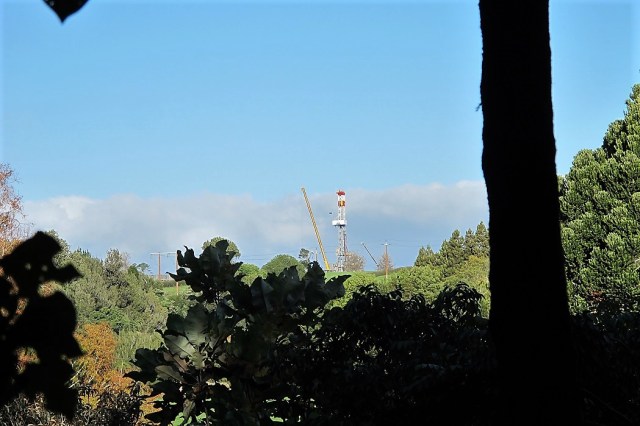
While some of the Todd Energy staff might be so naïve that they didn’t realise the devastating impact of that news on many local residents, at least some of them knew exactly what they were doing. “Let’s really give the Tikorangi residents a Christmas present this year. Ho ho ho! Hahahahaha!” my inner monologue has some unnamed Todd staff saying to themselves and even to each other.
I spent a few weeks in the garden toying with the Todd Energy Twelve Days of Christmas but I couldn’t get the words to scan to my satisfaction.
“On the twelfth day Of Christmas Todd Energy gave to us
Twelve more gas wells
Eleven more frack jobs (more like eleventy hundred more frack jobs over the next decade) ….
Five Christmas hampers (utility ones from Pak’n’Save)….
And a drilling rig they call Big Ben.”
We fought hard for better process of the gas industry in our community over a number of years – all documented under the petrochem tab you can find at the top at this page. We failed on most fronts and that battle from 2011 to 2014 almost broke me. The activities of the petrochemical companies were devastating on a daily front – it was the main reason we closed the garden in 2013 – as well as draining mentally and emotionally. When activity eased off with falling international prices and the general understanding of the impact of climate change grew, we were lulled into a false sense of relief, thinking that maybe we had seen off the worst of it. It seems not.
In my lowest moments, I imagine myself asking the young person who is the ‘Community Relations Manager’: “Do you have children? What are you going to tell them when they ask you what you did to try and counter the impacts of climate change? Are you going to be proud to say ‘Oh, I did spin and soft-soaped local residents for a fossil fuel company in the dying days of the fossil fuel industry’?”
So there we are. My inner monologue now is trying to focus on how to maintain some equanimity and peace in the face of the ravages of an unwelcome industry. I managed it in 2014 when I realised how close I was to breaking point. I can do it again. I hope. It may be time to get out the iPod and recharge it, to block out the world. Are those Bluetooth earpieces worth getting so I can dispense with the awkward cords? Do they fall out of ears readily in which case I am sure I will lose one in the garden?
What do you think about when gardening? Can you empty your mind sufficiently to turn it into a meditative exercise? Do you mentally plan great works of note? Or do most of us really just plan what we will eat, edit our mental ‘to-do list’, ponder what we have heard or seen and focus on the detail of what we are doing? All that time to think – I feel at least some of us must be mentally coming up with next great scientific theory or planning a work of literature. Or maybe not.
Footnotes:
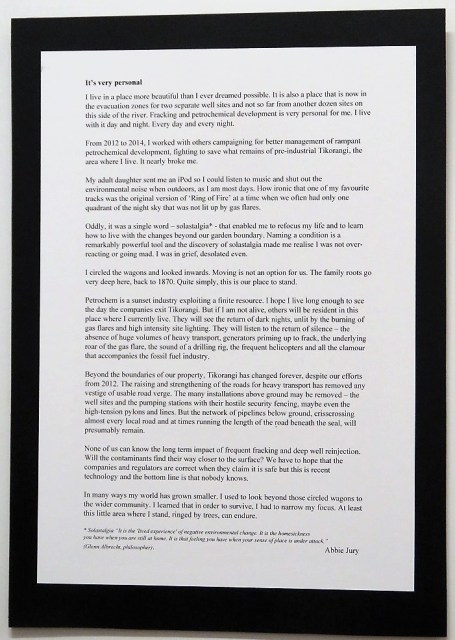
For the easier to read version of ‘It’s very personal’ – a piece I wrote for the 2017 Frack Off Exhibition, click here.
Our Labour government only stopped NEW permits for oil and gas offshore and in areas other than Taranaki. It is still allowed – encouraged, even, by some here.
All the optimistic talk of ‘clean hydrogen’ being pushed successfully by the fossil fuel industry is unproven technology predicated on the use of gas as a *transition* energy.
Gas is only *clean* (or clean-ish) if the emissions are measured only at the end-point user. There is nothing clean or sustainable about getting that gas out of the ground, keeping it flowing and getting it to the end-point user.
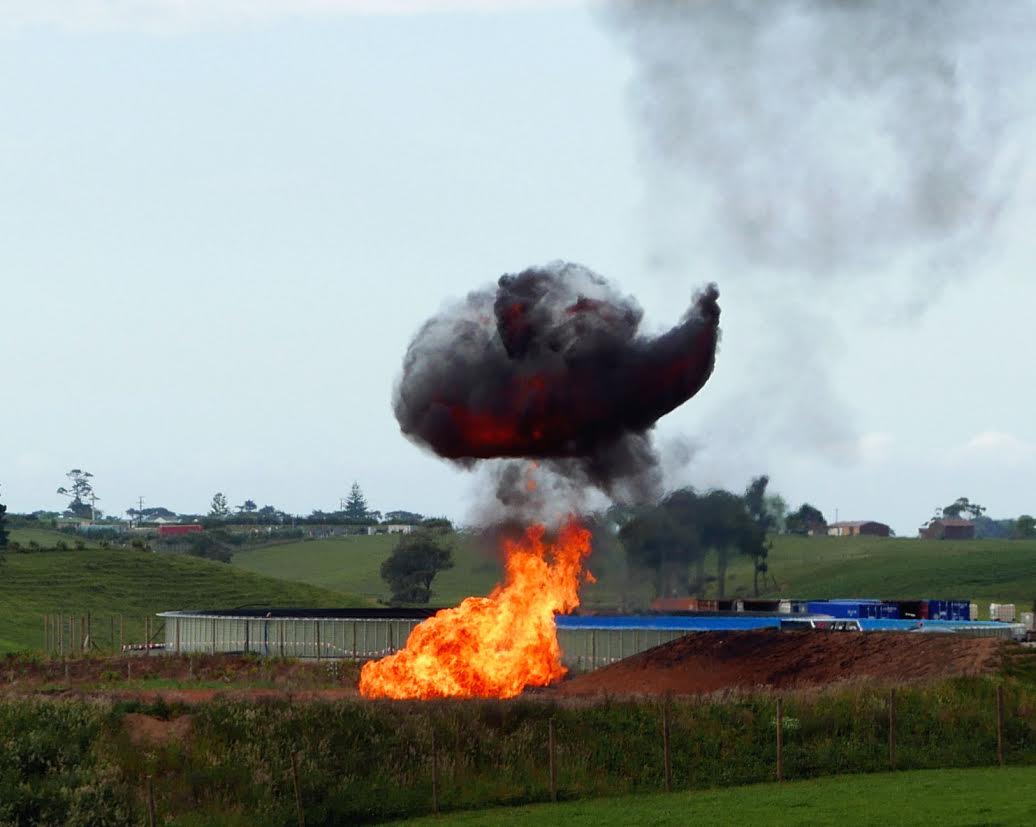
What makes the Mangahewa gas field economically viable is frequent and ongoing fracking (hydraulic fracturing). The ground beneath here has been fracked repeatedly since 2007.



 This is what our corner of Otaraoa and Tikorangi Roads used to look like in the mid 1990s. The havoc on the left hand side is the result of major work Mark carried out to reduce flooding through our park and to return some of the stream to its original bed. His tidy grandfather had straightened up the stream to run along the boundary back around the early 1900s.
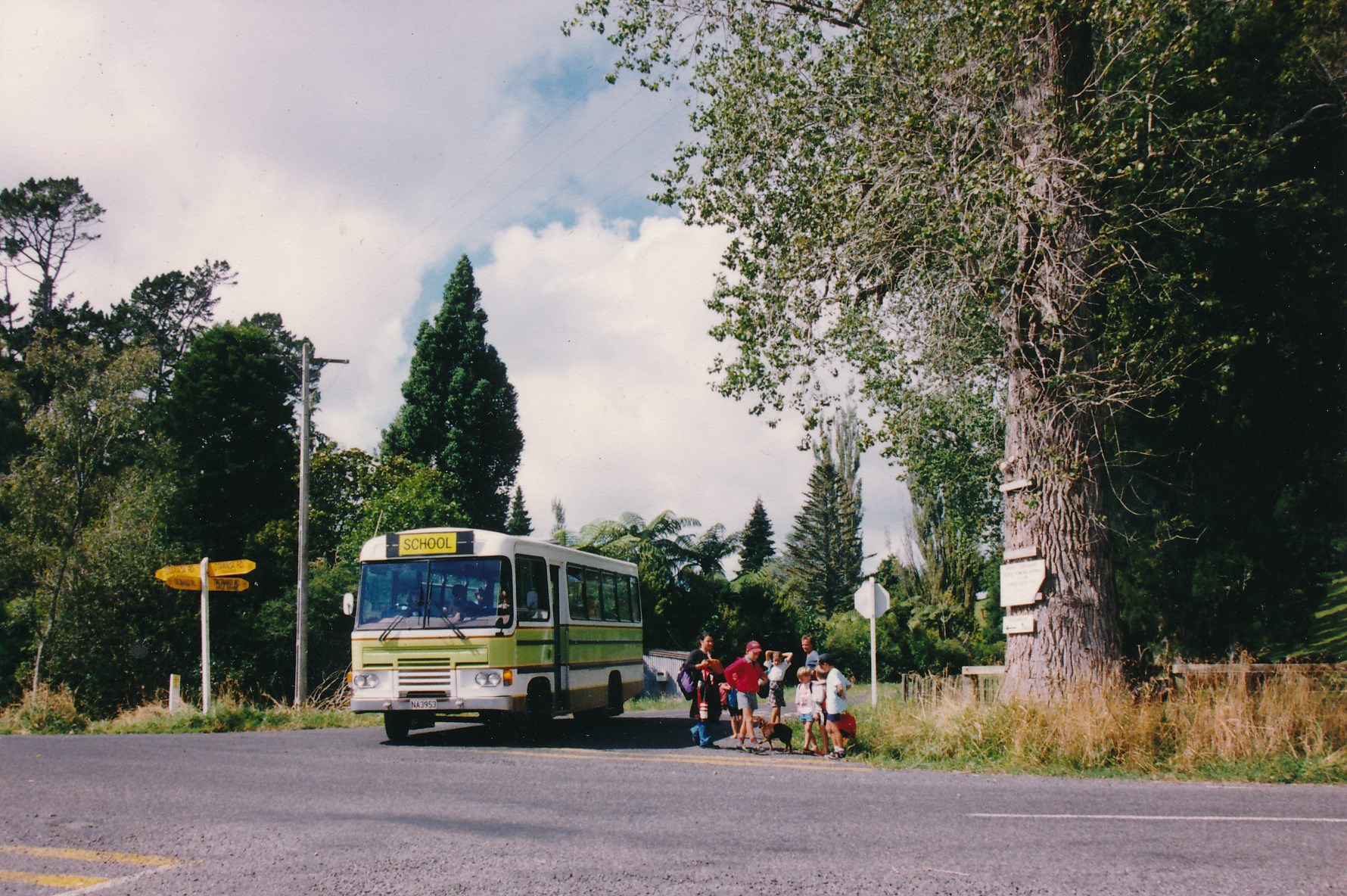 A year or two later and our children are getting off the school bus on what was a quiet country road. Note the trees on the right hand side.
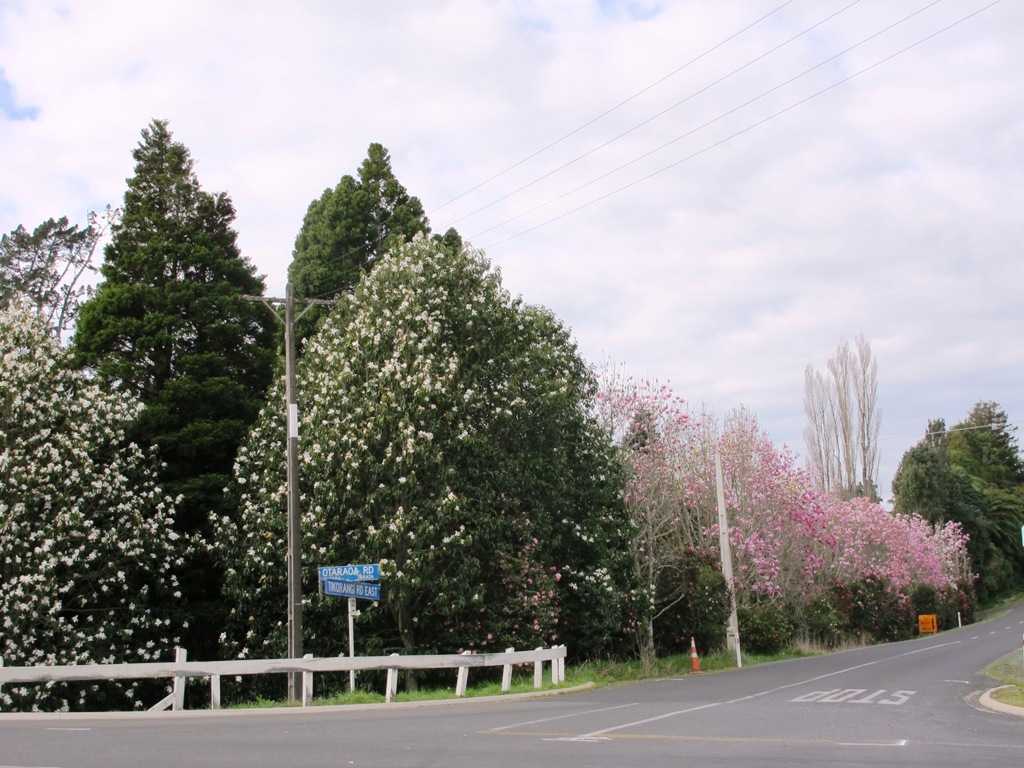 This is what our side of the road looks like now. The trees have grown up and many people tell us how much they enjoy the flowering.
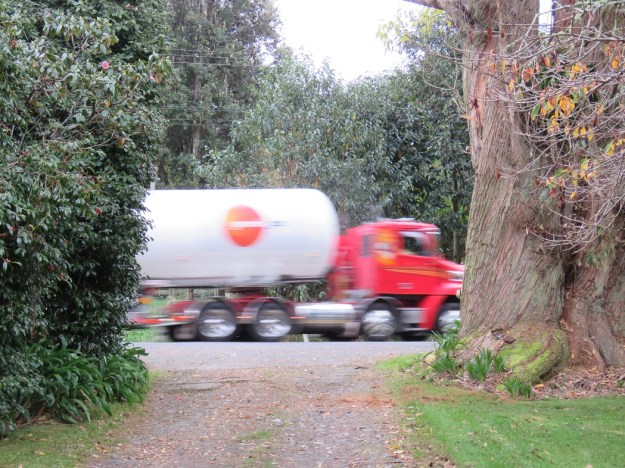
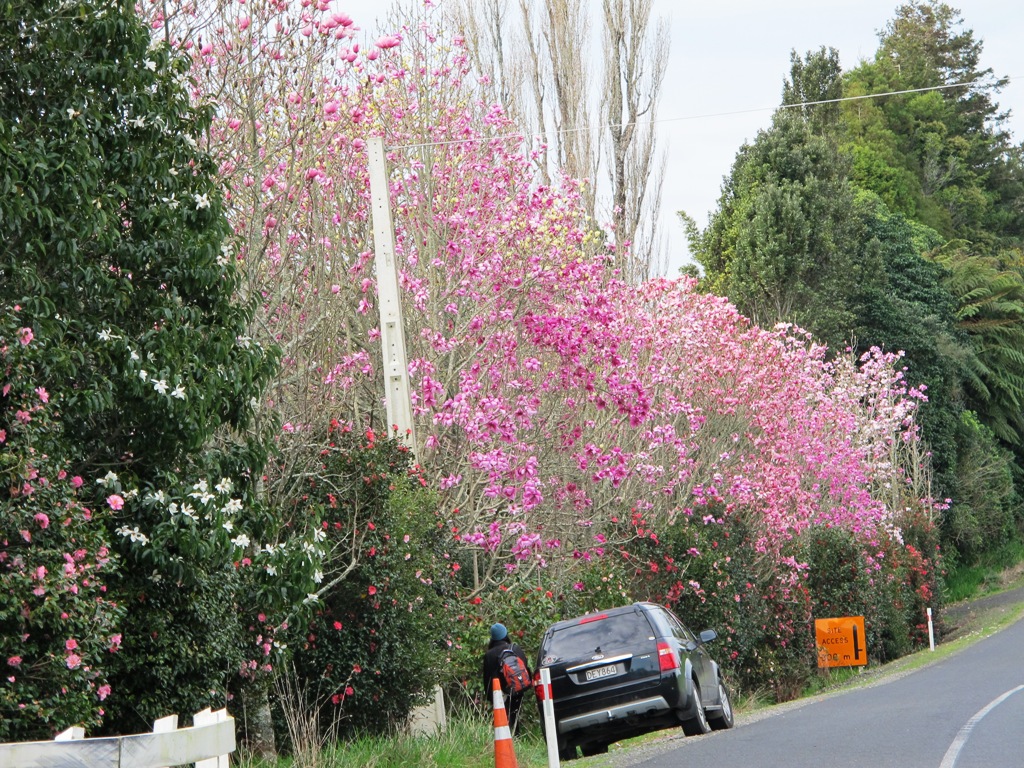 But we now have the petrochemical industry all round us and down this formerly quiet little country lane is the huge Mangahewa C site with its eight gas wells, single men’s camp and much additional activity. The road has been strengthened and widened for their heavy transport, all done in such a way as it is now impossible to walk along the verge. It is sometimes referred to as “loss of rural amenity”. Children can no longer walk safely to and from school bus stops, cycling is not safe, forget horse riding. It is pretty difficult to find a safe position to stand clear when the heavy transport thunders by. Meantime, across the intersection, the other side of Tikorangi Road – largely unused by the petrochemical industry – has remained unchanged over the past 20 years. It is a stark contrast.
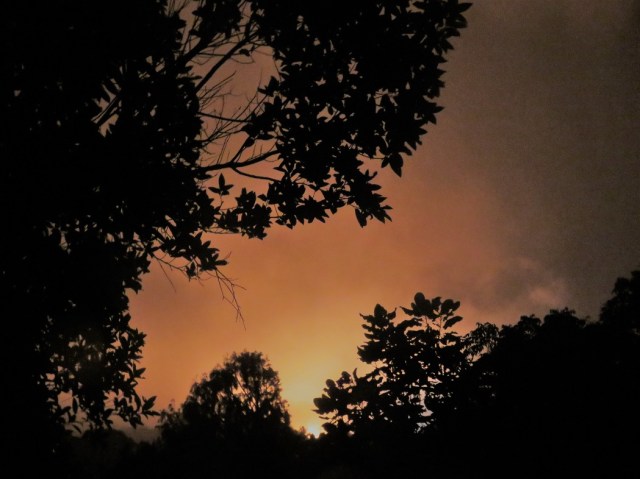
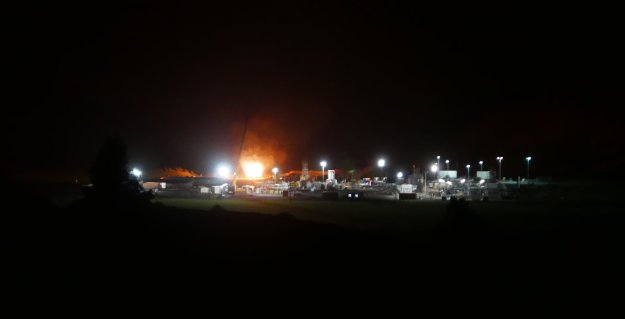
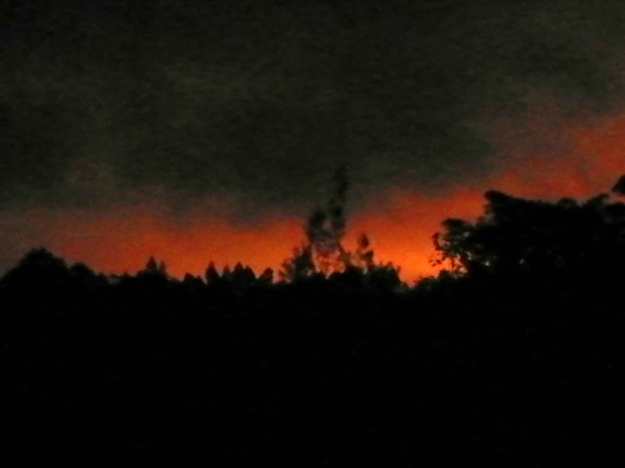
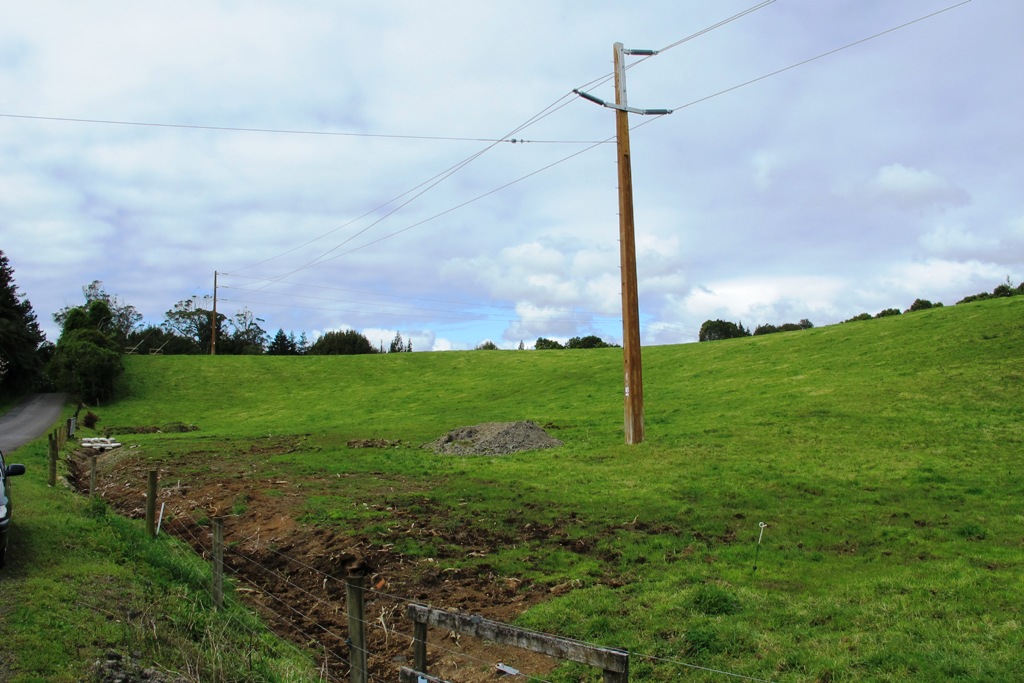 And on the right hand side of the road where there used to be trees, there is now a green wasteland dominated by the designated high tension power lines that Todd Energy, a petrochemical company, deemed necessary for their operations. Sadly, petrochemical development is now given precedence over rural amenity, local residents or the preservation of the environment. This is our world of 2014. During the day we listen to the heavy transport. At night, our formerly pitch black sky is often lit by gas flares in one or more quadrants. On an otherwise quiet Sunday morning today, I could hear the distant noise from Mangahewa E site. Every night we go to sleep to a low drone from one of the plants and we are not even sure which one it is any longer because there are four possible sources for the noise. But under the Resource Management Act, we are told by our councils that “effects are less than minor” and we are not, therefore, an affected party.
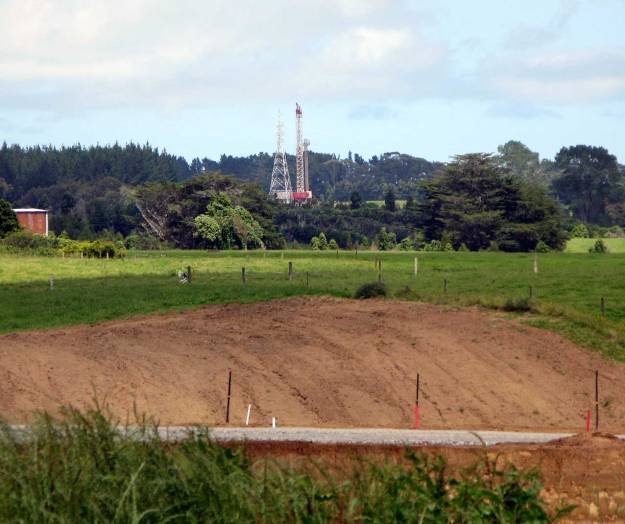 This is Kowhai C site as seen from Mangahewa E site. These sites belong to two different companies drilling right on their boundary which happens to cut through Tikorangi.
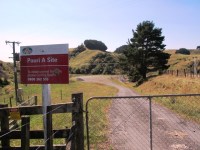
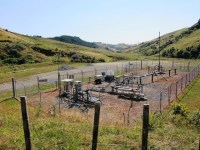
 Here we have Kowhai C site – the one this community said it didn’t want but got anyway. This photo was taken 150 metres to the side of Kowhai B site in order to get a clear view. Both sites belong to the same company – Greymouth Petroleum. Kowhai B is consented for 8 wells. Only one has been drilled so far. Close by, so very close that one wonders why the company needed a second site, Kowhai C is consented for 4 wells.
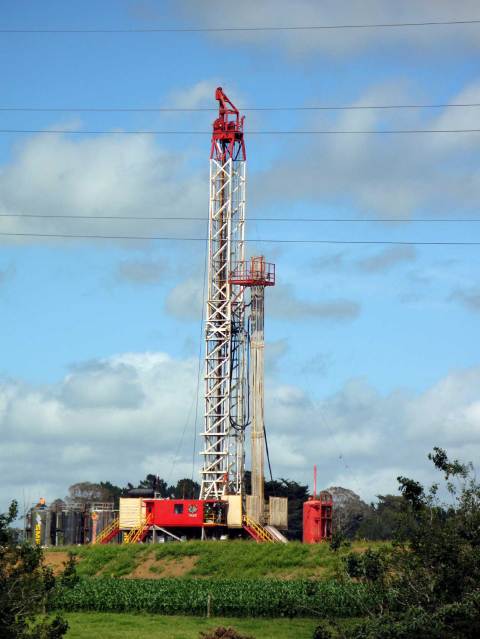 Kowhai C again, this time from Otaraoa Road. It is one of about 10 well sites Greymouth Petroleum has in Tikorangi. I know of 9 that have been consented – I am not sure of the current status of Urenui A (which is not in Urenui but is in Tikorangi).
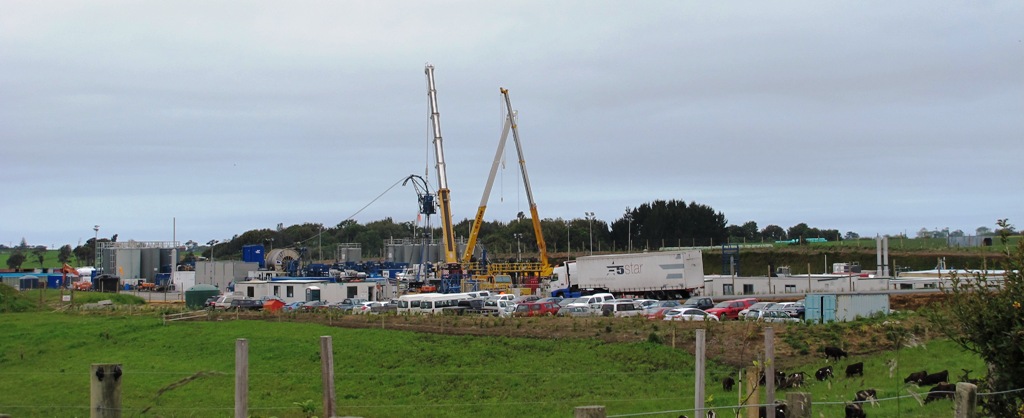
 This photo taken about August last year – the rig has now gone but it was on Mangahewa C, as photographed from Kowhai C. It is like a quadrilateral of sites, already. These two belong to separate companies again.
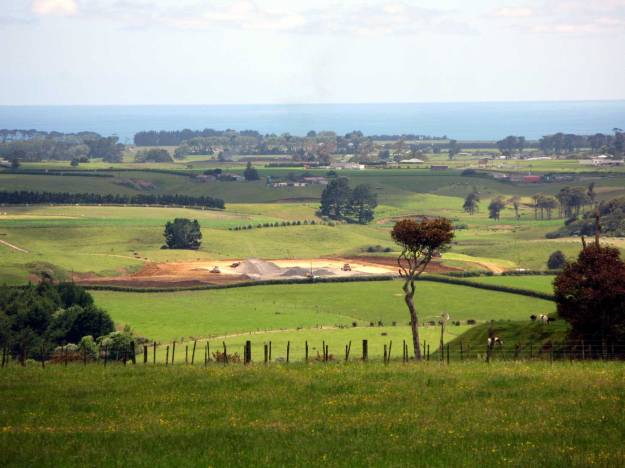 Mangahewa E site from Stockman Road (near Mangahewa C site). These two Mangahewa sites are Todd Energy’s but, to be fair, it should be pointed out that Mangahewa C site has 8 wells drilled on it so is at capacity on its current consent.
 Work progresses on the new Mangahewa E site.
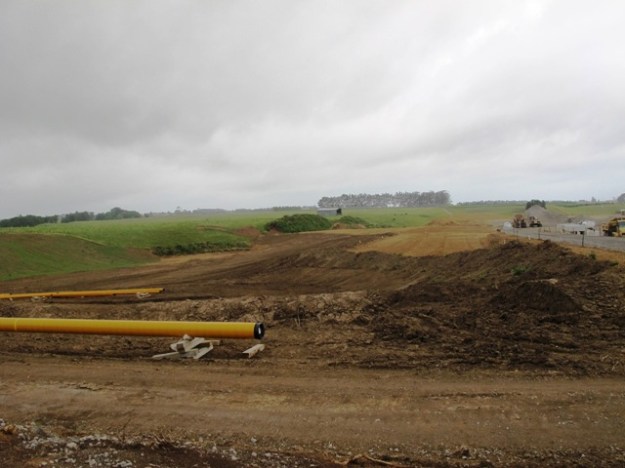 Mangahewa E site again. It is often stated that this petrochemical development (still called “exploration” but they are long past exploration in Tikorangi where it is decades since a dry well was drilled) is “temporary”. Does this look temporary? How can these developments be temporary when the majority of consents are open ended with no expiry date? Only the most recent three sites have a time limit on the consents – 15, 20 and 30 years. In whose books is this “temporary”?
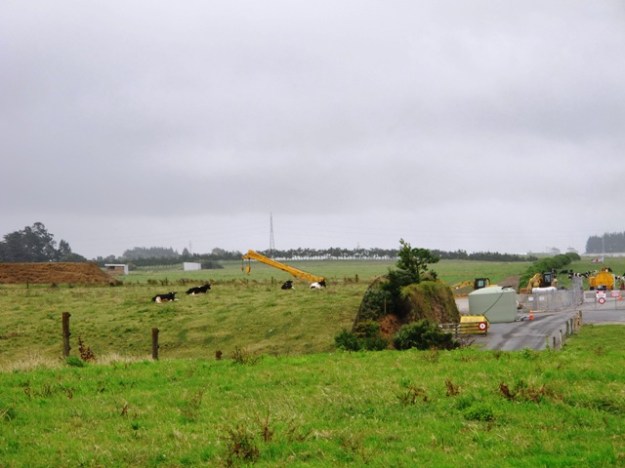 And work progresses on extensions at Turangi A site. These are the other company’s sites (Greymouth Petroleum).
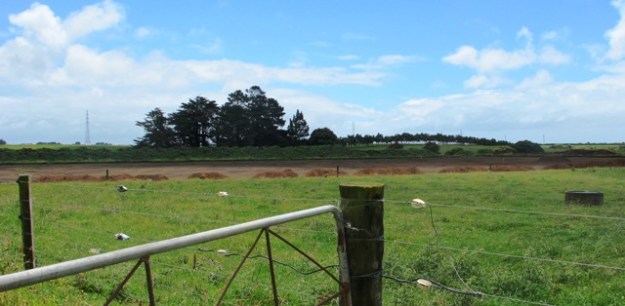 But wait, there are more. Turangi C site is, according to the company (Greymouth Petroleum) “about” 850 metres from Turangi A site. It can’t be any more than that from Turangi B site, in that case, because it is pretty much set back between the two. Neither Turangi A nor Turangi B have been drilled to capacity. So why does the company need a third site and could they not have deviation drilled from one of the other two sites? Who knows? Only the company and neither New Plymouth District Council nor Taranaki Regional Council seem inclined to ask them why. It looks mighty like speculative consenting to some of us – described by the company rep to me as “future proofing”. Right-o then. That is future proofing the company, not Tikorangi.
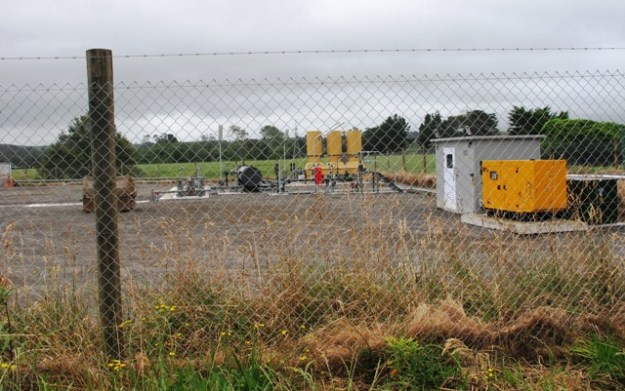 And Kowhai B site with one hole drilled, as viewed from the neighbour’s property. It doesn’t look “temporary” and it was anything but silent on the day I took this photo. It has a significant impact on the neighbour’s adjoining paddock and could well affect his future property options but he was never deemed an “affected party”. I think, to the right of centre at the front of the photo, that is an example of the screen planting done by the company. It’ll be quite a few years before anything is screened by that sort of planting.
 Tikorangi The Jury Garden