Tag Archives: Tulipa saxatilis

Bulbs of September

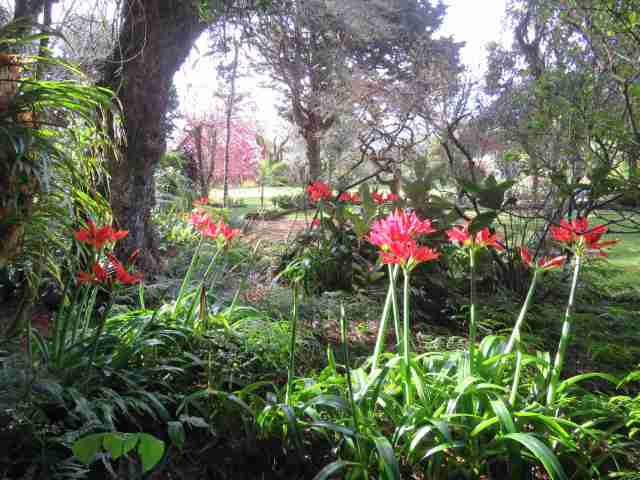
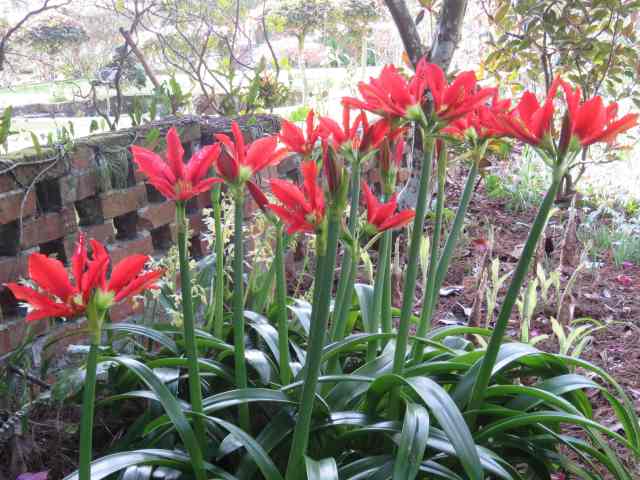
Hippeastrum aulicum – we plant it in semi shade to shaded areas because it will still flower and the dreaded narcissi fly only attack plants in sunny spots

Maybe I will do a monthly post on the bulbs in flower here during each month, I thought in August. I am pretty sure that we have bulbs, corms and tubers of one sort or another flowering twelve months of the year. But August came and went and here we are, well into September and peak spring.
Hippeastrum aulicum

Ah well, there is always some crossover. The narcissi and the Hippeastrum aulicum both started in August and are still in full bloom. The aulicums bring us great pleasure and are a significant feature as winter breaks to spring in our garden but are probably beyond the reach of most people. It is not that they are difficult to grow but they are not widely available and, purchased individually, they will be expensive. Mark’s dad probably started from one or maybe three bulbs, as was his and now our way, and the results here have been achieved over about seventy years of quietly lifting, dividing and planting around the garden, now with many hundreds of bulbs in various locations. Not every gardener has the time, patience and willingness to achieve this, let alone the longevity of stay in one garden location.
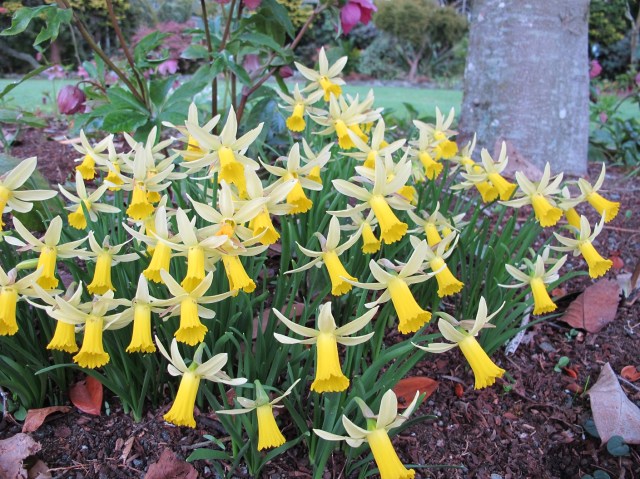
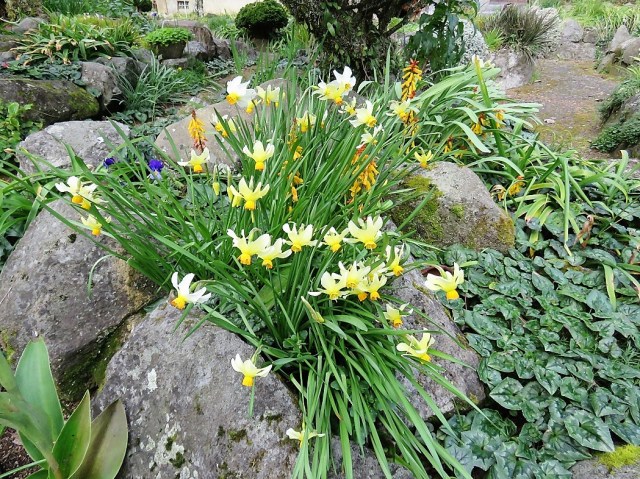
Narcissus Twilight

The narcissi are more achievable and will give a quicker result. We grow as many different types as we can, bar the modern hybrids (the King Alfred types) that are most commonly sold. They are better as cut flowers (the weight of the bloom often bends them over in the garden) and are better in places that don’t have issues with narcissi fly. We favour the earlier flowering dwarf narcissi. Growing a range of different species, named hybrids and seedlings raised here on site extends the season into many weeks from early August right through September.
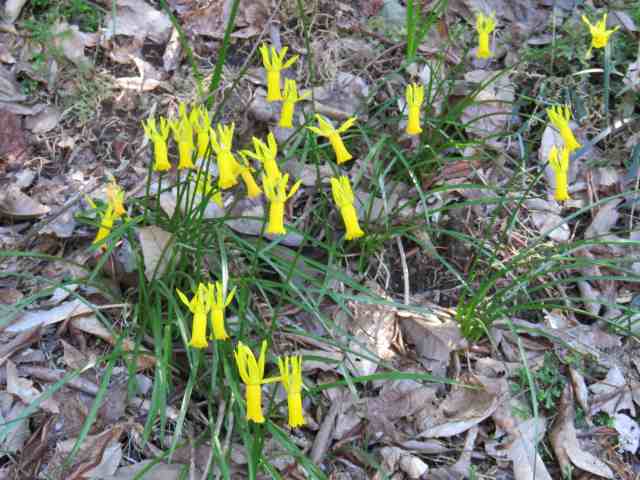
Narcissus cyclamineus seedlings growing on one of our bulb hillsides

We use narcissi everywhere really, the major consideration of sites being that they won’t get swamped by larger growing plants and that they will star as rays of sunshine in their time each year.
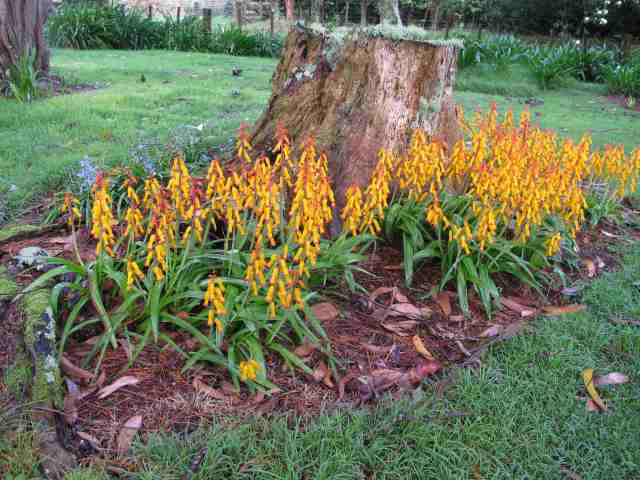
Lachenalia aloides

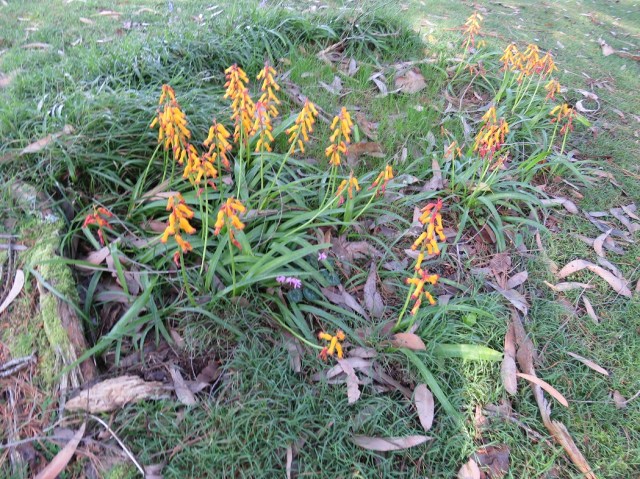
The lachenalias also star through spring. It is the boldest and the brightest that bloom first. Lachenalia aloides is the common form that is widely grown. Cheap and cheerful, might be the best description. Placement is everything when it comes to this bulb. I don’t like it as a garden plant but I think it is great on the margins and in wilder areas.
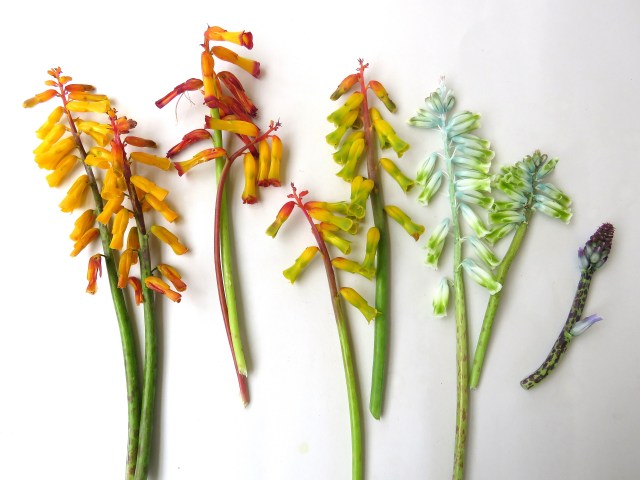
I am officially giving up on trying to understand the plant classification and nomenclature of lachenalias. Last time I looked, these were all forms of the species L. aloides. I even staged a photo to support my comment that a single species can be very variable. So we have straight aloides, quadricolor (already passing over – it is even earlier), tricolor, vanzyliae and glaucina which was barely opening a week ago. Now I look and I see they have been split. Glaucina is back with L. orchiodes, while quadricolor and vanzyliae seem to have been elevated to the status of being in species classes of their own and I have no idea where tricolor sits. They can remain a mystery for me.
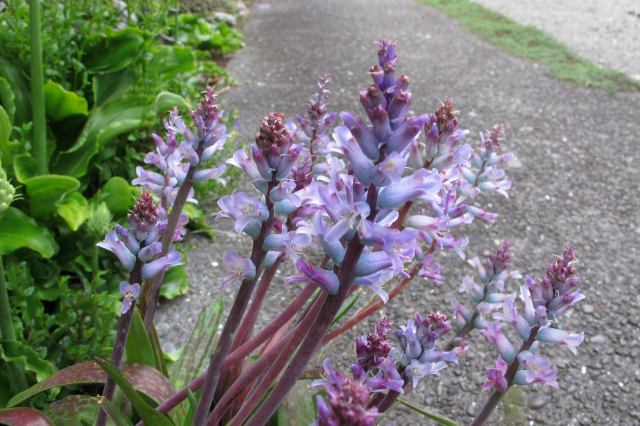
Lachenalia glaucina

From a garden perspective, I always notice that it is the orange, yellow and red lachenalias that flower first (the yellow being Mark’s reflexa hybrid, the red we have is bulbifera). The most desirable so-called blues come later. I say so-called blues because that casual grouping takes in those with the faintest blue genes that are really shades of cream, pink and lilac as much as pure blue. We have gathered every one we could find over the years and by far the most reliable is the aforementioned L. glaucina.

And without writing a book on topic, I can only continue by listing bulbs that I spotted on a perfunctory wander around the rockery and areas where we have done informal swathes of different bulbs. We find the bulbs add depth and detail which we value highly.
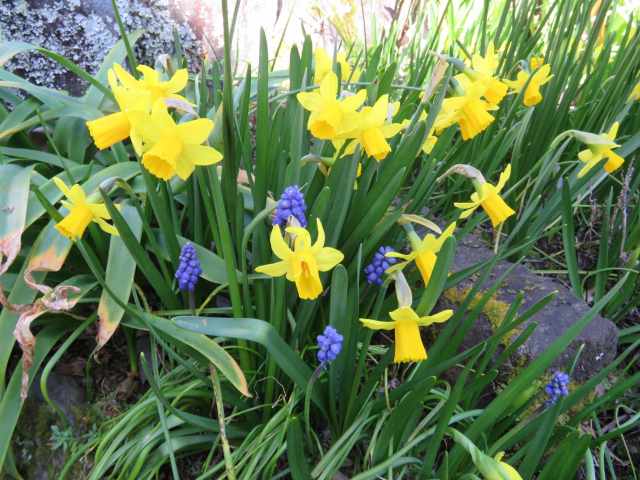
A touch of grape hyacinth is enough. Seen here with Narcissus Tete a Tete.

We are not too snooty about the common bulbs. While the snowdrops finished last month, the undervalued snowflakes (Leucojum vernum) flower on. We are thinning out both the grape hyacinths (muscari – foliage to flower ratio too high in our climate and spreads a bit too much) and bluebells (way too invasive) but not aiming for total eradication.
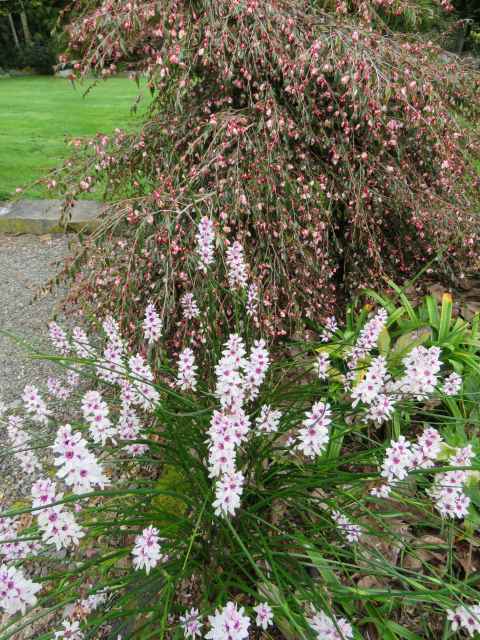
Once was dipidax, then onixotis but now, apparently a wurmbea
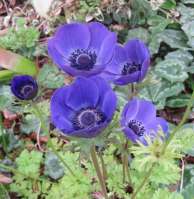
Seedling anemone

The blue anemones seed down and have quietly naturalised in the rockery without being a problem. I once planted a couple of bags of anemones and ranunculus and they all flowered the first year. From then on the ranunculus, the double anemones and all colours except blue quietly faded away but I like the simple blue and I like even more that they are self-maintaining. The Wurmbea stricta which we used to know as an onixotis and before that was a dipidax is another common bulb but one without a widely-used common name so most often greeted with words to the effect of “Is that what it’s called? My mother used to grow that – I never knew its name.” Dutch iris are another early spring option. I like my blue ones but I am not a particular fan of the family generally.
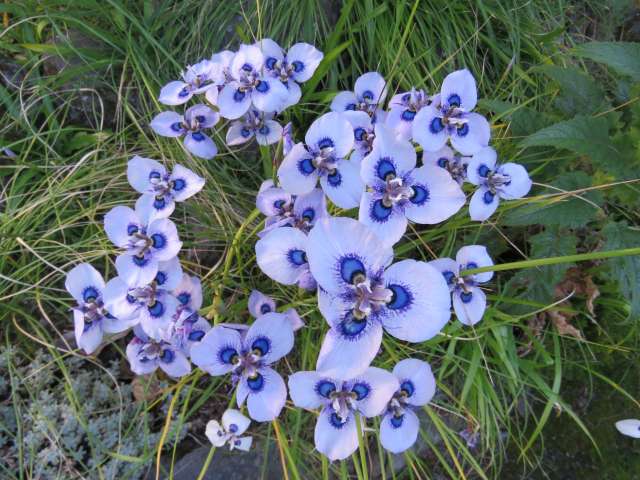
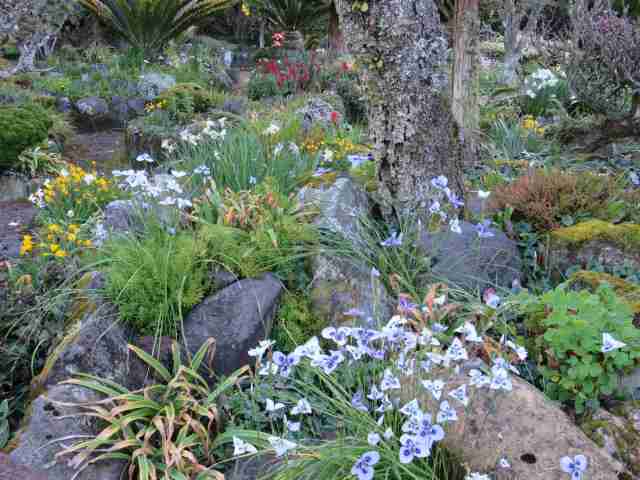
The blue moraea villosa are the most desirable but the white with blue eye are the most common

There is a large group of somewhat messy bulbs that are terrific in flower but their seasonal foliage is often dying, either just before they bloom or while they are in flower. So they are not nice, tidy, neat bulbs but they are generally showy. The Moraea villosa float like ethereal eyes of the peacock feather, moving in the breeze and they are a delight, even though I may feel irritation at their messy foliage in a few weeks’ time. The freesias (plain cream ones here), sparaxis, valotta, tritonia, Gladiolus tristis and babianas all fall into the same category and are flowering now. We grow them all, but more in the rockery for choicer ones and in meadow plantings for vigorous ones. Their foliage issues are less intrusive than in a tidy border planting.
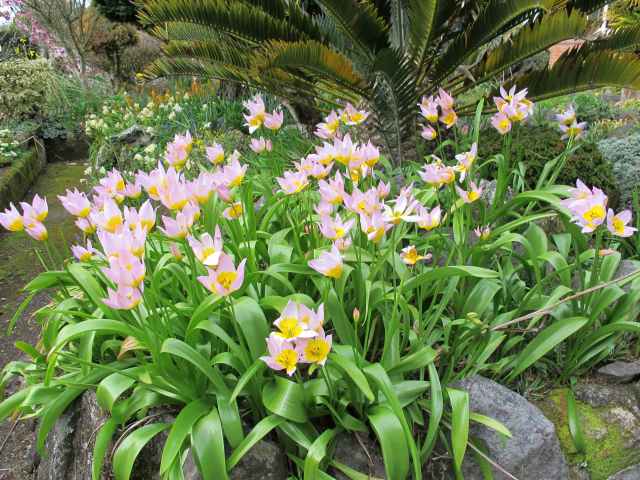
Unlike the Dutch hybrids, Tulipa saxatilis just keeps quietly increasing and returning to bloom every year

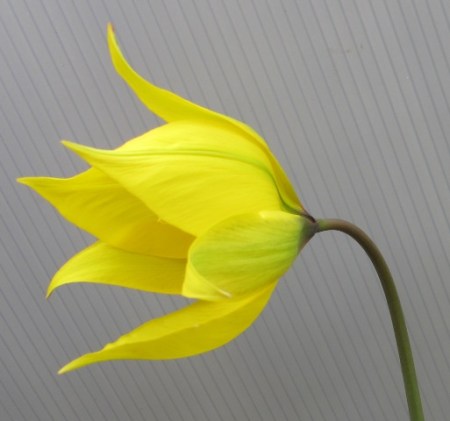
Tulips – we don’t grow the Dutch hybrids but we are enamoured with the Cretan species Tulipa saxatilis. And we have a dainty yellow species that may be a form of T. sylvestris, or it may not. Amongst Mark’s parents’ slides, there was a photo of it in the newly constructed rockery so around 1952 or so. Amusingly, seventy years on, we still have it but only in similar quantity to that in the early photo. It is clearly not going to naturalise and reproduce much here.
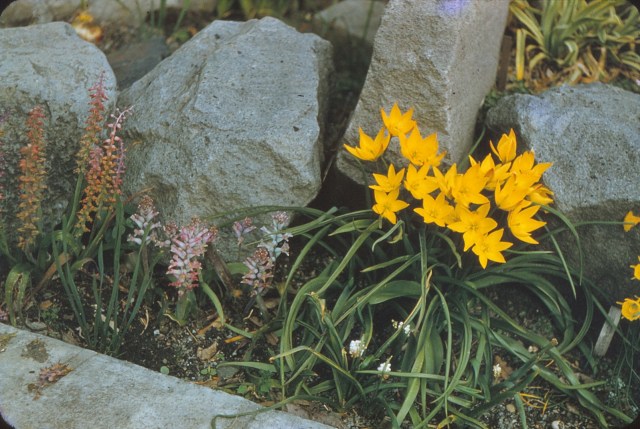
We know this is a very early photo because the rocks have not a skerrick of moss or lichen on them.
Ferraria crispa

Then there is the Ferraria crispa, the starfish iris which is only worth the space if you are fascinated by oddities and freaks. Erythroniums, dog’s tooth violets which prefer colder, drier winters, are a seven to ten day wonder with us but charming and dainty for that time and no bother for the rest of the year. Veltheimias in pink and in cream are a mainstay for us in both sun and shade, the pleione orchids are coming into flower and Hippeastrum papilio has opened its first blooms – I could go on.

Why did I start with the month that is probably the busiest of the year in the varied world of bulbs? There will be more that I have missed. If I end up having to retire to a very small town garden, there will be no roses, lavenders or easy-care mondo grass. I am pretty sure I will be growing bulbs.
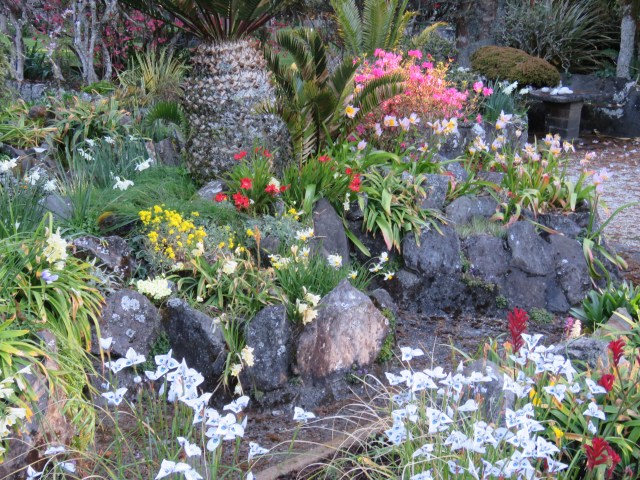
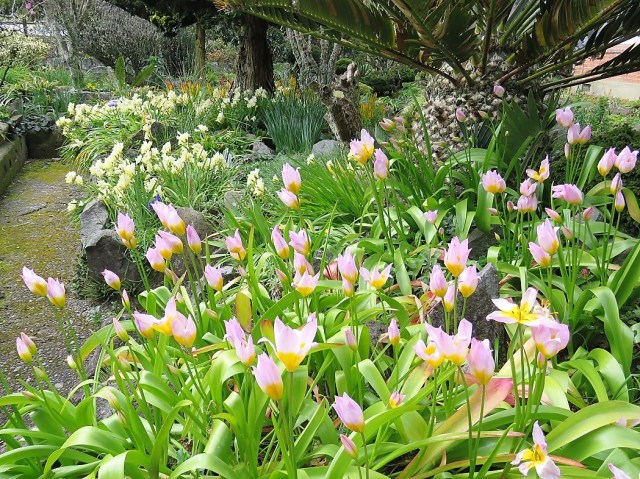
The rockery is at its busiest at this time of year

When the detail brings delight, not the devil

Tulipa saxatilis and simple cream freesias in the rockery this week

Bulbs play a major role in our garden. We use a huge range of bulbs, many no longer available commercially. Some never were readily available. Very few of those we grow are the larger, modern hybrids which are generally what are on offer these days. We prefer the simpler style of the species or at least closer to the species.

Added to that, seventy years of intensive gardening across two generations has built up the numbers most satisfyingly. Most of our cultivated gardens have bulbs incorporated in the plantings. Or at least bulbs, corms, tubers or rhizomes to cover the range.

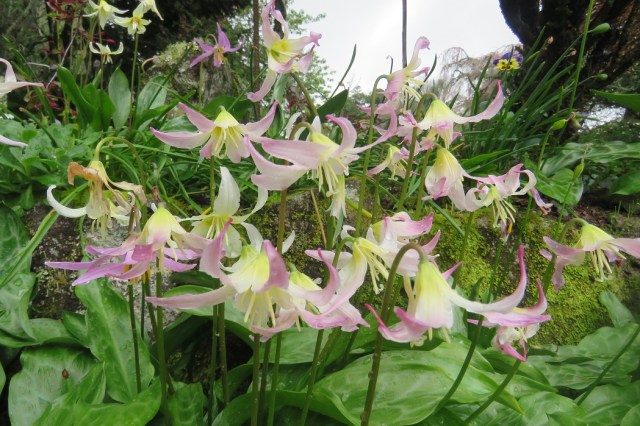
Erythroniums

We have a fair few that are fleeting seasonal wonders in our climate but we just adjust our expectations. The cute erythroniums – dog’s tooth violets – are maybe a 10 day delight and can be taken out by untimely storms but that is just the way things are.

Meet Beryl. Narcissis ‘Beryl’ with cyclamen, nerines and even a Satyrium coriifolium in the bottom left corner

I don’t grow any in containers now although the same can not be said of Mark. His bulb collection is currently sitting in limbo for us all to see the scale as his inner sanctum – his Nova house – is currently being relocated. He hasn’t taken good care of them in recent times but he is determined to keep some of the rarer, touchier varieties alive. It is possible to maintain a more comprehensive bulb collection if you are willing to faff around with growing them in containers in controlled conditions. I am not so dedicated. My interest wanes if we can not grow them in garden conditions.

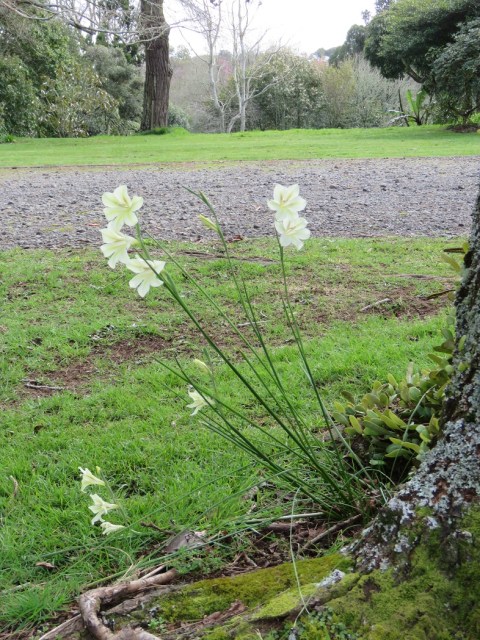
Gladiolus tristis popping up unexpectedly in our parking area

It is the random bulbs beyond the gardens that are currently bringing me pleasure. Some of these have been planted. Some have popped up from our nursery days. When trays of bulbs were being repotted, Mark had a strict rule that fresh potting mix was to be used (granulated bark was our chosen medium). Hygiene, he would explain. The old potting mix was spread around the place and at times it had seed or tiny bulbs within it. I am guessing this is how the Gladiolus tristis, a species gladiolus, came to be at the base of a cherry tree. I certainly don’t remember planting it there and I can’t recall it flowering before.

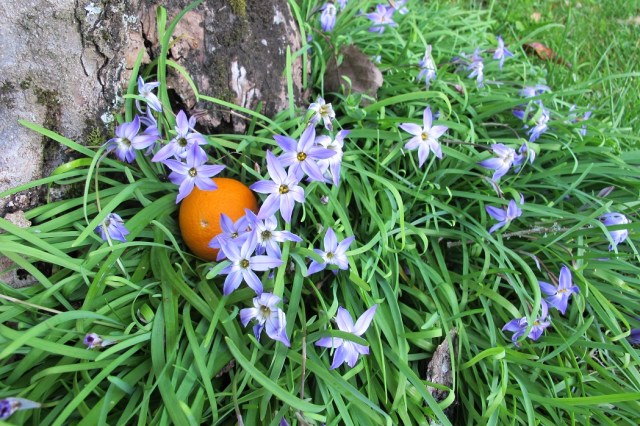
Ipheions at the base of an orange tree

When we plant bulbs beyond the cultivated garden areas, we try and select spots where they can establish in fairly undisturbed conditions. At the base of trees is good, as long as there is plenty of light. Around old tree stumps, on margins that don’t get mown often, or in little spots where we can walk past and be surprised to see them in bloom.

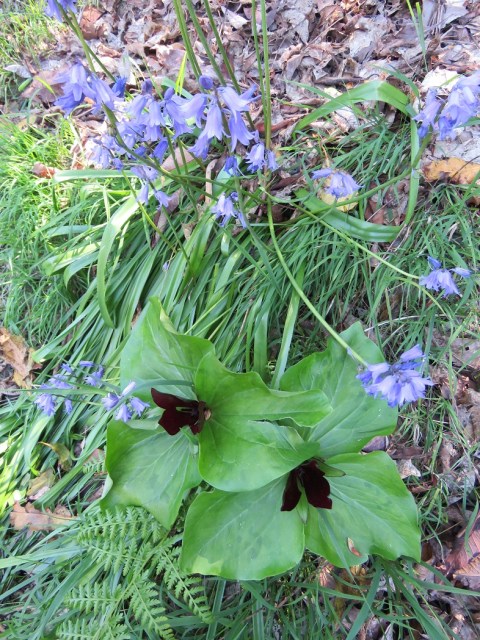
Trillium red with bluebells down in the park meadow
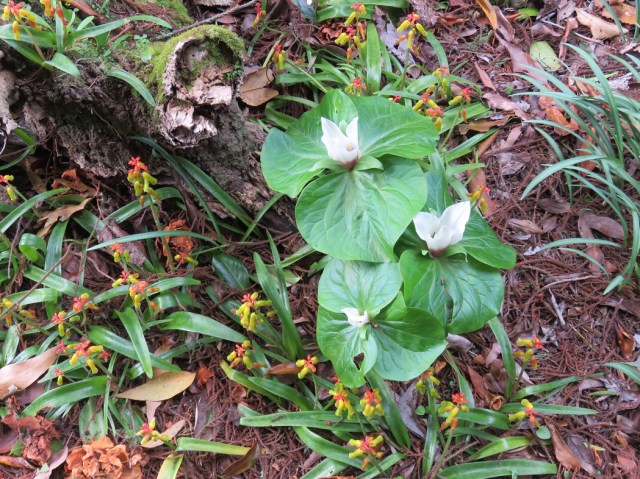
And trillium white with Lachenalia aloides tricolor and snowdrops to the right on the margins by a stump

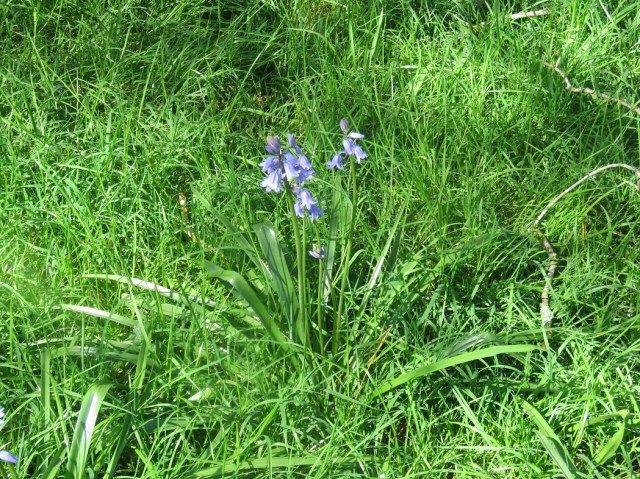
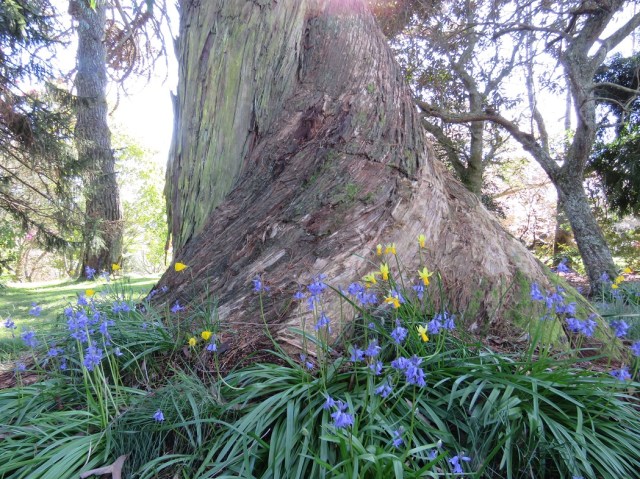
We have rather too many bluebells now, to the point where I often dig out clumps to reduce overcrowding. The Spanish bluebells or the ones that are crosses between the vigorous Spanish and the more refined English species are definitely rampant, bordering on weeds. That sea of blue is very charming in their flowering season but sometimes it is the one seedling escape flowering bravely on its own that makes me smile as I pass.

The simplicity of a self-sown bluebell
Common old Lachenalia aloides where a tree stump used to be

It is both the transient nature and the detail that makes bulbs so interesting in a garden context. Far from simplifying our own garden as we age, the more we garden, the more we like to add fine detail. That is what keeps it interesting for us.

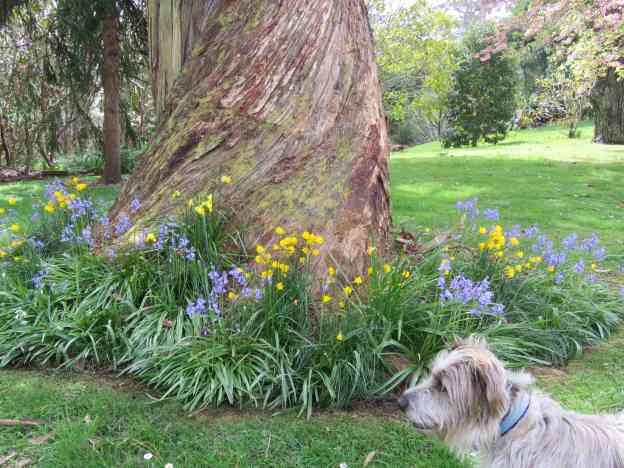
Bluebells and narcissi at the base of gum tree
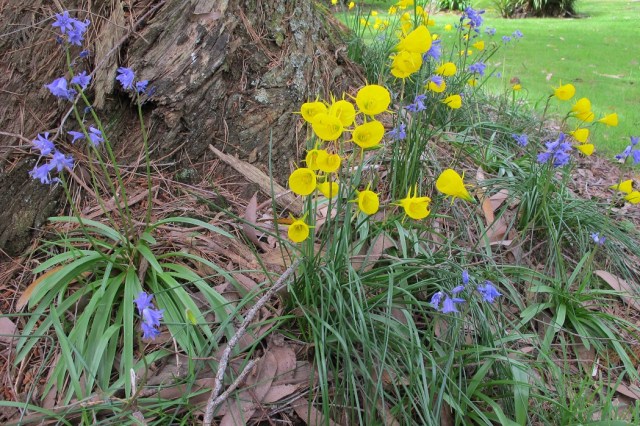
Narcissus bulbocodium with bluebells

Tulips, but not from Amsterdam

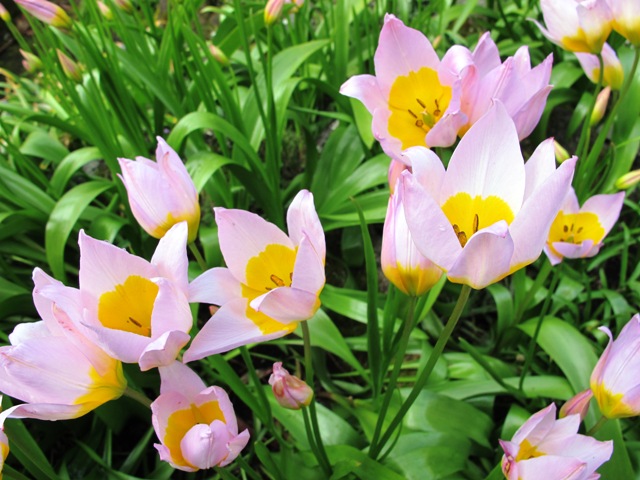
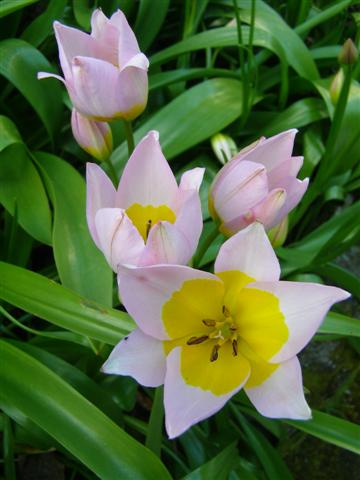
Tulips from Crete - T. saxatilis

Tulips from Crete – T. saxatilis

Tulips. They are Dutch in origin, aren’t they? Well no. The original tulips are no more Dutch than I am, but the modern hybrid tulips largely originate from the flat home of dairy, dykes, windmills and clogs. And in a love affair spanning 450 years, the Dutch have made this plant family their own.

We don’t grow many tulips in our own garden. The showiest by far is a tulip from Crete – T. saxatilis. Most people are surprised to find that there is a tulip from that Greek island because, after all, tulips come from Holland, do they not? In fact the species in the wild – and there appear to be somewhere between 70 and 100 different species recorded – do not originate from anywhere in Northern Europe. Instead, stretching from Southern Europe, through Northern Africa, the Middle East and spreading overland from Turkey to north western China, tulips have a wide territory. Many of them favour mountainous areas with hot, dry summers and cold winters and therein lies the hint to the problems people can have with getting the modern hybrids to flower past the first season in their garden. Most need a much greater winter chill than we can give them here.

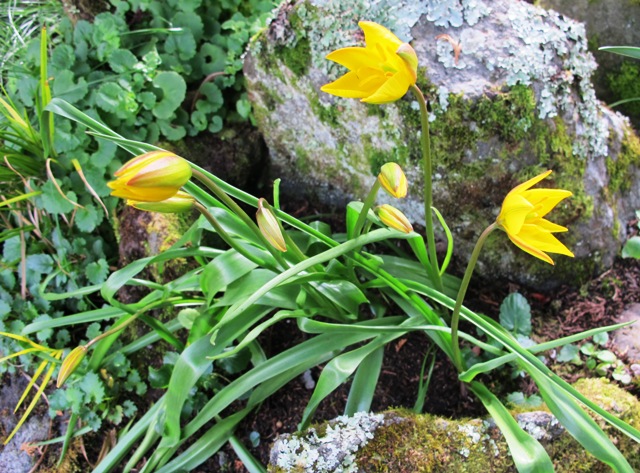
Some species - we just don't know which one

Some species – we just don’t know which one

We have three different tulips in the garden. The Cretan species is wonderfully easy-care and increases gently and reliably. I love the unlikely contrast between the lilac pink and bright gold. Then we have a pure yellow one which is inclined to nod its head. Mark thinks it may be a hybrid, not a species, though I am unsure of how he reached this conclusion. It never increases but it does at least return each year. And we have a small flowered, small growing species of unknown origin. Charmingly understated, might be the descriptor.

Indubitably tulip, but we have no name on it and it never increases.

Indubitably tulip, but we have no name on it and it never increases.

I am not the world’s greatest fan of modern tulip hybrids but concede I am in a minority. I have toyed with the idea of bulk buying bulbs of one or maybe two selected cultivars to drift through areas of the garden. A swathe of pure white tulips or maybe clusters of a deep wine colour might add to the early spring herbaceous plantings even though they may be a little clichéd. But I prefer to spend money on bulbs which have a life-span beyond just one season. I can’t bring myself to treat tulip bulbs as a disposable commodity. It seems a shocking waste of money, resources and effort.

I was a bit surprised to find that even in the UK, tulips are often treated as annuals because their repeat performance is patchy at best, despite the fact that their winters are much colder than ours. Tulip bulbs are much cheaper to buy there which may be a factor.

It is not that these hybrids all die after flowering for the one season. They just decline and flowering diminishes considerably in subsequent years unless you go to the trouble of lifting them, separating the offsets, chilling them and replanting in fresh ground. That is a lot of effort. Holland apparently produces fresh tulip bulbs by the billions each year, so I guess there is an insatiable demand from people who do keep replenishing supplies.

The early variegations and novelty breakthroughs were almost certainly caused by virus which, while giving variety, also weakens the plants over time. Nowadays, the variegations are the result of genetic breeding and selection, and considerable effort has been made to get rid of the debilitating viruses. Most of the modern hybrids descended originally from T. suaveolens, which we do not have in our garden here.

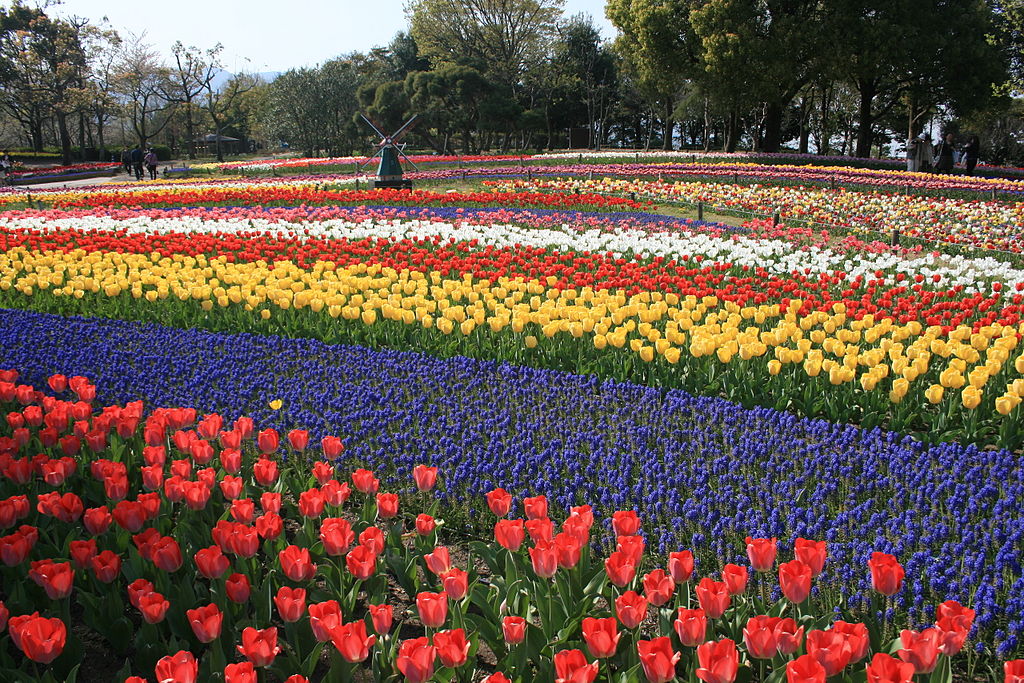
I went looking for a photo of tulip fields in Holland and found instead this one of tulip fields in Japan, pretending they are in Holland!

I went looking for a photo of tulip fields in Holland and found instead this one of tulip fields in Japan, pretending they are in Holland!

The history of tulips is fascinating but not without debate. The earliest cultivation of tulips was apparently recorded 1000 years ago in Persia. How and when they arrived in Northern Europe is disputed, but they appear to have been taken there in the mid 1500s. By 1637, what is now called “tulip mania” had hit Holland. Single bulbs could command fabulous prices – reportedly as high as 10 times the annual income of a skilled craftsman. But it was not just the wealthy plant collector who coveted these flowering plants. They had become an investment commodity, priced way beyond their actual value. This extraordinary situation has received a lot of attention because it was the first recorded instance of rampant, economic speculation on a product but there is ongoing debate about the extent and the detail. Economic data from 1637 is always going to be a little sparse and sometimes unreliable. Whatever, it makes a good story and “tulip mania” has entered the lexicon as a term for a freakish economic bubble, such as the sub-prime mortgage bubble in most recent times.

Going back to garden plants, in their simplest form tulips are generally cup-shaped and can face upwards or downwards. Essentially they all have strappy foliage and while it looks as if they have 6 petals, botanically they have 3 petals and 3 sepals. Ten times an average income seems an awful lot to pay for one of those.

First published in the Waikato Times and reprinted here with their permission.

Plant Collector: Tulipa saxatilis

Plant Collector: Tulipa saxatilis

Plant Collector: Tulipa saxatilis

I am not a great fan of the common tulip and even less so of the novelty forms so prized in colder, northern European gardens. But get back to the original species, (how they occur naturally in the wild) and it is a different matter altogether. This very pretty tulip is a combination of soft lilac with a yellow throat which is not the world’s most obvious colour scheme but generally the colours of nature do not clash. It hails from the island of Crete (the home of Zorba the Greek) though apparently it is also found in Turkey. In their natural environment, these are wild flowers and if you have ever visited the Greek islands or the coast of Turkey, you will know that conditions are hard with poor stony or clay soils, very low fertility, drying winds and next to no rain for most of the year. These are not conditions that we can replicate in the garden here but Tulipa saxatilis is not too picky and has thrived in our rockery for many years. With open conditions and excellent drainage, it is genetically programmed to be a survivor.

This is an early spring bulb, so it starts to grow in winter (triggered by autumn rains) and flowers in early spring for a period of several weeks. Each bulb puts up a stem which flowers its way down in succession so you get several blooms per bulb. It is a good example of a bulb which will find the depth it is happiest at in the soil so it will often drag itself down quite deep and it is a rarity amongst the tulips because it runs below ground. Because the foliage doesn’t hang on very long, it lends itself to being co-planted with a summer perennial which is dormant when the tulip flowers. We have had a dwarf species oenothera, better known as Evening Primrose, interplanted with our main bed of Tulipa saxatilis for many years and it comes into its own as the tulip goes dormant.